2027 Most Valuable Marketing Degree Programs Ranking in Connecticut

Co-Founder and Chief Data Scientist
Choosing the right marketing degree program is a crucial step toward a successful career, especially here in Connecticut. This article introduces the 2027 Most Valuable Marketing Degree Programs Ranking in Connecticut, carefully developed by the Research.com team of data scientists. Their work aims to guide students like you in making well-informed decisions about which programs truly stand out.
By exploring this ranking, you'll discover valuable insights into marketing education that can open doors to exciting opportunities. Pursuing a marketing degree offers not only knowledge but also a pathway to personal and professional growth.
Key benefits of getting marketing degree in Connecticut
- Marketing degree graduates in Connecticut can expect competitive salaries, with roles like Public Relations Specialists earning around $159,420 annually and Marketing Assistants and Digital Marketing Specialists earning about $83,190 per year.
- Graduates from Connecticut's popular universities often pursue diverse careers such as Media Planner, Sales Associate, or PR Specialist, offering exciting opportunities to grow in dynamic marketing fields.
- Online marketing degrees provide flexible learning options for busy students, allowing graduates to gain practical skills and enter the workforce faster while balancing personal commitments.
- 2027 Most Valuable Marketing Degree Programs Ranking in Connecticut
- What can I expect from marketing degree in Connecticut?
- Where can I work with marketing degree in Connecticut?
What can I expect from marketing degree in Connecticut?
The average cost of earning a marketing degree in Connecticut typically ranges from $10,000 to $16,000 per year at public universities like the University of Connecticut, while private institutions such as Quinnipiac University may charge between $40,000 and $50,000 annually. Graduates often recall balancing tuition costs with internship opportunities that provided hands-on experience, allowing them to offset expenses through stipends or part-time roles in marketing departments.
Many students view the investment as worthwhile, given the strong connections to regional businesses in finance, healthcare, and insurance sectors. For example, some graduates secured internships with companies based in Connecticut's metropolitan corridors, gaining practical insight and professional networking that helped launch their careers.
Since marketing programs emphasize skills like digital analytics and strategic communication, students often highlight how access to modern technology on campus enhanced their learning, making the tuition feel like a direct contribution to their career readiness. Exploring financial aid and scholarships offered by these universities is a practical step to manage costs effectively.
Where can I work with marketing degree in Connecticut?
Marketing graduates in Connecticut find strong career opportunities in corporate marketing departments of major firms like Aetna, Cigna, and United Technologies. Many alumni from well-known institutions such as the University of Connecticut secure roles crafting strategies, managing digital campaigns, and analyzing consumer trends in these companies, gaining hands-on experience and confidence early in their careers.
Others leverage their education to enter Hartford's financial services sector, benefiting from the area's reputation as the "Insurance Capital of the World." Graduates often land positions in marketing analysis or communications within insurance and investment companies, where their skills directly impact business growth and client engagement.
Healthcare organizations like Yale New Haven Health also attract marketing talent, where graduates apply regulatory knowledge and patient-focused messaging to promote medical services and pharmaceutical products.
Many students who attend schools like Quinnipiac University find success joining nimble advertising agencies and digital marketing firms in Stamford or New Haven, working on SEO, social media, and event marketing campaigns that offer dynamic, creative work environments.
Graduates with a marketing degree in Connecticut often find rewarding salary prospects across various entry-level and specialized roles. For instance, marketing assistants and digital marketing specialists typically earn a mean annual wage of about $83,190, providing a solid foundation for new graduates. Public relations specialists stand out with even higher earnings, averaging around $159,420 annually, reflecting the state's demand for strong communication skills in business.
Many graduates from respected institutions such as the University of Connecticut or Quinnipiac University share positive experiences securing these roles shortly after graduation. These schools' strong ties to Connecticut's corporate hubs like Hartford and Stamford offer students invaluable internships and networking opportunities that boost salary potential.
Sales associate roles, often held by marketing graduates entering retail or client-facing positions, average approximately $53,280 per year. Media planners similarly report earnings near $83,190, emphasizing the consistency of salaries across related marketing fields in Connecticut.
By focusing on gaining real-world experience through internships and certifications, graduates can accelerate career growth and tap into the state's competitive salary landscape.
- Annual tuition for marketing programs in Connecticut public universities is about $13,000 for in-state students, while private institutions may charge over $40,000 per year.
- Community colleges in Connecticut offer more affordable marketing programs, with tuition typically between $4,000 and $6,000 annually.
- Entry-level marketing jobs in Connecticut pay an average annual salary between $48,000 and $55,000, increasing to $75,000-$90,000 for mid-career professionals.
- Marketing employment in Connecticut is expected to grow by approximately 6% over the next decade, driven by demand for digital marketing and brand management skills.
- The state's diverse economy includes finance, insurance, manufacturing, and healthcare sectors, all needing skilled marketing professionals.
- Internships and networking opportunities with local businesses are important for gaining employment and building a marketing career in Connecticut.
Completing a marketing degree in Connecticut generally takes about four years for full-time undergraduates. Graduates from schools like the University of Connecticut share how this timeframe fits well with their personal and professional goals, balancing coursework and internships fluidly. Part-time options at institutions such as Gateway Community College offer flexibility but naturally extend completion time, allowing students to manage jobs or family commitments alongside their studies.
For those pursuing associate degrees at community colleges like Manchester Community College, expect around two years. These programs provide a strong foundation and can speed transitions into bachelor's programs by transferring credits.
Graduate students, including those in MBA programs with marketing concentrations at UConn, typically finish within one to two years. Many appreciate evening and weekend classes, which let them continue working while advancing their education.
By actively planning enrollment status and leveraging credit transfers, students often reduce overall time to degree completion, making their marketing education journey in Connecticut both practical and rewarding.
As the marketing landscape rapidly evolves, staying informed about emerging trends can significantly enhance a graduate’s career trajectory. In 2024 and beyond, emphasis is being placed on digital transformation, data analytics, and integrated communication strategies-areas that not only redefine classroom learning but also reshape real-world marketing execution. Institutions in Connecticut are adapting their curricula to include courses on AI-powered marketing, social media automation, and behavioral analytics. This evolving approach ensures that graduates are well-equipped to navigate and lead dynamic marketing environments. Moreover, proactive engagement in industry trends can open additional pathways to value-driven learning experiences, such as specialized workshops, real-time case studies, and expert-led seminars. For prospective students seeking cost-effective options while accessing cutting-edge resources, consider reviewing the affordable marketing school in connecticut ranking to discover programs that strike a balance between practicality and academic excellence. In essence, understanding and adapting to these emerging trends is essential for those aiming to make a meaningful impact in the ever-evolving field of marketing.
Students pursuing marketing degrees in Connecticut often experience distinct differences between online and on-campus formats. Graduates from the University of Connecticut recall how on-campus programs created vibrant networking moments during group projects and campus events, crucial for building local business connections. These face-to-face interactions often lead to easier access to internships with nearby companies.
Conversely, online students from institutions like Central Connecticut State University appreciate the flexibility to study asynchronously, balancing coursework with jobs or family life. They enjoy consistent curriculum coverage-mastering topics such as digital marketing and consumer behavior-without relocating.
While on-campus learners benefit from direct access to career services and marketing labs, online learners develop strong self-discipline and tech skills by navigating virtual platforms. Both paths offer valuable opportunities, but your choice depends on your lifestyle and how you prefer to engage, whether through hands-on campus experiences or flexible, independent study.
The average total cost of obtaining a marketing degree in Connecticut is approximately $59,082, with in-state students typically paying around $21,044. Public universities like the University of Connecticut offer more affordable tuition options for residents, making a marketing degree accessible without an overwhelming financial burden. Graduates from these programs often share how balancing costs with access to quality education made their journey manageable and rewarding.
Private institutions in Connecticut tend to have higher tuition fees, but they can offer valuable scholarships and personalized learning environments. For example, graduates from private schools frequently highlight the benefit of smaller class sizes and enhanced networking opportunities, which can be vital for launching a successful marketing career. These benefits often complement the investment, reassuring students that their higher costs contribute to a richer educational experience.
When considering the average marketing degree cost in Connecticut, remember additional expenses such as room, board, and books, which can add significantly to the overall price. Many students recommend researching financial aid options early and consulting official tuition data to clarify total expenses and plan accordingly. For those seeking budget-friendly options, exploring an affordable marketing school in connecticut can be a practical solution to manage costs effectively.
Students emphasize that understanding Connecticut marketing degree tuition and expenses upfront helps create realistic financial plans, leading to less stress and greater focus on academic success. Keeping these factors in mind can make the pursuit of a marketing degree more achievable and fulfilling.
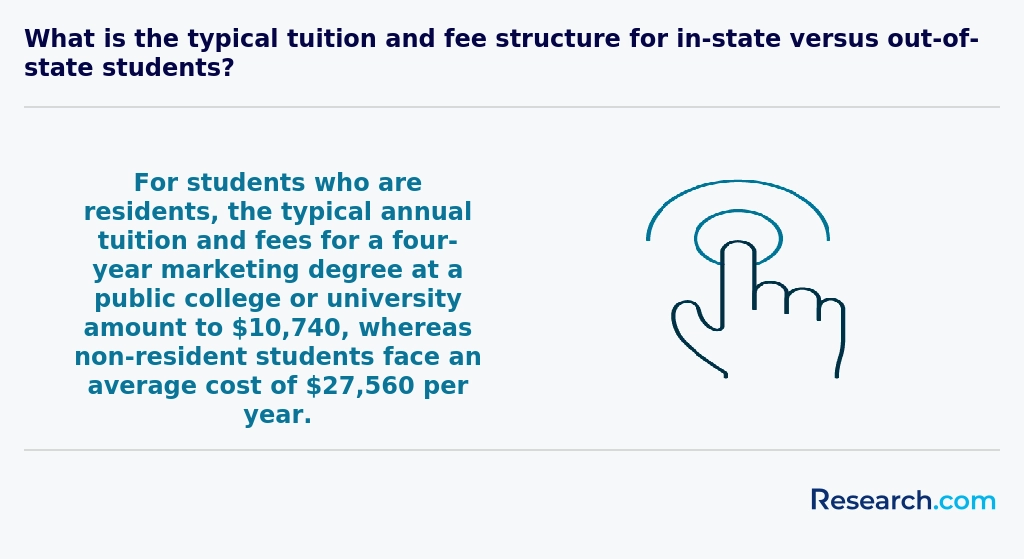
Connecticut marketing degree programs typically carry annual tuition averages between $14,000 and $38,000, depending on public or private status, while living costs in cities like Hartford and New Haven can add $12,000 to $18,000 per year. By contrast, several institutions just across the border in New York offer equally rigorous curricula at slightly lower price points-public in-state rates often fall between $12,000 and $28,000 annually, with urban living expenses averaging $15,000 to $20,000. For budget-minded students, these differences can translate into $10,000–$20,000 in savings over a four-year bachelor’s program. Financial aid packages and scholarship opportunities vary by state, so it’s crucial to compare net costs after grants and loans. If you’re exploring more cost-effective alternatives without sacrificing academic quality, consider our Inexpensive Marketing Degree Programs Ranking in New York, NY for detailed tuition breaks, graduation outcomes, and ROI analyses. Ultimately, weigh each program’s total cost against factors like internship networks, faculty expertise, and job placement rates. By conducting a thorough regional affordability comparison, you can maximize return on your marketing education investment and position yourself for long-term career growth.
Marketing students in Connecticut can access a variety of financial aid options that make pursuing their degree more affordable. Many graduates from the University of Connecticut, for example, speak highly of the institutional scholarships that reward academic achievement and leadership, which helped them focus on studies instead of finances. Similarly, Quinnipiac University offers targeted scholarships for marketing majors that recognize community involvement, creating real opportunities to reduce tuition costs.
Federal aid plays a key role, with Pell Grants providing up to $7,895 annually based on need, which can significantly lower expenses for in-state students. Connecticut residents also benefit from state grants like the Roberta B. Willis Scholarship, offering $1,500 to $4,000 for qualified marketing students, and the Robert N. Clarke Postsecondary Scholarship, designed especially for first-generation college attendees.
Many marketing students supplement aid through private scholarships from local business groups, like those by the Connecticut Business & Industry Association. For those who need it, federal student loans provide flexible funding options to cover tuition and living costs, allowing students to invest in their future with manageable repayment plans.
To enroll in a marketing degree program in Connecticut, you'll typically need a high school diploma or GED with a GPA between 2.5 and 3.0, though some schools may expect higher. Graduates from popular Connecticut colleges often share how meeting this GPA threshold made them confident applicants. Many schools have embraced test-optional admissions, so while SAT or ACT scores aren't always mandatory, submitting strong results can boost your chances.
Applicants must usually provide transcripts and letters of recommendation, along with a personal statement. This essay is your chance to showcase genuine passion for marketing-something past students found helpful when applying to institutions like the University of Connecticut or Sacred Heart University.
If you're aiming for a graduate program such as an MBA with marketing focus, be ready to demonstrate solid undergraduate performance and, sometimes, submit GRE or GMAT scores. Coursework in math or economics during high school often eases the transition, as many successful alumni attest.
Checking each school's specific prerequisites and deadlines early will keep your application on track and stress-free.
Ensuring that your marketing degree is fully accredited is essential for both academic rigor and career readiness. In Connecticut, prospective students should verify that their chosen institution holds regional accreditation from bodies such as the New England Commission of Higher Education (NECHE). Moreover, programmatic accreditation from organizations like the Association to Advance Collegiate Schools of Business (AACSB) or the Accreditation Council for Business Schools and Programs (ACBSP) signals that a curriculum meets industry standards and that faculty are actively engaged in research and professional development. Accredited programs often offer seamless credit transfer options, making it easier to pursue advanced degrees or certificate pathways. They also tend to provide robust student support services-academic advising, career counseling, and internship placement-that directly impact graduation rates and job placement outcomes. Employers frequently prioritize candidates from accredited schools, as it ensures consistent learning outcomes and ethical standards in coursework. For students exploring flexible entry points, consider reviewing our best rated online associate in marketing programs. These programs combine foundational marketing principles with online convenience, while maintaining accreditation and industry-aligned coursework-ideal for those balancing work, family, and education. Finally, program quality assessments such as faculty credentials, student-to-faculty ratios, and ongoing curriculum reviews should factor into your decision. Schools that engage in continuous quality improvement demonstrate a commitment to staying current with marketing trends-digital analytics, AI integration, and sustainability practices-ensuring that graduates enter the workforce with the skills employers demand.
Marketing degree programs in Connecticut typically include essential courses such as Principles of Marketing, Marketing Research, Digital Marketing, Consumer Behavior, Advertising and Promotion, Sales Management, and Marketing Strategy. Students at well-known Connecticut institutions often share how grasping these subjects helped them confidently analyze market trends or design compelling campaigns during internships.
For example, graduates from popular colleges in Connecticut recall applying their Digital Marketing skills by creating social media content for local businesses, which reinforced their learning and boosted their portfolios. In Principles of Marketing, hands-on projects involving real brands make abstract concepts like consumer behavior tangible and memorable.
Many programs also offer electives in international marketing and product development, allowing students to tailor their education to their career goals. Business analytics and e-commerce courses equip learners to thrive in Connecticut's finance and insurance sectors, making their skillsets highly relevant and in demand.
Marketing degree specializations in Connecticut offer practical pathways to focus your skills. Popular concentrations include Digital Marketing, where students master online ads and SEO, crucial for thriving in today's e-commerce-driven environment. Graduates from the University of Connecticut report feeling confident tackling real-world social media campaigns and analytics projects that local businesses value.
Market Research and Analytics is another option, emphasizing consumer behavior and data interpretation. Students describe applying these insights during internships with Connecticut companies, helping brands make smarter decisions. This hands-on experience makes graduates highly sought after.
Advertising and Promotion, Sales and Sales Management, and International Marketing also stand out in Connecticut programs, preparing students for leadership roles in creative strategy, sales teams, or global markets. Many students appreciate how these specializations relate to their career goals.
For those exploring affordable and flexible options, looking into the best rated online associate in marketing programs can be a valuable step toward gaining foundational skills aligned with Connecticut marketing degree concentration options.
To choose the best marketing degree programs in Connecticut, start by verifying the school's regional accreditation and its reputation locally and nationally. Graduates from well-known Connecticut universities often mention the advantage of strong connections with Hartford and Stamford companies, which boost internship and job placement rates. Consider the curriculum carefully-programs offering specializations in digital marketing or data analytics prepare you for Connecticut's growing tech and financial sectors. Many students appreciate flexible options like online courses or part-time schedules that accommodate work while reducing costs.
Cost is a major factor, too. Public colleges usually provide affordable marketing degrees Connecticut residents can access without excessive debt, while some private institutions have more expensive tuition. For students balancing budgets, exploring programs with robust career counseling and mentorship can make a real difference. One practical step is to review the Inexpensive Marketing Degree Programs Ranking in New York, NY, which can offer insights on accessible options nearby.
Graduates exploring marketing degree careers in Connecticut find a wealth of opportunities across thriving sectors such as finance, healthcare, and manufacturing. Many local students from well-known universities appreciate how their education prepares them for roles like market research analyst, where they translate consumer data into actionable strategies for businesses. Others enjoy positions as digital marketing specialists, leveraging skills in SEO and social media to boost company visibility statewide.
Students and graduates targeting job opportunities for marketing graduates Connecticut often highlight the advantage of proximity to major hubs like New York City, which expands prospects in advertising and media agencies. Alumni from popular colleges have thrived as brand or product managers, shaping marketing campaigns that deliver measurable sales growth. Sales managers and public relations specialists also find success by building strategic plans and managing corporate reputation within Connecticut's competitive market.
For those balancing education with other commitments, exploring the fastest online undergraduate degrees for working adults offers a practical pathway to enter this rewarding field promptly.
The marketing degree job outlook Connecticut reveals promising career prospects fueled by the state's diverse economy. Graduates from well-known institutions like the University of Connecticut and Quinnipiac University share how their internships in nearby business hubs opened doors to roles in digital marketing and brand management. Many find opportunities in finance and insurance sectors where strong data analytics skills are highly valued. Entry-level salaries typically range from $45,000 to $55,000, encouraging students to build practical skills that meet employer demands.
Employment opportunities for marketing graduates Connecticut also benefit from a surge in digital marketing as regional companies shift toward e-commerce platforms. Graduates note that networking events hosted by schools and Fortune 500 local companies helped them secure competitive positions locally. Tuition costs vary, but investing in marketing remains worthwhile given Connecticut's average marketing manager salary of around $130,000.
For those seeking flexibility during studies, some turn to the easiest online degree to get in marketing, balancing work and education with success while positioning themselves well in this evolving job market.
2027 Most Valuable Marketing Degree Programs Ranking in Connecticut
Investing in your education is a significant decision that can shape your future, and the Research.com team recognizes the importance of making well-informed choices. To support prospective students in Connecticut, we have carefully developed the "2027 Most Valuable Marketing Degree Programs Ranking in Connecticut." Our dedication to quality, credibility, and accuracy is demonstrated through the rigorous research and thorough analysis behind this ranking.
We utilized the following reputable data sources to ensure a comprehensive evaluation of marketing degree programs:
By examining this ranking, readers will gain valuable insights to help identify the most valuable marketing degree programs in Connecticut and make confident decisions about their educational future. For more information on how this ranking was created, please visit our Research.com methodology page.


# 6 position
Post University
Bachelor of Science in Marketing


Frequently Asked Questions About marketing
Marketing degree students in Connecticut can maximize their learning by engaging deeply with both academic and practical experiences. Participating in internships with local businesses helps apply theoretical knowledge to real-world problems and builds valuable industry connections. According to the Connecticut Department of Labor, marketing roles are growing faster than average in the state, highlighting the importance of hands-on experience.
Students should also leverage career centers and networking events offered by Connecticut colleges. These resources frequently connect students with regional marketing firms and workshops tailored to emerging trends.
Complementing studies with coursework in digital marketing and data analytics further enhances skills relevant to Connecticut's evolving job market.
The marketing field is rapidly evolving, with several emerging niches gaining importance, especially for students pursuing marketing degrees in Connecticut. Digital marketing continues to expand, focusing on social media strategies and content creation tailored to local markets.
Another growing area is data analytics, where marketers use consumer data to craft precise campaigns. This demand aligns with Connecticut's increasing investment in tech-driven businesses.
Additionally, sustainability marketing is becoming crucial as more Connecticut companies emphasize eco-friendly practices. Marketing professionals skilled in promoting green initiatives are sought after.
Lastly, influencer marketing and experiential marketing offer new ways to engage customers, reflecting national trends also observed within Connecticut's dynamic business environment.
Preparing for the job market after earning a marketing degree in Connecticut involves combining practical experience with academic knowledge. Many Connecticut graduates benefit from internships, which provide hands-on exposure and networking opportunities within the state's diverse business environment. According to the Connecticut Department of Labor, marketing roles in the state are projected to grow by 7% from 2022 to 2032, emphasizing the importance of relevant experience.
Strong digital marketing skills, especially in data analytics and social media, are highly sought in Connecticut's competitive market. Graduates should also develop a professional portfolio and consider certifications such as Google Analytics or HubSpot. Active participation in local marketing associations can further enhance job prospects. Connecticut's proximity to major Northeast markets provides additional job opportunities beyond the state borders.
Employers in Connecticut highly value marketing degree graduates who demonstrate strong communication skills combined with analytical abilities. According to the Connecticut Department of Labor, proficiency in data analysis and digital marketing techniques is increasingly important, reflecting the state's growing technology sector.
Critical thinking and creativity are also essential, as businesses seek professionals capable of developing innovative campaigns that engage diverse audiences. Familiarity with social media platforms and content management systems remains a common requirement. Additionally, teamwork and project management skills are prized, given the collaborative nature of marketing roles.
Overall, graduates who balance technical expertise with interpersonal skills tend to have the most competitive edge in Connecticut's marketing job market.
To find marketing internships in Connecticut, start by exploring opportunities at local companies and agencies, especially in cities like Hartford and Stamford, known for their strong business communities. Many universities in Connecticut, such as the University of Connecticut, offer career services that connect students with internship programs tailored to marketing majors. According to the Connecticut Department of Labor, marketing-related internships have grown alongside the state's expanding digital media and advertising sectors.
Networking is crucial; attending local chamber of commerce events or marketing meetups can open doors. Online platforms like Handshake, LinkedIn, and specific university portals are also effective tools for discovering internships in the state's diverse marketing field.
A marketing degree in Connecticut significantly enhances career mobility and advancement opportunities. According to the Connecticut Department of Labor, marketing professionals in the state experience a steady job growth rate of about 7% through 2030, which is faster than average for many professions.
Graduates with a marketing degree are often preferred for roles in digital marketing, brand management, and market research, especially in Connecticut's thriving finance, healthcare, and manufacturing sectors. These industries value analytical and strategic skills developed through formal marketing education.
Furthermore, holding a degree improves prospects for promotions and higher salaries. Data from the U.S. Bureau of Labor Statistics shows that marketing managers with a bachelor's degree earn a median salary over $135,000 annually in Connecticut, reflecting strong advancement potential
Studying for a marketing degree in Connecticut offers students a strong foundation for interdisciplinary roles due to the state's diverse economy and academic offerings. Many Connecticut institutions incorporate coursework in data analytics, finance, psychology, and communications as part of their marketing programs.
According to the Connecticut Department of Labor, marketing professionals often collaborate with IT, finance, and creative teams, making interdisciplinary skills essential. The region's business environment includes industries like manufacturing, insurance, and biotechnology, encouraging marketing students to adapt and apply knowledge across sectors.
Programs emphasize practical skills such as digital marketing and consumer behavior analysis, equipping graduates for versatile career paths.
When choosing between a thesis and a non-thesis marketing degree program in Connecticut, consider your career goals and learning preferences. Thesis programs typically emphasize research, requiring students to conduct original studies and write a detailed paper. This path suits those interested in academic research or pursuing a PhD.
Non-thesis programs often focus on practical skills and coursework, appealing to professionals aiming for direct entry into marketing roles or industry advancement. According to the Connecticut Office of Higher Education, many local employers value hands-on experience alongside theoretical knowledge.
Evaluate available programs based on faculty expertise, internship opportunities, and whether the curriculum aligns with your future plans.
Students in Connecticut seeking to study marketing abroad have several pathways through U.S. universities and exchange programs. Many Connecticut colleges partner with international institutions, offering study-abroad opportunities in countries like the United Kingdom, Spain, and Australia. These experiences often include courses focused on global marketing strategies and international business practices.
According to the Institute of International Education, about 10% of marketing students nationwide participate in study abroad programs, gaining valuable intercultural skills. Connecticut's strong business schools encourage these options to enhance graduates' global competitiveness in marketing careers.
Scholarships and grants specific to international study are available to help offset costs, making such programs accessible for qualified students.
Part-time jobs in Connecticut offer valuable experience for students pursuing marketing degrees. Popular roles include social media coordinator, sales associate, and marketing intern positions. These jobs allow students to apply classroom theory to real-world projects, improving skills in digital marketing, customer engagement, and market research.
Connecticut's diverse economy, with strong sectors in healthcare and finance, provides opportunities to work in targeted marketing roles. According to the Connecticut Department of Labor, marketing-related positions have grown by 5% over the past five years, highlighting demand for skilled professionals.
Internships at local firms or nonprofits also offer networking benefits and practical insights into the regional market, an essential asset after graduation.
Marketing students in Connecticut benefit from numerous networking opportunities through university-sponsored events, local industry associations, and internships. Connecticut hosts chapters of national organizations such as the American Marketing Association (AMA), offering students access to workshops, guest speakers, and networking mixers. According to the Connecticut Department of Labor, over 10,000 marketing-related jobs exist statewide, supporting active local professional communities.
Many Connecticut colleges partner with businesses in Hartford, Stamford, and New Haven, allowing students to engage in internships and cooperative education programs. These connections provide real-world experience and expand professional networks.
Additionally, annual marketing conferences and regional business expos present further chances to connect with industry experts and alumni working in marketing roles across the state.
Alumni networks offer significant advantages to marketing degree students in Connecticut by providing access to valuable professional connections. Graduates from institutions like the University of Connecticut and Fairfield University often participate in active alumni groups that facilitate mentorship and career advice. According to the Connecticut Department of Labor, the marketing sector in the state grew by over 5% in recent years, increasing demand for networking opportunities.
These networks help students find internships, job openings, and collaborations within Connecticut's diverse business environment, including media, healthcare, and retail industries. Participation in alumni events can lead to introductions with marketing professionals across the state, enhancing career prospects.
Research indicates that students involved in active alumni networks are 20% more likely to secure employment within six months post-graduation.
Customizing a marketing degree program in Connecticut allows students to align their education with specific career objectives. Many schools offer elective courses in areas like digital marketing, consumer behavior, and sales management, which lets students focus on disciplines that match their interests. Internships and cooperative education opportunities in Connecticut's thriving industries, including healthcare and finance, provide practical experience to complement coursework.
Students can also select certificates or minors in related fields such as data analytics or communications to broaden their skill sets. According to the Connecticut Department of Labor, marketing professionals with specialized skills often see faster job placement and higher wages, emphasizing the value of personalization. Planning with academic advisors ensures alignment with both academic requirements and career ambitions.
Marketing students in Connecticut often face challenges related to keeping pace with rapidly evolving digital tools. The state's economy is heavily influenced by finance and manufacturing, which may limit local internship opportunities strictly within marketing fields. Additionally, students must compete for positions in industries that prefer candidates with both strong analytical skills and creativity, a combination not always emphasized equally in traditional programs.
Limited access to specialized marketing technologies on some campuses can hinder hands-on experience, which is crucial for job readiness. According to the Connecticut Department of Labor, marketing job growth is steady but demands continual adaptation to emerging trends.
Networking opportunities also tend to concentrate around larger metropolitan areas like Hartford or Stamford, posing challenges for students studying in less urban parts of Connecticut. These factors collectively shape the learning environment for marketing students in the state.
With a marketing degree, graduates in Connecticut can enhance their credentials by pursuing several professional certifications. Popular options include the Certified Marketing Professional (CMP) and the Digital Marketing Certification offered by the American Marketing Association (AMA). These certifications demonstrate expertise in core marketing strategies and digital tools.
Another valuable credential is the HubSpot Content Marketing Certification, focusing on inbound marketing tactics, which is widely recognized in the industry. Additionally, Google's Ads and Analytics certifications provide practical digital advertising skills prized by Connecticut employers.
Obtaining these certifications can increase job prospects and earning potential in Connecticut's competitive marketing job market, where demand is steadily growing according to the Connecticut Department of Labor.
Applying to a marketing program in Connecticut requires careful preparation to stand out. Begin by researching accredited schools such as the University of Connecticut or Fairfield University, known for strong business faculties. Highlight your interest in marketing trends relevant to Connecticut's economy, including digital marketing and healthcare sectors, which are prominent local industries.
Demonstrate your academic strengths with a solid GPA and relevant coursework. Connecticut colleges often expect letters of recommendation that reflect both academic ability and professional potential. Including internships or volunteer work related to marketing can boost your profile.
Finally, craft a clear personal statement that connects your career goals with the opportunities available in Connecticut. According to the National Association of Colleges and Employers, clear communication and specific examples significantly improve application success.
The global perspective on a marketing career highlights the growing importance of digital skills and cross-cultural communication. Employers increasingly seek professionals who can navigate international markets and diverse consumer behaviors. In the United States, including Connecticut, marketing roles often require knowledge of data analytics and social media strategies aligned with global trends.
According to the U.S. Bureau of Labor Statistics, marketing management jobs are projected to grow 7% from 2022 to 2032, faster than the average for all occupations. This growth reflects strong demand both domestically and abroad. Connecticut's proximity to major financial and corporate hubs further enhances opportunities for marketing graduates.
Students pursuing marketing degrees in Connecticut benefit from academic programs that emphasize global marketing perspectives, preparing them to meet industry demands in an interconnected economy.
Students pursuing a marketing degree in Connecticut can gain practical experience through internships offered by numerous local businesses and regional marketing agencies. Universities often partner with companies in sectors like insurance, finance, and healthcare-which are significant to Connecticut's economy-to provide hands-on opportunities. According to the Connecticut Department of Economic and Community Development, internship programs correlate strongly with higher job placement rates for marketing graduates.
Additionally, many institutions encourage participation in marketing clubs and student-run campaigns, allowing learners to apply classroom concepts in real-world scenarios. Some schools also facilitate cooperative education (co-op) programs, combining coursework with paid professional work experiences.
Choosing the right concentration within a marketing degree program in Connecticut depends on your career goals and local market trends. Popular concentrations often include digital marketing, consumer behavior, and brand management. Connecticut's economy, with strengths in finance, insurance, and manufacturing, creates demand for marketers skilled in B2B communication and data analytics, according to the Connecticut Department of Labor.
Consider programs offering practical experience or internships with local firms, as hands-on learning enhances employability. Reviewing faculty expertise and course content will help you find a program aligned with evolving marketing fields, such as social media or market research.
- 2027 Most Valuable Marketing Degree Programs Ranking in New Hampshire
- 2027 Most Valuable Marketing Degree Programs Ranking in Maryland
- 2027 Most Valuable Marketing Degree Programs Ranking in Maine
- 2027 Most Valuable Marketing Degree Programs Ranking in Indiana
- 2027 Most Valuable Marketing Degree Programs Ranking in Georgia
- 2027 Most Valuable Marketing Degree Programs Ranking in Illinois
- 2027 Most Valuable Marketing Degree Programs Ranking in Florida
- 2027 Most Valuable Marketing Degree Programs Ranking in Alabama
- 2027 Most Valuable Marketing Degree Programs Ranking in Missouri
- 2027 Most Valuable Marketing Degree Programs Ranking in Mississippi
See What Experts Have To Say About Studying Marketing
Read our interview with Marketing experts

John R. Meindl
Marketing Expert
Adjunct Assistant Professor of Marketing
Hofstra University

Sonya A. Grier, Ph.D.
Marketing Expert
Professor, Department of Marketing
American University

- BSc Business and Management (Marketing) with Study Year Abroad https://www.reading.ac.uk/ready-to-study/study/subject-area/business-and-management-accounting-and-finance-ug/bsc-business-and-management-marketing-with-study-year-abroad
- Social Media Marketing Program – Online or In-Person at CSB https://gocsb.com/social-media-marketing/hartford-connecticut/
- Outstanding Job Application Letter for Marketing Manager | Cover Letter Copilot https://coverlettercopilot.ai/blog/job-application-letter-marketing-manager
- The skills that will get you a graduate job in marketing https://targetjobs.co.uk/careers-advice/marketing-advertising-and-pr/skills-will-get-you-graduate-job-marketing
- Marketing Manager Salaries State-by-State https://www.allbusinessschools.com/marketing/salary/
- How Niches Provide New Growth Opportunities for Business https://visionedgemarketing.com/niche-marketing-provides-new-growth-opportunities/
- Who Can Be an International Marketer? https://www.spencerstuart.com/research-and-insight/who-can-be-an-international-marketer
- Marketing https://www.easternct.edu/business-administration/programs-of-study/concentrations/marketing.html
- What is a niche market? Types and 26 untapped niches https://clientify.com/en/blog/marketing/what-is-a-niche-market-types-and-examples
- Entry Level Sales, Marketing Jobs Connecticut | Business Management https://lmg-incorporated.com/pages/service-areas/sales-marketing-job-opportunities-connecticut/