2027 Best Marketing Degree Programs Ranking in Boston

Co-Founder and Chief Data Scientist
Choosing the right marketing degree program can shape your future career in Boston's dynamic business landscape. Our article presents the 2027 Best Marketing Degree Programs Ranking in Boston, crafted by the Research.com team of data scientists to guide you toward informed decisions.
By exploring this ranking, you'll discover programs that align with your goals and strengths, helping you find the best fit. Earning a marketing degree opens doors to exciting opportunities, creativity, and growth in a fast-evolving field.
Take this step with confidence and clarity toward a rewarding marketing career.
Key benefits of getting marketing degree in Boston
- Marketing degree graduates in Boston can pursue rewarding careers with strong salaries, such as Public Relations Specialists earning about $159,420 annually and Marketing Assistants earning around $83,190.
- A typical marketing graduate from a Boston university gains access to diverse career paths like Digital Marketing Specialist or Media Planner, opening doors to dynamic and creative roles in the industry.
- Choosing an online marketing degree from a Boston-based school offers flexibility and convenience, allowing busy students to balance studies with work while still gaining valuable skills recognized by employers.
- 2027 Best Marketing Degree Programs Ranking in Boston
- What can I expect from marketing degree in Boston?
- Where can I work with marketing degree in Boston?
What can I expect from marketing degree in Boston?
The average cost of obtaining a marketing degree in Boston varies notably depending on the institution and program type. For example, graduates from Boston University or Northeastern University often report tuition fees ranging from $50,000 to $60,000 per year for full-time undergraduate study. These costs reflect the city's reputation for high-quality, comprehensive marketing programs that blend theoretical learning with hands-on experience.
Many students appreciate the value they receive, especially when internships or cooperative education placements with local companies are included. Evening and online options, popular among working professionals, may offer slightly reduced tuition rates, enhancing affordability.
Boston College alumni emphasize that while the investment is significant, the extensive networking opportunities and direct access to Boston's thriving job market often lead to a strong return on investment. With over 25,000 marketing specialists employed locally as of 2022, the salary potential and career growth justify these expenses for many students.
Where can I work with marketing degree in Boston?
Graduates with a marketing degree from Boston University or Northeastern University often find abundant career opportunities across diverse sectors in Boston's dynamic job market. Many start their careers in Boston's booming tech industry, joining firms like HubSpot or Drift where they handle digital campaigns and content strategy. This reflects data from the Massachusetts Technology Collaborative showing 13,000 new tech jobs created in 2023, many aimed at marketing roles.
Others transition into finance, working with companies such as Fidelity Investments and State Street. Here, marketing graduates apply skills in brand management and product marketing amid a sector employing over 120,000 statewide, as reported by the Massachusetts Division of Labor Statistics.
Healthcare and biotech sectors also attract marketers, with companies like Boston Scientific offering roles focused on medical market research and public relations. Retail and nonprofit organizations provide further diverse career paths, where marketing professionals contribute to consumer engagement and fundraising campaigns, areas emphasized by local alumni narratives.
Graduates with a marketing degree in Boston can expect competitive salaries that reflect the city's vibrant economy and demand for skilled professionals. Entry-level roles such as marketing assistants and digital marketing specialists typically earn about $83,190 annually, according to the latest U.S. Bureau of Labor Statistics data. This solid starting salary allows recent graduates from schools like Boston University or Northeastern University to comfortably begin their careers while gaining valuable experience.
For those progressing into specialized roles, such as public relations specialists, salaries increase significantly to an average of $159,420 per year. This aligns with the experiences of many graduates who have leveraged their advanced skills to secure positions at firms within Boston's dynamic financial and healthcare sectors.
Even sales associates, often a stepping stone for marketing graduates focusing on client relations, earn respectable wages, with a mean annual salary of $53,280. The range of salaries in Boston demonstrates clear growth potential, fostering optimism among marketing students as they plan their careers in this competitive market.
- Annual tuition for marketing degrees in Boston ranges from $15,000 to $25,000 at public universities and $40,000 to $60,000 at private universities.
- Total costs for a four-year marketing degree at private institutions can exceed $100,000, including fees, books, and living expenses.
- Marketing job roles in Boston are expected to grow 6% to 8% over the next decade, slightly above the national average.
- Entry-level marketing salaries in Boston typically start between $50,000 and $60,000 annually.
- Mid-career marketing professionals can earn between $80,000 and $110,000, while senior managers often have six-figure incomes.
- Boston offers many internship and networking opportunities through marketing agencies and corporate headquarters, enhancing job prospects.
Completing a marketing degree in Boston generally aligns with national averages but offers some flexibility depending on the institution and program format. Most students pursuing a bachelor's degree at well-known schools like Boston University or Northeastern University spend about four years in full-time study. This period balances broad general education with focused marketing coursework, giving graduates a robust foundation.
Some graduates share how accelerated programs at institutions such as Suffolk University helped them graduate in three years by enrolling in summer courses and heavier credit loads. This allows motivated students to enter the workforce sooner, reducing time and expenses.
For graduate degrees, students commonly spend one to two years completing a master's or MBA with a marketing focus. Boston's urban setting supports part-time and online options, enabling working professionals to extend their studies over three or more years while maintaining careers, as many find flexible schedules essential.
Internships integrated into Boston programs provide valuable practical experience without adding extra time, helping graduates feel confident and job-ready upon finishing their degree.
- 4 years for most full-time bachelor's marketing degrees
- 1 to 2 years for full-time master's or MBA marketing programs
- 3 or more years for part-time or continuing education graduate options
On-campus marketing degrees at Boston institutions like Boston University or Northeastern University offer direct interaction with faculty and peers, fostering a collaborative learning environment. Graduates often cite the value of face-to-face access to professors and local networking events, such as internships coordinated through campus career centers. These connections help students gain real-world experience in Boston's competitive marketing job market, which employs roughly 15,000 professionals according to the Bureau of Labor Statistics.
Conversely, online marketing programs appeal to students balancing work or family commitments due to their flexibility. Graduates appreciate the ability to study at their own pace without commuting, which also reduces expenses. However, success in online programs requires proactive engagement with virtual networking opportunities, such as webinars and online career fairs, which may not fully replicate the campus experience.
Tuition costs also differ; public Boston universities charge around $13,000 per year for in-state on-campus students, whereas private schools can exceed $35,000. Online tuition varies but may be more affordable overall when factoring in living costs and transportation.
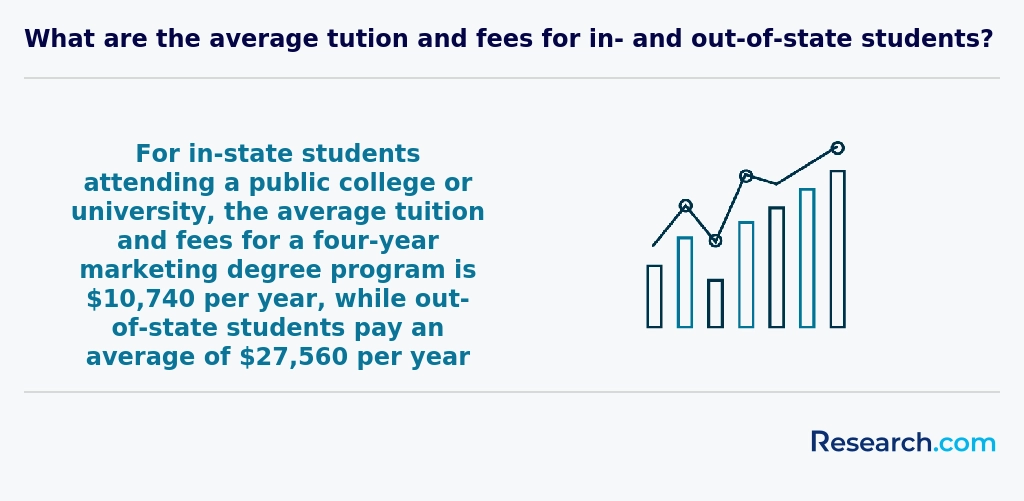
The average cost of a marketing degree in Boston varies notably depending on the type of institution and residency status. Median total expenses, including tuition and fees, are approximately $75,742 for out-of-state students. In-state students typically face a lower median total cost closer to $48,550. For graduates from prominent universities such as Boston University or Northeastern University, totaling these costs often reflects investments around this range, which matches their experience of balancing tuition with living expenses in the city.
Marketing students often find the total expenses for marketing degree Boston studies extend beyond tuition. Boston's higher living costs-housing, meals, and transportation-contribute significantly to the overall financial commitment. Many students share how budgeting for these daily life expenses alongside tuition shaped their view of affordability during the program.
Community colleges offer a notably more budget-friendly path, with tuition typically ranging from $5,000 to $8,000 annually for local students. These institutions appeal to those seeking quality education at a lower price point. For prospective students evaluating their options, exploring the most affordable marketing programs in massachusetts can reveal viable pathways to reduce financial strain while earning a recognized marketing degree in Boston.

Investing in a marketing degree involves balancing tuition costs with potential earnings and career growth. On average, a four-year marketing program in Boston costs around $38,070 per year, including tuition, fees, and living expenses. By comparison, the mean starting salary for marketing graduates in Boston is approximately $78,880, with mid-career professionals earning up to $105,000 annually. When assessing whether the investment makes financial sense, students should calculate the payback period-the time it takes to recoup educational expenses through salary gains. A simple ROI estimate divides total program costs by the difference between graduate and baseline salaries. For example, if total costs amount to $152,280 (4 years at $38,070) and a graduate’s annual salary is $78,880 versus a baseline of $40,000, the payback period is roughly 3.3 years. Beyond raw figures, intangible benefits-such as networking opportunities, internships, and access to Boston’s marketing ecosystem-can accelerate career advancement and boost long-term earnings. Prospective students seeking to understand is getting a marketing degree worth it should consider both quantitative metrics and qualitative factors like mentorship and industry connections. To maximize ROI, explore financial aid, scholarships, and work-study programs, and choose specializations aligned with high-demand niches such as digital marketing or market research. Additionally, engaging in internships and co-op placements can shorten the payback period by enhancing employability and negotiation leverage. By thoroughly evaluating both costs and career outcomes, students can make an informed decision that leads to a strong return on their educational investment.
Marketing students in Boston frequently rely on a combination of federal, state, institutional, and private financial aid to manage tuition costs that range from $15,000 to over $50,000 annually. Many turn to federal aid by completing the FAFSA, securing Pell Grants that cover need-based expenses without repayment obligations. Federal student loans also offer lower interest rates and flexible repayment, easing immediate financial pressure.
State aid, especially the MassGrant program, supports Massachusetts residents with several thousand dollars annually, contingent on income and enrollment status. Students at Boston University and Northeastern University often benefit from merit-based institutional scholarships, awarded for academic excellence or leadership within marketing programs.
Graduates have noted local private scholarships-offered by marketing associations and community foundations-as vital for offsetting costs. Work-study roles on campus or in affiliated organizations supplement finances while providing practical marketing experience, making these aid forms especially valuable for engaging students who want to excel without overwhelming debt.
Pursuing a marketing degree is a significant financial commitment, but understanding the return on investment (ROI) can help you make an informed choice. In Boston, the average annual tuition for private institutions is approximately $38,070, while public universities charge between $10,000 and $30,000 in-state. When you compare these figures to average starting salaries-$78,880 for Marketing Assistants and $150,030 for Public Relations Specialists-you can estimate a payback period of just 2–4 years for most graduates. Key factors influencing ROI include: • Total Cost of Attendance: Add tuition, fees, books ($500–$1,500/year), and room and board ($10,000–$15,000/year) to calculate your full investment. • Average Starting Salary: Use Boston’s mean wages to project early-career earnings. For example, a Marketing Assistant’s salary covers one year’s tuition within six months post-graduation. • Salary Growth Trajectory: Mid-career marketers in Boston can earn upwards of $100,000, shortening the breakeven period and boosting lifetime earnings. • Scholarship and Aid Impact: Leveraging grants, merit scholarships, and work-study can reduce net costs by up to 50%. For students seeking even lower cost programs while maintaining quality, explore our Low Cost Marketing Degree Programs Ranking in Missouri to compare tuition and financial aid packages. By analyzing these variables, you can select a program that aligns with your budget and career goals, ensuring that your marketing degree delivers maximum value over time.
To enroll in a marketing degree program in Boston, candidates typically must hold a high school diploma or equivalent, such as a GED, reflecting standard U.S. higher education prerequisites. Many Boston institutions, including well-known universities, require submission of standardized test scores like the SAT or ACT, though some schools now offer test-optional policies. For instance, graduates from marketing programs at Boston-based colleges often recall the importance of a strong GPA and relevant extracurricular activities, which helped their applications stand out.
Foundational coursework in English and mathematics-such as algebra and statistics-is frequently emphasized to prepare students for the analytical and communication demands of marketing studies. Graduate programs, like MBAs with marketing concentrations at Boston universities, generally require a completed undergraduate degree, official transcripts, letters of recommendation, and sometimes GRE or GMAT scores, although these requirements are becoming more flexible.
Applicants who have practical marketing experience or internships often find their portfolios enhance admission prospects, a factor many successful graduates from Boston's competitive programs recognize as critical to their acceptance.
. In addition to traditional academic considerations, prospective students should closely monitor emerging trends that are reshaping the marketing industry in Boston. The rapid evolution of technologies-such as artificial intelligence, data analytics, and influencer marketing-is prompting institutions to integrate innovative practices into their curricula. Programs are now placing greater emphasis on digital transformation, personalized consumer experiences, and strategic use of emerging platforms, ensuring that graduates remain competitive in an ever-changing marketplace. Staying informed about these trends not only helps you choose a program that aligns with future industry demands but also enhances your ability to secure internships and job placements. By leveraging insights from industry partnerships, networking events, and alumni panels, you can gain a clearer picture of potential career trajectories and evolving skill requirements. Additionally, exploring options like most affordable marketing programs in massachusetts can offer a well-rounded perspective on balancing quality education with cost-effective solutions. By considering emerging industry trends as a vital component of your educational and career planning, you'll be better equipped to navigate Boston's competitive marketing landscape and achieve long-term career success.
Marketing degree programs in Boston typically include core courses such as Principles of Marketing, which introduce concepts like market segmentation, branding, and the marketing mix. Graduates from well-known Boston universities often recall how these foundational classes helped them frame real-world campaigns, whether for local startups or campus organizations.
Courses in Consumer Behavior delve into the psychological and social factors behind purchasing decisions, providing students with insights they apply during internships with Boston's thriving tech and healthcare industries. Marketing Research emphasizes quantitative and qualitative methods, equipping students to analyze Boston's diverse markets effectively.
Advertising and Promotion classes are particularly valued by students engaging with Boston's robust media sector, where hands-on projects in creative campaign development mirror actual industry demands. Digital Marketing coursework, covering SEO and social media strategy, empowers students to meet growing employer expectations for online engagement skills.
Many programs also integrate Business Statistics and Marketing Analytics, sharpening data-driven decision-making skills important for Boston's finance sector. Electives such as International Marketing broaden perspectives, reflecting Boston's global business connections.
Marketing degree specializations in Boston typically include Digital Marketing, Market Research and Analytics, Brand Management, and Integrated Marketing Communications. Digital Marketing focuses on SEO, social media advertising, and content creation, aligning well with Boston's booming tech startups. Graduates from local universities appreciate how this specialization equips them to work with cutting-edge digital platforms. Market Research and Analytics trains students to analyze consumer data, a skill highly valued in Boston's data-driven business environment, where marketing analyst roles are expected to grow by 22% through 2030.
Boston marketing degree concentration options also feature Brand Management, teaching skills to build customer loyalty in competitive global markets, especially within pharmaceutical and healthcare sectors prominent in the city. Integrated Marketing Communications prepares students for multi-channel campaign development incorporating advertising and public relations. Many graduates from Boston colleges find that specializing in these areas brings practical experience and confidence to thrive locally while exploring whether is getting a marketing degree worth it.
Choosing the best marketing degree programs Boston offers involves analyzing several critical factors. For instance, graduates from Northeastern University highlight the value of cooperative education, which blends academic courses with real-world marketing internships in Boston's thriving digital and healthcare sectors. Such practical experience enhances employability and industry insight.
Accreditation is another decisive element. Schools like Boston University and Northeastern hold AACSB accreditation, guaranteeing a high standard of curriculum rigor and faculty expertise, a key factor for students prioritizing program credibility. Affordability should also guide your choice; public universities in Massachusetts charge approximately $14,000 annually for in-state students, whereas private institutions exceed $50,000, influencing long-term financial planning.
Prospective students seeking affordable marketing degrees in Boston should review financial aid and scholarship opportunities carefully. For comprehensive cost comparisons, the Low Cost Marketing Degree Programs Ranking in Missouri can serve as a useful benchmark approach despite geographic differences.
A curriculum aligned with specific career goals, such as digital marketing or consumer behavior, increases relevance and satisfaction, as evidenced by many Boston graduates who credit relevant coursework for their post-graduation success. Choosing schools with strong industry connections further boosts networking and job prospects.
Graduates with a marketing degree in Boston find diverse career paths reflecting the city's dynamic economy. One key sector is digital marketing, supported by Boston's vibrant tech scene, where specialists work on social media strategies, SEO, and content creation to boost online engagement. This aligns with national trends showing digital marketing roles growing by approximately 23% between 2021 and 2031.
Brand management is another strong career avenue, with marketing graduates contributing to shaping brand identities for major Boston companies in finance, healthcare, and consumer goods. Boston's marketing managers earn a median salary near $120,000 annually, higher than the national average, which motivates graduates from local colleges to pursue these roles confidently. This demonstrates the robust marketing career opportunities in Boston.
Market research analyst positions also attract graduates, leveraging Boston's emphasis on innovation and university-industry collaborations. Additionally, prospects exist in public relations firms, advertising agencies, and non-profits, requiring extensive communication and campaign planning skills. Many Boston-based marketing students express excitement about such prospects after completing programs at recognized institutions.
Those exploring educational investment can consider the range of costs associated with studying marketing in Boston, but positive outcomes often justify the tuition. Students aiming for accelerated paths often research the best accelerated associates degree online opportunities to complement their Boston-based experience.
The job market for marketing degree holders in Boston is highly favorable, driven by the city's diverse economy and concentration of top firms. Graduates from institutions like Boston University and Northeastern University frequently find themselves well-positioned for roles at biotech leaders, financial firms, and tech companies such as HubSpot. Entry-level salaries range from $55,000 to $65,000, with marketing managers earning a median annual wage near $120,000, reflecting Boston's competitive landscape and living costs. This strong demand reinforces the positive outlook for career advancement.
Boston's marketing career opportunities 2027 are expected to grow by 7%, outpacing national averages, especially in digital marketing, data analytics, and SEO expertise. Graduates emphasize the value of hands-on internships offered by local agencies and startups, which enable practical learning and networking essential for success. Many students enhance their knowledge by exploring college courses for seniors online to complement their classroom experience.
The marketing degree job outlook Boston highlights reflects consistent job openings fueled by Fortune 500 companies combined with innovative startups, creating a dynamic environment for new professionals ready to thrive in a tech-savvy and evolving market.
2027 Best Marketing Degree Programs Ranking in Boston
Investing in your education is a significant decision that can shape your future, and the Research.com team understands the importance of making informed choices. To assist prospective students in Boston, we have meticulously crafted the "2027 Best Marketing Degree Programs Ranking in Boston." Our commitment to quality, credibility, and accuracy is reflected in the extensive research and analysis conducted to compile this ranking.
We utilized the following reputable data sources to ensure a comprehensive evaluation of marketing programs:
By exploring this ranking, readers will gain valuable insights into the best marketing degree programs available in Boston, helping them make informed decisions about their educational paths. For more details on our methodology, please visit our Research.com methodology page.


Frequently Asked Questions About marketing
Marketing degree students in Boston can enhance their learning experience by actively engaging with the city's vibrant business environment. Boston hosts numerous marketing firms and startups, offering valuable internship opportunities that complement academic theory with real-world practice. According to the Boston Planning & Development Agency, the city's tech and marketing sectors have grown over 10% since 2020, increasing career prospects.
Students should also participate in local networking events and industry conferences, such as those organized by the American Marketing Association's Boston chapter. Additionally, leveraging resources at universities-like career services and marketing clubs-can provide competitive advantages.
Taking advantage of Boston's rich academic collaborations and guest lectures from industry leaders further enriches the educational journey.
The marketing field is rapidly evolving, with several emerging niches gaining traction, especially relevant to students pursuing degrees in Boston. One key area is digital marketing, including specialization in data analytics and artificial intelligence, which helps companies tailor campaigns to specific audiences more effectively. According to the Boston Planning & Development Agency, digital advertising expenditures in the region grew by over 12% annually between 2020 and 2023.
Another growing niche involves sustainability marketing, reflecting increasing consumer demand for environmentally responsible brands. Boston businesses are adapting by integrating sustainable practices into their marketing strategies.
Lastly, experiential marketing, which focuses on creating immersive customer experiences, is becoming popular among Boston-based companies wanting to deepen brand engagement in competitive urban markets.
After completing a marketing degree in Boston, preparing for the job market involves strategic planning and skill development. Graduates should focus on building a strong professional network by attending local industry events, such as those hosted by the American Marketing Association Boston Chapter. Research from the Boston Planning & Development Agency highlights that marketing roles in Greater Boston are expected to grow by about 5% through 2028, emphasizing the importance of staying competitive.
Internships and cooperative education experiences are highly valued by employers in this region. Additionally, gaining proficiency in digital marketing tools and analytics platforms popular in Boston's tech-driven market can boost employability. According to the Bureau of Labor Statistics, marketing managers in Massachusetts earn a median annual wage above the national average, indicating opportunities for well-prepared candidates.
Employers in Boston highly value marketing graduates who demonstrate strong analytical skills. According to the Boston Business Journal, there is increasing demand for professionals adept at interpreting data to drive marketing strategies. Graduates proficient in digital marketing tools, such as SEO and social media management, also stand out in this competitive market.
Communication skills remain crucial, as marketing roles require clear messaging across various platforms. Creativity and adaptability are equally important to address the fast-changing trends in Boston's vibrant business environment, which includes numerous startups and established companies.
Additionally, knowledge of local consumer behavior enhances a candidate's appeal. Networking abilities and experience with project management software frequently appear in job listings from leading employers in the region.
Finding internships in Boston relevant to a marketing degree involves several strategic steps. First, students should leverage university career centers, which often partner with local businesses and provide access to exclusive internship listings. Boston's strong marketing sector includes firms spanning digital marketing agencies, media companies, and startups.
Platforms such as Handshake and LinkedIn are essential for discovering opportunities and networking with industry professionals in Boston's marketing community. Additionally, attending marketing events or local networking meetups can increase connections.
According to the Greater Boston Chamber of Commerce, over 15,000 marketing jobs are available annually in the area, highlighting a demand for interns.
In Boston, a marketing degree significantly enhances career mobility and advancement due to the city's robust economy and diverse business landscape. According to the U.S. Bureau of Labor Statistics, marketing managers in the Boston metropolitan area earn a median annual wage 15% higher than the national average. This reflects strong demand for marketing expertise in finance, technology, and healthcare sectors prevalent in the region.
Graduates with marketing degrees benefit from networking opportunities with local firms and industry events, which employers highly value. Additionally, many Boston universities offer cooperative education programs that integrate work experience directly into academic study, improving employability.
The marketing field in Boston is competitive but rewarding, with a marketing degree often being a prerequisite for leadership roles. Data from the Greater Boston Chamber of Commerce highlights that professionals with formal marketing education are more likely to receive promotions and salary increases within five years of graduation.
Studying for a marketing degree in Boston offers a strong foundation for interdisciplinary roles by combining marketing principles with practical skills in data analysis, communication, and technology. Many Boston universities emphasize collaboration between departments, allowing students to engage with fields like computer science, psychology, and business management.
The city's vibrant business environment, hosting major firms and innovative startups, provides students with real-world experiences through internships and projects, enhancing cross-disciplinary problem-solving abilities. According to the Boston Business Journal, nearly 40% of marketing jobs in Boston require skills overlapping with data analytics or digital technology, highlighting the interdisciplinary nature of the field.
Furthermore, Boston's educational institutions often integrate emerging tools such as AI-driven marketing platforms, ensuring graduates are prepared to work fluently across traditional and technical domains.
Choosing between a thesis and a non-thesis marketing degree program in Boston depends on your career goals and learning preferences. Thesis programs typically require original research, appealing to those interested in pursuing doctoral studies or research-intensive roles. Many Boston universities, such as Boston University and Northeastern, offer these options aligned with academic careers. Non-thesis programs emphasize practical skills and internships, suitable for professionals targeting immediate industry employment in Boston's dynamic marketing scene, ranked among the top 20 U.S. metro areas for marketing jobs by the U.S. Bureau of Labor Statistics in 2023.
Thesis tracks can be more time-consuming, with students often taking 1-2 additional semesters to complete research and writing. They provide experience in data analysis and strategic thinking, valuable for consulting or analytical marketing roles. Non-thesis options allow for more coursework or real-world projects, supporting faster completion and hands-on experience valued by Boston's corporate employers, including firms in finance, technology, and healthcare sectors.
Students based in Boston who want to study marketing abroad have several pathways through partnerships and exchange programs offered by local universities. Many Boston institutions, such as Boston University and Northeastern University, maintain agreements with European and Asian universities allowing students to spend a semester or year overseas while earning credits.
These programs often focus on global marketing strategies, intercultural communication, and international business. According to NAFSA: Association of International Educators, nearly 40% of Boston college students participate in study-abroad programs, highlighting strong institutional support.
Additionally, marketing students can explore short-term summer programs abroad designed to provide intensive training in emerging markets. Boston-based students benefit from extensive resources to prepare for and fund these opportunities, including scholarships targeted at study-abroad participants in business disciplines.
Boston offers numerous part-time job opportunities that complement a marketing degree. Many students find value in roles such as social media coordinator, marketing assistant, or brand ambassador. These positions provide practical experience with digital marketing tools and campaign management, skills highly sought by employers.
Boston's vibrant startup scene and established companies alike often seek marketing interns or freelancers. According to the Boston Planning & Development Agency, the city's tech and marketing sectors grew by 5% annually, increasing job availability.
Retail and event promotion roles also allow students to develop communication and customer engagement skills critical to marketing success.
Marketing students in Boston benefit from numerous networking opportunities due to the city's strong business and academic environment. Local universities like Boston University, Northeastern University, and Boston College regularly host career fairs, workshops, and guest speaker events that connect students with industry professionals.
Boston's position as a hub for marketing, advertising, and technology companies means students can tap into internships and mentorship programs easily. Organizations such as the American Marketing Association (AMA) Boston chapter offer events that allow students to meet marketing executives and build valuable relationships.
Additionally, Boston hosts marketing conferences and meetups frequently, giving students the chance to engage with trends and network beyond the campus. According to the Bureau of Labor Statistics, marketing roles in Boston are growing by over 6% annually, increasing opportunities for graduates to leverage these networks professionally.
Alumni networks play a crucial role for marketing degree students in Boston, offering access to valuable professional connections. Graduates from Boston universities, such as Boston University and Northeastern, often maintain active networks that help current students gain internships and job opportunities in the city's competitive marketing sector.
According to the Boston Business Journal, alumni connections increase the chances of securing positions at top local firms by up to 40%. These networks often provide mentorship, industry insights, and invitations to exclusive events, helping students understand current marketing trends.
Strong alumni engagement also supports collaboration with local businesses, fostering real-world experience. For students, leveraging alumni relationships can be a key asset in building a successful marketing career in Boston's dynamic job market.
Customizing a marketing degree program in Boston enables students to align their education with specific career ambitions. Many Boston universities offer flexible curricula that allow selection of electives in areas like digital marketing, data analytics, or brand management. Students can also pursue certificates or minors in complementary fields such as entrepreneurship or communications.
Boston's strong business environment means internships and cooperative education programs with local companies are commonly available, providing practical experience tailored to desired industries. According to the Boston Business Journal, nearly 70% of marketing graduates find employment in tech, healthcare, or finance sectors, reflecting local demand trends.
Additionally, networking opportunities and local workshops help students build professional skills and industry connections, further shaping their career path.
Marketing students in Boston face several distinct challenges during their studies. One key issue is the high cost of living in the city, which can strain budgets and limit access to internships or part-time work that provide essential real-world experience.
Additionally, Boston's competitive academic environment demands strong time management and networking skills. According to the Boston Business Journal, over 60% of marketing students seek internships annually, making practical placement both crucial and highly competitive.
Finally, staying updated with rapidly changing digital marketing trends and tools remains a constant pressure, requiring students to balance coursework with ongoing skill development.
With a marketing degree, Boston students and graduates can enhance their credentials by pursuing professional certifications that bolster industry credibility. Popular certifications include the American Marketing Association's Professional Certified Marketer (PCM), recognized nationwide for demonstrating expertise in marketing strategy and management.
Another valuable option is the HubSpot Content Marketing Certification, focusing on inbound marketing techniques widely used in Boston's growing tech and startup economy. Additionally, the Google Analytics Individual Qualification (IQ) is beneficial for those interested in data-driven marketing roles, especially as Boston companies increasingly prioritize digital analytics.
These certifications can improve job prospects and salary potential, with many local employers valuing such credentials in competitive marketing environments. According to the Boston Business Journal, marketing certification holders can see salary increases averaging 10 to 15 percent.
When applying for a marketing program in Boston, it is important to craft a clear, focused application that highlights your relevant skills and experiences. Start by researching the specific program's requirements, as many Boston universities look for strong communication skills, creativity, and analytical thinking. According to the Boston Business Journal, nearly 70% of marketing roles in the city demand proficiency in digital marketing tools and data analysis. Including internships or projects that demonstrate these abilities will strengthen your application.
Ensure your personal statement connects your goals with the unique opportunities Boston offers, such as networking in its vibrant marketing industry. Additionally, maintain a polished resume and secure strong recommendation letters from professionals familiar with your work in marketing-related fields.
The global outlook on a marketing career emphasizes adaptability and cultural awareness. As businesses increasingly operate across borders, marketers must understand diverse consumer behaviors and international market trends. In the U.S., and specifically in Boston, marketing professionals benefit from access to global companies headquartered in the region, such as HubSpot and Wayfair, which foster international marketing strategies.
According to the U.S. Bureau of Labor Statistics, marketing specialist jobs are projected to grow 10% from 2022 to 2032, reflecting global demand. Boston's strong educational institutions support this need by offering programs that incorporate global case studies and digital marketing tools used worldwide. This international approach prepares graduates to compete in a globalized marketplace effectively.
Boston offers numerous opportunities for marketing students to gain practical experience while studying. Many universities collaborate with local businesses, enabling students to participate in real-world projects and internships. For example, internships in Boston's thriving marketing industry can provide hands-on experience managing campaigns or analyzing consumer data.
Students can also engage with Boston's vibrant startup ecosystem, which is known for digital marketing innovation. According to the Boston Planning & Development Agency, over 10,000 marketing and advertising jobs were in Greater Boston as of 2023, reflecting strong industry demand.
Additionally, students can join marketing clubs or participate in case competitions to build skills and networks before graduation.
Choosing the right concentration within a marketing degree program in Boston involves aligning your interests with industry demands. Boston's diverse economy, featuring strong sectors like technology, finance, and healthcare, influences marketing specialization opportunities.
Popular concentrations include digital marketing, brand management, and market research. According to the Boston Business Journal (2023), employers in Boston increasingly seek candidates skilled in data analytics and digital campaigns. Exploring course offerings and faculty expertise at local universities can help identify strong programs in these areas.
Internship availability in Boston's vibrant business community also guides concentration choices by offering hands-on experience in specific marketing fields.
- 2027 Best Marketing Degree Programs Ranking in Providence
- 2027 Best Marketing Degree Programs Ranking in Manchester
- 2027 Best Marketing Degree Programs Ranking in Springfield
- 2027 Best Marketing Degree Programs Ranking in Fairfield
- 2027 Best Marketing Degree Programs Ranking in New York
- 2027 Best Marketing Degree Programs Ranking in Jersey City
- 2027 Best Marketing Degree Programs Ranking in Syracuse
- 2027 Best Marketing Degree Programs Ranking in Philadelphia
- 2027 Best Marketing Degree Programs Ranking in Rochester
- 2027 Best Marketing Degree Programs Ranking in Washington
See What Experts Have To Say About Studying Marketing
Read our interview with Marketing experts

John R. Meindl
Marketing Expert
Adjunct Assistant Professor of Marketing
Hofstra University

Sonya A. Grier, Ph.D.
Marketing Expert
Professor, Department of Marketing
American University

- Make the most of your digital marketing https://www.ccdaily.com/2022/01/make-the-most-of-your-digital-marketing/
- What Careers Can You Expect with a Marketing Degree https://www.global-business-school.org/content-type/blog/what-careers-can-expect-marketing-degree/
- 12 Major Marketing Challenges and How to Address Them | NetSuite https://www.netsuite.com/portal/resource/articles/erp/marketing-challenges.shtml
- BCom Management Marketing - South Africa | Boston City Campus https://www.boston.ac.za/business-administration-service/bcom-management-marketing-degree/
- Tips for Marketing Students - Impact Marketing https://impactmt.com/tips-for-marketing-students/
- Best Marketing Certifications for Your Marketing Career https://www.business.com/articles/guide-to-marketing-certifications/
- Why study marketing? Discover 7 compelling reasons https://isc.strath.ac.uk/blog/why-study-marketing
- Marketing https://www.emmanuel.edu/academics/academic-study/schools/school-business-management/undergraduate-programs/business/marketing
- The guide to marketing and marketing jobs: Everything I wish I had known when I started | The Marketing Meetup https://themarketingmeetup.com/blog/the-guide-to-marketing/
- How to use growth marketing in an alumni network context? - AlumnForce https://www.alumnforce.com/en/how-to-use-growth-marketing-in-an-alumni-network-context/