2027 Best Marketing Degree Programs Ranking in Washington

Co-Founder and Chief Data Scientist
Choosing the right marketing degree program can be a crucial step toward a rewarding career. If you're a student in Washington, this article offers valuable insights to guide your decision.
It features the 2027 Best Marketing Degree Programs Ranking in Washington, developed by the Research.com team of data scientists. This ranking helps you identify programs that combine quality education and real-world relevance.
Reading this article will empower you to make an informed choice and take a confident step toward a bright future in marketing.
Key benefits of getting marketing degree in Washington
- Marketing degree graduates in Washington can earn competitive salaries, such as $83,190 annually for roles like Marketing Assistant, Media Planner, and Digital Marketing Specialist, and up to $159,420 for Public Relations Specialists.
- Graduates from universities in Washington often find diverse career paths including sales, digital marketing, PR, and media planning, offering exciting opportunities to grow and thrive in various dynamic industries.
- Completing a marketing degree online from a Washington college allows flexibility and balance with personal commitments, while providing the skills needed to enter the workforce confidently and successfully.
- 2027 Best Marketing Degree Programs Ranking in Washington
- What can I expect from marketing degree in Washington?
- Where can I work with marketing degree in Washington?
What can I expect from marketing degree in Washington?
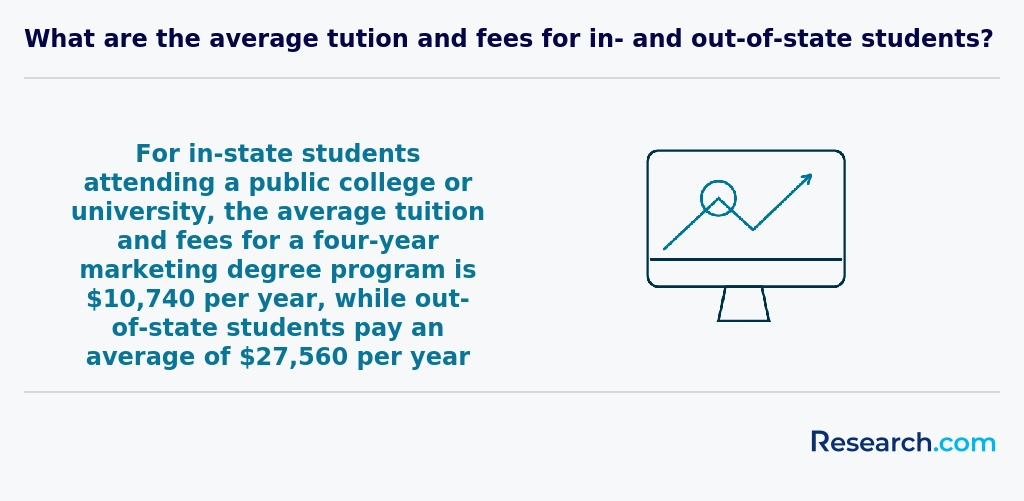
Expecting the average cost of a marketing degree in Washington to be straightforward can be misleading. Graduates from universities like the University of Washington or Seattle University have found the financial reality varies widely depending on public versus private enrollment and their personal paths through financial aid. For instance, public institutions often hover around $10,000 to $15,000 per year for in-state students, while private colleges may push beyond $30,000 annually. Yet, what many students discover is that scholarships, work-study opportunities, and internships across Seattle's vibrant tech and business sectors significantly ease the financial burden.
One graduate reflected on balancing a digital marketing internship alongside studies, which not only provided practical experience but also substantial income support, making tuition manageable. Another spoke of how targeting certificate programs alongside a degree minimized costs while enhancing career readiness. These real-life decisions highlight that the "average cost" is less about a single figure and more about strategic navigation through Washington's educational and economic landscape.
Where can I work with marketing degree in Washington?
Graduates with marketing degrees from institutions like the University of Washington or Seattle University quickly realize the wealth of opportunities available in Washington's unique economy. Imagine landing your first role at Amazon or a cutting-edge startup, where your skills in digital marketing and data analytics directly influence multi-million dollar campaigns. This reality pushes beyond traditional notions of marketing as just advertising-it's about shaping customer experiences in some of the world's most innovative companies.
Others find themselves navigating creative leadership roles at regional giants like Starbucks or Nordstrom, crafting campaigns that resonate deeply with consumer values. The appeal of marketing here expands into sectors like healthcare, where graduates contribute to meaningful community outreach and patient engagement strategies with organizations such as Seattle Cancer Care Alliance.
More than just job placements, graduates share how internships embedded in Washington's thriving marketing ecosystem sharpened their skills and boosted confidence, making them competitive candidates in this fast-paced job market.
Even public sector roles challenge the typical assumptions around marketing-here, roles in government and nonprofits focus on impactful storytelling to drive social change and public engagement, reflecting a broader, purposeful application of marketing expertise.
Graduates with marketing degrees from Washington's top programs, such as the University of Washington or Seattle University, often find themselves pleasantly surprised by their earning potential. Many start as marketing assistants, earning a mean annual wage of about $83,190, which is higher than what conventional wisdom might expect for entry-level roles. Those who dive into specialized positions like digital marketing or media planning encounter similar salary averages, around $83,190, reflecting the strong demand for tech-savvy marketers in the region.
Meanwhile, graduates who pursue roles in public relations quickly realize the financial rewards are substantial, with mean wages reaching $159,420 annually-figures that reflect the high-stakes nature of PR in competitive urban markets. Even sales associates, often stepping stones in marketing careers, earn a respectable mean salary of $53,280, illustrating solid entry points within Washington's active commercial environment.
These numbers challenge the outdated notion that marketing degrees in Washington lead only to modest pay. Real-world experiences from recent grads show that leveraging specialized skills and industry connections in Seattle or Bellevue can unlock unexpectedly lucrative opportunities, fueling ambition and career growth.
- In-state tuition for a bachelor's degree in marketing at Washington public universities ranges from $23,000 to $30,000 per year, while private colleges charge over $40,000 annually.
- Entry-level marketing graduates in Washington typically earn between $50,000 and $55,000 per year.
- Mid-career marketing professionals usually make between $70,000 and $90,000 annually.
- Marketing jobs in Washington are expected to grow faster than the national average, especially in digital marketing, social media, and market research.
- Major companies like Amazon, Microsoft, and Starbucks drive strong demand for marketing expertise within the state.
- Internships and cooperative education programs are widely available, offering practical experience and industry connections.
Four years is often touted as the magic number to earn a marketing degree in Washington, especially for students enrolled full-time at institutions like the University of Washington or Washington State University. Yet, this timeline can feel more like a starting point than a guarantee. Graduates frequently share how balancing part-time work, internships, and family commitments stretched their journey beyond the traditional four years, making the standard timeline more flexible than fixed.
Community college students pursuing associate degrees typically complete their studies in about two years, but when transferring to a four-year university, credit transfer policies can add unexpected months to their path. Many students at Seattle colleges found themselves recalibrating their schedules around such credit nuances, experiencing a blend of anticipation and occasional frustration.
For those advancing to master's programs or MBAs with marketing focuses in Washington, the commitment can extend one to two more years, though part-time and accelerated options offer hopeful alternatives. These journeys underscore how time to degree completion is not just a number-it's deeply personal, shaped by choices and circumstances unique to each student's Washington experience.
Choosing between online and on-campus marketing degrees in Washington often feels like weighing flexibility against immersion. Graduates from the University of Washington recall the vibrant energy of in-person classes, where brainstorming sessions and networking happen organically in Seattle's tech-driven environment. The immediate access to internships and career fairs connected them deeply to the local marketing scene.
On the other hand, many online students appreciate the freedom to juggle coursework alongside full-time jobs or family commitments. At institutions offering both formats, such as Western Washington University, graduates highlight how virtual lectures and interactive platforms skillfully replicate classroom dynamics while allowing them to learn at their own pace. For them, studying marketing online isn't just convenient-it's empowering.
Cost perceptions also challenge assumptions: while some expect online degrees to be cheaper, Washington's top programs often maintain similar tuition rates regardless of format, emphasizing quality and accreditation. Ultimately, the difference is less about better or worse and more about discovering which path aligns with your personal and professional rhythm in Washington's bustling marketing landscape.
Evaluating the return on investment (ROI) of a marketing degree is critical for making an informed decision. In Washington, DC, where tuition and living costs can be higher than the national average, understanding how quickly you recoup your investment can guide both program choice and financial planning. On average, graduates see a salary increase of 30–40% within three years of earning their degree, translating to an annual boost of $20,000–$30,000 compared to pre-degree earnings. Key factors influencing ROI:
- Tuition vs. Starting Salary: With private institutions charging around $38,070 per year and public universities closer to $15,000 in‐state, compare these figures against entry-level roles that start at $78,880.
- Payback Period: Assuming full-time enrollment and no additional aid, many students recover their total cost within four to five years through incremental salary gains and career progression.
- Long-Term Growth: Moving from a Marketing Assistant role ($78,880) to a Public Relations Specialist ($150,030) can more than double your initial salary, shortening the payback period substantially if you leverage internships and networking. Choosing the right institution also affects ROI. Enrolling in a top-ranked marketing school can yield stronger industry connections and higher starting offers. Additionally, securing scholarships or grants can reduce upfront expenses and shrink the payback window. By factoring in average salaries, tuition costs, and career trajectories, you’ll be better equipped to select a program that not only ignites your passion but also maximizes your financial return.
The average cost of a marketing degree in Washington reveals a nuanced financial landscape studded with choices that go beyond sticker price. While the median in-state total cost settles around $67,710, the experiences of graduates at public universities like the University of Washington provide a more textured story. Many recall the initial financial pressure but also emphasize the value of in-state tuition, which for undergraduates was about $11,745 annually as of 2023-2024. Out-of-state students face a steeper climb, with total costs often exceeding $82,500, underscoring how residency status dramatically affects the Washington marketing degree tuition and fees landscape.
Those who pursued marketing at private colleges in Washington frequently mention the challenge of tuition fees ranging between $30,000 and $50,000 per year but couple that with gratitude for smaller class sizes and the close mentorship that shaped their early careers. Meanwhile, community colleges, with tuition as low as $4,000 to $5,000 annually, offer a more affordable path - a crucial insight shared by alumni who started there and later transferred to four-year institutions.
Students juggling these financial realities often seek strategies to manage expenses beyond tuition, like the typical living costs estimated at $14,000 annually. Many lean on scholarships and aid, encouraging prospective students to consult resources such as the National Center for Education Statistics and the Washington Student Achievement Council. To explore alternatives, consider the most affordable marketing schools in district of columbia as part of broader financial planning when assessing the average cost of marketing degree in Washington.

A key factor often overlooked when selecting a marketing degree program is the quality of campus life and the holistic student experience. Beyond rigorous coursework and industry connections, the vibrant environment and available resources at each institution can significantly impact your personal development and future career success. In Washington, DC, many universities foster a close-knit community through student organizations, career counseling, leadership workshops, and hands-on project opportunities that complement academic learning. Students have expressed that engaging in campus clubs and networking events not only enhances their social life but also builds essential soft skills such as teamwork and communication, which are invaluable in the marketing field. Moreover, many programs offer dedicated facilities like modern media labs, creative spaces, and mentorship centers that connect you with industry professionals. Prospective students should also consider exploring collaborative opportunities with local businesses and community initiatives, which help bridge the gap between theory and real-world practice. For added value, you can review programs recognized for balancing quality education with affordability, as seen in the most affordable marketing schools in district of columbia. Emphasizing campus life and extracurricular support can enhance your overall educational journey, ensuring you graduate not only with academic knowledge but also with a strong, collaborative network and diversified skills ready to tackle the dynamic landscape of marketing.
When pursuing a marketing degree in Washington, financial aid often looks like a mosaic of options rather than one straightforward path. Federal Pell Grants can be a lifeline, offering up to $7,395 to offset tuition-imagine a student at the University of Washington tapping into this to lighten their bill while balancing classes and internships. Beyond federal aid, the Washington College Grant notably shifts the playing field for residents, covering anywhere from 40% to the full cost at institutions like Seattle University, transforming dreams of marketing careers into tangible realities.
Merit scholarships tailored for marketing students add another layer of opportunity. Graduates from the Foster School of Business often recount how their strong GPA and leadership roles earned them scholarships that motivated them to push further. Meanwhile, private scholarships from associations such as the American Marketing Association spark fierce competition but also offer crucial support for those who dare to stand out.
Work-study and employer tuition reimbursement schemes create a practical bridge for adult learners juggling jobs with study plans, making degree pursuit feel both achievable and empowering in Washington's dynamic economy.
Navigating the cost of a marketing degree in Washington, DC can feel daunting, but strategic planning and resourcefulness can significantly reduce your financial burden. First, consider in-state tuition rates at public institutions like the University of the District of Columbia, where Maryland and Virginia reciprocity agreements may lower your costs. Second, explore accelerated transfer pathways from local community colleges-completing core general education requirements at a lower per-credit cost before moving to a four-year program can slash your overall tuition. Third, take advantage of employer tuition assistance programs and work-study placements; many DC-based agencies and nonprofits offer partial or full reimbursement for continuing education, allowing you to gain hands-on experience while funding your degree. Scholarships and grants are another vital piece of the puzzle. Target industry-specific awards such as the American Marketing Association Foundation scholarships or the DC Tuition Assistance Grant (DCTAG) to cover up to $10,000 annually. Additionally, submit applications early for merit-based aid at institutions like George Washington University and American University, where deadlines often align with admissions. Finally, if you’re open to hybrid or fully online programs, consider outside-the-region options that maintain accreditation and quality while offering lower tuition rates; for instance, our Most Affordable Marketing Degree Programs Ranking in Fairfield, CT showcases cost-effective programs combining flexibility with academic rigor. By combining these strategies, you can achieve a top-tier marketing education in Washington, DC without compromising your financial future.
Enrolling in a marketing degree program in Washington often begins with meeting foundational academic standards that can initially feel daunting but ultimately empower you. Graduates from the University of Washington and Seattle University frequently recall that a minimum high school GPA around 2.5 to 3.0 set a clear benchmark to aim for, yet many found that submitting optional SAT or ACT scores gave their application a welcome boost amid competitive pools.
Imagine walking through the halls at Bellevue College, where community college admissions policies are more accessible, allowing many to start with associate degrees in marketing before confidently transferring to four-year institutions. Here, proving mastery in foundational subjects such as English and algebra isn't merely a checkbox but a practical preparation for intense marketing analytics and persuasive communication challenges.
For those eyeing graduate studies, the path at Washington State University illustrates how a bachelor's degree and a solid GPA of 3.0 or higher become non-negotiable credentials. Some students reflected that submitting GRE or GMAT scores was a hurdle, yet waived requirements based on work experience often reassured those balancing careers with education.
This authentic journey highlights how prerequisites at varied Washington institutions don't just restrict entry-they equip students to thrive in vibrant marketing environments, inspiring confidence and personal growth.
Marketing degrees in Washington unfold through courses that blend theory with dynamic real-world applications. At universities like the University of Washington or Seattle University, graduates often recall how a course in Consumer Behavior transformed their understanding by connecting psychological insights directly to crafting campaigns that resonate with Seattle's diverse communities. It's not just about studying marketing concepts but experiencing their impact firsthand.
Core courses such as Marketing Research and Digital Marketing equip students to navigate data-rich environments, reflecting Washington's tech-driven economy where skills in SEO or marketing automation can lead to exhilarating opportunities at local giants like Amazon or emerging startups.
Sales Management and Strategic Marketing Planning anchor students in leadership and forward-thinking tactics, often challenging them to create innovative strategies that anticipate shifting market trends in a fast-paced, competitive environment.
Graduates frequently highlight Marketing Analytics as a pivotal course, enabling them to translate numbers into actionable insights-an invaluable skill in Washington's analytics-heavy job market. These courses together cultivate confident marketers ready to adapt and thrive.
In Washington, marketing degree specializations often extend beyond textbook theories, reflecting the dynamic local economy. Graduates from Seattle-based universities frequently highlight digital marketing as a game changer, where expertise in SEO and social media strategy aligns perfectly with the state's tech-driven business landscape. Others find that concentrations like brand management resonate deeply, especially when they engage with real enterprises in Bellevue or Redmond, mastering customer behavior and competitive positioning firsthand. These practical experiences challenge the traditional view of marketing as purely creative, revealing it as a rigorous, data-informed profession.
Washington marketing degree concentration options also include market research, where students translate vast datasets into actionable insights-a skill highly prized amid the state's increasing reliance on data analytics. Sales management specialization attracts those eager to step into leadership roles across aerospace and manufacturing industries, combining strategic thinking with interpersonal skills. The advertising track, enriched by Washington's vibrant media scene, offers a playground for innovative campaign strategies. Many students discover their passion through hands-on projects at local institutions, and prospective learners can explore these pathways further at a trusted marketing school.
Choosing the best marketing degree in Washington isn't just about picking the school with the highest ranking; it requires immersing yourself in the unique opportunities each program offers. Graduates from Seattle's urban-centered universities often recall how working internships with giants like Amazon or Starbucks transformed their theoretical knowledge into real-world savvy. That practical exposure can be a game-changer when launching your marketing career in Washington's competitive landscape.
Think beyond tuition: while private schools may seem prestigious, many students find that public universities strike a better balance between quality and affordability. For those prioritizing cost, exploring affordable marketing degrees Washington state offers is essential-some programs even incorporate hybrid or online learning to fit diverse schedules without sacrificing rigor.
Reflect on your focus-do you want to dive deep into digital marketing analytics or brand management? Programs accredited by AACSB in Washington provide structured curricula that foster these specializations, producing graduates who feel confident navigating complex marketing challenges. Find stories from alumni who leveraged these programs' connections into rewarding careers, and weigh your choices carefully. For detailed options, check out the Most Affordable Marketing Degree Programs Ranking in Fairfield, CT.

Graduates with a marketing degree in Washington find themselves at a crossroads where traditional roles meet innovative opportunities. Many become marketing managers, commanding impressive salaries in cities like Seattle, where the blend of tech giants and retail chains fuels a dynamic market. Others carve paths as market research analysts, diving deep into consumer behavior-a skill increasingly prized as companies seek to outsmart competition in all industries. For those fueled by creativity and digital savvy, digital marketing specialist roles offer a vibrant arena, reflecting the increasing emphasis businesses place on online presence.
Washington's universities, such as the University of Washington, shape graduates ready to thrive in diverse positions including brand management and product marketing, especially within the state's thriving tech sector. These roles demand strategic thinking, offering graduates the chance to influence product success in a competitive environment. Smaller yet impactful career tracks include public relations and sales, reflecting the versatility of marketing degrees. Reflecting on marketing career opportunities in Washington, many graduates also pursue entrepreneurial ventures, supported by the state's startup culture and resources like the best accelerated online programs for working adults.
The job market for marketing degree graduates in Washington is both promising and competitive, especially in the Seattle metropolitan area where tech giants and retail leaders dominate. Graduates from universities like the University of Washington often share how internships with companies such as Amazon or Nordstrom transform theoretical knowledge into practical skills, boosting their confidence and employability. These experiences reveal that understanding digital marketing trends and consumer data is no longer optional but essential.
While Washington marketing graduate employment outlook shows salaries above the national median, real challenges exist in standing out amid a crowded field of skilled peers. Many graduates emphasize the value of hands-on projects and networking facilitated by their programs, which open doors to roles in media agencies or software companies that demand expertise beyond textbooks.
For students weighing their options, the financial commitment of a marketing degree is significant but often justified by the vibrant job opportunities found locally. To explore alternative paths that might align with your goals, consider what is the easiest associate's degree to get? This approach may offer a quicker or complementary route into the marketing world.
2027 Best Marketing Degree Programs Ranking in Washington
Investing in your education is a significant decision that can shape your future, and the Research.com team understands the importance of making informed choices. To assist prospective students, we have meticulously crafted the "2027 Best Marketing Degree Programs Ranking in Washington." Our commitment to quality, credibility, and accuracy is reflected in the extensive research and analysis conducted to compile this ranking.
We utilized the following reputable data sources to ensure a comprehensive evaluation of marketing programs:
By exploring this ranking, readers will gain valuable insights into the best marketing degree programs available in Washington, helping them make informed decisions about their educational paths. For more details on our approach, please visit our Research.com methodology page.


Frequently Asked Questions About marketing
Marketing degree students in Washington can maximize their learning by engaging with the state's vibrant business community through internships and cooperative education programs. Washington hosts a diverse economy with strong tech, retail, and service sectors, offering abundant internship opportunities for hands-on experience. According to the Washington State Employment Security Department, marketing-related roles in the state are projected to grow by 7% through 2031, highlighting the value of practical skills.
Networking with local marketing professionals and joining industry groups like the American Marketing Association's Seattle chapter can deepen understanding of current trends. Additionally, leveraging resources from Washington's universities, including access to marketing analytics tools and guest lectures from industry leaders, supports academic growth. Staying informed on digital marketing innovations is crucial given the industry's rapid evolution in the region.
Emerging niches within the marketing field in Washington reflect broader trends in technology and consumer behavior. One growing area is digital analytics, where professionals use data to optimize campaigns and improve consumer engagement. According to the U.S. Bureau of Labor Statistics, marketing analysts are expected to grow 23% nationally by 2032, with Washington showing strong regional demand.
Another key niche is sustainable or green marketing, driven by Washington's emphasis on environmental responsibility. Companies increasingly seek marketers skilled in promoting eco-friendly products and corporate social responsibility initiatives.
Additionally, the rise of influencer and social media marketing creates opportunities for creative professionals who understand platforms like TikTok and Instagram. Emerging technologies such as AI and augmented reality are also shaping new marketing strategies, making tech-savvy graduates highly valuable in Washington's dynamic economy.
Graduates with marketing degrees in Washington should focus on building practical skills alongside their academic knowledge to succeed in the competitive job market. Internships play a crucial role, offering real-world experience and networking opportunities in key industries like technology and retail.
The Washington state labor market reports steady growth in marketing-related roles, with demand increasing by approximately 7% through 2030 according to the U.S. Bureau of Labor Statistics. This highlights the importance of staying updated on digital marketing trends and analytics tools.
Additionally, pursuing professional certifications such as Google Analytics or HubSpot can enhance a graduate's resume and employer appeal. Joining local marketing associations and attending industry events in Seattle or Bellevue can further support career development and job placement.
Employers in Washington highly value marketing graduates who possess strong digital marketing skills. Proficiency in data analysis, SEO, and social media management ranks among the top requirements, reflecting the region's growing tech industry. According to the Washington State Employment Security Department, firms seek candidates who can leverage analytics tools to drive strategic decisions.
Additionally, communication and creativity remain critical. Marketing professionals must effectively convey brand messages across diverse platforms, adapting quickly to changes in consumer behavior. Employers also emphasize teamwork and problem-solving abilities, essential in collaborative work environments common in Washington.
Understanding local market trends and customer preferences specific to Washington's diverse population is increasingly important for graduates entering the job market. Staying updated with emerging technologies and consumer data protection regulations also gives candidates an edge.
Finding internships in Washington relevant to a marketing degree involves leveraging multiple resources. Start by exploring career centers at local universities such as the University of Washington or Seattle University. These centers often connect students with regional companies in need of marketing interns. Additionally, use online platforms like Handshake and LinkedIn, which frequently list marketing internships specific to the Seattle metropolitan area-a hub for tech and retail businesses.
Networking is also crucial. Joining local chapters of professional organizations like the American Marketing Association can provide valuable contacts and internship opportunities. According to the Washington State Employment Security Department, the marketing sector in Washington is expected to grow by 6% from 2022 to 2032, increasing internship availability in industries like technology, healthcare, and e-commerce.
A marketing degree in Washington significantly enhances career mobility and advancement opportunities. Graduates often access diverse sectors, including technology, retail, and healthcare, which dominate the state's economy. According to the U.S. Bureau of Labor Statistics, Washington saw a 7% growth in marketing-related jobs from 2021 to 2023. This growth supports higher demand for qualified marketers, enabling degree holders to compete for roles such as marketing analyst, brand manager, and digital strategist.
Possessing a marketing degree also equips professionals with skills in data analysis, consumer behavior, and digital tools, vital for promotion to senior roles. Networking opportunities through internships and local industry events further boost advancement potential. Regional reports from the Washington State Employment Security Department highlight that degree holders earn 15-20% more on average than those without formal marketing education.
Studying for a marketing degree in Washington equips students with skills that span multiple disciplines, essential for today's dynamic job market. Many universities incorporate coursework in areas such as business analytics, digital technology, communication, and psychology. This interdisciplinary approach ensures graduates can collaborate effectively across departments.
Washington's growing tech and retail sectors, including companies like Microsoft and Nordstrom, provide practical environments that demand versatile marketing expertise. According to the U.S. Bureau of Labor Statistics, the Seattle metropolitan area employs over 10,000 marketing specialists, highlighting strong local industry connections.
Students often engage in internships and projects that involve data analysis and creative strategy, sharpening both technical and interpersonal abilities.
Choosing between a thesis and a non-thesis marketing degree in Washington depends on your career goals and learning preferences. A thesis program typically suits students interested in research or pursuing a PhD, as it requires original research and a substantial written report. In contrast, non-thesis programs focus on practical skills, often including internships or projects, preparing students for immediate work in Washington's competitive marketing job market.
Washington hosts over 150 marketing-related employers, with a 12% job growth projected through 2030 (BLS). For hands-on experience, a non-thesis path might be more suitable. Meanwhile, a thesis path offers deep academic expertise valued in research roles or academia.
Students based in Washington seeking to study marketing abroad have multiple pathways through U.S. university exchange programs and study-abroad partnerships. Many Washington institutions, such as the University of Washington, offer access to international business and marketing courses via agreements with universities in Europe, Asia, and Australia.
According to the Institute of International Education, over 60% of U.S. study-abroad students participate in business-related programs, including marketing. Washington students can benefit from these trends by choosing programs that align with global marketing practices.
Options typically include semester-long exchanges, internships abroad, and summer programs focusing on international marketing strategies and digital marketing innovations relevant in global markets.
Washington offers diverse part-time jobs that can enhance marketing degree education. Positions such as social media assistant, content creator, and marketing intern are common in cities like Seattle, which hosts many startups and established firms. According to the U.S. Bureau of Labor Statistics, Washington's marketing sector grew 6% faster than the national average in recent years, reflecting growing opportunities.
Students can gain valuable experience by working with local advertising agencies or non-profits, helping develop promotional campaigns or conducting market research. These roles improve skills in analytics, communication, and digital tools, all essential for marketing careers.
Additionally, retail and event coordination jobs help sharpen customer insight and brand engagement knowledge. Such hands-on experience complements academic theory effectively.
Marketing students in Washington benefit from robust networking opportunities due to the state's diverse economy and strong presence of major companies. Many universities, such as the University of Washington and Seattle University, host active marketing clubs and career fairs connecting students with local businesses. According to the Washington State Department of Commerce, sectors like technology and retail are rapidly growing, increasing internships and mentorship offers for marketing students.
Additionally, professional organizations like the American Marketing Association (AMA) have chapters in Washington, offering events and workshops that foster industry connections. These opportunities help students build valuable relationships for internships and future employment.
Alumni networks offer significant benefits to marketing degree students in Washington by providing valuable connections within the local industry. These networks link students to graduates working in key companies across Seattle and the greater Puget Sound area, a region with a growing marketing sector fueled by tech and retail firms.
Studies show that strong alumni engagement can improve job placement rates; according to the Washington Student Achievement Council, networking contributes to nearly 40% of job opportunities for recent graduates in business fields.
Additionally, alumni often participate in mentorship programs, internships, and guest lectures, helping students gain practical insights and stay updated on marketing trends specific to Washington's competitive job market.
Customizing a marketing degree in Washington allows students to align their education with specific career goals. Many Washington universities offer flexible elective options in areas like digital marketing, consumer behavior, and brand management. Pursuing internships within Seattle's vibrant tech and retail sectors can provide practical experience tailored to your interests. Additionally, some programs enable students to focus on emerging fields such as data analytics or social media strategy, leveraging local industry partnerships. According to Washington's Employment Security Department, marketing roles are expected to grow by 9% from 2020 to 2030, highlighting opportunities for specialization. Advising services also help in selecting relevant courses to match individual ambitions.
Marketing students in Washington face several common challenges throughout their education. One notable difficulty is balancing theoretical knowledge with practical skills, as employers increasingly seek graduates with hands-on experience in digital marketing platforms like SEO and social media analytics. According to the National Association of Colleges and Employers, 67% of marketing employers prefer candidates with internship experience, which can be competitive to secure in Washington's growing but saturated job market.
Additionally, the high cost of tuition at many Washington institutions poses financial challenges. The Washington Student Achievement Council reports that public universities in Washington charge an average of $11,745 annually for in-state undergraduate tuition, which can strain students financially.
Finally, keeping pace with rapidly evolving marketing technologies requires constant learning outside the classroom, a task students often find demanding alongside their course load.
With a marketing degree in Washington, graduates can enhance their credentials by pursuing several respected professional certifications. Popular options include the Certified Marketing Professional (CMP) and the Digital Marketing Certified Associate (DMCA), both valued for verifying practical marketing skills.
Another widely recognized certification is the American Marketing Association's Professional Certified Marketer (PCM). This credential offers specialization in areas such as content marketing or sales management, increasing career flexibility.
According to the Washington State Workforce Training and Education Coordinating Board, professionals with certifications often see higher employability and wage potential in marketing roles.
Obtaining these certifications can also provide a competitive edge in Seattle's dynamic digital and tech-driven marketing industry.
Writing a winning application for a marketing program in Washington requires careful attention to several key elements. Start by highlighting your academic achievements, especially in business-related coursework, as many Washington universities value strong foundational knowledge. Admissions committees often appreciate applicants who demonstrate practical experience, so include internships or projects related to marketing.
It is important to tailor your personal statement to the specific program, emphasizing your career goals and how the program aligns with Washington's vibrant marketing industry, which includes sectors like technology and retail. According to the Washington State Employment Security Department, marketing roles are expected to grow 6% through 2028, reflecting healthy job prospects.
Also, secure strong recommendation letters from professionals or professors familiar with your marketing skills and potential. Lastly, meet all standardized test or prerequisite requirements, as these vary across institutions.
Marketing careers in Washington reflect a broader global trend emphasizing digital skills and cultural awareness. According to the U.S. Bureau of Labor Statistics, the marketing sector is expected to grow 10% nationally by 2032, with Washington's tech-driven economy accelerating this demand. Employers increasingly seek marketers who understand international markets, as global business connectivity expands.
Washington-based professionals benefit from proximity to international trade hubs such as Seattle-Tacoma, fostering opportunities in global marketing and e-commerce. Data from the Washington State Employment Security Department highlights a rising need for expertise in cross-cultural communication and digital analytics. Students pursuing marketing degrees here are positioned for careers that blend local innovation with global strategy.
Students pursuing a marketing degree in Washington can gain valuable practical experience through internships offered by numerous local businesses and tech companies. Seattle, home to many marketing firms, provides diverse opportunities where students apply classroom knowledge to real-world campaigns. According to the Washington State Department of Commerce, internships in marketing roles have grown by 12% over the past three years, indicating robust availability.
Many universities in Washington integrate experiential learning through cooperative education programs or practicum courses. These often involve project collaborations with industry partners, enabling students to build portfolios.
Additionally, students can join marketing clubs or participate in regional competitions to develop skills, network, and enhance their resumes.
Choosing the right concentration within a marketing degree program in Washington depends on your career goals and interests. Popular concentrations include digital marketing, market research, advertising, and sales management. Digital marketing is especially relevant in Washington's tech-driven economy, with companies like Microsoft and Amazon leading demand for skills in SEO, social media, and data analytics.
Labor statistics from the U.S. Bureau of Labor Statistics (BLS) show marketing managers in Washington earn a median wage above the national average, reflecting strong local opportunities. Research local job postings to identify in-demand skills and consider concentrations aligned with those trends. Additionally, examine program curricula and internship opportunities offered by universities to ensure practical experience matches your career aspirations.
- 2027 Best Marketing Degree Programs Ranking in Philadelphia
- 2027 Best Marketing Degree Programs Ranking in Pittsburgh
- 2027 Best Marketing Degree Programs Ranking in Jersey City
- 2027 Best Marketing Degree Programs Ranking in New York
- 2027 Best Marketing Degree Programs Ranking in Fairfield
- 2027 Best Marketing Degree Programs Ranking in Erie
- 2027 Best Marketing Degree Programs Ranking in Syracuse
- 2027 Best Marketing Degree Programs Ranking in Rochester
- 2027 Best Marketing Degree Programs Ranking in Cleveland
- 2027 Best Marketing Degree Programs Ranking in Springfield
See What Experts Have To Say About Studying Marketing
Read our interview with Marketing experts

John R. Meindl
Marketing Expert
Adjunct Assistant Professor of Marketing
Hofstra University

Sonya A. Grier, Ph.D.
Marketing Expert
Professor, Department of Marketing
American University

- Marketing Manager Salaries State-by-State https://www.allbusinessschools.com/marketing/salary/
- The Importance of Networking for Students Entering the Marketing Industry https://moviamedia.com/moving-billboard-blog/the-importance-of-networking-for-students-entering-the-marketing-industry/
- Who Can Be an International Marketer? https://www.spencerstuart.com/research-and-insight/who-can-be-an-international-marketer
- Traditional Marketing vs. Digital Marketing: What's the Difference? https://online.champlain.edu/blog/traditional-marketing-vs-digital-marketing
- What Careers Can You Expect with a Marketing Degree https://www.global-business-school.org/content-type/blog/what-careers-can-expect-marketing-degree/
- How to Become an International Marketing Executive https://online.maryville.edu/online-bachelors-degrees/marketing/careers/international-marketing-executive/
- How to Set Your Marketing Career Goals (and Actually Achieve Them) - Odeo Academy https://odeoacademy.com/how-to-set-your-marketing-career-goals-and-actually-achieve-them/
- Niche Digital Marketing Roles: Exploring Specialized Career Paths https://www.cellainc.com/insights/blog/niche-digital-marketing-roles-exploring-specialized-career-paths/
- Marketing Option and Concentration - School of Business https://www.uwb.edu/business/undergraduate/bachelor-of-business-administration/marketing
- What Are Market Niches? Includes Benefits And Expert Insights https://seekmarketingpartners.com/digital-marketing-blog/what-are-market-niches/