2027 Information Technology Degree Payback Report: Which Programs Deliver the Best Cost-to-Salary Return

Co-Founder and Chief Data Scientist
An information technology degree can open doors to cloud, cybersecurity, systems, support, and IT management careers, but the payoff depends heavily on cost and career target. The U. S. Bureau of Labor Statistics reported a May 2024 median annual wage of $105,990 for computer and IT occupations, far above the median for all occupations. That gap makes ROI attractive, but not automatic.
This guide helps prospective students, career changers, and working IT staff compare degree types, tuition levels, salaries, payback timelines, and practical ways to choose a program with stronger cost-to-salary value.
Key Things You Should Know
- The strongest information technology degree payback usually comes from accredited, lower-cost programs that connect students to internships, certifications, and employer-valued technical skills.
- May 2024 BLS data places the median annual wage for computer and IT occupations at $105,990, but entry-level support roles and advanced security, cloud, or management roles can differ widely.
- College Board's 2024 pricing data shows average published tuition and fees of $4,050 at public two-year colleges, $11,610 for in-state public four-year colleges, and $43,350 at private nonprofit four-year colleges, making program cost a major ROI driver.
- What Is the Return on Investment of an Information Technology Degree?
- Which Information Technology Programs Deliver the Best Cost-to-Salary Return?
What Is the Return on Investment of an Information Technology Degree?
The return on investment of an information technology degree is the financial value you receive compared with what you spend and what you give up while studying. In practical terms, IT degree ROI depends on total education cost, time to completion, salary after graduation, career growth, and whether the program helps you qualify for roles that actually require or reward the credential.
For most students, ROI is not simply "salary minus tuition." A better view includes direct costs, indirect costs, and career outcomes. The table below summarizes the main ROI components and why each one matters when comparing IT programs.
| ROI factor | What it includes | Why it matters for IT students |
| Direct program cost | Tuition, fees, books, software, labs, exam fees, and technology requirements | Lower cost can shorten payback, especially for students entering support, systems, or junior analyst roles. |
| Opportunity cost | Income lost or reduced while studying full time or cutting work hours | A working adult in IT may get better ROI from an online or part-time program if it preserves current income. |
| Credential value | Degree level, accreditation, curriculum quality, certifications, and employer recognition | Employers often screen for a bachelor's degree in analyst, security, cloud, and management tracks, but skills evidence still matters. |
| Salary lift | The realistic wage increase tied to the degree, role, location, and experience | ROI improves when the degree moves a student into higher-paying roles rather than only confirming skills they already have. |
| Time to completion | Program length, transfer credits, prior learning credit, and course load | Finishing faster can reduce borrowing and accelerate entry into higher-value roles. |
An information technology degree tends to have better payback when it is tied to a clear career path: help desk to systems administrator, support specialist to cybersecurity analyst, associate degree to bachelor's completion, or technical employee to IT manager. It tends to have weaker payback when students choose a high-cost program without checking employer outcomes, transfer policies, or whether the curriculum reflects current tools such as cloud platforms, endpoint security, scripting, networking, and data systems.
Which Information Technology Programs Deliver the Best Cost-to-Salary Return?
The best cost-to-salary return usually comes from programs that combine three things: low net price, strong technical alignment, and direct career access. A low-cost program with weak labs, limited career services, and outdated coursework may not deliver strong ROI. A higher-cost program can still make sense if it offers paid internships, strong employer recruiting, transfer efficiency, or specialization in high-demand areas such as cybersecurity or cloud infrastructure.
The comparison below ranks common IT education paths by their typical ROI logic rather than by brand name. Use it to identify which type of program best matches your goal, budget, and experience level.
| Program type | Best cost-to-salary use case | ROI strengths | When to be cautious |
| Associate degree in information technology | Entry-level support, networking, desktop administration, and transfer to a bachelor's program | Often lower tuition, shorter timeline, and useful for students who want to start working quickly | May not be enough for analyst, cybersecurity, cloud engineering, or management roles at some employers |
| Bachelor's degree in information technology | Systems analysis, cybersecurity, cloud operations, database work, network administration, and IT project roles | Usually the strongest broad-market credential because many employers use a bachelor's degree as a screening requirement | ROI weakens if the student pays premium tuition without internships, certifications, or relevant projects |
| Online bachelor's completion program | Working adults with transfer credits or prior IT experience | Can preserve income while reducing repeated coursework through transfer credit | Requires discipline, careful accreditation checks, and confirmation that labs are hands-on rather than purely theoretical |
| Master's degree in information technology or cybersecurity | Experienced professionals seeking leadership, architecture, security, analytics, or consulting roles | Can improve ROI when it supports advancement into higher-responsibility positions | Often poor ROI for students with no IT experience who expect the degree alone to replace entry-level experience |
| Certificate plus degree pathway | Students who want faster job readiness while completing a longer credential | Certifications in networking, cloud, security, or systems administration can improve employability before graduation | Certifications should support the target role; random credentials add cost without clear payoff |
For many students, the highest-value route is not the most prestigious or expensive option. It is an accredited public, nonprofit, or employer-connected program that allows transfer credits, offers relevant labs, and supports students in building a portfolio of projects, internships, and certifications before graduation.
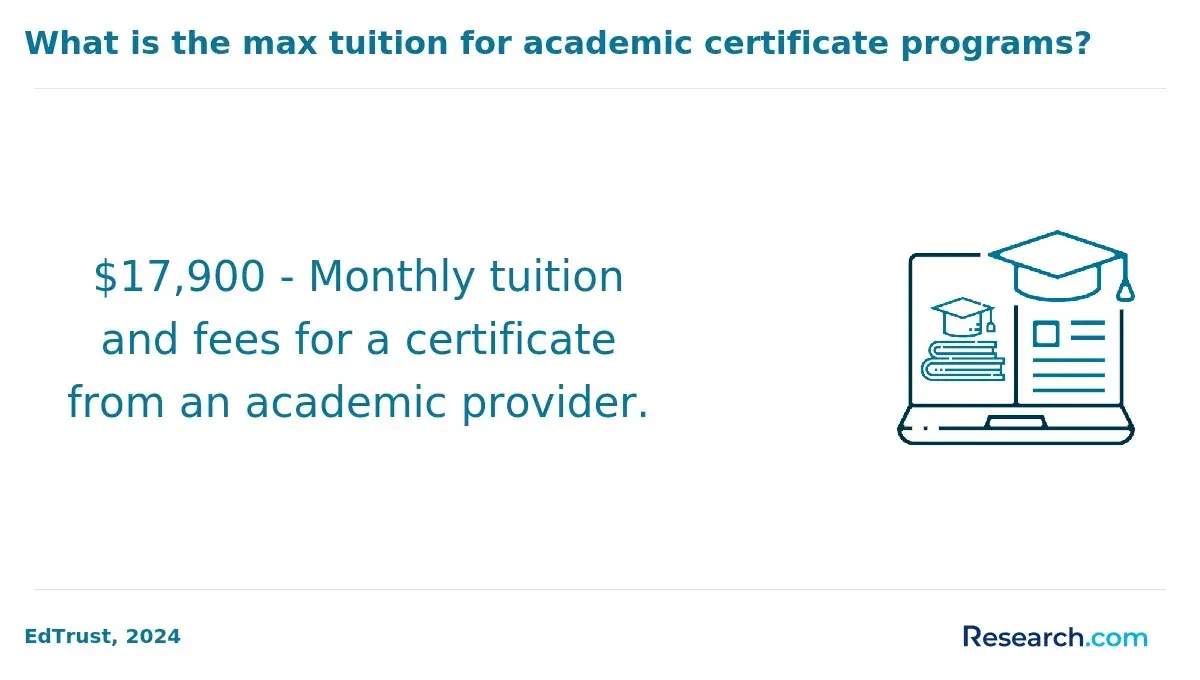
Tuition has an outsized effect on IT degree payback because many entry-level technology roles reward skills and verified competence as much as institutional prestige. This means two students can earn similar starting salaries while carrying very different education costs. The student with the lower net price usually reaches break-even sooner.
College Board's 2024 pricing data shows how large the cost gap can be before grants, scholarships, or living expenses. These published tuition and fee averages are not IT-specific, but they help illustrate why program type and institution choice matter when estimating payback.
| Institution type | Average published tuition and fees | ROI implication |
| Public two-year college | $4,050 | Often a strong starting point for students pursuing support, networking, or transfer pathways. |
| Public four-year college, in-state | $11,610 | Can deliver strong bachelor's-level ROI when the program has current labs and employer connections. |
| Private nonprofit four-year college | $43,350 | May require substantial scholarships or unusually strong outcomes to match lower-cost ROI options. |
Tuition is only one part of cost. Students should also check technology fees, cloud lab subscriptions, certification exam costs, commuting, housing, and whether they must buy specific hardware. For online programs, lower travel costs may help, but students should confirm that remote labs, tutoring, career services, and proctored exams are included rather than billed separately.
Cost comparison is also useful when weighing IT against other career-focused graduate options. For example, students evaluating business-oriented alternatives can study cost-screening approaches used in resources such as the cheapest online master's in human resources to see how tuition, completion time, and career target should be evaluated together rather than in isolation.
Break-even time is the point at which the added earnings connected to your degree outweigh the cost of earning it. A simple formula is: total degree cost divided by realistic annual salary increase. The challenge is that the "salary increase" varies by student, especially for career changers, current IT workers, and recent high school graduates.
The table below shows a tuition-only illustration using College Board 2024 published tuition and fee averages and the BLS May 2024 wage gap between the median for computer and IT occupations and the median for all occupations. It is not a promise of individual outcomes; it is a way to understand how cost changes the payback math.
| Pathway | Illustrative tuition and fees | Tuition-only payback logic |
| Two years at a public two-year college, then two years at an in-state public four-year college | $31,320 | Lower tuition can shorten payback if the student transfers efficiently and enters an IT role with wage growth. |
| Four years at an in-state public four-year college | $46,440 | Often a balanced ROI route when the student graduates on time and avoids excess borrowing. |
| Four years at a private nonprofit four-year college | $173,400 | Requires stronger grants, scholarships, employer outcomes, or family resources to compete with lower-cost options. |
Real break-even timelines can be longer because students may pay for housing, transportation, books, software, certification exams, and interest on loans. They can also be shorter if the student receives grants, uses employer tuition assistance, transfers credits, works during school, or earns paid internship income.
Payback comparisons are especially important when a student is choosing between IT and a licensed professional field. For instance, someone considering counseling or technology should compare not only tuition but also licensure requirements, supervised experience, and salary timelines using program-cost guides such as affordable online MFT programs.
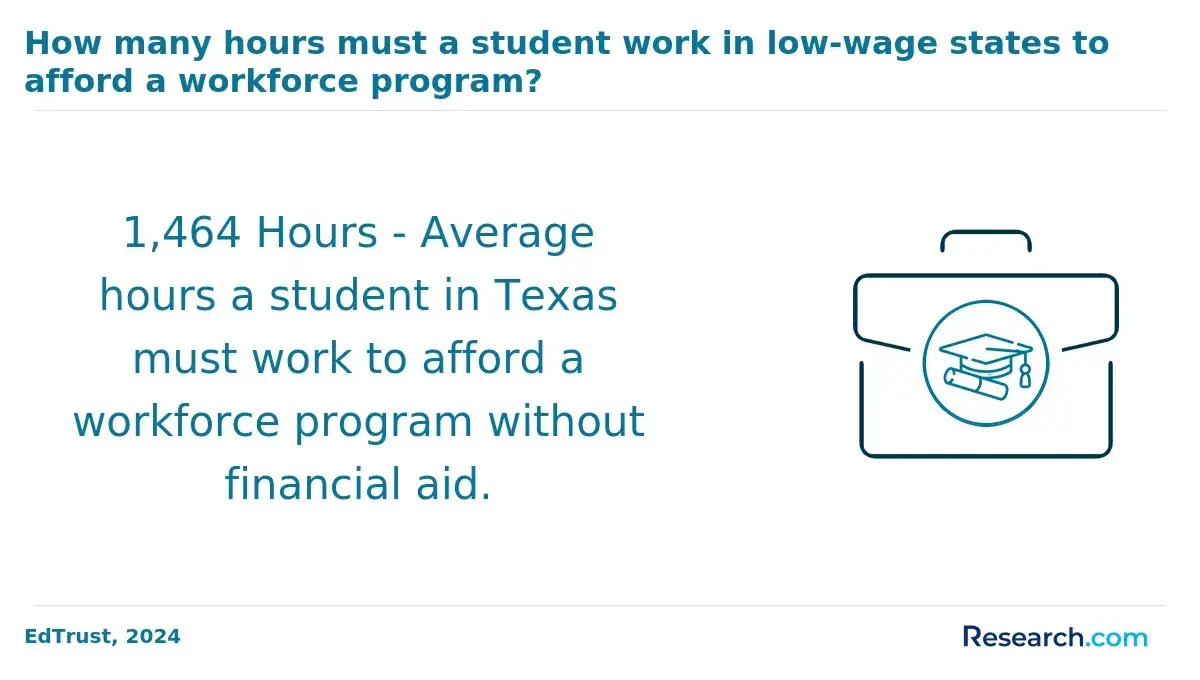
The biggest ROI drivers are not always the ones students notice first. Tuition matters, but so do transfer credit, credential recognition, curriculum currency, work experience, and the ability to graduate without delays. A slightly more expensive program can outperform a cheaper one if it produces stronger job access and prevents wasted credits.
Before enrolling, students should evaluate the factors below because each one can materially change the cost-to-salary return of an IT degree.
- Accreditation and institutional legitimacy: Choose a properly accredited school, and verify whether the IT program has discipline-specific recognition, employer partnerships, or external curriculum validation.
- Transfer credit policy: Ask how many credits will transfer, whether technical credits count toward the major, and whether credits expire.
- Hands-on curriculum: Look for networking labs, cloud environments, cybersecurity exercises, scripting, database work, troubleshooting, and capstone projects.
- Certification alignment: Strong programs often map coursework to respected credentials in networking, security, cloud, systems administration, or project management.
- Career access: Internships, apprenticeships, employer projects, alumni networks, and career coaching can be as important as the course catalog.
- Completion risk: A program with poor advising, limited course availability, or rigid scheduling can increase total cost by delaying graduation.
Students should also watch for common mistakes. The table below pairs frequent ROI red flags with better decision habits.
| Common mistake | Why it hurts ROI | Better approach |
| Choosing a school based only on rankings | Rankings may not reflect net price, transfer efficiency, or IT employer outcomes. | Compare actual cost, curriculum, internships, graduation support, and career placement evidence. |
| Ignoring total cost | Fees, housing, software, and loan interest can change payback substantially. | Request a full cost estimate and calculate net cost after grants and scholarships. |
| Assuming online means lower quality or lower value | Some online programs are strong, while some campus programs are weak; format alone does not determine ROI. | Evaluate labs, faculty access, career services, accreditation, and employer recognition. |
| Waiting until graduation to build experience | IT hiring often favors candidates with projects, internships, labs, and troubleshooting experience. | Build a portfolio, pursue internships, and document technical projects while enrolled. |
| Choosing a specialization too early | A narrow track can limit options if the student has not yet tested different IT roles. | Build core skills first, then specialize in security, cloud, data, networking, or systems. |
Employer demand is one reason information technology degrees can have strong value, but demand is not evenly distributed across every role. The BLS projects computer and IT occupations to grow much faster than the average for all occupations and reports about 356,700 openings each year on average from 2023 to 2033. For students, this means the field has broad opportunity, but role selection and skills alignment still determine individual payback.
Current hiring trends favor candidates who can support secure, cloud-based, data-connected, and automated systems. Employers are also responding to AI adoption, but AI is not eliminating the need for IT talent. Instead, it is changing the skill mix: entry-level workers may be expected to use automation tools, document workflows, monitor systems, secure endpoints, and troubleshoot AI-enabled applications.
Students should treat employer demand as a signal to build marketable skills, not as a guarantee. The highest-value IT degree plans usually include technical depth, applied projects, and proof that the student can solve real business technology problems. In practical terms, a student should graduate with more than a transcript: they should have a resume, portfolio, references, internship experience if possible, and a clear target role.
Students can improve the financial value of an IT degree by managing cost while building evidence of employability. The goal is to graduate with lower debt, stronger skills, and a realistic path into roles that offer wage growth.
Use the following steps before and during enrollment to improve your odds of a stronger cost-to-salary return.
- Start with a target role: Decide whether you are aiming for support, networking, cybersecurity, cloud, systems analysis, database work, or IT management because each path values different skills.
- Compare net price, not sticker price: Ask each school for estimated tuition, fees, grants, scholarships, transfer credits, and expected out-of-pocket cost.
- Verify accreditation: Confirm institutional accreditation and check whether employers, graduate schools, or certification providers recognize the program.
- Maximize transfer credit: Use community college credits, prior learning assessment, military credit, or industry certifications when accepted by the school.
- Choose hands-on coursework: Prioritize programs with labs, capstones, cloud environments, security simulations, scripting, and troubleshooting assignments.
- Add targeted certifications: Choose credentials that match your role goal instead of collecting unrelated certificates.
- Work while learning if feasible: Part-time IT support, campus technology jobs, internships, or apprenticeships can reduce opportunity cost and strengthen your resume.
- Track outcomes: Ask schools for graduation rates, job placement information, internship access, and examples of employers hiring recent IT graduates.
One practical rule is to avoid paying for coursework that does not move you toward a specific job family. If a course sequence does not build technical ability, support certification preparation, or contribute to a portfolio, ask the program how it supports employment outcomes.
An information technology degree often compares favorably with similar fields because it can lead to a wide range of roles without requiring graduate licensure. Still, the best ROI depends on the student's strengths. Someone who enjoys coding theory may prefer computer science, while someone who wants business technology implementation may be better suited to IT or management information systems.
The table below compares IT with related fields from an ROI decision perspective. It focuses on fit, cost-to-salary logic, and risk factors rather than assuming one major is best for everyone.
| Field | Best fit | ROI advantages | ROI cautions |
| Information technology | Students interested in systems, networks, cybersecurity, support, cloud, and business technology operations | Broad career options and strong alignment with employer infrastructure needs | Requires hands-on skills and experience; a degree alone may not be enough for advanced roles |
| Computer science | Students who want software engineering, algorithms, AI systems, or advanced computing theory | Can lead to high-paying software and technical roles | May be more math-intensive and less focused on infrastructure or support operations |
| Cybersecurity | Students drawn to risk, defense, incident response, compliance, and secure systems | Strong demand in many industries and government-related employers | Entry-level security roles can be competitive; networking and systems fundamentals are important |
| Data analytics or information systems | Students who like business decision-making, databases, reporting, and process improvement | Useful across industries and can pair well with IT or business experience | ROI depends on developing practical tools such as SQL, visualization, statistics, and business communication |
| Digital media or photography | Students seeking creative production, visual communication, or freelance-oriented work | Can be valuable when paired with portfolio strength and business skills | Income may be less predictable than many IT tracks, so cost control is especially important |
Students comparing technical and creative pathways should be honest about work style and income variability. For example, an online digital photography degree may suit a portfolio-driven creative career, while IT is usually a better fit for students who want to manage, secure, and support technology systems in organizations.
An information technology degree is worth it when the program is affordable, accredited, career-aligned, and paired with practical experience. It is especially worth considering if you want a broad technology credential, plan to move beyond entry-level support, or need a bachelor's degree to qualify for analyst, security, systems, cloud, or management tracks.
It may not be the best investment if you already have strong IT experience and only need one targeted certification, if the program requires heavy borrowing without clear outcomes, or if the curriculum lacks hands-on labs. Students who mainly want software engineering should compare computer science programs, while students who want creative or human-services careers should compare those fields directly rather than choosing IT only because salaries look attractive.
Use these questions before committing to a program. They help turn the broad "is it worth it?" question into a personal ROI decision.
- What job do I want within one to three years after graduation, and does this program prepare students for that role?
- What is my net cost after grants, scholarships, transfer credits, employer assistance, and fees?
- Will I graduate with hands-on projects, internship experience, certifications, or employer references?
- Can I study part time or online while keeping income, benefits, or current IT experience?
- Does the program publish credible outcomes, and can admissions staff explain where recent graduates work?
- What is my backup plan if I start in support or administration before moving into cybersecurity, cloud, or management?
For students considering longer academic pathways, time matters as much as tuition. If your goal eventually includes teaching, research, executive leadership, or advanced specialization, compare doctoral timelines carefully; resources on 1 year PhD programs online can help illustrate how completion time affects opportunity cost.
The bottom line: an information technology degree can deliver strong payback, but the best returns usually come from students who choose a reasonably priced program, avoid unnecessary debt, build job-ready skills, and connect the degree to a specific career path.
Information technology salaries vary widely because the field includes support, infrastructure, security, software-adjacent, database, cloud, and management roles. A degree can help students qualify for better roles, but salary depends on experience, location, employer, industry, certifications, and the type of work performed.
The table below uses May 2024 BLS median annual wage data for selected computer and IT occupations. These figures are national medians, so they should be treated as benchmarks rather than promises.
| Role or occupational group | May 2024 median annual wage | Degree payoff context |
| Computer support specialists | $61,550 | Often an entry point for associate degree holders, career changers, and students building experience. |
| Network and computer systems administrators | $96,800 | Commonly values hands-on networking, systems, cloud, and security skills alongside a degree. |
| Computer systems analysts | $103,790 | Often rewards a bachelor's degree plus business process, database, and project experience. |
| Information security analysts | $124,910 | Can produce strong ROI for students who combine a degree with security labs, internships, and relevant certifications. |
| Database administrators and architects | $123,100 | May fit students who develop strong SQL, data modeling, cloud database, and governance skills. |
| Computer and information systems managers | $171,200 | Usually requires experience; a degree may support advancement rather than immediate entry. |
The important salary lesson is that IT degrees pay back best when students plan beyond the first job. A help desk role may be the entry point, but the long-term ROI often comes from moving into systems administration, cloud operations, cybersecurity, data infrastructure, systems analysis, or IT leadership.
Other Things You Should Know About Information Technology
A degree is usually better for broad career mobility, bachelor's-level job screening, and long-term advancement. Certifications can be faster and cheaper for specific skills. Many students get the best value by combining an affordable degree with targeted certifications.
Yes, an online IT degree can be respected if it comes from an accredited institution and includes hands-on technical work. Employers typically care more about skills, projects, experience, and school legitimacy than whether every class was taken on campus.
For many students, a low-cost bachelor's degree has the best broad ROI because it supports access to analyst, systems, cybersecurity, cloud, and management-track roles. An associate degree can be high value for entry-level work or transfer, while a master's degree usually pays off best for experienced professionals.
An IT program may be overpriced if it has high tuition, limited transfer credit, few hands-on labs, weak career services, unclear graduate outcomes, or no connection to certifications or employer needs. Always compare net cost against realistic target roles.
- Repaying your student loan https://www.gov.uk/repaying-your-student-loan/what-you-pay
- Student Loan Debt Statistics [2026]: Average + Total Debt https://educationdata.org/student-loan-debt-statistics
- Highest-Paying Tech Majors in 2026 - Programs.com https://programs.com/resources/highest-paying-tech-majors/
- Top Degrees in Demand for the Future: 2026 & Beyond https://skillifysolutions.com/blogs/career-growth/top-degrees-in-demand-for-the-future/
- How does a college degree improve graduates’ employment and earnings potential? - APLU https://www.aplu.org/our-work/4-policy-and-advocacy/publicuvalues/employment-earnings/
- Career earnings by college major - The Hamilton Project https://www.hamiltonproject.org/data/career-earnings-by-college-major/
- Cross-National Student Loan Repayment Comparisons | HESA https://higheredstrategy.com/cross-national-student-loan-repayment-comparisons/
- What graduate salary can I expect in an IT job? https://targetjobs.co.uk/careers-advice/information-technology/what-graduate-salary-can-i-expect-it-job
- Study Information Technology Abroad: Top Colleges and Careers https://www.aeccglobal.com/study-abroad/courses/information-technology
- Cost to Study in USA – Living Cost & Tuition Fees https://www.studies-overseas.com/blogs/cost-to-study-in-usa