2027 Information Technology Degree Unemployment Risk Report: Which Career Paths Offer the Most Stability

Co-Founder and Chief Data Scientist
Choosing an information technology degree path now means weighing salary against job stability, automation exposure, and industry demand. The U. S. Bureau of Labor Statistics reports that computer and information technology occupations had a median annual wage of $105,990 in May 2024 and are projected to produce about 356,700 openings each year from 2023 to 2033. This guide is for students, career changers, and early-career IT professionals who want to identify the most resilient paths, avoid unstable choices, and build a practical plan for long-term employability.
Key Things You Should Know
- Information security analysts, cloud-focused engineers, systems analysts, and database/data infrastructure roles generally show lower unemployment risk because they support essential business operations and have strong projected demand.
- BLS data places computer and information technology occupations at a median annual wage of $105,990 in May 2024, but the most stable path is not always the highest-paying one.
- The best unemployment-risk strategy is to combine a recognized IT degree or equivalent training with hands-on experience, portable technical skills, and certifications tied to cybersecurity, cloud, networking, or enterprise systems.
- Which Information Technology Career Paths Have the Lowest Unemployment Risk?
- Which Industries Offer the Most Stable Employment for Information Technology Graduates?
Which Information Technology Career Paths Have the Lowest Unemployment Risk?
The lowest-risk information technology career paths are usually the ones tied to security, infrastructure, compliance, data reliability, and mission-critical systems. In this report, "unemployment risk" means the likelihood that a role becomes harder to keep or replace because of weak demand, narrow skills, automation pressure, geographic limits, or dependence on volatile employers.
The table below compares common IT career paths using stability factors, salary context, and labor-market signals. Use it to separate roles that are merely popular from roles that are durable across industries.
| Career path | Typical responsibilities | Stability signal | Salary and outlook context | Best fit |
| Information security analyst | Monitor threats, investigate incidents, improve controls, support compliance, and protect systems | Very strong because cyber risk affects nearly every industry | BLS reports a May 2024 median annual wage of $124,910 and 33% projected growth from 2023 to 2033 | Students who like problem-solving, risk analysis, and continuous learning |
| Cloud or systems engineer | Design, maintain, automate, and secure cloud and enterprise infrastructure | Strong because organizations rely on cloud uptime, migration, and cost control | Often overlaps with network, systems, and software roles; salary varies widely by platform and responsibility | Learners who enjoy infrastructure, scripting, automation, and reliability |
| Computer systems analyst | Translate business needs into technical solutions, evaluate systems, and coordinate implementation | Strong because the role connects technology with business operations | BLS reports 11% projected growth from 2023 to 2033 for computer systems analysts | Students who want a blend of technology, communication, and process improvement |
| Database administrator or database architect | Manage data systems, ensure performance, protect data, and design database structures | Moderate to strong because data reliability remains essential | BLS reports 9% projected growth from 2023 to 2033 for database administrators and architects | Learners interested in data quality, SQL, security, and system performance |
| Software developer | Build, test, improve, and maintain applications and services | Strong overall, but more cyclical in startups and consumer tech | BLS reports a May 2024 median annual wage of $133,080 and 17% projected growth from 2023 to 2033 for software developers | Students who can build portfolios and adapt to changing tools |
| Computer support specialist | Troubleshoot user, hardware, software, and network issues | Moderate because entry-level demand is steady but some tasks are automatable | BLS reports 6% projected growth from 2023 to 2033 for computer support specialists | New entrants building experience before moving into networking, cloud, or security |
| Network and computer systems administrator | Maintain networks, servers, accounts, backups, and system access | Moderate because traditional administration is being reshaped by cloud automation | BLS reports slower projected growth than many other IT occupations from 2023 to 2033 | Students who plan to add cloud, security, and automation skills |
The strongest stability profile usually comes from roles that are technical enough to be hard to replace, broad enough to move across industries, and close enough to business operations that employers cannot easily pause the work. Cybersecurity, cloud infrastructure, systems analysis, and data infrastructure meet that standard more consistently than narrow tool-specific jobs.
Education requirements vary by employer. A bachelor's degree in information technology, computer science, cybersecurity, information systems, or a related field is common, but associate degrees, certificates, apprenticeships, military training, and portfolios can also open entry-level doors. For senior architecture, research, or academic leadership roles, some professionals eventually compare advanced options such as 1 year PhD programs online, though most stable IT roles do not require a doctorate.
Which Industries Offer the Most Stable Employment for Information Technology Graduates?
Industry choice can affect unemployment risk as much as job title. A software developer at a speculative consumer startup may face a very different risk profile than a software developer maintaining claims systems for a health insurer or identity systems for a government agency.
The table below ranks industries by employment stability factors for IT graduates. It focuses on the durability of demand rather than prestige or short-term compensation.
| Industry | Why it can be stable for IT graduates | Common IT roles | Main risk to watch |
| Government and public sector | Agencies need secure systems, identity management, data reporting, and infrastructure modernization | Cybersecurity analyst, systems administrator, cloud specialist, database administrator | Hiring can be slow, and some roles require background checks or clearances |
| Healthcare and health insurance | Electronic records, privacy rules, billing systems, telehealth, and cybersecurity create continuing IT needs | Health IT analyst, security analyst, systems analyst, data engineer | Regulatory complexity requires careful documentation and domain knowledge |
| Financial services and insurance | Security, fraud prevention, transaction systems, compliance, and data governance are central to operations | Security engineer, risk systems analyst, cloud engineer, database architect | Some teams are sensitive to market cycles and consolidation |
| Utilities, energy, and critical infrastructure | Operational uptime, industrial control systems, and cyber resilience are essential | OT security analyst, network engineer, systems engineer | Specialized environments can require onsite work and safety knowledge |
| Education and research institutions | Schools and universities need learning platforms, identity systems, networks, and data security | IT support lead, systems administrator, security analyst, data systems specialist | Budgets may be tighter than in private-sector technology firms |
| Technology vendors and startups | They create new products and often pay competitively for specialized skills | Software developer, DevOps engineer, product security engineer, data engineer | Employment can be more cyclical, especially when funding tightens |
Public sector and regulated industries often offer stronger continuity, while high-growth private technology firms may offer faster salary growth and advancement. The trade-off is risk: private-sector roles can be excellent when your skills are in demand, but they may be more exposed to layoffs, product pivots, and investor pressure.
Students comparing IT with healthcare-adjacent people-focused careers should note that clinical fields have separate licensure and training expectations. For example, someone considering behavioral health instead of health IT might review affordable online MFT programs, while an IT student interested in healthcare stability would usually focus on security, data, compliance, or health systems roles.
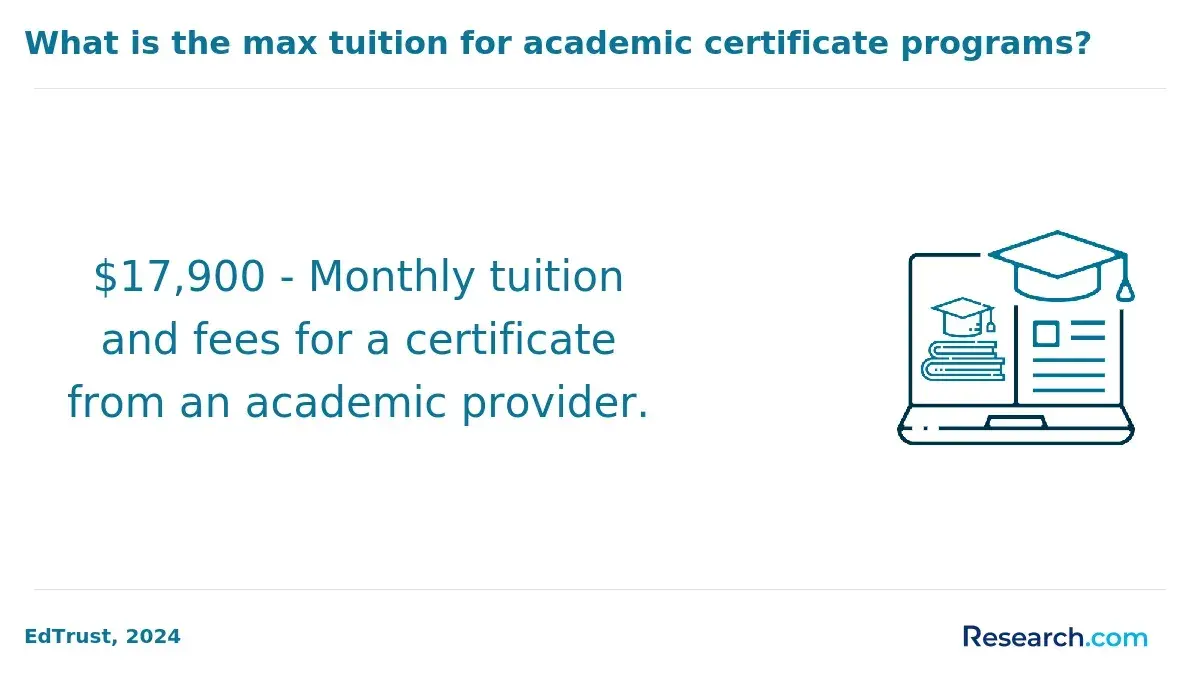
Specialization matters because employers tend to retain workers who solve urgent, expensive, or regulated problems. A general IT degree can be a strong foundation, but the most stable graduates usually add a concentration that makes their skills harder to replace.
The table below compares common IT specializations by stability, automation exposure, and the kind of student they fit best.
| Specialization | Stability level | Why it supports job security | Automation or AI exposure | Good choice if you want |
| Cybersecurity | Very high | Threats, compliance, incident response, and risk management are ongoing needs | AI changes tools but does not remove the need for judgment, investigation, and governance | A role tied to risk, defense, and business continuity |
| Cloud infrastructure | High | Organizations need reliable, secure, and cost-efficient cloud systems | Automation handles routine deployment, but architecture and troubleshooting remain valuable | Hands-on technical work with scalable systems |
| Data engineering and database systems | High | AI, analytics, reporting, and operations depend on reliable data pipelines | AI can assist coding, but data modeling and quality control require context | A bridge between software, databases, and analytics |
| Enterprise systems and business applications | Moderate to high | ERP, CRM, HRIS, and finance platforms are deeply embedded in organizations | Lower risk when paired with business process knowledge | A business-facing technology career |
| Networking | Moderate | Networks remain essential, but traditional roles are shifting toward cloud, security, and automation | Routine administration is more automatable than design and security work | A foundation for security, cloud, or infrastructure engineering |
| General IT support | Moderate | Organizations need user support, but entry-level tasks face pressure from self-service and AI tools | Higher for repetitive troubleshooting | A first step toward specialization |
The most resilient specializations combine technical depth with business relevance. Cybersecurity is strong because failure is costly; cloud infrastructure is strong because downtime is costly; data engineering is strong because poor data undermines reporting, automation, and AI projects.
Students interested in enterprise systems should also consider domain knowledge. For example, HR technology, payroll systems, and people analytics can be more stable when the IT professional understands HR workflows; those comparing the business side of that path may find resources on the cheapest online master's in human resources useful for understanding the nontechnical domain.
Location still matters, even with remote and hybrid IT work. Employers may restrict hiring to certain states because of tax rules, security requirements, client locations, salary bands, or onsite infrastructure needs. For students, that means unemployment risk is partly a regional issue, not just a degree or skill issue.
Large metro areas often provide more employer variety, which lowers risk if one company downsizes. Smaller regions may have fewer openings but can offer stable roles in hospitals, school systems, local government, manufacturers, utilities, banks, and managed service providers.
Before choosing a program or specialization, compare your target location using a practical checklist. The goal is to identify whether your local market supports the role you want or whether you need a remote-work strategy.
- Search current job postings in your target region for the exact role titles you want, such as security analyst, cloud engineer, systems analyst, or database administrator.
- Check whether employers require onsite work, security clearance, industry experience, or specific platforms.
- Compare salary ranges with local cost of living instead of looking only at national medians.
- Look for employer diversity across healthcare, government, finance, education, manufacturing, and technology vendors.
- Ask whether internships, co-ops, labs, or capstone projects are connected to local employers.
Students comparing IT with creative digital careers should be especially careful about location and portfolio demand. A program such as an online digital photography degree may prepare students for a different labor market, where freelance work, client geography, and portfolio visibility matter more than enterprise IT hiring pipelines.
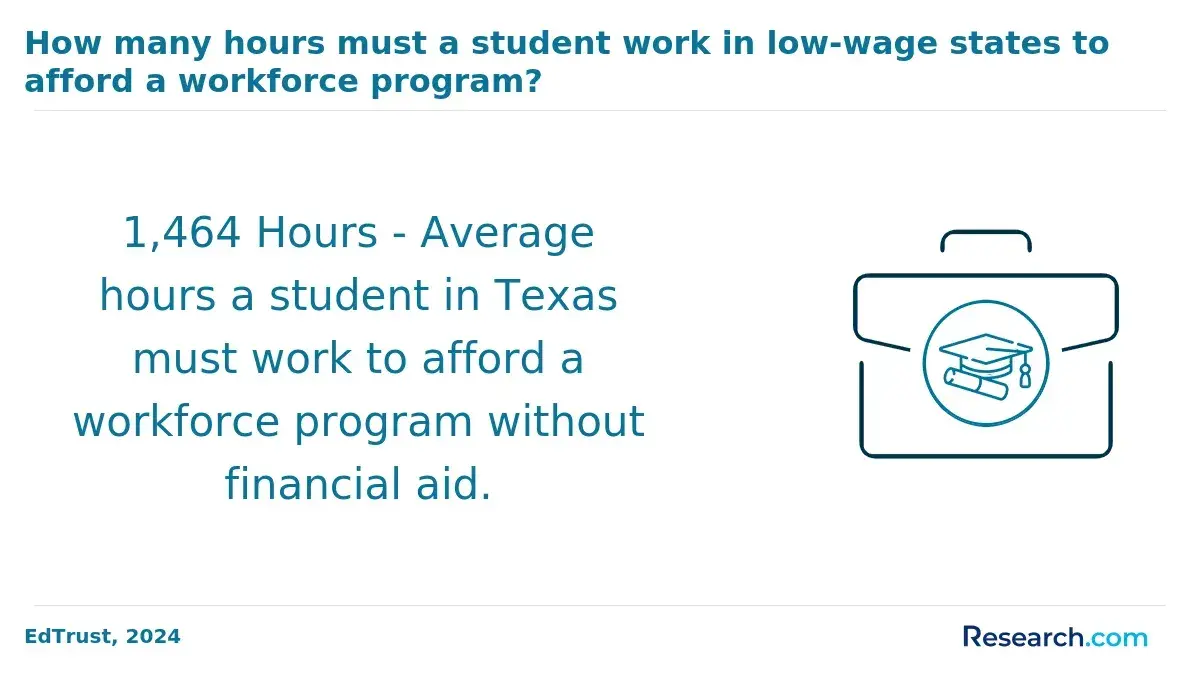
Skills influence unemployment risk because employers do not hire "IT majors" in the abstract; they hire people who can secure systems, automate tasks, support users, analyze requirements, maintain data, and solve operational problems. The safest graduates are not necessarily the ones with the longest list of tools, but the ones with transferable skills that survive tool changes.
The skill groups below are especially important because they apply across multiple IT career paths. Building them early can make it easier to recover from layoffs, change industries, or move into higher-stability roles.
- Technical foundations: Networking, operating systems, databases, scripting, cloud basics, cybersecurity fundamentals, and troubleshooting.
- Automation and programming: Python, PowerShell, Bash, APIs, infrastructure as code, and version control.
- Security awareness: Identity and access management, vulnerability management, incident response basics, secure configuration, and risk documentation.
- Data literacy: SQL, data quality, reporting logic, privacy, and the ability to explain data limitations.
- Business communication: Requirements gathering, documentation, stakeholder updates, ticket notes, and clear explanations for nontechnical users.
- Adaptability: Learning new platforms, reading documentation, testing safely, and showing evidence through labs or projects.
AI is changing skill expectations rather than eliminating the need for IT professionals. Generative AI can draft scripts, summarize logs, and help troubleshoot, but employers still need people who can validate outputs, understand systems, protect data, and make judgment calls. Graduates who use AI responsibly as a productivity tool may be more competitive than those who ignore it or rely on it without verification.
Red flags include graduating without a portfolio, knowing only one vendor tool, avoiding documentation, and treating soft skills as optional. Many entry-level candidates look similar on paper; hands-on labs, internships, GitHub projects, security write-ups, cloud deployments, and clear communication can reduce that similarity.
Certifications can improve job security when they validate skills employers already need. They are most useful when paired with a degree, labs, projects, internships, or work experience; they are less useful when treated as a substitute for practical ability.
The table below groups certifications by career goal. Requirements vary by employer, so use certifications as signals of readiness rather than guarantees of employment.
| Career goal | Certifications commonly valued | How they can reduce unemployment risk | Best timing |
| Entry-level IT support or junior systems work | CompTIA A+, Network+, Microsoft fundamentals, Google IT support-style credentials | Shows baseline troubleshooting, hardware, networking, and user support knowledge | During an associate or bachelor's program, or before the first IT job |
| Cybersecurity | CompTIA Security+, CySA+, SSCP, CISSP for experienced professionals | Signals knowledge of risk, controls, incident response, and security operations | Security+ or similar early; CISSP after meeting experience requirements |
| Cloud infrastructure | AWS, Microsoft Azure, and Google Cloud associate or professional certifications | Demonstrates ability to work with cloud services, identity, storage, networking, and deployment models | After basic networking, Linux, scripting, and cloud labs |
| Networking | Cisco CCNA, Juniper, Network+ | Builds a foundation for infrastructure, security, and cloud networking roles | Early to mid-career, especially before network or security roles |
| Project, service, or governance roles | ITIL Foundation, Scrum, PMP for experienced project professionals | Helps with roles involving service management, change control, and cross-team delivery | After gaining exposure to IT operations or projects |
A smart certification plan starts with your target role, not with the most advertised credential. For example, a student pursuing cybersecurity may start with networking fundamentals before Security+, while a cloud-focused student may build small deployments before paying for an advanced exam.
A common mistake is collecting certifications without building proof of work. Employers are more persuaded when a credential is supported by a home lab, cloud project, incident report sample, SQL project, automation script, or internship experience.
Experience changes unemployment risk because the labor market treats entry-level, mid-career, and senior IT professionals differently. Entry-level candidates often face the most competition, while experienced professionals with specialized and transferable skills may have more options across industries.
The table below explains how stability changes by career stage and what each group should prioritize.
| Career stage | Main unemployment risk | Stability strategy | Strong next step |
| Student or pre-entry | No experience, unclear specialization, weak portfolio | Complete labs, internships, help desk work, capstones, and certifications tied to a target role | Build a portfolio showing troubleshooting, cloud, security, scripting, or data work |
| Entry-level professional | Competition for junior roles and automation of routine support tasks | Move from basic support into networking, security, cloud, systems, or data responsibilities | Document measurable wins such as reduced ticket backlog, improved onboarding, or automated tasks |
| Mid-career professional | Skill stagnation or overdependence on one employer's tools | Develop platform depth, cross-functional communication, and industry knowledge | Lead migrations, audits, incident response work, or infrastructure improvements |
| Senior professional | Management-layer cuts, outdated technical skills, or narrow leadership experience | Combine strategy with current technical awareness and business value | Build expertise in architecture, governance, risk, cost control, or team leadership |
For students, the first job is often the hardest step. Help desk, junior support, QA, technical documentation, and campus IT roles can be useful entry points if they lead toward a stronger specialization. The risk is staying too long in a role where tasks are repetitive and advancement is unclear.
For experienced professionals, the biggest red flag is letting a job become too comfortable. If your current role uses outdated systems, offers no project ownership, and does not expose you to cloud, security, automation, or data work, your unemployment risk may rise even if your current job feels stable.
Emerging career paths can offer strong long-term stability when they are tied to durable business needs rather than hype. The safest emerging paths are usually those connected to cybersecurity, AI governance, data infrastructure, cloud reliability, privacy, and critical systems.
The table below highlights emerging IT paths that may offer a favorable mix of demand, resilience, and advancement potential.
| Emerging path | Why it may be stable | Core skills | Risk to watch |
| AI security and AI governance specialist | Organizations adopting AI need controls for data leakage, model misuse, vendor risk, and compliance | Security fundamentals, risk assessment, data governance, policy, AI literacy | Job titles are still evolving, so general security or governance skills are important |
| Cloud security engineer | Cloud adoption increases the need for identity, configuration, monitoring, and incident response expertise | Cloud platforms, IAM, networking, scripting, security monitoring | Requires continuous learning as platforms change |
| Platform engineer | Companies need internal tools, automation, and reliable developer infrastructure | DevOps, Kubernetes, CI/CD, infrastructure as code, observability | Can be more common in larger or mature engineering organizations |
| Data privacy and governance analyst | Data use, AI, reporting, and compliance require strong policies and controls | Data mapping, privacy principles, SQL basics, documentation, risk management | Responsibilities vary widely between legal, compliance, and IT departments |
| Operational technology security specialist | Utilities, manufacturing, transportation, and energy systems need protection from cyber disruption | Networking, industrial systems, security monitoring, incident response | May require onsite work and specialized industry knowledge |
| Health informatics security or systems analyst | Healthcare depends on secure records, interoperability, patient systems, and compliance | Health IT systems, privacy, security, data quality, workflow analysis | Requires patience with regulation, legacy systems, and stakeholder complexity |
Higher-risk, higher-reward paths can still make sense. Product engineering at a startup, advanced AI application development, or niche blockchain infrastructure may offer rapid growth for people with strong portfolios and risk tolerance. They are less ideal for students whose first priority is stable employment, predictable benefits, or geographic flexibility.
The strongest long-term strategy is to choose an emerging path that also has a fallback. For example, cloud security can fall back to cybersecurity or cloud engineering; data governance can fall back to data analysis, compliance, or database work; platform engineering can fall back to DevOps or systems engineering.
Students should evaluate unemployment risk by comparing role demand, industry stability, skill transferability, education cost, and personal fit. The best information technology path is not automatically the one with the highest median wage; it is the one that gives you realistic entry points, growth options, and resilience if the market changes.
Cost matters because a stable career path can still be a poor decision if the program is overpriced or poorly matched to your goals. College Board's 2024 pricing data reported average published tuition and fees of $11,610 for in-state students at public four-year institutions and $4,050 for public two-year in-district colleges for the 2024-2025 academic year, before grants and aid. That difference matters for IT students because community college transfer pathways, employer tuition assistance, and lower-cost online programs can reduce financial pressure while still leading to employable skills.
Use this decision process before choosing a degree concentration or career path. It helps you compare stability in a practical way rather than relying on rankings alone.
- Choose three target roles, such as security analyst, cloud engineer, systems analyst, or database administrator, and compare real job postings in your region.
- Check whether each role has multiple employer types, including healthcare, government, finance, education, utilities, and technology vendors.
- Compare required skills with your program curriculum, including networking, databases, scripting, cloud, cybersecurity, and hands-on labs.
- Estimate total education cost after grants, transfer credits, employer support, fees, equipment, exams, and the time needed to finish.
- Look for experience channels, including internships, co-ops, capstones, apprenticeships, campus IT jobs, and employer-connected projects.
- Evaluate credentials carefully: regional accreditation matters for degree recognition, while programmatic accreditation may be relevant for some computing programs but is not required for every IT job.
- Build a fallback plan by choosing skills that transfer across roles, such as SQL, Linux, networking, Python, cloud fundamentals, security, and documentation.
Students should also avoid several common mistakes. Do not choose a path based only on salary, assume all IT jobs have the same security, ignore location, rely on outdated job-growth claims, or graduate without proof of hands-on work. Also be cautious with programs that advertise unrealistic outcomes, hide total costs, lack employer-connected projects, or teach outdated tools without cloud, security, data, or automation components.
A strong IT degree plan usually includes a realistic timeline, practical projects, current technical coursework, career services, and a specialization that matches the student's risk tolerance. If your priority is stability, favor cybersecurity, cloud infrastructure, systems analysis, data infrastructure, or regulated-industry IT over narrow roles that depend on one tool, one company, or one short-term trend.
Economic cycles affect IT jobs unevenly. During expansions, employers often hire aggressively for software development, analytics, product engineering, and digital transformation. During downturns, they may pause experimental projects but continue funding security, infrastructure, compliance, customer systems, and cost-saving automation.
This distinction is important because "tech" is not one labor market. An IT graduate working on identity access management for a hospital may experience a different cycle than a developer building a new consumer app at a venture-backed startup. Stable roles are usually attached to systems that must keep running even when budgets tighten.
Use the following framework when comparing career paths during uncertain economic periods. These factors help you judge whether a role is essential or discretionary.
- Mission-critical function: Roles tied to security, uptime, compliance, revenue systems, patient systems, payments, or identity management tend to be more defensible.
- Employer funding model: Government, healthcare, utilities, and large regulated employers often move more slowly than startups, but they may also offer steadier demand.
- Project type: Maintenance, modernization, migration, and risk reduction are usually safer than experimental product work.
- Skill portability: Skills such as Linux, networking, SQL, Python, cloud platforms, security fundamentals, and documentation transfer across employers.
- Cost-saving value: IT workers who can automate workflows, reduce outages, improve cloud spending, or strengthen security can remain valuable when budgets are reviewed.
A common mistake is assuming that a high salary means low unemployment risk. High compensation can reflect scarcity, but it can also reflect volatility, long hours, or dependence on a narrow market. A more balanced strategy is to compare salary with demand breadth, industry stability, and how easily your skills transfer if your employer cuts staff.
Other Things You Should Know About Information Technology
Cybersecurity roles, especially information security analyst and cloud security roles, generally have some of the lowest unemployment risk because organizations must protect systems, data, identities, and operations across economic cycles.
Yes, for many students, but the degree should include hands-on work in security, cloud, data, networking, scripting, and systems. AI may reduce some routine tasks, but it also increases demand for professionals who can secure, validate, integrate, and govern technology.
Government IT jobs can offer strong stability, benefits, and long-term systems work, but hiring may be slower and some roles require background checks. Private-sector jobs may offer faster salary growth, but some employers are more exposed to layoffs and market cycles.
Start building proof of skill before graduation. Complete internships, labs, certifications, cloud projects, security exercises, database projects, or campus IT work, and align each experience with a target role instead of taking random courses or credentials.
- How does a college degree improve graduates’ employment and earnings potential? - APLU https://www.aplu.org/our-work/4-policy-and-advocacy/publicuvalues/employment-earnings/
- What Percentage of Graduates Gains Employment in an IT field Immediately Upon Graduation? https://www.mastersinit.org/faq/what-percentage-of-graduates-gains-employment-in-an-it-field-immediately-upon-graduation
- Software Engineer Unemployment Stats 2026 https://rockstardeveloperuniversity.com/software-engineer-unemployment-statistics/
- The Benefits of Continuing Education: How Upskilling Opens New Career Opportunities https://online.une.edu/blog/the-benefits-of-continuing-education-how-upskilling-opens-new-career-opportunities/
- Computer science graduates struggle to secure their first jobs https://www.bbc.com/news/articles/cm21dvg8l1go
- Recession-Proof Jobs That Thrive During Downturns https://create.fit/recession-proof-jobs/
- Computer Science Grads Facing a Lack of Entry-Level Jobs and a Career Readiness Gap https://www.cengagegroup.com/news/perspectives/2025/computer-science-grads-facing-a-lack-of-entry-level-jobs-and-a-career-readiness-gap/
- The Importance of Continuing Education in Times of Change. https://certiprof.com/blogs/news/continuing-education-in-times-of-change
- The Most Recession-Proof Jobs in the Tech Industry - Computer Measurement Group https://www.cmg.org/2023/05/the-most-recession-proof-jobs-in-the-tech-industry/
- SIX MONTHS: the average time it takes for a graduate to find a job in the current climate https://www.onrec.com/news/statistics/six-months-the-average-time-it-takes-for-a-graduate-to-find-a-job-in-the-current