2027 Best Online Healthcare Degree Programs Ranking in the Northeast

Co-Founder and Chief Data Scientist
Choosing the right healthcare degree can shape your future in meaningful ways. For students in the Northeast, finding an online program that fits your goals and lifestyle is essential.
This article presents the 2027 Best Online Healthcare Degree Programs Ranking in the Northeast, carefully compiled by the Research.com team of data scientists. It's designed to help you make an informed decision by highlighting programs worth considering.
Exploring these options can open doors to rewarding careers that make a difference every day. Reading on will guide you toward a brighter future in healthcare.
Key benefits of getting online healthcare degree in the Northeast
- Healthcare degree graduates in the Northeast can expect competitive salaries, such as a Patient Care Technician earning a mean annual wage of $60,790 and a Quality Improvement Coordinator earning $103,150, offering strong financial motivation.
- Graduates often pursue diverse career paths, including roles like Medical Assistant or Health Information Technician, backed by institutions like Northeastern University, which provide hands-on experience and career support.
- Completing a healthcare degree online from schools such as the University of Massachusetts allows flexibility, helping students balance work and life while gaining the same valuable skills and credentials as traditional programs.
- Key benefits of getting online healthcare degree in the Northeast
- What can I expect from online healthcare degree in the Northeast?
- Where can I work with online healthcare degree in the Northeast?
- How much can I make with online healthcare degree in the Northeast?
- 2027 Best Online Healthcare Degree Programs Ranking in the Northeast
- Key Findings
- How long does it take to complete online healthcare degree in the Northeast?
- Certification and Continuing Education Opportunities
- What's the difference between online and on-campus healthcare degree?
- Accreditation and Licensure Success
- What is the average cost of online healthcare degree in the Northeast?
- Emerging Trends and Future Opportunities
- What financial aid is available to online healthcare degree students in the Northeast?
- Continuing Education and Professional Certifications
- What are the prerequisites for enrolling in online healthcare degree program in the Northeast?
- Accreditation and State Authorization
- What courses are typically in online healthcare degree programs in the Northeast?
- What types of specializations are available in online healthcare degree programs in the Northeast?
- How do you choose the best online healthcare degree in the Northeast?
- What career paths are available for online healthcare degree students in the Northeast?
- What is the job market for online healthcare degree in the Northeast?
- Top Trending Healthcare Rankings
- See What Experts Have To Say About Studying Healthcare
What can I expect from online healthcare degree in the Northeast?
Expect to invest significantly when pursuing an online healthcare degree in the Northeast, with costs often reflecting the region's premium education landscape. Graduates from well-known institutions like those in Boston or New York frequently remark on tuition rates higher than the national average. One nurse administrator recalls balancing the financial challenge with the invaluable flexibility of asynchronous courses, which allowed working while studying.
While sticker prices may appear daunting, financial aid opportunities-including federal loans and employer assistance-play a crucial role in easing the burden. Another graduate from a Philadelphia-based university emphasized how local partnerships helped secure affordable practicum placements, enhancing the value of their education.
The cost is not merely a number but an investment in a rigorous program that boasts direct ties to leading healthcare employers and a curriculum shaped by evolving regional challenges. This connection often translates into competitive salaries post-graduation, justifying the upfront financial commitment for many students in the Northeast.
Where can I work with online healthcare degree in the Northeast?
Graduates with an online healthcare degree from well-known Northeastern institutions often find themselves at the heart of bustling hospitals, thriving research centers, or innovative tech hubs. Imagine a graduate from a Boston-based university stepping into a leading hospital system, managing healthcare operations where every decision directly impacts patient care-this hands-on influence defies the misconception that online degrees limit one's career scope.
Others discover rewarding roles in New York State's Department of Health, applying their skills to shape public health policies and disease prevention programs. This connection to community wellness offers a tangible sense of purpose as they witness their work improving lives across the population.
Technology-driven careers also beckon graduates near Philadelphia and Boston, where digital health startups and IT companies eagerly recruit professionals skilled in health informatics and telehealth, fields that continuously evolve and challenge traditional healthcare roles.
Finally, from private outpatient centers to prestigious university research projects, online healthcare graduates often describe a gratifying journey blending flexibility, meaningful impact, and vibrant career opportunities unique to the Northeast's diverse healthcare landscape.
How much can I make with online healthcare degree in the Northeast?
Graduates of online healthcare programs from renowned Northeast institutions often find their efforts rewarded with competitive salaries that defy outdated assumptions about remote education. For example, those stepping into roles as medical assistants in bustling states like New York or Massachusetts earn mean annual wages near $43,350, reflecting solid entry-level compensation that sustains a comfortable urban lifestyle.
Patient care technicians, who frequently launch their careers at respected regional colleges, typically command mean wages around $60,790 yearly. This salary underscores both the value of hands-on training accessed via online healthcare degrees and the rising demand for skilled support staff in sophisticated healthcare systems.
Health information technicians, emerging from programs that blend technical skills with healthcare knowledge, report mean wages close to $43,380. This reinforces that behind-the-scenes healthcare roles offer viable and stable income paths that complement clinical careers.
Meanwhile, graduates who advance to roles such as quality improvement coordinators, often after supplemental certifications or degrees through Northeast universities, break well beyond average earnings, with mean salaries soaring to $103,150. These figures reveal a clear truth: online healthcare education in the Northeast is not just accessible-it is a gateway to rewarding, impactful careers that grow with experience and specialization.
2027 Best Online Healthcare Degree Programs Ranking in the Northeast
How do we rank schools?
Investing in your education is a significant decision that can shape your future, and the Research.com team understands the importance of making informed choices. To assist prospective students in the Northeast, we have carefully developed the "2027 Best Online Healthcare Degree Programs Ranking in the Northeast." Our dedication to quality, credibility, and accuracy is demonstrated through thorough research and detailed analysis used to compile this ranking.
We utilized the following reputable data sources to ensure a comprehensive evaluation of healthcare programs:
By reviewing this ranking, readers will gain valuable insights into top online healthcare degree programs in the Northeast, empowering them to make well-informed decisions about their educational journeys. For more information on how this ranking was created, please visit our Research.com methodology page.


# 16 position
Penn State University Park
Master of Nursing


# 18 position
Hofstra University
Master of Strategic Business Management and Strategic Healthcare Management

Key Findings
- The average tuition for online healthcare degrees in the Northeast ranges from $20,000 to $45,000, with public institutions offering lower rates for in-state residents.
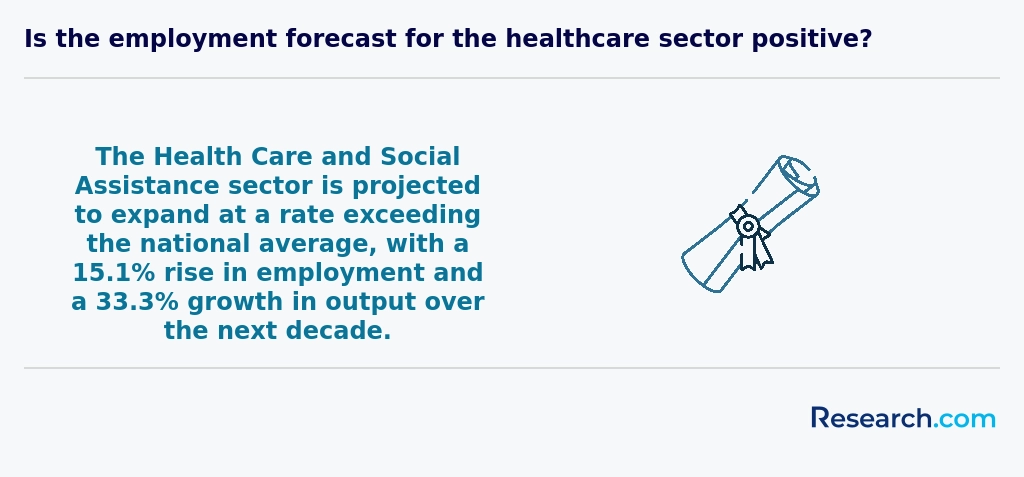
- Healthcare jobs in the Northeast are expected to grow by about 13% over the next decade, which is faster than the national average.
- Starting salaries for healthcare graduates in the region typically fall between $50,000 and $60,000 annually.
- Experienced healthcare professionals can earn between $80,000 and $110,000 or more, depending on their field and experience.
- Many programs require clinical components or local internships to meet licensure standards and assist students in finding placements nearby.
How long does it take to complete online healthcare degree in the Northeast?
Completing an online healthcare degree in the Northeast often defies the rigid timelines many expect. Graduates from notable institutions like Northeastern University or the University of Massachusetts recall that, while traditional associate degrees take about 18 to 24 months full-time, flexibility transformed their experience. Part-time options stretched these programs up to three years, allowing students to balance work and family, which many found empowering rather than limiting.
Bachelor's degrees, typically requiring four years, showcase even more variability. At schools such as Boston College, online nursing (BSN) students often move faster by taking extra courses, motivated by the ability to control their pace. This self-directed progression elicits pride, as graduates feel they've crafted a personalized journey rather than endure a fixed schedule.
Master's degrees in public health or healthcare management, like those offered by Columbia University's online programs, illustrate this further. While one to three years is typical full-time, part-time students embracing a five-year window often report greater confidence balancing career demands alongside academic growth, viewing this extended timeframe as a strategic advantage rather than a setback.
Certification and Continuing Education Opportunities
As the healthcare industry continues to evolve, obtaining an online healthcare degree in the Northeast is only the first step toward a rewarding career. Many graduates are increasingly supplementing their formal education with certifications and continuing education programs, which help them stay competitive and up-to-date with the latest industry practices. For example, professionals looking to specialize in coding and billing are encouraged to explore certification options such as those offered by aapc medical coding. These credentials not only validate your expertise but also increase your appeal to employers in a job market that values both advanced training and practical skills. Moreover, institutions and industry associations frequently offer workshops, webinars, and online courses that bridge gaps between academic theory and real-world applications. By taking advantage of these learning opportunities, graduates can effectively adapt to emerging technologies-like telehealth and artificial intelligence-while enhancing their leadership and technical abilities. Overall, integrating continuing education with your online healthcare degree can significantly boost career advancement, providing you with a comprehensive portfolio that meets both current regulatory standards and future industry demands.
What's the difference between online and on-campus healthcare degree?
Choosing between online and on-campus healthcare degrees in the Northeast often means weighing more than just convenience. Graduates from schools like Northeastern University describe the online route as a lifeline-balancing demanding jobs with coursework while avoiding costly commutes through congested Boston traffic or steep urban rents. The flexibility to log in after a late work shift can turn dreams into degrees without uprooting their lives.
Yet, alumni from on-campus programs at institutions such as New York University recall the irreplaceable value of face-to-face interaction. The hum of labs, spontaneous study groups, and direct mentoring from clinical instructors create an immersive energy that on-screen classes struggle to replicate. For many, mastering hands-on skills requires that tactile, in-person experience essential for healthcare professions.
Still, both pathways converge on one critical reality: in-person clinical hours remain non-negotiable-whether you study online or on campus. This blend poses a challenge and opportunity, inviting Northeast students to rethink where, when, and how education fits their unique lives and aspirations.
Accreditation and Licensure Success
Accredited online healthcare degree programs in the Northeast play a pivotal role in preparing students for mandatory licensure and certification exams. Institutions recognized by bodies such as the Commission on Collegiate Nursing Education (CCNE), the Accreditation Council for Education in Nutrition and Dietetics (ACEND), and the Council on Education for Public Health (CEPH) ensure that curricula meet state and national standards. As a result, graduates of these programs often achieve first-attempt licensure pass rates exceeding 90%. For instance, Northeastern University’s online nursing track reported a 95% NCLEX-RN pass rate in 2023, while graduates from Boston University’s Health Information Management program achieved a 93% RHIA certification success rate. To support licensure readiness, leading programs integrate specialized exam preparation resources-such as virtual simulation labs, timed practice tests, and dedicated review workshops-directly into coursework. Clinical residency partnerships with prominent regional hospitals and health systems further reinforce hands-on competencies, ensuring students transition seamlessly from theory to practice. Additionally, robust academic coaching and peer study groups help maintain consistent engagement and focus during high-stakes exam periods. For students seeking cost-effective yet high-quality pathways, our Most Affordable Online Healthcare Degree Programs Ranking in South Carolina highlights institutions that combine rigorous accreditation, proven licensure support, and competitive tuition rates-making it easier to achieve both professional certification and financial peace of mind.
What is the average cost of online healthcare degree in the Northeast?
The average cost of an online healthcare degree in the Northeast hovers around $34,650, but this figure shifts depending on residency status and institution. In-state students often enjoy lower tuition rates, averaging near $30,820, while out-of-state learners face higher expenses, often reaching about $41,170. These numbers challenge the usual assumption that online degrees are uniformly affordable, reminding prospective students that location and school choice remain critical financial factors in northeast online healthcare degree tuition fees.
Graduates from well-known public universities in the Northeast, such as those in the SUNY or University of Massachusetts systems, often recount how their investment paid off despite initial concerns about costs. Many found that the mix of in-state tuition discounts and scholarships helped keep expenses manageable while benefiting from respected programs. On the other hand, students from private institutions reported higher tuition ranges but praised the accelerated formats and wider support services that often justify the price differences.
When thinking about tuition, it's easy to overlook additional costs. Fees for technology and course materials can add several hundred dollars every semester, as many graduates can attest from their own budgeting experiences. Navigating these expenses in the Northeast often means balancing cost versus convenience, and careful planning unlocks opportunities to thrive in healthcare.
For those weighing options, reviewing the top online healthcare programs in pennsylvania provides a window into competitive pricing coupled with quality education. This nuanced perspective empowers students to look beyond average numbers and align their aspirations with financial realities.
Emerging Trends and Future Opportunities
As the healthcare landscape continues to evolve, online degree programs in the Northeast are adapting to meet the demands of a rapidly changing industry. Students and professionals now benefit from innovative curriculum updates that incorporate emerging technologies such as telehealth, artificial intelligence in diagnostics, and advanced data analytics. These advancements not only prepare graduates for current job market needs but also position them as forward-thinking leaders in healthcare. Furthermore, integrating real-world case studies and collaborative projects with industry experts enriches the learning experience and enhances career readiness. For example, many universities are now partnering with local hospitals and healthcare providers to offer virtual internships and mentorship programs. These initiatives allow students to gain practical experience even before graduation, setting a strong foundation for future success. If you’re considering a specialized path, you might also explore the resources available for top online healthcare programs in pennsylvania, which highlight cutting-edge approaches to healthcare management and innovation. By keeping abreast of these trends, you can ensure that your online education not only meets today’s standards but also anticipates the needs of tomorrow’s healthcare industry. Embracing these future opportunities empowers you to become a proactive contributor to a more adaptable and tech-forward healthcare system.
What financial aid is available to online healthcare degree students in the Northeast?
Many online healthcare students in the Northeast initially assume financial aid is out of reach, but the reality often surprises them. Graduates from institutions like SUNY and Northeastern University recall how Pell Grants and federal loans eased their tuition burdens, making education affordable without immediate repayment pressure.
State-specific programs add another vibrant layer of support. For example, a Pennsylvania resident attending an online healthcare program at a state university might benefit from targeted scholarships that few outside the region know about. New York's Excelsior Scholarship, accessible to eligible SUNY and CUNY students, has transformed the outlook for many aspiring nurses and healthcare administrators, removing a major financial barrier.
Moreover, the rise of employer tuition assistance in this sector exemplifies how professional commitment can be rewarded tangibly. Graduates working in Northeast hospitals often share stories of tuition reimbursements that allowed them to pursue advanced degrees without sacrificing income.
These financial aids weave together a comprehensive safety net, reminding students that investing in online healthcare education in the Northeast is not only a dream but a supported reality.
Continuing Education and Professional Certifications
After completing an online healthcare degree in the Northeast, many graduates enhance their credentials through targeted certifications and advanced programs that align with evolving industry demands. Professional certifications, such as Certified Health Information Manager (CHIM), Registered Health Information Technician (RHIT), and Certified Medical Assistant (CMA), validate specialized expertise and can significantly boost employability and salary potential. For those interested in hands-on diagnostic roles, pursuing a dedicated program like the bachelors of diagnostic medical sonography provides in-depth sonographic training and accreditation preparation. Continuing education pathways often include bridge programs-such as RN-to-BSN or RN-to-MSN tracks-that equip nurses with leadership, research, and advanced clinical skills. Similarly, post-bachelor’s certificates in Health Informatics or Public Health enable professionals to transition into data-driven and population health roles, respectively. Many accredited online institutions in the Northeast offer stackable credentials, allowing seamless progression from certificates to full degree programs while maintaining flexible study schedules. Maintaining certification also requires ongoing professional development. State boards and credentialing bodies typically mandate a set number of continuing education units (CEUs) or contact hours every renewal cycle. Online platforms and industry conferences in the Northeast provide convenient CEU courses on topics such as telehealth best practices, healthcare ethics, and emerging medical technologies. By proactively engaging in these learning opportunities, graduates can stay current with regulatory updates, technological advancements, and evidence-based practices that directly impact patient care. Ultimately, strategic investment in certifications and further education not only fortifies clinical competence but also signals accountability and commitment to lifelong learning-qualities highly valued by employers across hospitals, clinics, and research institutions in the Northeast’s competitive healthcare landscape.
What are the prerequisites for enrolling in online healthcare degree program in the Northeast?
The prerequisites for enrolling in an online healthcare degree program in the Northeast often challenge the assumption that a high school diploma alone is sufficient. Graduates from well-known institutions like Northeastern University or the University of Massachusetts report that strong foundations in biology, chemistry, and math are non-negotiable. These are not just hurdles but essential elements that prepare students for complex healthcare topics.
Many undergraduates recall having to submit high school transcripts emphasizing science courses, while those aiming for advanced degrees needed relevant college backgrounds. A graduate from a prominent state college noted that practical experience, such as CNA certification or hospital internships, made a palpable difference in admission chances and confidence during studies.
Standardized tests like the SAT have become optional at some universities, reflecting a shift to assess true readiness beyond scores. Yet, graduate applicants often encounter GRE requirements, reminding students that academic vigor remains critical.
With online programs, reliable technology and passing background checks for clinical placements are often essential, highlighting the blend of academic, practical, and logistical readiness required to thrive in Northeast healthcare education.
Accreditation and State Authorization
Ensure your online healthcare degree meets industry and regulatory standards before enrolling:
- Regional accreditation by U.S. Department of Education–recognized bodies (e.g., Middle States Commission on Higher Education)
- Programmatic accreditation from specialized agencies (e.g., CCNE for nursing, CAHIIM for health informatics)
- State authorization to deliver online instruction and clinical placements across Northeast jurisdictions
- Transferability of credits for licensure applications and graduate study
Verifying these criteria protects your investment, qualifies you for federal aid and licensure exams, and guarantees employer recognition. Many programs also support your credentials with accredited medical billing and coding classes to enhance job readiness.
What courses are typically in online healthcare degree programs in the Northeast?
Online healthcare degree programs in the Northeast defy the notion that virtual learning is less robust by offering a curriculum deeply rooted in real-world relevance. Graduates from well-regarded schools in this region often recall how core courses like anatomy, physiology, and medical terminology laid a foundation as vivid as any lab experience. These classes go beyond memorization-they cultivate an intuitive grasp of human biology crucial for effective patient interaction in bustling urban hospitals or rural clinics.
Students frequently describe healthcare ethics and health informatics courses as eye-opening, challenging them to think critically about data use and patient privacy in an increasingly digital healthcare landscape specific to the Northeast's complex system. Meanwhile, programs integrating healthcare management and policy create a lens through which learners understand behind-the-scenes decisions shaping care accessibility across diverse communities.
Specialized tracks-whether nursing with its focus on pharmacology and clinical decision-making or public health highlighting epidemiology and biostatistics-prepare students to navigate pressing regional health disparities. Practical virtual labs and case studies simulate scenarios familiar to anyone pursuing healthcare in this region, transforming theoretical knowledge into confident readiness to serve their communities.
What types of specializations are available in online healthcare degree programs in the Northeast?
Online healthcare degree specializations Northeast students pursue often defy the traditional image of this field. Graduates from prominent regional universities report how nursing tracks-ranging from BSN to MSN with focuses on nurse practitioner roles or administration-provide deeply rewarding paths that blend clinical expertise and leadership. These programs challenge students to rethink patient care beyond direct bedside work.
Healthcare career tracks in Northeast online programs also extend to healthcare administration, where learners develop skills in health policy and management, preparing them for high-level roles influencing entire hospital systems. One graduate from a noted Northeastern college shared their excitement about mastering financial strategies crucial for healthcare organizations, underscoring the region's emphasis on systemic impact.
Additional specializations include public health, health informatics, allied health professions, and pharmacy administration. For those interested in coding, programs often collaborate with clinical sites, bringing hands-on experience through internships. Students seeking specialized courses frequently explore options like aapc medical coding, which enhances their versatility in the evolving healthcare landscape.
How do you choose the best online healthcare degree in the Northeast?
Choosing the best online healthcare degree in the Northeast demands more than scanning tuition prices or checking program duration. Graduates from renowned Northeast institutions often reflect on how accreditation shaped their career credibility-seeing that programs endorsed by bodies like CCNE or ACEND became a gateway to trust and job security. Yet, affordability also weighs heavily on their minds; with average in-state tuition around $11,300 and out-of-state nearing $28,000, students quickly realize that affordable healthcare degrees online Northeast may require digging deeper into scholarships or flat-rate tuitions offered by schools.
Program flexibility is another real-world concern. One graduate recalls balancing work and study through asynchronous classes while utilizing clinical placements arranged near their city hospital. This hands-on experience was invaluable, demonstrating that practical training partnerships truly distinguish programs. For those drawn to specialized fields, a compelling option might be pursuing bachelors of diagnostic medical sonography, blending technical skill with regional healthcare demand.
What career paths are available for online healthcare degree students in the Northeast?
Graduates with an online healthcare degree in the Northeast find themselves at a crossroads of diverse and dynamic career paths that challenge traditional expectations. Clinical roles like registered nurses remain a cornerstone, especially in bustling metropolitan hubs such as Boston and Philadelphia, where graduates from popular institutions experience firsthand the fulfillment of serving aging populations. Yet, the emergence of healthcare informatics opens an intriguing door-graduates adept in health information management are reshaping patient care by integrating technology with medical knowledge across the region's hospitals and agencies, revealing a blend of healthcare and IT skills in high demand.
Healthcare career opportunities Northeast region also extend into administration, where online degree holders from well-known colleges manage operations behind the scenes, balancing regulatory demands with organizational efficiency-often earning salaries reflecting the region's high cost of living. Many alumni cite the rewarding challenge of working as physical therapy assistants or public health coordinators in underserved rural areas, highlighting how their education translates into tangible impacts on healthcare access beyond city limits.
For students evaluating investment against opportunity, exploring the Most Affordable Online Healthcare Degree Programs Ranking in South Carolina offers a perspective on cost-effective options, reminding future healthcare workers that affordability and quality are not mutually exclusive on the path toward fulfilling careers.
What is the job market for online healthcare degree in the Northeast?
The reality of online healthcare jobs in the Northeast defies skepticism often heard about remote credentials. Graduates from prestigious institutions like Boston University or University of Pennsylvania find themselves welcomed in hospitals and health systems across New York and New Jersey, where their degree is a passport to competitive, rewarding roles. These graduates often share stories of juggling demanding coursework with caregiving or full-time jobs, empowered by the flexibility of online programs.
Consider a healthcare administrator starting at a major New England hospital who leveraged their online degree earned through a rigorous program known for its regional accreditation. This practical experience, combined with emerging acceptance of online credentials, made their job transition smoother than expected in the Northeast healthcare degree employment outlook.
While some still question the value of an online healthcare degree, the growing demand and salaries-often surpassing national averages-speak volumes. For those looking to speed progression, exploring online 1 year masters programs offers a strategic advantage in this dynamic job market.
Frequently Asked Questions About healthcare
Online healthcare degree students in the Northeast can enhance their learning by actively engaging with virtual labs and simulation tools offered by many accredited programs. These resources provide practical experience critical to healthcare professions. According to the National Center for Education Statistics, nearly 30% of healthcare students in online programs nationwide use simulation software to improve clinical skills.
Students should also connect with local healthcare facilities for internships or observational opportunities. The Northeast's dense network of hospitals, like those in Boston and New York City, offers valuable real-world exposure that complements online coursework.
Forming study groups through forums or video calls encourages collaboration and deeper understanding. Furthermore, seeking faculty mentorship and attending online workshops can enhance retention and application of complex healthcare concepts.
The healthcare field is evolving rapidly, creating emerging niches that offer new career opportunities for students pursuing online degrees in the Northeast. One growing area is telehealth, which expanded by over 50% in the Northeast during 2020 alone, driven by rising demand for remote care (Northeast Telehealth Resource Center, 2023).
Another promising niche is healthcare informatics, where professionals analyze data to improve patient outcomes. With the adoption of electronic health records increasing across the region, demand for informatics specialists is expected to grow by 15% through 2028 (Bureau of Labor Statistics).
Lastly, geriatric care management is expanding as the Northeast has one of the highest elderly populations in the U.S., creating the need for specialized care providers focused on aging populations.
After completing an online healthcare degree in the Northeast, preparing for the job market requires strategic steps. Start by obtaining relevant certifications and licenses immediately, as many healthcare roles demand state-specific credentials. Networking is crucial; engaging with local healthcare organizations through professional associations such as the Massachusetts Health & Hospital Association or New York State Nurses Association can open doors.
Internships and clinical placements, often part of degree programs, provide hands-on experience valued by employers. The U.S. Bureau of Labor Statistics projects a 16% growth in healthcare jobs by 2030, with the Northeast showing strong demand in nursing and allied health fields. Lastly, tailoring your resume to highlight both online education and practical skills will improve your employment prospects in this competitive market.
Employers in the Northeast seek healthcare graduates with strong clinical skills and a solid understanding of patient care protocols. According to the Bureau of Labor Statistics, communication abilities are critical, as healthcare professionals must collaborate with diverse teams and explain complex information clearly.
In addition, proficiency with healthcare technology, including electronic health records (EHR), is increasingly essential. The Health IT sector in the Northeast has grown by 15% since 2020, signaling this trend's importance.
Problem-solving skills and adaptability are valued due to the fast-changing healthcare environment in states like New York and Massachusetts. A survey from the National Network of Career Nursing Assistants reports 78% of employers prioritize these traits.
Finding internships in the Northeast relevant to healthcare degrees involves a strategic approach. Students should start by exploring partnerships between their online programs and local hospitals or healthcare facilities. Many institutions in New York, Massachusetts, and Pennsylvania offer internship placements due to the region's extensive medical networks.
Utilizing resources like the National Healthcare Career Association or the New England Board of Higher Education can also help locate opportunities. According to the Bureau of Labor Statistics, healthcare employment in the Northeast grew by 5% in recent years, increasing demand for interns and entry-level roles.
Networking through professional associations like the Massachusetts Public Health Association can further open doors to internships.
Online healthcare degrees have significantly enhanced career mobility and advancement opportunities in the Northeast. Employers in states like New York, Massachusetts, and New Jersey increasingly recognize accredited online credentials, allowing graduates to access a broader range of job openings.
According to the National Center for Education Statistics, nearly 30% of healthcare professionals in the Northeast hold at least a bachelor's degree, a number growing steadily with online education options. This trend supports promotion prospects and higher salaries in competitive markets such as Boston and Philadelphia.
Moreover, online programs offer flexible scheduling, enabling working professionals to gain skills without career interruptions. This flexibility is crucial in the healthcare sector, where practical experience combined with academic achievement drives advancement.
Regional healthcare networks also value continuing education from recognized online institutions, further supporting career growth and leadership roles.
Studying for a healthcare degree in the Northeast offers unique preparation for interdisciplinary roles due to the region's dense network of hospitals, research centers, and public health organizations. Many Northeastern schools integrate coursework covering nursing, public health, health administration, and social services, reflecting real-world healthcare teams. According to the U.S. Bureau of Labor Statistics, healthcare employment in states like Massachusetts and New York is among the highest nationally, encouraging programs to emphasize cross-disciplinary collaboration. Online degree programs often include simulations and case studies that foster skills in communication, leadership, and problem-solving across multiple healthcare disciplines.
The Northeast's focus on community health challenges, including urban populations and aging demographics, further equips students for diverse roles. Schools also frequently partner with local institutions, providing students access to interdisciplinary practicum experiences that are crucial for career readiness in evolving healthcare environments. This multifaceted approach ensures graduates are prepared to work effectively across various healthcare sectors and teams.
Choosing between a thesis and a non-thesis healthcare degree program in the Northeast depends on your career goals and learning preferences. Thesis programs emphasize research skills, ideal for students targeting clinical research, policy development, or doctoral studies. Non-thesis options often focus on practical knowledge and coursework, suited for those seeking immediate employment in administration or practice.
Statistics show that Northeast healthcare employers value research experience, especially in states like Massachusetts and New York, where health tech and biomed fields are strong. According to the Bureau of Labor Statistics, 2023, research roles in healthcare grew by 6% in this region.
Also, consider program length and flexibility. Non-thesis programs typically allow faster completion, beneficial if you need to work while studying online. Review individual university requirements in the Northeast for specifics.
Students in the Northeast interested in studying healthcare abroad through online programs have several options facilitated by U.S. institutions with international partnerships. Many universities offer joint degrees or study-abroad components that can be partially or fully completed online while meeting rigorous U.S. accreditation standards. For example, Northeastern University in Boston has exchange agreements with universities in Canada and Europe, enabling healthcare students to gain global exposure.
According to the National Center for Education Statistics, about 15% of healthcare students in the Northeast explore programs with international experience to enhance their careers.
This approach allows students to experience diverse healthcare systems without fully relocating, which suits working professionals or those with family commitments.
Part-time job opportunities in the Northeast that complement healthcare degree education often include roles like medical assistants, patient care technicians, and pharmacy technicians. According to the U.S. Bureau of Labor Statistics, healthcare support occupations in Northeastern states are projected to grow by approximately 15% from 2021 to 2031, outpacing many other regions.
Positions in hospitals, outpatient clinics, and pharmacies provide hands-on experience while allowing flexible hours for online students. For example, New York and Massachusetts have robust healthcare sectors with many part-time openings that align well with typical class schedules.
Additionally, some students engage in telehealth support roles, which have expanded significantly due to technology adoption post-2020, offering both clinical exposure and remote work options.
Online healthcare students in the Northeast benefit from numerous networking opportunities designed to enhance their academic and professional growth. Many universities offer virtual career fairs and alumni networking events tailored specifically for healthcare fields. These events connect students with potential employers and industry experts across states like New York, Massachusetts, and Pennsylvania.
Professional organizations such as the New England Healthcare Assembly and the Healthcare Information and Management Systems Society (HIMSS) have active chapters in the region, providing online forums, webinars, and local meetups. According to the Bureau of Labor Statistics, healthcare jobs in the Northeast are growing steadily, increasing demand for strong professional networks.
Additionally, partnerships between online programs and local hospitals or clinics often facilitate internships and mentorship programs remotely. This blend of virtual and regional networking supports student engagement despite the online format.
Alumni networks provide significant benefits to online healthcare degree students in the Northeast by fostering professional connections and mentorship opportunities. Many programs in this region maintain active alumni groups that offer job referrals and career advice tailored to the Northeast healthcare market, which is valued for its diversity and size. According to the New England Board of Higher Education, about 45% of healthcare graduates find employment through alumni contacts within the first year after graduation.
These networks also facilitate continuing education and professional development workshops, helping students stay current with evolving healthcare practices.
Furthermore, strong alumni communities enhance access to internships and clinical placements, crucial for online students seeking practical experience in competitive healthcare hubs like Boston or Philadelphia.
Online healthcare degree programs in the Northeast offer significant flexibility, allowing students to tailor their studies to specific career goals. Many institutions provide a range of specialties like public health, nursing, or health informatics, letting students choose courses that align with their interests.
Students can often select electives, certificate add-ons, or focus areas within their program. For example, a nursing student might concentrate on gerontology, reflecting the region's aging population, according to the U.S. Census Bureau. Clinical practicum placements can sometimes be arranged in local healthcare facilities, providing relevant hands-on experience.
Advisors and faculty typically support degree customization, ensuring that students meet licensure or certification requirements while pursuing personalized career paths.
Online healthcare students in the Northeast often face challenges related to clinical placement availability. Many programs require hands-on experience, but dense populations and competitive healthcare markets can limit site options, especially in urban centers like New York and Boston. According to the New England Board of Higher Education, these constraints lead to longer wait times for practicum opportunities.
Technology access and digital literacy also present barriers for some students, particularly those balancing work or family obligations. Reliable high-speed internet is not uniform across all Northeastern communities, affecting remote learning quality.
Additionally, navigating state-specific licensing requirements can be complex. Each Northeastern state may have different rules for healthcare certification, which complicates program selection and career planning.
With an online healthcare degree earned in the Northeast, students can pursue a variety of professional certifications to enhance their career prospects. Common credentials include Certified Nursing Assistant (CNA), Registered Nurse (RN) licensure after passing the NCLEX-RN exam, and Certified Medical Assistant (CMA). These certifications are recognized across most Northeastern states and can significantly improve job opportunities.
Graduates may also consider certifications in specialties like Health Information Management (RHIA) or Medical Coding (CPC), both growing fields in the region due to the expansion of healthcare services.
According to the Bureau of Labor Statistics, healthcare occupations in the Northeast are projected to grow 15% through 2030, highlighting the importance of certification for competitive employment.
To write a winning application for an online healthcare program in the Northeast, start by researching regional schools accredited by recognized bodies like the Commission on Collegiate Nursing Education (CCNE) or the Accreditation Council for Occupational Therapy Education (ACOTE). Accreditation ensures your degree will meet industry standards.
Highlight any healthcare experience you have, as programs value practical knowledge, especially in states like New York and Massachusetts, where healthcare job growth exceeds the national average by 10% (Bureau of Labor Statistics, 2023). Include clear career goals showing your commitment to serving diverse Northeast communities.
Craft a concise personal statement emphasizing skills such as critical thinking, communication, and adaptability, which are vital for online learning and healthcare settings. Lastly, ensure all documents are error-free and submitted before deadlines to improve your chances.
The healthcare career is increasingly recognized as a vital global profession, with growing demand across many countries, including the United States. For students in the Northeast pursuing online healthcare degrees, understanding international trends adds value to their education and future opportunities.
Globally, populations are aging, increasing the need for skilled healthcare workers. The World Health Organization notes a projected shortfall of 18 million healthcare workers worldwide by 2030. In the U.S., the Bureau of Labor Statistics forecasts a 16% growth in healthcare occupations from 2021 to 2031, much faster than average.
The Northeast region, with dense populations and leading medical institutions, offers unique advantages. States like New York and Massachusetts have some of the highest concentrations of healthcare jobs nationally. According to the Northeast Regional Healthcare Workforce Network, this encourages programs that align with global standards, giving students broader perspectives.
Online healthcare degrees from accredited Northeastern schools often include curriculum informed by global health issues and cultural competence. This prepares graduates to work effectively in diverse domestic environments and consider international healthcare challenges.
Students pursuing online healthcare degrees in the Northeast can gain practical experience through clinical placements, internships, and partnerships with local hospitals or healthcare facilities. Many accredited programs require hands-on clinical hours to meet licensure or certification standards. According to the New England Board of Higher Education, approximately 75% of online health programs in this region collaborate with regional providers to facilitate these experiences.
Additionally, virtual simulation tools are increasingly used to supplement in-person practice, offering realistic scenarios that build clinical skills. Students are encouraged to engage with local health departments or community clinics, especially in urban centers like Boston and Philadelphia, where diverse patient populations provide rich learning environments.
Choosing the right concentration within an online healthcare degree in the Northeast involves assessing your career goals and the regional healthcare needs. Popular concentrations include nursing, health informatics, public health, and healthcare administration. Each offers distinct opportunities aligned with the region's growing demand for healthcare professionals.
According to the Bureau of Labor Statistics, healthcare jobs in the Northeast are projected to grow by 15% through 2030, particularly in nursing and health services management. Consider programs that align closely with this demand to increase your employment prospects.
Also, evaluate program accreditation and clinical placement support, which vary among schools.
Top Trending Healthcare Rankings
See What Experts Have To Say About Studying Healthcare
Read our interview with Healthcare experts

References
- Advancing Your Career in Healthcare: Tips and Strategies https://www.sunshinecarenetwork.com/blog/advancing-your-career-in-healthcare-tips-and-strategies
- The impact of postgraduate education on career advancement in healthcare https://sets.com.ua/journals/vol-3-no-2-2024/the-impact-of-postgraduate-education-on-career-advancement-in-healthcare
- Healthcare Degrees https://teach.com/online-ed/healthcare-degrees/
- How to Write Your Cover Letter | NQRTH https://www.nqrth.edu.au/career-planning/how-to-write-your-cover-letter/
- Online Medical Assistant Program With Financial Aid https://www.stepful.com/post/online-medical-assistant-program-with-financial-aid
- How to Gain Real-World Experience While Studying Online | American National University https://an.edu/how-to-gain-real-world-experience-while-studying-online/
- 6 key healthcare challenges affecting students and how to address them - Wellfleet Student https://wellfleetstudent.com/engaging-empowering-student-members/6-key-healthcare-challenges-affecting-students-and-how-to-address-them/
- Pre-Med Study Abroad Programs | Go Overseas https://www.gooverseas.com/study-abroad/pre-med
- Client Challenge https://www.springerpflege.de/nursing-graduates-perceived-future-career-pathway-and-career-shi/50653658
- Online Health Science Degrees with Financial Aid https://www.edumed.org/online-schools/health-science-degrees/financial-aid/