2027 Most Valuable Finance Degree Programs Ranking in Kansas

Co-Founder and Chief Data Scientist
Choosing the right finance degree program in Kansas can be challenging, but this article is here to help. It features the 2027 Most Valuable Finance Degree Programs Ranking in Kansas created by the Research.com team of data scientists. This ranking is designed to provide clear insights, helping you make an informed decision about your education.
Finance degrees open doors to rewarding careers with growth potential. Reading this article will guide you toward programs that offer real value, making your investment in education worthwhile. Start exploring and take confident steps toward your future.
Key benefits of getting finance degree in Kansas
- Finance degree graduates can earn competitive salaries in Kansas, with Financial Advisors earning a mean annual wage of $150,670 and Financial Analysts making about $112,950 per year, offering strong financial stability.
- Graduates from popular Kansas universities often pursue diverse career paths including investment banking, credit analysis, and insurance underwriting, allowing flexibility to find a role that matches their passion and skills.
- Completing a finance degree online in Kansas provides convenient scheduling and accessibility, enabling students to balance work and study while gaining the same valuable skills as traditional programs.
- 2027 Most Valuable Finance Degree Programs Ranking in Kansas
- What can I expect from finance degree in Kansas?
- Where can I work with finance degree in Kansas?
What can I expect from finance degree in Kansas?
The average cost of earning a finance degree in Kansas varies depending on the institution, but students typically spend between $10,000 and $25,000 per year in tuition. For example, attending a public university like the University of Kansas or Kansas State University often means more affordable in-state tuition options, making it practical for local students to manage expenses effectively. Graduates from these schools often appreciate how they balanced quality education with reasonable costs, allowing them to focus more on internships and certifications rather than worrying about debt.
Private or out-of-state students might encounter higher tuition rates, though scholarships and financial aid frequently help offset these expenses. Students often find value in programs that combine classroom theory with real-world experience, which justifies the investment. Many finance students at Wichita State University, for instance, have reported feeling confident in their career readiness thanks to hands-on internships and access to robust alumni networks within Kansas's financial sector.
Planning ahead for certification costs, like CFA or CFP exams, alongside tuition can improve your post-graduate job prospects and is a strategy several Kansas graduates recommend. This holistic approach to financing education ensures students are well-prepared without unexpected financial setbacks.
Where can I work with finance degree in Kansas?
Graduates with a finance degree in Kansas find diverse career paths in banking, investment firms, insurance companies, corporate finance, and government agencies. Many alumni from universities like the University of Kansas and Wichita State University have secured positions as loan officers or financial advisors in major banks around Kansas City and Topeka. These roles involve managing client assets and assessing financial risks, creating a rewarding and dynamic work environment.
Some graduates pursue investment analysis or financial planning with local portfolio management firms, helping clients grow wealth by interpreting market trends-a practical example of applying classroom concepts to real financial decisions. Others thrive as underwriters or actuaries in insurance companies, where analytical skills are crucial for evaluating policy costs and risks.
Corporate finance offers opportunities as budget analysts or controllers within Kansas' manufacturing and tech sectors. Additionally, state and local government positions appeal to graduates wanting to impact public budgets and economic projects, providing a sense of purpose and community contribution.
These paths combine excellent growth prospects with Kansas' affordable living, encouraging students to stay local while building fulfilling careers.
Graduates with a finance degree from institutions like the University of Kansas or Kansas State University typically start with salaries ranging from $50,000 to $60,000, aligning with entry-level roles such as financial examiners or budget analysts. Many find these early years an exciting period of growth as they gain experience and pursue certifications like the CFA or CPA to boost their earning potential.
In Kansas, financial analysts earn a mean annual wage around $112,950 nationally, with figures in metropolitan areas like Kansas City and Wichita often approaching these levels. Graduates working as financial advisors can expect even higher pay, with a national mean salary over $150,000, making this a rewarding path for those interested in client-facing finance careers.
Other roles include credit analysts with mean salaries near $94,750 and insurance underwriters earning about $85,610 annually. Many graduates appreciate how these positions offer a clear career trajectory and steady salary growth.
For example, finance graduates in Kansas City have shared how the combination of strong local industries and university connections helped them secure management roles with salaries exceeding six figures within a few years, fueling both confidence and financial stability.
- The cost of earning a finance bachelor's degree in Kansas ranges from $22,000 to $35,000 at public universities for in-state students, excluding housing and textbooks.
- Private colleges in Kansas may charge more than $40,000 per year in tuition fees.
- Average starting salaries for finance graduates in Kansas are about $55,000 annually, increasing to between $75,000 and $95,000 for mid-career professionals.
- Finance jobs in Kansas are supported by cities like Wichita, Overland Park, and Kansas City, with a projected employment growth of around 5% over the next decade.
- Kansas colleges often offer specialized finance programs with certifications and partnerships to improve job readiness and practical experience.
Finance degrees in Kansas typically take about four years for full-time students, especially at well-known schools like the University of Kansas or Kansas State University. Graduates often describe balancing a schedule filled with general education, business core classes, and specialized finance courses such as investment analysis and corporate finance, all within roughly 120 to 130 credit hours.
Some students accelerate their path by enrolling in summer sessions, gaining extra credits outside the traditional semesters. Others take advantage of combined bachelor's and master's programs that shave off time while maximizing qualifications. There's also the option to receive credit for prior professional experience, which can fast-track earning your degree depending on the institution's policies.
Graduate-level study, such as an MBA with a finance focus, usually adds one to two years, but flexible formats like evening or online classes make it easier for working students to manage. Many finance students appreciate these options as they provide practical ways to finish faster or balance life and education effectively in Kansas.
Finance students in Kansas find that on-campus programs-like those at the University of Kansas or Wichita State University-offer enriching face-to-face interaction with professors and peers, which many graduates say helped them build valuable industry connections. These programs provide access to campus resources such as finance labs, career counseling, and guest lectures, creating a dynamic learning environment that's motivating and engaging.
On the other hand, online finance degrees cater to busy professionals in cities like Overland Park or Topeka who need the flexibility to juggle work and family. Graduates report appreciating the ability to study at their own pace, with virtual tools that enable real-time lectures and group discussions. Though they miss some in-person networking, they gain time and cost savings by avoiding commuting or relocation.
Whether choosing on-campus or online in Kansas, students should weigh their personal learning style, career goals, and schedule demands to select the path that best supports their success.
The average cost of a finance degree in Kansas varies notably depending on the institution and residency status. For most students attending public universities such as the University of Kansas or Kansas State University, the median in-state total cost, including tuition and fees, is around $11,221. Out-of-state students face higher costs, with the median total expense closer to $38,816. Graduates recall managing these expenses by taking advantage of in-state tuition benefits and applying for scholarships offered by these institutions, allowing them to focus on their studies without excessive financial stress.
Private universities in Kansas generally have higher tuition, and while their total expenses often surpass public institutions, students report that scholarship opportunities and financial aid can significantly reduce their net costs. Many finance majors also recommend starting at a local community college to complete general education credits affordably before transferring to a university to specialize, which can alleviate overall expenses.
Additional costs such as books, fees, and living expenses usually add several thousand dollars to the annual budget. Considering this, it's practical to evaluate the Kansas finance degree total expenses holistically. Familiarizing yourself with these costs early helps with financial planning and reduces surprises throughout your college journey.
Students interested in finance careers have shared that understanding how to budget for education and exploring the fastest way to become a risk analyst or other related fields can open up new opportunities after graduation.

Students pursuing a finance degree in Kansas can access multiple financial aid options to ease their education costs. Completing the FAFSA is essential to unlock federal grants like the Pell Grant, which offers up to $7,395 annually for those with significant need. This foundational step helped numerous graduates from the University of Kansas reduce their loan burdens.
Kansas also provides state-specific aid such as the Kansas Comprehensive Grant Program, giving awards between $500 and $2,500 to eligible full-time students at schools like Kansas State University. Minority finance students benefit from the Kansas Ethnic Minority Scholarship, encouraging diversity and rewarding academic dedication.
Many finance departments offer merit and need-based scholarships tailored for finance majors, enabling students to lower tuition fees significantly. Additionally, private scholarships from organizations like the Kansas Bankers Association create further opportunities for funding.
Federal education loans with low-interest rates are available but require careful borrowing. Combining scholarships, state grants, and work-study roles in campus finance offices or local firms creates practical ways to manage finances, making the path smoother and more inspiring for aspiring finance professionals in Kansas.
When evaluating a finance degree program in Kansas, calculating the return on investment (ROI) is essential to ensure that tuition costs align with long-term earning potential. To estimate ROI, compare total program costs-including tuition, fees, and living expenses-against average post-graduation salaries and career growth rates. For example, with in-state tuition ranging from $20,000 to $50,000 per year and average starting salaries for finance graduates in Kansas between $65,000 and $85,000, the payback period typically falls between two to four years. Factoring in financial aid and scholarships can further accelerate this break-even point, making strategic funding decisions critical to maximizing ROI. Beyond base salary, consider bonuses, certification benefits (e.g., CFA or CFP), and regional cost of living adjustments. Graduates who secure internships early often report higher starting offers-sometimes exceeding $90,000-underscoring the value of hands-on experience and strong alumni networks. Additionally, career ladders in corporate finance, investment banking, and fintech-with projected growth rates of 7–8% through 2032-can compound ROI over a decade, transforming upfront educational investments into substantial lifetime earnings. For students prioritizing cost-efficiency without sacrificing program quality, exploring out-of-state options can uncover even greater value. For instance, the Cheapest Finance Degree Programs Ranking in Kentucky highlights affordable alternatives that maintain rigorous accreditation standards. By comparing long-term salary outcomes against program costs across states, prospective students can strategically select finance degrees that deliver the strongest ROI and set the foundation for a prosperous career.
To enroll in a finance degree program in Kansas, you need to have completed a high school diploma or its equivalent, like a GED. Universities such as Kansas State University and the University of Kansas particularly value strong grades in math, economics, and English because these subjects build critical skills for finance studies. Many students who succeeded at these schools emphasize the importance of mastering algebra and statistics before applying.
You'll often be asked for standardized test scores like the SAT or ACT, though some institutions have become test-optional, offering flexibility when submitting applications. Graduates recall how submitting solid transcripts with a GPA around 2.5 to 3.0 made a noticeable difference in acceptance chances.
Including personal statements and letters of recommendation is crucial. They illustrate your motivation and fit for finance, something alumni from popular Kansas programs found key to standing out. If you're transferring or pursuing graduate studies, be prepared to submit previous degree credentials along with tests like the GMAT or GRE, depending on your chosen school's requirements.
Kansas finance programs distinguish themselves through robust internship pipelines and strategic industry collaborations that bridge classroom theory with real-world practice. Universities like the University of Kansas and Kansas State University partner with leading regional banks, investment firms, and insurance companies to offer credit-bearing co-ops, summer internships, and project-based capstones. These experiences not only bolster resumes but also cultivate professional networks-many students receive full-time job offers before graduation. Key features include:
- Structured Internships: Mandatory credit hours in corporate finance or risk management are fulfilled through placements at institutions such as Farm Credit Services of America, UMB Financial, and local credit unions.
- Career Fairs and Employer Showcases: Annual finance expos connect students directly with hiring managers, while on-campus “speed networking” sessions facilitate one-on-one interviews.
- Capstone Projects with Industry Mentors: In collaboration with firms like Evergy and BOK Financial, student teams tackle real financial modeling challenges, presenting findings to senior executives at the end of each term. These partnerships enhance employability and clarify career pathways. For instance, students exploring risk analysis can leverage campus resources and alumni networks to discover the fastest way to become a risk analyst, securing targeted internships that align with their long-term goals. By integrating academic rigor with practical exposure, Kansas finance degrees ensure graduates hit the ground running in today’s competitive financial landscape.
Students pursuing a finance degree in Kansas can expect a curriculum packed with essential courses that build both theory and hands-on skills. Programs at well-known schools like the University of Kansas and Kansas State University typically include Financial Accounting and Managerial Accounting, which help students interpret complex financial data-an ability that graduates often praise for making budgeting and investment decisions more intuitive.
Core classes also cover Principles of Finance, teaching concepts like risk assessment and the time value of money. Graduates often recall how learning investment analysis and portfolio management prepared them to navigate the stock market confidently, while corporate finance courses offered insights into real-world capital budgeting and funding decisions in local businesses.
Additionally, courses in Financial Markets and Institutions reveal how banks and regulation shape the economy, a point that many Kansas students find vital given the state's dynamic financial sector. Supplementary topics such as economics, statistics, and business law deepen understanding, empowering students to tackle internships with regional firms effectively.
Finance degree specializations in Kansas typically include corporate finance, investment management, banking and financial institutions, and risk management and insurance. Graduates from popular Kansas universities often share how specializing in corporate finance empowered them to confidently handle capital budgeting and financial planning in local businesses, particularly in growing hubs like Wichita and Overland Park.
Students focusing on investment management gain practical skills in analyzing market trends and managing portfolios, which many Kansas City area graduates say opened doors to internships and rewarding roles in asset management firms. Banking and financial institutions specialization offers hands-on understanding of credit analysis and regulatory frameworks, crucial for those aiming at jobs within the region's numerous banks and credit unions.
Risk management and insurance is another winning path, equipping learners to identify and mitigate financial risks with real-world insights from companies operating in Kansas. Those weighing program costs can explore more options by checking the Cheapest Finance Degree Programs Ranking in Kentucky, a helpful resource for finding affordable paths.
This targeted approach to finance career paths Kansas universities offer reflects the state's economic landscape and student ambitions, ensuring strong alignment with job markets.
When choosing the best finance degree in Kansas, start by verifying the program's accreditation and reputation, as many graduates from the University of Kansas and Kansas State University report feeling confident entering the job market because of strong academic standards. Consider programs with specializations aligned to your goals, such as investment analysis or risk management, which reflect what successful students have benefited from while living and working in Kansas's financial centers.
Affordability also matters. Students seeking affordable finance degrees Kansas colleges offer often weigh tuition against additional costs like fees and living expenses to find sustainable options. Graduates frequently emphasize the value of internships and connections to local banks or investment firms, which enhance practical learning and career prospects.
Pay attention to class sizes and faculty backgrounds; former students praise smaller classes with professors who bring real-world finance experience into the classroom. For those balancing education with life commitments, exploring fast track degree programs online can be a flexible way to advance quickly while maintaining quality.
Graduates from finance programs at popular Kansas schools often find diverse roles waiting for them across the state, thanks to a strong local economy centered on banking, insurance, and corporate finance. Those pursuing finance degree career opportunities in Kansas regularly secure positions as financial analysts or planners, where they directly influence investment decisions and long-term financial strategies for companies based in Wichita or Overland Park. Many graduates recall how internships during their studies at regional universities opened doors to these roles.
Jobs with a finance degree in Kansas also include specialized positions such as insurance underwriters and actuaries, especially given the strong insurance industry in the state. Graduates appreciate that combining their finance knowledge with analytics skills enhances their chance to enter growing fintech sectors around Kansas City. For students concerned about costs, some explore easiest bachelors degree to get to balance expenses while aiming for competitive starting salaries just above $50,000.
The job market for finance degree holders in Kansas is steady and promising, closely mirroring national trends in financial careers. Graduates from popular institutions across the state often find opportunities in urban centers like Wichita and Overland Park, where banks, investment firms, and insurance companies actively seek skilled professionals. The region's economy, a blend of agriculture, manufacturing, and services, supports diverse roles including financial analysis, risk management, and corporate finance, offering multiple paths for career growth. For students worried about long-term investment, finance degree job outlook Kansas remains positive, especially with entry-level salaries around $55,000 to $65,000 and potential for significant increases with experience and certifications.
Finance graduates benefit not only from these opportunities but also from Kansas's comparatively affordable tuition, typically between $10,000 to $12,000 annually at public universities, which is below the national average. Those looking to deepen their expertise or balance work with study might explore phd programs without dissertation to accelerate career advancement while staying locally connected.
2027 Most Valuable Finance Degree Programs Ranking in Kansas
Investing in your education is a significant decision that can profoundly impact your future, and the Research.com team is keenly aware of the need for reliable guidance. To support prospective students in Kansas, we have carefully developed the "2027 Most Valuable Finance Degree Programs Ranking in Kansas." Our dedication to quality, credibility, and accuracy is demonstrated through thorough research and analysis.
We utilized the following reputable data sources to ensure a comprehensive assessment of finance degree programs:
By reviewing this ranking, readers will obtain valuable insights into the most valuable finance programs in Kansas, enabling informed decisions about their educational investments. For a deeper understanding of our ranking process, please visit the Research.com methodology page.
# 1 position
Fort Hays State University
Bachelor of Business Administration Degree with a Major in Finance


# 7 position
Washburn University
Bachelor of Business Administration in Finance


Frequently Asked Questions About finance
Finance degree students in Kansas can maximize their learning experience by combining strong academic coursework with practical opportunities. Participating in internships with local financial institutions such as banks or investment firms offers valuable real-world exposure. The Kansas City metro area, a regional financial hub, provides many such opportunities. Students should also engage in campus organizations focused on finance and economics to build networking skills and industry insight.
Additionally, leveraging resources from professional groups like the Kansas Society of CPAs can aid in skill development and career planning. Utilizing university career services to secure internships and mentorships is also crucial. According to the U.S. Bureau of Labor Statistics, Kansas has a projected 5% growth in financial analyst jobs through 2030, highlighting strong local industry demand.
The finance field in Kansas is evolving with new niches gaining importance. One key area is financial technology (fintech), which blends finance and digital innovation. Kansas City, a regional fintech hub, has seen startups and established companies develop payment platforms and blockchain solutions, reflecting a national trend.
Another emerging niche is sustainable finance, focusing on investments that support environmental and social goals. This area is gaining momentum as more Kansas firms pursue responsible investing strategies.
Data analytics in finance is also growing, driven by demand for professionals who can analyze large data sets to guide investments and risk management.
According to the Kansas Department of Labor, jobs in these specialized areas are expected to grow faster than average through 2030.
Preparing for the job market after completing a finance degree in Kansas involves several strategic steps. Graduates should focus on gaining practical experience through internships offered by local financial institutions, such as those in Wichita or Kansas City, where finance-related employment is growing by 3% annually according to the U.S. Bureau of Labor Statistics. Developing strong skills in financial analysis, Excel, and financial modeling is essential.
Networking is also crucial. Joining state and regional finance associations, like the Kansas Society of Certified Public Accountants or local CFA chapters, can open doors to job opportunities. Additionally, obtaining relevant certifications such as the CFA or CFP enhances employability in competitive markets.
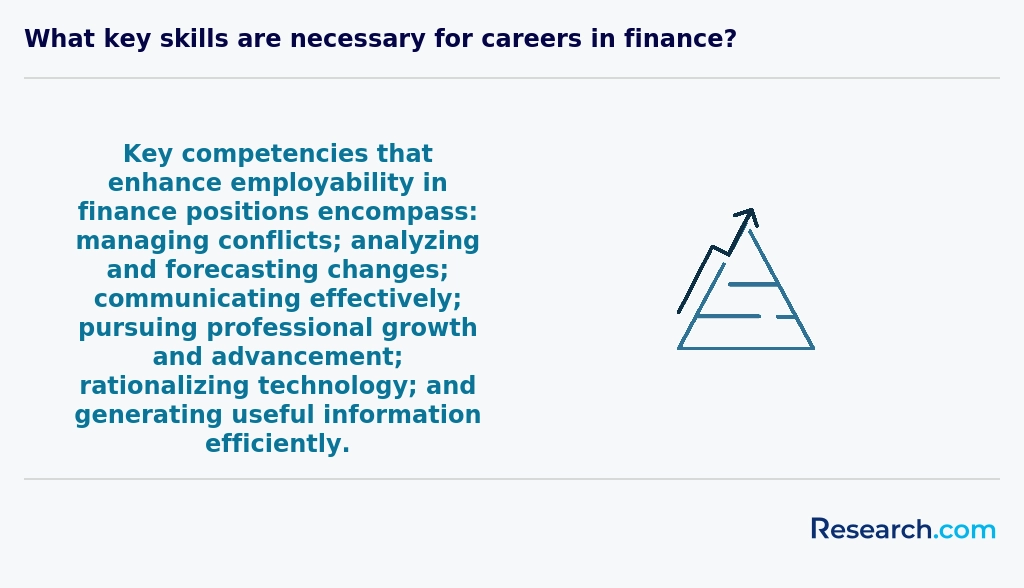
Employers in Kansas seeking finance degree graduates prioritize a mix of technical and interpersonal skills. Strong analytical abilities are essential, as these graduates must interpret financial data effectively to support decision-making. According to the Bureau of Labor Statistics, proficiency in Microsoft Excel and data analysis tools remains critical for success.
Communication skills rank high among employers, enabling graduates to explain complex financial concepts clearly to clients and colleagues. Attention to detail is equally important, reducing errors in budgeting and forecasting tasks. Additionally, knowledge of Kansas-specific financial regulations and local market trends enhances employability.
Leadership and teamwork abilities are increasingly valued, with many finance roles requiring collaboration across departments. The Kansas Department of Labor highlights problem-solving skills as key to adapting in the evolving finance landscape.
Finding internships in Kansas relevant to a finance degree involves leveraging several local resources. Many universities such as the University of Kansas and Kansas State University have dedicated career services that connect students with companies in Wichita, Overland Park, and Kansas City. These cities host major employers in banking, insurance, and investment firms, which often offer finance internships.
Utilizing platforms like Handshake, targeted for U.S. college students, can help identify local finance internship postings. Additionally, the Kansas Department of Commerce reports steady growth in the finance sector, increasing opportunities for practical experience.
Networking through finance-related student organizations and attending regional career fairs enhances chances of securing internships.
A finance degree significantly enhances career mobility and advancement opportunities in Kansas. Employers in key industries such as banking, insurance, and investment increasingly seek candidates with strong financial expertise. According to the U.S. Bureau of Labor Statistics (BLS), financial analysts in Kansas earn a median salary approximately 7% above the state average, supporting better career prospects.
The degree equips graduates with skills in financial analysis, risk management, and budgeting, which are essential for leadership roles. Additionally, Kansas's growing economy, anchored by sectors like agriculture finance and regional banking centers, offers diverse pathways for finance professionals.
Professional certifications often complement degrees, improving promotion chances and geographic flexibility within the state's labor market.
Studying for a finance degree in Kansas equips students with skills that reach beyond traditional finance roles. Many programs combine core finance principles with courses in economics, data analytics, and business management. This interdisciplinary approach prepares graduates for diverse roles that require financial expertise alongside strong analytical and strategic thinking skills.
Kansas schools often collaborate with local industries such as agriculture, manufacturing, and logistics, integrating real-world insights into the curriculum. According to the Kansas Board of Regents, finance graduates here show adaptability in sectors ranging from banking to supply chain management.
By learning financial modeling, risk assessment, and market analysis in varied contexts, students are prepared to work in interconnected roles across multiple industries.
Choosing between a thesis and a non-thesis finance degree program in Kansas depends on your career goals and learning preferences. A thesis option emphasizes research, requiring you to complete an original study under faculty supervision. This path suits students aiming for PhD programs or research-based careers.
Non-thesis programs usually focus on coursework and practical skills, ideal for those seeking immediate employment in finance roles such as banking or corporate finance. In Kansas, schools like the University of Kansas and Kansas State University offer both options, with about 30% of finance master's students opting for thesis tracks according to recent enrollment data from the Kansas Board of Regents.
Consider your time commitment too: thesis programs often take longer due to research demands.
Students in Kansas interested in studying finance abroad have several pathways through partnerships and exchange programs offered by Kansas universities. For example, the University of Kansas and Kansas State University facilitate study abroad opportunities in countries like the United Kingdom, Germany, and China, allowing finance students to gain international experience while earning course credits.
Many finance programs encourage participation in semester-long exchanges or summer overseas courses focused on global financial markets and economics. These experiences are valuable, given the increasing globalization of finance careers.
Additionally, students can explore programs listed by NAFSA, the Association of International Educators, which tracks U.S. study abroad statistics and options. According to recent NAFSA data, about 10% of Kansas college students engage in study abroad, with finance as a growing interest area.
Students pursuing finance degrees in Kansas have access to several part-time job opportunities that enhance their academic learning. Popular roles include bank teller positions, which provide firsthand experience with financial transactions and customer service. According to the Kansas Department of Labor, retail banking jobs grew by 3% from 2021 to 2023, reflecting steady demand. Additionally, internships at local accounting firms or financial planning offices often accommodate part-time schedules, allowing students to apply classroom theory to real-world cases.
Campus-based positions such as research assistants in finance departments also give deeper exposure to economic analysis and market data interpretation. These roles strengthen analytical and technical skills essential for finance careers. Overall, part-time jobs in Kansas's financial sector help students build practical expertise while completing their degrees.
Finance students in Kansas benefit from various networking opportunities that connect them with industry professionals and potential employers. Universities such as the University of Kansas and Kansas State University host finance clubs and student organizations that organize guest speaker events, workshops, and career fairs. The Kansas City Financial Executives International (FEI) chapter offers finance students chances to engage with senior finance executives through meetings and local events.
Additionally, Kansas is home to several finance-related conferences and seminars, often held in cities like Wichita and Overland Park, which attract professionals from banking, investment, and corporate finance sectors. According to the Kansas Department of Labor, the state reported a 3.5% growth in finance-related jobs between 2020 and 2023, highlighting expanding opportunities for networking and employment.
Alumni networks offer significant advantages to finance degree students in Kansas by connecting them to experienced professionals across the state's financial sector. These networks provide mentorship opportunities, which can be invaluable for career development and navigating job markets like those in Wichita and Kansas City.
Many finance programs in Kansas emphasize alumni engagement, facilitating internships and job placements through established relationships with local banks, investment firms, and accounting companies.
According to the Kansas Department of Labor, over 9% of the state's workforce is employed in finance-related fields, making strong alumni connections crucial for gaining a competitive edge.
Customizing a finance degree program in Kansas allows students to align their studies with specific career goals. Many universities offer electives in areas such as investment analysis, financial planning, or corporate finance. For example, the University of Kansas provides specialized courses that prepare students for careers in banking, insurance, or wealth management.
Students can also pursue internships at local Kansas City financial firms, gaining valuable hands-on experience. According to the Kansas Department of Labor, the finance sector is growing steadily, with opportunities in both urban and rural areas.
Certifications like CFA or CFP can complement a degree, making graduates more competitive in state job markets.
Finance students in Kansas face several common challenges as they pursue their degrees. One major issue is balancing rigorous coursework with practical experience. Many programs emphasize both theoretical knowledge and real-world application, requiring students to develop strong analytical and quantitative skills.
Additionally, access to internships in Kansas can be limited due to the state's smaller financial sector compared to larger metropolitan areas. According to the Kansas Department of Labor, finance jobs are projected to grow by 5% through 2030, but competition remains high, making internships critically important.
Another challenge is managing student debt. The average student loan debt for Kansas graduates stands near the national average of $30,000, which can be a burden as students enter the workforce. Navigating changing financial regulations and adapting to evolving technologies in finance also demand continuous learning.
With a finance degree in Kansas, graduates can pursue several key professional certifications to enhance their career prospects. Popular options include the Chartered Financial Analyst (CFA) designation, which focuses on investment management, and the Certified Financial Planner (CFP) credential, ideal for those interested in personal financial advising.
Other valuable certifications include the Certified Public Accountant (CPA) license, especially relevant if you concentrate on financial accounting, and the Financial Risk Manager (FRM) certification, which is gaining relevance in risk assessment roles. According to the Kansas Department of Labor, finance-related jobs in the state are expected to grow by 5% through 2030, making these certifications beneficial.
These designations typically require a combination of education, exams, and professional experience. Earning such credentials can significantly increase earning potential and open doors in fields such as banking, portfolio management, and corporate finance.
To write a winning application for a finance program in Kansas, start with a clear, well-structured personal statement. Highlight your interest in finance and relate it to Kansas's growing financial sector, which offers diverse career opportunities in cities like Wichita and Overland Park. Emphasize any relevant academic achievements and practical experience, such as internships or coursework in economics, accounting, or statistics.
Strong letters of recommendation from professors or employers familiar with your skills can enhance your application. Additionally, maintain a competitive GPA, ideally above 3.0, as many Kansas institutions, including the University of Kansas, emphasize academic performance.
Submit all required standardized test scores if requested, noting that some schools in Kansas have test-optional policies.
Finally, tailor each application to the specific finance program's strengths and requirements, utilizing resources from Kansas Board of Regents and school websites to understand unique expectations.
A finance career today is increasingly shaped by global economic trends and interconnected markets. Professionals with finance degrees in Kansas can expect to engage with international portfolios, global investment strategies, and multinational corporations. According to the U.S. Bureau of Labor Statistics, financial analysts nationwide, including those in Kansas, often advise on strategies that consider currency risks and international regulations.
In Kansas, cities like Wichita and Kansas City are growing financial hubs, benefiting from global trade and commerce. This creates opportunities for finance graduates to work with businesses that operate beyond U.S. borders. Understanding global financial systems is critical, especially as 62% of finance job postings in the state mention global market knowledge (Kansas Department of Labor, 2023).
Students pursuing a finance degree in Kansas can gain practical experience through multiple avenues available within the state's higher education system. Many universities offer internships that connect students with local businesses, banks, and financial institutions. For example, Wichita State University partners with regional firms for internship placements, enabling students to apply classroom knowledge in real-world settings.
Kansas also has active student-run investment clubs where participants manage real portfolios, providing hands-on trading and analysis experience. Additionally, cooperative education (co-op) programs allow students to alternate semesters of study with paid work in finance-related roles. According to the National Association of Colleges and Employers, 65% of finance graduates reported internships improved their employability.
Choosing the right concentration within a finance degree program in Kansas depends on your career goals and local industry demands. Common concentrations include corporate finance, investment analysis, risk management, and financial planning. Kansas's economy features strong sectors like agriculture, manufacturing, and banking, which can influence demand for specific finance skills.
Research shows Kansas banks employ over 30,000 professionals, indicating opportunities in banking and risk management (Kansas Bankers Association, 2023). Additionally, the growing agribusiness sector benefits from finance experts skilled in asset and investment management.
Consider programs with strong internship or networking opportunities in the Kansas City metro area, a major financial hub. Ultimately, look for a concentration that aligns with your interests and local job market trends.
- 2027 Most Valuable Finance Degree Programs Ranking in Nebraska
- 2027 Most Valuable Finance Degree Programs Ranking in Missouri
- 2027 Most Valuable Finance Degree Programs Ranking in Colorado
- 2027 Most Valuable Finance Degree Programs Ranking in Iowa
- 2027 Most Valuable Finance Degree Programs Ranking in Arkansas
- 2027 Most Valuable Finance Degree Programs Ranking in Minnesota
- 2027 Most Valuable Finance Degree Programs Ranking in Illinois
- 2027 Most Valuable Finance Degree Programs Ranking in Louisiana
- 2027 Most Valuable Finance Degree Programs Ranking in Alabama
- 2027 Most Valuable Finance Degree Programs Ranking in Kentucky
See What Experts Have To Say About Studying Finance
Read our interview with Finance experts

Ekaterina Potemkina
Finance Expert
Assistant Professor of Finance
Indiana University

Jason James Sandvik
Finance Expert
Assistant Professor of Finance
University of Arizona

Andrew Karolyi
Finance Expert
Dean of the Cornell SC Johnson College of Business
Cornell University

- Finance Internships: Find 248 Finance Intern Jobs https://internshala.com/internships/finance-internship/
- Must-Have Skills for Accounting & Finance Graduates Entering Singapore’s Competitive Job Market https://www.lsbf.edu.sg/blog/accountancy-and-finance/must-have-skills-for-accounting-finance-graduates-entering-singapores-competitive-job-market
- JA Personal Finance 2.0 https://kansas.ja.org/programs/ja-personal-finance-2-0
- Top Accounting Skills to Land Finance and Accounting Jobs https://www.kbwfinancial.com/top-skills-for-accounting-and-finance/
- The Rise of Niche Jobs in Africa’s Finance Sector | CA Global https://www.caglobalint.com/post/the-rise-of-niche-jobs-in-africas-finance-sector/
- Exploring Alternative Finance Careers: Niche Opportunities in Cambridge's Dynamic Sector https://www.cavillrobinson.co.uk/blog/2023/07/exploring-alternative-finance-careers-niche-opportunities-in-cambridges-dynamic-sector
- FINANCE AND BANKING (THESIS / NON-THESIS) - Lisansüstü Eğitim Enstitüsü https://lee.nisantasi.edu.tr/en/finance-and-banking-thesis-non-thesis-2/
- Top Ways to Leverage a Finance Degree – AP Professionals Rochester https://rochesterap.com/top-ways-to-leverage-a-finance-degree/
- What Can You Do With a Degree in Finance? - Brooklyn College https://www.brooklyn.edu/finance/finance-degree/
- Finance (FIN) https://catalog.umkc.edu/course-offerings/undergraduate/fin/