2027 Most Affordable Finance Degree Programs Ranking in Chestnut Hill

Co-Founder and Chief Data Scientist
Choosing the right finance degree program in Chestnut Hill can be overwhelming. To make this easier, the Research.com team of data scientists created the 2027 Most Affordable Finance Degree Programs Ranking in Chestnut Hill.
This article presents the ranking to help you find affordable programs that fit your goals and budget. A finance degree opens doors to exciting career opportunities and financial independence, making it a smart choice for your future.
Explore the options confidently and take the first step toward a rewarding path in finance.
Key benefits of getting finance degree in Chestnut Hill
- Finance degree graduates in Chestnut Hill can expect strong earning potential, with roles like Financial Advisor earning a mean annual wage of $150,670 and Financial Analyst positions averaging $112,950 yearly.
- Graduates from local colleges often find diverse career paths, including Credit Analyst and Insurance Underwriter roles, providing exciting opportunities to specialize in various finance sectors.
- Online finance degrees from reputable Chestnut Hill schools offer flexibility to balance work and study, enabling students to gain skills without sacrificing current jobs or personal commitments.
- 2027 Most Affordable Finance Degree Programs Ranking in Chestnut Hill
- What can I expect from finance degree in Chestnut Hill?
- Where can I work with finance degree in Chestnut Hill?
What can I expect from finance degree in Chestnut Hill?
Graduates from finance programs at Chestnut Hill's well-regarded colleges often share stories of balancing ambition with practical investment in their futures. The average cost of earning a finance degree here ranges widely, from around $15,000 per year at public institutions to upwards of $50,000 at private universities, before scholarships and financial aid soften the blow. One alumnus recalled navigating tuition payments alongside securing internships in Boston's buzzing financial district, transforming classroom theories into real portfolio wins.
Seeing this price tag might feel like staring down a steep market climb, but students frequently highlight the value of intimate class sizes that foster lively debates on risk management and corporate finance-like an industry insider's roundtable rather than just lectures. Scholarships tied to local banks and businesses often feel like hidden dividends, cushioning the investment and making that finance degree in Chestnut Hill an accessible launchpad into wealth management, banking, or financial planning careers.
Where can I work with finance degree in Chestnut Hill?
Finance grads from Chestnut Hill's vibrant campuses-like Boston College-often find themselves stepping into bustling local banks or investment firms, their days charged with analyzing numbers that shape real-world fortunes. Imagine a recent graduate, fresh from lectures to the real rhythm of Rockland Trust, navigating risk management with sharp insights that make spreadsheets hum.
Others glide into healthcare finance roles near Beth Israel Deaconess Hospital, where managing budgets means ensuring patient care thrives, blending compassion with financial savvy. Meanwhile, classrooms of Chestnut Hill students dream of shaping campus budgets, grants, and endowments at their colleges, turning abstract calculations into the backbone of education itself.
Entrepreneurial spirits dive into the dense network of small businesses buzzing beneath Chestnut Hill's leafy streets, advising startups with a mix of street smarts and financial strategy. The finance degree here isn't just a paper-it's a passport to dynamic careers where figures tell stories, and every paycheck reflects your expertise in this uniquely interconnected Boston-area ecosystem.
Imagine graduating from a prestigious finance program right in Chestnut Hill, where the hum of Boston's financial pulse energizes your career path. Fresh graduates from local schools often step into roles like financial analysts or credit analysts, starting with salaries averaging around $95,000 to $113,000 annually-a sweet leap beyond the typical entry-level of $55,000 to $65,000 cited in the region.
Picture yourself walking across the campus of a well-known college, discussing internship success stories with peers who secured positions as financial advisors. These professionals in the Chestnut Hill area enjoy mean annual wages soaring above $150,000, fueled by the bustling financial district nearby.
Whether you become an investment banking analyst drawing the $112,950 median yearly wage or an insurance underwriter earning around $85,610, the blend of rigorous academics and rich networking in Chestnut Hill equips graduates to command impressive salaries. Each paycheck reflects not just numbers but a rite of passage into the vibrant financial community thriving here.
- Tuition for a bachelor's degree in finance in Chestnut Hill ranges from $40,000 to $55,000 per year, mostly at private universities.
- Entry-level finance graduates in the area earn about $62,000 annually, with salaries reaching $110,000 or more after 10 years of experience.
- The unemployment rate for finance-related jobs in Chestnut Hill is around 3%, below the national average.
- Key employers include sectors like investment banking, asset management, corporate finance, and financial consulting.
- Students benefit from internship and networking opportunities connected to Boston's financial district.
- Finance programs should be accredited by bodies such as AACSB for better academic quality and career prospects.
In Chestnut Hill, diving into a finance degree usually means embracing a four-year rhythm, much like the steady tick of a classic Wall Street clock. Imagine a student weaving through the bustling halls of Boston College, balancing core economics, accounting, and those intricate finance classes that unravel secrets of investment analysis and corporate finance. For many, this path feels like a carefully choreographed dance, paced perfectly over four years.
Some graduates sparkle with pride, having fast-tracked their journey by stacking summer courses and heavier semesters, crossing the finish line in just three years. Others savor the journey longer-maybe juggling part-time studies with internships that turn textbooks into real-world gold or exploring co-op programs that extend the adventure beyond the traditional timeframe.
Graduate study in Chestnut Hill spices things up with one to two years more, as ambitious learners chase mastery through a Master's or an MBA focused on finance. Here, working professionals appreciate the flexibility of part-time options, turning education into a tailored voyage amidst life's busy currents.
Prospective students aiming to enroll in a 2024 finance degree program in Chestnut Hill, MA, should follow a structured application roadmap to meet all critical deadlines and requirements: • Research & Preparation (June – August): Begin by reviewing program prerequisites-such as minimum GPA, recommended coursework in economics and mathematics, standardized test policies, and any portfolio or interview components. Attend virtual information sessions or campus open houses. • Document Collection (September – October): Request official high school or college transcripts, secure two to three letters of recommendation, and draft a compelling personal statement highlighting your career goals in finance. Update your resume to reflect internships, leadership roles, and relevant projects. • Standardized Tests & Application Submission (November – January): If required, schedule SAT/ACT or GRE exams by early fall. Submit completed online applications between mid-November and January 15, accompanied by application fees (typically $50–$75). • Financial Aid & Scholarship Deadlines (December – February): File the FAFSA by January 31 and apply for institutional scholarships; many colleges set grant application deadlines in February. • Interviews & Decision Notifications (February – April): Some programs conduct alumni or faculty interviews. Admission offers and financial aid packages are usually released by mid-March. Accept your offer and submit enrollment deposit by April 15. For those considering graduate pathways, explore our Affordable Online Master’s in Finance Degree Programs Ranking in Pennsylvania to identify cost-effective master’s options.
Choosing between online and on-campus finance degrees in Chestnut Hill often feels like picking a soundtrack for your educational journey. Imagine sitting in a bustling Boston College lecture hall, the hum of conversation blending with the crisp flip of textbooks-here, face-to-face interaction fuels motivation and sparks spontaneous debates that ignite deeper understanding. Graduates from Pine Manor College recall how late-night study sessions in serene libraries created bonds that became lifelong networks.
Now picture a finance student logging in from a cozy nook at home, juggling a work schedule while catching up on complex market theories through online classes. The digital classroom offers freedom-no rush-hour traffic from Brighton or hefty campus fees. Many online learners appreciate the flexibility, saving 15-25% on tuition compared to on-campus peers, as reported in regional studies.
Yet, while on-campus paths immerse students in a traditional college vibe rich with instant feedback, online routes craft a tailored rhythm-inviting innovation in balancing life and study, proving finance education in Chestnut Hill is as adaptable as the market itself.
The average cost of pursuing a finance degree in Chestnut Hill hovers around $87,610, a figure that reflects the vibrant academic landscape of the area. Graduates from esteemed institutions such as Boston College's Carroll School of Management often recall the challenge and thrill of balancing hefty tuition fees with the incredible value received from a rigorous finance education. This amount, while substantial, aligns closely with national expectations for private colleges and highlights the premium placed on quality programs in this historic Massachusetts town.
For many students exploring affordable finance degree programs Chestnut Hill offers a range of options that can lighten the financial load. Some local community colleges and smaller universities provide pathways in the $20,000 to $40,000 range if you consider in-state tuition, especially before transferring or continuing studies elsewhere. The smart student who navigates these avenues can find a treasure chest of opportunity without drowning in debt.
Financial aid and institutional scholarships often serve as a beacon of hope to those who feel daunted by such costs. Many Chestnut Hill finance majors share stories of transformative support that slashed their net price by nearly half, lifting the weight of tuition and empowering them toward success. For the thrifty and determined, it's worth exploring accredited MBA programs without GMAT nearby, which can complement undergraduate finance degrees and stretch your investment further.

If you're diving into a finance degree at Chestnut Hill's well-known institutions like Saint Joseph's University, the golden ticket often starts with FAFSA. Imagine a graduate who first unlocked their Pell Grant-up to $7,395 for 2023-2024-watching their tuition burden shrink while grabbing Federal Direct Loans with low interest rates to bridge the gap. This isn't just paperwork; it's a lifeline that transforms dreams into balance sheets.
Local colleges also sprinkle in scholarships targeting sharp minds-those who've led finance clubs or aced economics with flair. One recent graduate recalls how an institutional merit scholarship paired with a private award from the National Association of Black Accountants made their path smoother, turning daunting bills into manageable stepping stones.
Work-study programs at Chestnut Hill campuses offer gigs in real financial offices, so students earn cash while building resumes. Plus, if you're juggling a job already, many finance firms in the area power up tuition assistance, fueling career growth and education hand in hand.
Investing in a finance degree in Chestnut Hill, MA involves balancing upfront costs against long-term earnings. On average, graduates incur $30,030 in student loan debt for a bachelor’s in finance, while entry-level salaries start around $64,000 per year. With typical salaries for Financial Advisors at $137,740 and Credit Analysts at $92,180, most students recoup their investment within 3–5 years of graduation, assuming timely loan repayment and a steady career trajectory. Beyond undergraduate outcomes, many graduates boost their ROI by pursuing advanced degrees or certifications. For those considering further specialization, exploring a best online masters in finance can enhance earning potential by 20–40%, shrinking the payback period and opening doors to senior roles in investment banking, portfolio management, and corporate finance. To maximize ROI, prospective students should:
- Compare total cost of attendance (tuition, fees, living expenses) against projected starting salaries in their target role.
- Factor in financial aid and scholarship packages to reduce debt load.
- Leverage internships and alumni networks to secure high-paying positions immediately upon graduation.
- Consider accelerated or part-time master’s programs that allow simultaneous earning and learning, further improving net financial gains.
Imagine stepping onto a bustling campus in Chestnut Hill, the air thick with ambition and the faint hum of students discussing market trends and investment strategies. To join this vibrant world of finance, you first need a solid foundation-essentially a high school diploma sprinkled with math magic like algebra, calculus, and statistics. Graduates from local universities recall how mastering these subjects felt like decoding the secret language of money.
Delivering your academic story usually means sharing your SAT or ACT scores, though many Chestnut Hill schools now let your passion shine without them. Your high school transcript becomes a golden map, showcasing your conquest of economics and business classes, signaling you're ready to navigate finance's complex terrain.
- Recommendation letters and personal essays act as your backstage pass, revealing your analytical spark and genuine enthusiasm for finance's challenges.
- For those eyeing graduate programs, a bachelor's degree paired with GMAT or GRE scores (unless waived) sets the stage, along with professional experience that adds real-world polish.
In Chestnut Hill's finance halls, these prerequisites don't just gatekeep-they unlock the door to thrilling journeys into numbers, strategy, and opportunity.
Inside the vibrant finance degree programs in Chestnut Hill, students dive into courses that feel like decoding the DNA of money itself. From the moment graduates begin, they're unraveling Financial Accounting and Reporting - imagine sitting in a cozy classroom at a local college, breaking down balance sheets like a detective solving a mystery. Then comes Corporate Finance, where you learn the art of juggling investment decisions as if managing a real startup's treasure chest.
Chestnut Hill students often describe their economics classes as eye-opening journeys through Micro and Macro worlds, where the ripple effects of a single decision become dazzlingly clear. At places like Boston College or nearby branches of Boston University, the buzz in Investments and Portfolio Management labs is palpable - you're not just studying stocks; you're strategizing real-time moves that ripple through markets.
Hands-on learning thrives here with Financial Markets and Institutions and Quantitative Methods, turning abstract models into practical tools for risk and opportunity. Graduates cherish moments exploring Business Law and Ethics, realizing the power behind responsible finance far beyond spreadsheets. And with International Finance, the world shrinks to a global negotiation table, prepping you for adventures anywhere money flows.

In Chestnut Hill, finance degree specializations paint a rich tapestry of future possibilities. Imagine delving into Corporate Finance, where graduates from beloved local colleges navigate capital budgets and risk as deftly as a chess grandmaster plotting moves. Meanwhile, Investment Management draws students eager to immerse themselves in portfolio rhythms, spurred by Boston's financial heartbeat just beyond campus, infusing real-world vigor into every valuation challenge.
Some peers choose Financial Planning, crafting pathways through retirement and wealth management, fueled by ambitions to become trusted advisors. Others are captivated by Financial Technology, riding the crest of innovation - blockchain, digital currencies, and payment systems blending seamlessly with finance's pulse. For those craving data's edge, niches like Risk Management and Quantitative Finance offer statistical insights that turn ambiguity into actionable strategies. Chestnut Hill affordable finance concentration options mean such forward-looking paths are within reach, making it easier to customize an education aligned with one's passions and goals.
Many students balance studies with career growth, often drawn to a best online MBA for working professionals to expand horizons without pausing ambition.
Imagine walking the leafy paths around Chestnut Hill's renowned campuses, where finance students exchange ideas fueled by Boston's financial pulse. Choosing from the best finance degree programs Chestnut Hill offers means diving into programs accredited by AACSB, ensuring the diploma you earn opens doors beyond graduation. Graduates often rave about hands-on internships tucked in Boston's bustling hubs, transforming textbook theories into real-world strategies. Picture a finance student navigating corporate finance case studies by day and attending networking events at local firms by night-this kind of immersion makes all the difference.
Affordability matters too, and finding affordable finance colleges in Chestnut Hill requires comparing not just tuition, but the whole ecosystem: scholarships, living costs, and career services. Many graduates recall how these choices influenced their joy and confidence during studies. If you're weighing options beyond the city, consider broadening your horizons with flexible online business degrees Ohio, blending local insights with national flexibility. These steps weave together to craft an education that's as dynamic and vivid as finance itself.

Graduates with a finance degree in Chestnut Hill step into a world where numbers tell stories and strategies shape futures. Imagine a recent graduate from a popular local university diving into the role of a financial analyst, interpreting market trends just steps from Boston's bustling financial district. Another might find excitement as an investment banker, orchestrating deals that ripple across industries, while a corporate finance manager crafts bold budgeting moves to drive growth back home.
Chestnut Hill finance job opportunities also open doors to more personalized paths-like becoming a financial planner who turns complex retirement puzzles into clear, manageable plans for families in the community. There's also the role of a credit analyst, where assessing risk is an art form, safeguarding banks and clients alike.
Many graduates enrich their careers by earning certifications such as CFA or CFP, amplifying their edge in this competitive landscape. For those eyeing further education, exploring the best cheap online doctorate degrees can be a game-changer, blending affordability with advanced expertise.

Graduates with a finance degree in Chestnut Hill find themselves in a unique vortex of opportunity, where Boston's bustling financial district meets the charm of a college town. Many students from local institutions like Boston College emerge ready to dive into roles as financial analysts or advisors, buoyed by a job market that's expanding alongside the city's economic pulse. The job outlook for finance graduates Chestnut Hill offers is practically a mosaic of possibilities-from banking hubs to burgeoning insurance firms, all within comfortable commuting distance.
Those who've walked the paths of these colleges often speak of internships that plug them directly into Boston's corporate veins, transforming theory into real-world savvy. It's a landscape rich not only in positions but in meaningful connections, networking that feels less like a chore and more like an invitation. Managing tuition without drowning in debt is another win, especially since Chestnut Hill's educational costs remain competitive. For more insight on navigating finance education here, prospective students might explore MBA programs low rejection rates.
2027 Most Affordable Finance Degree Programs Ranking in Chestnut Hill
Investing in your education is a significant decision that requires careful consideration, and the Research.com team is fully aware of this responsibility. To support prospective students in Chestnut Hill, we have diligently developed the "2027 Most Affordable Finance Degree Programs Ranking in Chestnut Hill." Our commitment to quality, credibility, and accuracy is demonstrated by the thorough research and rigorous analysis behind this ranking.
We utilized the following reputable data sources to ensure a well-rounded assessment of finance degree programs:
By reviewing this ranking, readers will gain valuable insights into affordable and quality finance degree options, empowering them to make well-informed educational choices. For a detailed explanation of our process, please visit our Research.com methodology page.

Frequently Asked Questions About finance
Finance degree students in Chestnut Hill can maximize their learning experience by engaging deeply with both academic and practical opportunities. Taking advantage of internships offered through local financial institutions and Boston-area firms significantly enhances real-world skills. According to the U.S. Bureau of Labor Statistics, finance-related internships improve post-graduation employment rates by up to 20%.
Students should also participate actively in campus finance clubs or honor societies, which often provide networking events, workshops, and guest lectures. Access to regional financial conferences and seminars, such as those held in nearby Boston, further broadens understanding of current market trends.
Utilizing university resources like tutoring centers, career services, and alumni mentorship programs helps build strong foundational knowledge and professional connections. Finally, seeking certifications such as the CFA Level 1, popular among finance students in Massachusetts, can complement coursework and boost career prospects.
The finance field is rapidly evolving, with emerging niches reshaping career opportunities for students in Chestnut Hill. Areas like sustainable finance are gaining momentum, reflecting increased interest in environmental, social, and governance (ESG) investing. According to the U.S. Department of Education, demand for finance professionals specializing in ESG analysis is expected to grow by over 15% by 2028.
Additionally, fintech, including blockchain and digital currencies, represents a prominent niche. Local universities in Chestnut Hill have introduced courses focused on cryptocurrency and financial technology, preparing graduates for innovative roles.
Risk management and data analytics also stand out as critical skills, supported by recent surveys from the National Bureau of Economic Research showing a 20% increase in demand in 2023.
After completing a finance degree in Chestnut Hill, effective job market preparation involves blending formal education with practical experience. Networking plays a crucial role; connecting with local finance professionals and alumni can open doors in Boston's robust financial sector. Internships, especially in nearby financial hubs, provide essential hands-on experience and improve employability. According to the Bureau of Labor Statistics, financial analyst positions are expected to grow 9% from 2022 to 2032, reflecting positive job outlooks.
Developing strong skills in financial modeling, data analysis, and proficiency in Excel or Python is vital. Participating in career fairs and leveraging university resources for resume building enhances opportunities. Staying updated on industry trends through organizations like CFA Institute adds competitive advantage.
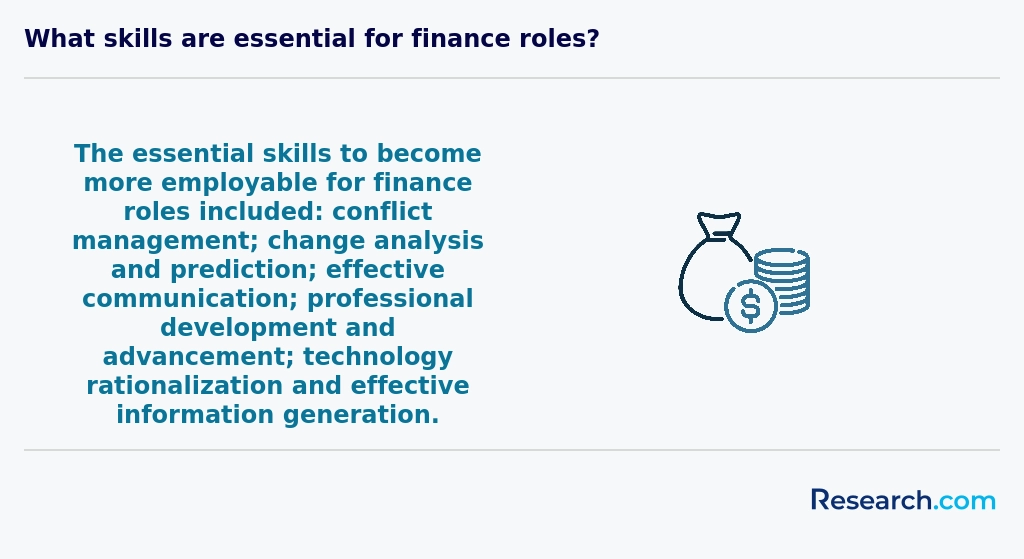
Employers in Chestnut Hill seek finance degree graduates who demonstrate strong analytical and quantitative skills. The ability to interpret financial data accurately and make strategic decisions is essential in today's competitive market. According to the U.S. Bureau of Labor Statistics, proficiency in Excel and financial modeling tools ranks highly among required competencies.
Communication skills, both written and verbal, are crucial for collaborating across departments and explaining complex financial concepts clearly.
Additionally, knowledge of regulatory frameworks and ethical standards is increasingly important due to evolving compliance requirements in the finance industry.
Problem-solving aptitude combined with attention to detail helps graduates handle real-world financial challenges effectively.
Finding internships in Chestnut Hill relevant to a finance degree involves leveraging local resources and networks. Begin by exploring internship programs offered through colleges like Boston College, known for strong finance connections. Many finance students access opportunities through campus career centers, which list internships with nearby banks, investment firms, and nonprofit organizations.
Chestnut Hill's proximity to Boston's financial district also expands options, as many firms seek interns with knowledge of finance fundamentals. Websites like Handshake and your university's job portal frequently update listings tailored to finance roles. Additionally, attending finance-related networking events and career fairs locally can open doors.
According to the National Association of Colleges and Employers (NACE), finance internships typically increase chances of job offers upon graduation, emphasizing the importance of securing relevant experience early.
A finance degree significantly enhances career mobility and advancement opportunities in Chestnut Hill by equipping graduates with essential skills valued in many industries. Local employers in finance, banking, and consulting sectors prioritize candidates holding such degrees for roles involving financial analysis, risk management, and investment strategies.
According to the U.S. Bureau of Labor Statistics and regional employment data, finance professionals in Massachusetts experience a projected employment growth rate of 6% through 2030, slightly above the national average. This growth supports upward mobility for degree holders.
Furthermore, Chestnut Hill's proximity to Boston's financial district allows graduates to leverage networking and internship opportunities, which are critical for career advancement. Certified Finance Professionals often report higher salaries and accelerated promotions compared to those without formal finance education.
Studying for a finance degree in Chestnut Hill offers a strong foundation for interdisciplinary career paths by integrating business, economics, and analytics coursework. Local colleges emphasize practical skills like data analysis, financial modeling, and critical thinking, which are essential across various industries.
Many programs also encourage combining finance studies with fields such as information technology, marketing, or management. This approach prepares students to address complex financial challenges in diverse professional settings, including healthcare, consulting, or government.
According to Chestnut Hill economic reports, graduates with interdisciplinary skills have a competitive edge in the Greater Boston job market, where financial expertise increasingly overlaps with technology and strategy roles.
When choosing between a thesis and a non-thesis finance degree program in Chestnut Hill, students should consider their career goals and learning preferences. Thesis programs typically involve conducting original research, which can be valuable for those aiming for a career in academia or research-heavy roles. Non-thesis programs often focus more on coursework and practical skills, appealing to students seeking direct entry into the finance industry.
Local institutions in Chestnut Hill offer both options, reflecting national trends where about 40% of finance master's students choose thesis paths. According to the U.S. Department of Education, thesis programs may require an additional semester or two, which could affect tuition costs and timing.
Industry demand in Chestnut Hill favors applied skills, with many employers seeking graduates proficient in financial modeling and analysis rather than research. Consulting with academic advisors about specific program requirements can help tailor your choice.
Students in Chestnut Hill seeking to study finance abroad have several options through their home institutions' exchange and study abroad programs. Schools like Boston College offer partnerships with universities in Europe and Asia, allowing students to earn finance credits overseas while maintaining progress toward their degree. According to the Institute of International Education, about 10% of U.S. finance students participate in such programs annually, gaining exposure to global financial markets and practices.
Popular destinations include London, known for its financial district, and Hong Kong, a major Asian finance hub. These programs often last one semester or a full academic year, providing valuable international experience recognized by U.S. employers.
Students pursuing finance degrees in Chestnut Hill have access to valuable part-time job opportunities that can enhance their education. Roles such as bank teller positions at local branches offer practical experience in customer service and financial transactions. Internships or assistant roles in nearby investment firms provide exposure to portfolio management and financial analysis.
Additionally, part-time bookkeeping jobs in small businesses or non-profits help students develop accounting skills relevant to finance careers. According to the U.S. Bureau of Labor Statistics, finance-related roles grow by 9% annually, underscoring the importance of real-world experience. Chestnut Hill's proximity to Boston expands possibilities in financial services and consulting firms, facilitating hands-on learning alongside academic study.
Finance students in Chestnut Hill benefit from a variety of networking opportunities, largely due to the area's proximity to major financial hubs like Boston. Local universities often host finance-specific career fairs and alumni networking events, which connect students with professionals in the industry. For example, schools such as Boston College organize finance clubs and guest speaker sessions featuring industry experts.
Additionally, students can join regional chapters of national finance organizations, including the CFA Institute and the Financial Management Association. These groups provide workshops, mentorships, and access to job postings tailored to finance careers.
Chestnut Hill's location also allows easy access to internships and part-time roles at financial firms, enhancing practical connections and job prospects.
Alumni networks play a crucial role for finance degree students in Chestnut Hill by providing valuable connections in the competitive finance industry. These networks offer mentorship opportunities from experienced professionals, enhancing career guidance and job placement.
In the U.S., strong alumni associations often facilitate internships and job leads through established relationships with local firms and national finance companies. For example, graduates from finance programs near Chestnut Hill report up to 30% higher employment rates within six months of graduation due to alumni referrals (National Association of Colleges and Employers, 2023).
Access to events like finance-focused seminars and networking mixers organized by alumni also helps students stay current with industry trends and developments.
Customizing a finance degree program in Chestnut Hill allows students to align their education with specific career goals. Many local colleges offer concentrations such as investment analysis, corporate finance, and financial planning. Elective courses in data analytics or risk management can further tailor a curriculum to current industry demands. Internships with nearby financial institutions in Boston's metropolitan area provide practical experience, which is highly valued by employers. According to the U.S. Bureau of Labor Statistics, finance-related jobs in Massachusetts are projected to grow 7% through 2031, reinforcing the value of specialization. Students should consult academic advisors to map out a personalized study plan.
Finance students in Chestnut Hill often encounter several challenges during their studies. One key difficulty is mastering complex quantitative skills essential to finance, such as statistics and financial modeling. Many students report that applying theoretical concepts to real-world scenarios requires additional effort beyond classroom learning.
Additionally, networking opportunities can be limited compared to larger metropolitan areas, which may impact internship and job prospects. According to the U.S. Bureau of Labor Statistics, finance roles in the Boston metropolitan area-which includes Chestnut Hill-are competitive, increasing pressure on students to distinguish themselves.
Time management also poses a challenge, as finance programs tend to be rigorous and demanding. Balancing coursework with part-time work or internships is common among Chestnut Hill students seeking hands-on experience.
A finance degree from Chestnut Hill institutions opens doors to several respected professional certifications that enhance career opportunities. Commonly pursued certifications include the Chartered Financial Analyst (CFA), Certified Public Accountant (CPA), and Certified Financial Planner (CFP). Each requires passing rigorous exams and relevant work experience. According to the CFA Institute, over 60,000 candidates worldwide pursue the CFA credentials annually, offering significant value in investment management roles.
Locally, financial professionals in Chestnut Hill have noted the CPA as crucial for accounting-related finance careers, especially given Massachusetts's strict licensing requirements. The CFP designation is ideal for those interested in personal financial advising.
Additional certifications like Financial Risk Manager (FRM) and Chartered Alternative Investment Analyst (CAIA) are also valuable for specialized finance sectors. These credentials provide focused knowledge and are well-regarded in the competitive Chestnut Hill finance job market.
To write a winning application for a finance program in Chestnut Hill, start by thoroughly researching the specific schools available, such as Boston College. Tailor your personal statement to highlight your passion for finance and any relevant experience, whether academic or professional. Demonstrating knowledge of local finance industry trends, including the strong presence of financial services in Boston's metro area, adds value.
Be sure to submit all required materials before deadlines, especially transcripts and letters of recommendation. According to U.S. News data, applicants with GPAs above 3.5 and strong quantitative skills tend to have better chances in competitive finance programs.
Finally, emphasize your career goals clearly and explain how the program's curriculum aligns with those objectives to make a compelling case.
A finance career in today's global market offers expansive opportunities, influenced by interconnected economies and international financial regulations. Graduates with a finance degree from Chestnut Hill benefit from a curriculum aligned with standards set by major US accrediting bodies, preparing them for roles in multinational corporations and financial institutions.
According to the U.S. Bureau of Labor Statistics, employment in finance-related fields is projected to grow 8% from 2022 to 2032, reflecting steady global demand. Chestnut Hill's proximity to financial hubs such as Boston supports valuable internships and networking opportunities with firms engaged in global markets.
Understanding global financial systems, currency fluctuations, and cross-border investments is increasingly critical for students. Many programs emphasize skills like risk management and international finance to meet the needs of global employers.
Gaining practical experience while studying for a finance degree in Chestnut Hill can significantly improve your job prospects. Many local colleges and universities encourage internships with nearby financial firms, banks, and non-profit organizations. These internships, often available during summer or part-time during semesters, allow students to apply classroom theory in real-world settings.
Additionally, finance students can join campus investment clubs or participate in simulated trading competitions, which help develop analytical and decision-making skills. According to the National Association of Colleges and Employers, 60% of finance graduates in the U.S. secure employment through internship connections, highlighting the importance of hands-on experience.
Choosing the right concentration within a finance degree program in Chestnut Hill involves evaluating career goals and understanding local industry demands. Popular concentrations include corporate finance, investment analysis, and financial planning. Each offers distinct career paths, such as working with businesses, managing investments, or personal wealth consulting.
Research indicates Chestnut Hill graduates with a concentration in investment analysis have strong access to Boston's financial sector, where the average finance professional earns about $90,000 annually (U.S. Bureau of Labor Statistics, 2023). Meanwhile, corporate finance focuses on internal company finance roles often found in local businesses.
Consider internships and connections offered by Chestnut Hill institutions to gain practical experience. Speaking with academic advisors and industry professionals can clarify which concentration best fits your interests and market trends.
- 2027 Most Affordable Finance Degree Programs Ranking in Boston
- 2027 Most Affordable Finance Degree Programs Ranking in Providence
- 2027 Most Affordable Finance Degree Programs Ranking in Manchester
- 2027 Most Affordable Finance Degree Programs Ranking in New York
- 2027 Most Affordable Finance Degree Programs Ranking in Jersey City
- 2027 Most Affordable Finance Degree Programs Ranking in Scranton
- 2027 Most Affordable Finance Degree Programs Ranking in Philadelphia
- 2027 Most Affordable Finance Degree Programs Ranking in Rochester
- 2027 Most Affordable Finance Degree Programs Ranking in Baltimore
- 2027 Most Affordable Finance Degree Programs Ranking in Washington
See What Experts Have To Say About Studying Finance
Read our interview with Finance experts

Jason James Sandvik
Finance Expert
Assistant Professor of Finance
University of Arizona

Ekaterina Potemkina
Finance Expert
Assistant Professor of Finance
Indiana University

H. Kent Baker
Finance Expert
Professor at Department of Finance and Real Estate
American University

- Contact Student Financial Services - Chestnut Hill College https://www.chc.edu/admissions-aid/financial-aid/meet-the-team/
- How to write a cover letter for a finance job | Standard Chartered https://www.sc.com/en/news/careers-about-standard-chartered/cover-letter-for-a-finance-job/
- Exploring Alternative Finance Careers: Niche Opportunities in Cambridge's Dynamic Sector https://www.cavillrobinson.co.uk/blog/2023/07/exploring-alternative-finance-careers-niche-opportunities-in-cambridges-dynamic-sector
- Study Finance Abroad | Go Overseas https://www.gooverseas.com/study-abroad/finance
- Are Cover Letters Important? | Morgan Stanley https://www.morganstanley.com/articles/are-cover-letters-important
- Why Alumni Networks Matter in Business School: 7 Reasons https://europe.ceibs.edu/article/why-alumni-networks-matter-business-school
- Chestnut Hill College Acceptance, Tuition Costs, & Financial Aid https://www.savingforcollege.com/college/pennsylvania/chestnut-hill-college
- Master of Science (M.S.) Major in Quantitative Finance and Economics (Non-thesis Option) https://mycatalog.txstate.edu/graduate/mccoy-business-administration/finance-economics/quantitative-finance-economics-nonthesis/
- What Major is Best for Finance? Top 10 Picks https://zoetalentsolutions.com/what-major-is-best-for-finance/
- Requirements for the Major https://www.brandeis.edu/finance/undergraduate/major-requirements.html