2027 Finance Degree Value by Institution Type: Public, Private, Nonprofit, and Online Models Compared

Co-Founder and Chief Data Scientist
Choosing where to earn a finance degree can change the real cost, employer signal, schedule flexibility, and long-term payoff of the credential. The College Board's 2024 pricing data shows average published tuition and fees of $11,610 for in-state public four-year colleges versus $43,350 at private nonprofit colleges, before aid.
This guide is for prospective finance students, transfer students, working adults, and parents comparing public, private, nonprofit, for-profit, and online models. You will learn how to judge value using net price, accreditation, completion odds, career support, debt, and finance career goals.
Key Things You Should Know
- Public in-state finance programs usually offer the lowest published tuition, but the better value is the program with the lowest net cost, strong accreditation, high completion support, and finance-relevant recruiting access.
- Online is a delivery format, not an institution type; an online finance degree can come from a public university, private nonprofit university, or private for-profit school, and employer credibility depends heavily on accreditation and school reputation.
- Finance ROI is sensitive to completion: NCES data released in 2024 shows six-year bachelor's completion rates are materially higher at public and private nonprofit four-year institutions than at private for-profit institutions, which affects debt risk and time-to-earnings.
- Key Things You Should Know
- Is a Public University Finance Degree More Cost-Effective Than a Private One?
- How Do Employers View the Credibility of an Online Finance Degree?
- Do Private Nonprofit Universities Offer Better Career Networking for Finance Students?
- Are There Hidden Fees Associated with an Online Finance Degree Program?
- Do Recruiters Prefer Finance Graduates From Prestigious Private Nonprofit Universities?
- How Do Graduation Rates Impact the Perceived Value of a Finance Degree Across School Types?
- Does a Private University Finance Degree Provide Better Long-Term Salary Growth?
- How Do Alumni Networks of Nonprofit vs. Online Finance Programs Compare in Long-Term Support?
- How Can You Choose the Right Finance Degree Pathway Based on Your Financial and Career Goals?
- Top Trending Finance Rankings
- See What Experts Have To Say About Studying Finance
Is a Public University Finance Degree More Cost-Effective Than a Private One?
A public university finance degree is often more cost-effective for students who qualify for in-state tuition, can graduate on time, and have access to a business school with solid employer relationships. A private university can still be a strong value when institutional grants, honors programs, alumni access, or recruiting pipelines reduce the gap between sticker price and career outcome.
The table below compares common institution models using the cost and value factors that matter most for a finance major. These are not rankings; they show how to think about trade-offs before assuming one category is automatically better.
| Institution or delivery model | Typical value strength | Main cost risk | Best fit |
| Public in-state university | Lower published tuition and broad major availability | Large classes, limited advising capacity, or delayed graduation if required courses fill quickly | Students seeking the lowest traditional campus cost with access to internships and regional employers |
| Public out-of-state university | Strong brand or specialized business school options | Out-of-state tuition can approach private-college pricing without the same aid package | Students targeting a specific finance market, honors college, or recruiting network unavailable in-state |
| Private nonprofit university | Potentially stronger advising, smaller classes, and alumni engagement | High sticker price if grants do not significantly reduce net cost | Students who receive strong aid or need intensive mentoring, networking, or placement support |
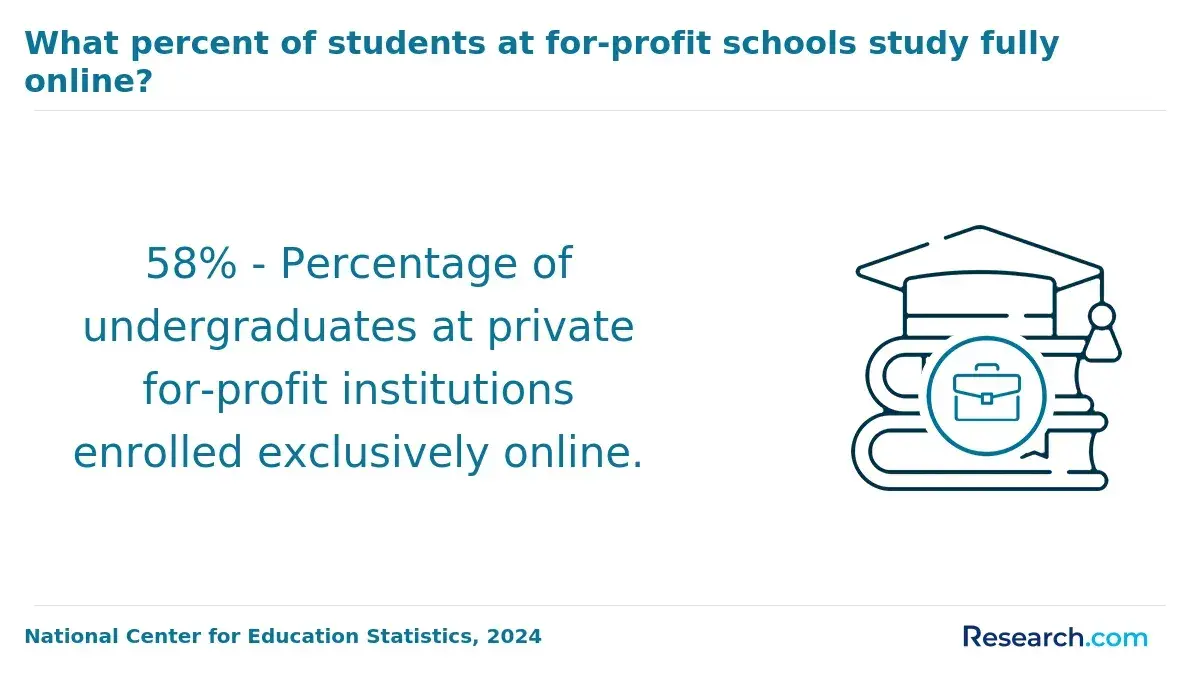
| Private for-profit institution | Flexible scheduling and career-focused formats in some programs | Higher borrowing risk and weaker completion outcomes at some institutions | Working adults who have verified accreditation, transferability, total cost, and employer acceptance |
| Online finance degree | Schedule flexibility and reduced relocation or commuting costs | Technology fees, self-paced attrition risk, and limited campus recruiting if support is weak | Working professionals, caregivers, military students, and transfer students needing flexibility |
According to the College Board's 2024 data, published tuition and fees averaged $11,610 for in-state students at public four-year colleges and $43,350 at private nonprofit colleges. That gap is meaningful, but it is not the final answer because grants, scholarships, transfer credits, housing choices, and time to completion can reverse the apparent winner.
When comparing public and private finance programs, focus on the complete price-to-outcome equation rather than tuition alone. The most useful comparison includes the following factors:
- Net price after grants and scholarships, not the advertised tuition rate.
- Total borrowing needed for tuition, fees, housing, transportation, books, software, and living costs.
- Whether the finance major is housed in an accredited business school with internship and recruiting support.
- Course availability in accounting, investments, corporate finance, financial modeling, statistics, data analytics, and business law.
- Graduation timeline, including whether transfer credits apply to major requirements or only electives.
- Career services quality, including employer visits, finance clubs, alumni mentoring, resume coaching, and internship placement support.
A public university is usually the best value when the student can pay in-state tuition and finish efficiently. A private nonprofit university may be worth the premium when the net price is competitive and the school has a stronger pathway into banking, wealth management, corporate finance, consulting, fintech, or graduate business education.
How Do Employers View the Credibility of an Online Finance Degree?
Employers generally view an online finance degree as credible when it comes from a properly accredited institution, lists the same degree title as the campus program, and provides evidence of rigorous coursework. The risk is not the word "online" by itself; the risk is enrolling in a program with weak accreditation, low employer recognition, limited career support, or poor completion outcomes.
Online education has become more normalized across credential levels, including graduate and professional study. Students comparing flexible finance pathways may also notice that fully online formats now exist well beyond bachelor's degrees, including online doctorate programs, which reflects how mainstream distance learning has become when institutions maintain quality controls.
The table below summarizes what typically shapes employer perception. Use it to separate the degree format from the underlying institutional quality.
| Credibility factor | Why it matters for finance employers | What to verify |
| Institutional accreditation | Employers and graduate schools often use accreditation as a baseline quality signal | Regional or recognized institutional accreditation listed by the school and federal databases |
| Business accreditation | AACSB, ACBSP, or IACBE accreditation can signal external review of business curriculum | Whether the business school or finance program is included, not just another unit of the university |
| Transcript and diploma wording | Some employers may ask whether the online program is equivalent to the campus program | Whether the diploma says "online" or uses the same degree title as campus students |
| Curriculum rigor | Finance work depends on quantitative reasoning, accounting fluency, Excel, modeling, and analytics | Required courses, proctored assessments, projects, capstones, and internship options |
| Career support | Online students need access to recruiting, alumni contacts, and interview preparation | Virtual career fairs, employer partnerships, Handshake access, mentoring, and finance clubs |
For a finance student, online credibility is strongest when the program includes applied assignments such as valuation models, portfolio analysis, risk assessment, financial statement analysis, and data visualization. Employers care about whether the graduate can analyze numbers, communicate recommendations, use financial tools, and work responsibly with sensitive business information.
Students should be cautious with programs that advertise speed without explaining assessment quality, career outcomes, transfer policies, or faculty credentials. A flexible degree has value only if it remains recognizable, rigorous, and useful in the job market the student wants to enter.
Do Private Nonprofit Universities Offer Better Career Networking for Finance Students?
Private nonprofit universities often provide stronger networking environments than large public institutions, but this is not automatic. The advantage usually comes from smaller cohorts, more active alumni offices, donor-funded career programs, business fraternities, student investment funds, and employer relationships built around the school's brand or regional influence.
Networking matters in finance because many early opportunities come through internships, referrals, student clubs, alumni introductions, and employer information sessions. This is especially true for competitive tracks such as investment banking, private wealth management, asset management, corporate development, financial consulting, and fintech.
Before paying more for a private nonprofit finance program, ask whether the network is active in the specific finance pathway you want. A high sticker price is easier to justify when the school can show concrete access points such as:
- Finance alumni working in the cities, industries, or firms the student wants to target.
- On-campus or virtual recruiting from banks, advisory firms, insurers, consulting firms, corporations, and fintech employers.
- Student-managed investment funds, finance case competitions, valuation clubs, and professional societies.
- Structured alumni mentoring, not just a searchable alumni directory.
- Internship support beginning in the first or second year rather than only near graduation.
- Career coaching that includes technical interview preparation, networking scripts, and resume review for finance roles.
Public universities can also have powerful networks, especially flagship campuses and institutions located near finance hubs. The key question is not whether the school is public or private; it is whether the program has a repeatable system for moving finance students from coursework into internships, interviews, and alumni-supported opportunities.
Do Private Colleges Offer More Personalized Faculty Mentorship for Finance Students?
Private colleges may offer more personalized faculty mentorship for finance students, particularly when class sizes are smaller and faculty advising is built into the business program. That can help students choose electives, prepare for internships, build valuation or analytics projects, and decide whether to pursue credentials such as the CFA Program, CFP certification, CPA eligibility, or a graduate business degree.
Mentorship is valuable in finance because the major can lead to very different career paths. A student interested in corporate treasury may need different electives and internships than a student pursuing financial planning, banking, risk management, or investment analysis.
Still, private status alone does not guarantee better mentorship. Use the following questions to test whether a program will provide the level of guidance you need:
- How many finance majors does each faculty advisor typically support?
- Are finance faculty available for undergraduate research, investment fund supervision, or career-oriented projects?
- Does the program provide early advising for internships, graduate school, and professional certifications?
- Are adjunct instructors connected to current finance practice, and do they mentor students outside class?
- Can online and transfer students access the same advising and faculty office hours as campus students?
- Does the school track whether finance students obtain internships before graduation?
A public university with a strong honors college, business living-learning community, finance lab, or student investment fund may offer more meaningful mentorship than a private college with limited finance faculty. The best value comes from visible access to faculty, not simply a low student-to-faculty ratio on a brochure.
Are There Hidden Fees Associated with an Online Finance Degree Program?
Yes, online finance degree programs can have hidden or easily overlooked fees. These costs are usually smaller than tuition, but they can affect the total price, especially for students paying per credit, taking part-time schedules, or transferring between institutions.
Finance students should look beyond tuition because many programs require technology platforms, proctoring, digital textbooks, financial calculators, spreadsheet tools, exam software, and sometimes residency or orientation fees. Unlike clinical fields, finance typically does not require supervised patient placements; for comparison, an online family counseling degree may involve placement-related requirements that are not part of a standard finance curriculum.
Review the full fee schedule before enrolling. The most common online finance degree cost add-ons include:
- Online learning or distance education fees charged per course or per credit.
- Technology fees for learning platforms, authentication systems, and student services.
- Proctoring fees for exams in accounting, statistics, economics, or finance courses.
- Digital textbook, homework platform, or access-code costs that may not be optional.
- Financial calculator, spreadsheet, analytics, or statistical software expenses.
- Graduation, transcript, portfolio, prior-learning assessment, or transfer-credit evaluation fees.
- Residency, orientation, travel, or campus-visit costs if the program is hybrid rather than fully online.
The best way to uncover hidden costs is to ask for a written cost-of-attendance estimate for your exact enrollment plan. A program that appears cheaper per credit may cost more if it accepts fewer transfer credits, charges high fees, or requires extra terms to complete major prerequisites.
Do Recruiters Prefer Finance Graduates From Prestigious Private Nonprofit Universities?
Recruiters may prefer finance graduates from prestigious private nonprofit universities for certain highly competitive roles, but that preference is usually tied to brand visibility, alumni density, technical preparation, and recruiting history rather than nonprofit status alone. Elite private universities can have strong pipelines into investment banking, consulting, asset management, and major corporate finance rotational programs.
That said, many finance employers hire broadly from public universities, regional institutions, and reputable online programs when candidates show strong skills and relevant experience. For most students, a recognizable program plus internship experience, strong grades, Excel and modeling skills, communication ability, and professional networking can matter more than institutional category.
Recruiter preference tends to be strongest when the job market uses target-school recruiting. It is usually less restrictive in regional banking, insurance, financial planning, corporate finance, credit analysis, government finance, fintech operations, and accounting-adjacent business roles.
Students who do not attend a prestigious private nonprofit university can improve competitiveness by building evidence of job readiness. The most practical steps are:
- Complete at least one finance-related internship before graduation, even if it starts in a smaller local firm.
- Build a portfolio with financial statement analysis, discounted cash flow modeling, budgeting, valuation, or investment research samples.
- Join finance clubs, investment funds, business fraternities, or case competitions that create recruiter-facing experience.
- Use alumni outreach and informational interviews to understand hiring timelines and technical interview expectations.
- Consider certifications or exam preparation aligned with the target role, such as SIE, CFA Level I preparation, CFP coursework, or financial modeling credentials.
A prestigious private nonprofit degree can open doors, but it does not replace preparation. A less expensive public or online degree can still be a strong investment when the student deliberately builds experience and employer-facing proof of skills.
How Do Graduation Rates Impact the Perceived Value of a Finance Degree Across School Types?
Graduation rates affect finance degree value because students receive the full labor-market benefit only if they complete the credential. A lower tuition program can become expensive if poor advising, course bottlenecks, transfer-credit loss, or life-work conflict extends the timeline or leads to dropout.
NCES data released in 2024 shows that six-year bachelor's completion rates vary significantly by institution control, with public and private nonprofit four-year institutions generally outperforming private for-profit institutions. This matters because completion probability changes the real risk of taking on debt for any finance program.
The table below shows how completion-related factors influence perceived value across institution models. Use it to evaluate whether a school can help you finish, not just enroll.
| Factor | Why it affects finance degree value | What students should check |
| Six-year graduation rate | Higher completion rates can signal stronger academic support and clearer degree pathways | Institution-level graduation rate for bachelor's students, plus business-school retention if available |
| Transfer-credit acceptance | Lost credits increase cost and delay entry into finance work | Written transfer evaluation before enrollment, including major-specific course equivalencies |
| Course scheduling | Finance majors often need sequenced prerequisites in accounting, economics, statistics, and corporate finance | Whether required courses are offered every term, online, evenings, or summers |
| Advising capacity | Poor advising can lead to unnecessary credits or missed internship windows | Advisor caseload, degree maps, and proactive alerts for students at risk |
| Support for working students | Adult and online learners may need flexible pacing to avoid stopping out | Part-time plans, asynchronous courses, tutoring, and reentry policies |
For finance students, delayed graduation also has an opportunity cost because it postpones full-time earnings, professional experience, and progress toward credentials. A school with slightly higher tuition but a stronger completion structure may produce better value than a cheaper option with weak support.
Does a Private University Finance Degree Provide Better Long-Term Salary Growth?
A private university finance degree can support better long-term salary growth in some cases, but the degree type itself does not cause higher earnings. Salary growth depends on the student's career path, internship quality, geographic market, technical skills, graduate education, employer type, and whether the school provides access to higher-paying finance pipelines.
The Bureau of Labor Statistics reported that the median annual wage for financial analysts was $101,910 in May 2024. That figure is not a guarantee for new graduates, but it shows why finance programs with strong placement into analyst-track roles can justify higher upfront cost for some students.
Private nonprofit universities may provide salary-growth advantages when they have deep alumni networks in high-compensation sectors, strong internship placement, rigorous quantitative training, and employer relationships in major finance markets. Public universities can offer the same benefits when they have well-regarded business schools, strong regional employer ties, or large alumni bases.
Long-term salary growth is usually strongest when a finance student stacks the degree with marketable experience and skills. The most important skill areas include financial modeling, accounting interpretation, data analysis, business writing, presentation, risk assessment, Excel, Python or SQL basics, and ethical decision-making.
Students comparing bachelor's programs should also think about whether graduate business study may be part of the plan later. For example, a student who chooses a lower-cost bachelor's option may preserve borrowing capacity for a future graduate credential, and those considering accredited online business options can compare the cheapest AACSB online MBA no GMAT pathways as part of a longer ROI strategy.
How Do Alumni Networks of Nonprofit vs. Online Finance Programs Compare in Long-Term Support?
Alumni networks at nonprofit institutions are often more established than those at newer or less selective online programs, but the comparison is not simply nonprofit versus online. Many online finance degrees are offered by public or private nonprofit universities, so online students may have access to the same alumni database, career platform, and employer events as campus students.
The real question is whether the network is usable for your situation. A strong alumni network should help students and graduates make career moves after graduation, not just provide a name on a website.
When comparing long-term alumni support, look for practical evidence of access and responsiveness. Strong programs typically offer:
- Lifetime or multi-year career services for resume reviews, job search support, and career transitions.
- Alumni mentoring programs that match students by industry, location, or finance specialization.
- Active alumni chapters in major business and finance markets.
- Virtual networking events that online students can attend without relocating.
- Employer panels, alumni talks, and finance-specific recruiting events available to all delivery formats.
- LinkedIn groups or alumni platforms with recent activity rather than inactive directories.
Online students should ask whether they can join student organizations, investment clubs, mentoring programs, and career fairs remotely. If the school treats online learners as second-tier participants, the flexibility benefit may come at the cost of weaker career support.
How Can You Choose the Right Finance Degree Pathway Based on Your Financial and Career Goals?
The right finance degree pathway is the one that fits your budget, schedule, academic needs, and target career without creating unnecessary debt or completion risk. Start by identifying the finance role you want, then work backward to the lowest-cost credible program that can help you reach it.
Use this step-by-step process to compare public, private nonprofit, private for-profit, and online finance degree options in a disciplined way:
- Define your target outcome, such as corporate finance analyst, financial planner, credit analyst, investment analyst, banking associate, insurance analyst, risk analyst, or graduate business school applicant.
- Check institutional accreditation first, then review business-school accreditation and finance curriculum depth.
- Request the net price after grants, scholarships, transfer credits, employer tuition assistance, military benefits, or state aid.
- Calculate total cost, including fees, housing, commuting, technology, books, software, and lost income if you must reduce work hours.
- Compare completion indicators, including graduation rates, course availability, advising access, and part-time support.
- Review career outcomes cautiously, focusing on internship access, employer partners, alumni support, and role types rather than salary claims alone.
- Ask whether online, evening, hybrid, or accelerated formats change access to faculty, clubs, career fairs, or recruiting.
- Choose the program that gives you the strongest credible path to completion and employment for the least manageable debt.
The table below summarizes which type of pathway often fits different student profiles. Use it as a decision guide, then verify details with each school before enrolling.
| Student profile | Often strongest option | Why it may fit | When to be cautious |
| Traditional student with strong in-state options | Public in-state university | Usually lower tuition with campus recruiting and broad course access | If business courses are overcrowded or finance recruiting is weak |
| Student admitted to a highly connected private nonprofit with major aid | Private nonprofit university | Can combine mentoring, alumni access, and competitive net price | If aid is not renewable or debt would be excessive |
| Working adult or caregiver | Accredited online or hybrid program | Supports continued employment and flexible pacing | If online students lack career services, tutoring, or networking access |
| Transfer student with many credits | School with generous major-applicable transfer policy | Can reduce total cost and time to completion | If credits transfer only as electives |
| Career changer planning graduate study | Lower-cost accredited bachelor's plus targeted graduate option later | Preserves flexibility and reduces cumulative borrowing | If the bachelor's program lacks prerequisites for the next step |
Older learners should pay special attention to flexibility, credit for prior learning, advising, and debt limits. Students comparing age-friendly online pathways can also review resources on the best degrees for older adults to think through format, pacing, and career-fit considerations.
The most common mistake is treating institution type as a shortcut for quality. A better approach is to compare accredited programs by net price, completion likelihood, transfer efficiency, student support, career access, and fit with your finance goals.
Other Things You Should Know About Finance
Yes, if it comes from an accredited institution with a rigorous curriculum and recognizable reputation. Employers are more likely to focus on accreditation, skills, internships, projects, and interview performance than on delivery format alone.
No. Public in-state tuition is often lower, but private nonprofit colleges may offer large grants that reduce the net price. Always compare the full cost after aid, fees, housing, transfer credits, and time to graduation.
Not automatically, but they should be especially careful. Verify accreditation, total cost, transferability, graduation outcomes, employer recognition, and student debt before enrolling.
The strongest ROI usually comes from a credible accredited program, manageable debt, on-time completion, finance internships, technical skills, and access to employers or alumni in the student's target career path.
Top Trending Finance Rankings
See What Experts Have To Say About Studying Finance
Read our interview with Finance experts

Jason James Sandvik
Finance Expert
Assistant Professor of Finance
University of Arizona

Andrew Karolyi
Finance Expert
Dean of the Cornell SC Johnson College of Business
Cornell University

H. Kent Baker
Finance Expert
Professor at Department of Finance and Real Estate
American University

References
- Accreditation as a Strategic Driver of Alignment Across Higher Education and Industry https://acbspjournal.org/2026/05/22/accreditation-as-a-strategic-driver-of-alignment-across-higher-education-and-industry/
- Antecedents and Consequences of Accreditation Among ... https://oborjournal.org/index.php/journal/article/download/19/19/37
- ROI in Higher Education - FREOPP https://freopp.org/roi-in-higher-education/
- University and Alumni Network: The Blueprint for Mutual Success | Joinee Articles https://www.joinee.io/articles/university-and-alumni-network
- Business Programs With The Best ROI https://poetsandquantsforundergrads.com/rankings/business-programs-with-the-best-roi/
- Why Accreditation Matters for Business Schools - IBA | International Business Academy https://ibalondon.co.uk/why-accreditation-matters-for-business-schools/
- Is College Worth it? | Return on Investment Analysis of College Degree https://educationdata.org/college-degree-roi
- The Higher Education Accreditation Guide for Small and Mid-Sized Schools https://corecampus.com/higher-education-accreditation-guide/
- Alumni Networks: Universities vs. Corporations – Alumni Reach https://alumnireach.com/alumni-networks-universities-vs-corporations/
- College ROI | Understanding Return on Investment for College Degrees https://www.collegeflightpath.com/cfp-blog/understanding-the-roi-of-college-majors-financial-considerations