2027 Finance Degree Concentration Outlook Report: Which Tracks Are Growing Faster, Paying More, and Hiring More Consistently

Co-Founder and Chief Data Scientist
Choosing a finance degree concentration is also a choice about cost, credibility, flexibility, and return on investment. College Board reported average published tuition and fees of $11,610 for in-state public four-year colleges and $43,350 for private nonprofit colleges in 2024-25, before aid. That gap can change which finance track pays off fastest. This guide helps prospective students, career changers, and working adults compare concentrations, institution types, online options, salaries, hiring demand, and practical ROI trade-offs before enrolling.
Key Things You Should Know
- Finance tracks tied to analytics, risk, financial management, and advisory work show the strongest combination of growth and resilience; BLS 2024-2034 projections place financial managers at 15% growth and personal financial advisors at 10% growth.
- Salary upside is highest in corporate finance leadership, investment-related roles, quantitative finance, and risk management; BLS May 2024 data lists financial managers at a $161,700 median annual wage.
- The best-value program is not always the cheapest one: compare net price, accreditation, transfer credit, completion support, career services, internship access, and borrowing before choosing public, private nonprofit, for-profit, campus, or online study.
- Key Things You Should Know
- How Do the Major Finance Degree Concentrations Compare?
- Which Finance Degree Concentrations Are Growing the Fastest?
- Which Finance Concentrations Offer the Highest Salary Potential?
- Which Finance Concentrations Offer the Best Entry-Level Career Opportunities?
- Which Industries and Employers Hire the Most Finance Graduates?
- Where Are the Best Job Markets and Remote Opportunities for Finance Concentrations?
- What Skills and Certifications Increase the Value of a Finance Concentration?
- Which Finance Concentration Offers the Best Return on Investment?
- Which Finance Concentrations Provide the Strongest Long-Term Job Security?
- Top Trending Finance Rankings
- See What Experts Have To Say About Studying Finance
How Do the Major Finance Degree Concentrations Compare?
A finance concentration is the specialized track inside a finance major or business degree. It shapes the courses you take, the internships you target, the software you learn, and the roles you are most competitive for after graduation.
The table below compares major finance concentrations by career fit, hiring pattern, and education strategy. Use it to narrow your options before comparing schools, because a low-cost program with weak alignment to your target role may produce worse value than a moderately priced program with better recruiting access.
| Finance concentration | Best-fit roles | Hiring pattern | Best institution or delivery fit | Watch-outs |
| Corporate finance | Financial analyst, FP&A analyst, treasury analyst, finance manager | Consistent across large companies, healthcare, manufacturing, retail, and technology | Public universities, private nonprofit business schools, and accredited online programs with employer projects | Internships and Excel or business intelligence skills often matter as much as the concentration name |
| Financial planning and wealth management | Financial advisor, associate planner, client service associate, retirement planning analyst | Growing due to retirement planning, wealth transfer, and demand for personalized advice | Programs aligned with CFP coursework, including flexible online formats for working adults | Early roles may be sales-heavy; verify whether the program supports fiduciary planning skills |
| Investment management | Portfolio analyst, investment analyst, equity research associate, fund operations analyst | Cyclical and competitive, strongest near financial centers and asset managers | Schools with strong alumni networks, student investment funds, and market-data tools | Prestige and networking can influence access to front-office roles |
| Risk management and insurance | Risk analyst, credit risk analyst, insurance analyst, enterprise risk associate | Stable because banks, insurers, and corporations need risk controls in every cycle | Public universities and online programs with quantitative, regulatory, and insurance coursework | Students should add statistics, modeling, and compliance exposure |
| Fintech and financial analytics | Business analyst, financial data analyst, product analyst, payments analyst | Fast-growing but skills-sensitive; employers look for finance plus data capability | Programs with Python, SQL, data visualization, AI literacy, and applied projects | A finance-only curriculum may not be enough for technical analytics roles |
| Real estate finance | Real estate analyst, acquisitions analyst, commercial lending analyst, asset management analyst | Interest-rate sensitive but strong in active development and commercial markets | Urban campuses, regional public universities, and schools with local real estate employer ties | Market cycles can affect hiring more than in corporate finance |
| Accounting-finance hybrid | Budget analyst, audit associate, valuation analyst, controllership analyst | Consistent because accounting, reporting, and controls remain core business needs | AACSB-accredited business schools or programs with CPA-aligned accounting depth | Some roles require additional accounting credits or licensure planning |
For most students, the strongest default choice is corporate finance or financial analytics because these tracks map to many industries. Investment management can pay well, but it usually has narrower recruiting pipelines and more competition from elite campuses, MBA programs, and quantitative candidates.
Institution type matters because it changes the real cost and career signal. Public universities often offer strong value for in-state students, private nonprofit schools may justify higher tuition through recruiting networks and alumni access, private for-profit programs require closer scrutiny of accreditation and outcomes, and online programs can work well when they are properly accredited and built around applied finance skills.
Which Finance Degree Concentrations Are Growing the Fastest?
The fastest-growing finance concentrations are those connected to decision analytics, risk, technology, and long-term advisory needs. Growth does not mean every graduate will be hired quickly, but it does show where employers are expanding teams or replacing skill sets.
The table below uses BLS 2024-2034 occupational projections as a directional guide. Because BLS categories do not map perfectly to college concentrations, the best reading is "which concentration feeds into faster-growing job families," not "which major guarantees growth."
| Growth rank | Concentration | Related BLS occupation | Projected growth | What this means for students |
| 1 | Fintech and financial analytics | Data scientists | 34% | Finance students who add SQL, Python, statistics, and AI-assisted analysis can compete for analytics-heavy finance roles. |
| 2 | Quantitative risk and actuarial-adjacent finance | Actuaries | 22% | Students strong in math, probability, and risk modeling may find durable demand in insurance, pensions, and risk consulting. |
| 3 | Corporate finance leadership | Financial managers | 15% | This track has strong long-term upside, but many roles require experience beyond the bachelor's level. |
| 4 | Financial planning and wealth management | Personal financial advisors | 10% | Demand is supported by retirement planning and wealth management needs, especially for students who pursue CFP-aligned preparation. |
| 5 | Financial analysis | Financial analysts | 6% | Growth is moderate, but the occupation remains a core entry point for finance graduates across sectors. |
AI is changing the fastest-growing tracks rather than eliminating the need for finance talent. Routine spreadsheet cleanup and report generation are easier to automate, while judgment-heavy work such as scenario analysis, risk interpretation, client advice, and capital allocation remains valuable.
Students choosing a school should ask whether the curriculum has kept up with this shift. A finance program that still treats Excel as the only technical tool may be less competitive than one that includes data visualization, forecasting, database work, and responsible AI use in financial decision-making.
Which Finance Concentrations Offer the Highest Salary Potential?
The highest salary potential usually appears where finance knowledge combines with decision authority, client assets, quantitative skill, or revenue responsibility. Entry-level pay can be much lower than senior medians, so students should interpret wage data as a career-path signal rather than a first-year promise.
The table below uses BLS May 2024 median annual wage data for related occupations. Median pay is useful because it reduces the distortion caused by very high earners in investment banking, hedge funds, private equity, and executive roles.
| Concentration | Related role family | Median annual wage | Salary upside driver | Best preparation |
| Corporate finance | Financial managers | $161,700 | Budget authority, capital planning, treasury leadership, and business-unit decision-making | Financial modeling, accounting, management reporting, internships, and leadership experience |
| Quantitative finance and risk | Actuaries | $125,770 | Advanced modeling, exam progress, insurance pricing, and enterprise risk work | Calculus, statistics, programming, actuarial exams, and risk coursework |
| Fintech and analytics | Data scientists | $112,590 | Technical analysis, automation, forecasting, and product or revenue analytics | Python, SQL, statistics, data visualization, and finance domain knowledge |
| Financial planning | Personal financial advisors | $102,140 | Client assets, planning specialization, business development, and CFP preparation | Tax, retirement, estate planning basics, behavioral finance, and client communication |
| Financial analysis | Financial analysts | $101,910 | Valuation, capital markets analysis, credit analysis, and sector expertise | Valuation, accounting, Excel, Power BI or Tableau, and internship experience |
| Accounting-finance hybrid | Accountants and auditors | $81,680 | Reporting, controls, audit, tax, and progression into controllership or finance leadership | Accounting credits, systems skills, CPA planning where relevant, and audit or reporting internships |
Private nonprofit universities can sometimes be worth the higher price for salary-driven tracks when they provide access to selective internships, alumni mentors, finance clubs, student-managed funds, or employers that recruit heavily on campus. That value is strongest when the student is likely to complete the degree on time and use the network actively.
Public universities often produce better ROI for students pursuing broad-access roles such as corporate finance, banking operations, credit analysis, and FP&A. If the curriculum is accredited, the career center is active, and the student can graduate with less debt, the lower net price can outweigh a less prestigious brand.
Which Finance Concentrations Have the Most Consistent Hiring Demand?
Consistent hiring demand is different from fast growth. A concentration can grow quickly but still be volatile if it depends on venture funding, interest rates, or capital markets activity; another may grow more slowly but hire steadily because every organization needs the function.
The table below ranks finance concentrations by hiring consistency, using employer breadth, sensitivity to market cycles, and transferability across industries as the main criteria.
| Hiring consistency | Concentration | Why demand is durable | Most common employers | Main risk |
| Very high | Corporate finance | Organizations need budgeting, forecasting, pricing, reporting, and capital planning in both strong and weak markets | Corporations, hospitals, universities, manufacturers, retailers, and technology firms | Entry-level candidates must show practical modeling and reporting ability |
| Very high | Accounting-finance hybrid | Financial reporting, compliance, audit, and controls are recurring needs | Public accounting firms, corporate accounting teams, government, and nonprofits | Some roles require accounting depth beyond a general finance curriculum |
| High | Risk management | Banks, insurers, and corporations must manage credit, operational, market, and regulatory risk | Banks, insurers, consulting firms, fintech companies, and large corporations | Regulatory expectations and modeling tools change over time |
| High | Financial planning | Households need retirement, tax, insurance, and investment guidance | RIA firms, banks, broker-dealers, retirement firms, and planning practices | Early roles may involve client acquisition or licensing hurdles |
| Moderate | Investment management | Asset allocation and research remain important, but hiring is competitive and market-sensitive | Asset managers, banks, pension funds, endowments, and research firms | Front-office openings are limited and often network-driven |
| Moderate to high | Fintech and analytics | Finance teams increasingly need automation, reporting, and predictive analysis | Fintech firms, banks, SaaS companies, payments firms, and corporate strategy teams | Technology hiring cycles can be uneven |
For students who need the most dependable path, corporate finance, accounting-finance, and risk management are usually safer than investment-only tracks. They prepare graduates for jobs across many industries instead of relying on a narrow set of capital markets employers.
Online and regional public programs can perform especially well for consistent-demand tracks when they include internships, employer projects, and strong advising. The key is not whether the program is online or campus-based, but whether it produces job-ready evidence: projects, certifications, internship experience, and credible accreditation.
Which Finance Concentrations Offer the Best Entry-Level Career Opportunities?
The best entry-level finance concentration is usually the one that helps a student get a first relevant role quickly, not necessarily the one with the highest senior salary. Early access depends on internship availability, local employer demand, software skills, and how clearly the degree maps to job titles.
For first roles, students should prioritize concentrations with broad job titles and repeatable recruiting channels. The following sequence can help new students, transfer students, and career changers move from coursework to employability.
- Choose a concentration with broad entry points, such as corporate finance, financial analysis, accounting-finance, risk, or financial planning.
- Complete at least one applied project that uses real or realistic financial statements, budgets, valuation assumptions, portfolio data, or credit data.
- Build technical fluency in Excel, financial modeling, Power BI or Tableau, and at least basic SQL if targeting analytics roles.
- Apply for internships, co-ops, student-managed fund roles, tax-season positions, bank analyst programs, or finance rotations before the final year.
- Use the school's career outcomes data to verify whether graduates actually enter the roles you want, not just whether the major sounds aligned.
Corporate finance is often the strongest entry-level choice because analyst roles exist in many sectors. Financial planning can also be accessible for students who are comfortable with client service, licensing steps, and relationship-building.
Working adults should compare flexibility and credit transfer policies closely. Students exploring finance alongside other career-friendly options may also want to review the best degrees for older adults, especially if they need online scheduling, a practical credential, or a lower-risk transition path.
Common mistakes include choosing an investment concentration without a recruiting network, selecting an online program without career support, ignoring transfer-credit limits, or assuming that a finance degree alone replaces internships. Employers commonly use internships and applied work to separate job-ready candidates from students with only classroom exposure.
Which Industries and Employers Hire the Most Finance Graduates?
Finance graduates are hired far beyond Wall Street. The widest job markets are in industries that manage budgets, capital, risk, lending, insurance, pricing, investments, and performance measurement.
The table below shows where finance concentrations commonly lead. This matters because students can improve ROI by choosing a school with employer relationships in the industries that match their concentration.
| Industry or employer type | Finance concentrations most aligned | Common roles | What students should look for in a program |
| Commercial banking and credit | Corporate finance, risk, accounting-finance | Credit analyst, commercial banking analyst, loan portfolio analyst | Credit analysis, accounting depth, local bank partnerships, and internship pipelines |
| Corporate finance departments | Corporate finance, analytics, accounting-finance | FP&A analyst, treasury analyst, pricing analyst, revenue analyst | Budgeting, forecasting, ERP exposure, Excel, and business intelligence tools |
| Investment firms and asset managers | Investment management, quantitative finance, analytics | Investment analyst, portfolio operations analyst, research associate | Student investment fund, valuation training, CFA preparation, and alumni access |
| Insurance and risk firms | Risk management, actuarial-adjacent finance, analytics | Risk analyst, underwriting analyst, claims analytics associate | Statistics, probability, insurance markets, risk modeling, and exam support where relevant |
| Fintech and payments | Fintech, analytics, corporate finance | Product analyst, payments analyst, fraud strategy analyst, business operations analyst | SQL, Python, product metrics, compliance basics, and applied data projects |
| Government and nonprofits | Budgeting, accounting-finance, public finance | Budget analyst, grants finance analyst, procurement analyst | Public budgeting, compliance, auditing, and policy-related finance coursework |
| Consulting and advisory firms | Corporate finance, valuation, risk, analytics | Financial consultant, valuation associate, transaction advisory analyst | Case preparation, communication practice, modeling, and strong career coaching |
Students at public universities may have strong access to regional banks, government employers, hospitals, utilities, and corporate finance departments. Students at private nonprofit schools may benefit from smaller alumni networks that are highly active in investment banking, consulting, wealth management, or asset management.
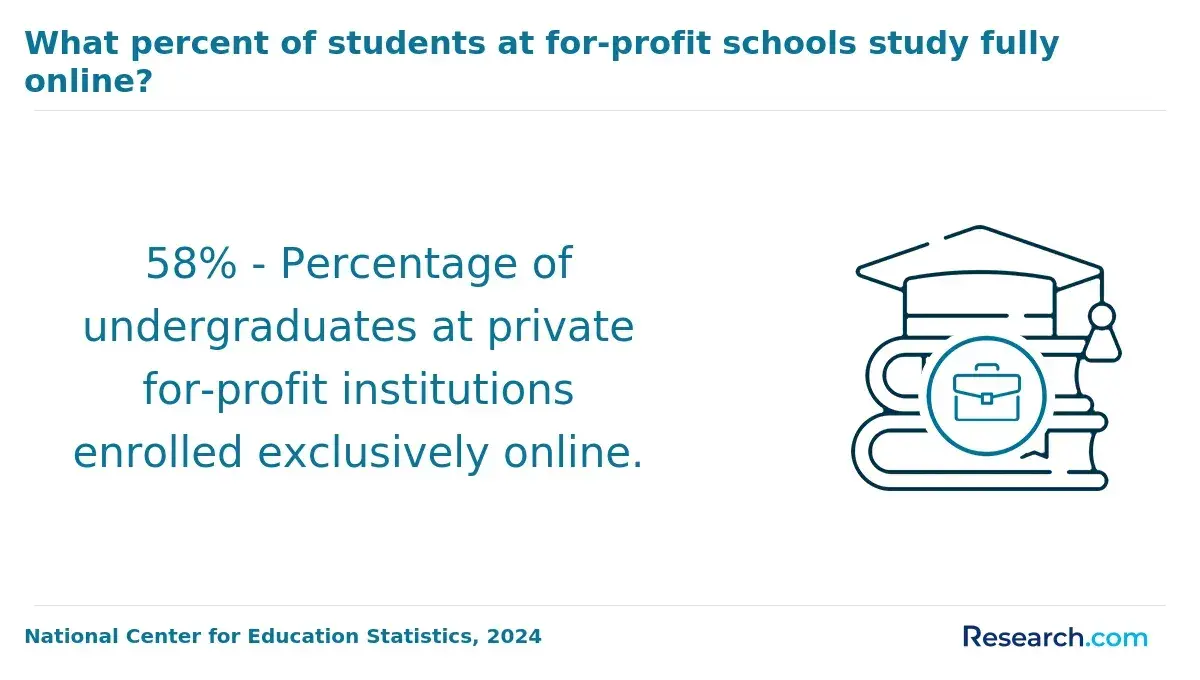
Private for-profit and online programs require more outcome verification. Some are legitimate and flexible, but students should ask for program-level completion rates, internship support, employer partnerships, graduate employment data, and whether the institution is regionally accredited.
Where Are the Best Job Markets and Remote Opportunities for Finance Concentrations?
The strongest finance job markets combine employer density, internship access, alumni networks, and industry specialization. A student's location can matter most for internships and first jobs, while remote and hybrid options often become more realistic after a candidate has experience.
The table below summarizes major U.S. finance markets and the concentrations they tend to support. Use this as a planning tool, not a rule, because strong finance roles can also exist in smaller regional economies.
| Market | Strong concentration fit | Why it matters | Remote or hybrid outlook |
| New York City metro | Investment management, banking, risk, fintech | Deep concentration of banks, asset managers, exchanges, and advisory firms | Hybrid is common for many professional roles; entry-level front-office roles may require office presence |
| San Francisco Bay Area | Fintech, venture finance, analytics, corporate finance | Technology and startup finance create demand for data-driven finance talent | Hybrid and remote roles exist, but competition is national |
| Charlotte | Banking, risk, corporate finance | Major banking center with strong demand for credit, operations, and risk talent | Hybrid roles are common in banking support and analyst functions |
| Dallas-Fort Worth | Corporate finance, real estate finance, banking, analytics | Large corporate headquarters base and growing financial services presence | Good hybrid potential after students gain analyst experience |
| Chicago | Trading, risk, insurance, corporate finance | Strong markets in derivatives, insurance, consulting, and corporate finance | Hybrid varies by employer and role type |
| Boston | Asset management, biotech finance, analytics | Investment firms, universities, healthcare, and life sciences create specialized finance demand | Hybrid is common, especially in corporate and investment operations roles |
| Washington, DC metro | Public finance, budgeting, risk, consulting | Government contractors, agencies, nonprofits, and consulting firms need finance talent | Hybrid is common, but some roles have security or location requirements |
Remote finance work is most common in FP&A, financial reporting, client service, planning support, fintech operations, and analytics. It is less reliable for early investment banking, trading, commercial banking relationship roles, and positions that depend heavily on in-person client or deal teams.
Online finance programs can be respected by employers when they are accredited, transparent about outcomes, and connected to practical work. The best online options help students create proof of ability through capstone models, dashboards, case competitions, internships, and employer-reviewed projects.
What Skills and Certifications Increase the Value of a Finance Concentration?
A finance concentration becomes more valuable when it is paired with skills and credentials that employers can verify. The strongest combinations are finance plus accounting, finance plus analytics, finance plus risk, or finance plus client planning.
The list below highlights practical skill and certification choices. Students should choose based on their target role rather than collecting credentials randomly.
- For corporate finance: advanced Excel, three-statement modeling, budgeting, variance analysis, Power BI, ERP exposure, and clear business writing.
- For investment management: valuation, portfolio theory, accounting analysis, market research, Bloomberg or similar tools where available, and CFA exam awareness.
- For financial planning: CFP-aligned coursework, tax planning basics, retirement planning, insurance fundamentals, behavioral finance, and client communication.
- For risk and credit: statistics, credit analysis, regulatory awareness, stress testing, SQL, Python basics, and model documentation.
- For fintech and analytics: SQL, Python, data visualization, forecasting, product metrics, AI literacy, and financial data governance.
Accreditation is one of the most important credibility filters. Regional institutional accreditation is essential, and business-school accreditation such as AACSB can add value, especially for students considering graduate study or employer-funded education later.
Students who already have a bachelor's degree and want management-level finance mobility may compare specialized master's programs with the cheapest AACSB online MBA no GMAT options. An MBA is not required for every finance role, but an accredited, affordable program can make sense when it adds leadership training, alumni access, and promotion potential without excessive debt.
Before enrolling, ask schools which software is taught, whether projects use real company cases, how often finance employers recruit from the program, whether internships are credit-bearing, and whether certification preparation is embedded or merely advertised. These details often reveal more about value than brochure language.
Which Finance Concentration Offers the Best Return on Investment?
The best ROI usually comes from the lowest net cost that still provides credible accreditation, timely completion, relevant coursework, employer access, and a realistic path into the student's target finance role. Institution type matters, but it does not determine value by itself.
The table below compares common finance degree models. Published tuition is only the starting point; scholarships, grants, transfer credits, housing, fees, lost work time, and extra semesters can change the real price substantially.
| Model | Typical value advantage | Best for | ROI risk | How to evaluate it |
| In-state public university | Lower published tuition and broad employer recognition | Traditional students, transfer students, and cost-conscious students targeting corporate finance, banking, accounting-finance, or risk | Large class sizes or limited individual career coaching at some campuses | Compare net price, graduation rate, finance placement, internship access, and business-school accreditation |
| Out-of-state public university | Access to a stronger regional market or specialized finance program | Students targeting a specific city, employer network, or concentration unavailable locally | Higher tuition may erase the benefit unless recruiting access is strong | Verify whether the program places graduates in the target market often enough to justify the cost |
| Private nonprofit university | Potentially stronger alumni networks, smaller classes, selective recruiting, and scholarships | Students pursuing competitive tracks such as investment management, consulting, or elite financial services | High sticker price if aid is limited or outcomes are unclear | Focus on net price after grants, debt at graduation, employer list, alumni engagement, and internship outcomes |
| Private for-profit institution | Flexible scheduling and career-focused formats in some programs | Working adults who need high flexibility and have verified accreditation and outcomes | Potentially weaker employer recognition, higher borrowing, or lower completion outcomes if not carefully vetted | Check regional accreditation, transferability, program-level outcomes, total cost, and employer acceptance |
| Online public or nonprofit program | Flexibility, lower relocation cost, ability to keep working, and access to accredited programs outside the local area | Working adults, parents, military students, rural students, and transfer students | Weak networking if the program lacks live support, projects, or employer engagement | Ask about synchronous options, career coaching, online internships, alumni access, and completion support |
College Board's 2024-25 tuition data shows why net price matters: the average published tuition and fees for private nonprofit four-year colleges were almost four times the in-state public average. That does not automatically make private programs a poor choice, but it raises the standard of proof for career support, scholarships, and placement outcomes.
Use the following checklist before committing to a finance program. It is designed to catch the most common ROI mistakes before they become debt or lost time.
- Calculate total cost using tuition, fees, books, technology costs, housing or commuting, interest, and the number of semesters you realistically need.
- Compare net price after grants and scholarships, not just published tuition.
- Confirm regional accreditation and, when relevant, business-school accreditation such as AACSB, ACBSP, or IACBE.
- Ask how many transfer credits will apply directly to the finance degree rather than only as electives.
- Review finance-specific career outcomes, internship participation, employer partners, and salary reporting methods.
- Estimate opportunity cost if the program requires reducing work hours or delaying full-time employment.
- Choose the concentration that fits your strongest likely entry role, not only the one with the highest senior salary.
Students should also compare finance against other helping, business, or applied professional paths if their motivation is not primarily markets, analysis, planning, or business decision-making. For example, someone drawn more to family systems and client counseling than financial planning may find better personal fit by researching an online family counseling degree before committing to finance.
Which Finance Concentrations Provide the Strongest Long-Term Job Security?
The finance concentrations with the strongest long-term job security are those that remain useful across industries, economic cycles, and technology changes. Corporate finance, accounting-finance, risk management, financial planning, and analytics-oriented finance generally offer the strongest resilience.
Long-term security depends on adaptability. BLS wage and growth data can show where demand exists, but students should also evaluate whether a concentration builds transferable capabilities: financial interpretation, regulatory understanding, forecasting, data analysis, ethical judgment, and communication with non-finance decision-makers.
The most secure finance graduates are likely to be those who can translate numbers into decisions. AI can draft reports and automate dashboards, but employers still need people who can question assumptions, explain trade-offs, identify risk, communicate with clients, and recommend action under uncertainty.
Students who want maximum career durability should build a layered plan. Start with a broad finance concentration, add a technical or credential-based specialty, gain experience through internships or projects, and revisit graduate education only when it clearly supports promotion, specialization, or a career pivot.
- Choose corporate finance if you want the broadest employer base and a clear path from analyst to manager.
- Choose risk management if you want stable demand in banking, insurance, compliance, and enterprise decision-making.
- Choose financial planning if you want a people-centered finance career with strong demand tied to retirement and wealth decisions.
- Choose fintech or analytics if you enjoy data tools and want to work where finance and technology overlap.
- Choose investment management if you are prepared for a competitive recruiting environment and can access strong networking channels.
Some finance professionals later move into research, teaching, executive leadership, or specialized consulting. If that is part of a long-range plan, compare graduate options carefully; flexible online doctorate programs may be relevant for experienced professionals, but they should be evaluated by accreditation, faculty fit, research expectations, and career purpose rather than speed alone.
The bottom line: the best finance concentration is the one that combines labor-market demand with a school model you can afford, complete, and use. A public, private nonprofit, for-profit, campus, or online program can be a good decision when the net price, credibility, support, and career alignment are strong enough to justify the investment.
Other Things You Should Know About Finance
Corporate finance is the best all-around choice for many students because it leads to roles in many industries, including FP&A, treasury, pricing, budgeting, and finance management. Students who are strong in data may get better long-term upside from financial analytics or fintech.
Senior corporate finance, quantitative finance, investment management, and risk leadership roles often have the highest salary potential. BLS May 2024 data lists financial managers at a $161,700 median annual wage, but entry-level salaries vary by location, employer, school network, and experience.
Yes, online finance degrees can be respected when they come from accredited institutions and include rigorous coursework, applied projects, career support, and transparent outcomes. Employers are usually more concerned with accreditation, skills, internships, and performance than whether every course was online.
A private university may be worth it if scholarships reduce the net price and the school offers strong recruiting, alumni access, internships, and placement in the student's target finance track. If the higher cost leads to substantially more debt without better outcomes, an in-state public or accredited online program may offer better ROI.
Top Trending Finance Rankings
See What Experts Have To Say About Studying Finance
Read our interview with Finance experts

H. Kent Baker
Finance Expert
Professor at Department of Finance and Real Estate
American University

Andrew Karolyi
Finance Expert
Dean of the Cornell SC Johnson College of Business
Cornell University

Ekaterina Potemkina
Finance Expert
Assistant Professor of Finance
Indiana University

References
- The most in-demand finance jobs in 2026 https://flexa.careers/blog/the-most-in-demand-finance-jobs-in-2026
- What skills will finance workers and organizations need in an uncertain future? https://www.cfainstitute.org/insights/articles/future-skills-for-finance-professionals
- What is the average salary for Master’s in Finance graduates globally? https://mentr-me.com/question/what-is-the-average-salary-for-masters-in-finance-graduat
- Your Guide to Getting a Job in Finance https://www.mountunion.edu/academics/undergraduate-degrees/finance/your-guide-to-getting-a-job-in-finance
- Best MBA Specialisation for 2026 | Which MBA Specialisation is Most in Demand? https://lsmt.org.uk/blog/most-in-demand-and-best-mba-specialisation
- Emerging Jobs and Skills in Finance, Tech, Marketing, HR, and Supply Chain | Top Stack https://topstackgroup.com/future-of-work-emerging-jobs-skills/
- Finance and Accounting Degree Careers and Salary in Europe - 2026 - StudyinEurope.eu https://www.studyineurope.eu/finance-accounting/finance-accounting-degree-careers-salary-europe/
- What Do Finance Jobs Pay? Salaries Across Every Level | Trueline https://wearetrueline.com/what-do-finance-jobs-pay-a-complete-salary-guide-for-finance-professionals/
- How Many Jobs Are Available in Finance? – 365 Financial Analyst https://365financialanalyst.com/career-advice/how-many-jobs-are-available-in-finance/
- Guide to Finance Internships | Higherin https://higherin.com/career-guides/finance/finance-internships