2027 Finance Degree Schedule Flexibility Report: Online, Hybrid, Evening, Weekend, and Accelerated Options Compared

Co-Founder and Chief Data Scientist
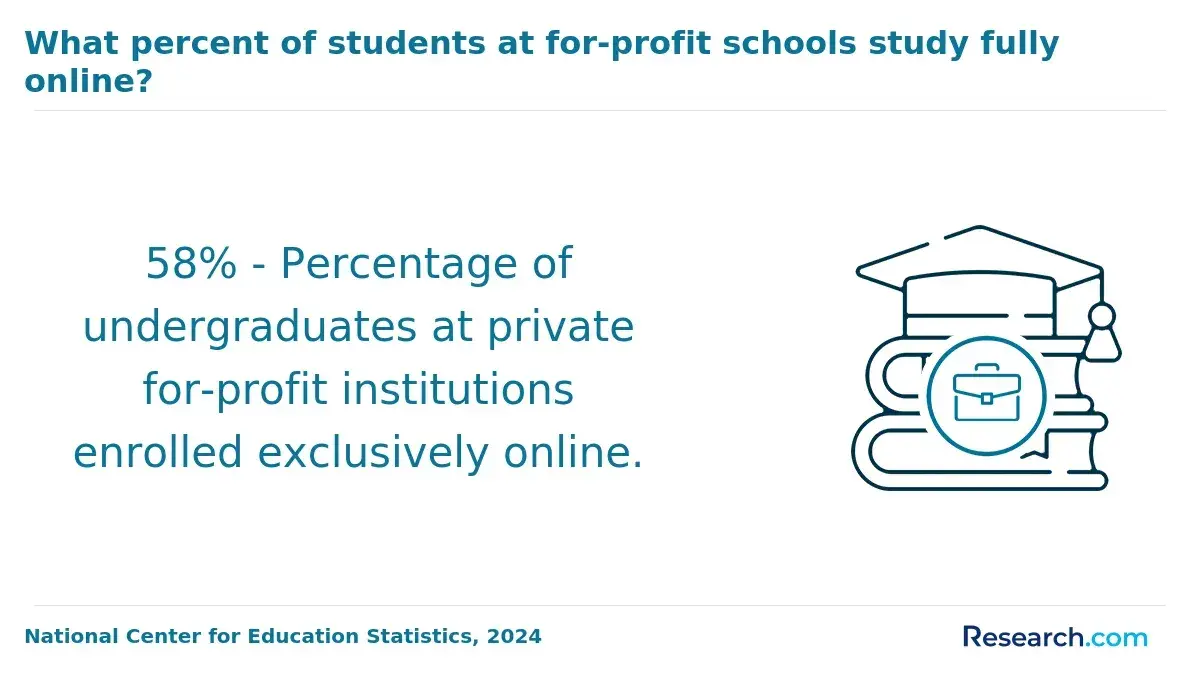
Choosing a finance degree is often a scheduling decision as much as an academic one. NCES reported in 2024 that 53% of U.S. undergraduates took at least one distance education course in fall 2022, showing how common flexible learning has become.
This guide is for students balancing work, caregiving, military service, commuting, or career changes. It explains how online, hybrid, evening, weekend, and accelerated finance degree formats differ in attendance, pace, workload, cost, and suitability so you can choose a program that fits real life-not just a brochure.
Key Things You Should Know
- Fully online finance programs usually offer the most location flexibility, but they are not always self-paced; many still require weekly deadlines, live sessions, proctored exams, group projects, or fixed 8- to 16-week terms.
- Hybrid, evening, and weekend programs can work well for students who want face-to-face networking or faculty access, but they may require predictable travel, campus attendance, and backup childcare or shift coverage.
- Accelerated finance degrees can shorten completion time through 5- to 8-week courses, transfer credits, year-round enrollment, or heavier course loads, but students should expect a more compressed weekly workload and less margin for missed assignments.
- How Do Online, Hybrid, Evening, Weekend, and Accelerated Degree Programs Differ?
- How Flexible Are Fully Online Degree Programs?
How Do Online, Hybrid, Evening, Weekend, and Accelerated Degree Programs Differ?
Finance degree formats differ across five practical dimensions: where you attend, when you participate, how fast courses move, how much structure you receive, and how much control you have over your weekly schedule. A finance curriculum may cover financial accounting, corporate finance, investments, financial modeling, risk management, business analytics, economics, taxation, and ethics, but the delivery format determines how those courses fit around work and family obligations.
The table below compares the most common flexible formats. Use it as a first-pass filter before reviewing individual program calendars, because two programs with the same label can have very different attendance rules.
| Format | Typical attendance pattern | Pace | Best fit | Main trade-off |
| Fully online | Coursework completed remotely; may be asynchronous, synchronous, or mixed | Often 8 to 16 weeks per course | Students who need location flexibility or cannot commute regularly | Requires strong time management and careful review of live-class rules |
| Hybrid | Mix of online work and scheduled campus meetings | Often traditional semester or shorter modules | Students who want online convenience plus in-person faculty or peer interaction | Campus days may conflict with work shifts, caregiving, or travel distance |
| Evening | Classes after standard work hours, often once or twice weekly | Usually semester-based or modular | Full-time workers with predictable daytime schedules | Long days can create fatigue and reduce study time after class |
| Weekend | Friday evening, Saturday, Sunday, or monthly intensive sessions | Semester, cohort, or modular | Workers with weekday commitments or regional commuters | Weekend blocks can disrupt family time, second jobs, or caregiving routines |
| Accelerated | Online, hybrid, evening, or weekend delivery with compressed terms or heavier course loads | Often 5 to 8 weeks per course | Students with transfer credits, strong study habits, and a clear completion goal | Less flexibility inside each week because assignments arrive quickly |
A useful rule is that "flexible" does not always mean "easier" or "less time-consuming." It usually means the program gives you a different way to distribute the same academic workload. For finance students, that workload often includes problem sets, spreadsheet modeling, case analysis, team presentations, exam preparation, and applied projects that cannot be rushed without affecting learning.
Before comparing schools, separate delivery format from pacing model. Online describes where you learn; asynchronous describes whether you can choose when to log in; accelerated describes how quickly the course moves; self-paced describes whether you can control the order and timing of assignments within school limits. These features can overlap, but they are not interchangeable.
How Flexible Are Fully Online Degree Programs?
Fully online finance programs are usually the strongest option for students who need geographic flexibility, frequent travel, irregular work schedules, or limited access to campus. They can be especially practical for students who work in banking, insurance, accounting support, retail management, military roles, or small-business operations and need to study outside normal classroom hours.
The key distinction is synchronous versus asynchronous learning. In a synchronous online finance course, students meet live through video at scheduled times. In an asynchronous course, students can typically watch lectures, complete modules, and submit work within weekly deadlines. Many programs use both models, such as recorded lectures with live exam reviews or required group presentations.
Online students should check the following scheduling details before enrolling, because these rules often determine whether a program is genuinely workable:
- Live-class expectations: Ask whether attendance is required, optional, recorded, or graded, and whether sessions are held during business hours, evenings, or weekends.
- Exam requirements: Confirm whether exams are open-book, timed online, remotely proctored, or held at an approved testing center.
- Group project timing: Finance courses frequently use team projects, so ask how groups coordinate across time zones and whether live presentations are mandatory.
- Assignment rhythm: Review whether major deadlines fall weekly, twice weekly, at midnight in a specific time zone, or at the end of each module.
- Residency requirements: Verify whether "online" includes orientation, capstone presentations, internships, networking weekends, or final exams on campus.
Online finance programs work best for students who can block consistent study time without needing a classroom to stay accountable. They may not be ideal for students who learn best through real-time discussion, need frequent reminders, or have a home environment with limited quiet study space. If you are comparing finance with other remote degree paths, reviewing broader examples of online study models-such as an online family counseling degree-can help you understand how fields differ in remote coursework, supervised experience, and in-person requirements.
A practical expectation is to budget study time as if the course were campus-based. Even when lectures are recorded, a three-credit finance course may require several hours each week for readings, spreadsheets, quizzes, discussion posts, and exam review. The flexibility is in when you complete the work, not whether the work exists.
Hybrid finance programs combine online coursework with required in-person meetings. They can offer a strong balance for students who want flexibility but still value classroom discussion, faculty access, career events, and networking with classmates. The risk is that "hybrid" can mean anything from one campus weekend per term to multiple weekly class meetings.
Use the table below to interpret common hybrid structures. The label matters less than the actual attendance calendar, especially if you commute, work shifts, care for children, or live far from campus.
| Hybrid model | Typical in-person requirement | Schedule flexibility | Good for | Watch for |
| Low-residency | One to several campus visits per year | High between visits | Regional students and working adults who can plan travel early | Travel, hotel, childcare, and missed work costs |
| Alternating weeks | Campus class every other week | Moderate | Students close to campus with predictable schedules | Calendar conflicts during exams or presentations |
| Weekly hybrid | One or more campus meetings most weeks | Lower | Students who want frequent face-to-face structure | Commute time and limited section availability |
| Intensive weekend hybrid | Long sessions on selected weekends | Moderate to high if weekends are protected | Students who can reserve full blocks of time | Fatigue from long sessions and reduced recovery time |
Hybrid programs are often a good fit when finance courses rely on live problem solving, case discussion, presentations, Bloomberg terminal access, campus recruiting, or applied portfolio projects. They can also help students build professional relationships that may matter for internships, analyst roles, banking, financial planning, or corporate finance positions.
However, hybrid students should avoid assuming that online days are "days off." The online portion may include lectures, discussion boards, data analysis, group work, quizzes, or preparation for the next campus session. If the program compresses in-person meetings into fewer days, the independent workload between meetings can be substantial.
The best way to evaluate a hybrid finance degree is to request the full academic calendar before applying. Ask whether campus dates are fixed for the entire term, whether attendance is mandatory, how many absences are allowed, and whether weather, illness, caregiving emergencies, or work travel can be accommodated without delaying graduation.
Accelerated finance degrees shorten time to completion by using compressed terms, heavier course loads, year-round calendars, transfer credit, prior learning assessment, or stacked credentials. They may be offered online, hybrid, evening, or weekend, so "accelerated" describes pace rather than location.
The table below summarizes common acceleration methods. It helps distinguish programs that are faster because they are better organized from programs that are simply more intense.
| Acceleration method | How it works | Potential benefit | Scheduling risk |
| Short terms | Courses run in 5- to 8-week blocks instead of a full semester | Students focus on fewer courses at once and complete credits more frequently | Weekly deadlines arrive quickly and missed work is harder to recover |
| Year-round enrollment | Students take courses in fall, spring, and summer | Reduces calendar gaps between terms | Less time for rest, internships, family obligations, or busy work seasons |
| Transfer-friendly design | Prior college credits apply toward general education or electives | Can reduce remaining credits and cost | Major finance prerequisites may still need to be completed in sequence |
| Competency-based pacing | Students move through material after demonstrating mastery | Experienced students may progress faster in familiar subjects | Requires self-discipline and may not fit students who need frequent live instruction |
| Combined bachelor's-to-master's pathway | Graduate courses count toward both degrees when allowed | Can shorten the path to an advanced credential | Higher academic intensity and stricter eligibility requirements |
Accelerated finance programs are best for students who already have a stable weekly routine, strong quantitative skills, reliable technology, and a clear reason to finish quickly. They may work well for students with transfer credits from community college, prior business coursework, military education benefits, or employer deadlines for promotion eligibility.
They are usually a poor fit for students entering college after a long break without math preparation, students facing unpredictable caregiving demands, or workers in seasonal jobs with heavy overtime. Finance classes build on one another, so rushing through accounting, economics, statistics, and Excel-based modeling can create problems later in valuation, investments, and risk management.
Students considering future graduate study should also think ahead. Some finance professionals eventually compare MBA, master's, or even online doctorate programs when planning long-term advancement. An accelerated bachelor's can help save time, but it should still provide the analytical foundation needed for advanced coursework.
The right pace depends on how many hours a student can realistically protect each week. Full-time study can shorten the calendar, but it may conflict with employment and caregiving. Part-time study reduces weekly pressure, but it extends completion time. Self-paced study can offer the most control, but only for students who can manage deadlines without frequent external structure.
College Board's 2024 Trends in College Pricing reported average published tuition and fees of $11,610 for in-state students at public four-year institutions and $43,350 at private nonprofit four-year institutions for 2024-25. Because tuition is often charged per credit, part-time and full-time students may pay similar tuition for the same credits, but the timing of payments, fees, financial aid eligibility, and opportunity costs can differ.
Students should make the pace decision by working through these steps in order. The goal is to choose a schedule that is sustainable for several terms, not just impressive on paper.
- List nonnegotiable weekly commitments, including work hours, commuting, caregiving, medical appointments, religious commitments, and sleep.
- Estimate study blocks for each course, including reading, problem sets, spreadsheets, exams, discussion posts, and group work.
- Check whether financial aid, scholarships, employer tuition benefits, or veteran benefits require a minimum credit load.
- Review prerequisite chains, because some finance courses must be taken in sequence and cannot be moved freely.
- Ask how easy it is to slow down, pause, or increase credits later without losing cohort status, aid eligibility, or course access.
Part-time study is often the safest choice for working adults taking two demanding quantitative courses in the same term. Full-time study can work when students have strong support, fewer outside obligations, and a need to finish sooner. Self-paced study can be excellent for motivated students with prior business experience, but it can become risky when students underestimate how much independent planning is required.
A good test is to review the syllabus for a core finance course and place every deadline on a real calendar. If the schedule already looks fragile before emergencies, overtime, illness, or family events, the pace is probably too aggressive.
Working adults and caregivers usually need predictable flexibility more than unlimited flexibility. The best schedule is one that protects essential responsibilities while keeping steady academic progress. For some students, that means asynchronous online classes. For others, a fixed Saturday cohort or one evening per week may be easier because it creates a dependable routine.
The strongest match depends on the student's constraint. A nurse, retail manager, parent of young children, military spouse, office worker, rideshare driver, and caregiver for an aging parent may all need "flexibility," but not the same kind.
| Student situation | Likely best format | Why it may work | Format to approach carefully |
| Rotating shifts or frequent travel | Asynchronous online | Work can be completed around changing hours | Live evening classes with strict attendance |
| Predictable 9-to-5 job | Evening, weekend, or hybrid | Class time can be planned around work | Accelerated overload without recovery time |
| Primary caregiver | Part-time asynchronous online or low-residency hybrid | Reduces regular travel and allows study during available windows | Weekly campus hybrid with limited absence flexibility |
| Student who needs structure | Evening, weekend, synchronous online, or cohort hybrid | Regular meetings create accountability | Fully self-paced courses with few checkpoints |
| Career changer with transfer credits | Accelerated online or evening program | Prior credits may reduce time while preserving employment | Programs with unclear transfer evaluation policies |
Older learners, returning students, and caregivers should also consider comfort with technology, advising access, and course design. Guides to the best degrees for older adults can be useful when comparing programs that prioritize accessible online systems, flexible pacing, and adult-student support.
The most important red flag is a program that uses flexible language but cannot answer specific scheduling questions. Admissions teams should be able to explain live attendance rules, how missed classes are handled, whether recordings are available, when finance courses are offered, and whether students can change pace without reapplying.
For caregivers, backup planning is essential. Ask whether deadlines can be extended for documented emergencies, whether online exams have multiple windows, whether group work can be completed asynchronously, and whether a leave of absence affects tuition, aid, or graduation timeline.
Flexible finance degrees can meet the same academic standards as campus programs when they are offered by properly accredited institutions and follow the same curriculum expectations. Schedule format alone does not determine quality. Accreditation, faculty qualifications, assessment standards, student support, and employer recognition matter more.
At minimum, students should verify institutional accreditation through a recognized accreditor. For business and finance programs, programmatic accreditation or recognition may also matter. AACSB accreditation is often viewed as a strong business-school signal, especially for students considering competitive finance roles, graduate business study, or employer tuition reimbursement. Students comparing graduate options may also encounter resources on the cheapest AACSB online MBA no GMAT pathways when weighing cost, accreditation, and admissions flexibility.
Finance itself is not licensed as a single profession in the way nursing or teaching may be, but certain career paths involve exams, registrations, or employer-sponsored credentials. Examples include securities licensing, financial planning credentials, accounting-related credentials, insurance licensing, or risk management certifications. Requirements vary by role, employer, state, and regulatory body.
Students should verify the following before enrolling in any flexible finance program:
- Institutional accreditation: Confirm the school is accredited by a recognized accrediting agency and that the campus or online division is included.
- Business-school recognition: Ask whether the business school or finance program holds AACSB, ACBSP, IACBE, or another relevant accreditation if that matters for your goals.
- Credit transfer rules: Check whether credits will transfer to graduate programs or professional pathways you may pursue later.
- Exam preparation alignment: Ask whether coursework supports common finance career exams or credentials without implying automatic eligibility.
- Internship or experiential requirements: Verify whether any required internship, practicum, capstone, trading lab, or residency must be completed in person.
Students should be cautious with schools that avoid direct accreditation answers, promise career outcomes, pressure immediate enrollment, or advertise extremely fast completion without explaining credit requirements. Flexible delivery can be legitimate, but vague claims are a warning sign.
Cost comparisons should include more than tuition. Flexible finance programs can reduce commuting, parking, relocation, and lost-wage costs, but they may add technology fees, online course fees, proctoring charges, travel for residencies, or higher per-credit rates. A cheaper schedule on paper may become expensive if it causes missed work, childcare problems, or delayed completion.
The table below summarizes common cost factors by format. It is not a price list, because actual tuition varies by school, residency status, transfer credits, and aid eligibility.
| Format | Costs that may decrease | Costs that may increase | Financial aid issue to check |
| Fully online | Commuting, parking, relocation, some meal costs | Technology, online fees, proctoring, software, home internet | Minimum credit load for grants, loans, scholarships, or employer benefits |
| Hybrid | Daily commuting compared with full campus attendance | Travel, lodging, parking, childcare during campus sessions | Whether residencies are included in tuition or billed separately |
| Evening | Lost wages if classes do not conflict with work | Transportation after work, meals, parking, late childcare | Availability of required courses outside daytime hours |
| Weekend | Weekday work disruption | Weekend childcare, travel blocks, reduced overtime availability | Whether weekend cohorts have separate tuition or fees |
| Accelerated | Total living expenses if completion is faster | Higher short-term payment pressure and fewer work hours during intense terms | How aid is disbursed across shorter or overlapping terms |
Financial aid can be less flexible than the course schedule. Students should ask the financial aid office how enrollment intensity, term length, repeated courses, withdrawals, satisfactory academic progress, and summer enrollment affect aid. Employer tuition benefits may also require grades, upfront payment, approved schools, or reimbursement after course completion.
A practical cost comparison should include three totals: direct academic cost, life logistics cost, and delay cost. Direct academic cost includes tuition and fees. Life logistics cost includes internet, software, transportation, meals, childcare, and travel. Delay cost includes extra terms, missed promotions, or reduced work hours. This broader view is especially important for accelerated and hybrid formats.
Finance students should also budget for tools and materials. Some courses may require spreadsheet software, financial calculators, data platforms, textbooks, exam proctoring, or subscriptions. Ask whether software is included through the school or must be purchased separately.
A flexible finance degree should not leave students to figure everything out alone. Strong programs provide advising, tutoring, library access, career services, technical support, faculty interaction, internship guidance, and clear course maps. These services matter because finance coursework can become difficult quickly if students fall behind in accounting, statistics, Excel, economics, or quantitative analysis.
When comparing programs, ask for evidence of support and outcomes rather than relying on marketing language. The following questions help reveal whether the schedule is manageable and whether students receive meaningful help.
- Academic planning: Can an advisor show a full degree plan by term, including prerequisites and when each finance course is offered?
- Workload transparency: Are sample syllabi available for core finance courses, including weekly assignments, exams, and group projects?
- Faculty access: Do instructors hold office hours in evenings, weekends, or online formats that match the program schedule?
- Tutoring support: Is help available for accounting, statistics, economics, Excel, financial modeling, and quantitative finance topics?
- Career services: Are online and part-time students eligible for internships, recruiting events, resume reviews, interview coaching, and alumni networking?
- Technology support: Is technical help available during the hours when working students are most likely to study?
- Schedule changes: Can students move between full-time and part-time study, switch sections, pause enrollment, or retake a course without major penalties?
Students should also compare outcomes carefully. Useful indicators include retention, graduation rates, internship access, job placement reporting methods, graduate school placement, employer partnerships, and alumni career paths. Be cautious with vague claims that do not explain the student population, reporting period, or whether outcomes include online and part-time students.
Common mistakes include assuming online means self-paced, ignoring campus visit requirements, choosing accelerated courses during a heavy work season, failing to confirm accreditation, and overlooking time-zone conflicts for live classes. A better approach is to request sample syllabi, map deadlines onto a real calendar, calculate total costs, and speak with current students or alumni in the same format.
The best finance degree schedule is the one you can complete consistently while learning the material well enough to use it. A format that looks slower but fits your life may produce better academic performance than a faster schedule that constantly forces missed work, rushed assignments, or withdrawals.
Evening and weekend finance programs are designed for students who can attend at set times outside standard weekday hours. They can fit a full-time work schedule when the student's job is predictable, the commute is manageable, and the program publishes course rotations far enough in advance. They are less flexible than asynchronous online programs, but they provide more structure and regular contact.
Evening formats commonly meet once or twice per week after work. Weekend formats may meet on Saturdays, Sundays, Friday evenings, or occasional intensive weekends. Both can be useful for students who prefer live instruction in accounting, valuation, financial statement analysis, statistics, or investment coursework.
Before choosing an evening or weekend schedule, compare the pressure points that affect daily life rather than only the class start time:
- Commute reliability: A 6:00 p.m. class may be realistic from a downtown office but difficult from a rotating job site or a long suburban commute.
- Energy after work: Finance courses require quantitative focus, so students should consider whether they can handle exams or spreadsheet assignments after a full workday.
- Course sequencing: Ask whether required finance courses are offered every term or only once per year in evening or weekend sections.
- Family coverage: Weekend classes can help weekday workers but may create childcare, eldercare, or shared custody conflicts.
- Employer support: Tuition assistance, schedule swaps, or occasional early departures can make a fixed class schedule more sustainable.
Evening and weekend programs can be especially attractive for students who want to keep working full time while building credentials for roles such as financial analyst, budget analyst, credit analyst, personal financial advisor, treasury analyst, or corporate finance associate. According to the BLS Occupational Outlook Handbook updated in 2024, financial analysts had a 2023 median pay of $99,890, with faster-than-average projected growth from 2023 to 2033. That does not mean a finance degree guarantees that income, but it shows why many working adults view schedule-compatible education as a career investment.
A common mistake is enrolling in an evening or weekend program without checking whether upper-division electives are available in the same format. Introductory courses may be convenient, while advanced courses in derivatives, portfolio management, fintech, or international finance may have fewer sections. Ask for a two-year course rotation, not just the first semester schedule.
Other Things You Should Know About Finance
Ask the school whether students can switch from full-time to part-time study, move from evening to online sections, take a leave of absence, or change cohorts. Policies vary, and some programs only offer required finance courses in certain terms.
Yes. Asynchronous online courses may rely more on assignment deadlines, while synchronous, hybrid, evening, and weekend courses may have stricter attendance rules. Always check whether absences affect grades, participation points, exams, or progression.
Live sessions, exam windows, office hours, and assignment deadlines may follow the school's time zone. Students outside that zone should confirm whether recordings are available and whether deadlines can be adjusted.
Sometimes, but not always. Some accelerated programs allow students to reduce course loads, while cohort-based programs may require waiting for the next course cycle. Ask about pace changes before enrolling.
See What Experts Have To Say About Studying Finance
Read our interview with Finance experts

Ekaterina Potemkina
Finance Expert
Assistant Professor of Finance
Indiana University

H. Kent Baker
Finance Expert
Professor at Department of Finance and Real Estate
American University

Jason James Sandvik
Finance Expert
Assistant Professor of Finance
University of Arizona

- Common Challenges Faced by At-Risk College Students https://www.quadc.io/blog/common-challenges-faced-by-at-risk-college-students
- Online, Hybrid, and More: Flexible Learning Options in College - ReUp Education https://reupeducation.com/blog/online-hybrid-and-more-flexible-learning-options-in-college/
- Working Students Face New Challenges in a Shifting Policy Landscape https://www.higheredtoday.org/2025/08/18/working-students-face-new-challenges-in-a-shifting-policy-landscape/
- Distance Education: New Requirements https://www.powerslaw.com/distance-education-new-requirements/
- Journal of Education and Human Development https://jehd.thebrpi.org/vol-12-no-2-december-2023-abstract-8-jehd
- Best Finance Degrees Online | Accounting.com https://www.accounting.com/degrees/finance/bachelors/best-online-programs/
- Full-time, part-time, online - which study mode is right for you? https://www.studentspace.pl/en/blog/post/studia-stacjonarne-zaoczne-wieczorowe---ktory-tryb-wybrac
- Course Schedule and Course Pacing: Does it Affect Student Success in Online Asynchronous Courses? - OJDLA https://ojdla.com/articles/course-schedule-and-course-pacing-does-it-affect-student-success-in-online-asynchronous-courses
- 10 Fastest Accelerated Online Bachelorâs of Finance Degree Programs 2026 | Academic Influence https://academicinfluence.com/rankings/degrees/fastest-online-bachelors-finance
- Scheduling Courses for Flexibility and Student Success https://www.facultyfocus.com/articles/trends-in-higher-education-scheduling-courses-for-flexibility-and-student-success/