
2027 Easiest Online Bachelor's in Finance Degree Programs Ranking in Iowa

Co-Founder and Chief Data Scientist
Exploring finance as a career path can open doors to exciting opportunities and financial independence. For Iowa students seeking flexibility, online programs offer a convenient way to earn a bachelor's degree without sacrificing everyday commitments.
This article introduces the 2027 Easiest Online Bachelor's in Finance Degree Programs Ranking in Iowa, developed by the Research.com team of data scientists. It's designed to help you identify finance programs that offer a balance of accessibility and quality education.
By reading, you'll gain insights to confidently choose a program that fits your lifestyle and career goals, empowering your journey toward success in finance.
Key benefits of getting online finance degree in Iowa
- Finance degree graduates in Iowa can expect strong earning potential; for example, Financial Advisors earn a mean annual wage of $150,670, while Financial Analysts and Investment Banking Analysts earn around $112,950 annually.
- Graduates from popular Iowa universities often explore exciting career paths such as credit analysis, insurance underwriting, or financial advising, offering diverse opportunities to grow professionally and financially.
- Completing an online finance degree in Iowa offers flexibility and convenience, allowing students to balance work and study while gaining valuable skills from reputable institutions without relocating.
- Key benefits of getting online finance degree in Iowa
- What can I expect from online finance degree in Iowa?
- Where can I work with online finance degree in Iowa?
- How much can I make with online finance degree in Iowa?
- 2027 Easiest Online Bachelor's in Finance Degree Programs Ranking in Iowa
- Key Findings
- How long does it take to complete online finance degree in Iowa?
- Return on Investment (ROI) of Online Finance Degrees in Iowa
- What's the difference between online and on-campus finance degree?
- What is the average cost of online finance degree in Iowa?
- What financial aid is available to online finance degree students in Iowa?
- Return on Investment: Evaluating the True Value of an Online Finance Degree in Iowa
- What are the prerequisites for enrolling in online finance degree program in Iowa?
- What courses are typically in online finance degree programs in Iowa?
- What types of specializations are available in online finance degree programs in Iowa?
- How do you choose the best online finance degree in Iowa?
- What career paths are available for online finance degree students in Iowa?
- What is the job market for online finance degree in Iowa?
- Related Finance Rankings for Nearby States
- Top Trending Finance Rankings
- See What Experts Have To Say About Studying Finance
What can I expect from online finance degree in Iowa?
The average cost of an online finance degree in Iowa typically ranges from about $10,000 to $20,000 for in-state students, depending on the institution and program length. For example, graduates from popular schools like the University of Iowa or Iowa State University often find that their tuition stays on the lower end compared to national averages. This affordable tuition, combined with financial aid options such as scholarships and employer reimbursement, makes earning a finance degree financially manageable.
Graduates often recall balancing their budgets by applying for federal aid early and leveraging on-campus resources for scholarship guidance. Many appreciated knowing the exact costs upfront, allowing them to plan realistically for tuition, textbooks, and occasional travel for proctored exams.
Students at these Iowa universities also highlight the value of practical skills gained, which justify their investment. The programs focus on tools like Excel for financial modeling, making them feel confident stepping into local banks or insurance firms after graduation. This blend of affordability and real-world readiness creates a positive experience for many pursuing finance careers in Iowa.
Where can I work with online finance degree in Iowa?
Graduates from online finance programs at Iowa State University or the University of Iowa frequently land roles in banking, where they apply skills like financial assessment and risk management. For example, a recent graduate shared how their internship at a local community bank in Des Moines led to a full-time position as a loan officer. This illustrates the state's solid banking network and clear career pathways.
Many finance degree holders also find rewarding jobs in Iowa's insurance sector, working for companies such as Principal Financial Group. These roles often involve underwriting or policy advising-tasks that finance students practiced through case studies during their studies.
In manufacturing hubs like Cedar Rapids, graduates contribute as financial planners or internal auditors, supporting companies in budgeting and asset management. Previous students report strong job satisfaction knowing their work directly impacts local businesses.
Lastly, with the growth of fintech firms around Iowa City, graduates skilled in both finance and technology are in demand for data analysis and compliance roles, perfectly blending their degree knowledge with emerging industry trends.
How much can I make with online finance degree in Iowa?
Graduates with an online finance degree in Iowa, such as those from Drake University or the University of Iowa, often find promising salary prospects right after completing their studies. For instance, financial analysts typically earn a mean annual wage around $112,950 in the state, offering a solid return on educational investment. Entry-level roles might start closer to $50,000, but those who gain experience or certifications see steady salary growth.
Other common careers for these graduates include financial advisors, with a mean salary of $150,670, and credit analysts earning about $94,750 annually. Insurance underwriters also provide opportunities, with an average wage near $85,610. These figures reflect real potential incomes in sectors around Des Moines or Cedar Rapids where financial services thrive.
Iowa graduates report that internships and local networking play key roles in landing positions with these salary ranges. Pursuing certifications like CFA or CPA further boosts earning power, ensuring that your online degree positions you well in the state's competitive but rewarding finance job market.
2027 Easiest Online Bachelor's in Finance Degree Programs Ranking in Iowa
How do we rank schools?
Investing in your education is a significant decision that can shape your career, and the Research.com team recognizes the importance of making well-informed choices. To assist prospective students in Iowa, we have carefully developed the "2027 Easiest Online Bachelor's in Finance Degree Programs Ranking in Iowa." Our dedication to quality, credibility, and accuracy is demonstrated through thorough research and detailed analysis conducted to create this ranking.
We utilized the following reputable data sources to ensure a comprehensive evaluation of online finance degree programs:
By reviewing this ranking, readers will obtain essential insights to identify the most accessible online Bachelor's in Finance programs in Iowa, empowering them to make confident decisions about their education. For more information on how this ranking was developed, please visit our Research.com methodology page.


Key Findings
- Tuition for an online bachelor's degree in finance in Iowa ranges from $10,000 to $25,000, with public universities generally offering lower costs for in-state students.
- The employment rate for finance roles in Iowa is steady, with entry-level salaries averaging around $55,000 per year.
- After 5 to 10 years, average salaries can rise to about $85,000 or more, especially with certifications like CPA or CFA.
- Finance job demand in Iowa is expected to grow by about 5% over the next decade, particularly for financial analysts, accountants, and managers.
- Online finance programs cover key topics such as corporate finance, investment analysis, and risk management, often allowing flexible schedules for working students.
- Some Iowa schools collaborate with local companies and associations, enhancing certification and networking opportunities for students.
How long does it take to complete online finance degree in Iowa?
If you enroll full-time in an online finance degree program at popular Iowa schools like the University of Iowa or Iowa State University, expect to complete your studies in about four years, much like traditional on-campus students. Graduates often share how balancing a full course load and summer classes helped them stick to this timeline and graduate on schedule.
Part-time students, juggling jobs or family responsibilities, typically take five to six years or more. For example, a working professional pursuing an online finance degree from Drake University appreciated the flexibility to progress steadily without sacrificing income or family time.
Many Iowa programs offer credit for AP scores or relevant work experience, helping students reduce overall time. Accelerated online options allow motivated learners to finish in as little as two and a half to three years, which some recent graduates found rewarding for quickly entering the workforce.
Choosing an in-state public program means manageable tuition and access to tailored support, making the journey both affordable and encouraging, especially when flexibility allows you to design a pace fitting your life.
Return on Investment (ROI) of Online Finance Degrees in Iowa
When evaluating an online finance degree in Iowa, understanding the return on investment (ROI) is critical. On average, graduates see a tuition‐to‐salary payback period of just 2.5 to 4 years when comparing total program costs-around $38,449-to median starting salaries of $64,887. By factoring in financial aid, scholarships, and accelerated pathways, many students reduce their effective tuition by 20–30%, further shortening the payback timeline. Beyond salary, ROI also encompasses career growth and long‐term earning potential. Financial analysts in Des Moines report median mid‐career earnings exceeding $105,000, while certified planners earn up to $137,740 annually. These figures translate to a lifetime earnings premium of $500,000–$800,000 compared to peers without a finance degree. Prospective students should weigh these long‐term gains against upfront costs when selecting a program. For budget-conscious learners, exploring cost‐effective pathways can boost ROI even further. Consider our Inexpensive Finance Degree Programs Ranking in Florida to compare low-cost alternatives offering solid career outcomes. By strategically aligning program length, tuition, and financial aid, you can optimize your investment and accelerate your path to a high-earning finance career.
What's the difference between online and on-campus finance degree?
The key difference between online and on-campus finance degrees in Iowa lies in how you attend and interact with your program. Graduates from the University of Iowa often recall the energizing campus environment where face-to-face interaction with professors and peers sparked lively discussions and easy access to resources like career fairs and local internships. Meanwhile, those studying online appreciated the freedom to balance work and family, logging into classes on their own schedule without leaving home.
Costs can also differ. On-campus students typically pay about $10,000 annually for in-state tuition at public schools, but online programs sometimes offer slightly lower rates by cutting campus-related fees. However, keep in mind technology or software costs that might arise with online courses.
Networking feels different too. On-campus attendees enjoy spontaneous conversations and Iowa-based finance events, while online students build connections through virtual forums and can still pursue local internships to gain hands-on experience in Iowa's finance sector.
What is the average cost of online finance degree in Iowa?
Expect the average cost of an online finance degree in Iowa to fall well below the national median, with many public universities offering affordable online bachelor's finance programs Iowa residents find attractive. For example, graduates from the University of Iowa and Iowa State University often report total tuition costs ranging between $9,000 and $11,000. This lower tuition makes it easier to budget without sacrificing a quality education. Many students benefit from community college pathways and transfer agreements that reduce expenses further, providing a clear, manageable route to completing their degree.
Private colleges in Iowa usually price their online finance degrees higher, between $15,000 and $25,000 total, reflecting the added flexibility and resources they offer. Graduates frequently appreciate the personalized support and special scheduling options that help balance work, study, and personal life. While the price is higher, many find the investment worth it given the convenience and specialized coursework.
Keep in mind that additional costs such as technology fees and materials can add a few hundred dollars to your budget. Planning ahead means researching financial aid opportunities, including scholarships and employer tuition assistance programs, which are widely accessible options for reducing out-of-pocket costs.
Students looking for cost-effective alternatives might also explore the best logistics degree programs, which can complement finance studies and expand career prospects.

What financial aid is available to online finance degree students in Iowa?
When financing an online finance degree in Iowa, start by applying for federal aid like Pell Grants, which provided up to $7,395 last year. Many graduates from the University of Iowa found this grant essential in lowering their tuition burden, which typically ranges from $9,000 to $10,500 annually for in-state students. Next, consider the Federal Supplemental Educational Opportunity Grant, especially if you demonstrate significant financial need, as it offers extra funds on top of Pell Grants.
Federal student loans are another practical option. For instance, graduates from Iowa State University often chose Direct Subsidized Loans to avoid accruing interest while studying, while others relied on Direct Unsubsidized Loans for more flexible funding. These loans usually have lower interest rates compared to private lenders, easing repayment after graduation.
Don't overlook Iowa-specific programs like the Iowa Tuition Grant, useful for students attending participating private schools online. Working students in finance sectors frequently benefit from employer tuition reimbursement, helping them juggle work and studies. Finally, those balancing education and income often find federal work-study jobs, including remote roles, beneficial for both experience and paying bills.
Return on Investment: Evaluating the True Value of an Online Finance Degree in Iowa
Calculating the return on investment (ROI) for an online finance degree in Iowa starts with a clear picture of total costs versus expected earnings. With average tuition and fees around $38,449 and additional expenses (books, technology fees, and living costs) pushing the total investment to approximately $45,000–$50,000 for a bachelor’s program, students need to understand how quickly they can recoup these expenses. On average, entry-level finance graduates in Iowa earn about $64,887 per year. Assuming a 3% annual salary growth, graduates typically recover their initial investment within four to six years of full-time employment. Mid-career salaries for roles such as Credit Analyst ($92,180) or Financial Advisor ($137,740) further accelerate payback and boost lifetime earnings. Beyond raw salary figures, considering net present value (NPV) offers a more nuanced assessment. Discounting future cash flows at a conservative rate of 4% yields a positive NPV for most graduates, indicating that the degree’s long-term benefits outweigh upfront costs. Factoring in professional certifications-such as the CFA or CFP-can improve salary trajectories and shorten the break-even period. Many prospective students also research whether an online finance degree is finance degree worth it by comparing program ROI, employment rates, and alumni outcomes. In Iowa’s growing financial services market-with a projected 7% job growth in business and financial occupations through 2031-the ROI metrics underscore that an online finance degree is not just an educational credential but a strategic investment in a high-demand career.
What are the prerequisites for enrolling in online finance degree program in Iowa?
To enroll in an online finance degree program in Iowa, you first need a U.S. high school diploma or an equivalent like a GED. Graduates from University of Iowa's online program often recall how this foundational step ensured they had the essential academic skills to manage university-level finance courses effectively.
Many schools, including Iowa State University, ask for standardized test scores such as the SAT or ACT. However, several have adopted test-optional policies, which is a relief for working students balancing jobs and families.
Official transcripts are required to confirm your background in crucial subjects like math and English. Students who succeeded in these programs often emphasized how having a solid understanding of algebra, statistics, economics, and accounting made challenging coursework more manageable.
- A strong foundation in mathematics, especially algebra and statistics
- Basic understanding of economics and accounting principles
- Proficiency in written and verbal communication skills
Some programs suggest completing introductory college courses before starting. This practical advice, shared by several returning students from popular Iowa colleges, helped them confidently engage with advanced topics and complex financial analyses online.

What courses are typically in online finance degree programs in Iowa?
Online finance degree programs in Iowa commonly start with foundational courses in business and accounting, such as Principles of Financial Accounting, which helps students grasp how businesses record and analyze financial information. Graduates from well-known universities like the University of Iowa often recall how this course provided a clear lens for understanding company balance sheets and income statements in real job settings.
Students then advance to more specialized classes like Corporate Finance, where they learn to manage budgets and capital structure-skills directly applicable when working on a small business plan or a nonprofit finance project. At Iowa State University, many online grads found these lessons valuable for internships that required practical budgeting skills.
- Investments, covering portfolio management and market analysis
- Financial Markets and Institutions, explaining how the U.S. economy's financial systems work
- Risk Management and Insurance, teaching ways to assess and reduce financial risks
- Business Statistics and Quantitative Methods, essential for data-driven financial decisions
- International Finance, covering global markets and currency exchange
Many Iowa programs also emphasize ethics in finance, which recent graduates appreciate as they navigate evolving industry rules. Hands-on courses like financial modeling or internships boost confidence, equipping students with real-world skills valued by employers across Iowa's growing finance sector.

What types of specializations are available in online finance degree programs in Iowa?
Students pursuing an online finance degree in Iowa often encounter a range of practical specializations tailored to real-world career paths. Common options include Financial Planning, where graduates learn to guide clients through budgeting and retirement strategies, a choice that has proven rewarding for many alumni from Midwest universities. Another popular concentration is Corporate Finance, designed for those aiming to work as financial analysts or treasurers, aligning well with Iowa's growing business sectors. Investment Management is also widely offered, equipping students with skills in portfolio and securities analysis-graduates frequently highlight the edge it gave them in competitive job markets.
When considering finance bachelor degree concentration options Iowa programs also feature Risk Management and Insurance and Financial Technology (FinTech). The former is ideal for students focused on minimizing organizational risk, while the latter keeps pace with innovations like blockchain, reflecting Iowa's expanding agricultural finance industries. Many graduates share how these specializations helped them find meaningful work close to home.
For those balancing interests, these options complement practical paths like the ones explored in online digital marketing degree programs, showing how Iowa's educational landscape supports diverse ambitions.
How do you choose the best online finance degree in Iowa?
Start by verifying accreditation, especially from the Higher Learning Commission, as many reputable Iowa institutions hold this regional accreditation ensuring your credits transfer smoothly and federal aid eligibility. Graduates from popular colleges often remark that attending an accredited program gave them confidence employers respected their degree.
Next, look closely at the curriculum. Top online finance degree programs Iowa offer core courses in investment analysis, corporate finance, and risk management, plus electives tailored to real-world demands like financial technology. Former students at these schools appreciated having flexibility to focus on specializations that aligned with their career goals, enhancing their job prospects post-graduation.
Consider costs carefully. The average in-state tuition for Iowa's public universities is around $9,200 annually, generally more affordable than many national options. Always check if online learners receive in-state rates plus any additional fees. Some graduates highlight how savings here allowed them to manage expenses without sacrificing quality education.
Choose programs with asynchronous formats and strong virtual support like career counseling and academic advising, which help balance study alongside work or family. Networking and faculty expertise at schools known statewide enhance access to local internships-practical experience that Iowa finance students find invaluable for career entry.
Finally, if you want to explore diverse career paths in finance, Iowa students often combine their finance degree with related studies; for example, many look into an MBA in entrepreneurship careers after completing their bachelor's, maximizing their skills and opportunities.
What career paths are available for online finance degree students in Iowa?
Graduates with an online finance degree in Iowa commonly step into roles such as financial analysts, planners, loan officers, and budget analysts. For example, those completing their studies at well-known universities in Des Moines find that financial analyst positions offer satisfying careers with median wages around $73,500, allowing them to confidently plan their futures. These roles make real-world impact by helping both businesses and individuals navigate investment choices amid changing markets.
Finance degree jobs in Iowa for graduates also include corporate finance roles like financial managers or risk analysts. These professionals, often hired by Iowa's bustling urban centers or larger companies, oversee financial operations and strategy, earning average salaries near $125,000. Graduates who want to diversify might explore insurance roles such as actuaries or underwriters, leveraging the state's strong insurance industry.
Alongside these options, some graduates explore complementary fields by pursuing hr degree certifications, enhancing career flexibility. Students from Iowa's top finance programs appreciate this pragmatic pathway, knowing the state's economy supports steady demand for these skill sets in various sectors.
What is the job market for online finance degree in Iowa?
The job market for graduates with an online finance degree in Iowa remains steady and promising. Many who completed their studies at popular schools like the University of Iowa or Iowa State University find that the state's diverse economy, including strong agricultural and insurance sectors, frequently seeks skilled financial professionals. Graduates often secure positions in regional banks, financial management, or advisory roles where they apply budgeting and investment knowledge gained through their degree. Iowa's economic landscape fosters opportunities for analysts and planners, with an average wage near $80,000, competitive for the region.
Students navigating the online finance degree job outlook Iowa appreciate the possibility to work remotely, expanding their chances beyond local offices to national companies. For example, graduates from public universities report success entering credit analysis or financial examiner roles, which remain in demand. Those focused on enhancing credentials often pursue certifications like the CFA or CFP to stand out.
Finance students in Iowa should also explore related paths, such as healthcare management MBA careers, which complement financial expertise and increase employability in specialized sectors.
Frequently Asked Questions About finance
Online finance degree students in Iowa can maximize their learning by actively engaging with course materials and participating in virtual discussions. Consistent time management and setting strict study schedules help maintain steady progress throughout the program.
Utilizing university resources like online tutoring, career services, and academic advising is essential to strengthen understanding and career readiness. According to the Iowa College Student Aid Commission, nearly 60% of Iowa finance graduates find employment within six months, highlighting the importance of networking and internship opportunities offered by institutions.
Students should also stay updated on Iowa's financial sector trends, including Iowa's strong insurance and banking industries, which can provide practical contexts for coursework and future job prospects.
Emerging niches in the finance field reflect growing trends driven by technology and regulatory changes. In Iowa, areas such as financial technology (fintech), sustainable investing, and data analytics are gaining prominence. Fintech careers focus on integrating technology into banking and payment systems, which is reshaping traditional finance roles. Sustainable investing, linked to environmental, social, and governance (ESG) factors, sees increasing demand as companies and investors prioritize ethical practices.
Data analytics in finance has also grown rapidly, with professionals needed to interpret large datasets and improve decision-making. According to the Iowa Workforce Development, demand for finance-related data analysts is expected to rise by 15% through 2030. These niches offer exciting opportunities for students completing online finance degrees in Iowa.
After completing an online finance degree in Iowa, preparing for the job market is essential to maximize career opportunities. Start by gaining practical experience through internships or part-time roles with local financial firms, as Iowa's finance sector benefits from a growing presence of banks and insurance companies. Networking is also important; join professional organizations like the Iowa Finance Association to connect with industry professionals. Additionally, obtaining certifications such as the CFA or CFP can improve your credentials and employability in Iowa's competitive market. According to Iowa Workforce Development, financial analysts in the state earn a median annual wage of approximately $85,000, underscoring the value of solid preparation.
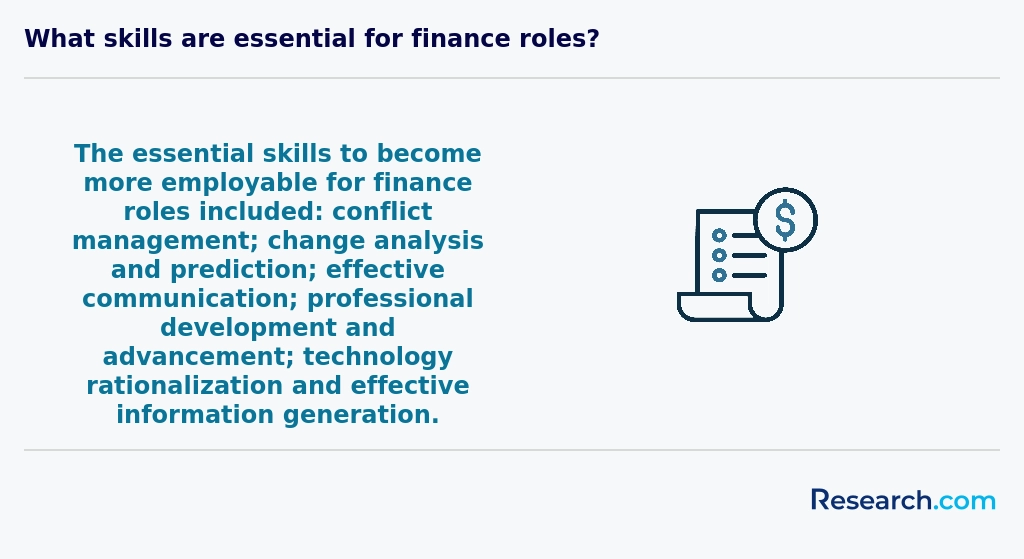
Employers in Iowa highly value finance degree graduates who demonstrate strong analytical skills. The ability to interpret financial data and apply quantitative methods is crucial, as finance roles often require detailed data analysis and decision-making.
Communication skills are also essential. Finance professionals must clearly convey complex financial concepts to clients and team members, ensuring understanding across diverse audiences. According to the Iowa Workforce Development, candidates with these skills tend to have better job prospects in the state.
Additionally, proficiency in financial software such as Excel, QuickBooks, and emerging fintech tools is increasingly sought after. Employers expect graduates to be adaptable and technologically proficient to handle Iowa's growing finance sector demands effectively.
Finding internships in Iowa relevant to a finance degree starts with exploring local financial institutions, including banks, credit unions, and insurance companies. The Iowa Workforce Development reports a steady growth in finance-related roles, suggesting internship opportunities are increasingly available.
Utilizing university career centers and internship programs affiliated with online finance degrees can connect students with employers in cities like Des Moines, Iowa's financial hub. Additionally, platforms like Handshake and IowaJobs.com often list internships targeted at finance students.
Networking through professional groups such as the Iowa Society of CPAs offers valuable contacts and insights into entry-level finance internships. Early application and demonstrating knowledge of Iowa's finance sector improves chances.
An online finance degree in Iowa can significantly enhance career mobility and advancement. Iowa's growing financial sector offers diverse opportunities for graduates, especially in cities like Des Moines, a national hub for insurance and financial services. According to the Iowa Workforce Development, employment in financial activities is projected to grow about 4% through 2030, which outpaces many other sectors.
Online degrees provide flexibility for working professionals seeking advancement without leaving their jobs. Employers increasingly recognize accredited online programs from Iowa institutions, often rewarding graduates with higher starting salaries and leadership opportunities.
Additionally, online study allows students to develop up-to-date skills in financial analysis, risk management, and regulatory compliance-key areas valued across Iowa's banking and insurance industries.
Studying for a finance degree in Iowa equips students with a broad skill set essential for interdisciplinary roles. Iowa's universities emphasize core financial principles alongside courses in economics, data analytics, and business management. This combination prepares graduates to work effectively across sectors like banking, healthcare, and technology.
Iowa's robust agricultural and insurance industries require finance professionals to understand complex, varied markets and regulatory environments. According to the Iowa Workforce Development (2023), demand for professionals skilled in finance and analytical thinking is expected to grow faster than average in the state.
Additionally, many online finance programs integrate practical software training and case studies, encouraging students to adapt financial knowledge in diverse organizational contexts.
Choosing between a thesis and a non-thesis finance degree program in Iowa depends largely on your career goals and learning preferences. Thesis programs emphasize research and require students to complete a substantial paper, which is ideal for those aiming for graduate studies or analytical roles in finance. Non-thesis options focus on practical skills and coursework, appealing to students seeking immediate employment.
In Iowa, finance graduates often enter sectors like banking and insurance, which value applied knowledge. According to the Iowa Workforce Development, finance jobs are projected to grow 7% by 2028, highlighting demand for practical expertise.
Consider your long-term plans carefully. Thesis programs often take longer but foster critical thinking, while non-thesis programs are typically quicker and career-oriented.
Students based in Iowa interested in studying finance abroad can explore several options through partnerships offered by American universities. Many institutions provide online finance degrees with opportunities to participate in exchange programs or short-term study abroad experiences, often in Europe or Asia. These programs allow students to gain international exposure without interrupting their primary studies.
Iowa's public universities, such as the University of Iowa and Iowa State University, collaborate with global business schools, facilitating credit transfers for finance courses taken overseas. According to the Institute of International Education, around 2,000 students from Iowa studied abroad in 2022, with business and finance among the popular fields.
Online programs may also include virtual internships with international firms, enhancing global finance skills. This approach suits working professionals seeking flexibility while expanding their global financial insights.
Part-time job opportunities in Iowa that complement online finance degree education include roles such as bank teller, accounting assistant, and financial services representative. These positions provide practical experience with financial transactions, customer service, and basic financial analysis. Iowa's financial sector employs tens of thousands, with Des Moines recognized as a growing hub for insurance and finance companies, according to the Iowa Workforce Development 2023 report.
Students can also explore internships with local banks, credit unions, and investment firms. These roles often offer flexible hours and direct exposure to financial concepts studied in coursework. Gaining this hands-on experience enhances resumes and helps build valuable professional networks within Iowa's finance industry.
Online finance students in Iowa benefit from various networking opportunities through their institutions and statewide professional organizations. Many Iowa universities with online finance programs offer virtual career fairs and alumni networking events to connect students with finance professionals.
The Iowa Society of Certified Public Accountants and the Iowa Bankers Association host regular conferences and webinars, providing online students access to industry leaders. Iowa's growing finance sector, especially in Des Moines with over 30,000 financial services jobs according to the U.S. Bureau of Labor Statistics (2023), offers robust networking prospects.
Students can also join LinkedIn groups focused on Iowa finance careers or participate in community business chambers to expand their contacts. These resources help bridge the gap between online education and practical career connections in Iowa's finance industry.
Alumni networks offer valuable support for online finance degree students in Iowa by providing access to experienced professionals and industry connections. These networks often facilitate mentorship opportunities, helping students navigate the local job market. According to a 2023 report by the Iowa Economic Development Authority, nearly 45% of finance-related jobs in Iowa are filled through networking and referrals. Through alumni events and online platforms, students can learn about internships and job openings not always publicly advertised. Building relationships within Iowa's finance sector, including banking hubs like Des Moines, enhances career prospects and practical insights for online learners pursuing finance degrees.
In Iowa, students pursuing an online finance degree can often tailor their coursework to align with specific career goals. Many universities offer elective courses in areas such as investment banking, corporate finance, or financial planning, allowing students to specialize based on their interests.
Additionally, some programs provide opportunities for internships or virtual practicums with local financial firms, which can enhance practical skills and networking within Iowa's growing finance sector. Institutions typically allow flexible scheduling and accelerated tracks to fit working professionals' needs.
Prospective students should review individual program curricula and consult academic advisors to ensure their selected path matches industry demands and Iowa's economic landscape. According to the Iowa Workforce Development, finance-related jobs in the state are projected to grow steadily, emphasizing specialized education's importance.
Online finance students in Iowa commonly face challenges related to time management and balancing coursework with personal and professional responsibilities. Many learners juggle jobs alongside studies, which can limit the available time for complex finance topics.
Access to local resources, such as financial data and internship opportunities, may also be limited compared to traditional on-campus students. This can impact practical learning experiences crucial for understanding Iowa's unique economic sectors like agriculture and manufacturing.
Furthermore, some students report difficulties in maintaining motivation and staying engaged without in-person interaction. According to the National Center for Education Statistics, about 30% of Iowa's college students are enrolled exclusively online, highlighting the importance of strong self-discipline.
Technical issues and navigating multiple learning platforms can add stress, especially for those with limited digital skills. Support services vary across institutions, affecting student success rates in online finance programs statewide.
Graduates with an online finance degree in Iowa can pursue several professional certifications to enhance their careers. Popular options include the Certified Financial Planner (CFP) and Chartered Financial Analyst (CFA) credentials, both highly respected in the finance industry. These certifications often require passing exams and relevant work experience.
The Certified Public Accountant (CPA) license is another common path, especially for those interested in financial accounting or auditing. Iowa's Board of Accountancy outlines specific education and experience rules for CPA candidates.
Additionally, the Financial Risk Manager (FRM) designation is valued in risk assessment roles. Data from the Iowa Workforce Development note steady growth in finance-related jobs, making these certifications valuable investments for Iowa residents.
When applying for an online finance degree program in Iowa, focus on clear and concise communication of your goals. Admission committees often look for candidates who demonstrate a genuine interest in finance and a commitment to finishing the program. Highlight any relevant work experience, such as internships or jobs in financial services, to show practical knowledge.
Include strong academic records, especially in math-related courses, since finance relies heavily on quantitative skills. According to the Iowa College Student Aid Commission, math proficiency significantly strengthens your application.
Additionally, tailor your personal statement to reflect how Iowa's growing financial sector motivates your career ambitions. Mentioning local firms or industries can show your dedication to contributing to Iowa's economy.
Finance careers offer a wide range of global opportunities driven by the interconnected nature of markets. Professionals with finance degrees from Iowa, especially those with online education credentials, are positioned to enter fields such as international banking, investment management, and corporate finance. According to the U.S. Bureau of Labor Statistics, employment of financial analysts is projected to grow 9% from 2022 to 2032, reflecting strong demand.
Global financial centers, including New York and London, set trends impacting local finance jobs, but Iowa's growing business sectors also provide regional opportunities. The Iowa Workforce Development reports steady growth in financial services jobs, emphasizing analytical and regulatory skills. Finance graduates with a global perspective can navigate diverse economic systems and regulatory environments, making their credentials valuable nationally and internationally.
Students pursuing an online finance degree in Iowa can gain practical experience through internships, cooperative education programs, and virtual simulations offered by many universities. Iowa's strong agricultural and financial sectors provide ample opportunities for remote internships with local banks, investment firms, and agricultural finance companies. According to the Iowa Workforce Development, finance roles in Iowa grew by 3.5% annually from 2018 to 2023, increasing demand for hands-on experience.
Many online programs also include case studies and real-world projects that develop critical skills. Networking with Iowa-based finance professionals via virtual events or local chapters of organizations like the CFA Institute can enhance practical knowledge.
Choosing the right concentration within an online finance degree program in Iowa depends on your career goals and interests. Common concentrations include corporate finance, investment management, financial planning, and risk management. Each offers unique skills relevant to different finance sectors.
Review Iowa's job market projections from the Iowa Workforce Development, which indicate growth in financial analysis and planning roles, reflecting local demand. Also, consider programs that align with certifications like CFA or CFP, which are valuable nationally and in Iowa.
Evaluate courses offered, internship opportunities, and faculty expertise to ensure the concentration matches your professional aspirations. Many Iowa institutions provide flexible options catered to working adults aiming to advance in finance careers.
Related Finance Rankings for Nearby States
Top Trending Finance Rankings
See What Experts Have To Say About Studying Finance
Read our interview with Finance experts

H. Kent Baker
Finance Expert
Professor at Department of Finance and Real Estate
American University

Ekaterina Potemkina
Finance Expert
Assistant Professor of Finance
Indiana University

Andrew Karolyi
Finance Expert
Dean of the Cornell SC Johnson College of Business
Cornell University

References
- JA Afford Your Future | Junior Achievement of Central Iowa https://centraliowa.ja.org/programs/supplements/ja-afford-your-future
- Types of Finance Degrees | Accounting.com https://www.accounting.com/degrees/finance/
- The Rise of Niche Jobs in Africa’s Finance Sector | CA Global https://www.caglobalint.com/post/the-rise-of-niche-jobs-in-africas-finance-sector/
- Your Guide to Getting a Job in Finance https://www.mountunion.edu/academics/undergraduate-degrees/finance/your-guide-to-getting-a-job-in-finance
- Study Finance Abroad | Go Overseas https://www.gooverseas.com/study-abroad/finance
- What Major is Best for Finance? Top 10 Picks https://zoetalentsolutions.com/what-major-is-best-for-finance/
- Top Ways to Leverage a Finance Degree – AP Professionals Rochester https://rochesterap.com/top-ways-to-leverage-a-finance-degree/
- How to Get a Finance Internship with No Experience – 365 Financial Analyst https://365financialanalyst.com/career-advice/how-to-get-a-finance-internship-with-no-experience/
- Financial Literacy and Investor Education https://www.iowa.gov/how-to-guides/iowa-tax-finance-guides/financial-literacy-and-investor-education
- 10 Challenges of Financial Management & How to Overcome Them https://itservices.saglobal.com/blogs/10-challenges-finance-teams-face/


