2027 Emergency Management Degree Persistence Report: Retention, Stop-Out Risk, and Re-Enrollment Patterns

Co-Founder and Chief Data Scientist
Choosing an emergency management degree is not just about curriculum; it is about whether the program helps you stay enrolled long enough to graduate. NCES reporting published in 2024 shows that about 77% of first-time, full-time students at 4-year institutions returned after their first year, meaning persistence is a real selection issue. This guide is for prospective students, transfer students, working adults, and advisors who want to understand retention, stop-out risk, re-enrollment, and program support before committing time and money.
Key Things You Should Know
- Retention is a program-quality signal, but not a guarantee: NCES data published in 2024 shows first-year retention near 77% at 4-year institutions and lower at 2-year institutions, so students should compare both school-level and program-level outcomes.
- Emergency management students face common stop-out risks: shift work, disaster-response schedules, military or public-safety employment, caregiving, transfer-credit loss, and unpaid internship requirements can all disrupt steady enrollment.
- The strongest programs usually combine flexible scheduling, proactive advising, transfer-friendly policies, career-aligned field experiences, and clear re-entry rules for students who need to pause and return.
- Key Things You Should Know
- What Do Retention Rates Reveal About Student Success in Emergency Management Degree Programs?
- Which Students Are Most at Risk of Stopping Out of a Emergency Management Degree Program?
- What Academic and Financial Challenges Reduce Persistence in Emergency Management Degree Programs?
- How Do Emergency Management Students Return After Stopping Out?
- Which Institutional Support Services Improve Persistence in Emergency Management Degree Programs?
- How Does Persistence Affect Graduation Time and Career Outcomes for Emergency Management Students?
- Which Emergency Management Degree Programs Have the Strongest Student Persistence Outcomes?
- How Are Student Persistence Patterns Changing in Emergency Management Degree Programs?
- How Should Students Evaluate Emergency Management Degree Programs Based on Persistence and Retention?
- Top Trending Emergency Management Rankings
What Do Retention Rates Reveal About Student Success in Emergency Management Degree Programs?
Retention rate measures the share of students who return to the same institution after a defined period, usually from the first fall term to the next fall term. In emergency management, retention matters because many students are working adults in public safety, military, healthcare preparedness, logistics, or government roles where irregular schedules can interrupt coursework.
A high retention rate suggests that students are finding enough academic, financial, scheduling, and advising support to continue. However, it does not prove that every student graduates, nor does it show whether emergency management majors specifically are retained unless the school publishes program-level outcomes.
The table below explains the main persistence metrics students should compare. These measures are often reported at the institution level, but the best schools can also explain how emergency management students perform inside the major.
| Metric | What it measures | Why it matters for emergency management students | How to use it |
| First-year retention rate | How many first-year students return for year two | Shows whether new students receive enough early academic and advising support | Use it as an early-warning indicator, especially if you are entering directly from high school or transferring with limited college experience |
| Graduation rate | How many students finish within a defined window | Shows whether students ultimately complete, not just return | Compare it with retention; a school can retain students initially but still have delayed completion |
| Transfer-out rate | How many students leave for another institution | May reflect mobility, poor fit, or students moving from associate to bachelor's pathways | Ask whether transfer students keep credits toward the emergency management major |
| Stop-out rate | How many students pause enrollment without completing | Important for working adults, military students, and disaster-response personnel | Ask whether returning students can re-enter under the same catalog, tuition, and degree requirements |
| Program-level persistence | Retention or completion within a specific major | More useful than institution-wide data if available | Request emergency management-specific outcomes from admissions or program leadership |
For decision-making, retention should be read alongside graduation rates, net price, transfer policy, course availability, and advising access. A lower-cost program with weak course sequencing can become expensive if required courses are offered too rarely and extend your time to graduation.
Which Students Are Most at Risk of Stopping Out of a Emergency Management Degree Program?
Students most at risk of stopping out are usually not less capable; they are often carrying more competing obligations. Emergency management programs attract students who already work in police, fire, EMS, military, public health, utilities, transportation, nonprofit response, or local government, and those jobs can become most demanding during emergencies.
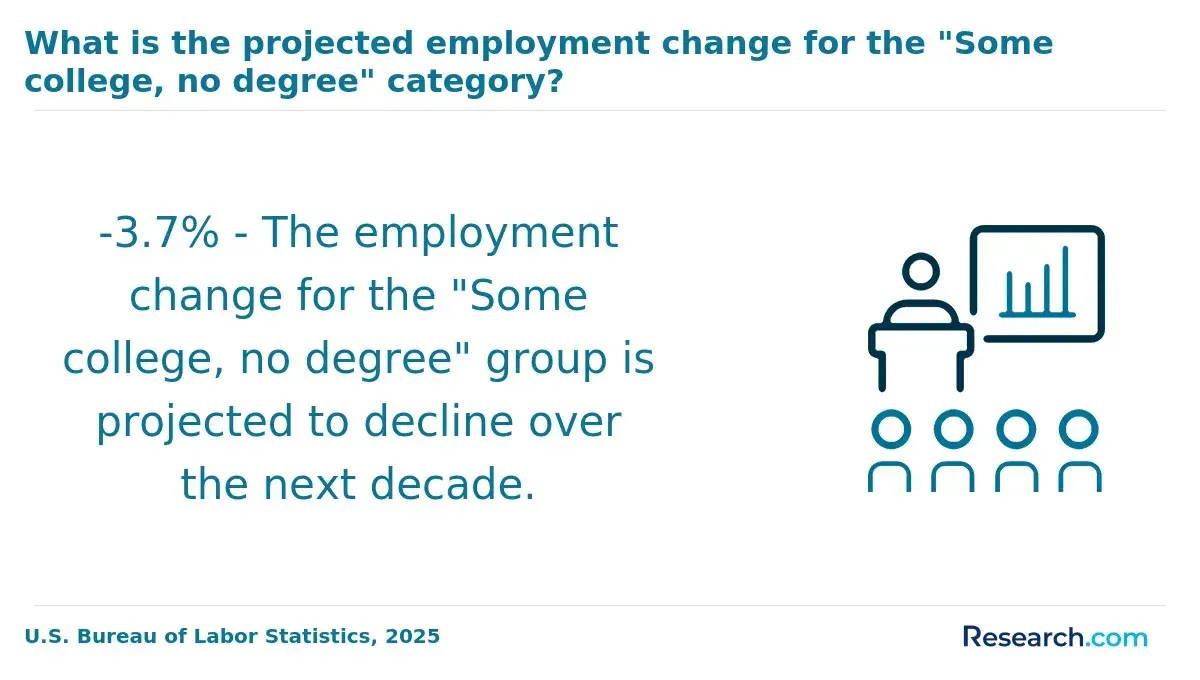
National Student Clearinghouse reporting published in 2024 identified more than 36 million adults under age 65 with some college credit and no credential. That number matters because it shows that stopping out is common across higher education, and prevention is often about structure, timing, finances, and support rather than motivation alone.
The groups below commonly need more persistence planning before enrollment. These are not labels; they are signals that a student should ask more detailed questions about scheduling, advising, and re-entry options.
- Working public-safety and emergency-response personnel should look for asynchronous courses, predictable assignment windows, and faculty policies that account for mandatory deployments or shifts.
- Part-time students should confirm that required emergency management courses are offered often enough to avoid a one-course-per-term bottleneck.
- Transfer students should request a written transfer-credit evaluation before enrolling because lost credits can add cost, delay graduation, and increase stop-out risk.
- First-generation students should prioritize programs with proactive advising, degree maps, and early alerts rather than relying only on self-service registration systems.
- Students with caregiving duties should ask whether internships, field experiences, or capstones can be completed locally or through an employer-approved project.
- Military-affiliated students should verify deployment leave policies, tuition-assistance rules, credit for military training, and whether the school has staff who understand military education benefits.
A common mistake is assuming that flexibility means "easy to complete." A program can be online and still have rigid deadlines, limited course rotations, synchronous meetings, or field requirements that do not fit a student's work life.
What Academic and Financial Challenges Reduce Persistence in Emergency Management Degree Programs?
Persistence in emergency management degree programs is affected by two broad pressure points: academic fit and financial stability. Academic challenges often appear early in writing-intensive courses, statistics or research methods, GIS and data tools, public administration, risk analysis, homeland security policy, and capstone projects.
Financial pressure is equally important. College Board data for the 2024-2025 academic year placed average published tuition and fees at about $11,610 for in-state students at public 4-year institutions, before books, fees, housing, transportation, and lost work hours. For emergency management students who are already balancing employment, even moderate tuition can become a persistence issue if aid changes or overtime disappears.
The table below connects common barriers with how they affect completion. It is useful when comparing schools because a program's value depends partly on how well it reduces these risks before they become reasons to stop out.
| Challenge | How it can reduce persistence | What a stronger program does |
| Weak course sequencing | Students wait extra terms for required courses | Publishes a 2-year or 4-year course rotation and guarantees access to required major courses |
| Unclear transfer credit | Students repeat courses or lose progress after transfer | Provides written degree audits before enrollment and accepts relevant FEMA, military, or public-safety training when appropriate |
| Financial aid gaps | Students pause when aid is delayed, reduced, or exhausted | Offers financial aid counseling, emergency grants, payment plans, and scholarship guidance |
| Writing and research demands | Students struggle in policy analysis, planning, and capstone courses | Provides writing support, library research help, and staged capstone milestones |
| Fieldwork conflicts | Students cannot complete internships because of work or location limits | Allows employer-based projects, local placements, or prior-experience alternatives when academically appropriate |
Students should also watch for red flags: no published degree map, no dedicated advisor, unclear internship rules, limited transfer transparency, and advising that focuses only on admission rather than graduation planning.
How Do Learning Format and Enrollment Status Affect Emergency Management Student Persistence?
Learning format affects persistence because emergency management students often need a program that fits real-world schedules. Online, hybrid, evening, and campus-based options can all work, but they support different students in different ways.
Online programs can be strong for working adults if they include responsive advising, clear weekly modules, accessible tutoring, and realistic fieldwork options. Campus programs may be better for students who need in-person structure, local networking, labs, student organizations, or direct access to faculty. Students comparing online programs in other applied fields, such as an exercise science degree online, will notice the same pattern: format matters less than whether the program is intentionally built for the students it serves.
The table below compares the persistence implications of common enrollment choices. It does not rank formats universally; it shows when each choice can support or weaken completion.
| Enrollment choice | When it supports persistence | When it raises stop-out risk | Best-fit student profile |
| Full-time campus | Works well when students need structure, peer connection, and fast progress | Can be difficult for students with full-time jobs or rotating shifts | Traditional-age students, scholarship recipients, and students with fewer outside obligations |
| Full-time online | Can shorten time to degree while preserving location flexibility | Requires strong time management and reliable technology | Self-directed students with predictable weekly study time |
| Part-time online | Reduces weekly workload and supports working adults | Can extend graduation time and increase exposure to life or financial disruptions | Public-safety workers, caregivers, military students, and career changers |
| Hybrid | Combines online flexibility with periodic in-person connection | Can create travel or schedule conflicts if campus meetings are fixed | Students near campus who want both flexibility and local networking |
The strongest choice is the one you can sustain. Before enrolling, map a normal workweek, commute time, family obligations, assignment deadlines, and emergency-response duties against the program's expected weekly workload.
How Do Emergency Management Students Return After Stopping Out?
Stopping out means pausing enrollment before completing a credential. It is different from formally withdrawing, transferring, or being academically dismissed. For emergency management students, a stop-out may happen because of deployment, job promotion, overtime, injury, caregiving, financial interruption, or a major disaster response period.
Re-enrollment is easier when students leave with a plan. A temporary break can be manageable if the student understands catalog rules, financial aid consequences, course rotation, transcript holds, and whether completed credits will still apply. It becomes risky when the student leaves informally and does not know what must happen to return.
The table below summarizes common re-enrollment patterns. It helps students decide whether a pause, transfer, or reduced course load is likely to protect progress better.
| Return pattern | What usually happens | Main advantage | Main risk |
| Planned leave of absence | Student pauses under an approved school policy | Often preserves advising connection and degree plan | May have time limits or aid implications |
| Reduced enrollment | Student drops from full-time to part-time instead of leaving | Keeps momentum and access to school services | Extends graduation timeline |
| Stop-out then same-school return | Student reactivates enrollment after one or more terms away | May preserve credits and relationships | Degree requirements may change if no leave was approved |
| Transfer after stop-out | Student returns through a different institution | Can improve fit, cost, or scheduling | Credits may not transfer cleanly into the new emergency management major |
| Credential pivot | Student shifts to a shorter credential or different career pathway | May support faster workforce entry | May not meet long-term advancement goals in emergency management leadership |
Some students reassess their timeline after stopping out and decide they need a shorter workforce credential before returning to a bachelor's program; for example, healthcare-focused students might compare a list of 6-month LPN programs while weighing whether a faster credential better fits immediate income needs. For emergency management majors, the equivalent decision might involve completing an associate degree, FEMA-related coursework, or a certificate before returning to the full degree.
Before taking a break, students should take several practical steps to reduce long-term damage to their progress.
- Ask for a written degree audit showing completed requirements, remaining courses, and courses that must be taken in sequence.
- Confirm whether a formal leave of absence is available and how long it protects the current catalog year.
- Check financial aid consequences, including satisfactory academic progress, loan repayment timing, and scholarship renewal rules.
- Request the next 2-year course rotation so you know when required emergency management courses will be offered again.
- Keep access to your student email, advising contact, unofficial transcript, and re-enrollment checklist.
Which Institutional Support Services Improve Persistence in Emergency Management Degree Programs?
Support services improve persistence when they are proactive, specific, and easy to access. In emergency management, the most helpful services connect academic planning with the realities of fieldwork, response schedules, public-sector employment, and applied career goals.
The table below highlights support services that matter most for persistence. Use it as a checklist when speaking with admissions counselors, program directors, or current students.
| Support service | Persistence value | What to ask the school |
| Dedicated academic advising | Helps students choose the right course sequence and avoid delays | Will I have an advisor who understands the emergency management major? |
| Early-alert system | Identifies missed assignments, low grades, or attendance problems before withdrawal | How quickly does someone contact students who are struggling? |
| Transfer-credit evaluation | Protects prior learning and reduces repeated coursework | Can I receive a written credit evaluation before I commit? |
| Career services tied to the major | Connects coursework to internships, public-sector roles, and employer expectations | Which agencies or employers have hosted students recently? |
| Writing, research, and data support | Helps students complete planning documents, policy analysis, and capstones | Are tutoring and library research consultations available online and after hours? |
| Emergency aid and financial counseling | Can prevent small financial problems from becoming withdrawal decisions | Does the school offer emergency grants, payment plans, or aid appeals? |
The best support model is not passive. If a school only says "resources are available" but cannot explain how students are contacted, advised, and helped through setbacks, persistence may depend too heavily on the student navigating everything alone.
How Does Persistence Affect Graduation Time and Career Outcomes for Emergency Management Students?
Persistence affects both graduation time and career timing. Emergency management roles often value a combination of education, experience, leadership, communication, planning, incident command knowledge, and familiarity with public-sector systems. A delayed degree may postpone eligibility for some promotions, internships, graduate study, or management-track roles.
The U.S. Bureau of Labor Statistics reported a May 2024 median pay of $86,130 for emergency management directors. This figure should not be treated as an entry-level promise because many director roles require experience, but it shows why finishing the degree can matter for students aiming at leadership, planning, continuity, homeland security, or public administration responsibilities.
Students should think about persistence as a career-readiness issue, not only an academic issue. A student who stays enrolled steadily is more likely to complete internships, build faculty references, finish a capstone, and document skills in hazard mitigation, continuity planning, emergency operations, grant writing, risk communication, and interagency coordination.
Students comparing long-term education investments sometimes look across very different fields, including professional healthcare paths such as a PharmD degree, to understand how tuition, licensure requirements, time-to-degree, and career outcomes interact. Emergency management usually has different credential expectations, but the same principle applies: the longer and more expensive the pathway, the more important persistence planning becomes.
The table below shows how enrollment patterns can influence time-to-degree. Actual timelines vary by transfer credit, course availability, developmental coursework, military service, work schedule, and whether the student changes majors.
| Student pathway | Typical persistence advantage | Common timeline risk | Decision point |
| First-time full-time bachelor's student | Fastest route if courses are passed on schedule | One failed prerequisite or schedule conflict can delay later major courses | Choose a program with clear 4-year mapping and advising checkpoints |
| Associate-to-bachelor's transfer student | Can reduce cost and build momentum before transfer | Credits may transfer as electives rather than major requirements | Use articulation agreements and written degree audits |
| Part-time working adult | More sustainable weekly workload | Longer exposure to job, family, and financial disruptions | Prioritize predictable course rotations and year-round options |
| Stop-out returner | Can restart with existing credits | Catalog changes, transcript holds, or aid limits can slow return | Resolve holds and confirm remaining requirements before reapplying |
Which Emergency Management Degree Programs Have the Strongest Student Persistence Outcomes?
The strongest emergency management degree programs are not simply the ones with the highest institution-wide retention rate. They are the programs that can show students how they will stay on track through advising, course access, fieldwork, transfer credit, financial planning, and career integration.
Because program-specific retention rates are not always publicly available, students should use a layered evaluation. Start with school-level retention and graduation data, then ask the department for emergency management-specific information such as major persistence, capstone completion, internship placement, transfer outcomes, and re-enrollment policies.
The table below identifies the strongest persistence signals to look for. These signals are more useful than marketing language because they show how the program supports real student progress.
| Program signal | Why it matters | Strong evidence to request |
| Transparent student outcomes | Shows whether the school tracks persistence beyond admission | Retention, graduation, transfer, and re-enrollment data, preferably by major or college |
| Emergency management course rotation | Prevents delayed graduation caused by unavailable required courses | Published schedule showing when major courses run over multiple terms |
| Flexible applied learning | Helps working students complete internships or capstones | Examples of employer-based projects, local placements, or virtual planning assignments |
| Transfer-friendly structure | Protects prior credits and reduces cost | Articulation agreements, prior learning assessment rules, and written transfer audits |
| Faculty and employer relevance | Connects coursework to current emergency management practice | Faculty experience, advisory boards, agency partnerships, and recent capstone topics |
| Returner-friendly policies | Supports students who pause and come back | Clear leave, reactivation, catalog, and financial hold policies |
A practical way to compare programs is to ask each school the same questions and score the answers. If one program has a slightly higher tuition but provides better transfer credit, more predictable scheduling, and stronger advising, it may reduce total cost by helping you finish with fewer repeated or delayed credits.
How Are Student Persistence Patterns Changing in Emergency Management Degree Programs?
Student persistence patterns in emergency management are changing because the field itself is changing. Programs are responding to more complex disasters, expanded public-sector planning needs, cyber and infrastructure risk, climate resilience, public health coordination, and data-driven emergency operations.
NOAA reported 27 separate U.S. weather and climate disasters in 2024 with losses of at least $1 billion. For students, this does not mean every emergency management graduate will enter a high-paying role immediately, but it does explain why programs are updating coursework around mitigation, resilience, continuity planning, and interagency coordination.
Several trends are especially relevant to persistence. Students should look for programs that respond to these changes without making completion unnecessarily complicated.
- More online and hybrid delivery means students can stay enrolled from more locations, but only if online advising, tutoring, and faculty access are as strong as campus support.
- AI and analytics are becoming more common in emergency planning, mapping, risk communication, and resource coordination, so programs should teach responsible tool use rather than treating technology as an add-on.
- Stackable certificates can help students earn interim credentials on the way to a degree, which may improve motivation and provide career value if a temporary pause becomes necessary.
- Prior learning assessment is increasingly important for military, public-safety, and government employees who may bring relevant training into the classroom.
- Career transparency is becoming more important across applied fields; students often compare salary pathways in related areas, such as health information management salary data, before deciding which degree path offers the best fit.
A current red flag is a program that has not updated its curriculum to reflect modern emergency management work. If the degree lacks coursework or applied projects in resilience, continuity, data tools, communication, equity, cybersecurity coordination, or public health preparedness, students should ask how the program keeps pace with employer expectations.
How Should Students Evaluate Emergency Management Degree Programs Based on Persistence and Retention?
Students should evaluate emergency management programs based on persistence the same way they evaluate cost or curriculum. The right question is not only "Can I get admitted?" but "Can I realistically complete this program with my schedule, finances, credits, and career goals?"
Use the following steps before choosing a school. They are designed to help you compare programs in a way that reveals completion risk early.
- Check institution-wide retention and graduation rates, then ask whether emergency management-specific persistence data is available.
- Request a written degree plan showing every required course, prerequisite, elective, internship, capstone, and expected term of completion.
- Confirm how transfer credits, FEMA training, military education, prior learning, and professional certifications are evaluated.
- Ask how often required emergency management courses are offered and whether online students have equal access to them.
- Review total cost, not just tuition, including fees, books, technology, travel, internship costs, and lost work time.
- Ask what happens if you need to stop out for one term, including leave policies, catalog protection, aid consequences, and reactivation steps.
- Speak with current students or alumni about advising quality, faculty responsiveness, workload, and whether course schedules match what the school promises.
Retention and graduation rates should both matter, but they answer different questions. Retention shows whether students return early; graduation shows whether they finish. A strong program should be able to explain both, including what it does when students fall behind.
Common mistakes include choosing the cheapest option without checking course availability, assuming online means self-paced, ignoring transfer-credit limits, waiting too long to ask for help, and taking an informal break without understanding re-enrollment rules. The safest approach is to choose a program that fits your life now and has a clear plan for helping you recover if life changes.
Other Things You Should Know About Emergency Management
A good retention rate is one that compares favorably with similar institutions and student populations, but it should not be judged alone. Ask whether the school can provide emergency management-specific persistence, graduation, transfer, and re-enrollment information.
No. Retention shows that students return, not that they complete on schedule. Graduation depends on course sequencing, transfer credit, academic performance, finances, work obligations, and whether required courses are available when needed.
Neither is automatically better. Online programs can work well for working adults, while campus programs may provide more structure and in-person networking. The best option is the format you can sustain with strong advising, tutoring, and clear course access.
Meet with an advisor, request a written degree audit, ask about a formal leave of absence, check financial aid consequences, and confirm when remaining courses will be offered. Leaving with a plan makes returning much easier.
Top Trending Emergency Management Rankings
References
- The Case Against a 4-Year Mandate - EM Resident https://emresident.org/case-against-4-year-mandate/
- Early Warning and Response System Increases School Enrollment and Retention https://dai-global-developments.com/articles/early-warning-and-response-system-increases-school-enrollment-and-retention/
- EXPLORING THE DETERMINANTS OF STUDENTS' DROPOUT IN ... https://ulb-dok.uibk.ac.at/ulbtirolhs/download/pdf/10391315
- College Campus Emergency Preparedness: Is Avoidance a Reason for Concern? https://encompass.eku.edu/etd/506/
- Top 5 College Dropout Reasons & Prevention Strategies | Campus Mind - Campus Mind https://www.campusmind.org/college-dropout-reasons/
- Boosting Student Retention: Proven Strategies for Higher Ed Success https://moderncampus.com/blog/strategies-for-improving-retention-in-higher-education.html
- Mental Health, Stress Top Reasons Students Consider Leaving https://news.gallup.com/poll/644645/mental-health-stress-top-reasons-students-consider-leaving.aspx
- Online Emergency Management Degrees: Review Top Programs https://www.degreesforgood.org/online-degrees/emergency-management-programs/
- 2025 Most Affordable Online Emergency Management Degrees https://www.onlineu.com/most-affordable-colleges/emergency-management-degrees
- 5 Student Retention Strategies and the Tech Features That Make Them Work https://www.stellic.com/resources/student-retention-strategies