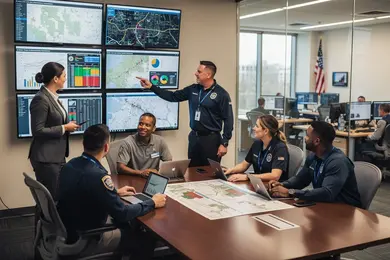
2027 Admission Requirements for Emergency Management Degree Programs

Co-Founder and Chief Data Scientist
As competition intensifies for college admissions, understanding the specific standards for specialized programs becomes crucial. Recent data shows that overall acceptance rates at U.S. colleges have dropped by nearly 5% over the past five years, reflecting increased selectivity. For students pursuing a degree in emergency management, navigating admission expectations requires careful attention to detail.
This article provides an expert analysis of the essential admission requirements for emergency management degree programs, equipping prospective applicants with the knowledge needed to enhance their chances of acceptance in this vital and growing field.
Key Benefits of Emergency Management Degree Programs
- Understanding admission requirements helps applicants tailor their preparation effectively, considering that 85% of emergency management programs in the U.S. prefer candidates with relevant coursework in public safety or environmental science.
- Awareness of prerequisites allows students to meet GPA and standardized test benchmarks, which is crucial since over 60% of accredited emergency management programs report increased competition for limited enrollment slots.
- Knowing admission criteria in advance enables timely submission of additional documents like letters of recommendation or personal statements, which have become a deciding factor in 45% of emergency management program admissions due to the field's emphasis on leadership and communication skills.
What GPA Do You Need to Get Into a Emergency Management Program?
GPA remains one of the most important factors in college admissions because it provides a standardized measure of academic readiness and consistency across applicants. However, GPA requirements for emergency management programs can vary widely depending on the institution, the level of the degree, and how competitive the program is, affecting admission chances significantly. Below is a bullet list outlining typical GPA expectations and the factors influencing these requirements for emergency management degree admissions.
- Minimum GPA Requirements: Most bachelor's degree programs in emergency management require a minimum cumulative GPA of 2.0 to 2.5 for admission. Graduate programs generally set higher bars, often requiring a GPA between 2.5 and 3.0. For example, some programs demand a 3.0 minimum for unconditional acceptance but may offer conditional admission at 2.5.
- Competitive GPA Range: More selective programs, especially at the graduate level, expect GPAs at or above 3.0. To gain an edge at prestigious schools or high-demand online programs, applicants should aim for GPAs closer to 3.5. Meeting these thresholds strengthens the likelihood of acceptance in top-tier emergency management degrees.
- Online vs. On-Campus Programs: Although online emergency management programs might sometimes provide a bit more flexibility, many top online programs maintain minimum GPA standards equivalent to their on-campus counterparts, often requiring at least a 3.0 GPA. This ensures consistent academic quality regardless of delivery mode.
- Strengthening GPA-Related Application Aspects: Applicants with GPAs below the minimum can enhance their applications through substantial professional experience, relevant coursework, or compelling personal statements. Many programs permit conditional admission, allowing students to demonstrate their academic ability during their initial semester or year.
- Regional Differences: It's important to note that the emergency management program GPA requirement in California may align with these national trends but can vary by school, making it essential to review specific institutional criteria. Prospective students should also consider the broader context within the list of college majors and careers to find the best fit for their goals.
What Prior Education Is Required for a Emergency Management Program?
Prior education plays a crucial role in determining eligibility for emergency management degree programs, as each program sets academic standards based on the level of study-undergraduate, graduate, or professional. These requirements ensure students possess the necessary foundation to succeed in specialized emergency management coursework.
Below are common educational prerequisites for emergency management programs that reflect varied expectations across different academic stages:
- Undergraduate Prerequisites: Typically, applicants must have a high school diploma or GED, with emphasis on coursework in English, mathematics, science, and social studies. Many programs expect a minimum GPA around 3.4 and value completion of courses such as Algebra, Precalculus, and lab-based sciences as part of meeting minimum education requirements for emergency management degree eligibility.
- Degree-Completion and Transfer Options: Some programs offer pathways requiring an associate or bachelor's degree for emergency management programs or at least 30 transferable credits. These options often include GPA minimums (commonly 2.0 or higher) and credit evaluations to facilitate student transition and completion.
- Graduate-Level Expectations: Master's programs generally require a bachelor's degree from an accredited institution. Although standardized tests like the GRE or GMAT are often waived, applicants should demonstrate academic readiness through undergraduate transcripts and possibly relevant work experience. Foundational courses or bridge programs may be available for those without prior emergency management backgrounds.
- Foundational and Related Coursework: Preferred undergraduate studies include fields such as public administration, science, criminal justice, or environmental studies. Programs may require foundational classes in areas like crisis communication, environmental hazards, and introductory emergency management to bolster student preparedness.
- Alternative and Flexible Pathways: Some institutions allow admission without strict prerequisites beyond general university criteria. These flexible paths may provide additional support or bridge courses to accommodate students coming from diverse academic backgrounds.
Applicants interested in enhancing their qualifications can also consider quick courses that pay well to supplement their emergency management education and improve readiness for advanced study or career opportunities.
Do Emergency Management Programs Require GRE, GMAT, or Other Standardized Tests?
Standardized tests such as the GRE and GMAT have long played a significant role in graduate admissions across the United States, providing a consistent measure of academic preparedness. However, evolving priorities in higher education-favoring accessibility, diversity, and practical experience-are leading many programs to reconsider or eliminate these testing requirements. This is particularly true for emergency management degrees, where diverse skills and real-world experience often outweigh test scores.
Below is a summary of the current expectations regarding standardized tests for emergency management programs:
- Widespread Test-Optional Policies: The majority of U.S. emergency management master's and certificate programs, including notable institutions like Georgetown University and Bellevue University, do not require GRE or GMAT scores. This shift aligns with a broader national trend, where over 60% of master's programs are now test-optional or test-blind as of 2024.
- Program-Specific Exceptions: Certain universities, especially those offering business-related or executive tracks, may still request GRE or GMAT scores. For example, California State University, San Bernardino's MBA with an emergency management concentration accepts these test scores as one of several options to demonstrate academic readiness.
- Emphasis on Holistic Review: Admissions decisions increasingly prioritize factors such as undergraduate GPA, professional experience, personal statements, and letters of recommendation. This holistic approach is common in applied fields like emergency management, where leadership and crisis management skills are critical.
- No Impact on International Applicants: The move away from standardized testing largely applies to all applicants, though international students typically still must meet English language proficiency requirements through exams like TOEFL or IELTS.
One graduate I spoke with reflected on his experience navigating admissions for an emergency management program. He recalled feeling anxious about whether he needed to prepare for the GRE, especially because he came from a non-traditional academic background. "When I found out the program was test-optional, it was a huge relief," he explained.
Instead of spending months studying for a standardized test that felt disconnected from my actual skills, I focused on strengthening my personal statement and gathering strong recommendations from colleagues I'd worked with during disaster response efforts.
He noted that this approach enabled him to showcase his practical experience and leadership in ways that standardized tests could never capture. "Ultimately, it made the application process more meaningful and less stressful," he concluded, emphasizing how the evolving admissions landscape can better accommodate diverse student profiles in emergency management.
College and graduate admissions for emergency management programs typically require multiple documents that demonstrate an applicant's academic readiness, relevant experience, and potential fit for the field. These requirements can vary depending on the institution, the level of the program, and whether the degree is offered online or on campus. Understanding what materials are commonly needed can help you prepare a strong application.
Below is a summary of the most common application materials required for emergency management programs:
- Official Transcripts: Transcripts from all previously attended schools show your academic history and achievements. Programs often look for minimum GPAs-generally 2.0 to 2.5 for undergraduate and 2.65 or higher for graduate levels. Online applicants may initially submit scanned copies but must provide official documents before enrollment.
- Standardized Test Scores: SAT or ACT scores might be optional for many undergraduate programs since many U.S. colleges have adopted test-optional policies. If submitted, these scores can supplement your academic profile and may be superscored.
- Personal Statement or Essay: This allows you to express your motivation, relevant experiences, and career goals. Admissions committees evaluate your writing skills, clarity of purpose, and fit for emergency management. Online programs may prioritize self-direction and digital communication in your statement.
- Résumé or Curriculum Vitae: Especially required for graduate applicants, this details your professional background, certifications, internships, and volunteer work related to emergency management or similar fields. It helps programs assess your practical readiness.
- Letters of Recommendation: Written by teachers, supervisors, or professionals, these letters attest to your skills, work ethic, and potential success in the program. Graduate programs often require two or three letters, while undergraduate requirements vary.
- Completed Application Form: Every applicant must fill out the official application form, available online or in paper format. This form collects personal information, academic background, and program choices.
International students applying to emergency management degree programs in the United States encounter additional admission requirements beyond their academic qualifications. These include demonstrating English language proficiency and verifying educational documents to ensure preparedness for U.S.-based coursework and adherence to both institutional policies and federal visa regulations.
Such requirements help confirm that students can successfully navigate the demands of emergency management studies while complying with legal standards for study in the U.S.
Prospective international applicants should be ready to meet the following key admission requirements:
- English Proficiency Proof: Most programs mandate official proof of English proficiency, commonly through tests like the TOEFL (scores generally between 80-100 iBT), IELTS (minimum 6.5-7.0), or the Pearson Test of English. Some online programs may offer flexibility with slightly lower requirements or accept alternatives such as the Duolingo English Test. Applicants should confirm the specific minimum scores for their chosen institution and arrange for test results to be sent directly to the admissions office.
- Credential Evaluation: Degrees earned outside the U.S. typically require credential evaluation by recognized agencies to verify equivalency with U.S. bachelor's or master's degrees. Official transcripts must be submitted, and this process often takes several weeks, so early initiation is recommended to avoid application delays.
- Financial Documentation: To qualify for visas like the F-1 or J-1, students must provide evidence of sufficient financial resources covering tuition and living expenses for at least one academic year. This usually involves submitting bank statements or affidavits of support, which are compulsory for visa issuance at the federal level.
- Visa-Related Forms: On-campus applicants must complete additional paperwork such as the I-20 (for F-1 visas) or DS-2019 (for J-1 visas), issued only after full admission and verification of financial and supporting documents. Conversely, online-only emergency management programs often do not sponsor visas, requiring international students to study remotely from their home countries.
- Additional Application Materials: Beyond the aforementioned requirements, most programs ask for a statement of purpose, letters of recommendation, a resume or CV, and occasionally writing samples. These materials should reflect the applicant's motivation, professionalism, and preparedness for graduate-level study.
Reflecting on her experience as an international student in an emergency management degree program, she shared that navigating the admission requirements felt challenging but ultimately rewarding. "Meeting the English proficiency criteria pushed me to improve my communication skills significantly, which is essential for collaboration in emergency scenarios," she explained.
She emphasized that preparing her credential evaluation and financial documents early eased the stress of the application timeline. "The process taught me discipline and attention to detail, qualities that have been invaluable during my studies and in my professional career," she noted. Her journey highlighted how understanding and fulfilling these requirements not only opened doors to U.S. education but also strengthened her ability to contribute effectively in the global emergency management field.

Professional experience can significantly influence admission decisions for emergency management programs, especially at the graduate level where schools tend to value applicants with relevant backgrounds and practical skills. While some programs list work experience as recommended rather than required, others make it a core admission criterion. Understanding how this factor plays into admissions can help applicants strengthen their candidacy.
Below are key ways professional experience factors into admission decisions for both online and on-campus emergency management programs:
- Minimum Experience Requirements: Some graduate-level programs require a specific amount of professional experience, often at least 12 months of full-time employment in a relevant government agency or emergency management role, as a formal admission prerequisite. In contrast, most bachelor's programs do not require prior work experience but may favor applicants with backgrounds in public safety, military, or related fields.
- Experience as a Competitive Edge: Even when not mandatory, practical experience in emergency management or related fields can strengthen an application. Admissions committees may view such experience as evidence of commitment to the field and readiness for advanced study, particularly in selective programs or for those aiming to move from technical to leadership roles.
- Integration in Application Materials: Relevant work experience can be highlighted through resumes, personal statements, and letters of recommendation. Graduate programs may ask applicants to describe professional achievements, leadership roles, or crisis response experiences in an admissions essay or statement of professional goals.
- Online vs. On-Campus Programs: Online emergency management programs often accommodate working professionals and may be more flexible regarding experience requirements. Some online programs serve as degree-completion pathways for those already employed in the field, placing additional emphasis on professional backgrounds.
Many universities tailor their admission standards based on a program's concentration or specialization area within emergency management degrees. While core admission requirements, such as minimum GPA and official transcripts, generally remain consistent across programs, concentrations with a research-heavy or technical focus often require additional prerequisites, specialized coursework, or relevant professional experience.
Admission requirements for emergency management specializations can vary significantly depending on the chosen track. Key distinctions in these requirements include the following:
- Technical or Quantitative Tracks: These concentrations often prioritize applicants with demonstrated skills in data analysis, risk assessment, or geographic information systems (GIS). Prospective students may need prior coursework in statistics or computer science and proficiency in specialized tools like ESRI GIS. Online applicants might also be required to submit portfolios or complete remote assessments to verify technical competencies.
- Research-Heavy or Thesis-Based Concentrations: Programs emphasizing research methods or requiring a master's thesis typically expect higher GPAs, often 3.0 or above, along with relevant academic experience such as prior research or advanced coursework in social sciences. Letters of recommendation and statements of research interest carry more weight in these admission decisions, reflecting the academic rigor of these tracks.
- Leadership and Management Concentrations: Concentrations focused on disaster leadership or organizational management usually favor applicants with supervisory experience or coursework related to public administration or business. For online students, verifiable work experience and evidence of self-directed learning can be key components considered during admissions.
- Specialized Professional Tracks: Fields such as homeland security or public health emergency management may require certifications, security clearances, or specific licenses. Applicants might also need to provide proof of relevant fieldwork or employment history to demonstrate preparedness in these specialized areas.
Prospective students seeking the cheapest associate's degree relevant to emergency management might find resources listing affordable options, which can be a practical starting point before advancing to specialized degrees or concentrations.
Most universities in the United States align their admission standards for online and on-campus emergency management degree programs to ensure consistent academic quality and integrity.
However, some variations exist due to differences in student demographics, program delivery formats, or requirements related to experiential learning components. These differences impact specific admission criteria or documentation requirements but do not undermine overall program standards.
The following points summarize the main similarities and differences between online and on-campus emergency management program admission requirements:
- Core academic standards: Both online and on-campus programs typically require a minimum GPA, often between 2.0 and 2.5 for undergraduate admission, along with a high school diploma or equivalent. Transfer credit policies are also similar, with online degree completion tracks frequently mandating at least 30 transferable college credits to maintain accreditation for online emergency management programs.
- Application materials: Official transcripts, completed applications, and sometimes personal statements or essays are generally required for both formats. Online programs often streamline submission processes through digital portals, but the documentation asked for remains largely the same.
- Professional experience expectations: Online programs are more likely to accommodate working professionals by recognizing relevant work experience or prior learning credits, especially at the graduate level or in degree completion paths. On-campus admissions tend to focus more strictly on academic achievements and traditional pathways.
- Field experience and internships: Both program types usually require experiential learning such as internships or supervised fieldwork. Online programs often offer flexibility in arranging local placements to suit remote learners, whereas on-campus students usually engage in university-coordinated opportunities.
- Interview and test requirements: Standardized test scores like the SAT or ACT are increasingly optional with little distinction between formats. Interviews are uncommon but may be used in select competitive programs, generally without regard to whether the program is online or on-campus.
Students seeking affordable options can research the best affordable online colleges that accept financial aid to find programs that meet their needs while adhering to recognized admission standards.
Most financial aid applications, including the emergency management degree FAFSA application process, can be completed before you are formally accepted into a program. Filing the FAFSA early, often starting October 1 of the year before enrollment, offers several advantages. Early submission helps students understand their potential funding options, accurately estimate out-of-pocket college costs, and ensures they meet important federal and institutional priority deadlines.
Since some aid like grants and work-study funds are often distributed on a first-come, first-served basis, submitting financial aid forms promptly increases the chance of receiving maximum support. This proactive approach also provides time to correct any application errors or respond to additional documentation requests well before tuition deadlines.
However, there are important limitations when you apply for financial aid before emergency management program acceptance. Many scholarships and grants rely on confirmed admission, meaning official disbursement of these funds occurs only after enrollment verification. Some merit-based or departmental awards require separate applications submitted after acceptance.
To maximize your financial aid opportunities, be sure to list all potential schools, including different emergency management programs, on your FAFSA so each institution can consider your aid eligibility. It is also wise to keep your financial aid application timeline aligned with your admission timeline to avoid missing key deadlines. For those seeking affordable options, it may be helpful to explore an online bachelor degree cheap that fits your circumstances and budget.
Timing is one of the most important factors in the emergency management application process. Starting early not only improves your chances of acceptance but also increases eligibility for competitive financial aid, scholarships, and priority enrollment. According to the National Association for College Admission Counseling (NACAC), nearly 35% of U.S. colleges now enforce early application deadlines, highlighting the advantage of beginning preparations well ahead of time.
To ensure a smooth admission experience, it is critical to understand the ideal timeline for applying to emergency management programs, whether online or on campus. Many programs offer multiple start dates throughout the year, with application deadlines set several months in advance.
For instance, Arkansas State University's online program has fall, spring, and summer start terms, each with deadlines ranging from late September to mid-December. Graduate and doctoral programs may have even earlier deadlines, such as the University of North Texas requiring applications by July 1 for fall entry and November 1 for spring, while some doctoral programs set deadlines as early as March for fall cohorts.
Applicants should begin researching programs and admission requirements at least six to nine months before their intended start date. This timeline allows sufficient time to gather transcripts, secure recommendation letters, and develop personal statements or writing samples-common application components.
Simultaneously, students should explore financial aid options and submit applications early, as funding is often limited and awarded on a first-come, first-served basis. Aligning these key milestones with priority deadlines increases the likelihood of acceptance and financial support.
Starting the process early provides greater flexibility in choosing programs and meeting admission requirements while also helping to reduce stress. Early preparation ensures you can present the strongest application possible to emergency management degree programs.
Here's What Graduates of Emergency Management Programs Have to Say About Their Degree
- John: "Completing my emergency management degree was a turning point that opened doors to a deeply rewarding career. The specialized training gave me the tools to coordinate disaster response effectively, and now I work alongside first responders in my community. This program strengthened my leadership skills and helped me develop a true passion for protecting others in times of crisis. I feel proud knowing my work directly contributes to making neighborhoods safer and more resilient."
- Aisha: "The emergency management degree challenged me to think critically and adapt quickly to unpredictable situations, which perfectly prepared me for the field. After graduation, I secured a position with a government agency where I've been able to influence policy and enhance public safety measures. The academic experience also brought tremendous personal growth, helping me become more empathetic and collaborative. It's fulfilling to know that my education allows me to make meaningful improvements on a broad scale."
- Rafael: "What stands out most about earning my emergency management degree is the professional development opportunities it unlocked. From internships to networking events, the program connected me with experts who guided my career trajectory toward advanced roles in disaster recovery. The challenges I faced in balancing coursework and hands-on training taught me resilience and attention to detail. I'm grateful for a degree that equips me not only with knowledge but also the practical skills essential for success in this demanding field."
Other Things You Should Know About Emergency Management Degree Programs
Most undergraduate emergency management programs require a high school diploma or equivalent. Applicants usually must submit official transcripts, standardized test scores such as the SAT or ACT, and letters of recommendation. Some programs may also request a personal statement or demonstrate relevant volunteer or work experience in emergency services.
Most emergency management degree programs in 2027 require prerequisite coursework in subjects like geography, public safety, and statistics. These foundational courses ensure applicants are well-prepared for the diverse challenges of emergency management. Each institution may have specific requirements, so it's advisable to check the program details directly with them.
Many emergency management degree programs ask for one to three letters of recommendation, usually from teachers, employers, or supervisors. Some bachelor’s programs waive them for open-admission applicants, while competitive graduate programs often require them with a résumé and statement of purpose.
- Master of Arts in Disaster and Emergency Management | Royal Roads University https://www.royalroads.ca/programs/master-arts-disaster-and-emergency-management
- Academics https://www.mdc.edu/emergencymanagement/admission-requirements.aspx
- Master's in Emergency & Disaster Management How to Apply https://scs.georgetown.edu/programs/419/master-of-professional-studies-in-emergency-disaster-management/how-to-apply
- Bachelor of Science in Disaster Relief & Emergency Management https://ciu.edu/program/bs-disaster-relief-emergency-management/
- Disaster Science and Emergency Management Concentration, Bachelor of General Studies http://catalog.lsua.edu/preview_program.php
- Master of Emergency Management Science https://www.pacific.edu/healthsciences/programs/emergency-management
- Master of Science in Emergency Management and Homeland Security Online or On Campus https://www.albany.edu/cehc/programs/ms-emergency-management-homeland-security
- Emergency Management Admissions Requirements https://www.maritime.edu/undergraduate-programs/emergency-management/admission-requirements
- Bachelor of Science in Emergency Management https://www.jsu.edu/degrees/undergraduate/social-behavioral/emergency-management/emergency-management.html
- Master of Science in Emergency Management https://online.newhaven.edu/masters-in-emergency-management/