2027 Entrepreneurship Degree Payback Report: Which Programs Deliver the Best Cost-to-Salary Return

Co-Founder and Chief Data Scientist
Choosing an entrepreneurship degree is really a payback question: will the program help you build a business career fast enough to justify its cost? The answer matters because the U.S. Small Business Administration reported 34.8 million small businesses in its 2024 profile, representing 99.9% of U.S. firms.
This guide is for students, career changers, and founders comparing associate, bachelor's, and graduate options. You'll learn how tuition, salaries, job demand, program format, and business goals affect ROI so you can choose a smarter path.
Key Things You Should Know
- Entrepreneurship degree ROI is strongest when tuition is controlled, work experience is gained during school, and the degree leads to scalable roles such as operations, business development, product, consulting, or venture creation.
- College Board data for 2024-25 shows average published tuition and fees of $11,610 for in-state public four-year colleges and $43,350 for private nonprofit four-year colleges, making school choice one of the biggest payback variables.
- BLS 2024 wage data shows that related business roles vary widely, from $76,950 for market research analysts to $101,280 for general and operations managers, so ROI depends more on role choice than on the word "entrepreneurship" alone.
- Key Things You Should Know
- What Is the Return on Investment of an Entrepreneurship Degree?
- Which Entrepreneurship Programs Deliver the Best Cost-to-Salary Return?
- How Do Tuition Costs Affect the Payback of an Entrepreneurship Degree?
- How Long Does It Take to Break Even on an Entrepreneurship Degree?
- Which Factors Have the Biggest Impact on Entrepreneurship Degree ROI?
- How Do Employer Demand and Job Growth Affect Entrepreneurship Degree Value?
- How Can Students Maximize the Financial Value of an Entrepreneurship Degree?
- How Does an Entrepreneurship Degree Compare With Similar Fields for ROI?
- Is an Entrepreneurship Degree Worth It for Your Career Goals?
- Top Trending Entrepreneurship Rankings
What Is the Return on Investment of an Entrepreneurship Degree?
The return on investment of an entrepreneurship degree is the financial value you receive compared with what you spend to earn it. In practical terms, ROI depends on total program cost, student debt, income while enrolled, graduation speed, post-graduation salary, and whether the degree helps you launch or grow revenue-generating work.
Entrepreneurship is different from many majors because the payoff is not tied to one licensed occupation. Graduates may become founders, operations managers, sales leaders, business analysts, product managers, franchise owners, consultants, or nonprofit venture builders. That flexibility can be valuable, but it also means students must evaluate programs by outcomes, not branding.
The table below shows how ROI differs by credential level. Use it to match the degree type to your career stage instead of assuming the highest credential automatically produces the best return.
| Degree path | Typical fit | ROI strengths | Main ROI risks |
| Associate degree or certificate | Students seeking low-cost entry into business ownership, sales, retail management, or transfer pathways | Lower upfront cost, faster completion, useful for testing business interest | May not qualify for management-track roles that prefer a bachelor's degree |
| Bachelor's degree in entrepreneurship or business | First-time college students and transfer students seeking broad business roles | Strongest general-purpose credential for operations, sales, marketing, and startup roles | ROI weakens if tuition is high and the program lacks internships or employer connections |
| Master's degree or MBA with entrepreneurship focus | Working professionals, founders, and managers seeking leadership, capital-raising, or strategic skills | Can raise value when paired with experience, networks, and measurable career progression | Expensive programs may not pay back if the student lacks a clear promotion, venture, or industry goal |
A strong entrepreneurship ROI usually comes from combining the credential with practical assets: customer discovery projects, financial modeling, sales experience, internships, pitch competitions, incubators, and alumni networks. A weak ROI often comes from choosing a costly program without a specific career use case.
Which Entrepreneurship Programs Deliver the Best Cost-to-Salary Return?
The best cost-to-salary return usually comes from accredited public universities, transfer-friendly bachelor's programs, employer-supported online programs, and applied business schools with strong internship pipelines. A "best" program is not simply the one with the most famous brand; it is the one that gives you credible business training at a cost that fits your likely salary path.
Because entrepreneurship outcomes are highly individual, compare programs by value signals rather than by rankings alone. The table below summarizes the program traits that most often improve payback.
| Program feature | Why it improves cost-to-salary return | What to verify before enrolling |
| Regional accreditation | Supports transfer credit, employer recognition, and graduate school eligibility | Confirm the institution's accreditation through the school and recognized accreditor records |
| Business accreditation or strong business school reputation | May indicate stronger curriculum oversight and employer familiarity | Ask whether the business school holds AACSB, ACBSP, or IACBE accreditation |
| Low net price | Reduces debt and shortens break-even time | Compare net price after grants, scholarships, transfer credits, and employer aid |
| Internships and experiential learning | Builds evidence employers and investors can evaluate | Ask how many students complete internships, consulting projects, or venture labs |
| Career placement support | Improves access to jobs that can repay the degree faster | Request career outcomes by major, not only schoolwide averages |
| Entrepreneurship ecosystem | Can provide mentors, seed funding, competitions, and founder networks | Review incubator participation, alumni ventures, and local employer partnerships |
For many students, the strongest payback comes from a reasonably priced bachelor's degree in business administration with an entrepreneurship concentration rather than a niche stand-alone major. This route keeps options open if a startup takes longer to produce income.
Before choosing a program, ask admissions and career services for evidence that connects the curriculum to outcomes. The most useful questions are specific because they reveal whether the program can support your actual goal.
- What is the total estimated cost after transfer credits, grants, scholarships, and required fees?
- How many entrepreneurship students complete internships, consulting projects, or revenue-generating ventures before graduation?
- What roles do recent graduates enter within six to 12 months, and are outcomes reported by major or only by college?
- Does the program include accounting, finance, analytics, sales, operations, and legal basics, or does it focus mainly on ideation?
- Are courses taught by faculty with founder, investor, product, consulting, or operating experience?
How Do Tuition Costs Affect the Payback of an Entrepreneurship Degree?
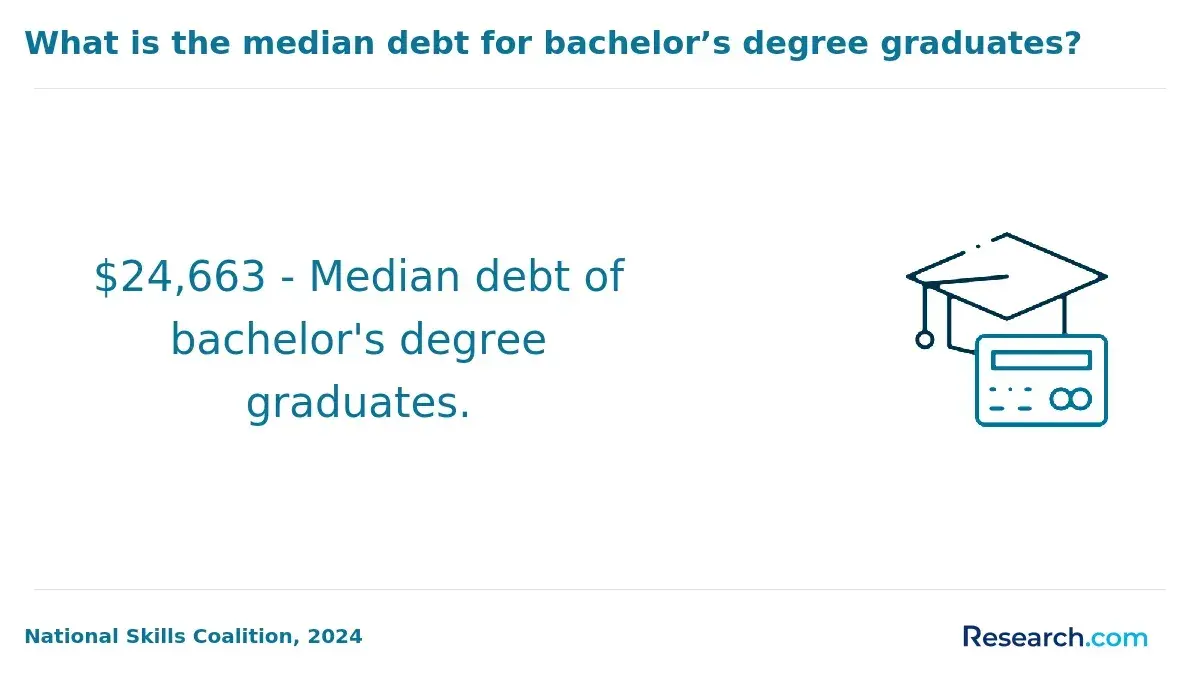
Tuition directly affects payback because every extra borrowed dollar must be repaid from future earnings or business cash flow. College Board's 2024-25 figures show a large gap between average published tuition and fees at public in-state four-year colleges and private nonprofit four-year colleges, which means two students can earn similar business credentials while facing very different break-even timelines.
The table below compares common cost scenarios. It does not predict your exact cost, but it shows why net price, not sticker price, should drive ROI decisions.
| Cost factor | Lower-payback-risk choice | Higher-payback-risk choice | Why it matters |
| Institution price | In-state public, community college transfer, or discounted online program | High-cost private program without strong aid | Lower tuition reduces the salary increase needed to break even |
| Time to completion | Transfer credits, prior learning credit, summer terms, or accelerated formats | Lost credits, repeated courses, or unclear degree maps | Longer enrollment raises tuition and opportunity cost |
| Living costs | Commuting, online study, or working while enrolled | Relocating to a high-cost campus without added career benefit | Housing and transportation can exceed tuition savings |
| Debt type | Federal loans used conservatively after grants and scholarships | Heavy private borrowing for uncertain income outcomes | Loan terms affect monthly cash flow after graduation |
| Work access | Part-time study with employer tuition assistance or paid internships | Leaving work for a program without a clear salary premium | Income during school can materially improve payback |
Graduate students should be especially cautious because business graduate tuition can rise quickly. If you are already working and considering executive leadership options, comparing entrepreneurship-focused MBAs with the cheapest EMBA options can help you separate networking value from unnecessary cost.
A practical rule is to calculate ROI using your expected net cost, not the school's advertised tuition. Include tuition, fees, books, required software, travel, unpaid internship time, interest, and income you might forgo if you reduce work hours.
How Much Can Entrepreneurship Graduates Expect to Earn?
Entrepreneurship graduates can pursue a wide salary range because the degree feeds into business functions rather than one fixed occupation. BLS 2024 wage data is useful for benchmarking related roles, but it should not be read as a guaranteed outcome for any individual graduate.
The table below lists common entrepreneurship-aligned career paths and median annual wage benchmarks from BLS 2024 data. These figures are best used to compare role direction, not to predict a specific offer.
| Career path | Relevant responsibilities | 2024 median annual wage benchmark | ROI note |
| General and operations manager | Oversee teams, budgets, workflows, vendors, and performance targets | $101,280 | Often a strong ROI target for graduates who build supervisory and operations experience |
| Management analyst | Improve business processes, costs, strategy, and organizational performance | $101,190 | Can reward analytical skills and consulting experience gained during school |
| Market research analyst | Analyze customers, competitors, pricing, and demand for products or services | $76,950 | Useful for students interested in startups, product strategy, or growth marketing |
| Sales manager | Lead sales teams, set revenue targets, monitor pipelines, and train representatives | $138,060 | High upside, but usually requires proven sales performance before management |
| Marketing manager | Plan campaigns, positioning, brand strategy, and customer acquisition | $161,030 | Potentially high ROI, but competition is strong and experience matters heavily |
Founders are harder to benchmark because income can be volatile. A graduate who starts a business may earn little at first while building revenue, while another may use the degree to move into a salaried role and launch a venture later. For ROI planning, it is safer to model a realistic employed pathway first, then treat business profits as upside rather than guaranteed payback.
Skills have a major influence on salary outcomes. Students who pair entrepreneurship coursework with accounting, data analysis, sales, digital marketing, product management, and operations tend to have more ways to monetize the degree than students who focus only on business ideas.
How Long Does It Take to Break Even on an Entrepreneurship Degree?
Break-even time is the point at which the financial gains from the degree equal or exceed its cost. For entrepreneurship degrees, the cleanest approach is to compare total net cost with the salary increase or business income increase you reasonably expect after completing the program.
Use this simple formula as a planning tool: total net degree cost divided by expected annual income gain equals estimated years to break even. For example, if a student's net cost is $40,000 and the degree helps support a $10,000 annual income increase, the estimated break-even period is about four years before taxes, interest, and career interruptions.
The table below shows how different cost and income-gain combinations affect payback. These are examples for decision planning, not promised outcomes.
| Total net degree cost | Annual income gain after completion | Estimated break-even time | Interpretation |
| $20,000 | $10,000 | About 2 years | Strong payback if the program is accredited and supports your target role |
| $40,000 | $10,000 | About 4 years | Reasonable for many students, especially with low-interest debt or employer aid |
| $80,000 | $10,000 | About 8 years | Riskier unless the program gives access to a clearly higher-paying career path |
| $80,000 | $20,000 | About 4 years | More defensible when the degree supports promotion, consulting, management, or venture growth |
Students should also account for opportunity cost. A full-time program may speed graduation but reduce earnings during school, while part-time or online study may take longer but preserve income. The better option depends on whether faster completion or continued cash flow matters more for your situation.
To estimate your own break-even time, follow a short, evidence-based process rather than relying on broad salary averages.
- Calculate the total net cost after grants, scholarships, transfer credits, employer assistance, and required fees.
- Identify three realistic job titles you would pursue after graduation, not just your ideal founder outcome.
- Compare local or remote salary ranges for those roles using employer postings and federal wage benchmarks.
- Estimate the annual income gain compared with your current or expected no-degree pathway.
- Divide net cost by the annual income gain, then test a conservative scenario with slower salary growth.
Which Factors Have the Biggest Impact on Entrepreneurship Degree ROI?
The biggest ROI factors are not always the most visible ones. Tuition matters, but so do career fit, the school's business network, your prior experience, and whether the curriculum builds marketable skills that employers or customers will pay for.
The following factors usually have the strongest impact on entrepreneurship degree value. Review them before comparing schools because they can change the financial outcome more than a ranking position.
- Net price: Lower net cost creates a shorter break-even timeline and gives founders more financial flexibility after graduation.
- Career target: A student aiming for operations management, analytics, sales leadership, or consulting can model ROI more easily than a student relying only on uncertain startup income.
- Work experience: Internships, co-ops, paid projects, and prior business experience make the degree more credible to employers and investors.
- Curriculum depth: Programs should include finance, accounting, data analysis, marketing, sales, legal basics, operations, and strategy, not only pitch decks.
- Network quality: Mentors, alumni founders, local employers, incubators, and investors can improve access to opportunities that are not visible in tuition comparisons.
- Program flexibility: Online, evening, or part-time formats can protect income while enrolled, especially for working adults.
Advanced credentials can make sense when they support a specific professional goal. For example, students interested in research, university teaching, or senior thought-leadership roles may compare entrepreneurship-oriented doctorates with online PhD programs for working professionals, but they should weigh the time commitment against clear career benefits.
Common mistakes can lower ROI even when the school is legitimate. Avoid choosing a program because it sounds innovative without confirming accreditation, total cost, transfer rules, faculty experience, internship access, and career outcomes. Also avoid assuming that entrepreneurship coursework alone replaces the hard evidence employers value, such as revenue results, analytical ability, sales performance, or leadership experience.
How Do Employer Demand and Job Growth Affect Entrepreneurship Degree Value?
Employer demand affects entrepreneurship degree value because most graduates need the labor market even if they eventually want to start a company. A practical entrepreneurship education should prepare students for roles where organizations need people who can identify opportunities, manage uncertainty, control costs, and grow revenue.
BLS employment projections released for 2024-34 show management analyst employment growing faster than the average for all occupations. That matters because consulting, process improvement, and business strategy roles often reward the same problem-solving skills taught in stronger entrepreneurship programs.
Current employer expectations are also shifting. Companies increasingly want graduates who can use data tools, automation, customer analytics, and AI-assisted workflows responsibly. For entrepreneurship students, this means the best programs now combine creativity with measurable execution: testing demand, modeling unit economics, analyzing acquisition costs, and managing digital operations.
Job growth does not make every program worth its price. A high-cost degree can still underperform if it lacks experiential learning or if graduates leave without a portfolio of business evidence. Look for programs that help you produce tangible outputs employers can evaluate, such as market research reports, financial models, operations dashboards, sales plans, product prototypes, and consulting deliverables.
Industries where entrepreneurship training can be useful include technology, healthcare administration, retail and e-commerce, financial services, real estate, manufacturing, logistics, food service, franchising, social enterprise, and professional services. The highest ROI path is usually the one where your coursework, work experience, and industry knowledge reinforce each other.
How Can Students Maximize the Financial Value of an Entrepreneurship Degree?
Students can improve the financial value of an entrepreneurship degree by treating school as a business investment, not just an academic experience. The goal is to graduate with lower cost, stronger proof of ability, and clearer access to income.
Use the following steps before and during enrollment. They are designed to reduce risk while increasing the chance that the degree leads to measurable career value.
- Start at the lowest-cost credible point, such as a community college transfer pathway or in-state public program, if it preserves accreditation and transferability.
- Ask for a full degree plan before enrolling so you know which credits apply, how long completion should take, and which courses are required.
- Prioritize programs with internships, venture labs, consulting projects, incubators, or employer partnerships tied to real business problems.
- Build a portfolio that includes financial models, customer interviews, marketing tests, sales metrics, market analysis, and operations improvements.
- Use electives strategically in accounting, analytics, AI tools, digital marketing, supply chain, or product management.
- Apply for scholarships every year, not only before freshman enrollment, and ask whether departmental awards are available for business students.
- Work part time or complete paid internships when possible to reduce borrowing and build experience at the same time.
- Compare expected monthly loan payments with conservative entry-level salaries before accepting a financial aid package.
Red flags deserve serious attention. Be cautious if a school will not provide accreditation details, avoids discussing total cost, reports only broad universitywide outcomes, pressures you to enroll quickly, or offers entrepreneurship content with little finance, accounting, analytics, or operations training.
Online programs, such as bachelors in photography online, can offer strong ROI for working adults because they may reduce relocation and commuting costs. However, students should confirm that online learners receive the same access to career services, faculty, incubators, networking, and experiential projects as campus students.
How Does an Entrepreneurship Degree Compare With Similar Fields for ROI?
An entrepreneurship degree can offer strong flexibility, but it is not always the highest-ROI choice for every student. The best comparison depends on whether your goal is to start a company, manage a business unit, enter a licensed or structured profession, or monetize a creative skill.
The table below compares entrepreneurship with adjacent fields from an ROI perspective. Use it to decide whether you need broad business-building skills or a more specialized credential.
| Field | Best fit | ROI advantage | ROI limitation |
| Entrepreneurship | Students who want to start ventures, manage growth, or work across business functions | Flexible across industries and useful for founders and operators | Outcomes vary widely and depend heavily on experience, network, and execution |
| Accounting | Students who want structured business roles and possible CPA pathways | Clearer occupational pathway and strong demand for financial expertise | Licensure requirements can add time and state-specific complexity |
| Finance | Students targeting banking, corporate finance, investment analysis, or financial planning | Can lead to higher-paying roles when paired with quantitative skills | Competitive entry-level hiring and strong dependence on school network in some roles |
| Marketing | Students interested in growth, branding, customer acquisition, and analytics | Directly useful for startups and revenue-focused roles | Portfolio and performance metrics often matter as much as the degree |
| Management information systems | Students who want to combine business with technology and data systems | Often strong ROI because technical business skills are widely applicable | May be less focused on venture creation and founder-specific training |
Some alternatives are attractive because they lead to more defined occupational routes. For example, students drawn to legal operations, compliance, or small-business legal support may compare entrepreneurship coursework with ABA-approved paralegal programs if they want a more structured legal-services pathway.
Creative founders may need a different calculation. A student planning to build a photography studio, content business, or digital media brand might compare business entrepreneurship programs with a bachelors in photography online, then add business electives or certificates to cover pricing, marketing, and client acquisition.
In general, choose entrepreneurship when you want broad business-building ability and are willing to create your own opportunities. Choose a more specialized field when you want a clearer hiring pipeline, licensing structure, or technical skill set that employers can evaluate quickly.
Is an Entrepreneurship Degree Worth It for Your Career Goals?
An entrepreneurship degree is worth it when the program is affordable, accredited, experiential, and connected to a realistic income path. It is especially useful for students who want to become founders, operators, business development professionals, product-minded managers, consultants, franchise owners, or leaders in small and midsize companies.
The degree may not be worth it if you expect the credential alone to create a successful business. Entrepreneurship rewards execution, sales, resilience, financial discipline, customer insight, and timing. A degree can strengthen those abilities, but it cannot remove market risk.
The decision is strongest when you can answer "yes" to most of these questions. They focus on the practical conditions that make ROI more likely.
- Can I complete the degree at a net price that fits my likely salary path?
- Does the program have regional accreditation and credible business coursework?
- Will I graduate with internships, paid work, business projects, or a portfolio?
- Does the curriculum include finance, accounting, analytics, sales, operations, and marketing?
- Can the school show career outcomes that match my target roles?
- Will the format let me keep earning income or reduce unnecessary living costs?
If your goal is to launch a company immediately, consider a low-cost program, incubator, or part-time study path that preserves capital. If your goal is management or corporate innovation, a bachelor's degree in business with entrepreneurship coursework may provide the strongest balance of flexibility and employer recognition. If you already have experience and a clear advancement target, a carefully priced graduate program may make sense.
The bottom line: an entrepreneurship degree can deliver a strong cost-to-salary return, but only when you choose the program around total cost, applied experience, and a concrete career strategy. The best payback comes from treating the degree as one part of a broader business plan.
Other Things You Should Know About Entrepreneurship
For many students, a bachelor's degree in business administration with an entrepreneurship concentration offers the best balance of employer recognition, flexibility, and cost control. Certificates or associate degrees can work well for lower-cost entry, while graduate programs make the most sense for experienced professionals with clear advancement or venture goals.
An online entrepreneurship degree can be worth it if the school is accredited, the net cost is reasonable, and online students receive strong career services, experiential projects, and networking access. It may offer better ROI for working adults because it can reduce relocation costs and allow continued employment.
Yes. A degree is not required to start a business. However, a strong entrepreneurship program can help you learn finance, marketing, operations, sales, strategy, and risk management in a structured way, which may reduce avoidable mistakes.
Avoid programs that are not properly accredited, do not disclose total cost, lack applied projects, report vague career outcomes, or focus mostly on inspiration without teaching finance, analytics, sales, and operations. Also avoid borrowing heavily without a realistic break-even plan.
Top Trending Entrepreneurship Rankings
References
- Insights https://www.nexford.edu/insights
- ROI Of College Majors By Early And Mid-Career Salaries | Bankrate https://www.bankrate.com/loans/student-loans/roi-mid-career-by-major/
- Labor Market | ELA https://ela.nauka.gov.pl/en/labor-market/who_earns_more_after_studies
- Top 50 Undergraduate Entrepreneurship Programs https://www.princetonreview.com/college-rankings
- 50 Most Affordable Entrepreneurship School Programs | UniversityHQ https://universityhq.org/business/entrepreneurship/most-affordable-degrees/
- Entrepreneurship Ranking: Best Undergraduate and MBA Programs https://poetsandquantsforundergrads.com/rankings/entrepreneurship-ranking-best-undergraduate-and-mba-programs/
- Cost of College by Country [2025]: Average Tuition Fees https://educationdata.org/average-cost-of-college-by-country
- Top 50 Graduate Programs for Entrepreneurs in 2025 https://www.entrepreneur.com/living/top-50-graduate-programs-for-entrepreneurs-in-2025/482100