2027 Entrepreneurship Degree Clinical Placement Report: Hours, Site Access, and Completion Bottlenecks

Co-Founder and Chief Data Scientist
Entrepreneurship students often ask whether a "clinical placement" means real client work, an internship, a venture lab, or a required practicum before graduation. The answer matters because site access can affect tuition costs, work schedules, and completion timelines. The U.S. Small Business Administration's 2024 profile counted 34.8 million small businesses, showing why applied entrepreneurial training remains relevant.
This guide is for prospective and current students comparing entrepreneurship degrees, especially online or hybrid programs, and explains hours, site models, bottlenecks, costs, and questions to ask before enrolling.
Key Things You Should Know
- Entrepreneurship degrees usually use internships, venture labs, consulting clinics, incubators, or capstone practicums rather than licensure-style clinical rotations; required hours are set by the school, not by a national entrepreneurship licensing board.
- Placement bottlenecks usually come from site approval, supervisor availability, client confidentiality rules, academic calendar timing, and incomplete onboarding documents rather than from a shortage of "clinical" sites in the healthcare sense.
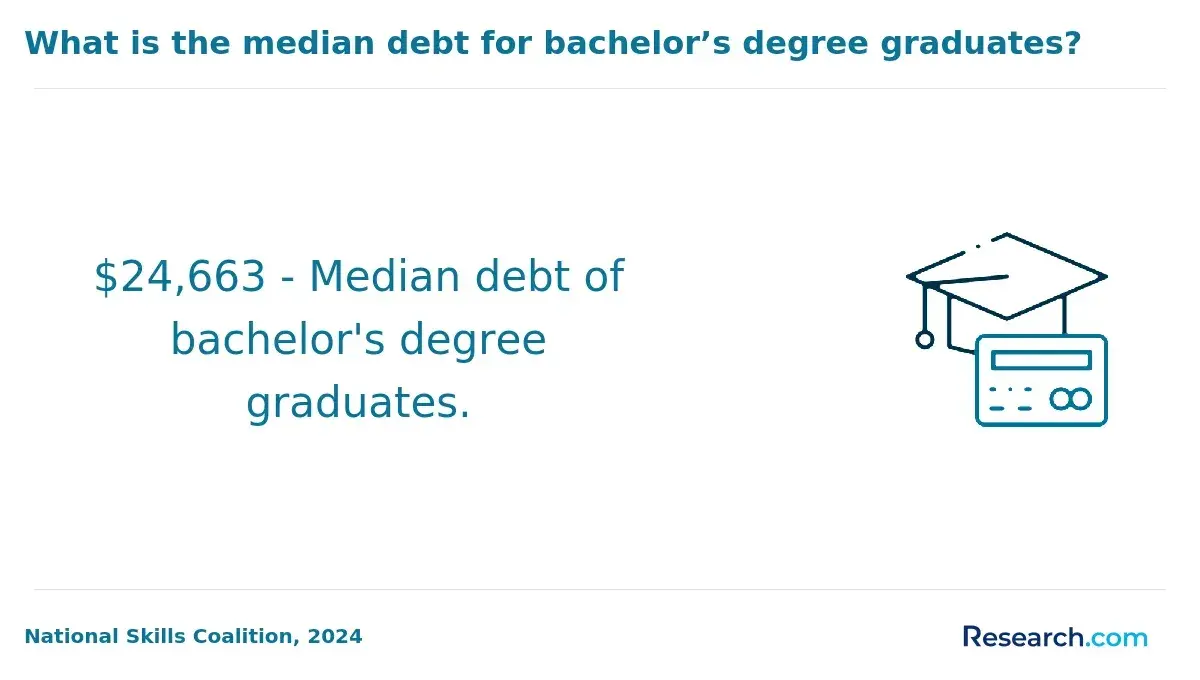
- College Board reported 2024-25 published tuition and fees of $11,610 for in-state public four-year colleges and $43,350 for private nonprofit four-year colleges, while BLS reported a May 2024 median wage of $101,190 for management analysts.
- Key Things You Should Know
- What Clinical Placement Requirements Do Entrepreneurship Degree Programs Have?
- How Are Clinical Placement Sites Assigned in Entrepreneurship Degree Programs?
- Which Factors Create Clinical Placement Bottlenecks in Entrepreneurship Degree Programs?
- What Supervision and Evaluation Standards Apply During Entrepreneurship Clinical Placements?
- Can Entrepreneurship Students Complete Clinical Placements Part-Time, Online, or Near Home?
- What Costs Are Associated With Entrepreneurship Clinical Placements?
- How Do Clinical Placements Affect Career Readiness for Entrepreneurship Graduates?
- How Are Clinical Placement Opportunities Changing for Entrepreneurship Students?
- How Should Students Compare Entrepreneurship Degree Programs Based on Clinical Placement Quality?
- Top Trending Entrepreneurship Rankings
What Clinical Placement Requirements Do Entrepreneurship Degree Programs Have?
In entrepreneurship education, "clinical placement" is usually a practical learning experience where students apply business-building skills in a supervised setting. Unlike nursing, counseling, or allied health programs, entrepreneurship degrees typically do not have nationally standardized clinical hour requirements.
Instead, schools may require an internship, startup practicum, consulting clinic, venture accelerator, cooperative education placement, or capstone project with a real client or founder.
The table below shows how placement requirements often differ by program type. Use it as a planning framework, not as a substitute for a program catalog, because hour requirements vary by institution, degree level, credit system, and concentration.
| Program type | Common experiential requirement | How hours are usually documented | Completion risk |
| Undergraduate certificate or minor | May use a project, pitch competition, or short applied course | Course deliverables, mentor feedback, or project milestones | Lower risk because placements may not be required |
| Associate degree in business or entrepreneurship | May include a business plan project or optional internship | Faculty evaluation, site confirmation, or portfolio review | Moderate risk if internship slots are limited locally |
| Bachelor's degree in entrepreneurship | Often includes internship, practicum, consulting clinic, or capstone | Logged hours, supervisor evaluation, reflective assignments, and final presentation | Higher risk if graduation depends on site approval or a fixed semester schedule |
| MBA or master's concentration in entrepreneurship | May include venture lab, accelerator, client consulting, or innovation residency | Project milestones, client deliverables, pitch decks, and faculty review | Moderate to high risk for working adults with limited scheduling flexibility |
| Healthcare, social impact, or technology entrepreneurship track | May require placement in a hospital innovation office, nonprofit, incubator, or startup | Site onboarding, confidentiality agreements, supervisor review, and project outcomes | Higher risk where compliance, data access, or intellectual property rules apply |
Students should read the requirement carefully. A "three-credit internship" does not automatically mean the same number of clock hours at every school. Some institutions convert credits into work hours using internal credit-hour policies, while others evaluate the placement through deliverables, sponsor feedback, and faculty assessment rather than a strict hour total.
The best-fit requirement depends on your goal. A founder who already operates a business may benefit from a venture practicum that lets them develop their own company. A student seeking corporate innovation or consulting roles may gain more from a client-facing consulting clinic.
A student with limited transportation may prefer a program that allows remote startup support, market research, or digital venture-building projects, as long as the school confirms those hours count before enrollment.
How Are Clinical Placement Sites Assigned in Entrepreneurship Degree Programs?
Entrepreneurship clinical placements are assigned in three main ways: school-arranged, student-arranged, or co-arranged. The assignment model is one of the most important program-selection factors because it determines how much responsibility the student carries before the placement can begin.
The table below compares the main placement models and what each means for access, flexibility, and risk. This comparison is especially useful for online students, working adults, and students who live far from the campus or business community connected to the school.
| Placement model | How it works | Best fit | Main risk |
| School-arranged | The program assigns students to approved incubators, startups, employers, nonprofits, or consulting clients | Students who want structure, predictable approval, and less cold outreach | Limited choice of location, industry, schedule, or venture type |
| Student-arranged | The student finds a site, then the school reviews it for academic fit and supervision standards | Students with strong local networks, employer connections, or an existing startup | Graduation delays if the proposed site is rejected or paperwork arrives late |
| Co-arranged | The school provides leads, templates, and approval support while the student contacts sites | Students who need flexibility but still want institutional guidance | Unclear responsibility if the school does not define timelines and backup options |
| Embedded practicum | The placement is built into a course through simulations, live cases, venture labs, or faculty-supervised client work | Students who need predictable scheduling or online access | Less exposure to workplace culture if external partners are limited |
School-arranged placements are usually safer for students who cannot afford a delayed graduation term. Student-arranged placements can be valuable when the student has a specific industry goal, such as food entrepreneurship, fintech, healthcare innovation, retail, or social enterprise, but they require earlier planning.
Before choosing a program, ask for the actual placement workflow, not just a broad promise of "career support." The most useful questions are specific and time-bound:
- Who is responsible for finding the site: the school, the student, or both?
- How many weeks before the term must the site be approved?
- Does the school maintain active agreements with startups, incubators, chambers of commerce, nonprofits, or corporate innovation teams?
- Can a student use their current employer, family business, freelance practice, or own startup as the placement site?
- What happens if a site cancels, a supervisor leaves, or the project no longer meets academic requirements?
- Are remote, evening, weekend, or project-based placements allowed?
A strong program can explain its placement process in plain language. A red flag is vague wording such as "students may seek opportunities" without a clear approval timeline, supervisor standard, or backup plan.
Which Factors Create Clinical Placement Bottlenecks in Entrepreneurship Degree Programs?
Clinical placement bottlenecks in entrepreneurship programs are different from those in healthcare programs. The issue is usually not a fixed number of patient-care seats. Instead, delays happen when a business site, faculty member, external mentor, client project, and academic deadline fail to align.
The table below summarizes common bottlenecks and the likely effect on students. Reviewing these issues before enrollment can help you estimate whether a program's experiential requirement fits your life and graduation plan.
| Bottleneck | Why it happens | Possible effect |
| Late site approval | The student identifies a site after the school's deadline or submits incomplete information | Placement may move to a later term |
| Limited qualified supervisors | The site has founders or managers but no one available to mentor and evaluate a student | The site may be rejected even if the work looks relevant |
| Confidentiality and intellectual property concerns | Startups may restrict access to financials, product roadmaps, customer data, or investor materials | Project scope may shrink or require legal review |
| Mismatch between student goals and site work | The student wants strategy or venture development but the site offers routine administrative work | Hours may not count if learning outcomes are not met |
| Academic calendar mismatch | Startup timelines do not always fit semester start and end dates | Students may struggle to complete deliverables on time |
| Online student location limits | The school may have fewer employer relationships near the student's home | Student may need to arrange a local site independently |
The most common mistake is assuming that "online" means "no in-person or live-client requirement." Many online entrepreneurship degrees still require applied projects, synchronous mentor meetings, internship documentation, or approved local placements.
Students can reduce bottlenecks by starting the placement process early and documenting every approval step. A practical sequence is:
- Read the internship, practicum, or capstone handbook before the first registration deadline.
- Ask whether the program has pre-approved sites in your region or industry.
- Confirm whether your own startup, employer, or family business is eligible.
- Collect required paperwork, including learning objectives, supervisor contact information, project scope, and schedule.
- Ask for written approval before counting any hours or beginning client work.
- Keep a backup site or alternate project option in case the first site falls through.
Program quality shows up in how bottlenecks are handled. A reliable school provides clear deadlines, sample agreements, named placement staff, and escalation steps when a site becomes unavailable.
How Do Clinical Hour Requirements Affect Entrepreneurship Degree Completion?
Clinical hour requirements can affect entrepreneurship degree completion because applied work is harder to reschedule than a standard online lecture course. A student can often retake an academic course in another term, but a placement may depend on external supervisors, business cycles, client availability, and approved project scopes.
Entrepreneurship programs generally track completion through one or more of four mechanisms: clock hours, credit hours, deliverables, and evaluations. If the program uses clock hours, missing even a small number can delay final approval. If the program uses deliverables, weak documentation or an incomplete client project can create the same problem.
The table below explains how different completion measures affect graduation planning. Students should ask which model their program uses before assuming the placement will fit around work or family commitments.
| Completion measure | What the school reviews | Why it can delay graduation |
| Clock hours | Time logs signed by a supervisor or verified through a platform | Unapproved hours, missed shifts, or poor logs may not count |
| Credit hours | Registration in a practicum, internship, or capstone course | The course may be offered only in certain terms |
| Project deliverables | Business plan, market analysis, pitch deck, operations plan, financial model, or client report | Incomplete or confidential materials may not satisfy the rubric |
| Supervisor evaluation | Professionalism, communication, initiative, reliability, and quality of work | Weak performance can require remediation or additional work |
| Faculty assessment | Reflection papers, presentations, portfolios, or learning outcome evidence | Late submissions can delay final grades even if site hours are complete |
Completion risk is highest when students wait until the final year to understand the placement rules. It is also higher for students who work full-time, rely on public transportation, live far from business hubs, or need evening and weekend hours.
A good rule is to treat the placement like a graduation requirement, not an optional career activity. Build it into your academic plan at least one or two terms before it appears on the degree map.
If the program allows electives, consider choosing courses that produce placement-ready materials, such as a startup concept, market validation plan, customer discovery report, or financial model.
What Supervision and Evaluation Standards Apply During Entrepreneurship Clinical Placements?
Supervision and evaluation standards in entrepreneurship placements are usually set by the school, department, or business college. Since entrepreneurship is not a licensed clinical profession, standards often focus on academic learning outcomes, professional behavior, ethical conduct, project quality, and supervisor feedback.
Fields with external approval structures, such as ABA-approved paralegal programs, often have clearer third-party practice expectations. Entrepreneurship programs are more variable, so students need to ask how the school defines a qualified supervisor and how performance is evaluated.
Most entrepreneurship placements require a site supervisor and a faculty evaluator. The site supervisor observes the student's day-to-day work, while the faculty member confirms that the experience meets academic standards. In startup settings, the supervisor may be a founder, product manager, incubator director, nonprofit executive, small-business owner, investor relations lead, or corporate innovation manager.
Strong supervision usually includes the following elements. These standards matter because they protect students from placements that are unpaid, poorly structured, or unrelated to entrepreneurial learning:
- A written learning agreement that defines the project, schedule, expected outputs, and evaluation method.
- A supervisor who has enough professional experience and availability to provide feedback.
- Clear rules for confidentiality, intellectual property, customer data, and use of company materials in academic assignments.
- Regular check-ins with faculty or a placement coordinator before problems become severe.
- A final evaluation that measures both professional conduct and entrepreneurship-specific competencies.
Red flags include a site that cannot explain what the student will do, a supervisor who is unavailable, a project limited to clerical work, or a company that refuses all documentation needed for academic credit. Students should clarify these issues before starting, because schools may not count work that was never formally approved.
Can Entrepreneurship Students Complete Clinical Placements Part-Time, Online, or Near Home?
Many entrepreneurship students can complete placements part-time, online, or near home, but flexibility depends on the school's policies and the type of experiential requirement. A remote venture lab is easier to complete online than a site-based internship at a local startup, and a consulting clinic may require scheduled client meetings even if the rest of the degree is asynchronous.
Working adults comparing flexible formats, including online PhD programs for working professionals, should apply the same level of scrutiny to entrepreneurship degrees: the coursework may be online, but the applied component may still require live meetings, approved supervisors, or location-specific projects.
The table below compares common scheduling formats. It can help you identify which placement structure is realistic based on your work schedule, location, and support needs.
| Format | How it usually works | Best for | Watch for |
| Part-time placement | Student completes hours or deliverables across several weeks or a full term | Working adults and caregivers | Longer calendar time and fewer available sites |
| Full-time intensive | Student completes a concentrated internship, accelerator, or residency | Students who can pause work or study full-time | Higher short-term time pressure |
| Remote project placement | Student supports a startup, client, or venture team through digital collaboration | Online students and students outside major business hubs | Need for strong documentation and regular communication |
| Near-home placement | Student uses a local employer, small business, incubator, nonprofit, or own venture | Students with transportation limits or regional career goals | School may require site approval before hours count |
| Hybrid clinic | Student completes online preparation plus scheduled client or mentor sessions | Students who want structure without daily site attendance | Synchronous meetings may conflict with work hours |
Online students should not assume they can invent a placement after the course begins. The safest approach is to ask the admissions team, academic advisor, and placement coordinator the same question: "Can I complete the required applied experience from my current location, and what proof do you need before the term starts?"
Part-time completion makes sense when you need income stability, caregiving flexibility, or time to build your own venture. It may not make sense if the program offers the practicum only once a year or if the site expects daytime availability. In that case, a program with an embedded virtual consulting clinic may be less risky than one that leaves site access mostly to the student.
What Costs Are Associated With Entrepreneurship Clinical Placements?
Entrepreneurship clinical placements can create costs beyond tuition. Some are obvious, such as travel, while others are easy to miss, such as software subscriptions, professional clothing, background checks for certain sites, or lost wages from reducing work hours.
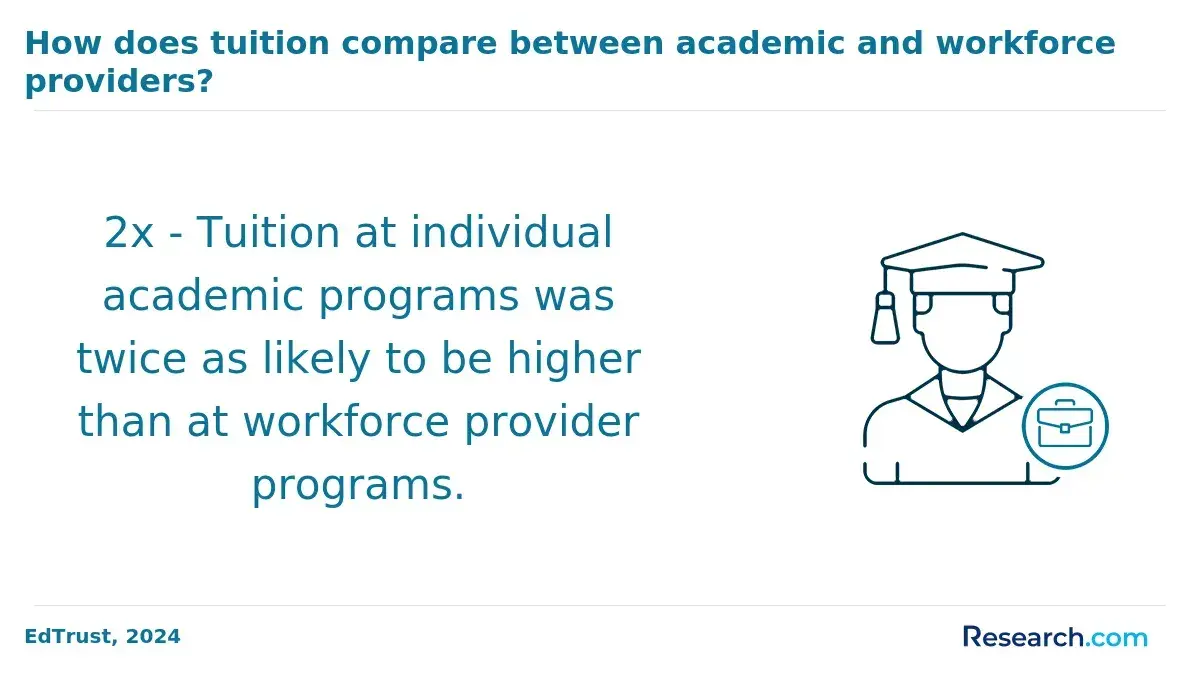
Cost-sensitive students comparing business education options, including the cheapest EMBA pathways, should evaluate placement costs alongside tuition. College Board's 2024-25 figures show why this matters: published tuition and fees alone averaged $11,610 for in-state public four-year institutions and $43,350 for private nonprofit four-year institutions, before indirect expenses.
Common placement-related costs include the following:
- Transportation, parking, fuel, transit passes, or rideshare costs for site visits and client meetings.
- Technology tools such as project management platforms, analytics software, design tools, customer discovery tools, or premium video conferencing features.
- Professional expenses, including interview attire, presentation materials, business cards, or portfolio hosting.
- Background checks, health documentation, or compliance onboarding when the placement is in healthcare, education, government contracting, or another regulated environment.
- Lost wages if the placement requires daytime availability or reduces paid work hours.
- Travel or temporary lodging if the program requires an accelerator residency, pitch event, campus intensive, or regional site visit.
These items vary widely, so students should request a written estimate from the program rather than relying on tuition alone.
Not every student should pay more for a program with placement support, but it can be worth it when the support reduces the risk of delayed graduation. A lower-tuition program may become more expensive if the student has to add another term, travel farther for an approved site, or take unpaid time away from work. The better question is not "Which program is cheapest?" but "Which program gives me the lowest realistic total cost to finish?"
How Do Clinical Placements Affect Career Readiness for Entrepreneurship Graduates?
Clinical placements can improve career readiness when they require students to solve real business problems, communicate with stakeholders, test assumptions, and produce evidence of work. For entrepreneurship students, the most useful placement is not always the most prestigious one. It is the one that produces concrete experience aligned with the student's next step.
Portfolio-based fields show a similar pattern. Students comparing a bachelors in photography online often look for portfolio development, critique, and real client work; entrepreneurship students should look for validated venture work, client deliverables, pitch materials, or measurable market research.
The career value of a placement depends on the role you want after graduation. A student pursuing startup founding needs different evidence than a student pursuing product management, small-business consulting, franchise operations, venture capital support, nonprofit enterprise, or corporate innovation.
The table below connects common placement settings to the skills and career evidence they can produce. Use it to judge whether a program's placement network matches your career target.
| Placement setting | Typical learning experience | Useful career evidence |
| Startup or early-stage company | Customer discovery, operations support, market research, sales testing, product launch work | Case study, growth experiment, pitch deck contribution, founder reference |
| University incubator or accelerator | Mentoring, venture validation, investor-readiness work, peer founder feedback | Demo day materials, validated business model, mentor evaluations |
| Small business or family enterprise | Local market analysis, process improvement, digital marketing, financial planning | Operations plan, revenue improvement proposal, implementation portfolio |
| Corporate innovation team | Internal entrepreneurship, product strategy, market scans, business case development | Business case, stakeholder presentation, innovation project summary |
| Nonprofit or social enterprise | Mission-driven revenue models, grant-linked ventures, community partnerships | Impact model, sustainability plan, stakeholder report |
| Healthcare or regulated-sector innovation site | Workflow improvement, patient experience innovation, compliance-aware product research | De-identified project summary, process map, supervisor evaluation |
BLS May 2024 data placed the median annual wage for management analysts at $101,190, a role often associated with problem-solving, market analysis, and organizational improvement.
That figure should not be read as a guaranteed outcome for entrepreneurship graduates, but it shows why applied consulting, analysis, and venture-building skills can be valuable beyond starting a company.
Students should leave the placement with tangible proof of ability. Ask whether the program helps students turn placements into resumes, portfolios, LinkedIn project summaries, pitch decks, interview stories, or employer-ready case studies.
How Are Clinical Placement Opportunities Changing for Entrepreneurship Students?
Entrepreneurship placement opportunities are changing as more programs incorporate remote collaboration, AI tools, virtual incubators, employer-sponsored projects, and interdisciplinary innovation labs. These changes can expand access for students outside major startup hubs, but they also make documentation and supervision more important.
AI is especially relevant. Students may use AI tools for market research, customer segmentation, financial modeling, content testing, or pitch preparation, but programs and sites increasingly need policies on data privacy, attribution, accuracy, and client confidentiality. A placement that uses AI without clear rules can create ethical or academic-integrity problems.
Several trends are shaping site access and completion timelines:
- More remote client projects are available, but schools may require stronger evidence of communication, deliverables, and supervisor oversight.
- Startup and small-business sites may welcome student help but lack the administrative capacity to complete university paperwork quickly.
- Healthcare, fintech, education technology, and government-adjacent ventures may require additional compliance review before students can access data or systems.
- Employers increasingly value practical proof, so placements that produce measurable outcomes may carry more career value than generic internships.
- University incubators are becoming important placement hubs because they combine mentorship, peer feedback, faculty oversight, and venture support in one environment.
The strongest programs are adapting by building broader partner networks, offering virtual consulting clinics, clarifying AI-use policies, and giving students earlier access to placement planning.
The weakest programs may still rely on students to find sites with minimal guidance, which can be risky for online students and career changers without existing networks.
How Should Students Compare Entrepreneurship Degree Programs Based on Clinical Placement Quality?
Students should compare entrepreneurship programs based on placement quality, not just tuition, ranking, or course titles. A program with a strong experiential system can reduce completion risk and produce better career evidence, while a vague placement model can create delays even when the curriculum looks attractive.
Use the following checklist when speaking with admissions counselors, academic advisors, faculty, or current students. These questions are designed to reveal how the placement actually works once you are enrolled:
- Ask whether the applied requirement is mandatory, optional, or replaceable with a capstone project.
- Request the exact number of required credits, hours, deliverables, or supervisor evaluations.
- Ask who finds the placement and what percentage of the process is student-led.
- Confirm whether online students can complete placements near home or remotely.
- Ask for examples of recent placement sites, such as startups, incubators, small businesses, nonprofits, or corporate innovation teams.
- Verify whether your employer, family business, freelance practice, or own startup can qualify.
- Ask what happens if a site cancels or a supervisor becomes unavailable.
- Request all onboarding deadlines, documentation rules, and approval forms before registration.
- Ask whether the program helps students turn placement work into portfolio evidence or career materials.
- Compare the total cost of completion, including travel, added terms, lost wages, and placement fees.
The best program for you depends on your situation. A campus program may be stronger if you want access to a local startup ecosystem, faculty-led incubator, and in-person networking. An online or hybrid program may be better if you already have a business, employer, or local site and need schedule flexibility.
A more expensive program may be worth considering if it provides guaranteed placement coordination or strong employer partnerships, but only if the school defines what that support includes in writing.
Be cautious with programs that advertise entrepreneurship as highly practical but cannot describe how students access real projects. Also be cautious if the school says placements are "available" but not required, because optional support may not receive the same staffing or priority as a required practicum. The safest choice is a program that matches your location, schedule, industry goal, and need for placement support.
Other Things You Should Know About Entrepreneurship Clinical Placement
Usually no. Entrepreneurship programs typically use internships, practicums, consulting clinics, incubators, or capstone projects rather than licensure-style clinical hours. Requirements are set by the school.
Some programs allow it, but approval is not automatic. The school may require learning objectives, a qualified mentor, documentation, and proof that the work meets academic standards.
They can be more flexible, but online coursework does not always remove applied requirements. Ask whether remote projects, local sites, employer-based placements, or virtual consulting clinics are accepted.
The most common delay is late or incomplete approval. Students often lose time when they start work before the site, supervisor, schedule, and project scope are formally approved by the program.
Top Trending Entrepreneurship Rankings
References
- Resources at Academic Entrepreneurship Centers https://academicentrepreneurship.pubpub.org/pub/h2vj88lu
- Work Integrated Learning (Placement) - Procedures https://www.unisc.edu.au/about/policies-and-procedures/work-integrated-learning-placement-procedures
- The Challenges of Student Placements in Higher Education https://inplacesoftware.com/blogs/the-challenges-of-student-placements-in-higher-education/
- Tracking Students’ Progression and Achievement - Essex School of Business https://esb.net.bd/tracking-students-progression-and-achievement/
- Overcoming Barriers to Student Entrepreneurship | Geneva Business School https://gbsge.com/newsroom/overcoming-barriers-to-student-entrepreneurship/