2027 Entrepreneurship Degree Value by Institution Type: Public, Private, Nonprofit, and Online Models Compared

Co-Founder and Chief Data Scientist
Choosing an entrepreneurship degree is really a value decision: how much should you pay for credibility, flexibility, mentoring, and career access? College Board data for 2024-25 shows average published tuition and fees ranging from $11,610 at public four-year in-state institutions to $43,350 at private nonprofit colleges, before aid.
This guide is for prospective undergraduates, transfer students, working adults, and career changers comparing public, private, nonprofit, for-profit, and online models so they can estimate real cost, evaluate employer recognition, and choose the pathway most likely to support their business goals.
Key Things You Should Know
- Public in-state entrepreneurship programs often have the lowest published tuition, with College Board reporting $11,610 in average 2024-25 tuition and fees at public four-year institutions for in-state students, but net price, transfer credits, and time to graduation matter more than sticker price alone.
- Online entrepreneurship degrees can be credible when they are offered by properly accredited institutions, but students should verify regional accreditation, faculty access, internship options, and whether the diploma or transcript distinguishes online delivery.
- NCES data published in 2024 shows six-year completion rates are generally higher at public and private nonprofit four-year institutions than at private for-profit institutions, making graduation likelihood a key ROI factor alongside tuition and borrowing.
- Key Things You Should Know
- Is a Public University Entrepreneurship Degree More Cost-Effective Than a Private One?
- How Do Employers View the Credibility of an Online Entrepreneurship Degree?
- Do Private Nonprofit Universities Offer Better Career Networking for Entrepreneurship Students?
- Are There Hidden Fees Associated with an Online Entrepreneurship Degree Program?
- Do Recruiters Prefer Entrepreneurship Graduates From Prestigious Private Nonprofit Universities?
- How Do Graduation Rates Impact the Perceived Value of a Entrepreneurship Degree Across School Types?
- Does a Private University Entrepreneurship Degree Provide Better Long-Term Salary Growth?
- How Do Alumni Networks of Nonprofit vs. Online Entrepreneurship Programs Compare in Long-Term Support?
- How Can You Choose the Right Entrepreneurship Degree Pathway Based on Your Financial and Career Goals?
- Top Trending Entrepreneurship Rankings
Is a Public University Entrepreneurship Degree More Cost-Effective Than a Private One?
A public university entrepreneurship degree is often more cost-effective for in-state students, especially when the program has strong business accreditation, active startup resources, and good transfer-credit policies. However, "public" and "private" describe institutional control, while "online" describes delivery format; a public university can offer an online entrepreneurship degree, and a private nonprofit can offer both campus and online options.
The table below summarizes the major cost and value differences students should compare before assuming one model is automatically cheaper or better.
| Institution model | Typical value advantage | Main cost risk | Best fit |
| Public in-state university | Lower average published tuition and broad financial aid access | Large class sizes or limited access to specialized startup mentors | Students seeking a lower-cost business foundation with campus resources |
| Public out-of-state university | Access to a stronger entrepreneurship ecosystem in another state | Tuition can approach private college levels without the same aid package | Students targeting a specific regional startup market or flagship business school |
| Private nonprofit college | Smaller classes, donor-funded centers, alumni networks, and mentoring | Higher sticker price if institutional grants are limited | Students who can secure strong aid or need close faculty and alumni support |
| Private for-profit institution | Flexible scheduling and career-focused formats | Higher borrowing risk if completion rates, transferability, or employer recognition are weak | Working adults who have verified accreditation, outcomes, and total cost |
| Online program | Lower relocation and opportunity costs | Technology fees, limited networking, or weaker experiential learning if poorly designed | Working professionals, parents, military students, and transfer students |
For published tuition, College Board reported 2024-25 averages of $11,610 for public four-year in-state students, $30,780 for public four-year out-of-state students, and $43,350 for private nonprofit four-year institutions. Those figures show why in-state public programs can be compelling, but they do not include individual aid offers, scholarships, housing choices, work income, or the cost of taking extra semesters.
The practical answer is that a public entrepreneurship degree is usually the best starting point for price-sensitive students, but not always the best net-value option. A private nonprofit program with a generous grant package, guaranteed business incubator access, strong alumni placement, and faster completion can sometimes beat a public option on total value.
How Do Employers View the Credibility of an Online Entrepreneurship Degree?
Employers generally evaluate an online entrepreneurship degree by the institution's accreditation, reputation, curriculum, evidence of applied skills, and the candidate's work experience. For entrepreneurship specifically, credibility often comes less from the word "online" and more from whether the student can show business plans, market research, financial modeling, pitching experience, internships, venture projects, or measurable business results.
Online education has also become more mainstream for adults who cannot pause their careers. Students comparing flexible graduate pathways, including online PhD programs for working professionals, will see the same core credibility questions: accreditation, faculty quality, completion support, and outcomes transparency.
The table below explains how employers may interpret different signals from an online entrepreneurship program.
| Credibility signal | Why it matters | What to verify |
| Institutional accreditation | Shows the school meets recognized academic standards | Confirm accreditation through the U.S. Department of Education or CHEA-recognized databases |
| Business school recognition | Can strengthen confidence in curriculum quality | Look for AACSB, ACBSP, or IACBE accreditation when relevant |
| Applied entrepreneurship projects | Demonstrates practical ability beyond coursework | Ask whether students complete pitch decks, launch plans, consulting projects, or capstones |
| Employer-facing career support | Improves access to internships, mentors, and early roles | Review career fairs, employer partnerships, internship databases, and alumni involvement |
| Transcript and diploma wording | Some students prefer no delivery-mode distinction | Ask whether the transcript identifies the program as online |
A common mistake is assuming online means less respected. A better question is whether the program gives you credible proof of entrepreneurial skill. For a founder, that proof may be a tested product, customer discovery research, or investor-ready pitch; for an employee, it may be innovation management, business development, market analysis, or operations experience.
Do Private Nonprofit Universities Offer Better Career Networking for Entrepreneurship Students?
Private nonprofit universities can offer strong career networking, but the advantage depends on the school's alumni engagement, business school resources, regional employer relationships, and entrepreneurship ecosystem. A small private college with an active incubator and involved alumni may outperform a larger public university for mentorship, while a major public flagship in a startup-heavy region may provide broader employer access.
Networking matters more in entrepreneurship than in many majors because venture creation depends on introductions, feedback, funding access, and early customer discovery. Students comparing business-focused graduate options such as the cheapest EMBA should apply a similar value lens: the least expensive program is not always the best if it lacks the relationships needed to convert learning into opportunity.
Before paying a premium for a private nonprofit entrepreneurship program, evaluate the network in concrete terms rather than relying on brand language. Strong programs usually make the following resources easy to verify:
- Active alumni founders, investors, product leaders, and business development professionals who mentor students or judge pitch competitions
- Entrepreneurship centers that offer seed funding, venture studios, incubator space, legal clinics, or customer discovery support
- Internship and experiential learning pipelines with startups, family businesses, accelerators, nonprofits, or corporate innovation teams
- Regular access to founders, angel investors, small business owners, and regional economic development organizations
- Documented student outcomes, such as venture launches, competition participation, internship placements, or graduate school progression
The best networking choice is not always the most prestigious one. It is the program whose relationships match your goal, whether that is launching a company, joining a startup, taking over a family business, or working in product, sales, consulting, or venture support.
Do Private Colleges Offer More Personalized Faculty Mentorship for Entrepreneurship Students?
Private colleges often market smaller classes and closer faculty access, and that can be valuable in entrepreneurship. A student building a venture may need repeated feedback on pricing, legal risk, customer discovery, financial assumptions, and go-to-market strategy. Faculty mentorship can also help students identify internships, pitch competitions, research opportunities, and alumni contacts.
However, private does not automatically mean personalized. Some public universities have honors colleges, entrepreneurship living-learning communities, startup labs, and faculty-led accelerators that provide highly individualized support. The real comparison should focus on advising load, faculty availability, experiential requirements, and whether mentorship is built into the curriculum rather than offered only to the most proactive students.
Ask admissions and program staff specific questions that reveal how much support you will actually receive:
- How many entrepreneurship majors or business students does each faculty advisor typically support?
- Are students assigned a faculty mentor, or must they find one independently?
- Does the program require a capstone, venture launch, consulting project, internship, or pitch presentation?
- How often can online students meet faculty synchronously, and are evening or weekend options available?
- Do faculty members have founder, investor, consulting, family business, or small business ownership experience?
Personalized mentorship is worth paying more for when it directly improves completion, skill development, venture readiness, or career access. It is less valuable if the program has a high price but offers mostly generic advising, limited faculty contact, or few applied entrepreneurship experiences.
Are There Hidden Fees Associated with an Online Entrepreneurship Degree Program?
Yes, online entrepreneurship degree programs can include costs beyond advertised tuition. These may not be "hidden" in a legal sense, but they are often easy to miss during early research. For value comparison, students should calculate total program cost, not just cost per credit.
Online students in project-based fields may see fees tied to technology, proctoring, simulations, portfolio tools, or software. The same issue appears in other online creative and professional programs, such as a bachelor's in photography online, where software, equipment, and portfolio expenses can materially change the real price of attendance.
When comparing online entrepreneurship programs, request a complete fee schedule and estimate the following costs before enrolling:
- Technology, online learning, proctoring, graduation, transcript, and student service fees
- Required business software, market research databases, accounting tools, presentation platforms, or simulation licenses
- Residency, immersion, pitch weekend, or campus visit costs, including travel and lodging
- Internship, practicum, or capstone expenses that may require unpaid time away from work
- Lost transfer credits if the school rejects prior coursework or applies credits only as electives
- Extra-term costs if courses are not offered frequently enough to support on-time completion
The most important 2024 cost trend is that students are scrutinizing net price more closely as tuition, housing, and borrowing concerns remain high. For online learners, the best-value program is often the one that combines reasonable tuition with generous transfer acceptance, predictable course availability, and low non-tuition fees.
Do Recruiters Prefer Entrepreneurship Graduates From Prestigious Private Nonprofit Universities?
Some recruiters do favor prestigious private nonprofit universities, especially for competitive roles in consulting, venture capital support, product strategy, investment banking-adjacent startup finance, or leadership development programs. Brand recognition can help a resume get attention, but it rarely replaces evidence of skills, experience, and fit.
For entrepreneurship graduates, recruiters and founders commonly look for applied ability. That may include market sizing, financial modeling, sales experience, product testing, operations knowledge, data analysis, leadership, and resilience. A graduate from a less famous public or online program can compete well when they bring internships, a portfolio of venture projects, strong references, and clear business outcomes.
The salary context also argues against choosing prestige alone. The U.S. Bureau of Labor Statistics reported a May 2024 median annual wage of $80,920 for business and financial operations occupations, a broad category that includes many roles entrepreneurship graduates may pursue. That figure is useful as a labor-market benchmark, but actual outcomes vary widely by role, location, industry, experience, and whether the graduate starts a business or seeks employment.
A prestige premium is most likely to be worth it when the school provides access that directly supports your target path. If the higher-cost private nonprofit program offers strong recruiting pipelines, founder networks, venture funding exposure, and a realistic aid package, it may create value. If the brand is expensive but the entrepreneurship support is thin, a lower-cost public or online program may be the better ROI choice.
How Do Graduation Rates Impact the Perceived Value of a Entrepreneurship Degree Across School Types?
Graduation rates matter because an unfinished degree can leave students with debt, used financial aid eligibility, and limited credential value. For entrepreneurship students, noncompletion can also delay business launch plans, reduce internship access, and weaken eligibility for roles requiring a bachelor's degree.
NCES data published in 2024 shows that six-year completion rates for first-time, full-time bachelor's degree students are generally stronger at public and private nonprofit four-year institutions than at private for-profit institutions. Use this data as a broad institutional signal, not a prediction of your personal outcome, because transfer students, part-time learners, and working adults may follow different timelines.
The table below shows how completion likelihood affects degree value across institution types.
| Institution type | How graduation rates affect value | What students should check |
| Public university | Strong completion outcomes can make lower tuition even more valuable | Major-specific retention, course availability, advising quality, and transfer pathways |
| Private nonprofit university | Higher completion rates can offset higher tuition if aid lowers net price | Net price after grants, four-year graduation rate, mentoring, and career services |
| Private for-profit institution | Lower completion outcomes can raise the risk of borrowing without finishing | Accreditation, loan repayment outcomes, transferability, and student support staffing |
| Online program | Flexibility helps adults persist, but isolation and scheduling gaps can slow progress | Online retention, tutoring, synchronous support, course sequencing, and leave policies |
A strong entrepreneurship program should be able to explain how it helps students stay on track. Look for proactive advising, degree maps, predictable course rotations, embedded career milestones, and transfer evaluations before enrollment. Completion support is not a bonus feature; it is central to ROI.
Does a Private University Entrepreneurship Degree Provide Better Long-Term Salary Growth?
A private university entrepreneurship degree does not automatically provide better long-term salary growth. Salary growth is influenced by industry, location, work experience, business performance, internships, alumni access, leadership opportunities, and the student's ability to turn coursework into marketable skills. Institution type can help, but it is only one part of the earnings equation.
Private nonprofit programs may support long-term growth when they connect students to high-value networks, selective internships, founder mentors, and employers in growth industries. Public universities may offer similar or better outcomes when they have strong business schools, regional employer pipelines, lower debt burdens, and active entrepreneurship centers. Online programs may support salary growth for working adults by allowing them to keep earning while studying.
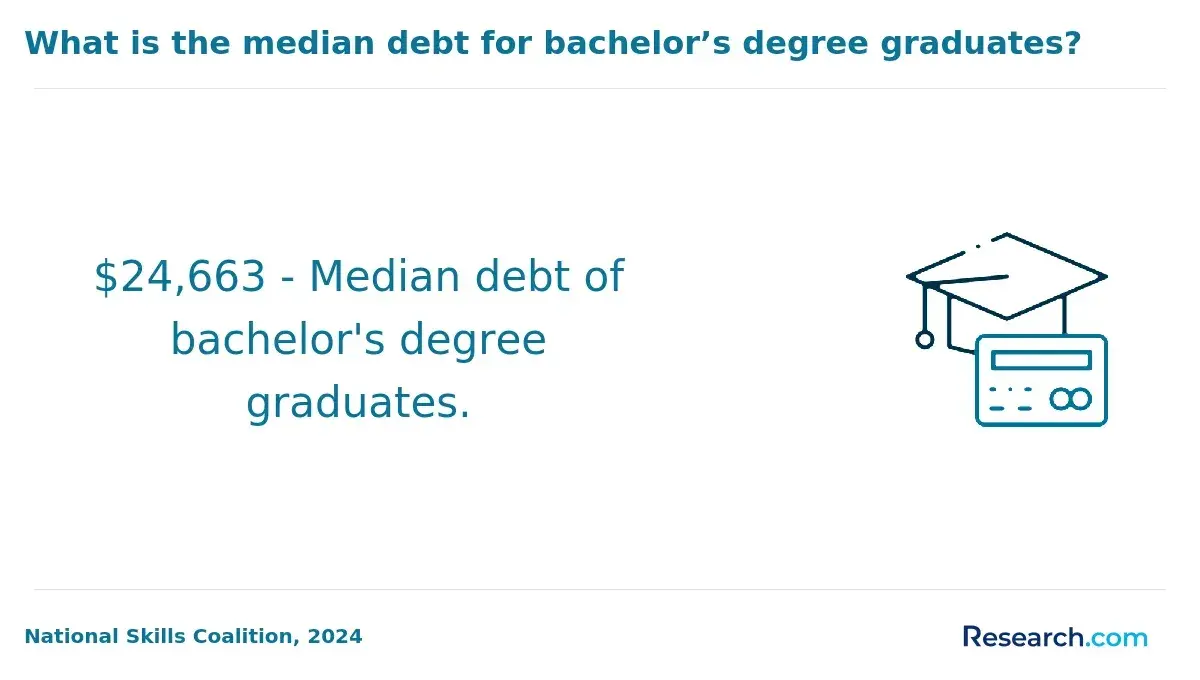
Debt is a major part of the long-term salary equation. College Board's 2024 student aid reporting places recent average bachelor's borrower debt near $29,000, which means monthly repayment can reduce the practical value of a higher salary if the degree required substantial borrowing. A lower-cost program with slightly less prestige can produce stronger personal ROI if it allows the graduate to keep debt manageable.
To evaluate salary growth realistically, compare the program against your intended path. A student aiming for product management, business development, consulting, or corporate innovation may benefit from recruiter access and internships. A student planning to start a small business may care more about cash flow, local mentors, accounting skills, and low debt than institutional prestige.
How Do Alumni Networks of Nonprofit vs. Online Entrepreneurship Programs Compare in Long-Term Support?
Nonprofit institutions, especially long-established public and private universities, often have larger and more mature alumni networks. These networks can support entrepreneurship graduates through mentorship, investor introductions, hiring referrals, customer leads, and local business connections. The strength of the network depends less on nonprofit status alone and more on how actively the school engages alumni with current students.
Online entrepreneurship programs vary widely. Some online degrees are offered by major nonprofit universities with the same alumni association as campus programs. Others are attached to institutions with limited networking infrastructure. The delivery format does not determine alumni value; the key is whether online students receive equal access to events, directories, career platforms, mentoring, and entrepreneurship programming.
Students should compare alumni support by asking for evidence rather than promises. The most useful indicators include:
- Whether online and campus students join the same alumni association
- How often alumni participate in pitch competitions, guest lectures, mentoring, or hiring events
- Whether the school has alumni chapters in the region where the student wants to work or launch a business
- Whether entrepreneurship graduates can access alumni founders, investors, franchise owners, consultants, and small business operators
- Whether career services remain available after graduation or expire shortly after degree completion
For long-term support, the best program is the one that makes alumni relationships usable. A smaller online program with structured mentoring can be more valuable than a famous network that is difficult for students to access.
How Can You Choose the Right Entrepreneurship Degree Pathway Based on Your Financial and Career Goals?
Start by identifying your goal: launching a venture, joining a startup, advancing in a current company, managing a family business, or preparing for graduate business education. Then compare programs by net cost, completion likelihood, accreditation, flexibility, experiential learning, and career support. Institution type is a filter, not the final answer.
Accreditation should be verified early because rules differ by field and credential. For example, students comparing regulated or approval-sensitive pathways such as ABA-approved paralegal programs need to evaluate program approval differently than entrepreneurship students, who usually focus on institutional and business-school accreditation rather than licensure.
The table below provides a decision framework for matching the institution model to your financial and career priorities.
| Your priority | Often strongest option | Why it may fit | When to reconsider |
| Lowest total cost | Public in-state or transfer-friendly online public program | Lower tuition and reduced relocation costs can limit borrowing | If course availability delays graduation |
| Prestige and selective recruiting | Private nonprofit or flagship public university | Stronger brand and employer pipelines may help in competitive roles | If aid is weak and debt would limit career flexibility |
| Working while enrolled | Online public or online nonprofit program | Flexible scheduling can preserve income and reduce opportunity cost | If online students receive limited career or faculty support |
| Founder mentorship | Program with incubator, pitch funding, and active alumni founders | Applied support can help convert coursework into venture progress | If entrepreneurship resources are mostly promotional |
| Fast completion after transfer | School with generous transfer policies and clear degree maps | Accepted credits reduce cost and time | If credits transfer only as electives |
Use a structured process before enrolling so you do not compare programs on tuition or reputation alone:
- Calculate net price after grants, scholarships, employer tuition assistance, transfer credits, fees, books, travel, and lost income.
- Confirm institutional accreditation and, when relevant, business-school accreditation or recognition.
- Ask for entrepreneurship-specific outcomes, including internships, capstones, pitch competitions, venture launches, and employer partnerships.
- Compare graduation and retention rates for students like you, especially if you will study online, part time, or as a transfer student.
- Review student debt, repayment, and career services data instead of relying only on admissions claims.
- Speak with current students or alumni about faculty access, advising quality, workload, and networking usefulness.
- Choose the lowest-cost program that still gives you credible learning, completion support, and access to the opportunities you actually need.
Avoid the common mistake of treating public, private nonprofit, private for-profit, and online as equal categories. Public, private nonprofit, and for-profit describe institutional structure; online describes delivery. The best entrepreneurship degree pathway is the one that balances affordability, credibility, flexibility, completion probability, and career relevance for your specific business goal.
Other Things You Should Know About Entrepreneurship
It can be worth it if the program helps you build practical skills in finance, marketing, operations, sales, leadership, and customer discovery while keeping debt manageable. If tuition is high and the program lacks applied venture support, lower-cost business, management, or certificate options may be better.
Campus programs may offer easier access to live networking, incubators, and pitch events. Online programs may be better for working adults who need flexibility and want to keep earning while studying. The stronger choice is the one with credible accreditation, strong support, and applied projects.
Choose entrepreneurship if you want venture creation, innovation, small business management, or startup-focused coursework. Choose general business if you want broader preparation for corporate roles, accounting, finance, operations, or management jobs and want to keep more career paths open.
Ask about net price, accreditation, transfer credits, graduation rates, internship access, faculty mentorship, entrepreneurship centers, alumni founders, career outcomes, online student support, and all required fees. These answers reveal more about value than the school's advertised tuition or brand alone.
Top Trending Entrepreneurship Rankings
References
- Transferring to the website... https://www.sid.ir/paper/1050769/en
- Experiential Learning in Entrepreneurship: Better Than Lectures https://teachingentrepreneurship.org/experiential-learning-in-entrepreneurship/
- Average Cost of College [2025]: Yearly Tuition + Expenses https://educationdata.org/average-cost-of-college
- Comparative Studies of Employability in Higher Education https://journal.staihubbulwathan.id/index.php/alishlah/article/download/2617/1343
- How Much Does a Master's Degree Cost? | SoFi https://www.sofi.com/learn/content/masters-degree-cost/
- Costs of Online and Campus Colleges | University of Phoenix https://www.phoenix.edu/blog/comparing-the-costs-of-online-and-campus-colleges.html