2027 Entrepreneurship Degree Education Premium Report: How Pay Changes From Bachelor's to Master's to Doctorate

Co-Founder and Chief Data Scientist
Choosing how far to go in entrepreneurship education is a money decision as much as a career decision. BLS data show full-time workers with a master's degree had median weekly earnings of $1,840 in 2024, compared with $1,543 for bachelor's degree holders.
This report is for students, founders, managers, and career changers weighing bachelor's, master's, and doctoral options. You will learn how pay changes by degree level, where the premium is strongest, and how to compare salary gain against tuition, time, debt, and career goals.
Key Things You Should Know
- Across all U.S. full-time workers in 2024, the bachelor's-to-master's median earnings premium was $297 per week, while the master's-to-doctorate premium was $269 per week, according to BLS educational-attainment data.
- For most entrepreneurship-focused careers, the master's degree usually offers the strongest pay gain relative to time and cost because it can support management, consulting, venture, product, and executive-track roles without requiring a multi-year research doctorate.
- A doctorate can pay more in national earnings data, but its best ROI is usually in academia, research, policy, innovation leadership, or high-level consulting rather than in launching a small business or moving into a first management role.
- Key Things You Should Know
- How Much More Do Entrepreneurship Degree Holders Earn With a Bachelor's, Master's, or Doctorate?
- How Do Entry-Level Salaries Compare for Entrepreneurship Bachelor's, Master's, and Doctoral Graduates?
- How Does the Entrepreneurship Education Premium Change Across a Career?
- Does a Doctorate in Entrepreneurship Pay More Than a Master's Degree?
- Which Entrepreneurship Careers and Promotions Require an Advanced Degree?
- Which Entrepreneurship Specializations and Industries Offer the Largest Graduate-Degree Pay Premium?
- Where Is the Entrepreneurship Degree Education Premium Highest by Location and Employer Type?
- Can Experience, Certifications, or Licensure Outweigh an Advanced Entrepreneurship Degree?
- How Should Students Interpret Entrepreneurship Salary Data, Education-Premium Estimates, and Report Limitations?
- Top Trending Entrepreneurship Rankings
How Much More Do Entrepreneurship Degree Holders Earn With a Bachelor's, Master's, or Doctorate?
The direct answer is that entrepreneurship pay typically rises with education, but the premium is not caused by the degree alone. It depends on whether the graduate moves into higher-paying roles such as founder, product leader, business development manager, innovation consultant, venture analyst, general manager, or business faculty member.
Because federal salary datasets do not isolate "entrepreneurship degree holders" as a single labor-market category, the best baseline is national earnings by education level, then adjusted by occupation, experience, industry, and employer type. The table below uses 2024 BLS median weekly earnings for full-time wage and salary workers and annualizes them by multiplying weekly pay by 52.
| Highest degree level | 2024 median weekly earnings | Annualized equivalent | Incremental premium | How to interpret it for entrepreneurship |
| Bachelor's degree | $1,543 | $80,236 | Baseline | Often enough for startup work, sales, operations, marketing, product support, small-business management, and early founder roles. |
| Master's degree | $1,840 | $95,680 | $15,444 above bachelor's | Most useful when it helps the student move into leadership, consulting, finance, product, venture, or executive-track positions. |
| Doctoral degree | $2,109 | $109,668 | $13,988 above master's | Most useful for research, teaching, thought leadership, policy, specialized consulting, and senior innovation roles. |
The key takeaway is that the bachelor's-to-master's jump is slightly larger than the master's-to-doctorate jump in the national data. For entrepreneurship students, that matters because a master's can often be completed faster than a doctorate and may align more directly with employer-paid leadership roles.
However, entrepreneurship is unusual because income can come from wages, equity, consulting fees, profit distributions, commissions, or business exits. A founder with a bachelor's degree may out-earn a doctoral graduate, while a doctoral graduate in a research university may have a more stable career path. The education premium is therefore best treated as a decision signal, not a salary guarantee.
How Do Entry-Level Salaries Compare for Entrepreneurship Bachelor's, Master's, and Doctoral Graduates?
Entry-level entrepreneurship pay is more role-driven than degree-driven. A bachelor's graduate may enter business development or operations, a master's graduate may enter a rotational leadership or consulting role, and a doctoral graduate may enter academic, research, or specialized strategy work rather than a typical "entry-level" business job.
One useful benchmark is management analysis: BLS reported median pay of $101,190 for management analysts in May 2024. This does not mean new entrepreneurship graduates start at that level, but it shows why analytical, consulting, and strategy paths can raise the value of graduate education.
| Degree level | Common early-career positioning | Roles where the degree may help | Main limitation at entry level |
| Bachelor's in entrepreneurship | Fastest entry into the workforce or business ownership | Sales associate, business development representative, operations coordinator, startup team member, assistant product role, small-business manager | May need experience before qualifying for higher-level strategy or leadership roles. |
| Master's in entrepreneurship or MBA concentration | Stronger positioning for leadership-track and analytical roles | Management consultant, innovation associate, product manager, venture analyst, corporate entrepreneurship associate, growth strategy role | ROI depends heavily on program cost, prior work experience, and whether the school has employer connections. |
| Doctorate in entrepreneurship, business, or management | Specialized entry into research, teaching, policy, or high-level advisory work | Assistant professor, research fellow, innovation researcher, entrepreneurship center director, specialized consultant | Often too specialized for general startup roles unless the student wants research or academic credibility. |
For a student comparing entry-level outcomes, the practical question is not "Which degree has the highest median?" It is "Which degree gives me access to a better first role than I could get with my current credential?" If the answer is unclear, gaining one to three years of business experience before graduate school can make the master's premium more realistic.
How Does the Entrepreneurship Education Premium Change Across a Career?
The entrepreneurship education premium usually becomes more visible after the early-career stage. At first, employers often reward proof of execution: revenue generated, products launched, customers acquired, teams managed, or operations improved. Later, graduate education can help professionals compete for bigger budgets, strategy ownership, investor-facing work, and senior leadership.
BLS reported a May 2024 median annual wage of $122,090 for management occupations overall, which helps explain why the premium can grow when entrepreneurship graduates move from execution roles into management roles. The table below shows how degree value tends to change over time.
| Career stage | Bachelor's degree value | Master's degree value | Doctorate value |
| Early career | Strong for getting started quickly, building a portfolio, and learning business operations through work. | Useful if paired with internships, consulting projects, or prior experience; less valuable if the graduate has no applied record. | Usually not the most efficient route unless the goal is research or academia. |
| Mid-career | Experience can outweigh degree level, especially for founders and operators with measurable results. | Often strongest here because it can support promotion into management, strategy, product, consulting, or venture roles. | Can help in specialized advisory, innovation research, university, or policy roles. |
| Senior career | Can still be enough for executives and founders with strong track records. | May support executive credibility, board-facing work, and leadership mobility. | Most valuable for academic leadership, research authority, expert consulting, and thought leadership. |
The premium is also affected by timing. A full-time master's may delay income for one or two years, while a part-time or online format may preserve earnings. A doctorate may require a longer opportunity-cost window, so its financial value should be judged against the specific jobs it unlocks, not just the national doctoral earnings median.
Is a Master's Degree in Entrepreneurship Worth the Cost Based on Salary Gain and Payback Time?
A master's degree in entrepreneurship is most likely to be worth the cost when it changes the student's career level, not merely the student's academic credential. The strongest cases usually involve a move from individual contributor to manager, from general business work to consulting, from startup employee to product or growth leader, or from small-business operator to scalable venture builder.
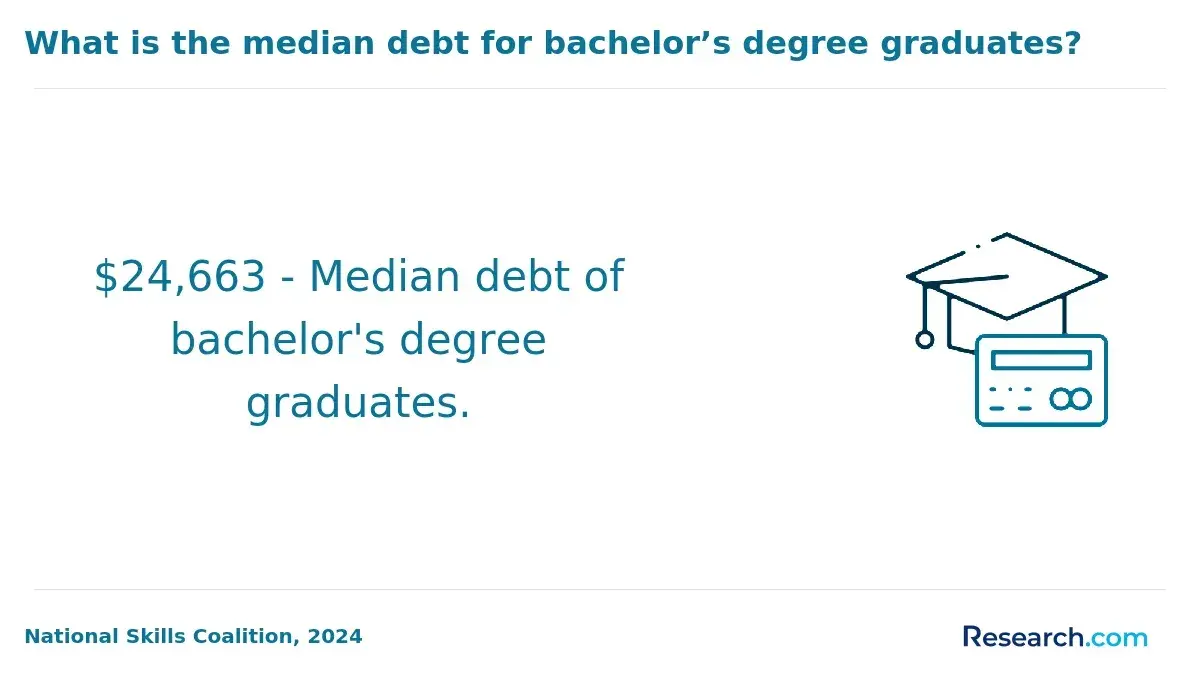
The simplest ROI test is payback time: divide the net cost of the degree by the realistic annual salary increase after graduation. Using the 2024 BLS bachelor's-to-master's annualized earnings gap of $15,444 as a broad benchmark, a student should ask whether their likely post-degree role can produce enough added earnings to repay tuition, fees, interest, and lost income within a reasonable period.
Before enrolling, compare the following cost and value factors together rather than looking at tuition alone.
- Net tuition and required fees after scholarships, employer tuition assistance, military benefits, or grants.
- Books, technology, travel, residency requirements, and any required international or consulting experiences.
- Lost income if the program requires full-time enrollment or reduced work hours.
- Debt cost, including interest and origination fees if federal or private loans are used.
- Career services strength, alumni network, employer partnerships, venture incubators, and access to investors or consulting projects.
- Whether the curriculum teaches measurable skills such as financial modeling, customer discovery, product strategy, analytics, negotiation, fundraising, and team leadership.
Students comparing entrepreneurship master's programs with executive formats may also evaluate options such as the cheapest EMBA programs, especially if they already have management experience and want an employer-friendly schedule. The right comparison is not only entrepreneurship master's versus MBA; it is which credential produces the best role change for the lowest net cost.
A master's is less likely to pay off if the student already has strong business results, the program has weak employer connections, the degree requires heavy borrowing, or the target career values sales performance, portfolio work, licenses, or venture traction more than graduate credentials.
Does a Doctorate in Entrepreneurship Pay More Than a Master's Degree?
In broad national earnings data, doctoral degree holders have higher median earnings than master's degree holders. In 2024 BLS data, the doctoral median was $2,109 per week versus $1,840 for master's degree holders, an annualized difference of $13,988. That premium is real at the national level, but it does not automatically mean a doctorate is the best financial choice for every entrepreneurship career.
A doctorate makes the most sense when the target job specifically rewards research expertise, academic credentials, or advanced theoretical training. The table below distinguishes financial value from career-fit value.
| Doctorate use case | Likely value of the credential | Financial caution |
| University teaching and tenure-track research | Often essential or strongly preferred for business faculty roles. | Time to completion and academic job competition can reduce short-term ROI. |
| Entrepreneurship research, policy, or economic development | Strong when the role requires research design, publication, grant work, or program evaluation. | Pay varies widely by institution, grant funding, and public versus private employer. |
| Innovation strategy or specialized consulting | Can build authority in niche advisory markets. | Clients may value results, industry experience, and network more than the doctorate itself. |
| Startup founding or small-business ownership | Usually optional unless the venture is research-heavy or deep-tech. | Years spent in doctoral study may delay customer acquisition, revenue, and market learning. |
Working professionals who need flexibility can compare online PhD programs for working professionals, but speed should not be the only criterion. For entrepreneurship, the better question is whether the dissertation, faculty expertise, research network, and credential will directly support the career path the student wants.
For most business builders, a doctorate is not required. For future professors, research directors, entrepreneurship scholars, or specialized policy leaders, it may be the right credential even if the payback period is longer than a master's.
Which Entrepreneurship Careers and Promotions Require an Advanced Degree?
Most entrepreneurship careers do not legally require an advanced degree. Unlike nursing, law, accounting licensure, or some healthcare fields, entrepreneurship is not a licensed occupation. Employers and investors usually care about execution, judgment, market knowledge, leadership, and financial discipline.
That said, advanced degrees can be important for specific promotions, especially in large organizations or education-focused careers. BLS projects management analyst employment to grow 9% from 2024 to 2034, which makes consulting and organizational improvement roles a relevant pathway for entrepreneurship graduates with strong analytical training.
| Career or promotion target | Bachelor's usually enough? | Master's helpful or preferred? | Doctorate commonly needed? |
| Startup founder | Yes | Sometimes, especially for finance, scaling, or network access | No, except for some research-heavy ventures |
| Small-business owner or franchise operator | Yes | Sometimes | No |
| Product manager or growth manager | Often | Often helpful for competitive employers | Rarely |
| Management consultant or innovation consultant | Sometimes | Often preferred, especially at selective firms | Only for specialized research or expert roles |
| Venture capital analyst or startup accelerator role | Sometimes | Helpful when paired with finance, strategy, or founder experience | Rarely |
| College professor in entrepreneurship | No | Sometimes for adjunct teaching | Often required for tenure-track roles |
Students should also separate degree requirements from approval or accreditation rules in other fields. For example, someone comparing regulated legal-support education may need to understand ABA-approved paralegal programs, but entrepreneurship programs are generally evaluated through business-school accreditation, curriculum quality, faculty, outcomes, and employer reputation rather than a single occupational licensing requirement.
A practical way to test whether an advanced degree is necessary is to review job postings for the exact roles you want, then separate "required" from "preferred." If most postings say "bachelor's required, MBA preferred," the master's may help but is not the only route. If they say "PhD required," a doctorate is not optional for that path.
Which Entrepreneurship Specializations and Industries Offer the Largest Graduate-Degree Pay Premium?
The largest graduate-degree premium usually appears where entrepreneurship overlaps with high-value decisions: capital allocation, technology commercialization, analytics, product strategy, consulting, healthcare innovation, corporate venture building, and private equity or venture finance. In these areas, a master's or doctorate can signal analytical depth and leadership readiness.
BLS reported May 2024 median annual pay of $156,100 for advertising, promotions, and marketing managers, a role family that can overlap with growth strategy, product positioning, and market expansion. That does not make a marketing manager salary an entrepreneurship-degree outcome, but it shows why specializations tied to revenue growth can offer stronger upside than general small-business coursework alone.
| Specialization or industry | Why the graduate-degree premium may be higher | Best-fitting degree level |
| Technology commercialization | Employers value product strategy, market validation, intellectual property awareness, and technical translation. | Master's for product and venture roles; doctorate for research-heavy innovation. |
| Venture finance and startup investing | Graduate training can support valuation, due diligence, portfolio analysis, and investor communication. | Master's, often MBA or finance-oriented entrepreneurship. |
| Management consulting and innovation strategy | Clients pay for structured problem-solving, market analysis, and change leadership. | Master's; doctorate for expert niches. |
| Healthcare entrepreneurship | Regulated markets reward domain knowledge, compliance awareness, and stakeholder management. | Master's, sometimes combined with healthcare or public health experience. |
| Academic entrepreneurship research | Research methods, publication, and theory development matter more than general business training. | Doctorate. |
The premium may be smaller in industries where customers, portfolios, licenses, or creative output matter more than graduate credentials. The same ROI logic applies to creative founders comparing options such as bachelors in photography online: the best credential is the one that improves market access, pricing power, and business capability, not necessarily the highest degree available.
For entrepreneurship students, specialization choice can matter as much as degree level. A focused master's in entrepreneurship with strong finance, analytics, product, or venture content may produce better returns than a broader program with limited applied projects.
Where Is the Entrepreneurship Degree Education Premium Highest by Location and Employer Type?
The entrepreneurship education premium is usually highest in labor markets where advanced business skills are scarce, employers pay for strategy and leadership, and graduates can move into industries with larger budgets. Location matters because the same credential can lead to very different outcomes in a startup hub, a corporate headquarters market, a regional small-business economy, or a university town.
Employer type also changes the value of education. BLS reported May 2024 median annual pay of $101,280 for general and operations managers, but actual pay varies by industry, location, employer size, and performance incentives. The table below shows how to think about the premium by work setting.
| Location or employer type | Where the premium may be stronger | Why it matters |
| Startup hubs and technology markets | Master's or doctorate may help when paired with product, analytics, venture, or technical commercialization skills. | Compensation may include salary, bonus, equity, or performance-based upside. |
| Corporate headquarters and large employers | Master's degrees may carry more weight for leadership development, internal mobility, and strategy roles. | Formal promotion systems often reward advanced credentials more than small firms do. |
| Universities and research institutions | Doctorates are more valuable and often required for faculty or research leadership. | The credential is tied directly to the job function. |
| Regional small-business markets | Experience may outweigh graduate education unless the degree improves financing, operations, or growth capacity. | Local demand and business performance may matter more than degree level. |
| Government, nonprofit, and economic development organizations | Master's or doctorate may help for program design, grant work, evaluation, and entrepreneurship ecosystem roles. | Credential expectations can be more formal than in founder-led startups. |
A useful rule is to evaluate the local market before evaluating the degree. If target employers routinely hire master's graduates into higher bands, the premium may be real. If the market rewards portfolio, revenue, or licenses more than credentials, an advanced degree may not change pay enough to justify the cost.
Can Experience, Certifications, or Licensure Outweigh an Advanced Entrepreneurship Degree?
Yes. In many entrepreneurship careers, experience can outweigh an advanced degree because the work is judged by outcomes. Employers, investors, and customers often ask whether you can find a market, manage cash, lead people, sell, negotiate, build systems, and grow revenue.
Certifications and licenses can also matter, but usually because they support a specific business model rather than entrepreneurship itself. A founder in real estate, insurance, financial advising, construction, healthcare, education, or food service may need industry-specific authorization before operating legally.
Use the following sequence to decide whether experience, certification, licensure, or graduate school should come first.
- Identify the exact role or business model you want, including industry, employer type, and income source.
- Check whether the role legally requires a license, exam, supervised hours, or state approval.
- Review job postings and founder profiles to see whether a master's or doctorate appears as a requirement, preference, or rare credential.
- Estimate the salary or revenue increase you can reasonably connect to the credential.
- Compare that increase with tuition, debt, time away from work, and lost business-building opportunities.
- Choose the lowest-cost credential or experience path that unlocks the next opportunity.
Common alternatives to an advanced entrepreneurship degree include project management certification, analytics training, financial modeling courses, industry licenses, incubator participation, accelerator programs, sales training, product management certificates, and direct operating experience. These options may not replace a master's for consulting or leadership-track roles, but they can be more efficient for founders who need practical skills quickly.
The red flag is pursuing a graduate degree because it feels safer than testing the market. If your goal is to launch a venture, customer discovery, prototype testing, and revenue validation may be more valuable than another academic credential.
How Should Students Interpret Entrepreneurship Salary Data, Education-Premium Estimates, and Report Limitations?
Salary data should be used as a comparison tool, not a promise. Entrepreneurship is especially difficult to measure because graduates may become employees, founders, consultants, investors, professors, or small-business owners, and their income may include wages, profits, equity, bonuses, or irregular venture returns.
The most important limitation is that education-level earnings data reflects all fields, not only entrepreneurship. A doctoral engineer, a master's-prepared nurse administrator, and an entrepreneurship graduate may all appear in broad education categories even though their labor markets are very different.
To avoid overestimating the education premium, watch for these common mistakes.
- Comparing bachelor's, master's, and doctorate salaries without controlling for occupation, industry, location, and experience.
- Using national median earnings as if they predict an individual graduate's outcome.
- Ignoring tuition, debt interest, living costs, and lost earnings during full-time study.
- Assuming a doctorate automatically improves startup income or investor interest.
- Comparing programs by sticker price instead of net cost, completion time, employer outcomes, and alumni network.
- Choosing a degree before confirming whether the target role requires, prefers, or ignores the credential.
A better approach is to build a simple decision file for each program. Include the degree cost, expected completion time, realistic target roles, job-posting evidence, alumni outcomes, employer partnerships, internship or consulting access, and your own current earnings. Then calculate whether the salary gain is large enough to justify the cost and delay.
The final decision should be career-specific. Stop at a bachelor's if you can reach your target role through work experience, portfolio results, or venture execution. Consider a master's if it opens a better role, stronger network, or faster promotion. Choose a doctorate only when research, teaching, or specialized authority is central to the career you want.
Other Things You Should Know About Entrepreneurship
Using 2024 BLS education-level earnings as a broad benchmark, master's degree holders had median weekly earnings $297 higher than bachelor's degree holders. For entrepreneurship graduates, the actual difference depends on role, experience, industry, location, and whether the master's leads to a higher-paying job.
It can be worth it if the degree creates a clear career change, promotion, stronger network, or access to higher-paying roles. It may not be worth it if the program is expensive, the target career does not require graduate education, or experience and market traction would produce better returns.
A master's is rarely legally required for entrepreneurship, but it may be preferred for consulting, corporate innovation, product leadership, venture finance, and executive-track roles. Students should check job postings and employer promotion patterns before enrolling.
A doctorate makes the most financial sense when the desired career requires research expertise, such as tenure-track teaching, entrepreneurship research, policy evaluation, or specialized consulting. It is usually not necessary for launching a business or moving into general management.
Top Trending Entrepreneurship Rankings
References
- Community College vs. University: Where Should You Go? https://upchieve.org/blog/community-college-vs-university
- Higher Education’s Economic Benefits to Communities https://www.ihep.org/higher-educations-economic-benefits-to-communities/
- Want to earn more? Here's how much a postgraduate degree could grow your salary https://www.thejournal.ie/how-much-a-postgraduate-degree-could-earn-3225583-Feb2017/
- How does a college degree improve graduates’ employment and earnings potential? - APLU https://www.aplu.org/our-work/4-policy-and-advocacy/publicuvalues/employment-earnings/
- The Geographical Location as a Limitation for Starting ... https://ecsdev.org/ojs/index.php/ejsd/article/download/1327/1310/2593
- Is College Worth It? - Public Policy Institute of California https://www.ppic.org/publication/is-college-worth-it/
- Master's Degree in Entrepreneurship Salary - Expectations After Graduating | Nexford University https://www.nexford.edu/insights/masters-degree-in-entrepreneurship-salary
- High School Course - School and Money - Hands on Banking https://youth.handsonbanking.org/courses/high-school-school-and-money/
- How to Succeed in Business with a Degree in Geography - AAG https://www.aag.org/how-to-succeed-in-business-with-a-degree-in-geography/
- Entrepreneurship salary - What you earn after studying | CBS https://www.cbs.de/en/blog/entrepreneurship-salary