2027 Easiest Online Master's in Emergency Management Degree Programs Ranking in the USA

Co-Founder and Chief Data Scientist
Choosing the right online master's program in emergency management can be overwhelming. To help, this article introduces the 2027 Easiest Online Master's in Emergency Management Degree Programs Ranking in the USA, created by the Research.com team of skilled data scientists. This ranking aims to guide you through the best programs that fit your needs.
By exploring these options, you'll gain valuable insight into programs that balance quality, flexibility, and ease. Earning a degree in emergency management opens doors to meaningful careers where you can make a real difference in communities.
Key benefits of getting online emergency management degree in America
- Emergency management graduates in the US often pursue roles like emergency preparedness specialists, with average annual salaries around $75,000, offering financial stability and rewarding work.
- Graduates from popular universities, such as the University of Florida, find diverse career paths in disaster response, risk assessment, and public safety leadership, providing exciting opportunities to make a real difference.
- Online degrees, like those from Arizona State University, offer flexible schedules and the ability to balance work and study, making it easier to earn your degree without sacrificing your current commitments.
- Key benefits of getting online emergency management degree in America
- What can I expect from online emergency management degree in America?
- Where can I work with online emergency management degree in America?
- How much can I make with online emergency management degree in America?
- 2027 Easiest Online Master's in Emergency Management Degree Programs Ranking in the USA
- Key Findings
- How long does it take to complete online emergency management degree in America?
- What's the difference between online and on-campus emergency management degree?
- What is the average cost of online emergency management degree in America?
- What financial aid is available to online emergency management degree students in America?
- What are the prerequisites for enrolling in online emergency management degree program in America?
- What courses are typically in online emergency management degree programs in America?
- What types of specializations are available in online emergency management degree programs in America?
- How do you choose the best online emergency management degree in America?
- What career paths are available for online emergency management degree students in America?
- What is the job market for online emergency management degree in America?
- Top Trending Emergency Management Rankings
What can I expect from online emergency management degree in America?
On average, an online emergency management degree in America ranges from $15,000 to $40,000 in total tuition, depending on the institution and program length. Graduates from well-known programs at universities such as the University of North Carolina or Arizona State University often report that the investment is justified by flexible pacing, comprehensive coursework, and strong faculty support.
Many students emphasize the value of real-world applications integrated into their online courses, which balance theory with simulations and internships. These practical experiences build confidence in managing crises like natural disasters or public health emergencies, reinforcing the curriculum's alignment with federal guidelines such as those from FEMA.
Graduates appreciate how the cost reflects access to career services and networking with agencies that enhance job placement rates. While prices vary, the ability to study part-time while working allows students to manage tuition expenses effectively. This affordability combined with a robust educational structure makes emergency management degrees a worthwhile path for those pursuing this critical field.
Where can I work with online emergency management degree in America?
Graduates with an online emergency management degree in America often secure roles across diverse sectors, reflecting the field's broad applicability and steady job growth. The U.S. Bureau of Labor Statistics projects a 6% increase in demand for emergency management directors from 2022 to 2032, signaling strong career prospects. Many graduates find employment with federal agencies such as FEMA and the Department of Homeland Security, where they directly contribute to national disaster preparedness and crisis response.
State and local governments also hire specialists to design emergency plans and coordinate community training, providing graduates with opportunities to impact regional resilience. Healthcare employers, including hospitals and public health departments, increasingly seek professionals trained in managing medical emergencies and pandemics-fields highlighted by recent global health challenges.
Private sector roles in risk management, business continuity, and consultancy offer graduates experience in preparing companies to withstand disruptions. Nonprofits like the American Red Cross recruit these professionals to lead disaster relief initiatives. Alumni from well-known programs at universities such as the University of Oklahoma and Tulane University report feeling empowered and equipped to tackle real-life emergencies after graduation.
How much can I make with online emergency management degree in America?
Graduates with an online emergency management degree in America typically start with salaries ranging from $50,000 to $60,000 annually, depending on the employer and location. For example, those working with federal agencies or in large metropolitan areas often earn toward the higher end of this range. Experienced professionals managing complex emergencies or coordinating multi-agency responses can see salaries rise to over $100,000, with the top 10% earning more than $135,000 per year.
Students from prominent programs at universities such as the University of Delaware or the University of North Texas often share how their degrees enabled them to move quickly into rewarding roles in emergency coordination or disaster recovery. These roles often include benefits like health insurance and retirement plans, which add value beyond the base salary.
As disaster preparedness becomes increasingly vital, employers nationwide seek skilled graduates. Earning a degree online allows professionals to balance work and study, making career advancement and salary growth attainable without sacrificing income.
2027 Easiest Online Master's in Emergency Management Degree Programs Ranking in the USA
How do we rank schools?
Investing in your education is a significant decision that can shape your future, and the Research.com team understands the importance of making informed choices. To assist prospective students, we have meticulously developed the "2027 Easiest Online Master's in Emergency Management Degree Programs Ranking in the USA." Our dedication to quality, credibility, and accuracy is reflected in the thorough research and analysis behind this ranking.
We utilized the following reputable data sources to ensure a comprehensive evaluation of emergency management programs:
By exploring this ranking, readers will gain valuable insights into accessible and high-quality online emergency management master's programs, helping them make well-informed educational decisions. For more details on how the ranking was created, please visit our Research.com methodology page.


# 6 position
Penn State University Park
Master of Homeland Security - Agricultural Biosecurity and Food Defense Option

# 7 position
Columbia Southern University
Master of Emergency Services Management


Key Findings
- Online emergency management degrees offer bachelor's and master's programs, with master's degrees preferred for higher-level jobs.
- Bachelor's program tuition ranges from $15,000 to $30,000, while master's programs cost between $20,000 and $40,000.
- Starting salaries for graduates typically range from $40,000 to $60,000, with experienced emergency management directors earning around $80,000 annually.
- The job market for emergency management professionals is expected to grow by 8% between 2022 and 2032, faster than average for all occupations.
- Online programs focus on practical skills like risk assessment and crisis communication, aligning with employer needs.
How long does it take to complete online emergency management degree in America?
Completing an online emergency management degree in America typically takes about four years for a bachelor's program when studied full-time, mirroring traditional undergraduate timelines. Many students from institutions like the University of Florida or Purdue University appreciate that accelerated tracks or credit for prior learning can shorten this period significantly, allowing them to balance work and study effectively.
At the graduate level, master's programs in emergency management or related fields usually require between 18 to 24 months of full-time study. Part-time learners often take two to three years, a flexible option favored by professionals employed in emergency services or public safety. For example, graduates from American Military University often describe how the online structure made managing family and career obligations feasible, while still completing their degree within two years.
Programs generally demand 120 credit hours for bachelor's and 30 to 36 credit hours for master's degrees, including practical internships or capstone projects. Such applied learning offers students invaluable real-world experience that increases their confidence and employment readiness in emergency management careers.
What's the difference between online and on-campus emergency management degree?
Online emergency management degrees in America offer notable flexibility, appealing to working professionals who balance careers and family. Graduates from programs like the University of Nebraska at Omaha often praise the ability to access coursework asynchronously, allowing them to study during off-hours without relocating or commuting. This flexibility is critical for mid-career students who need to maintain employment while advancing their education.
Conversely, on-campus programs provide immersive, face-to-face learning experiences valued by many students attending universities such as Texas A&M. These environments foster networking and hands-on exercises like disaster simulations that reinforce practical skills essential to emergency management careers. However, on-campus study typically involves additional costs, including housing and transportation, sometimes making it financially challenging despite the interactive benefits.
Tuition differences are significant: online programs tend to be more affordable, with per-credit fees often lower than traditional campuses. Both formats maintain accreditation standards required to ensure quality education. Ultimately, online students often feel empowered by their ability to tailor pacing, while on-campus peers experience a structured, collaborative atmosphere that some find vital to their professional growth.
What is the average cost of online emergency management degree in America?
The average cost of an online emergency management degree in America is approximately $22,536, based on current median data. In-state students attending public universities often pay significantly less, with median total costs around $11,772, while out-of-state students face higher expenses, sometimes exceeding $34,980. These figures reflect tuition and fees for programs typically requiring about 36 credit hours, which most students complete to earn their master's degree in emergency management.
Graduates from well-known programs, such as those at the University of New Haven or Arkansas Tech University, often highlight how affordable tuition rates-ranging between $400 and $700 per credit hour-allowed them to pursue their studies without overwhelming debt. Their experiences underline the importance of seeking affordable online master's in emergency management 2027 options, especially for students balancing career and family commitments. Furthermore, many students find that financial aid, including federal loans, scholarships, and employer tuition assistance, substantially lowers the net cost.
When budgeting, students must also consider additional fees, like technology and materials costs, which can add several hundred dollars to the overall expenses. Those interested in comparing tuition and program quality may review the top online emergency management degree programs to find a suitable balance of cost and curriculum rigor aligned with their career goals.
What financial aid is available to online emergency management degree students in America?
Students pursuing online emergency management degrees in America have access to several financial aid options that make education more affordable. Graduate programs at institutions like Texas A&M University or the University of New Haven typically cost between $15,000 and $35,000, yet many students successfully bridge this gap through federal student aid, including Direct Unsubsidized Loans offering up to $20,500 annually without needing to prove financial need.
Institutional scholarships and grants, often merit- or need-based, provide meaningful support. For example, emergency management students at Northeastern University frequently leverage such awards ranging from a few hundred to several thousand dollars. Graduates recall feeling relieved knowing these funds acknowledge the vital role they will fill in disaster response.
Professional groups like the International Association of Emergency Managers (IAEM) also grant scholarships, giving students not only financial help but valuable networking opportunities. Additionally, many employers, particularly government agencies, offer tuition reimbursement, a crucial benefit for working professionals advancing their credentials.
State and local grants targeting regions prone to emergencies further enhance affordability, making these degrees accessible to those dedicated to public safety careers across the country.
What are the prerequisites for enrolling in online emergency management degree program in America?
To enroll in an online emergency management degree program in America, applicants typically must hold a bachelor's degree from an accredited institution, ensuring they possess foundational critical thinking and analytical skills. Popular universities like the University of North Dakota and the American Public University System reflect this standard, where graduates often mention how this academic base prepared them for complex coursework.
Most programs require a minimum GPA around 2.5 to 3.0 on a 4.0 scale, though some flexibility exists. While GRE scores are sometimes requested, many schools waive this for applicants with relevant professional experience-a common scenario for those transitioning from emergency services or military backgrounds.
Experience in fields such as disaster response, fire services, or healthcare emergency management significantly strengthens applications. Graduates frequently share how their firsthand knowledge of crisis situations enhanced their learning and engagement.
Technical readiness is crucial; reliable internet and compatible computers enable participation in virtual lectures and digital simulations. Additionally, applicants are often asked for letters of recommendation and personal statements, helping admissions committees assess dedication and career goals in emergency management.
What courses are typically in online emergency management degree programs in America?
Online emergency management degree programs in America commonly include a comprehensive set of courses tailored to prepare students for real-world crisis scenarios. Graduates from institutions such as the University of Maryland and Texas A&M often highlight core subjects like Principles of Emergency Management, where they learn foundational frameworks critical during natural disasters or public health crises.
Courses like Disaster Risk Reduction and Mitigation emphasize practical strategies for minimizing impacts on communities, while Incident Command Systems training equips students with coordinated response techniques used by first responders. Emergency Planning and Preparedness classes guide learners through developing actionable response plans for events like hurricanes or large-scale accidents.
Many programs also introduce specialized topics such as Geospatial Analysis for Emergency Management, enabling students to use GIS technology to map flood zones or wildfire risks effectively. Electives like cybersecurity in emergency contexts reflect the evolving challenges faced by professionals today.
Graduates report feeling empowered by these courses, which blend theory with hands-on skills essential for leadership roles in public agencies and private sectors across the US.
What types of specializations are available in online emergency management degree programs in America?
Online emergency management specializations in the USA cover several focused areas that align with the evolving demands of public safety and disaster resilience. Key specializations include Disaster Recovery and Response, which trains students to coordinate crisis operations following natural and man-made disasters, a skill praised by graduates from top public universities known for their emergency management programs. Homeland Security is another vital focus, encompassing counterterrorism, cybersecurity, and risk analysis, with career prospects growing by 8% according to the Bureau of Labor Statistics. Many students report feeling empowered by mastering these skills at well-regarded institutions.
Programs also emphasize Public Health Emergency Management, reflecting lessons from the COVID-19 pandemic, where graduates engage in disease outbreak mitigation and emergency medical service coordination. Environmental and Climate Disaster Management responds to climate risks by teaching sustainability and policy strategies crucial for protecting vulnerable communities. Critical Infrastructure Protection and Emergency Planning and Policy prepare students to secure essential services and develop preparedness frameworks used nationwide. Those seeking affordable options often explore cheapest online masters emergency management programs.
Prospective students interested in an emergency management degree focus areas America-wide will find that these specializations provide practical, career-ready knowledge applicable in government, healthcare, and private sectors, making these degrees highly valued.
How do you choose the best online emergency management degree in America?
Choosing the best online emergency management degree in America requires focusing on program accreditation, curriculum content, and cost. Graduates from well-regarded universities emphasize the importance of regional accreditation by bodies such as the Higher Learning Commission (HLC) or SACSCOC, which certify program quality and acceptance by employers. Programs that equally emphasize theory and applied skills-covering areas like risk assessment, disaster response, and homeland security-better prepare students for real-world challenges.
Affordability is crucial; with public online programs averaging $8,000 to $15,000 annually and private ones charging $20,000 to $35,000, prospective students should investigate affordable emergency management master's programs America-wide. Graduates often highlight that flexible online structures, especially fully asynchronous courses, enable balancing work and study effectively. Programs linked to agencies like FEMA improve career prospects through internship opportunities.
Students seeking practical routes may explore easy online homeland security degrees that complement this field. Selecting programs with strong professional networks in emergency management enhances graduate confidence and employment outcomes.

What career paths are available for online emergency management degree students in America?
Graduates with an online emergency management degree in America have access to a broad range of career paths across multiple sectors. Popular roles include Emergency Management Directors, who lead government disaster response and preparedness efforts. According to the U.S. Bureau of Labor Statistics, this position has a median annual wage near $76,000 (May 2022) and is projected to grow 7% through 2031, highlighting strong job outlooks in emergency management job prospects America. Other careers involve Public Safety Officers, who apply skills in risk assessment and crisis communication to enhance community safety initiatives.
Additionally, graduates may pursue positions as Business Continuity Planners or Homeland Security Specialists, ensuring organizational resilience and infrastructure protection. Many find opportunities in federal agencies like FEMA, state emergency offices, or local government, as well as in private sectors such as healthcare insurance and logistics. Students from popular universities in America often share positive experiences about hands-on training that builds confidence managing real-world emergencies, emphasizing the value of practical skills.
Programs frequently address incident command and grant writing, equipping specialists for roles in disaster logistics or public health preparedness. Those considering advanced degrees might explore accredited options with tuition ranging from $15,000 to $40,000, ideal for working professionals. For those seeking accelerated paths, the fastest online degrees homeland security offer efficient routes to enter this dynamic field, positioning graduates to contribute strategically in various emergency management careers USA.
What is the job market for online emergency management degree in America?
The job market for graduates with an online emergency management degree in America remains robust, driven by an 8% projected employment growth for emergency management directors through 2032. This demand reflects the increasing frequency of natural disasters and emerging cybersecurity threats requiring skilled coordination and leadership. Graduates from popular universities and colleges across America often find meaningful roles within government agencies like FEMA or the Department of Homeland Security, as well as in private industries such as healthcare and insurance, where emergency plans and risk assessments are critical.
Graduates report feeling confident about their career trajectories, noting that their education equips them for diverse roles that respond to real-life crisis scenarios. For those weighing tuition costs, programs typically range from $15,000 to $30,000, a sound investment given starting salaries for emergency management specialists and the competitive median wage of $83,020 for directors. Prospective students can explore options for the cheapest online masters homeland security, which align well with career goals in emergency management jobs USA.
Frequently Asked Questions About emergency management
Online emergency management degree students in America can maximize their learning by actively engaging with course materials and participating in virtual discussions. Research shows that students who interact frequently with instructors and peers tend to have higher retention rates. Utilizing practical simulation tools, often provided by accredited programs, also helps build real-world skills that employers such as FEMA and state emergency agencies value.
Time management is essential for balancing studies and personal responsibilities. Many programs offer flexible scheduling options, but setting a consistent study routine improves outcomes. Leveraging resources like the U.S. Department of Homeland Security's emergency preparedness guidelines can deepen contextual understanding.
Networking with professionals through online forums and emergency management associations enhances career prospects. According to the Bureau of Labor Statistics, the demand for emergency management directors is expected to grow 7% from 2022 to 2032, highlighting the importance of practical knowledge and connections.
Emerging niches within emergency management in the United States reflect evolving threats and technological advancements. One growing area is cybersecurity and critical infrastructure protection, as malicious cyberattacks increasingly disrupt emergency systems. According to the Department of Homeland Security, cyber threats remain a top concern for emergency planners.
Another niche is public health emergency management, which gained prominence during the COVID-19 pandemic. This field integrates traditional emergency planning with epidemiology and health system coordination.
Additionally, climate resilience and disaster adaptation are rapidly expanding due to more frequent natural disasters linked to climate change. The Federal Emergency Management Agency (FEMA) emphasizes community resilience programs to address these challenges.
Professionals skilled in data analytics and geographic information systems (GIS) have also become essential, enabling more accurate disaster modeling and resource allocation.
After completing an online emergency management degree in America, preparing for the job market involves building both practical skills and professional connections. According to the U.S. Bureau of Labor Statistics, the emergency management field is expected to grow 6% from 2022 to 2032. Gaining certifications like Certified Emergency Manager (CEM) from the International Association of Emergency Managers can enhance employability.
Internships or volunteer work with local emergency agencies provide hands-on experience. Networking through professional organizations and attending industry conferences helps connect with potential employers. Strong communication and leadership skills are essential, as emergency managers coordinate responses during crises.
Finally, staying updated on federal and state emergency policies improves job readiness and market competitiveness.
Employers seeking graduates of emergency management degrees in America prioritize strong communication and leadership skills. According to the Federal Emergency Management Agency (FEMA), the ability to coordinate with multiple agencies during crises is essential.
Critical thinking and problem-solving are also highly valued, as emergencies require quick decision-making under pressure. Graduates must understand risk assessment and disaster mitigation strategies, which are fundamental components of most online emergency management programs.
Technical proficiency, including Geographic Information Systems (GIS) and data analysis, increasingly supports effective emergency response. The U.S. Bureau of Labor Statistics highlights that adaptability and emotional resilience are crucial for handling high-stress emergency situations.
Overall, employers look for graduates who combine practical skills with strategic planning abilities to improve community safety and disaster readiness.
Finding internships relevant to an emergency management degree in America requires targeted research and proactive networking. The Federal Emergency Management Agency (FEMA) offers internship programs that provide valuable experience in disaster response and recovery. Many state and local emergency management offices also provide internships, which can be discovered through their official websites or career pages.
Additionally, universities with emergency management programs often maintain partnerships with public agencies and nonprofit organizations, facilitating internship placement. The National Emergency Management Association (NEMA) website lists resources and opportunities related to internships and employment in this field.
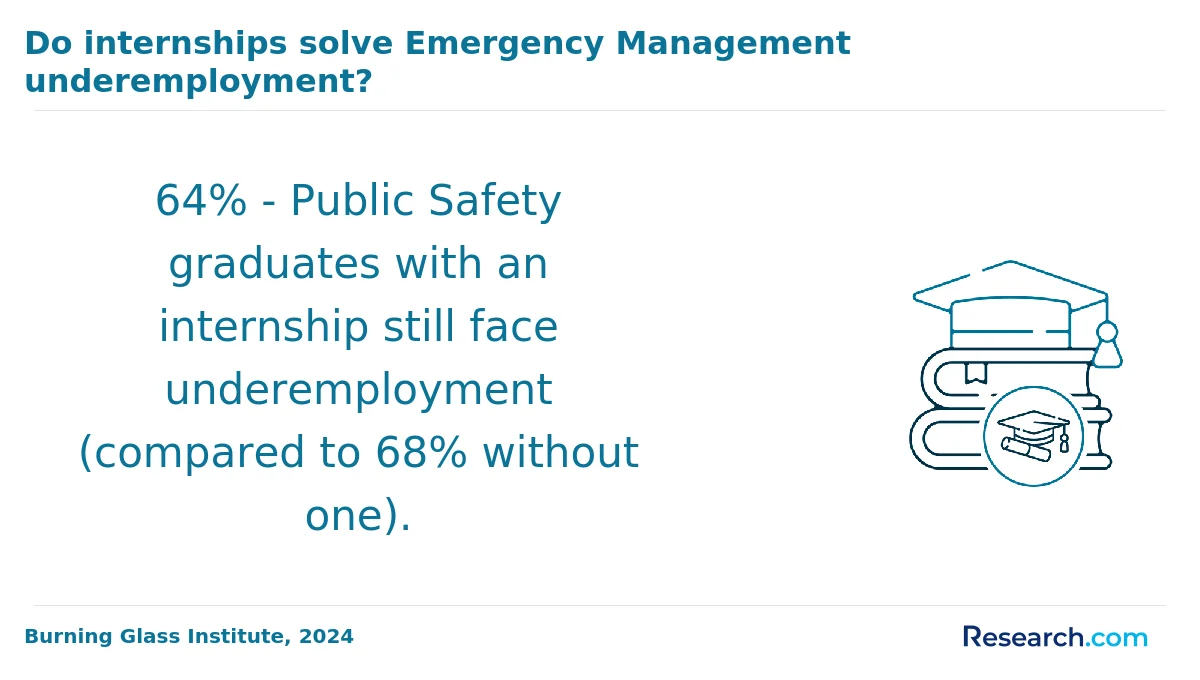
Students should leverage career services and attend industry conferences such as the Emergency Management Higher Education Partnership (EMHEP) to connect with potential employers. Statistics show that internships can increase employment prospects by up to 25% in public safety sectors, making them a crucial step for career development.
An online emergency management degree in America significantly enhances career mobility by equipping students with critical skills valued across public and private sectors. The Federal Emergency Management Agency (FEMA) highlights a growing demand for qualified emergency managers to address increasing natural disasters and public health crises. According to the U.S. Bureau of Labor Statistics, employment for emergency management directors is projected to grow 6% from 2022 to 2032, faster than the average for all occupations.
Graduates gain knowledge in risk assessment, crisis communication, and strategic planning, making them competitive candidates for higher-level roles. Online degrees offer flexible schedules, enabling working professionals to upskill without career interruption. Many employers prefer candidates with at least a master's degree for leadership positions, where salaries range from $70,000 to over $120,000 annually depending on experience and location, as reported by the Bureau of Labor Statistics.
Ultimately, this degree supports both lateral movement into specialized roles and upward advancement in emergency management agencies, healthcare systems, and private corporations focused on disaster preparedness and response.
Studying for an emergency management degree in America equips students to work across various fields by emphasizing interdisciplinary skills. Programs typically combine coursework in public safety, environmental science, health, and communication to build a broad knowledge base.
The Federal Emergency Management Agency (FEMA) highlights that effective emergency managers coordinate with diverse sectors, including government, healthcare, and nonprofit organizations. Online degrees often include training in risk assessment, crisis communication, and logistics, which are vital for multi-agency collaboration.
Graduates learn to analyze complex situations and design strategic responses, preparing them for roles that require integrating social, technological, and environmental considerations in disaster scenarios.
When choosing between a thesis and a non-thesis online emergency management degree program in America, consider your career goals and learning preferences. A thesis option involves conducting original research, which can prepare you for roles in policy development or doctoral studies. The non-thesis path typically focuses on practical skills and coursework, suited for professionals aiming for immediate application in emergency response and management careers.
The Council of Graduate Schools notes that thesis programs may take longer to complete due to research demands, while non-thesis programs often require additional electives instead. Cost and time commitment should also factor into your decision.
Understanding accreditation and faculty expertise in emergency management at your chosen school is essential, as these ensure quality and relevance in a rapidly evolving field, which, according to FEMA, saw a 7% job growth from 2021 to 2031.
Students based in America who wish to study emergency management abroad often face limited options for fully online international degrees. Most American universities offering online emergency management master's programs focus on domestic accreditation and curricula tailored to U.S. standards. However, partnerships between U.S. institutions and foreign universities occasionally provide combined or dual-degree opportunities.
For example, some programs enable students to complete global emergency management modules through online coursework with international experts, enhancing cross-border disaster response skills. According to the Federal Emergency Management Agency (FEMA), such global perspectives are increasingly valued in the U.S. workforce, which is expected to grow by 8% through 2031 (Bureau of Labor Statistics).
Students seeking overseas study often supplement U.S.-based degrees with short-term exchange programs or certificates from international institutions, rather than fully foreign online degrees. This approach maintains compliance with U.S. accreditation requirements and enhances their employment prospects in American emergency management agencies.
Part-time jobs that complement an emergency management degree in America often involve roles in public safety, healthcare, and community services. Positions such as emergency medical technician (EMT), disaster response volunteer, or public health aide provide hands-on experience relevant to emergency preparedness and response.
According to the U.S. Bureau of Labor Statistics, EMT roles are expected to grow 11% from 2022 to 2032, reflecting strong demand. Many students also find opportunities as administrative assistants in local emergency management agencies, which help develop organizational and communication skills.
These jobs offer practical insights into disaster coordination and resilience building, enhancing academic learning with real-world application.
Online emergency management students in America benefit from diverse networking opportunities despite not being on campus. Many programs collaborate with organizations like the Federal Emergency Management Agency (FEMA) and the International Association of Emergency Managers (IAEM), offering virtual events and forums. These platforms help students connect with professionals and peers nationwide.
Students often engage in online discussion groups and participate in webinars tailored to emergency management trends and policies. According to FEMA, networking through these channels can increase job prospects by up to 30%.
Some universities also facilitate virtual career fairs and mentorship programs specifically designed for online learners, bridging the gap between theory and practical application across the emergency management field.
Alumni networks play a crucial role for students pursuing online emergency management degrees in America. These networks provide access to experienced professionals who have navigated the emergency management workforce, offering valuable career advice and mentorship. According to the Federal Emergency Management Agency (FEMA), strong professional connections improve job placement rates significantly in this sector.
Moreover, alumni often share job openings and internship opportunities exclusive to their networks, helping graduates transition smoothly into roles within government agencies, non-profits, or private sectors. The International Association of Emergency Managers highlights that students connected to alumni networks report higher confidence and preparedness in crisis response careers.
Engagement in these networks also fosters professional development through webinars and workshops tailored to emerging emergency management challenges in the U.S. Thus, online students benefit from ongoing education and community support despite distance learning settings.
Customizing an online emergency management degree in America allows students to tailor their education to specific career goals. Many universities offer elective courses focusing on areas like disaster response, homeland security, or public health emergencies. Choosing a concentration relevant to your career path can enhance job readiness.
Additionally, students may select practicum or capstone projects that align with their interests, providing hands-on experience. According to FEMA, emergency management roles are growing by 3% annually, emphasizing the need for specialized skills.
Flexible scheduling and accelerated courses also help professionals balance work and study while targeting their desired expertise.
Online emergency management students in America often face challenges related to balancing work, family, and study commitments. Many learners are working professionals who find time management difficult when dealing with rigorous coursework and real-time responsibilities.
Technical issues also present obstacles; stable internet access and familiarity with digital platforms are essential but not always available. The U.S. Department of Education notes that about 17% of rural households lack high-speed internet, which can hinder participation in online studies.
Additionally, students can struggle with limited hands-on practice, since emergency management relies on scenario-based training often conducted in person. Lack of networking opportunities and direct contact with faculty and peers may impact learning depth and professional development.
With an online emergency management degree, you can pursue several key professional certifications that enhance career prospects in the emergency management field. One of the most recognized is the Certified Emergency Manager (CEM) credential offered by the International Association of Emergency Managers (IAEM). This certification requires verified experience and education, and passing an exam tailored to emergency management competencies.
The Federal Emergency Management Agency (FEMA) also offers professional development certifications through its Emergency Management Institute, including the Certified Professional in Emergency Management (CPEM).
Other certifications, like the Associate Emergency Manager (AEM) and Certified Business Continuity Professional (CBCP), are popular among professionals focused on disaster readiness and organizational resilience. These credentials are often valued by employers in government, healthcare, and private sectors across the U.S., supporting career advancement and credentialing.
Writing a winning application for an online emergency management program in America requires clear focus and preparation. Start by thoroughly researching the program's unique features and align your goals with its objectives. Highlight any relevant experience in disaster response, public safety, or related fields, as 82% of emergency management professionals have backgrounds in these areas according to FEMA's 2023 report.
Strong personal statements are crucial. Clearly explain why you want to pursue emergency management and how this degree will advance your career. Be specific about your interests, such as crisis communication or hazard mitigation.
Lastly, submit all required materials on time, including transcripts, letters of recommendation, and any standardized test scores if required. Ensure your resume emphasizes leadership and problem-solving skills, which are highly valued in this sector.
Emergency management careers in the United States are influenced by global challenges such as climate change, pandemics, and international disasters. Professionals must understand global practices to effectively respond to crises that transcend borders. The U.S. fosters collaboration with international agencies like the United Nations Office for Disaster Risk Reduction (UNDRR) and the World Health Organization (WHO), broadening perspectives beyond domestic issues.
According to the U.S. Bureau of Labor Statistics, employment in emergency management is projected to grow 8% from 2022 to 2032, partly due to increasing global risks. Online degrees often include global case studies, preparing students to manage emergencies in diverse contexts.
Such programs emphasize cultural competence, international law, and global coordination strategies, reflecting how interconnected emergency response has become worldwide.
Gaining practical experience while studying for an online emergency management degree in America involves several strategic approaches. Many programs encourage internships with local emergency management agencies, public health departments, or nonprofit organizations. These placements offer hands-on exposure to disaster preparedness, response, and recovery efforts.
Students can also participate in virtual simulations and tabletop exercises, increasingly integrated into online curricula. The Federal Emergency Management Agency (FEMA) offers free online courses and real-world training programs accessible to students nationwide, enhancing applied skills.
Networking with professionals through webinars and joining organizations like the International Association of Emergency Managers can provide valuable mentorship and career opportunities during studies.
Choosing the right concentration within an online emergency management degree program depends on your career goals and interests. Common concentrations include disaster preparedness, homeland security, recovery management, and cybersecurity. Each focuses on different aspects of emergency response and prevention.
Consider your professional background and where you want to specialize. For example, homeland security aligns with government roles, while disaster recovery suits positions in nonprofits or local agencies. The U.S. Bureau of Labor Statistics projects a 6% growth in emergency management jobs from 2021 to 2031, highlighting strong demand across sectors.
Review curriculum details to ensure courses match your goals. Accreditation and faculty expertise also matter for quality education. Resources like FEMA and the Emergency Management Institute offer additional guidance on specialization areas.
Top Trending Emergency Management Rankings
References
- Emergency Management Career Guide | 2026 https://www.publichealthonline.org/emergency-management-career/
- Guiding Lights in Crisis: The Path to Mentorship in Eme... https://www.aemo.us/blog/guiding-lights-in-crisis-the-path-to-mentorship-in-emergency-management-careers
- Online Emergency Management Degree Programs https://www.firescience.org/emergency-management-degree-programs-online/
- How to Become an Emergency Management Specialist https://www.publichealthdegrees.org/careers/emergency-management-specialist/
- Design for Emergency Management – Design resilient ... https://dnem.org/
- Bachelor's Degree - Emergency and Disaster Management https://www.monroeu.edu/academics/undergraduate-programs/school-criminal-justice/bachelors-emergency-and-disaster
- IRG Global's Emergency Management Debut https://irgglobal.com/insight-hub/news/press-releases/emergency-management-conferences
- 2026 Most Affordable Online Emergency Management ... https://www.onlineu.com/most-affordable-colleges/emergency-management-degrees
- Degree in Emergency Management Online or On Campus https://www.albany.edu/cehc/programs/bs-emergency-management-homeland-security
- USAJOBS – Emergency Management Jobs https://www.usajobs.gov/Search/