
2027 Most Valuable Counseling Degree Programs Ranking in Iowa

Co-Founder and Chief Data Scientist
Choosing the right counseling degree program in Iowa can feel overwhelming, but it doesn't have to be. This article introduces the 2027 Most Valuable Counseling Degree Programs Ranking in Iowa, carefully created by the Research.com team of data scientists to guide you through your options.
By exploring this ranking, you'll discover which programs offer the best value based on thorough data analysis, helping you invest in your future wisely.
Earning a counseling degree opens doors to meaningful careers where you can truly make a difference. Let's help you take the next step with confidence.
Key benefits of getting counseling degree in Iowa
- Counseling degree graduates in Iowa can earn competitive salaries, such as $76,000 annually for Intervention Specialists and $60,080 for Addiction Counselors, providing financial stability and rewarding career opportunities.
- Graduates of counseling programs at popular Iowa universities often find diverse career paths available, including roles like Family Support Worker or Community Outreach Coordinator, allowing flexibility and growth in helping others.
- Completing a counseling degree online from an Iowa-based college offers convenience and flexibility, making it easier for busy students to balance work and study while gaining valuable skills for their future careers.
- Key benefits of getting counseling degree in Iowa
- What can I expect from counseling degree in Iowa?
- Where can I work with counseling degree in Iowa?
- How much can I make with counseling degree in Iowa?
- 2027 Most Valuable Counseling Degree Programs Ranking in Iowa
- Key Findings
- How long does it take to complete counseling degree in Iowa?
- What's the difference between online and on-campus counseling degree?
- What is the average cost of counseling degree in Iowa?
- What financial aid is available to counseling degree students in Iowa?
- What are the prerequisites for enrolling in counseling degree program in Iowa?
- What courses are typically in counseling degree programs in Iowa?
- What types of specializations are available in counseling degree programs in Iowa?
- How do you choose the best counseling degree in Iowa?
- What career paths are available for counseling degree students in Iowa?
- What is the job market for counseling degree in Iowa?
- Related Counseling Rankings for Nearby States
- Top Trending Counseling Rankings
- See What Experts Have To Say About Studying Counseling
What can I expect from counseling degree in Iowa?
The average cost of pursuing a counseling degree in Iowa typically ranges between $20,000 and $40,000 for a full master's program, though this varies by institution and format. For example, graduates from popular schools in Iowa, such as those attending programs at the University of Iowa or Iowa State University, often mention the balance between cost and value, appreciating flexible options like evening or hybrid classes that accommodate working professionals.
While some students find financial strain, many emphasize the rewarding nature of their investment, especially given the comprehensive curriculum that integrates theory and supervised clinical experience. This hands-on training, often conducted at community agencies or healthcare facilities, reinforces their commitment and excitement about entering the field. Moreover, tuition costs sometimes reflect the program's accreditation status under CACREP, which is essential for licensure and future career prospects.
Despite variability in tuition, graduates consistently highlight the steady job demand in Iowa's mental health and school counseling sectors, which helps justify the financial and time commitments required. Considering their real-world training and supportive learning environments, many view their expenses as a worthwhile stepping stone toward fulfilling careers.
Where can I work with counseling degree in Iowa?
Graduates with counseling degrees from institutions like the University of Iowa and Iowa State University often find diverse employment paths across the state. Many begin in mental health clinics or community health centers, where they help individuals facing issues such as anxiety or substance abuse. One graduate recalls working in a community center that provided accessible support, highlighting the rewarding nature of these roles.
School counseling positions are common, especially in public and private schools, where professionals assist students with social-emotional learning and crisis intervention. Graduates emphasize the fulfillment they experience helping young people navigate academic and personal challenges.
Other career paths include hospitals and healthcare organizations, where counselors support patients through trauma and rehabilitation. Licensed professionals often choose private practice, benefiting from the flexibility and patient relationships this setting offers.
Some choose roles in correctional facilities or veteran support centers, applying trauma-informed care in complex environments. These opportunities demonstrate the broad impact counseling graduates can have throughout Iowa, reflecting the state's commitment to expanding mental health services.
How much can I make with counseling degree in Iowa?
Graduates from counseling programs at universities like the University of Iowa or Drake University often find that their earnings vary widely depending on their chosen path within the field. For example, those working as addiction counselors in Iowa typically earn a mean annual wage of about $60,080, reflecting the specialized skills they bring to addressing substance abuse challenges.
Other counseling roles include intervention specialists who see higher average salaries around $76,000 annually, demonstrating the value of advanced expertise in guiding individuals through behavioral adjustments. Community outreach coordinators and family support workers both earn roughly $54,020 per year, highlighting viable careers that combine counseling knowledge with community impact.
It's important to note how location influences pay; graduates employed in Des Moines or Cedar Rapids often report higher salaries than those in rural areas. Many graduates recall starting near $45,000 but feeling motivated as experience and certifications increase their income closer to six figures. This variability encourages students to carefully weigh the investment in their degree versus expected returns, especially while studying at Iowa institutions known for strong practicum opportunities.
2027 Most Valuable Counseling Degree Programs Ranking in Iowa
How do we rank schools?
Investing in your education is a significant decision that can shape your professional future, and the Research.com team is fully aware of the importance of making well-informed choices. To support individuals seeking counseling degrees in Iowa, we have carefully developed the "2027 Most Valuable Counseling Degree Programs Ranking in Iowa." Our dedication to quality, credibility, and accuracy is evident in the thorough research and analysis conducted to produce this ranking.
We utilized the following reputable data sources to ensure a comprehensive evaluation of counseling programs:
By reviewing this ranking, readers will gain valuable insights into the most valuable counseling degree programs in Iowa, enabling them to make informed decisions aligned with their career goals. For additional information about how this ranking was created, please visit our Research.com methodology page.


Key Findings
- Tuition for master's counseling programs in Iowa ranges from $8,000 to $20,000 per year for in-state students, with public universities generally being more affordable than private ones.
- Starting salaries for new counseling graduates in Iowa are about $40,000 to $45,000 annually, increasing to $55,000 to $65,000 with experience and certifications.
- The job market in Iowa for counselors is expected to grow around 11% through 2030, matching the national average.
- To become a Licensed Mental Health Counselor (LMHC) in Iowa, candidates need a master's degree, required coursework, supervised clinical hours, and must pass a national exam.
- Post-degree supervised experience for LMHC licensure typically requires 2,000 to 3,000 hours.
How long does it take to complete counseling degree in Iowa?
Completing a counseling degree in Iowa typically takes varying amounts of time depending on the level pursued. For instance, students at the University of Iowa or Drake University often spend about four years earning a bachelor's degree in counseling or a related field. While this undergraduate path builds foundational knowledge, graduates usually find they must continue with graduate studies to become licensed counselors in Iowa.
Most graduates aiming for licensure enroll in master's programs at institutions like Iowa State University, which generally take two to three years of full-time study. These programs include extensive supervised practicum hours-at least 700, as required by the Iowa Board of Behavioral Science-offering hands-on experience that many find rewarding and confidence-building.
Some graduates pursuing advanced clinical or academic roles invest an additional four to six years in doctoral studies. Balancing coursework, research, and clinical practice, they often describe this journey as challenging yet deeply fulfilling. It's important to remember that part-time enrollment or life commitments can extend these timelines, making flexibility and personal circumstances key factors in completion time.
What's the difference between online and on-campus counseling degree?
Students pursuing counseling degrees in Iowa often find that online and on-campus programs differ primarily in learning style and daily routine. For instance, a graduate from the University of Iowa online program appreciated the flexibility to complete coursework after work hours, which was crucial while raising a family. In contrast, students attending on-campus programs at Drake University mention the energizing benefit of face-to-face discussions and immediate feedback from professors and peers, which can deepen understanding.
Both formats meet Iowa's licensure requirements, including the crucial clinical hours. However, on-campus students might more easily access local practicum sites through university partnerships, while online students often need to arrange supervised placements independently, especially when living outside Iowa. Costs between the two can be comparable; online students commonly save on commuting and housing expenses.
These differences reveal that choosing between formats depends on personal circumstances, such as work schedules, family commitments, and preferred interaction styles, rather than on educational quality alone.
What is the average cost of counseling degree in Iowa?
The average counseling degree cost in Iowa can vary significantly depending on the institution and residency status. Graduates from public universities often report spending around $30,500 in total tuition and fees when attending as in-state students. This figure captures the typical financial commitment required to complete a counseling program within the state, reflecting moderate expenses compared to national averages. For example, students at well-known Iowa public universities find that their total tuition aligns with these numbers, offering a balance between quality education and affordability.
Out-of-state students usually encounter a higher cost, often totaling near $48,500 for the entire counseling degree, which can feel like a steep investment initially. However, many students appreciate the value they receive from respected programs, noting the comprehensive training and clinical practice that prepares them effectively for their careers. Those attending private colleges, including popular health sciences schools, often face even higher tuition costs. Such differences highlight why exploring financial aid, scholarships, and state assistance programs can be crucial for aspiring counselors.
To navigate these expenses, prospective students can benefit from researching available options and considering alternative pathways, such as best accelerated online bachelor degree programs, which may offer reduced costs and flexibility. The total tuition and fees for counseling programs Iowa residents pursue often include extra expenses like books, supplies, and clinical fees, which graduates commonly recall as manageable parts of their overall investment in their careers.

What financial aid is available to counseling degree students in Iowa?
Students pursuing counseling degrees in Iowa often rely on a mix of federal, state, and institutional financial aid to manage costs. For example, many graduates from the University of Iowa describe FAFSA as an essential first step, unlocking access to federal Stafford and Grad PLUS loans with manageable interest rates, which helped them continue their studies without overwhelming debt. While Pell Grants are less common for graduate students, Iowa-specific aid like the Iowa Tuition Grant or support from the Board of Vocational Rehabilitation offer important relief-especially for those attending public universities or students with disabilities.
Graduate assistantships at Iowa State University and other local institutions also prove invaluable. These roles, often tied directly to counseling departments, provide practical experience and tuition waivers, easing financial stress while enriching professional growth. Numerous counseling students and graduates credit these opportunities with fostering confidence and financial independence during demanding programs.
Private scholarships, such as those from the Iowa Counseling Association, complement other aid, rewarding dedication to the counseling profession. Some graduates even mention employer tuition reimbursement programs as a fortunate bonus, allowing continued work in social services while funding their education.
What are the prerequisites for enrolling in counseling degree program in Iowa?
Enrolling in a counseling degree program in Iowa typically requires a high school diploma for undergraduate programs, while graduate programs demand a bachelor's degree from an accredited institution. Graduates from universities like the University of Iowa or Drake University often recall needing prerequisite courses in psychology or human development to feel confident and prepared entering advanced study.
Many programs also require standardized test scores such as the GRE. However, some Iowa universities have waived this to ease access, which former students describe as a relief amid the stresses of application season. Personal statements, letters of recommendation, and interviews play a crucial role in demonstrating commitment and communication skills-qualities graduates emphasize as pivotal for success in counseling careers.
Importantly, students must ensure their program is CACREP-accredited, as this accreditation directly influences licensure eligibility in Iowa. Alumni from accredited programs appreciate the clear pathway this provides toward professional credentials, reinforcing their satisfaction with their educational choices.
What courses are typically in counseling degree programs in Iowa?
Counseling degree programs in Iowa commonly include courses designed to build practical and theoretical expertise essential for diverse counseling careers. Graduates from universities like the University of Iowa and Iowa State University often reflect on how classes such as Foundations of Counseling and Counseling Techniques and Interventions prepared them to confidently engage with clients in mental health or school settings.
In these courses, students learn counseling theories and apply therapeutic strategies that feel immediately relevant when working in internships or practicum experiences-real-life settings where they practice under supervision. For example, graduates often describe the challenge and reward of conducting group counseling sessions, which helps develop skills in managing interpersonal dynamics.
Other significant classes-like Ethics and Professional Issues and Multicultural Counseling-equip students to navigate complex cultural and legal situations reflective of Iowa's diverse populations. The emphasis on Assessment and Testing also ensures students can interpret client evaluations accurately, a skill frequently used in schools or rehabilitation centers.
While programs may vary based on specialization, many graduates feel these core courses provide a strong foundation that is both practical and adaptable across counseling professions in Iowa.
What types of specializations are available in counseling degree programs in Iowa?
Students pursuing counseling degrees in Iowa typically encounter specializations that reflect the state's diverse mental health landscape. Clinical Mental Health Counseling is a popular choice among graduates from institutions like the University of Iowa, enabling them to work in community agencies or private practices while preparing for licensure as Licensed Mental Health Counselors. These graduates often share how rewarding it feels to support individuals through complex emotional challenges.
School Counseling programs are prevalent at colleges such as Drake University, focusing on guiding K-12 students academically and emotionally. Many graduates describe their training as deeply fulfilling given Iowa's steady demand for certified school counselors, which aligns with the state's education policies. For those exploring best counseling programs with specializations Iowa editions often list, Marriage and Family Therapy and Substance Abuse Counseling also stand out, covering relational and recovery dynamics respectively. Rehabilitation Counseling is another pathway, preparing students to assist individuals with disabilities.
Prospective students should consider program structure carefully; many include supervised internships crucial for licensure, which some find invaluable despite added time and expense. For those comparing options, exploring open enrollment college offerings might uncover flexible paths aligning with personal schedules and goals.
How do you choose the best counseling degree in Iowa?
Choosing the best counseling degree in Iowa means weighing factors beyond surface-level elements like tuition or program length. Graduates from well-regarded institutions in Iowa often emphasize the value of CACREP accreditation, which not only supports eligibility for LPC licensure but also signals rigorous curriculum standards. For instance, those who pursued counseling degrees at universities known for strong clinical mental health or school counseling programs report greater confidence passing state licensure exams and securing employment.
It's also essential to consider how a program aligns with your specific goals. Some graduates aiming for school counseling appreciated programs tailored to Iowa Department of Education requirements, while others focusing on marriage and family therapy sought institutions offering hands-on practicum experiences locally. Cost considerations vary too; while many affordable counseling degrees Iowa offer in-state tuition between $8,000 and $20,000 annually, private options have their own merits.
Flexibility in delivery, especially online formats, appeals to working professionals, but make sure clinical hours can be completed in Iowa. For those interested in advanced degrees, exploring non dissertation doctoral programs may present opportunities to build further expertise without prolonged disruption. Thoughtful comparison of these factors will help you choose a program that suits both career ambitions and personal circumstances.
What career paths are available for counseling degree students in Iowa?
Graduates from counseling programs in Iowa often find a variety of counseling career opportunities in Iowa that align with their interests and training. Many choose to pursue licensure as Licensed Mental Health Counselors or Licensed Independent Social Workers, enabling them to work in diverse settings such as private practices or community health centers. For instance, graduates from well-known universities in Iowa describe rewarding experiences working alongside multidisciplinary teams to address complex mental health issues, fostering a deep sense of professional fulfillment.
Others explore specialized jobs for counseling degree graduates Iowa, such as school counseling, substance abuse therapy, or career counseling. These roles can be particularly impactful within the state's educational and rehabilitation systems, where professionals help individuals navigate academic challenges or recovery journeys. Students from Iowa's public colleges often appreciate the practical training and affordable tuition that support their path to these careers.
While the salary range and job stability are promising, it is wise to consider that personal strengths and local demand influence success in these roles. Those interested in quicker workforce entry sometimes look for the fastest degree to make money as an alternative pathway, yet counseling offers meaningful, sustained connections in communities that many find deeply rewarding.
What is the job market for counseling degree in Iowa?
The counseling job outlook in Iowa shows promising growth, with graduates from popular colleges like the University of Iowa or Iowa State University often finding roles in school systems or community health centers. Many new counselors share that their education combined with supervised clinical hours prepared them well for positions in both urban and rural areas. For example, graduates have reported satisfaction working in public school settings, helping students navigate academic and emotional challenges, reflecting a steady demand recognized by the Iowa Board of Behavioral Science.
Employment opportunities in Iowa counseling degree employment opportunities also extend to healthcare and private practices, where counselors can tailor their careers while building a loyal client base. While salary ranges around $45,000 to $65,000 might seem modest compared to bigger cities, graduates emphasize Iowa's lower living costs and supportive communities as meaningful advantages. Those concerned about affordability often explore options like a cheap bachelor's degree online to reduce debt before entering the workforce.
Frequently Asked Questions About counseling
Counseling degree students in Iowa can maximize their learning experience by actively engaging with both academic and practical opportunities. Enrolling in accredited programs ensures quality education, as Iowa's Council for Accreditation of Counseling & Related Educational Programs (CACREP) accredits several institutions statewide. Students should pursue internships or practicum placements within Iowa's diverse communities to gain hands-on experience, which is critical for licensure.
Networking with local professionals through organizations like the Iowa Counseling Association can provide valuable mentorship and job prospects. Staying informed about Iowa's licensure requirements, which include supervised clinical hours and passing the National Counselor Examination, helps students plan their education effectively. Utilizing university resources and participating in workshops further deepen counseling skills.
The counseling field in Iowa is expanding with several emerging niches that reflect evolving social needs and mental health trends. One prominent area is telehealth counseling, which has grown due to increased access to technology and the COVID-19 pandemic's impact. Iowa's rural communities particularly benefit from virtual sessions, addressing provider shortages. Another niche is trauma-informed counseling, responding to rising awareness of adverse childhood experiences and community violence. Additionally, school counseling with a focus on social-emotional learning is gaining attention as Iowa schools prioritize mental health support. These specialties offer promising career paths for new graduates seeking to meet Iowa's diverse counseling demands.
After completing a counseling degree in Iowa, preparing for the job market involves several strategic steps. First, obtaining the necessary state licensure is crucial. Iowa requires counselors to be licensed through the Iowa Board of Behavioral Science for many counseling roles, including Licensed Mental Health Counselor (LMHC). This typically involves supervised clinical hours and passing a national exam, such as the National Clinical Mental Health Counseling Examination.
Networking plays an essential role, with local organizations like the Iowa Counseling Association offering events and job boards tailored to the region. Additionally, gaining internship or practicum experience during studies can give a competitive edge.
According to the Iowa Workforce Development, mental health counselor demand in Iowa is projected to grow by 14% from 2020 to 2030, highlighting strong employment opportunities for well-prepared graduates.
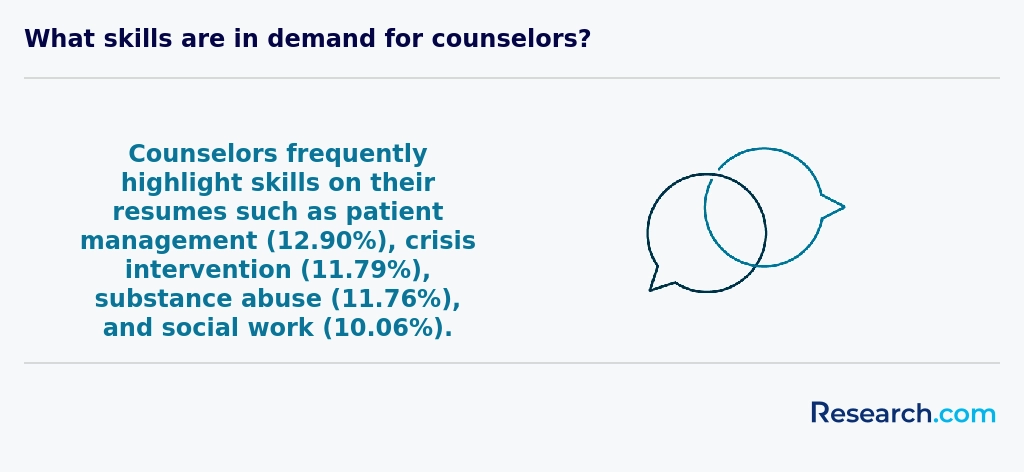
Employers in Iowa prioritize several key skills when hiring counseling degree graduates. Strong communication abilities stand out, enabling counselors to effectively listen and respond to diverse clients. According to the Iowa Department of Public Health, cultural competence is crucial, given the state's growing demographic diversity.
Critical thinking and problem-solving are also highly valued, as counselors must develop tailored treatment plans. Additionally, ethical decision-making and knowledge of state regulations impact licensure and practice.
Finally, interpersonal skills and empathy are essential for building trust and therapeutic relationships. The Iowa Board of Behavioral Science highlights these qualities as vital for successful counseling professionals in Iowa's healthcare system.
Finding internships in Iowa for counseling degrees involves leveraging local resources and university partnerships. Many accredited Iowa institutions with counseling programs maintain relationships with community mental health centers, hospitals, and schools to help students secure positions.
The Iowa Department of Public Health and the Iowa Board of Behavioral Science provide listings and resources for clinical internships aligned with licensing requirements. According to recent data, over 75% of counseling students in Iowa complete internships at sites affiliated with licensed mental health agencies.
Students should also explore organizations such as the Iowa Counseling Association, which offers internship directories and networking opportunities. Consulting academic advisors early can guide you toward placements that comply with state licensure prerequisites. Additionally, the Iowa Workforce Development website lists relevant openings in mental health services.
In Iowa, earning a counseling degree significantly enhances career mobility and advancement opportunities. The state's demand for professional counselors continues to grow, particularly in mental health, substance abuse, and school counseling. According to the Iowa Workforce Development, employment for mental health counselors is projected to increase by 17% from 2020 to 2030, faster than the national average. Holding a counseling degree fulfills licensure requirements for many clinical roles, enabling graduates to pursue specialized certifications such as Licensed Professional Counselor (LPC).
The degree also opens doors to leadership roles within healthcare agencies, schools, and private practices. Counselors with advanced degrees often receive higher salaries and greater job security. In addition, Iowa's licensure system supports career advancement by recognizing supervised experience gained after degree completion.
Studying for a counseling degree in Iowa equips students with skills essential for interdisciplinary collaboration. Many Iowa programs emphasize integrating knowledge from psychology, social work, and healthcare fields. This approach prepares graduates to work effectively with diverse teams, such as educators, medical professionals, and social service providers.
According to the Iowa Department of Public Health, interdisciplinary teamwork is increasingly valued in mental health and community services across the state. Counseling students often engage in practicum experiences involving multiple disciplines, enhancing communication and problem-solving skills.
This foundation helps Iowa counseling graduates meet the growing demand for professionals adaptable to complex, multifaceted client needs in various settings.
When choosing between a thesis and a non-thesis counseling degree program in Iowa, consider your career goals and learning preferences. Thesis programs typically require original research, preparing students for roles involving clinical research or doctoral studies. Non-thesis options emphasize practical skills and hands-on experience, often aligning with licensure requirements for professional counselors.
In Iowa, counseling programs accredited by the Council for Accreditation of Counseling & Related Educational Programs (CACREP) shape curriculum standards. According to Iowa College Aid, about 70% of counseling graduates pursue licensure rather than research careers, making non-thesis tracks popular.
Your decision should also factor in time commitment; thesis pathways often take longer due to research demands.
Students based in Iowa who wish to study counseling abroad have several pathways to consider. While Iowa offers strong local programs, looking internationally can provide unique cultural insights valuable in counseling careers. Many U.S. institutions have exchange partnerships with universities overseas, giving Iowa students opportunities to study counseling courses in countries like the UK, Canada, or Australia.
Before enrolling abroad, students should verify that foreign programs meet Iowa Board of Behavioral Science licensing requirements, ensuring credits transfer and can support future licensure.
The Council for Accreditation of Counseling & Related Educational Programs (CACREP) accreditation is an important factor, as it is widely recognized by Iowa licensing bodies. Some international programs hold CACREP equivalency.
While specific statistics on Iowa students studying counseling abroad are limited, the growing global emphasis on mental health continues to encourage Iowa students to seek diverse learning environments that enhance cross-cultural competence.
In Iowa, part-time jobs that align well with counseling degree education include roles such as behavioral health technicians, crisis hotline workers, and case management assistants. These positions provide valuable hands-on experience in mental health settings and help develop crucial interpersonal skills. According to the Iowa Workforce Development, behavioral health technician roles are projected to grow by 15% through 2030, reflecting increased demand.
Working in community mental health centers or nonprofit organizations as part-time support staff allows students to observe counseling techniques and client interactions closely. Additionally, peer support specialist positions, often available in Iowa, enable students to assist individuals in recovery, enhancing empathy and communication skills vital for future counselors.
Counseling students in Iowa benefit from various networking opportunities through both academic institutions and professional organizations. Universities like the University of Iowa and Iowa State University host student counseling associations that facilitate peer connections and professional development events. Additionally, the Iowa Counseling Association (ICA) is a key state organization offering workshops, conferences, and mentoring programs specifically for aspiring counselors. In 2023, ICA's annual conference attracted over 300 participants, highlighting the active community available to students. Students can also connect with licensed professionals through local internship placements, enhancing practical experience and building professional networks within Iowa's mental health services.
Alumni networks play a crucial role for counseling degree students in Iowa by offering valuable professional connections. These networks connect current students with graduates who have experience in various counseling fields, including mental health, school, and substance abuse counseling. According to the Iowa Board of Behavioral Science, networking often leads to internship and job opportunities post-graduation, which is essential in the competitive counseling job market.
Students benefit from mentorship programs through alumni who provide guidance on licensure, a critical step to becoming a Licensed Mental Health Counselor (LMHC) in Iowa. Alumni events also enhance professional development by sharing insights on industry trends and continuing education requirements.
Customizing a counseling degree program in Iowa involves selecting coursework and practical experiences aligned with your career goals. Many Iowa institutions offer various concentrations, such as clinical mental health, school counseling, or marriage and family therapy. For example, the Iowa Board of Behavioral Science reports that specialized certification requirements may vary, so choosing a focus that matches licensure paths is crucial. You can also tailor your practicum and internship settings to gain experience in preferred environments, whether in schools, hospitals, or private practice. Additionally, connecting with faculty advisors helps create a personalized plan balancing theory, research, and hands-on training.
Counseling students in Iowa often face several key challenges throughout their education. One major difficulty is meeting the required practicum and internship hours, as Iowa mandates at least 700 supervised hours for licensure, which can be hard to arrange in rural areas due to fewer available placement sites. Financial pressures also impact students, with tuition costs and living expenses posing barriers, especially since Iowa's average graduate tuition ranges widely between institutions.
Additionally, balancing academic workload with personal and professional responsibilities is common, as many students juggle part-time or full-time jobs. Understanding the evolving state licensing requirements adds another layer of complexity, given that rules can differ between LPC, LMHC, and other credentials regulated by the Iowa Board of Behavioral Science.
With a counseling degree in Iowa, graduates can pursue several professional certifications that enhance their career opportunities. The most commonly sought credential is the Licensed Mental Health Counselor (LMHC), which requires a master's degree in counseling, supervised clinical experience, and passing the National Counselor Examination.
Other important certifications include Licensed Marriage and Family Therapist (LMFT) and Licensed Substance Abuse Counselor (LSAC). These licenses also require specific educational backgrounds and clinical hours as outlined by the Iowa Board of Behavioral Science.
According to the Iowa Department of Public Health, obtaining these certifications positions graduates to work in hospitals, schools, and private practices where demand for qualified counselors is growing.
Certification requirements often involve continuing education, so staying current with professional development is essential for maintaining licensure in Iowa.
Applying to a counseling degree program in Iowa requires careful preparation. Start by researching accredited programs recognized by the Iowa Board of Behavioral Sciences to ensure your degree qualifies for state licensure.
Focus on crafting a clear, sincere personal statement. Highlight your motivation for counseling, relevant experiences, and understanding of ethical standards, which Iowa programs prioritize.
Strong academic records matter-maintain a competitive GPA, typically above 3.0, and submit transcripts demonstrating relevant coursework in psychology, sociology, or human services.
Additionally, gather solid recommendation letters from professionals familiar with your interpersonal skills. These enhance your application by providing insight into your counseling potential.
Globally, a career in counseling is increasingly viewed as vital to public health and well-being. In the United States, including Iowa, counseling professionals address mental health issues with a focus on culturally sensitive practices. The U.S. Bureau of Labor Statistics projects a 22% growth in mental health counselor jobs nationwide from 2021 to 2031, highlighting a strong demand. Iowa's focus on rural mental health care also opens opportunities for counselors to serve diverse communities. Additionally, counseling careers often require licensure, which varies by state but generally includes a master's degree and supervised clinical hours. This aligns with international trends prioritizing advanced education and ethical standards.
Gaining practical experience is essential when pursuing a counseling degree in Iowa. Most accredited programs require students to complete supervised internships or practicum placements. These opportunities allow students to apply classroom knowledge in real-world settings, often in hospitals, schools, or community agencies.
The Iowa Board of Behavioral Science offers guidelines ensuring internships meet licensure standards. According to the board, counseling licensure candidates must complete a minimum of 2,000 hours of supervised work experience, typically structured during the degree program.
Many universities in Iowa also collaborate with local agencies to provide diverse clinical experiences, which help build essential skills and professional networks.
Choosing the right concentration within a counseling degree program in Iowa involves evaluating your career goals and the needs of the community. Iowa offers various concentrations such as clinical mental health, school counseling, and marriage and family therapy, each aligned with specific licensure paths under the Iowa Board of Behavioral Science.
Consider workforce demand: the Iowa Workforce Development reports steady growth in mental health counseling jobs, especially in clinical and school settings. Accreditation and licensure eligibility are critical; programs accredited by CACREP meet Iowa's licensing standards, which can ease certification processes.
Review curriculum focus and practicum opportunities, as hands-on experience in your preferred field is crucial. Engaging with local counseling professionals or mentors in Iowa can also provide practical insights to guide your decision.
Related Counseling Rankings for Nearby States
- 2027 Most Valuable Counseling Degree Programs Ranking in Minnesota
- 2027 Most Valuable Counseling Degree Programs Ranking in Illinois
- 2027 Most Valuable Counseling Degree Programs Ranking in Missouri
- 2027 Most Valuable Counseling Degree Programs Ranking in Indiana
- 2027 Most Valuable Counseling Degree Programs Ranking in Michigan
- 2027 Most Valuable Counseling Degree Programs Ranking in Ohio
- 2027 Most Valuable Counseling Degree Programs Ranking in Oklahoma
- 2027 Most Valuable Counseling Degree Programs Ranking in Alabama
- 2027 Most Valuable Counseling Degree Programs Ranking in Georgia
- 2027 Most Valuable Counseling Degree Programs Ranking in Texas
Top Trending Counseling Rankings
See What Experts Have To Say About Studying Counseling
Read our interview with Counseling experts

Charles Figley
Counseling Expert
Kurzweg Distinguished Chair in Disaster Mental Health
Tulane University

References
- Study Counseling Abroad - Top Universities for Masters, MBA, PhD Degree Programs https://studee.com/degree/abroad/counseling
- School Counseling https://educate.iowa.gov/pk-12/student-supports/integrated-supports/school-counseling
- How to Find Therapist Jobs https://agentsofchangeprep.com/blog/how-to-find-therapist-jobs/
- How a Strong Alumni Network Can Benefit Students https://www.pacificu.edu/blog/how-strong-alumni-network-can-benefit-students
- How Can I Gain Counselling Work Experience? https://oxbridgehomelearning.uk/blog/how-can-i-gain-counselling-work-experience/
- Interdisciplinary Training: Preparing Counselors for Collaborative Practice - The Professional Counselor https://tpcjournal.nbcc.org/interdisciplinary-training-preparing-counselors-for-collaborative-practice/
- Internship Opportunities | PCS https://pacounseling.com/internships/
- Student Counselor Cover Letter Sample https://www.kickresume.com/en/help-center/student-counselor-1-cover-letter-sample/
- How Can a Graduate Degree Advance Your Career in Counseling? https://paloaltou.edu/resources/blog/how-can-graduate-degree-advance-your-career-counseling
- 11 Challenges That Counselors & Therapists Face - Talkspace https://www.talkspace.com/blog/counselor-challenges/


