2027 Most Valuable Online Bachelor's in Accounting Degree Programs Ranking in Pennsylvania

Co-Founder and Chief Data Scientist
Considering an online bachelor's degree in accounting? Choosing the right program can feel overwhelming, especially with so many options available. This article introduces the 2027 Most Valuable Online Bachelor's in Accounting Degree Programs Ranking in Pennsylvania, developed by the Research.com team of data scientists. It's designed to help Pennsylvania students like you make informed decisions about which programs offer real value.
Discover programs that balance quality education and career potential, helping you unlock opportunities in the accounting field. Pursuing an accounting degree is a smart step toward a rewarding, stable future, and this ranking makes finding the best fit easier and more confident.
Key benefits of getting online accounting degree in Pennsylvania
- The mean annual wage for Staff Accountants in Pennsylvania is $90,780, while other accounting roles like Bookkeepers and Tax Preparers earn around $49,580, offering competitive salaries that reflect strong job prospects.
- Graduates from Pennsylvania State University's accounting program often pursue roles such as auditors, tax preparers, and accounts payable clerks, showcasing a diverse range of career paths available with an accounting degree.
- Online accounting degrees from universities like Drexel University provide flexibility and convenience, allowing students to balance work and study, often accelerating career growth without compromising quality education.
- 2027 Most Valuable Online Bachelor's in Accounting Degree Programs Ranking in Pennsylvania
- What can I expect from online accounting degree in Pennsylvania?
- Where can I work with online accounting degree in Pennsylvania?
What can I expect from online accounting degree in Pennsylvania?
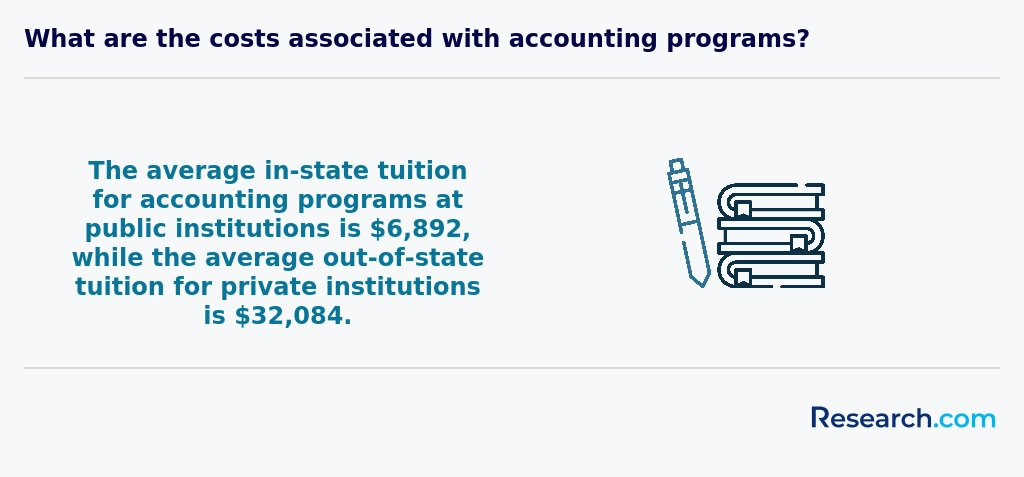
The average cost of an online accounting degree in Pennsylvania typically ranges between $15,000 and $40,000 for a bachelor's program, depending on whether you attend a public university or a private college. Graduates from popular schools like Penn State World Campus often mention the value of affordable tuition paired with strong faculty support and flexible course schedules, which helped them balance work and study without overwhelming debt.
Some programs, especially those offering AACSB accreditation, may be on the higher end of the cost scale but deliver substantial long-term career benefits by preparing students thoroughly for the CPA exam and real-world accounting challenges. Others share stories about how financial aid and employer tuition reimbursement programs made their degrees even more affordable, ensuring accessibility regardless of financial background.
When considering the total investment, remember to factor in costs for required materials or additional credits needed to meet Pennsylvania's 150-credit-hour CPA eligibility. Choosing a program designed for busy professionals can provide a manageable path to certification with a reasonable financial commitment.
Where can I work with online accounting degree in Pennsylvania?
Graduates with an online accounting degree in Pennsylvania often find rewarding careers in public accounting firms, especially in hubs like Philadelphia and Pittsburgh. These roles include auditing, tax preparation, and consulting, offering hands-on experience that many students from Penn State or Temple University have praised for sharpening their professional skills. One graduate shared how working at a CPA firm in Harrisburg provided real client interaction early on, building confidence and expertise.
Corporate accounting positions are another common path, with companies like Comcast and DuPont hiring locally. Here, graduates handle budgeting, financial reporting, and internal audits-tasks that align well with coursework from respected programs such as those at the University of Pennsylvania.
State and local government jobs in budget management and tax administration are accessible too, especially for those pursuing CPA certification alongside their degree. Healthcare organizations and nonprofits also seek accounting skills, providing diverse opportunities for graduates eager to apply their knowledge in impactful ways.
Graduates with an online accounting degree in Pennsylvania can expect to earn competitive salaries that align with local industry standards. For instance, staff accountants typically earn around $90,780 annually, offering a strong financial foundation right after graduation. Bookkeepers, tax preparers, associate auditors, and accounts payable clerks see average salaries near $49,580 per year, reflecting solid entry-level opportunities.
Many graduates from well-regarded Pennsylvania institutions find these figures reflect real-world pay, especially when working in cities like Philadelphia or Pittsburgh where demand is higher. One graduate from a prominent university reported starting in an associate auditor role close to the state average, then quickly advancing to a staff accountant position with a notable raise.
To boost earning potential, consider pursuing certifications such as the CPA, which often raises salaries by 20 to 30 percent. Gaining experience in sectors like finance or manufacturing can also lead to salaries well above the average. Leveraging flexible online programs allows students to balance education with gaining practical experience, further enhancing career prospects.
- Online accounting degrees in Pennsylvania are fully available and accredited, offering flexibility for students balancing other commitments.
- Tuition for these programs ranges from $15,000 to $25,000 at public universities and $30,000 to $50,000 at private institutions.
- Entry-level accounting graduates in Pennsylvania earn between $50,000 and $60,000 annually, with salaries potentially rising above $85,000 with experience and CPA certification.
- The job market for accountants in Pennsylvania is expected to grow by about 6% over the next ten years, matching the national growth rate.
- Many programs prepare students for the CPA exam through courses in financial accounting, taxation, auditing, and business law.
- Accreditation from organizations like the Middle States Commission on Higher Education or AACSB is important for education quality and financial aid eligibility.
Completing an online accounting degree in Pennsylvania typically takes about four years for full-time students without previous college credits. For example, graduates from popular schools like Pennsylvania State University often share how attending full-time allowed them to finish in this timeframe, balancing studies with internships.
Some students speed up their progress by transferring associate degree credits, cutting completion time to three or four years. Many working professionals at institutions like Temple University find this helpful when managing their job commitments alongside school.
Part-time students, or those juggling family and work, may take longer than four years. However, several Pennsylvania colleges offer accelerated online programs that let motivated learners complete degrees in two and a half to three years by enrolling year-round, including summer terms. Graduates appreciate this flexible pacing to match their busy lifestyles.
Additionally, students aiming for CPA certification often take extra courses to meet the 150-credit-hour requirement, extending study by one to two years. Knowing these options upfront helps you plan effectively to meet your goals.
In today’s dynamic financial landscape, complementing your online bachelor's in accounting with targeted certifications is essential for standing out in a competitive job market. Supplementary credentials-such as CPA, CMA, and specialized bookkeeping certificates-not only validate your expertise but also offer hands-on experience with industry-standard practices. For instance, enhancing your qualifications through recognized courses can improve your career prospects and lead to faster professional growth. To further broaden your skill set, consider exploring additional training opportunities that delve into niche areas of accounting. Many experts recommend that students enroll in specialized programs; for example, you might benefit from pursuing best online bookkeeping courses with certificates to gain practical insights and a competitive edge. These certifications often cover essential topics like payroll management, financial data analysis, and compliance, ensuring that you stay updated with evolving industry trends. Moreover, engaging in continuous professional development demonstrates your commitment to lifelong learning. It not only boosts your resume but also enhances your ability to navigate complex financial challenges, making you a valuable asset to potential employers. By integrating these supplementary certifications with your degree, you position yourself for long-term career success in the ever-evolving field of accounting.
Online accounting degrees in Pennsylvania offer flexibility that works well for busy individuals balancing jobs or family. Graduates from programs at universities like Temple or Drexel often share how being able to study on their own schedule helped them keep up with coursework without sacrificing income or personal time. With no need to commute, they save on transportation and housing costs, making education more accessible.
On the other hand, students attending traditional campuses such as Penn State or Villanova benefit from direct interaction with professors and peers. This hands-on learning and immediate feedback help build strong professional networks and practical skills, which some employers highly value. Graduates recall group projects and in-person workshops that deepened their understanding and prepared them confidently for the CPA exam.
For those considering Pennsylvania's public universities, knowing that in-state tuition averages near $13,000 annually supports budget planning, while online tuition may include additional fees for tech resources. Weighing these factors helps students choose the path that best suits their lifestyle and career goals.
To convert your online accounting degree into a licensed CPA in Pennsylvania, you must satisfy education, exam, and experience standards:
- Education: Complete 150 semester hours with required courses in financial accounting, auditing, taxation and business law. Many accredited online programs design their curriculum around these benchmarks.
- Uniform CPA Exam: Pass all four sections-Auditing & Attestation; Business Environment & Concepts; Financial Accounting & Reporting; Regulation-within an 18-month rolling period.
- Ethics Exam: Successfully complete the AICPA Professional Ethics Exam for Pennsylvania applicants.
- Experience: Gain at least one year (2,000 hours) of supervised accounting experience under a licensed CPA, covering attest, financial reporting or tax services.
Online learners aiming to meet these requirements should compare program accreditation and tuition by reviewing the cheapest accredited online accounting degree.
The average cost of an online accounting degree in Pennsylvania typically falls around $38,640 for in-state students, while out-of-state students may expect to pay closer to $41,640. The median total cost for most students is approximately $51,860. These figures reflect tuition and fees but do not include extra expenses like textbooks or technology fees specific to online coursework. Many students find that choosing a public university with in-state tuition rates significantly reduces their overall financial burden.
Graduates from popular Pennsylvania universities often share that paying around $550 per credit hour, as at Penn State World Campus, made achieving their degree manageable when combined with financial aid. A full degree usually requires about 120 credits, so budgeting with payment plans or scholarships can considerably ease the cost. Students emphasize that understanding tuition and fees for online accounting degree PA programs early helps them plan effectively and avoid surprises.
Additional fees for technology and distance learning can add several hundred dollars per term, but these are offset by savings on commuting and housing. Pennsylvania students seeking affordable options should explore the most affordable accounting programs in Pennsylvania, where many programs offer competitive pricing alongside quality training.
Considering public vs. private tuition rates and leveraging scholarships, employer tuition assistance, or federal aid are practical strategies for reducing costs. Many students find this approach empowering, transforming what initially seemed a high expense into an attainable investment in their future careers.
Choosing an accredited online accounting program in Pennsylvania is essential not only for academic quality but also for meeting state CPA licensure requirements. The Pennsylvania State Board of Accountancy mandates a minimum of 150 semester hours, including at least 24 credit hours in accounting (financial, managerial, taxation, auditing) and 9 credit hours in business courses (economics, finance, management). Prospective students should verify that their institution holds regional accreditation-such as the Middle States Commission on Higher Education-and specialized recognition from bodies like AACSB or ACBSP to ensure credits are accepted by the board. Most online bachelor’s programs award 120 credits, so graduates aiming for licensure must bridge the gap with additional coursework. Many opt to pursue a master’s degree to fulfill the 150-hour rule; students seeking cost-effective options can explore our Inexpensive Online Master’s in Accounting Degree Programs Ranking in the Midwest for affordable pathways. These master’s programs often include advanced topics-such as forensic accounting or information systems-that count toward both degree and licensure requirements. In addition to credit hours, candidates must pass the Uniform CPA Examination and complete 1 year of relevant work experience under a licensed CPA. Online programs that offer CPA review courses, internship placement assistance, and alumni networks can significantly streamline this process. Before enrolling, confirm program approval with the Pennsylvania State Board and review any course sequencing or residency requirements to avoid delays in exam eligibility and licensure. By selecting an accredited program with built-in CPA support, Pennsylvania students can confidently progress from online study to certified practice.
Many students pursuing an online accounting degree in Pennsylvania successfully manage costs by tapping into a mix of federal, state, and institutional financial aid. For example, graduates from Penn State's World Campus often highlight how completing the FAFSA unlocked access to Federal Pell Grants and Direct Loans, which covered a significant portion of tuition without overwhelming debt. These federal programs include need-based Pell Grants and flexible Direct Loans with low interest rates, making education more manageable.
State aid is another valuable resource. Residents can apply for the Pennsylvania State Grant through PHEAA, receiving awards ranging from $500 to $5,000 that ease the financial burden at universities like Temple or Drexel. Many students share how this grant helped them stay enrolled and focus on their studies instead of financial stress.
Institutional scholarships from schools and professional bodies like the Pennsylvania Institute of CPAs also offer relief, rewarding merit and commitment to accounting careers. Alongside these, employer tuition reimbursement programs provide working students the opportunity to advance without sacrificing income, a strategy many find empowering while balancing work and school.
Accreditation is a cornerstone of any reputable online accounting program in Pennsylvania, as it validates that the curriculum meets rigorous academic and professional standards. Prospective students should look for accreditation from recognized bodies such as the Association to Advance Collegiate Schools of Business (AACSB) or the Accreditation Council for Business Schools and Programs (ACBSP), both of which signal that a program’s coursework, faculty qualifications, and learning outcomes align with industry expectations. Beyond institutional accreditation, specialized accreditation in accounting demonstrates that a program offers the depth of accounting education required for certification and licensure. Preparing for the Uniform CPA Examination is often a primary goal for accounting graduates, and Pennsylvania’s State Board of Accountancy mandates 150 semester hours of coursework-including specific credits in accounting, auditing, and business law-to qualify for CPA candidacy. Many online programs integrate CPA-focused content into upper-level courses, offer dedicated exam review modules, or partner with leading test-prep providers. Students should inquire about program CPA pass rates, success stories, and available study support such as virtual review workshops or peer study groups, all of which can dramatically improve exam readiness and confidence. Cost is also a critical factor when balancing quality and affordability. For those seeking programs that combine strong accreditation and exam support with budget-friendly tuition, exploring the best affordable bachelor’s degree accounting online can help you identify schools that meet CPA prerequisites without compromising on value. By choosing an accredited program with proven CPA exam preparation resources, students ensure both academic excellence and a clear path to licensure.
To enroll in an online accounting degree program in Pennsylvania, you'll first need a high school diploma or GED, which is a universal requirement across institutions like Temple University or Penn State World Campus. Graduates often mention that having a solid foundation in math and English made navigating coursework much smoother, since these skills are essential in accounting studies.
Many programs also ask for official transcripts to verify academic readiness. Transfer students benefit from submitting prior college records, which can shorten their path to graduation-a relief for busy adults balancing work and studies. Some schools require standardized test scores, but increasingly, test-optional admissions make applying more accessible and less stressful.
Prospective students should also prepare for possible orientation sessions or placement tests which help align their skill levels with course demands. Overall, showing readiness through these steps opens the door to quality, flexible accounting education tailored perfectly for Pennsylvanians aiming to advance their careers.
When considering an online accounting degree in Pennsylvania, affordability is a crucial factor, as it directly impacts the return on investment for graduates. Prospective students often seek programs that balance quality education with manageable tuition costs. For those looking for economical options, researching the most affordable accounting programs in Pennsylvania can provide valuable insights. This involves examining not only the sticker price but also the overall value, including the potential for financial aid, scholarships, and the program's reputation in the job market. Many institutions in Pennsylvania offer competitive pricing without compromising on the academic rigor or career preparation, making it essential for students to weigh these factors carefully. By doing so, they can make informed decisions that align with their budget and career aspirations, ultimately securing a promising future in the accounting field.
Online accounting degree programs in Pennsylvania usually include courses that equip students with practical skills tailored to local business environments. Graduates from popular colleges in the state often highlight how Financial Accounting and Managerial Accounting classes gave them confidence preparing real financial reports and managing budgets for small businesses they volunteered with.
Taxation courses cover both federal and Pennsylvania-specific tax laws, which students find invaluable when navigating state tax regulations during internships or entry-level jobs. Auditing classes teach crucial compliance skills, often applied by students supporting local firms to ensure accuracy in financial records.
Programming graduates also emphasize how Accounting Information Systems classes helped them master software tools used by Pennsylvania's finance and manufacturing sectors, making job transitions smoother. Including Business Law and Ethics provides clarity on legal responsibilities, avoiding common pitfalls early in careers.
Electives like forensic and nonprofit accounting allow students to customize their studies toward niche fields, reflecting diverse career ambitions observed among alumni from Pennsylvania's well-known universities.
Students pursuing an online accounting degree in Pennsylvania can choose from several practical specializations to align with their career goals. Graduates from popular institutions like Penn State and Temple University often highlight Financial Accounting, which equips them to prepare official reports and pursue CPA roles. This specialization is valuable for those targeting regulatory compliance and auditing jobs.
Another common focus is Managerial Accounting, ideal for students who want to work in corporate finance by mastering budgeting and performance analysis. Those concentrating on Taxation benefit greatly in Pennsylvania's complex tax environment, preparing for careers as tax consultants or IRS agents. Many graduates find success choosing concentrations in Auditing, where accuracy and fraud prevention are critical skills in demand locally.
A growing number of students also select Forensic Accounting or Accounting Information Systems, both enhancing employability through specialized knowledge in digital tools or financial investigations. For those seeking a flexible start, combining these with best online bookkeeping courses with certificates can boost practical skills and job readiness in Pennsylvania's competitive market.
When choosing the best online accounting degree in Pennsylvania, prioritize programs accredited by recognized agencies like the Middle States Commission on Higher Education to ensure quality education. Graduates from popular Pennsylvania colleges often emphasize the value of programs covering core courses along with Pennsylvania-specific tax laws, which better prepare them for local job markets and the CPA exam. For instance, students appreciate when courses align with state requirements, increasing their confidence during certification.
Many find that flexibility is essential, especially if working full-time. Programs offering asynchronous classes allow busy students to study around their schedules while still staying connected to faculty. Hybrid options with occasional campus visits can work well for those living near schools in Philadelphia or Pittsburgh but may feel restrictive otherwise. Considering the 6% job growth in accounting across Pennsylvania, choosing schools with strong career support and local industry ties boosts employment chances after graduation.
Evaluating costs is also crucial. Graduates often recommend comparing tuition against available aid to avoid debt, noting that public options tend to be more affordable. For guidance on affordability, check out the best affordable bachelor's degree accounting online to find programs that balance quality and price effectively.
Graduates with an online accounting degree in Pennsylvania can pursue various career paths that leverage their specialized skills. A common route is becoming a Certified Public Accountant (CPA), which many Pennsylvanian schools prepare their students for by covering the 150 credit hour education requirement and CPA exam essentials. CPAs in the state work in auditing, tax consultation, and financial advising, often landing roles in metropolitan hubs like Philadelphia or Pittsburgh with competitive salaries.
Other career options include roles such as financial analyst, management accountant, tax examiner, auditor, and forensic accountant. Graduates from well-known Pennsylvania programs often find these positions rewarding due to the practical training in budgeting, financial reporting, and regulatory compliance. These diverse job opportunities align directly with what employers seek, making accounting job opportunities in Pennsylvania for online graduates promising in both the public and private sectors.
Students aiming to deepen their expertise might explore advanced study options, including those listed in the Inexpensive Online Master's in Accounting Degree Programs Ranking in the Midwest, which can further enhance career prospects and earning potential.
The job market for online accounting degree graduates in Pennsylvania is solid and growing, with strong demand in industries like healthcare, manufacturing, and finance. Many graduates from well-known Pennsylvania colleges find they can secure roles such as auditors, financial analysts, and tax consultants shortly after completing their degrees. Employers in the state increasingly value online education, especially when paired with CPA certification, which requires passing an exam and 150 credit hours that many programs are designed to support. Graduates often report feeling confident about their job prospects thanks to the flexibility of online study combined with practical, recognized credentials.
For those interested in online accounting jobs in Pennsylvania, the median salary of around $75,000 reflects competitive wages that help graduates establish financial independence. Costs for online programs range from $20,000 to $40,000, making them a cost-effective option compared to traditional campuses. Students should consider exploring certificate careers that pay well to enhance employability and career growth possibilities.
2027 Most Valuable Online Bachelor's in Accounting Degree Programs Ranking in Pennsylvania
Investing in your education is a significant decision that can shape your future, and the Research.com team understands the importance of making informed choices. To assist prospective students, we have meticulously crafted the "2027 Most Valuable Online Bachelor's in Accounting Degree Programs Ranking in Pennsylvania." Our commitment to quality, credibility, and accuracy is reflected in the extensive research and analysis conducted to compile this ranking.
We utilized the following reputable data sources to ensure a comprehensive evaluation of accounting programs:
By exploring this ranking, readers will gain valuable insights into the most valuable online accounting degree programs in Pennsylvania, empowering them to make informed decisions about their educational journeys. For more details on our methodology, please visit our Research.com methodology page.


# 3 position
Peirce College
Bachelor of Accounting



Frequently Asked Questions About accounting
Students pursuing online accounting degrees in Pennsylvania can enhance their learning by combining discipline with available state resources. Pennsylvania ranks among the top states for accounting employment, with over 75,000 professionals reported by the U.S. Bureau of Labor Statistics as of 2023, underscoring strong local demand. Taking advantage of virtual internships through Pennsylvania businesses or accounting firms helps build practical skills. Participating in online study groups and professional organizations like the Pennsylvania Institute of Certified Public Accountants (PICPA) connects students with current industry trends and networking opportunities.
Engaging actively in software training, such as QuickBooks or Excel, is essential since Pennsylvania employers value technical proficiency. Additionally, students should utilize academic support services offered by their institutions, including tutoring, career counseling, and workshops. Remaining aware of Pennsylvania's certification requirements can prepare students for the CPA exam, ultimately increasing their job prospects in the state. Consistent time management and goal setting further improve the online learning experience.
The accounting field is evolving rapidly, with several emerging niches gaining prominence. One significant area is forensic accounting, which involves investigating financial crimes and fraud. The demand for forensic accountants in Pennsylvania is growing as businesses and government agencies seek experts to handle complex legal cases.
Another expanding niche is environmental accounting, focusing on how companies measure and report their environmental impact. This aligns with increasing regulations and public interest in sustainability, particularly in industries prominent in Pennsylvania, such as manufacturing and energy.
Additionally, technology-related accounting fields, like data analytics and cybersecurity accounting, are becoming essential. These areas combine financial expertise with IT skills to protect sensitive information and analyze large data sets effectively.
According to the Pennsylvania Department of Labor & Industry, jobs in these specialized accounting roles are expected to grow faster than average through 2030, highlighting opportunities for students pursuing online degrees with a focus on these fields.
After completing an online accounting degree in Pennsylvania, it's crucial to build a strong professional profile to enter the job market effectively. Begin by gaining practical experience through internships or part-time positions, which many Pennsylvania employers value. Networking with accounting professionals via organizations like the Pennsylvania Institute of CPAs can open valuable job opportunities.
Obtaining certifications such as the CPA (Certified Public Accountant) is especially important in Pennsylvania, where roughly 38,000 CPAs are active, according to the Pennsylvania Department of State. The CPA license enhances credibility and can increase earning potential.
Additionally, familiarize yourself with Pennsylvania-specific tax laws and accounting regulations, as local expertise is often required.
Employers in Pennsylvania highly value both technical and soft skills in accounting graduates. Proficiency in accounting software like QuickBooks and Excel is essential, as 85% of local firms expect this competence, according to the Pennsylvania Institute of CPAs.
Strong analytical skills are critical for interpreting financial data accurately. Graduates must also demonstrate attention to detail to prevent costly errors.
Communication skills rank among the top requirements, enabling accountants to explain complex information clearly to clients and colleagues. Additionally, ethical judgment remains vital due to regulatory standards in the state.
Familiarity with Pennsylvania tax laws and compliance procedures gives candidates a competitive advantage in the job market.
Finding internships in Pennsylvania relevant to an accounting degree involves several strategic steps. Start by exploring resources provided by Pennsylvania universities offering online accounting programs; many have career services that connect students with local firms. According to the Pennsylvania Institute of CPA's 2023 report, internships in accounting within the state grew by 7%, reflecting increased opportunities in public accounting, corporate finance, and government sectors.
Students should register with job platforms like Handshake or the Pennsylvania CareerLink, which list accounting internships specifically in Pennsylvania. Networking through local chapters of professional bodies such as the Pennsylvania Institute of CPAs can also be valuable for uncovering hidden internship positions.
Additionally, contacting regional accounting firms directly and attending virtual career fairs hosted by Pennsylvania colleges can improve chances. Many internships require basic knowledge of accounting software like QuickBooks and Excel, so gaining these skills beforehand is recommended.
Obtaining an online accounting degree in Pennsylvania can significantly enhance career mobility and advancement opportunities. Pennsylvania's accounting job market is expected to grow by 7% through 2030, according to the U.S. Bureau of Labor Statistics, reflecting steady demand for qualified professionals. An online degree provides flexibility, allowing students to balance education with employment, which can lead to faster progression in current roles or transitions to higher-level positions.
Employers in Pennsylvania value accredited degrees, especially those that prepare graduates for certification exams such as the CPA. The Pennsylvania State Board of Accountancy requires 150 semester hours for CPA licensure, making an online bachelor's degree a practical step toward meeting this qualification.
Additionally, online programs often include up-to-date curricula aligned with industry standards, supporting skill development in emerging areas like forensic accounting and data analytics. This alignment helps graduates remain competitive in Pennsylvania's dynamic financial sector.
Studying for an online accounting degree in Pennsylvania equips students with versatile skills suited for interdisciplinary roles. Programs often integrate coursework in finance, economics, information systems, and management. This broad foundation prepares graduates to work collaboratively across departments, enhancing problem-solving and communication abilities.
Many Pennsylvania institutions emphasize practical experience with software like QuickBooks and Excel, vital for modern business environments. According to the Pennsylvania Department of Labor & Industry, accounting professionals often engage with data analysis and compliance across sectors, reinforcing the need for interdisciplinary training.
Additionally, ethics and regulatory policies included in curricula support roles that intersect with legal and corporate governance fields, further expanding career options for graduates.
When choosing between a thesis and a non-thesis online accounting degree program in Pennsylvania, consider your career goals and learning preferences. A thesis option typically involves conducting original research and writing a detailed paper, which can be advantageous for students interested in advanced studies or academic careers.
In contrast, non-thesis programs focus more on practical coursework and internships, which may better prepare students for immediate entry into Pennsylvania's accounting workforce. According to the Pennsylvania Department of Labor, employment in accounting roles is expected to grow by 7% through 2030, favoring practical experience.
Additionally, non-thesis programs often require fewer credits, allowing for faster completion. Review each program's curriculum and consult academic advisors to align your choice with your professional aspirations.
Students based in Pennsylvania seeking to study accounting abroad through online programs have limited direct options due to accreditation and licensing requirements tied to U.S. standards. Most online accounting degrees targeting Pennsylvania residents are offered by U.S.-accredited institutions, ensuring alignment with Pennsylvania State Board of Accountancy requirements.
However, some accredited international universities offer online accounting courses that may complement a degree, but these typically do not meet Pennsylvania's CPA exam eligibility without additional U.S.-based credit. According to the Pennsylvania State Board of Accountancy, candidates must complete specified U.S. coursework.
Therefore, Pennsylvania students aiming for CPA licensure often prefer U.S.-based online degrees with strong regional accreditation, rather than foreign degrees. This approach ensures compliance with state-specific education standards and easier credit transfer.
Part-time job opportunities in Pennsylvania that align well with online accounting degree studies often include roles such as bookkeeping assistants, tax preparers, and accounting clerks. These positions provide practical experience with financial records, tax codes, and software like QuickBooks, which are vital for building accounting skills. According to the Pennsylvania Department of Labor & Industry, accounting and auditing clerks are expected to grow steadily through 2030, reflecting ongoing demand.
Many employers in Pennsylvania, including small businesses and nonprofit organizations, offer flexible part-time roles that accommodate students' schedules. Internships with local accounting firms or corporate finance departments also serve as valuable adjunct experiences, improving both knowledge and employability upon graduation.
Online accounting students in Pennsylvania benefit from a variety of networking opportunities despite not attending campus physically. Many universities facilitate virtual events, such as webinars, guest lectures, and career fairs, specifically tailored for accounting students. These platforms connect students with faculty, alumni, and industry professionals statewide.
Professional organizations like the Pennsylvania Institute of Certified Public Accountants (PICPA) offer student memberships at reduced rates, enabling access to local chapter meetings, mentorship programs, and networking events. According to PICPA, over 70% of its members actively engage in peer networking, which can be vital for internships and job placements.
Moreover, online learners can join LinkedIn groups focused on Pennsylvania accounting careers, expanding their contacts in both urban and rural markets. These options help students build valuable relationships and professional connections essential for career advancement.
Alumni networks provide valuable support to students pursuing online accounting degrees in Pennsylvania. These networks connect current students with graduates who have professional experience within the state's accounting industry. According to the Pennsylvania Institute of CPAs, leveraging alumni connections can increase job placement rates by up to 20%.
Members of alumni networks often share job leads, internship opportunities, and insights into local accounting firms. This helps students navigate Pennsylvania's competitive job market more effectively. Additionally, these networks offer mentorship programs that guide students on licensure requirements specific to Pennsylvania, such as preparing for the CPA exam regulated by the Pennsylvania State Board of Accountancy.
Access to alumni events and online forums enhances career development, providing students with industry trends and continuing education resources critical for long-term success in accounting within Pennsylvania.
Customizing an online accounting degree in Pennsylvania allows students to align their education with specific career objectives. Many Pennsylvania institutions offer elective courses in areas such as forensic accounting, taxation, and auditing. Choosing these electives can prepare students for specialized roles in the state's diverse job market.
Internships and practical experiences are often integrated into programs, providing valuable local industry exposure. Pennsylvania's accounting sector, noted for its growing demand-projected to increase by 6% through 2030 according to the Bureau of Labor Statistics-supports these customized options.
Students may also select programs with CPA exam preparation tracks, essential for many Pennsylvania accountants. This flexibility helps students tailor their studies toward goals like public accounting, corporate finance, or government work.
Online accounting students in Pennsylvania often face unique challenges balancing coursework with personal and professional obligations. Compared to traditional programs, distance learning requires strong self-discipline, as students must manage deadlines independently without immediate, in-person support.
Another challenge is limited networking opportunities. Accounting is a field that benefits from professional connections, and many online students in Pennsylvania find it harder to engage with peers, faculty, and local CPA professionals due to the virtual format.
Technical difficulties and access to reliable internet can disrupt learning, especially in rural areas of Pennsylvania. According to the Pennsylvania Department of Education, roughly 14% of residents in some counties lack consistent broadband, impacting online students' experience.
Finally, navigating state-specific accounting regulations and CPA licensure requirements can be complex. Pennsylvania's Board of Accountancy mandates 150 credit hours and specific coursework, which some online programs may not fully address, making careful program selection essential.
With an online accounting degree from Pennsylvania, graduates can pursue several professional certifications that enhance career prospects. The most recognized is the Certified Public Accountant (CPA) credential, essential for accounting roles in public firms and businesses in Pennsylvania. To sit for the CPA exam, Pennsylvania requires 150 credit hours of education, often met through an online bachelor's plus additional coursework.
Other valuable certifications include the Certified Management Accountant (CMA) and Certified Internal Auditor (CIA), which focus on management accounting and auditing, respectively. These credentials are highly regarded by employers across the state.
Additionally, the Chartered Financial Analyst (CFA) and Enrolled Agent (EA) designations offer niche expertise in financial analysis and tax representation, useful in Pennsylvania's diverse accounting job market.
To write a winning application for an online accounting program in Pennsylvania, start by carefully reviewing each school's admission requirements. Many programs value a strong academic record, especially in math and business-related courses. Highlight your GPA and any relevant coursework or certifications.
Provide a clear, focused personal statement that explains your career goals and why you chose accounting. Emphasize your understanding of the profession's importance in Pennsylvania's diverse economy, including industries like finance and manufacturing.
Letters of recommendation should come from professionals or professors familiar with your work ethic and potential.
Finally, prepare for any standardized tests like the SAT or ACT if required and submit all materials well before deadlines to increase your chances of acceptance.
The accounting profession increasingly requires global awareness due to expanding international business relations. In Pennsylvania, students pursuing online accounting degrees benefit from curricula that often include global accounting standards, such as International Financial Reporting Standards (IFRS) alongside US Generally Accepted Accounting Principles (GAAP). This dual focus prepares graduates for roles in multinational companies and firms with global clients.
According to the Pennsylvania Department of Labor & Industry, the demand for accountants with knowledge of international financial regulations is growing, reflecting broader US economic ties worldwide. Understanding global tax laws, cross-border transactions, and cultural business practices enhances career opportunities both domestically and abroad.
For Pennsylvanians, staying informed about global trends is critical as employers seek professionals who can navigate diverse regulatory environments confidently.
Gaining practical experience while pursuing an online accounting degree in Pennsylvania is essential for career readiness. Many programs encourage internships with local firms, offering students real-world exposure to accounting practices. Pennsylvania's strong business sector, especially in Philadelphia and Pittsburgh, provides diverse internship opportunities.
Students can also benefit from virtual internships, which have grown significantly since 2020. These remote roles allow for flexibility and practical engagement without geographic constraints. Additionally, joining Pennsylvania's chapters of national bodies like the American Institute of CPAs (AICPA) can provide networking and mentorship.
Some online programs incorporate experiential learning through case studies, simulations, and software training in platforms like QuickBooks and SAP. According to the Pennsylvania Department of Labor, accounting jobs are projected to grow 7% statewide by 2030, reinforcing the need for hands-on skills alongside theoretical knowledge.
Choosing the right concentration within an online accounting degree in Pennsylvania depends on your career goals and local job market trends. Common concentrations include auditing, tax accounting, forensic accounting, and managerial accounting. Each offers specialized skills that align with different roles in Pennsylvania's accounting sector. For instance, the Pennsylvania Department of Labor notes strong demand for forensic accountants due to rising financial fraud cases statewide.
Consider Pennsylvania's certification requirements, such as the CPA license, which may influence your concentration choice. Programs emphasizing CPA exam preparation can provide a competitive edge. Additionally, reviewing the Bureau of Labor Statistics data shows that tax accountants and auditors are expected to grow faster than average in Pennsylvania, guiding students toward these concentrations.
Assess how each concentration fits your interests and long-term goals while examining program curriculum and faculty expertise. Some Pennsylvania schools also offer networking opportunities within local accounting firms, which can be a valuable factor when choosing your specialization.
- 2027 Most Valuable Online Bachelor's in Accounting Degree Programs Ranking in New York
- 2027 Most Valuable Online Bachelor's in Accounting Degree Programs Ranking in West Virginia
- 2027 Most Valuable Online Bachelor's in Accounting Degree Programs Ranking in Ohio
- 2027 Most Valuable Online Bachelor's in Accounting Degree Programs Ranking in Virginia
- 2027 Most Valuable Online Bachelor's in Accounting Degree Programs Ranking in Indiana
- 2027 Most Valuable Online Bachelor's in Accounting Degree Programs Ranking in Georgia
- 2027 Most Valuable Online Bachelor's in Accounting Degree Programs Ranking in Illinois
- 2027 Most Valuable Online Bachelor's in Accounting Degree Programs Ranking in Florida
- 2027 Most Valuable Online Bachelor's in Accounting Degree Programs Ranking in Missouri
- 2027 Most Valuable Online Bachelor's in Accounting Degree Programs Ranking in Arkansas
See What Experts Have To Say About Studying Accounting
Read our interview with Accounting experts

Yaw M. Mensah
Accounting Expert
Professor and Interim Vice Dean for Strategic Partnerships
Rutgers Business School

John Wermert, Ph.D., CPA
Accounting Expert
Associate Professor of Accounting
Middle Tennessee State University

- Expectations of accounting students in relation to their ... https://sevenpubl.com.br/anais7/article/download/4780/8840/19578
- Skills You Need for a Career Path in Accounting | AIU https://www.aiuniv.edu/degrees/business/articles/top-skills-for-career-in-accounting
- How to Choose a Degree in Accounting | Accounting.com https://www.accounting.com/resources/choosing-a-program/
- Online Accounting Degree | University of Phoenix https://www.phoenix.edu/online-business-degrees/accounting-bachelors-degree.html
- Accountant Cover Letter Example https://www.careertoolbelt.com/professions/accountant/cover-letter-example/
- Are accounting students overloaded and under-supported? https://www.studentvoice.ai/blog/accounting-students-challenges-with-workload-and-support/
- Accountants of the Future https://www.deloitte.com/us/en/programs/center-for-controllership/blogs/future-of-accounting-profession.html
- Accounting Bachelor's Degree - Central Penn College https://www.centralpenn.edu/uncategorized/accounting/
- Networking Events https://www.necpas.org/networking
- Top 10 Accounting and Finance Skills Employers Want | Tamarack Recruiting | Tamarack Recruiting https://tamarackrecruiting.com/top-10-accounting-and-finance-skills-employers-want-tamarack-recruiting/