2027 Neuroscience Specializations That Best Match University and Industry Research Paths

Co-Founder and Chief Data Scientist
Professionals seeking to pivot within neuroscience confront a maze of specialization options with distinct demands and outcomes, yet shifting workforce needs and educational access complicate decisions. Recent data from the National Student Clearinghouse Research Center reveals a 12% rise in adult enrollment for STEM-linked graduate programs over two years, signaling growing demand from mid-career professionals pursuing flexible, career-aligned credentials. This surge amplifies the importance of aligning specialization with real-world research trajectories-be it academic inquiry or industry innovation-while balancing program structure, hands-on experience, and employability. This article identifies neuroscience specializations that best synchronize with university and industry research pathways, guiding strategic educational choices toward sustainable career progression.
Key Things You Should Know
- Computational neuroscience accounts for 35% of industry-funded research projects in 2024, driving a skillset mismatch as academic programs underprepare graduates for AI-driven roles.
- Pharmaceutical companies prefer candidates with translational neuroscience training, reflected in a 22% salary premium, pressuring universities to balance bench science rigor against application-oriented curricula.
- Specializations focusing on neuroinformatics require 18-24 months of additional certification, increasing educational cost and delaying workforce entry by over a year, constraining access for nontraditional students.
What are the main neuroscience specializations that align with academic and industry research paths?
Choosing a neuroscience research specialization directly impacts employability as the field's applications diverge sharply between academic depth and industry readiness. Computational neuroscience, for example, aligns closely with growing AI and data science roles within life sciences and healthcare, which are expected to expand by 36% over the next decade, with median wages around $112,590. However, this path demands strong programming capabilities, creating a tangible barrier for some students despite its high market relevance. This is a key neuroscience research specialization in academia and industry that offers a strategic pathway but requires clear technical preparation.
Cognitive neuroscience plays a significant role in behavioral and decision-making studies, relevant not only within academia but also in neuropsychology and neuromarketing. Neuroengineering merges neuroscience with engineering to develop practical technologies like brain-computer interfaces, a fast-evolving industry sector requiring hands-on technical skills. Molecular neuroscience emphasizes cellular and genetic brain mechanisms, with direct application in translational research and pharmaceuticals, typically favoring candidates with strong lab-based research experience.
Prospective students must weigh program features such as interdisciplinary collaboration, technical training, and publication focus, as academic careers prioritize deep specialization while industry roles demand applied data analytics and software fluency. These considerations reflect the real tradeoff inherent in selecting from key neuroscience fields aligning with university and industry research.
When evaluating programs, also consider the infrastructure and breadth of expertise, similar to choosing options in related disciplines. Prospective students interested in expanding their options might explore online geology degrees for comparative insights on balancing specialization against market versatility.
How do cognitive, behavioral, and systems neuroscience differ in focus and career outcomes?
Choosing between cognitive, behavioral, and systems neuroscience involves considerable tradeoffs that impact career trajectories and daily work. Cognitive neuroscience, with its emphasis on mental processes and brain imaging, is often the most direct path into neurotechnology fields, including the rapidly expanding brain-computer interface market, which is forecasted to reach $9.7 billion by 2032. Mastery of neuroimaging and experimental design aligns candidates with industry demands for data-driven translational research roles.
Behavioral neuroscience career paths in university and industry tend toward pharmaceutical research, neuropsychological testing, and applied health sciences. It relies heavily on animal models and pharmacology, making its tech exposure comparatively limited and requiring strong competence in behavioral assessment and statistics. This specialization suits those targeting clinical or translational research rather than neurotech innovation.
Systems neuroscience focuses on neural circuits and network modeling, demanding interdisciplinary skills in programming, electrophysiology, and math. Careers in this area often involve neural engineering and computational biology, positioning professionals well for advanced neural device development. However, this path usually requires combining neuroscience with engineering or computer science training to meet employer expectations.
For students weighing these options, an important practical consideration is the availability of programs that suit adult learners balancing career pivots, such as an online exercise science degree, which shares similarly technical and applied skill requirements. Differences in cognitive and systems neuroscience research focus, therefore, not only reflect divergent scientific goals but distinct workforce readiness profiles.

Which neuroscience specializations are most connected to biotech, pharma, and medical device research?
Neuroscience specializations linked to biotech and pharma research offer distinct career pathways shaped by workforce needs and skill complexities. Neuropharmacology remains pivotal for pharmaceutical companies addressing neurological diseases, especially as NIH funding surged 46% from $5.64 billion in 2019 to $8.25 billion in 2024. This specialization demands a strong foundation in molecular biology and pharmacokinetics, with graduates often focused on receptor-specific drug development and clinical trial involvement.
Medical device research and neuroscience specialization pathways such as neuroengineering confront a different set of challenges. This field combines engineering and neural science to develop brain-computer interfaces and neuroprosthetics, requiring fluency in biomaterials, coding, and systems integration. The critical tradeoff is the need for rigorous interdisciplinary technical training while gaining hands-on industry experience to remain competitive in specialized roles.
Translational neuroscience connects fundamental research to commercial applications, emphasizing experimental design, regulatory science, and multidisciplinary collaboration. Here, graduates facilitate moving molecules or devices through clinical trials and regulatory processes. This specialization aligns closely with biotech firms prioritizing full translational pipelines rather than isolated drug mechanisms or hardware design.
When choosing a pathway, candidates must consider practical workforce implications: strong molecular biology skills for neuropharmacology, engineering expertise for neuroengineering, or clinical research proficiency for translational neuroscience. Prospective students often balance these demands alongside program accessibility, which can be augmented by pursuing an online computer science degree to support multidisciplinary fluency.
What degrees and prerequisites are required to enter research-focused neuroscience specializations?
Securing a role in research-focused neuroscience demands more than formal degrees; it requires early, strategic choices embedding extensive lab experience, grant writing, and mentorship into one's academic pathway. Undergraduate foundations in neuroscience, biology, psychology, or related STEM fields must be complemented by robust coursework in statistics, chemistry, and calculus to meet basic expectations. Graduate credentials, often a master's or PhD in neuroscience or cognitive science, serve as critical gateways to competitive university or industry labs conducting advanced experiments.
The fragmented structure of neuroscience research, spanning molecular to clinical fields, produces distinct practitioner profiles with specific academic and skill prerequisites. For example, targeting behavioral neuroscience in mental health calls for psychology and therapeutic counseling familiarity, reflecting workforce trends like a projected 19% growth in behavioral and mental health counselor roles through 2033 with a median wage of $59,190 in 2024. Industry positions increasingly insist on data science competencies such as Python or R programming and basic machine learning, often necessitating supplementary certifications beyond degree requirements.
Applicants must evaluate programs not only for academic rigor but for how effectively they build applied research portfolios tailored to their focus areas. Without deep experiential learning, candidates risk falling behind peers who accumulate publications and hands-on expertise during graduate training. This balance of foundational knowledge, interdisciplinary skills, and strategic program choice directly influences long-term employability in neuroscience research degrees and prerequisites in the United States.
Those considering a pivot into neuroscience research should explore varied educational formats, including an online accelerated psychology degree, to efficiently acquire relevant competencies while managing career transitions.
How do online, hybrid, and campus-based neuroscience programs compare for research preparation?
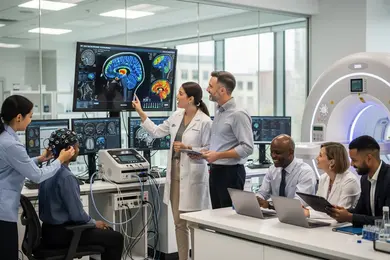
Online neuroscience programs provide theoretical grounding and data analysis skills but fail to deliver the necessary hands-on experiences crucial for neuroimaging roles requiring MRI or EEG proficiency. Without direct access to equipment, graduates face steep challenges in workplace readiness. Hybrid programs mitigate this gap by integrating remote learning with mandatory on-campus lab work, allowing practice with essential hardware and software while maintaining some flexibility. Purely campus-based formats continue to lead in preparing candidates through immersive lab interaction, real-time mentorship, and access to the latest neuroimaging technologies.
Employers prioritize candidates proficient in operating specific neuroimaging tools-a competence that demands supervised lab time beyond virtual coursework. For example, an exclusively online-trained candidate without MRI suite experience will likely encounter significant delays adapting to on-the-job technical requirements. In contrast, hybrid students who complete practicum blocks gain a tangible advantage reflected in stronger job placement outcomes and immediate operational skills.
The U.S. Bureau of Labor Statistics via ASU Online projects a 6% growth rate in neuroimaging technician jobs over a decade, with a median wage of $78,980. This growth signals the premium placed on verified technical expertise over purely academic knowledge. Prospective students should critically assess programs' lab certification and employer collaboration to align their education with market demands.
What courses and lab experiences define a strong research-oriented neuroscience curriculum?
Programs that integrate biological depth with quantitative rigor yield the most workforce-relevant neuroscience graduates. Core coursework typically spans cellular and molecular neuroscience, systems neuroscience, neuropharmacology, neuroanatomy, alongside biostatistics, computational modeling, and bioinformatics. This combination equips students to address challenges in CNS therapeutic development and large-scale neurobiological data analysis.
Hands-on lab experiences are non-negotiable for market alignment, particularly with technologies like optogenetics, CRISPR gene editing, and electrophysiology. For instance, labs focusing on neurodegenerative disease models mirror industry priorities, connected to a CNS drug market projected to reach $273 billion by 2030 with ~13% CAGR (Fortune Business Insights).
Real-world outcomes emphasize the advantage of multi-modal training; students who combine experimental proficiency with computational skills are better positioned for roles in biotech startups, clinical trial design, or pharma research. However, access to labs with both human and animal neuronal models remains a practical bottleneck. Programs linked with research hospitals or industry partnerships mitigate this challenge more effectively.
On the employer side, candidates showing experimental neuro expertise plus data-driven decision-making stand out amid competition. Conversely, curricula lacking depth in lab rotations or quantitative courses risk producing graduates relegated to theoretical roles with limited practical growth. Prospective students should critically assess program balance between coursework and practical lab integration to align with evolving CNS therapeutic strategies.
How can students evaluate accreditation and lab resources in neuroscience programs?
Program accreditation by recognized bodies such as the Commission on Accreditation of Rehabilitation Facilities (CARF) or regional agencies is a non-negotiable starting point to ensure research quality and employability. Without this validation, students risk entering programs that do not meet rigorous standards, diminishing their eligibility for advanced research roles or clinical certification, particularly in competitive sectors like neurodegenerative disease research.
Evaluating the lab infrastructure is equally critical. Access to advanced technologies-high-field MRI scanners, electrophysiology equipment, and high-throughput sequencing-is essential for developing practical skills aligned with current research demands. Institutions linked with large medical centers or neuroscience institutes typically provide superior hands-on experience, which translates into workforce readiness.
For example, a student focusing on Alzheimer's disease must gain familiarity with biomarker assays and longitudinal clinical study protocols to match the increasing global financial and research investment in this area, projected to reach over $2.8 trillion annually by 2030. Programs engaged in multicenter consortia offer vital exposure to collaborative research models that enhance employability.
Key verification steps include reviewing faculty NIH or NSF grant histories, publication records in impactful journals, and the availability of interdisciplinary projects. Limited lab access or outdated equipment usually correlates with lower research output and weaker job placement in translational neuroscience roles.
Proximity to industry hubs offers additional advantages through internship opportunities, honing applied skills. Conversely, online or hybrid programs without substantive lab components may impair competitiveness for research-centric positions. Students must weigh relocation costs and extended study timelines against the practical benefits of accessible, cutting-edge resources.
What research careers and job titles correspond to different neuroscience specializations?
Neuroscience career pathways sharply diverge based on specialization, with tangible differences in employer expectations and skill sets. Cognitive neuroscience demands mastery in experimental design and complex data analysis, typically leading to academic or research lab roles that require postdoctoral experience. For example, principal investigator positions emphasize publishing rigor and securing research funding, which may limit accessibility for those prioritizing quicker industry entry.
Graduates focusing on computational neuroscience face a distinct job market where programming and large-scale data modeling are non-negotiable. These professionals often become machine learning engineers or neural data scientists in tech and pharmaceutical companies, sectors that prefer applied expertise over theoretical background. The transition to these roles involves continuous skill updates and adapting to rapidly evolving tools.
Educational neuroscience careers intersect with the expanding global edtech market, valued at $142.4 billion in 2024 and projected to reach $370.4 billion by 2030. But moving into educational program evaluation or instructional design requires proficiency in digital tools paired with clear market communication, which may pose barriers for those rooted mainly in research.
Clinical neuroscience roles demand practical patient-facing experience and compliance knowledge, as seen in neurorehabilitation therapy or clinical trial management. Meanwhile, neuropharmacology graduates integrate lab research into drug development pipelines, where networking and up-to-date regulatory insight outweigh academic prestige. Navigating these careers involves complex tradeoffs between research depth and applied skills.
What salary ranges and job outlook can neuroscience specialists expect in university and industry roles?
Choosing between university and industry roles in neuroscience demands weighing distinct practical tradeoffs that directly shape career trajectories and income potential. Academic positions, ranging roughly from $50,000 for postdoctoral roles to about $100,000 for tenured faculty, emphasize grant acquisition and research funding stability over rapid salary growth. For example, an assistant professor initially earning near $70,000 may see slow increases tied closely to external funding and institutional constraints.
In contrast, industry professionals leveraging computational skills such as machine learning or neuroinformatics can command salaries between $90,000 and $150,000, with senior roles in biotech surpassing $160,000 supplemented by performance bonuses. This creates a clear financial incentive but requires continuous adaptation to technology shifts and commercial timelines.
The job market landscape also differs: academia faces intense competition for limited tenure-track slots with relatively low turnover, while industry expands quickly due to exponential growth in data-heavy resources like EBRAINS, which exceeded a petabyte of brain data by 2024. Such scale demands proficiency in managing complex datasets, a skill gap that can hinder academics pivoting to industry.
Decision-making should factor these considerations:
- Academic roles offer intellectual freedom and long-term stability but come with funding and salary volatility.
- Industry pathways provide faster advancement and higher compensation at the cost of requiring up-to-date computational expertise and navigating regulatory constraints.
- Professionals lacking grant-writing skills may find limited growth in academia, whereas those without strong data analytics experience risk exclusion from expanding industry opportunities.
How should students choose a neuroscience specialization that fits their research interests and goals?
Deciding on a neuroscience specialization requires careful alignment of skills, industry demands, and career objectives rather than defaulting to popular options. For instance, computational neuroscience demands advanced programming and data analysis capabilities critical for AI-focused brain research roles, while neuroengineering emphasizes hardware design skills applicable to medical device firms. Such distinctions shape curriculum needs and internship opportunities.
Prioritizing programs with hands-on experiences in established research labs or industry partnerships significantly improves employability. Emerging fields like neuroethics highlight the growing impact of policy: by early 2024, 11 countries and regions had legislated neurorights and brain data protections, influencing roles in regulation and compliance. This policy integration particularly matters for careers in government agencies or advisory functions.
Students should map job descriptions against required competencies and scrutinize whether courses focus on technical skills or theory, while verifying access to multidisciplinary collaboration. Those pivoting into clinical neuroscience face longer certification processes and clinical placements, unlike peers targeting industry R&D. Budget and location constraints remain practical barriers shaping access to specialized resources.
In summary, a data-driven, workforce-informed approach that weighs technical proficiency, evolving regulatory frameworks, and realistic program features ensures a functional match between specialization choice and sustainable neuroscience careers.
Other Things You Should Know About Neuroscience
In 2027, emerging neuroscience specializations like neuroinformatics and computational neuroscience are particularly suited for collaborations between academia and industry. These fields harness big data and advanced algorithms, facilitating innovative solutions in drug discovery, brain-computer interfaces, and personalized medicine. Such partnerships enhance both theoretical research and practical applications.
Academically oriented programs emphasize deep theoretical understanding, experimental design, and publishing results, often requiring substantial lab rotations. Industry-focused programs typically prioritize technical skills like data analytics, translational research, and regulatory knowledge to expedite commercialization. Prospective students should assess whether a program includes internships or partnerships with companies, which are critical for employment prospects in industry and may be less emphasized in pure academic tracks.
Specializations that demand extensive lab time, such as neurophysiology or molecular neuroscience, can limit course flexibility and prolong degree completion. Conversely, fields like computational neuroscience often involve more programming and modeling with reduced bench work, easing scheduling challenges. Students aiming for industry roles should prioritize programs that integrate practical projects without excessive experimental obligations, as this balance influences timely graduation and skill applicability.
Programs offering access to interdisciplinary resources-such as biomedical engineering, data science, or psychology-enhance versatility in research skills and appeal to a broader range of employers. Students intending to enter translational or biotech research benefit from training that crosses traditional neuroscience boundaries. However, prioritizing interdisciplinary exposure may come at the cost of depth in core neuroscience topics, making it important to align program offerings with specific career goals rather than selecting multidisciplinary programs indiscriminately.
References
- Discover the Best Neuroscience Summer Program for Aspiring Students https://pioneeracademics.com/news/research-opportunties-for-high-school-students-research-programs/
- 37 Brain Companies Worldwide | Biotech Careers https://biotech-careers.org/business-area/brain
- Neuroscience PhD Career Paths Beyond Academia https://www.industrycareerguide.com/blog/neuroscience-phd-career-paths
- Neuroscience Degree Salary https://www.collegehelpguide.com/degrees/neuroscience/salary/
- Hybrid class vs. online: Choosing the best for your student https://www.asuprepdigital.org/blog/hybrid-class-vs-online/
- 50+ Research Programs to Turbo-Charge Your College Application | MedSchoolCoach https://www.medschoolcoach.com/50-research-programs-to-turbo-charge-your-college-application/
- 15 Neuroscience Research Programs for High School Students https://www.immerse.education/knowledge-base/15-neuroscience-research-programs-for-high-school-students/
- Research in Applied Neuroscience: A Guide for University Students https://www.bescgraduate.eu/research-in-applied-neuroscience-a-guide-for-university-students
- Trends In Neuroscience Drug Discovery And Development https://www.lek.com/insights/life-sciences-pharma/trends-neuroscience-drug-discovery-and-development
- 10 Neuroscience Programs for High School Students https://riseglobaleducation.com/blogs/best-neuroscience-programs-for-high-school-students