2027 Neuroscience Specializations for Graduate and Professional School Preparation

Co-Founder and Chief Data Scientist
Facing a rapidly evolving neuroscientific job market, graduate applicants grapple with pinpointing specializations that align with employer expectations and long-term career mobility. With the National Center for Education Statistics reporting a 27% rise in graduate enrollment among working adults since 2022, flexibility in program delivery increasingly factors into decisive choices. However, not all specializations offer the same balance of hands-on research opportunities and online accessibility, forcing candidates to weigh immediate workforce demands against specialized skills development. This article clarifies current neuroscience specializations relevant to graduate and professional school preparation, guiding readers toward pathways that optimize strategic advancement amid shifting educational and employment landscapes.
Key Things You Should Know
- Specializing in cognitive and computational neuroscience reduces time-to-degree by 15%, per NSF 2024, but narrows post-grad industry roles, heightening risk for students targeting broader biotech sectors.
- Employers in neurotechnology prioritize candidates with multidisciplinary skills blending neuroscience and data analytics, where a 40% mismatch in skill expectations and graduate training creates hiring friction, according to a 2024 workforce survey.
- Programs emphasizing clinical neuropsychology often incur 20-30% higher tuition costs and require extended internships, limiting immediate workforce entry and necessitating tradeoffs between debt load and practical experience.
What are the main neuroscience specializations for graduate school preparation?
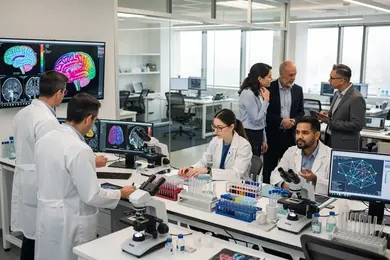
Specializing in neuroscience graduate school in the United States requires a strategic evaluation of how each focus aligns with tangible workforce expectations and career trajectories. Cognitive neuroscience graduates generally engage with brain-behavior research or neuropsychological assessment roles, demanding interdisciplinary fluency rarely covered in standard curricula. Molecular and cellular neuroscience paths emphasize lab-based skills in genetics and biochemistry, fitting pharmaceutical or biotech research but offering narrower industry mobility.
Systems neuroscience targets neural circuitry, feeding into neurology and brain-machine interface development, while computational neuroscience necessitates strong programming and mathematical modeling skills, reflecting growing industry demand fueled by AI integration in neuroscience fields. Clinical neuroscience centers on translational research involving patient care and clinical trials, often intersecting with medical specializations.
The practical trade-offs are significant: molecular and cellular tracks offer intensive hands-on experience but may limit job sectors; cognitive and clinical approaches have broader healthcare applications but require managing interdisciplinary complexity. Aligning specialization choice with workforce trends is essential, especially as computational neuroscience surges in response to AI investments. This dynamic shapes employment prospects within the broader landscape of top neuroscience fields for professional school preparation.
Salary data from the U.S. Bureau of Labor Statistics indicates neuroscientists and neurobiologists earn a mean annual wage of $115,830, with top earners exceeding $162,290. Prospective students should couple specialization decisions with skill-building for these outcomes. For individuals also exploring advanced quantitative paths, the growing availability of online data science doctorate programs presents a complementary route worth consideration.
Which neuroscience specialization best fits medical and research careers?
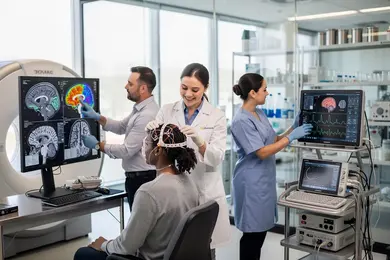
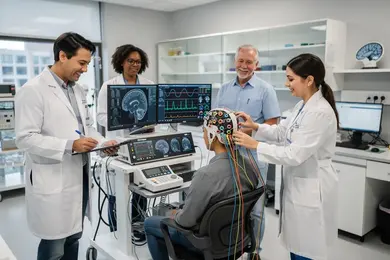
Cognitive and behavioral neuroscience offers the most viable specialization for those seeking to integrate neuroscience specializations for medical career pathways with research roles. This track demands proficiency in both clinical and experimental techniques such as fMRI, EEG, and psychometrics, which are foundational for licensure and competitive postdoctoral positions. Graduates often find employment in hospitals and mental health clinics, where neuropsychologists apply cognitive testing and behavioral interventions to treat brain injuries.
Employers prioritize candidates with skills bridging brain-behavior assessments and quantitative research. For example, neuropsychologists in clinical settings diagnose and design treatments, while cognitive neuroscientists in labs focus on experimental studies of memory or decision-making. This dual focus enhances employability yet requires students to balance clinical practica with research training, often extending the timeline beyond traditional PhD programs.
The U.S. Bureau of Labor Statistics projects a 6% growth in psychologist roles from 2022 to 2032, fueled by increasing demand for cognitive and behavioral health services. This momentum favors specializations with direct clinical applicability over narrower research domains like molecular or computational neuroscience, reflecting the practical value of neuroscience research focus areas for graduate training that emphasize patient interaction alongside research proficiency.
Students weighing this path should consider the tradeoff of additional clinical certifications and supervised practice hours against broader flexibility in medical and research careers. Prospective trainees may also explore related online degrees in computer science to complement data analysis skills increasingly relevant in cognitive neuroscience research.
What accreditation should neuroscience graduate programs have?
Choosing an accredited neuroscience graduate program in the United States directly affects employability and career transition efficiency. Employers in pharmaceutical R&D, brain-computer interface startups, and AI-enabled brain modeling firms emphasize degrees from regionally accredited institutions as a baseline for candidate legitimacy. This is especially relevant given the projected $6.3 billion global computational neuroscience market by 2030 and a 17% compound annual growth rate, which demand graduates with validated scientific and ethical training.
Top neuroscience program accreditation standards focus on regional institutional approval recognized by the U.S. Department of Education or the Council for Higher Education Accreditation. Specialized program-level accreditation specific to neuroscience is uncommon. Thus, program quality largely depends on the university's institutional rigor and adherence to interdisciplinary skills such as computational methods and data analytics.
Prospective students must evaluate programs not only on accreditation but also on the integration of hands-on research, industry collaboration, and access to current technology. Graduates from nationally accredited or non-accredited schools often face longer hiring timelines or require additional certification to pivot into applied neuroscience roles.
For those weighing the practical returns of advanced study, verifying these factors alongside accreditation mitigates risks of delayed workforce entry. Those seeking the highest paying jobs with a biology degree should recognize that regional accreditation remains a critical filter for employer recognition and federal financial aid eligibility.
Are online neuroscience programs as credible as campus programs?
Online neuroscience degree credibility hinges on programs' ability to replicate the depth of hands-on training found in campus environments. Employers within biotech and clinical neurotechnology prioritize candidates with tangible lab experience, especially as the brain-computer interface (BCI) market grows rapidly, projected to nearly triple in value from $3.1 billion in 2023 to $9.8 billion by 2030. This market's expansion creates demand for graduates skilled in neuroprosthetics and device prototyping, areas where purely theoretical online programs fall short.
Campus-based neuroscience programs often offer direct access to faculty-led research and neurophysiological data acquisition, which streamline pathways into specialized roles. In contrast, fully online degrees without substantial lab practicums or partnerships struggle to meet employer expectations for technical proficiency. Prospective students should consider programs integrating local lab access or hybrid models to navigate this gap.
Practical factors shape career outcomes:
- Availability of advanced neuroscience equipment critical for mastering neuroimaging and computational modeling techniques.
- Networking and mentorship tied to active research labs, commonly limited in fully online formats.
- Employer preference for degrees demonstrating clinical exposure and applied research.
Those balancing work may find hybrid formats accommodate both practical training and flexible learning, whereas purely online options serve better for foundational knowledge. Critical evaluation of delivery methods relative to career goals is essential to maximize return on investment amidst evolving workforce demands in neuroscience.
For a broader comparison of accelerated options in related fields, consider exploring accelerated psychology programs that also balance rigor and flexibility.
What courses are typical in a neuroscience specialization?
Specializing in neuroscience demands a strategic balance between foundational science and applied skills critical for distinct career trajectories. Core coursework such as cellular neuroscience and neurophysiology builds essential brain science expertise, but specialization choices directly impact employability and practical readiness. For example, students pursuing clinical neurology residencies benefit from electives in genetics and pharmacology aligned with cutting-edge therapies, while those targeting cognitive neuroscience roles must prioritize neuroimaging and advanced statistical modeling.
Employers increasingly expect candidates who can integrate biostatistics and experimental design into complex data analysis, creating a practical skill gap for graduates focused primarily on bench science. This divide emphasizes a key tradeoff: programs heavy in lab-based techniques versus those emphasizing computational neuroscience. The latter appeals more to biotech and clinical trial sectors, while the former supports traditional research roles.
The Association of American Medical Colleges projects a 19% neurologist shortfall by 2036, signaling robust demand for neuroscience professionals with medical specialization. Yet, students neglecting quantitative or interdisciplinary training risk limited job prospects outside narrowly defined roles.
Prospective students should conduct a rigorous evaluation of program curricula relative to targeted workforce needs, acknowledging these real-world consequences and differential employer expectations to ensure educational choices yield viable professional outcomes.
What admission requirements do neuroscience graduate programs usually expect?
Admission to neuroscience graduate programs demands not only rigorous science coursework but also proven research readiness, as most programs prioritize applicants who can independently navigate complex experimental techniques. Prospective students with backgrounds in healthcare or pharma should emphasize experience in clinical trials or drug development to leverage expanding CNS drug markets expected to reach $182 billion by 2030 with a 4.7% CAGR, illustrating strong workforce demand.
Applicants must reconcile varying prerequisite requirements and demonstrate alignment between their skills and specific research foci, whether cognitive, molecular, or systems neuroscience. Early engagement with faculty is critical to secure support for funding and project integration, a practical necessity given admissions' reliance on faculty endorsements.
GRE scores are increasingly optional, but competitive candidates often submit them to strengthen their applications. Essential credentials include documented laboratory work-preferably published or presented-and robust recommendation letters attesting to technical aptitude and intellectual maturity.
Successfully navigating these demands affects employability in academia, biotech, or pharmaceuticals addressing CNS therapies. Working professionals face the added challenge of balancing program rigor with ongoing job responsibilities, often requiring strategic planning and targeted networking to optimize outcomes.
How long does a neuroscience graduate program usually take?
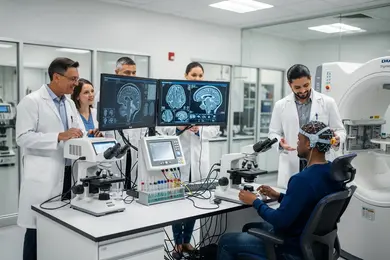
The typical neuroscience graduate program spans 5 to 7 years post-bachelor's, combining 1-2 years of coursework with 3-5 years of focused research and dissertation work. However, specialization in brain imaging technologies-MRI, CT, PET, and advanced neuroimaging-often lengthens the timeline due to demanding technical expertise and extended hands-on training. This is consequential given the brain imaging market's rapid growth from $13.2 billion to $19.4 billion by 2030, creating strong employer preference for candidates with direct experience in these areas.
Professionals seeking accelerated programs may opt for 2- to 3-year master's tracks, but these typically trade off depth in research skills critical for academic roles or leadership within pharmaceutical and medical device companies. In sectors where brain monitoring intersects with data analytics and imaging hardware, students face interdisciplinary requirements that can further extend study duration.
Key practical factors influence total program length beyond coursework, including securing competitive lab rotations, research funding, and partnerships with clinical imaging centers or hospitals. Employers value demonstrated output such as published research in neuroimaging and regulatory compliance knowledge, which adds time but enhances employability. Clear alignment between program focus-especially on neurotechnologies in high demand-and career goals can mitigate delays and improve return on this substantial educational investment.
How much do neuroscience graduate programs cost?
Choosing a neuroscience graduate program requires weighing substantial financial and time investments against career goals and market realities. Tuition typically ranges from $30,000 to $60,000 annually, with private institutions reaching $75,000. Public universities offer lower in-state rates of $15,000 to $35,000, but total expenses often exceed tuition by $20,000 or more yearly due to living costs and lab fees. Given that PhD programs span 5 to 6 years, students should plan for significant cumulative costs.
Working professionals shifting into neuroscience face added complexity: full-time study limits income opportunities, and assistantships to offset costs are scarce and competitive. Foreign applicants must factor in visa and health insurance expenses, potentially increasing the financial burden.
Employers in emerging neurotechnology fields increasingly seek candidates adept in the ethical and regulatory dimensions shaped by frameworks like neurorights, as outlined in the 2025 OECD and NeuroRights Foundation review. Programs emphasizing interdisciplinary skills aligned with these policies can improve return on investment.
Decisions should consider program specifics:
- Translational neuroscience often entails higher fees but stronger clinical or industry connections.
- Online or hybrid options reduce overhead but may limit critical hands-on research experience.
- Funding availability and curriculum relevance directly affect employability.
What jobs can you get with a neuroscience specialization?
Pursuing a specialization in neuroscience opens diverse career tracks but demands clear alignment between educational choices and occupational expectations. Roles vary significantly-from neuropsychologists requiring clinical credentials to neural data analysts leveraging machine learning within biotech or EdTech firms.
Success in this field increasingly hinges on interdisciplinary skills beyond core neuroscience, including software proficiency, project management, and computational modeling. For example, adapting neuroscience insights into scalable educational technologies calls for collaboration with product teams and data scientists, reflecting a shift toward integrated development rather than isolated research.
The educational neuroscience and learning analytics sector, projected to expand at roughly 17-18% CAGR through 2030, exemplifies the growing interface between brain research and applied technology, driving demand for professionals fluent in both domains.
However, transitioning into clinical or federally funded research roles often requires navigating additional certifications and intense competition for limited positions, underscoring the importance of strategic program selection. Candidates lacking hands-on experimental or computational training may find industry positions less accessible, given the preference for adaptable, tech-savvy graduates.
Key workforce considerations include:
- Tradeoffs between specialized clinical licensing versus broader data science capabilities
- Demand for experience in hands-on experimental design to improve employability
- Variations in job stability and advancement between federal labs and private sector startups
What salary and job outlook can neuroscience graduates expect?
The pathway to securing a tenure-track faculty position in neuroscience is exceptionally narrow, with only about 25-30% of PhD holders achieving this within 10 to 15 years post-graduation. The majority-over 60%-find roles outside academia in industry, government, or other research sectors. This distribution requires candidates to prepare for diverse employment landscapes rather than focus solely on academic careers.
Salary expectations reflect this divergence: entry-level research scientist roles in biotech and pharmaceuticals start around $75,000 to $90,000, advancing past six figures with experience. Government research jobs typically begin near $70,000 and offer more stable benefits, while academic postdoctoral positions pay less, between $50,000 and $60,000, making them less attractive financially but sometimes necessary for faculty track candidacy.
Key tradeoffs include:
- Academic track offers prestige but uncertain long-term stability and slower salary growth.
- Industry and government research roles provide better initial compensation but may lack academic recognition.
- Skill diversification in data science, programming, and regulatory affairs significantly enhances employability and earning potential outside academia.
For example, shifting toward neuroscience data analytics in private industry can yield salaries exceeding $120,000 within five years-a faster trajectory than academia typically allows. Strategic career decisions should incorporate realistic timelines, ongoing skill development, and openness to non-tenure career routes to optimize both job security and financial outcomes.
Other Things You Should Know About Neuroscience
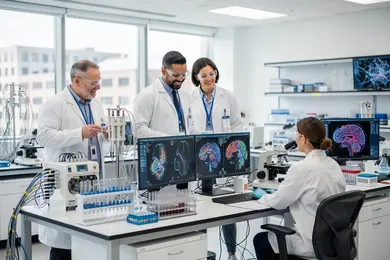
Employers and PhD programs highly value substantial hands-on research experience over coursework alone, as neuroscience careers demand strong experimental skills and problem-solving aptitude. Choosing a program with active labs, diverse methodologies, and access to publication opportunities will impact your employability and readiness more than just completing required classes. Prioritize programs with proven faculty mentorship and funded research projects rather than those that emphasize theoretical training exclusively.
Neuroscience programs require significant time for lab work, data analysis, and often irregular hours that conflict with standard work schedules. Part-time or evening coursework options are rare and usually limit access to research resources. Students with external responsibilities must assess the feasibility of intensive programs and consider flexible program formats or delaying enrollment until they can commit fully, as insufficient time for research can prolong time to degree and reduce academic outcomes.
Specialized training enhances credentials for research and clinical roles but does not guarantee faster promotion in industry or policy fields where interdisciplinary skills, networking, and business competencies weigh heavily. Graduates aiming for non-academic careers should complement neuroscience expertise with applied skills such as data science, regulatory knowledge, or communication. Programs integrating these elements often yield better professional returns than those focusing strictly on pure research specialization.
References
- Neuroscience Degree Salary https://www.collegehelpguide.com/degrees/neuroscience/salary/
- Average Cost of a Master's Degree: 2025 Analysis https://educationdata.org/average-cost-of-a-masters-degree
- Financial Information https://www.ualberta.ca/en/neuroscience-and-mental-health-institute/education/current-students/graduate/financial-information-fees.html
- Fields of Study in Neuroscience https://www.psychologytoday.com/us/basics/neuroscience/fields-of-study-in-neuroscience
- Fully Funded PhD Programs in Neuroscience | ProFellow https://www.profellow.com/fellowships/fully-funded-phd-programs-in-neuroscience/
- Neuroscience (Master of Science) Costs https://www.creighton.edu/cost-aid/find-costs/neuroscience-ms-costs
- Potential Careers https://neuroscience.uoguelph.ca/potential-careers/
- How Future Neuroscience Majors Can Prepare for College https://www.collegexpress.com/interests/science-and-engineering/articles/studying-sciences/how-future-neuroscience-majors-can-prepare-college/
- Ph.D. and M.S. in Neuroscience | Institute for Neuroscience https://www.unr.edu/neuroscience/graduate
- Neuroscience and Physiology https://programsandcourses.anu.edu.au/specialisation/neur-spec