2027 Online Neuroscience Degrees With Cellular Neuroscience Coursework

Co-Founder and Chief Data Scientist
Neuroscience professionals aiming to deepen expertise in cellular neuroscience often confront the challenge of balancing advanced study with ongoing career demands and geographic constraints. Nearly 45% of graduate students now choose online programs, a trend reported by the National Center for Education Statistics, reflecting growing demand for flexible, accessible learning that accommodates working adults. However, many online options lack robust cellular neuroscience coursework essential for research and specialized roles, complicating credentialing and career advancement. This article evaluates online neuroscience degree programs offering cellular neuroscience content, providing critical insights to help prospective students identify options that align with their professional goals and real-world scheduling needs.
Key Things You Should Know
- Online neuroscience degrees with cellular neuroscience coursework often lack direct laboratory components, reducing hands-on skill acquisition and complicating eligibility for lab-based research roles, according to the 2024 National Science Foundation STEM workforce report.
- The Bureau of Labor Statistics projects a 12% growth in neuroscience-related jobs by 2030, but employers emphasize in-person research experience, creating a credential-employability gap that must be mitigated through internships or hybrid programs.
- Average tuition for online neuroscience bachelor's programs increased 7% in 2023, outpacing inflation, which pressures working professionals to balance extended completion times against rising education costs and delayed workforce reentry.
What is an online neuroscience degree with a cellular neuroscience focus, and who is it best for?
An online neuroscience degree with a cellular neuroscience specialization offers a targeted academic track focused on the molecular and cellular foundations of nervous system function through remote study. This pathway fits best students for online neuroscience programs with cellular coursework who require flexibility due to full-time employment or geographic constraints. Graduates commonly pursue roles in pharma R&D, biotech, or clinical research settings where deep theoretical knowledge of ion channel dynamics and synaptic signaling drives drug discovery and disease modeling efforts.
However, the emphasis on virtual labs and simulations over hands-on benchwork creates tradeoffs. Candidates seeking hands-on technical roles, such as neuroengineering prototyping or neurosurgical technician positions, may find their eligibility limited without supplementary lab experience. Employers value the specialized knowledge but expect supplementary practical skills for applied or technical neuroscience jobs.
Recent workforce data shows e-learning in higher education is expanding rapidly, with Precedence Research forecasting a 14.2% CAGR through 2032 on a $74.8 billion base. This expansion supports increasing employer acceptance of online credentials that demonstrate rigorous, cellular neuroscience-focused coursework. Students should consider augmenting online degrees with certificates or internships that provide real-world lab exposure to maximize employability.
Ultimately, understanding what can you do with an environmental science degree offers a comparable lens to evaluate how specialized online STEM degrees translate to current workforce demands and career trajectories in neurobiology and related biomedical fields.
How do online neuroscience programs compare with campus-based options for cellular neuroscience training?
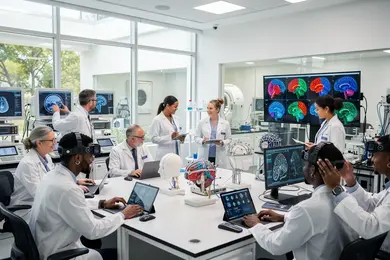
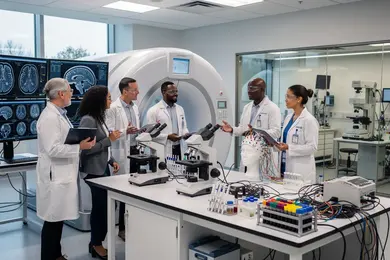
Online neuroscience programs with comprehensive cellular neuroscience courses often fall short in delivering the hands-on training essential for mastering cellular techniques. Campus-based vs online neuroscience degrees for cellular neuroscience training reveal a critical difference: on-campus programs grant access to live tissue analysis and specialized laboratory equipment that online formats cannot fully replicate. This practical experience is indispensable for roles requiring advanced cellular assays, electrophysiology, or molecular imaging-skills highly sought after in pharmaceutical and research sectors.
Students limiting themselves to fully online pathways frequently encounter difficulties securing lab internships or research assistantships comparable to those embedded in campus curricula. Employers consistently favor candidates demonstrating substantial wet-lab experience as a hiring standard, particularly given the U.S. Bureau of Labor Statistics' projection of 9% growth in neuroscientist positions through 2032 with approximately 7,500 annual openings.
For professionals unable to relocate or commit to full on-campus schedules, hybrid programs offering mandatory lab residencies or practicum arrangements present a pragmatic compromise. Supplementing coursework with external research collaborations or part-time lab roles is often necessary to attain competitive cellular neuroscience expertise resembling that of campus-trained peers.
When weighing flexibility against core skill acquisition, prospective cellular neuroscientists should evaluate programs rigorously, including options like the best online registered dietitian programs for analogous online training models emphasizing structured practical components.
How can students verify accreditation and program quality for online neuroscience degrees?
Choosing an online neuroscience degree demands careful scrutiny of accreditation standards due to direct consequences on career outcomes and employability in research-intensive sectors. Federal recognition through regional or national accreditation validated by the U.S. Department of Education or the Council for Higher Education Accreditation is non-negotiable for eligibility in financial aid and credible graduate opportunities. Specialized accreditation, such as that from the National Accrediting Agency for Clinical Laboratory Sciences, is particularly essential when programs include cellular neuroscience lab components, ensuring instructional rigor and alignment with employer expectations.
Evaluating quality of online neuroscience programs goes beyond accreditation. Prospective students should examine faculty expertise and research publications accessible through institutional platforms and academic repositories to confirm alignment with current scientific advances. Programs offering documented integration of practical lab work and internships, especially within pharmaceutical or biomedical fields, tend to yield superior graduate outcomes. For example, graduates from unaccredited or lesser-known online programs often encounter restricted access to federally funded research roles and advanced degree admissions.
Labor market data reflects these gaps: median annual salaries for neuroscience graduates in 2024 were $105,840 for medical scientists, rising to $131,300 in pharmaceutical manufacturing according to the U.S. Bureau of Labor Statistics. Verified employer connections and outcome transparency markedly improve job placement and salary prospects, underscoring the importance of program reputation. Independent student reviews and third-party rankings offer additional, nuanced insights on program value beyond formal accreditation.
Students must also assess financial investment against tangible returns. Understanding the MLIS degree cost exemplifies how tuition burden must be balanced with employment trajectories. Prioritizing online neuroscience degree accreditation standards mitigates the risk of costly setbacks and maximizes career pivot potential in this competitive and evolving research landscape.
What types of online neuroscience degrees include dedicated cellular neuroscience coursework?
Online neuroscience degree programs with cellular neuroscience courses predominantly exist at the bachelor's and master's levels, focusing on rigorous biological and molecular grounding essential for research roles requiring hands-on lab skills. This specialization is pivotal for careers in pharmaceutical research, neuroengineering, and clinical neuropsychology, where understanding cell signaling and synaptic mechanisms dictates employability and advancement. Conversely, purely behavioral or cognitive neuroscience programs often lack this cellular depth, creating a gap for students aiming at bench science or advanced cellular neurobiology studies.
For working professionals aiming to pivot into research-intensive roles, the tradeoff between program cost and curriculum focus is critical. For example, the University of Arizona's online Bachelor of Science in Neuroscience and Cognitive Science charges approximately $525 per credit, totaling around $63,000 for its 120-credit cellular-intensive curriculum. This premium reflects the expense of delivering virtual or hybrid laboratory experiences and specialized instruction, which are often compulsory to meet employer expectations in biomedical research and neurotechnology sectors.
Students must assess whether programs provide practical virtual labs or simulated cellular neuroscience experiments, as these components are vital without physical campus access. Selecting degrees with clear molecular and cellular module descriptions tied to workforce needs better positions graduates for success. Evaluating options extends beyond curriculum to credentials, such as programs recognized among school psychology programs online accredited by NASP.
Fully online neuroscience degrees featuring cellular neuroscience specialization offer nuanced pathways but demand a clear understanding of the skill sets employers prioritize and the financial and time investments involved.
What core cellular neuroscience courses and lab experiences can you expect online?
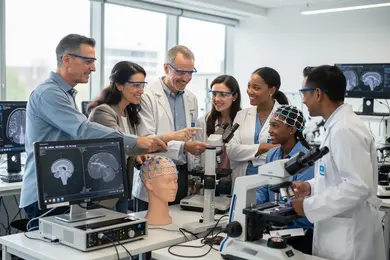
Online cellular neuroscience programs provide foundational knowledge in neuroanatomy, molecular neuroscience, and synaptic transmission, but the real challenge lies in replicating essential laboratory skills remotely. Practical methods like patch-clamp recordings and immunohistochemistry require specialized equipment, often inaccessible outside of a physical lab setting. Many programs attempt to bridge this gap with virtual labs and 3D interactive models designed to develop experimental design and data analysis capabilities. However, students aiming for roles demanding technical independence, such as pharmaceutical research or neural engineering, may find purely online routes insufficient without supplemental hands-on training.
Employers emphasize mastery of quantitative laboratory techniques alongside theoretical understanding, and graduates lacking tangible lab experience face a competitive disadvantage. Some institutions offer short-term residencies or partnerships with local labs to address this, but these options involve weighing travel costs and scheduling constraints against critical skill acquisition.
Enrollment in neuroscience online courses surged by 70% between 2020 and 2025, intensifying competition and raising program rigor standards. Completion of core courses arms learners with analytical frameworks for research interpretation, yet translating knowledge into practice remains a bottleneck for fully remote learners. Prospective students should evaluate programs for blended learning pathways or verified internships to ensure employability in sectors requiring autonomous laboratory competence.
What are typical admission requirements for online neuroscience programs with a cellular focus?
Programs in cellular neuroscience demand applicants possess a solid grounding in biology and chemistry, typically evidenced by prerequisites like general biology, organic chemistry, and introductory neuroscience. Nearly all entrants hold at least a bachelor's degree with demonstrated competency in cell or molecular biology. Over 85% of U.S. undergraduate neuroscience curricula require courses in cell biology or cellular neurobiology, creating a clear baseline for readiness in advanced study and research.
Applicants missing foundational science coursework face added time and expense through bridge classes, which can delay progress. A minimum GPA of 3.0 is common, with programs scrutinizing quantitative and lab skills due to the technical complexity of cellular neuroscience. Letters of recommendation from scientific faculty or research supervisors often validate an applicant's capacity for independent work involving cellular techniques.
Working professionals confront challenges balancing synchronous lab requirements with employment, often favoring programs offering asynchronous lectures and virtual labs despite their rarity. Employers in biotech and pharmaceuticals prioritize practical experience with cellular assays and data analysis, frequently verified through transcripts and documented research projects. GRE scores have become optional in many places but remain a differentiator in competitive admissions.
International students must fulfill English proficiency and credential equivalency requirements, adding administrative complexity. Awareness of these admission and workforce realities can prevent costly setbacks related to insufficient preparation or incomplete documentation.
How long do online neuroscience degrees take, and what do they usually cost?
Fully online neuroscience degrees present practical constraints that directly impact completion time and skill acquisition, especially when cellular neuroscience components require hands-on lab work. Bachelor's programs typically span 3 to 4 years, while master's degrees take 1.5 to 3 years, with part-time pacing extending these ranges for working adults. Candidates targeting roles in biotechnology or healthcare must balance flexible scheduling against potentially longer timelines.
Annual tuition broadly ranges from $10,000 to $25,000 at public universities for in-state online students, while private institutions command $30,000 to over $50,000. The overall expense, factoring in specialized lab fees and practicums, can reach $30,000 to $120,000. Budgeting for additional costs-such as certifications, study materials, or short-term relocation for essential lab residencies-is critical to avoid unexpected financial or timeline setbacks.
Employers in the pharmaceutical and research sectors prioritize demonstrable cellular neuroscience competencies, often validated by rigorous, hands-on coursework. Research from a 2024 meta-analysis in Computers & Education indicates that fully online STEM students outperform their on-campus peers by 0.20 standard deviations on final exams, challenging assumptions that distance learning compromises mastery. Still, limited in-person networking and lab access remain tradeoffs that candidates should weigh.
What careers can an online neuroscience degree with cellular coursework prepare you for?
An online neuroscience degree with a cellular neuroscience focus equips candidates for roles in biomedical research, pharmaceuticals, and neurotechnology, but its practical value depends heavily on program structure and career goals. Employers in biotech and medical device sectors demand cellular-level expertise for positions like research associate or drug development specialist, where applying knowledge to neurodegenerative disease research supports critical biomarker and therapeutic screening efforts.
Graduate education is often essential for meaningful advancement. The U.S. National Science Foundation's recent data reflect a notable 29% rise in neuroscience PhDs over the past decade, signaling a clear preference in competitive research environments for doctoral credentials. Students should weigh this carefully when planning their trajectory.
Clinical careers such as neuropsychologist or neurologist necessitate additional certifications beyond bachelor's or master's degrees, posing a practical barrier for online degree holders. For those targeting industry, alternative pathways like regulatory affairs or medical writing offer viable applications of cellular neuroscience without clinical licensing.
Hands-on laboratory experience and data analysis skills remain critical. Prospective students must verify their program provides this training, even if delivered through virtual labs or local partnerships. The growing demand for interdisciplinary fluency increases competition, making strategic choices about further education and skill specialization decisive for securing sustainable roles in biotech, neuroinformatics, or academic research.
What salary ranges and job outlook are associated with cellular neuroscience-related roles?
Cellular neuroscience salaries exhibit significant variability, closely tied to experience level and employment sector. Entry-level research technicians typically earn around $60,000 annually, whereas seasoned postdoctoral researchers or clinical neurobiologists can command over $130,000. PhD-level professionals working in academia or biotech commonly see median salaries between $85,000 and $110,000. Compensation often rises in pharmaceutical development or medical device companies, where expertise in cellular mechanisms directly influences drug target validation and biomarker innovation.
The job market growth for cellular neuroscience roles is steady but competitive. Federal projections estimate a 6% to 8% increase in biological science occupations through 2030, yet employers prioritize candidates with advanced degrees and specialized skills in molecular assays, imaging, and data analytics. Persistent funding limitations, especially in academic settings, typically require candidates to complete postdoctoral training to secure more stable employment.
Online and hybrid cellular neuroscience programs have broadened educational access, contributing to a more diverse talent pool: underrepresented minority students now constitute 19% of U.S. neuroscience graduate trainees, up from 12% a decade ago, as reported in the Society for Neuroscience's 2024 Neuroscience Training, Education, and Diversity Report. This growing diversity increases competition for prestigious positions and emphasizes the importance of mastering applied cellular neuroscience techniques and interdisciplinary collaboration.
How should you choose the best online neuroscience program for your cellular neuroscience goals?
Prioritizing coursework that drills deeply into molecular neurobiology, electrophysiology, and cellular signaling pathways is essential when selecting an online cellular neuroscience program. Programs focusing on hands-on virtual labs or collaborations with active research institutions offer the most effective skill transfer, particularly for biotechnology, pharmacology, or academic research roles where practical expertise is demanded. For instance, professionals aiming to enter drug development must ensure remote access to advanced experimental modules and data analytics, since traditional lab work is inaccessible online.
Critical employer expectations include tangible research experience and applicable internship placements, which significantly boost a graduate's competitiveness. Notably, bachelor's degrees in neuroscience or neurobiology correlate with a median lifetime earning approximately 30% higher than the average across disciplines, highlighting the value of rigorous scientific preparation recognized by accrediting bodies.
Beyond curriculum, logistical factors such as the program's pacing flexibility, synchronous versus asynchronous delivery, and specialized academic advising in cellular neuroscience influence the ability to master complex material and complete the degree efficiently.
Cost comparisons must weigh potential return on investment and industry recognition equally. Candidates pivoting from unrelated fields should assess programs that provide strong career services and neuroscience sector connections to address gaps in work history and improve hiring outcomes.
Other Things You Should Know About Neuroscience
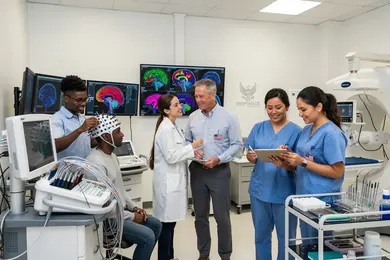
Hands-on lab experience is critical for understanding complex cellular neuroscience techniques and data interpretation, yet many online programs rely on virtual labs or simulations. This limits direct manipulation of biological specimens, which can be a disadvantage for students aiming for research-intensive roles or doctoral programs. Prospective students should prioritize programs offering hybrid models or local lab partnerships to ensure they gain practical skills that employers and graduate schools value.
Online neuroscience degrees with cellular coursework often demand high self-discipline and time management because students must independently navigate complex materials without immediate access to instructors. The asynchronous nature allows flexibility but increases the burden of self-directed learning, especially in interpreting dense cellular neuroscience content. Students considering this path should realistically assess their ability to engage deeply without structured, in-person support, which is common in traditional programs.
In 2027, online neuroscience degrees with a cellular emphasis are increasingly respected by employers if accredited and from reputable institutions. Key factors include the program’s rigor, inclusion of practical components, and the graduate’s ability to demonstrate acquired skills and knowledge effectively.
Students targeting doctoral programs must prioritize online degrees that integrate rigorous quantitative methods, advanced cell biology, and critical lab components. Coursework that emphasizes experimental design and data analysis improves doctoral admissions prospects and research readiness. Choosing programs lacking these elements risks gaps in preparation that can slow progress in competitive doctoral environments.
References
- What Can You Do with a Neuroscience Degree? | Tiffin University https://www.tiffin.edu/news/what-can-you-do-with-a-neuroscience-degree/
- Learn neuroscience | edX https://www.edx.org/learn/neuroscience
- Neuroscience | Online College Prep | Case Western Reserve https://case.precollegeprograms.org/neuroscience
- What is it like to study neuroscience? - Centre of the Cell https://www.centreofthecell.org/story/what-is-it-like-to-study-neuroscience/
- Neuroscience Jobs (with Salaries) - SEEK https://au.seek.com/neuroscience-jobs
- 7 Best Neuroscience Courses for 2025; Learn Online for Free — Class Central https://www.classcentral.com/report/best-neuroscience-courses/
- Campus+ Course Insights : Four 6-ECTS Courses from Radboud University, expanding the Empirical and Clinical Neuroscience offering https://theneurotech.eu/campus-course-insights-four-6-ects-courses-radboud-university-expanding-empirical-and-clinical
- School of Life Science/Neuroscience - INTERNATIONAL EUROPEAN UNIVERSITY, POLAND | EUROPE | STUDY IN POLAND | STUDY IN EUROPE | MBBS | GENERAL MEDICINE | BUSINESS | ENGINEERING | IT | EUROPE https://ieu.com.pl/european-school-of-life-sciences/school-of-life-science-neuroscience/
- Are Online Degrees Accredited? How to Identify Quality Distance Learning Programs https://www.umassglobal.edu/blog-news/online-degrees-accredited-identify-quality-distance-learning-programs
- Finding the best Neuroscience online course - https://itsnlp.com/finding-the-best-neuroscience-online-course/