2027 Neuroscience Roles at the Center of AI-Enabled Brain Research

Co-Founder and Chief Data Scientist
Neuroscience professionals now face unprecedented pressure to integrate AI tools rapidly into brain research workflows as funding timelines tighten and employer expectations shift toward interdisciplinary expertise. The 27% rise in online STEM master's program enrollment reported by the National Center for Education Statistics in 2024 signals growing demand for flexible, career-compatible training-yet many programs lag in offering practical AI applications tailored to neuroscience. This gap forces learners to gamble on curricula that may not match evolving job requirements or provide immediate workplace value. This article examines emerging roles at the intersection of neuroscience and AI-enabled brain research, guiding learners through educational options that align with real-world skills and hiring trends.
Key Things You Should Know
- Recent labor market data from the U.S. Bureau of Labor Statistics shows a 22% wage premium for neuroscience professionals with AI competency, but employer demand skews heavily toward integrated computational and neuroengineering skills, limiting roles for pure experimentalists.
- Academic pipeline constraints reveal that 60% of 2025 neuroscience PhD graduates lack AI-augmented research experience, impeding their competitiveness in top-tier brain research centers emphasizing algorithmic modeling and real-time neural data analysis.
- The average investment exceeding $45,000 in specialized AI-neuroscience certification programs by 2026 introduces a critical timing and cost barrier, often delaying workforce entry by 12-18 months and necessitating employer-sponsored upskilling to maintain salary trajectories.
How is AI transforming neuroscience research and creating new brain-focused career paths?
The rising prominence of AI applications in neuroscience research careers demands a robust grasp of both computational methods and domain-specific knowledge. Scientific output on AI applied to neuroscience surged from 129 publications in 2014 to 1,338 in 2023, illustrating the field's rapid expansion and the emergence of brain research jobs in AI technology. Employers increasingly prioritize candidates who can develop algorithms for neural decoding tasks, such as brain-computer interfaces, or utilize pattern recognition to forecast neurological disease progression.
A practical example includes clinical neuroscience settings where researchers must program deep learning models to interpret fMRI and electrophysiological data, contrasting with pharmaceutical contexts requiring integration of multi-omics datasets for drug target identification. This divergence highlights essential tradeoffs: students and professionals must balance neuroscience fundamentals with advanced machine learning skills to fit diverse roles.
Standard neuroscience degrees often lack the computational training necessary to meet these demands, making supplementary certifications or project portfolios critical for employability. Skills in Python, TensorFlow, or PyTorch frequently function as gateways to meaningful positions. Organizations look for candidates adept at translating neuroscientific questions into AI solutions without sacrificing biological interpretability.
Pursuing an online master in data science can be a strategic step to acquire interdisciplinary expertise necessary for these evolving career paths.
What neuroscience roles work most closely with AI-enabled brain imaging and data analysis?
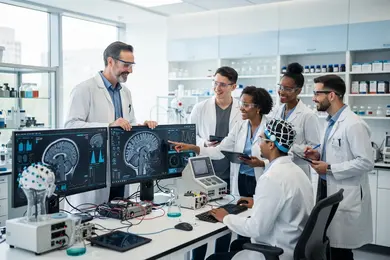
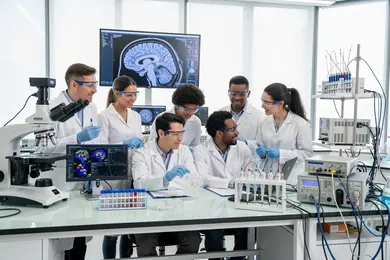
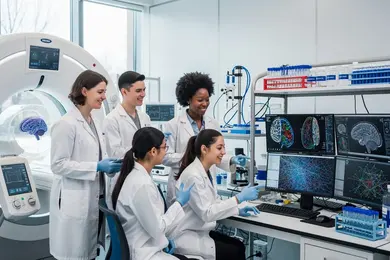
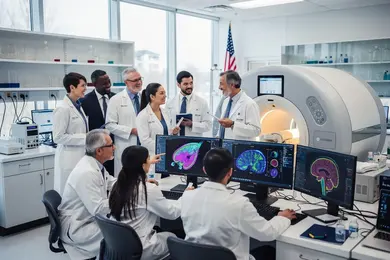
Neuroscience roles collaborating with AI brain imaging demand a rare intersection of domain expertise and technical fluency, reflecting a workforce where interdisciplinary fluency shapes employability. Neuroradiologists currently leverage AI to improve diagnostic accuracy for neuro-oncology, achieving a 94-97% precision rate that matches or surpasses human experts. This dynamic increases demand for clinicians who can interpret AI results while navigating clinical workflows and validation challenges.
Neuroinformatics specialists orchestrate massive brain imaging data pipelines, ensuring datasets are clean and compliant with AI input requirements. Their effectiveness hinges on strong programming capabilities, particularly Python and machine learning frameworks, tightly coupled with deep anatomical and pathological knowledge. As workforce analysis shows, these roles are pivotal in maintaining the integrity of AI-driven data analysis in neuroscience experts in AI-driven data analysis.
Computational neuroscientists face the nuanced task of building and refining algorithms to address bias and real-world variability, providing clinical teams adaptable AI tools. For individuals aiming to enter or pivot within this field, pairing formal neuroscience education with computer science credentials enhances career prospects. Prospective candidates often seek a computer science degree online to bridge these demands, balancing flexible study with essential technical skill acquisition.
Which degrees do you need for AI-centered neuroscience careers in research and industry?
Advanced educational trajectories for AI-focused neuroscience degree requirements in the United States demand an integrated mastery of computational techniques and brain science that goes beyond traditional disciplinary boundaries. For instance, professionals aiming to pivot into neurotechnology or pharmaceutical roles must often supplement a bachelor's degree in neuroscience with robust credentials in AI or data science. This typically means earning master's degrees with applied AI emphases or pursuing specialized training to bridge gaps in coding languages like Python or MATLAB.
Employers prioritize candidates demonstrating practical expertise in machine learning algorithms alongside experimental neuroscience, especially for handling the 16.1% share of AI-in-medicine publications focused on neuroscience as reported by Frontiers in Neurology in 2025. Tradeoffs between lengthy dual-degree graduate programs and condensed certification courses require students to weigh depth against time and financial cost. Those entering clinical neuroimaging, for example, must master GPU programming and advanced statistics-skills often missing in pure neuroscience tracks but crucial in applied contexts.
Practical workforce demands now mandate proficiency in AI protocol integration and reproducible data pipelines. Specialized postdoctoral fellowships and industry bootcamps focused on AI-enabled neuroscience tools accelerate readiness more efficiently than traditional degree paths alone. Cross-domain competencies evidenced by published AI-driven neuroscience work or relevant industry projects significantly enhance employment prospects.
For those seeking cost-effective options, exploring the librarian degree online offerings reflects a broader trend towards accessible interdisciplinary programs combining informatics and neuroscience. This strategic selection aligns tightly with essential academic backgrounds for neuroscience and AI research careers, balancing market needs with practical educational access.
How do neuroscience programs integrate coursework in AI, machine learning, and data science?
The integration of AI and machine learning into neuroscience graduate programs reflects a precise response to employer demands for candidates capable of building and validating complex brain-computer interface models. These programs embed AI integration in neuroscience graduate programs within core modules, pushing students to handle real neural datasets while mastering programming languages like Python, R, and MATLAB alongside statistical modeling for neural decoding. The rise in venture funding-from $1.2 billion in 2019 to over $7 billion in 2023-illustrates urgent industry expectations for this skill set.
Machine learning applications in neuroscience curriculum typically follow a structured progression, starting from foundational AI concepts to specialized tasks such as neural data classification and adaptive algorithms in clinical neuromodulation. This trajectory forces a tradeoff between achieving deep biological insight and computational efficiency. For example, applying machine learning models to individual patient data for precision medicine demands not only technical coding skills but also critical evaluation of data integrity and clinical applicability.
Students frequently encounter logistical challenges such as limited access to large, annotated neural datasets and insufficient computational infrastructure. Programs counterbalance these deficits by partnering with research entities and companies to offer internships and capstone projects mirroring the development cycles of neurotechnology devices. Those pursuing pathways like an accelerated biology degree online should weigh these practical limitations against their career goals in neuroengineering and data-driven neuroscience.
What is the difference between online and campus-based neuroscience programs with AI training?
Choosing between online and campus-based neuroscience programs with AI training boils down to hands-on experience versus convenience, a critical factor in meeting employer expectations in clinical neuroimaging roles. Campus programs integrate direct access to specialized imaging equipment, offering immersive familiarity with advanced workflows, such as the 30-50% reduction in MRI acquisition time enabled by deep learning algorithms cited in Convergence of Artificial Intelligence and Neuroscience, 2024. This exposure equips students to demonstrate verifiable skills in AI-enhanced image reconstruction, a top priority for hospitals and imaging centers hiring practitioners ready to operate complex hardware under regulatory standards.
In contrast, online programs focus on theoretical frameworks and simulation-based learning. While they effectively build foundational knowledge in machine learning and algorithm design, the lack of supervised laboratory rotations or clinical hardware access often results in a skill gap. Graduates may need to pursue external internships or practicums to achieve the operational competence demanded by imaging facilities. For working professionals balancing employment or geographic constraints, online paths provide flexibility but typically require more time and independent effort to reach equivalent proficiency.
Employers distinguishing roles within AI-integrated neuroscience settings generally favor campus-aligned training for positions involving real-world system implementation, whereas roles centered on algorithm development or data annotation might accommodate candidates from online backgrounds. Practical tradeoffs include:
- Campus programs demand relocation or daily commute but foster peer interaction and direct mentorship that accelerate technical skill acquisition.
- Online formats reduce logistical barriers but often extend the timeline to competency due to limited hands-on opportunities.
How can you evaluate accreditation and research quality in neuroscience and AI programs?
Programs in neuroscience and AI that lack dedicated neuroinformatics infrastructure leave graduates unprepared for handling real-world datasets that are increasingly measured in terabytes to petabytes. Given that 42% of large-scale research projects demand such resources, students trained without access to state-of-the-art data management tools face significant skill gaps when applying for roles involving multimodal neuroscience data.
Faculty with strong publication records in high-impact journals and active participation in federally funded projects often indicate programs aligned with practical career development. Curricula focused mainly on theory, without hands-on experience managing vast datasets or neuroinformatics platforms, limit graduates' marketability, especially in environments where solving data infrastructure bottlenecks is routine.
Collaboration with industry partners and research centers offers tangible benefits beyond classroom knowledge, including internships where students engage directly with AI-enabled brain research workflows. This exposure is often the differentiator for employment in neuroscience labs or tech companies navigating multi-petabyte projects.
When evaluating neuroscience programs, prospective students should prioritize those accredited by recognized bodies-such as regional accreditors, the Society for Neuroscience, or the Association for the Accreditation of Human Research Protection Programs-that facilitate access to cutting-edge datasets and infrastructure reflecting current industry scale.
What are typical admission requirements for AI-focused neuroscience bachelor's, master's, and PhD programs?
Pursuing AI-focused neuroscience programs requires aligning academic credentials with evolving employer demands and research intensity across degree levels. For bachelor's candidates, applicants must demonstrate competence in biology, mathematics-especially calculus and linear algebra-and foundational programming, with competitive profiles often including Advanced Placement courses or equivalent preparatory work. Practical experience like internships or coding proficiency in Python notably strengthens admission chances, as interdisciplinary rigor is expected with GPAs around 3.5 at selective institutions.
Master's applicants face higher thresholds, needing not only a relevant bachelor's (neuroscience, computer science, engineering) but also clear quantitative skills and research background in computational or AI-driven models. The statement of purpose becomes a critical filter, requiring focused research plans linking brain function and AI architectures. GRE quantitative scores above the 70th percentile remain influential, though some programs are softening requirements. Published work or post-baccalaureate research notably improves competitiveness amidst a pronounced surge in NeuroAI research.
PhD candidates must demonstrate advanced expertise through a master's or equivalent research output, including robust publication records aligned with active lab priorities. Mastery of computational tools such as MATLAB, TensorFlow, and R is mandatory, as is experience translating biological processes into computational models-a key differentiator sought by interdisciplinary AI-brain research employers. The rising volume of high-quality NeuroAI publications reflects a significant elevation in admission standards compared to five years ago.
How long do AI-oriented neuroscience degrees take, and what do they cost?
Choosing between master's and PhD pathways in AI-focused neuroscience demands weighing duration, cost, and career trajectory against employer expectations. Master's programs, typically 18 to 24 months, offer a faster pivot into applied roles like brain-computer interface development but may lack the depth needed for research-intensive positions. In contrast, PhD programs stretch over 4 to 5 years, often funded by assistantships that reduce tuition burden, yet delay workforce entry and immediate financial returns.
Cost disparities also influence decision-making. Private institutions can charge up to $70,000 annually, constraining professionals without external support, while public universities may offer in-state tuition as low as $10,000, with potential assistantships offsetting living expenses. These financial factors intersect with program length to shape accessibility and risk.
When targeting industry roles emphasizing practical skill, a condensed master's track might enhance employability by minimizing opportunity cost. However, those aiming for academic research leadership or complex technical innovation often accept extended training for greater expertise, despite delayed compensation.
Employer collaborations, such as specific recruitment initiatives blending AI and neuroscience expertise, signal growing demand but also raise expectations for comprehensive skill sets that balance theoretical knowledge and applied research. Prospective students should map educational investments against realistic timelines, financial exposure, and workforce standards to optimize alignment with career outcomes.
What are the salary ranges and job outlook for AI-enabled neuroscience careers in the U.S.?
AI-enabled neuroscience roles in the U.S. reveal distinct salary tiers linked closely to specialization and sector, underscoring the importance of targeted skill development. Entry-level jobs in academic or clinical environments generally offer $95,000 to $110,000 annually, while positions in biotech and healthcare AI realization grow to $120,000-$140,000. Senior experts-such as neuroinformatics specialists and AI governance professionals-earn $150,000 to $160,000+, reflecting their critical contributions within private industry and federal labs.
One tangible workforce challenge is the shortage of professionals with expertise in neuroethics and AI governance. Over 60% of recent AI-in-neurology publications omit ethical and regulatory considerations, placing a premium on specialists able to navigate these complex domains. Their compensation aligns with senior roles, given the urgency of compliance in clinical trials and healthcare AI deployments.
Employers prioritize candidates with integrated neuroscience, machine learning, and regulatory fluency. For those pivoting into this area, solely technical abilities are insufficient. Without ethics proficiency, professionals may face constrained opportunities and slower progression, especially in translational research or government sectors. Augmenting one's credentials with focused coursework or certifications in AI ethics and data governance significantly strengthens employability and earning power.
- Entry-level salaries: $95,000 to $110,000
- Mid-career roles: $120,000 to $140,000
- Senior positions: $150,000 to $160,000+
Are there certifications, fellowships, or professional societies for AI and neuroscience specialists?
Specialized certifications in AI and neuroscience remain fragmented, offering limited direct pathways for practitioners aiming to integrate both disciplines. Instead, targeted fellowships at institutions such as the Allen Institute for Brain Science and MIT provide the essential bridge by combining computational AI skills with domain-specific neuroscience application. These programs typically demand prior research experience and are designed to transition candidates effectively into lab or industry roles focused on translational brain research.
Professional societies like the Organization for Computational Neurosciences (OCNS) and the International Neural Network Society (INNS) facilitate community engagement through conferences and workshops but do not confer formal certification, making their value primarily network- and knowledge-based rather than credential-driven.
Academic trends, for example at Stanford's Wu Tsai Neurosciences Institute and Columbia's NeuroAI initiatives, demonstrate a doubling of faculty and projects related to AI in brain science since 2019. This growth signals increased employer expectations for candidates with demonstrable AI competencies integrated with neuroscience expertise rather than isolated AI or data science certificates.
Professionals considering entry into this niche must weigh the tradeoff between broad AI credentials without domain context and the more selective fellowships that embed neuroscience training. Prior research experience is generally mandatory, underscoring a staged skill acquisition approach to maximize employability and meaningful impact in neuroscience-focused tech companies or translational research labs.
- Fellowships offer immersive, applied training combining AI and neuroscience.
- Professional societies provide informal recognition but no certifications.
- AI-only certificates lack the neuroscience dimension employers require.
Other Things You Should Know About Neuroscience
Specialized AI neuroscience programs in 2027 offer targeted skills for AI-enabled brain research, often leading to higher employment in niche areas. Broader neuroscience degrees provide versatile knowledge applicable to varied roles but may require additional specialization for AI-centric positions. The choice influences career trajectory and required ongoing education.
AI-focused neuroscience graduate programs combine complex computational coursework with demanding laboratory research, resulting in a heavier workload than traditional neuroscience tracks. Students must balance mastering programming skills with maintaining proficiency in biological sciences, often under tight research deadlines. Time management and technical competence are critical; underestimating the combined rigor leads to extended time-to-degree or burnout.
Prior coding or data science knowledge is essential to avoid substantial catch-up burdens. Employers expect candidates to apply AI tools to brain data independently, not just operate software. Programs without foundational coding prerequisites increase time-to-competency and stress. Candidates should prioritize programs that either require or provide early, rigorous computational training to ensure employability and effectiveness in AI-driven neuroscience roles.
Employers prioritize candidates who demonstrate practical AI skills integrated with neuroscience insight rather than purely theoretical knowledge. Specializations that combine hands-on experience in machine learning, coding, and real data analysis with solid neuroscience foundations yield the strongest hiring outcomes. Candidates must evaluate programs based on lab access, project portfolios, and direct AI tool application to meet these expectations, as pure theory-only backgrounds often fall short in competitive job markets.
References
- Considering Applying https://cognition.maxplanckschools.org/en/application/faqs/considering-applying
- Neuroscience Degree Salary https://www.collegehelpguide.com/degrees/neuroscience/salary/
- AI in Mapping Neural Pathways for Neuroscience https://trendsgroup.org/insight/ai-in-mapping-neural-pathways-for-neuroscience/
- 16 Artificial Intelligence Career Paths https://www.calmu.edu/news/artificial-intelligence-career-paths
- The Future of Quality Assurance in Online and AI-Driven Learning: Ensuring Trust, Innovation, and Global Standards https://iacde.org/uncategorized/the-future-of-quality-assurance-in-online-and-ai-driven-learning-ensuring-trust-innovation-and-global-standards/
- PhD Candidate - Neuroscience and Artificial Intelligence https://www.euraxess.al/jobs/363587
- Reforming neuroscience graduate education for—and with—AI https://www.thetransmitter.org/neuro-education/reforming-neuroscience-graduate-education-for-and-with-ai/
- Brain-Based AI Careers – A How-To Guide | Numenta https://www.numenta.com/blog/2022/04/11/how-to-pursue-career-in-brain-based-ai/
- Degrees That Transfer to Emerging AI Careers https://www.careergroupcompanies.com/blog/degrees-that-transfer-to-emerging-ai-careers
- Artificial Intelligence, data Science and computational science: call for expression of interest for Senior and Mid-Career Researchers | Paris Brain Institute https://parisbraininstitute.org/news/artificial-intelligence-data-science-and-computational-science-call-expression-interest-senior-and-mid-career-researchers