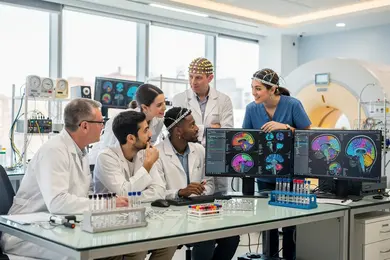
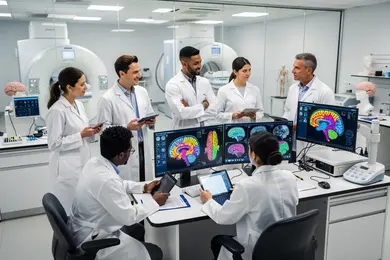
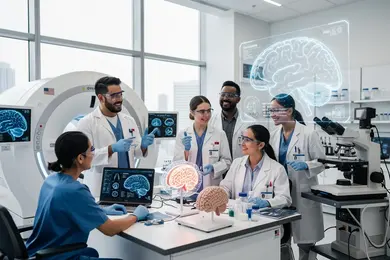
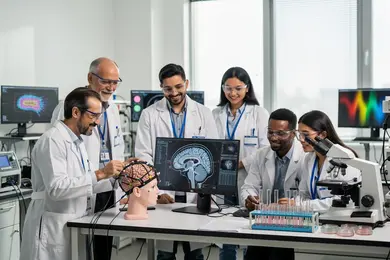
2027 First Neuroscience Roles for Students Preparing for Medical or Graduate School

Co-Founder and Chief Data Scientist
Securing an initial role in neuroscience research or clinical settings poses a distinct challenge for students preparing for medical or graduate school, where timing and credentials directly influence competitive positioning. The landscape demands experience that aligns tightly with evolving interdisciplinary methods and data-centric approaches. Recent federal education data reveals a 27% increase in online neuroscience course enrollment from 2022 to 2024, signaling growing demand for flexible, skill-specific opportunities but also intensifying competition among candidates with asynchronous credentials. This surge reflects broader shifts in workforce readiness, requiring strategic choices about when and how to gain relevant experience. This article maps out targeted first neuroscience roles and pathways that optimize practical skill acquisition, enhance admissions viability, and support long-term career mobility in a rapidly changing field.
Key Things You Should Know
- Neuroscience research assistant roles average salaries 12% below biomedical counterparts, pressuring students to weigh early income sacrifices against rare direct lab exposure that accelerates med school applications.
- Employers increasingly prefer interdisciplinary candidates with computational neuroscience skills, with 47% of entry-level postings demanding programming proficiency, complicating specialization timing for students prioritizing traditional bench science.
- Federal funding cuts in 2025 reduced available summer internships by 18%, extending typical neuroscience role search timelines, pushing many applicants to engage in lower-paid or volunteer roles, impacting cost and access equity.
What are the best first neuroscience jobs for pre-med students?
Entry-level roles that blend clinical responsibility with technical proficiency provide the most viable first neuroscience jobs for pre-med students aiming to strengthen their medical school applications. Positions such as clinical laboratory technologists deliver hands-on experience analyzing neurological samples and managing diagnostic tools, aligning with hospital demands where neuroscience expertise intersects patient care.
Median compensation for these roles is around $61,890 as of May 2024, with a projected 5% employment growth through 2033, surpassing average occupational expansions.
Top neuroscience research roles for medical school preparation often include research assistantships, which offer academic exposure but tend to vary in financial support and require balancing with coursework commitments. In contrast, technician positions generally require certification or associate degrees, offering a tangible credential mid-education and more predictable income streams.
For example, a student working part-time in a clinical lab gains applicable skills and clinical communication experience that enhance graduate program candidacy.
Transitioning to advanced clinical or research roles depends heavily on demonstrated reliability and interdisciplinary communication skills-qualities employers prioritize over purely academic achievements. Students should weigh the tradeoff between unpaid volunteer experience and paid technician roles, considering that direct clinical credentials often hold more weight in neuroscience-related medical pathways.
Those exploring further specialization might also consider complementary educational options such as a master of data science online to augment analytical skills critical in modern neuroscience research and applied clinical settings.
Which neuroscience roles help with medical or graduate school applications?
Laboratory roles in cognitive or systems neuroscience demand substantial commitment but offer unmatched preparation for graduate or medical school applications by imparting core competencies in experimental design, data analysis, and scientific communication. Admissions panels explicitly seek candidates with hands-on engagement in methodologies like electrophysiology and neuroimaging, which differentiate applicants in a competitive pool.
In contrast, clinical research assistant roles offer less technical rigor but valuable clinical exposure, making them more suitable for students prioritizing patient interaction while developing research literacy. These choices represent a critical decision: investing time in quantitative and reproducible research skills versus clinical acumen.
Approximately 17.9% of neuroscience PhD and MD/PhD graduates from Tufts University now work in biotech and pharmaceutical sectors, highlighting how early involvement in neuroscience research opportunities for pre-med students can significantly influence career pathways.
Securing mentorship in well-funded labs with access to computational modeling or neuropharmacology enhances prospects for translational neuroscience graduate programs. However, students face operational challenges like obtaining IRB approval for human subjects research and completing lab safety requirements, which signal professionalism and regulatory understanding to future employers and admissions committees.
For those balancing academic workloads with hands-on experience, prioritizing roles offering explicit training in quantitative tools over purely observational clinical internships is prudent. Clinical neuroscience internships relevant to graduate school admissions often lack this technical depth, which can limit PhD program competitiveness.
Additionally, exploring options in online exercise science programs may provide interdisciplinary advantages for students seeking diverse translational research skills.
What skills do neuroscience student jobs usually require?
Neuroscience student job technical skills must align with specialized job demands, where proficiency in laboratory techniques and regulatory knowledge directly affects employability. For example, neuroimaging technicians-earning a median wage of $78,980 in the U.S. as of May 2024-must balance patient safety and imaging precision alongside regulatory compliance, a frequent challenge that distinguishes candidates with immersive hands-on internships.
Essential skills for neuroscience research roles include mastering wet lab processes such as animal handling and chemical assays, as well as familiarity with neuroimaging tools like MRI, EEG, and fNIRS. Computational competence further differentiates candidates; familiarity with statistical software like SPSS, R, or Python is crucial for handling complex datasets and automating workflows, enhancing both accuracy and efficiency.
Soft skills such as scientific communication, teamwork across disciplines, and time management significantly impact research dynamics and project outcomes. Students also encounter practical tradeoffs when managing workflow pressures with technical demands, especially in clinical environments requiring strict adherence to protocol.
Students aiming for such roles should note the importance of early applied experience and documentation skills using electronic lab notebooks or data management systems. Understanding the broader cost implications involved in STEM-related education can also be decisive; for insight into financial aspects consider the MLIS degree cost.
What neuroscience degree paths lead to student research roles?
Bachelor's degrees in neuroscience, cognitive science with a neuroscience focus, and biomedical engineering with neural specialization offer direct alignment with student research roles, equipping candidates with essential lab techniques, neuroanatomy understanding, and foundational data analysis skills. These programs train students in experimental design and both human and animal model studies, facilitating immediate integration into university or hospital research environments.
Students pursuing undergraduate pathways to neuroscience research opportunities should be aware that psychology majors combining neuroscience coursework may require additional neurobiology certifications to meet employer expectations for behavioral or clinical research positions.
Graduate neuroscience degrees such as master's or PhDs provide advanced methodological expertise and autonomous research experience, often prerequisites for leading projects or obtaining competitive grants. However, these pathways involve greater time investments and delayed workforce entry, which may deter those prioritizing quicker clinical exposure before medical or graduate school.
Integration of data science skills-particularly proficiency in Python, R, or MATLAB and machine learning techniques-is increasingly vital. Data scientists with neuroscience backgrounds earned a median U.S. wage of $112,590 in May 2024 and encounter a 36% projected job growth from 2023-2033, highlighting strong demand in neuroinformatics and computational neurobiology sectors.
Successful research candidates demonstrate familiarity with neuroimaging tools like fMRI and EEG, animal behavior protocols, or neurogenetics lab procedures. Universities that embed coding and analytics in combined degree tracks streamline entry into this competitive field.
Without these interdisciplinary competencies, students risk confinement to routine wet-lab roles with limited advancement. Prospective students evaluating neuroscience degree programs for student research roles may also consider an online bachelor's degree in biology as a complementary or alternative path.
How do online and campus neuroscience programs compare?
Online neuroscience programs provide flexible access but fall short in delivering the hands-on laboratory experience and direct faculty mentorship essential for mastering translational techniques valued by competitive graduate and medical schools. Campus-based programs offer tangible advantages: structured lab access, immediate collaboration with faculty and peers, and direct involvement in ongoing research projects. For instance, aspiring neuropharmacology researchers benefit from intensive, guided lab work rarely matched by remote formats.
Employers and advanced academic programs prioritize proven research skills and established networks developed through in-person interactions. Campus environments create clearer pathways to internships within clinical and research settings, which can be pivotal for career progression. Online learners can partially bridge these gaps by independently securing local lab placements or enrolling in hybrid options, but this demands additional effort and logistical coordination.
The median annual salary for medical scientists specializing in neuroscience was $100,590 in May 2024, with an 11% job growth outlook through 2033-indicators of sustained demand favoring candidates with robust experiential training. Students weighing online versus campus routes must consider that lower upfront costs and flexibility potentially come at the expense of practical skills and professional connections crucial for long-term career competitiveness.
Decision-makers should prioritize programs integrating authentic research opportunities aligned with their professional goals, especially when targeting graduate or medical school admission.

What neuroscience courses prepare students for research and clinical work?
Prioritizing specialized skill sets in neuroscience education directly shapes career trajectories and employer alignment. Students aiming for research roles benefit from intensive coursework in cellular and molecular neuroscience coupled with lab experiences that sharpen experimental design and data analysis competencies. These technical skills, including electrophysiology and computational modeling, are critical to handling modern neural data challenges.
In contrast, those targeting clinical roles should emphasize neurophysiology and pathophysiology courses with practical rotations in healthcare settings to develop expertise in neurological assessments and clinical trial support. This approach accelerates readiness for patient-facing positions but may come at the cost of less research depth.
Key considerations include:
- Tradeoffs between broad clinical knowledge and deep technical research skills
- The importance of quantitative courses such as neuroinformatics and statistics for data-intensive neuroscience careers
- Practical internships or rotations enhancing clinical employability
- The value of aligning curriculum selection with targeted subsectors to optimize workforce adaptability
Interdisciplinary exposure, especially integrating biomedical engineering and neural engineering, can enhance employability in neuroprosthetics and brain-computer interface sectors. Neural engineers with master's credentials report median salaries around $97,410, reflecting the economic advantage of specialized training.
However, balancing early clinical exposure against extended technical training requires thoughtful course sequencing to accommodate evolving employer demands and technology shifts.
What admission requirements do neuroscience programs usually ask for?
Competitive neuroscience programs demand more than baseline academic metrics; students must strategically combine strong GPAs (generally 3.0 to 3.5), core coursework in biology, chemistry, math, psychology, and statistics, and practical laboratory or clinical experience to remain viable candidates. GRE scores, while often optional, can tip the scales in competitive admissions, especially for research-focused graduate paths.
Applicants face notable tradeoffs balancing rigorous coursework and securing relevant internships or lab placements, often requiring early and sustained networking to overcome logistical barriers.
Real-world neuroscience roles increasingly reward interdisciplinary skill sets combining behavioral science insights with data analysis, with job growth in related fields like behavioral and mental health counseling projected at 19% through 2033. This illustrates the importance of aligning educational experiences with labor market demands rather than purely academic interests.
Admissions committees prioritize precise career alignment supported by persuasive letters of recommendation and clear research proposals or personal statements that evidence analytical skills and methodological understanding.
Those pursuing medical tracks should integrate neuroscience electives and maintain strong MCAT scores, acknowledging additional credentialing layers that extend timelines and require careful planning.
Ultimately, students must weigh maintaining practical neuroscience exposure with academic performance amidst increasing employer expectations for clinical and technical proficiency in a specialized, evolving workforce landscape.
How long do neuroscience programs take, and what do they cost?
Choosing a neuroscience program involves weighing program length, cost, and career specificity against the realities of the labor market and credential expectations. Associate and certificate paths, typically around two years and costing $10,000 to $25,000, offer foundational skills but limit advanced research or clinical roles. Bachelor's degrees require four years, with in-state public tuition near $30,000 to $40,000 total and private options surpassing $100,000, representing a sizeable financial and time investment with broader career flexibility.
Graduate neuroscience training spans 2 to 6 years and often exceeds $20,000 annually, making funding and assistantships pivotal to controlling debt. For instance, pursuing a PhD with plans to enter scientific writing demands extended study plus postdoctoral experience, delaying income but aiming at a median wage of $91,670-with expected job growth around 4%.
Employers typically favor doctoral credentials for research-intensive careers, highlighting a key tradeoff between program duration and employability.
Professionals contemplating a shift through master's programs should rigorously assess whether such credentials match sector demands, as shorter pathways often fall short in research-preferred contexts. Indirect costs-housing, lab fees, materials-add roughly 20-30% to tuition, necessitating early budgeting beyond sticker price.
Strategic use of funding, assistantships, or employer tuition support can significantly reduce net costs and shape the long-term return on this educational investment.
What salaries and job outlook apply to neuroscience student roles?
Entry-level neuroscience roles provide varying salary prospects that reflect employer type and job function, ranging from about $45,000 in academic settings to $65,000 or more in biotech firms. These starting figures often correspond to laboratory technician or research assistant positions, which typically receive less compensation than industry jobs but offer essential access to experience in research environments.
The profession shows steady growth potential, with the U.S. Bureau of Labor Statistics projecting a 13% increase in biological and biomedical science roles through 2032, indicating ongoing demand.
Positions requiring graduate degrees substantially alter earnings and career scope. For instance, neuroscience graduates advancing to MD or PhD programs-comprising 38% and 28%, respectively, of majors five years post-graduation per University of Pennsylvania data-can expect starting salaries ranging widely but generally exceeding $90,000.
Medical doctors specializing in neuroscience often see entry salaries surpassing $175,000, while PhD holders engaged in applied or specialized research earn between $90,000 and $130,000 depending on the sector.
Choosing between entering the workforce immediately or pursuing graduate education involves balancing earlier income against opportunities for elevated roles and salary premiums. Employers frequently require clinical certification for medical neuroscience positions or robust publishing records for research careers. Thus, aligning educational choices with these specific expectations is critical.
Neuroscience students aiming for medical school face rigorous admissions criteria such as high GPA and MCAT scores, whereas doctoral candidates must demonstrate research experience and strong recommendations. These divergent pathways impose distinct financial and time commitments but substantially impact long-term employability and compensation.
How do you choose an accredited neuroscience program?
Evaluating an accredited neuroscience program demands direct attention to graduate outcomes aligned with diverse career trajectories rather than solely academic pathways. For instance, over 40% of Tufts University neuroscience PhD alumni since 2000 have transitioned into roles within biotech, pharmaceutical research, consulting, intellectual property law, and government agencies. This pattern indicates that programs emphasizing traditional research without industry or interdisciplinary integration may hinder graduates aiming for broader employment sectors.
Accreditation serves as a baseline confirmation of academic quality through recognized bodies that examine curriculum rigor, faculty qualifications, research infrastructure, and student support, fulfilling requirements tied to federal financial aid and employer recognition. However, accreditation alone provides no guarantee of relevance to specific career goals or labor market fit.
- Seek programs with established employer partnerships and internships in sectors such as biotech, pharma, or regulatory policy to gain practical experience
- Value curricula offering professional development tailored to non-academic roles like science communication or patent law
- Examine alumni employment data segmented by industry and job type to assess realistic outcomes
- Prioritize flexibility that enables cross-disciplinary coursework in areas like data science, business, or regulatory affairs
For candidates focused on regulatory roles within pharmaceutical companies, verifying that programs offer substantial regulatory science exposure and attract students to those careers is critical. Conversely, students targeting academia should confirm support for bench research and robust publication records.
The decision to enroll in a neuroscience program thus hinges on transparency in outcome metrics combined with curriculum and network alignment to the intended career path-whether industrial or academic-minimizing risks of misalignment that can waste time and resources.
Other Things You Should Know About Neuroscience
Research roles within academia typically demand deep expertise in experimental design, data analysis, and grant writing, with variable workloads tied to project cycles and funding. Industry positions often expect multidisciplinary teamwork, consistent output aligned with product development timelines, and adaptability to shifting priorities. Students should assess their tolerance for ambiguity and project timelines before choosing a path, as academia offers flexibility but less predictability, while industry demands consistent deliverables.
Programs emphasizing early lab rotations provide practical exposure that develops technical skills and clarifies research interests sooner, which benefits students uncertain about their specialization. Early classroom-heavy curricula may delay hands-on experiences but build a stronger theoretical foundation first. For students targeting medical or graduate school, prioritizing early lab involvement enhances application strength and practical understanding, outweighing the benefits of delayed technical training.
Interdisciplinary programs integrating psychology, biology, engineering, or computer science can increase competitiveness by expanding skill sets and research perspectives. However, they may dilute focus on core neuroscience content, potentially weakening foundational knowledge essential for some graduate programs. Students aiming for highly specialized neuroscience research or medical school should prioritize programs that maintain rigorous neuroscience coursework over broad interdisciplinary coverage.
References
- Neuroscience Degree Salary https://www.collegehelpguide.com/degrees/neuroscience/salary/
- Neuroscience https://www.une.edu/cas/schools/social-behavioral-sciences/programs/bs-neuroscience
- 5 Best Jobs for Pre Med Students - Motivate MD https://www.motivatemd.com/best-jobs-for-pre-med-students/
- Careers in Neuroscience - Thiel College https://www.thiel.edu/academics/departments/neuroscience/neuroscience-alumni-careers
- The Best Jobs for Pre-Meds https://www.medschoolcoach.com/premed-jobs/