2027 Best Online Bachelor's in Neuroscience for Mental Health Research Career Paths

Co-Founder and Chief Data Scientist
Facing the challenge of shifting into mental health research with limited access to on-campus programs, many adult learners confront rigid schedules and geographical constraints that slow career progress. The U. S. Department of Education reported a 17% increase in online degree enrollment among working adults in 2024, signaling a growing demand for flexible learning models that accommodate professional obligations. This trend reveals a structural shift in how neuroscience education must adapt to meet labor market needs without compromising rigorous training. This article evaluates the best online bachelor's programs specifically suited for those targeting mental health research, offering critical guidance for navigating program quality, accreditation, and career outcomes.
Key Things You Should Know
- Neuroscience bachelor's degrees with mental health research specializations often lack direct clinical licensure paths, forcing graduates to invest additional years and costs in graduate training, which complicates timely career advancement.
- Employers in biotech and public health sectors increasingly value interdisciplinary quantitative skills in neuroscience graduates, emphasizing computational modeling aptitude over traditional lab experience, reshaping hiring priorities through 2026.
- The median undergraduate neuroscience program cost rose 8% nationwide since 2023, disproportionately affecting mid-career professionals balancing tuition and lost income, amplifying access inequities for career pivoters outside academic hubs.
What is an online bachelor's in neuroscience and how does it prepare you for mental health research careers?
Online bachelor's in neuroscience programs attract candidates aiming to enter mental health research roles but require careful evaluation of inherent compromises. The remote format grants scheduling flexibility for working professionals but restricts access to hands-on laboratory experience, which employers often view as essential for technical positions in neuroimaging or clinical data collection. Graduates must therefore seek supplementary internships or cooperative placements to build practical skills.
Programs emphasize competencies like experimental design, neuroimaging interpretation, and statistical software use, including SPSS and MATLAB, all vital in mental health research data analysis. Students learn to formulate and test hypotheses related to psychiatric and neurodevelopmental disorders, aligning with the specific skill sets desired by research labs and clinical studies focused on mental health issues.
Financially, a bachelor's degree in neuroscience may lead to entry-level research technician roles with mean earnings near $111,430 annually for medical scientists, but sustainable advancement typically demands graduate education or certifications.
Individuals considering this path should weigh the tradeoff between immediate workforce entry and longer-term career growth. For those evaluating further education options in related fields, programs such as online masters data science might complement neuroscience expertise by expanding data analytic capabilities.
An online bachelor's in neuroscience mental health research training delivers foundational knowledge with practical limitations that require strategic planning to navigate workforce expectations and maximize career potential.
Which accredited online neuroscience bachelor's programs are best for aspiring mental health researchers?
Programs offering accredited online neuroscience bachelor degrees tailored for mental health research must transcend basic theory by embedding significant lab work and practicum opportunities. This practical emphasis not only aligns with employer expectations but is essential given the 9% projected employment growth for medical scientists, including neuroscientists, between 2024 and 2034.
Graduates with hands-on experience navigating neuropsychological testing and clinical trial protocols command more competitive positions than those limited to theoretical knowledge.
Working professionals shifting into mental health research particularly benefit from curricula that integrate data analysis tools like SPSS and MATLAB, skills indispensable for interpreting clinical neurological data.
Partnerships between programs and healthcare or research institutions provide real-world datasets and placements, mitigating challenges often faced by remote learners in securing meaningful research sites. Regional affiliations or hybrid learning models further ease access to these opportunities, supported by robust advising to facilitate site placement.
Employers seek graduates whose training bridges cognitive neuroscience, psychology, and biological sciences with applied research techniques and evidence-based mental health interventions. For those evaluating accredited online neuroscience bachelor programs for mental health research, this synthesis enhances job readiness and regulatory compliance awareness.
Prospective students should also consider degree accreditation from recognized bodies like the Higher Learning Commission to ensure degree legitimacy and eligibility for advanced study or federal aid. For those exploring interdisciplinary paths, comparisons with programs such as the best online animal science degree highlight the importance of practical research integration across fields.
How do online and on-campus neuroscience degrees compare for mental health research career goals?
The choice between online neuroscience degrees versus campus programs for mental health research hinges on balancing theoretical grounding with experiential learning essential for research roles. Online formats offer significant flexibility and affordability-behavioral science bachelor's programs averaged $12,701 in-state tuition in 2019-2020, with net costs closer to $6,000 after grants, yet often lack direct access to labs and immediate faculty mentorship that on-campus programs provide.
Employers in academic and clinical settings typically favor candidates with hands-on lab experience and collaborative project work, areas where traditional programs maintain an advantage. For working professionals, the comparison of on-campus and online neuroscience education for mental health careers involves a strategic sequence: foundational knowledge through online study supplemented by local internships or certificate programs to bridge skill gaps.
Consider a public health specialist transitioning into mental health neuroscience research. Starting with an online degree to build cognitive neuroscience expertise is practical, but meaningful career entry usually requires proactively securing local research roles. This necessitates deliberate networking to compensate for fewer spontaneous peer interactions in online settings.
Decision-makers should review program structures critically, particularly research practicum options, to align their education with specific employer expectations. For related fields, researching complementary credentials like a masters in library science can also enhance interdisciplinary research capabilities.
What admission requirements and prerequisites do online neuroscience bachelor's programs typically have?
Entry into online neuroscience bachelor programs aimed at mental health research demands more than a steady GPA; it involves navigating a precise alignment of quantitative, scientific, and personal qualifications that directly affect career trajectory. Candidates typically demonstrate proficiency in biology, chemistry, and mathematics-prerequisites that guard the rigor of core courses such as neurobiology and cognitive science.
Those lacking foundational science coursework risk substantial delays, requiring bridge classes that extend time to degree completion and postpone workforce entry where medical scientists, including neuroscientists, earn median salaries exceeding $239,200 annually.
Programs applying online neuroscience bachelor admission requirements for mental health careers frequently request standardized test scores, though exemptions exist for applicants with previous college credits or relevant professional experience.
Supplementary demands often include personal statements and recommendation letters focusing on scientific aptitude, while some schools assess time management and discipline through interviews or questionnaires, acknowledging the challenges of online education.
Applicants transitioning from unrelated fields encounter prerequisites in organic chemistry and statistics critical for research roles in neuroscience related to mental health. Admission committees weigh transcripts and certifications from science or health domains to evaluate readiness.
Accreditation by entities like HLC or WASC remains essential, ensuring credit transferability and meeting employer expectations. The practical demands and prerequisites can strongly shape individual educational strategies.
For candidates considering adjacent paths, options such as an online bachelor's in biology may offer alternative routes with overlapping coursework and distinct admission criteria.
What core courses and specializations should a neuroscience major take for mental health research?
Focusing a neuroscience major on mental health research demands deliberate integration of both theoretical frameworks and applied methodologies, as employers in clinical and pharmaceutical settings prioritize candidates with hands-on proficiencies and analytical rigor.
Foundational courses must encompass neurobiology, neuroanatomy, cognitive psychology, and psychopharmacology to establish a comprehensive understanding of brain function and behavior relevant to mental disorders. Practical training in statistics and research design is essential for managing the complex data sets typical in psychiatric studies.
Specializing in clinical neuroscience and neuropsychology sharpens focus on brain-behavior relationships linked to mental health, with neuroimaging techniques such as fMRI and EEG serving as indispensable tools in contemporary research environments. For students targeting roles that involve interpreting broad biomarker or genomic data, computational neuroscience or bioinformatics provides critical capabilities.
Applied coursework in psychopathology and behavioral neuroscience contextualizes neurobiological data into clinically meaningful symptoms, while pharmacology coursework builds needed fluency in how therapeutics modulate neural circuits, an expectation increasingly common in hospital and pharmaceutical research roles.
Given the rarity of fully online neuroscience bachelor's programs, only 2 globally and 6 in the U.S., prospective students should carefully weigh the availability of lab access, virtual simulations, and faculty alignment with mental health research priorities to remain competitive post-graduation.
How long does it take to complete an online neuroscience bachelor's and what does it cost?
Completing an online bachelor's degree in neuroscience typically requires four years of full-time study, though flexibility exists through accelerated or part-time options extending this from three up to six years. Choosing part-time enrollment often aligns with working professionals balancing income and study but delays labor market entry-impacting both early career earnings and time-sensitive skill acquisition.
For instance, someone transitioning into mental health research within a hospital system must weigh extended education against ongoing employment demands and employer milestones.
Tuition costs range widely, from approximately $30,000 total at public universities (notably lower in-state rates near $7,500 per year) up to $80,000 or more at private institutions. Beyond tuition, additional expenses include lab fees and technology access, which cumulatively add thousands of dollars, influencing total financial commitment. Strategic financial planning should incorporate these components alongside opportunity costs tied to program length.
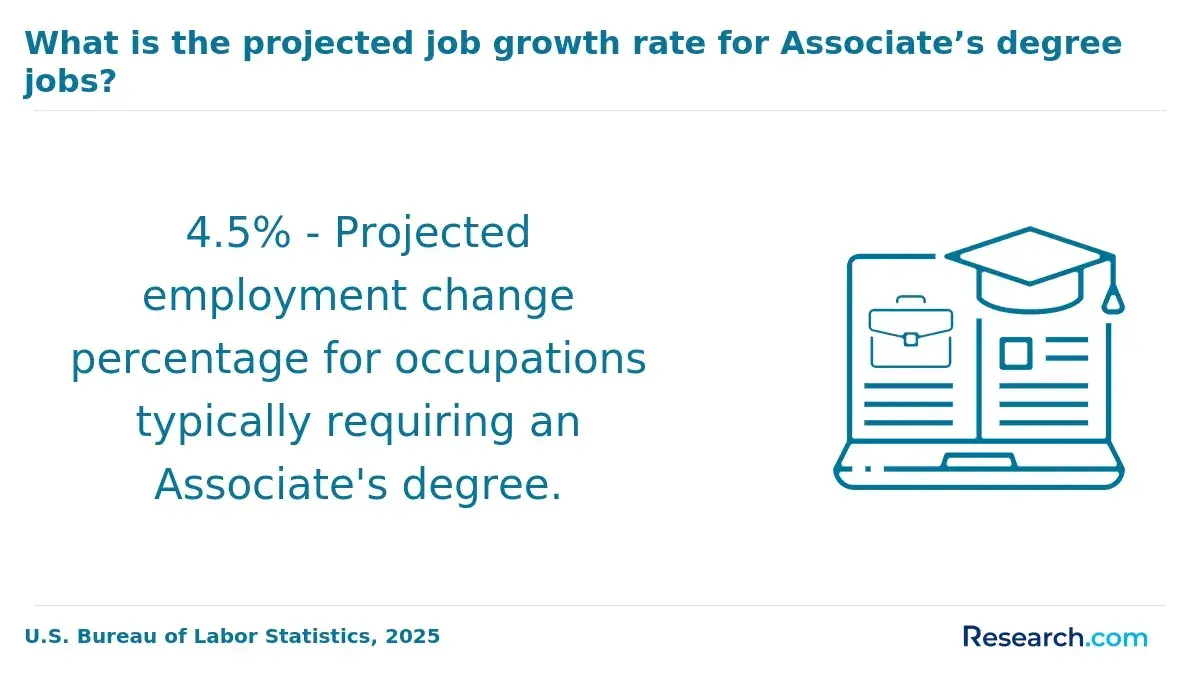
Graduates with bachelor's degrees in behavioral and social sciences often begin with salaries exceeding $60,000, reflecting strong market value when combined with practical skills.
Employers prioritize hands-on research experience and applied competencies-elements sometimes constrained by accelerated programs aiming to reduce debt. Longer, immersive studies with funded research roles may elevate upfront costs but enhance employability and income trajectory.
Decisions on pacing and format must carefully balance financial capacity, career timelines, and access to experiential learning to optimize both investment and workforce readiness.
What mental health research careers can you pursue with an online bachelor's in neuroscience?
Bachelor's degrees in neuroscience primarily open access to entry-level research roles that support mental health studies rather than lead them. Positions such as clinical research coordinator or lab technician focus on managing patient data, conducting assessments, and assisting experimental protocols. For example, a graduate might work within a hospital's psychiatric research unit, helping track outcomes for clinical trials targeting anxiety or depression.
While medical institutions and pharmaceutical firms value this foundational experience, employer expectations often require advanced degrees for independent research careers.
Without graduate education, neuroscience graduates typically enter jobs classified under medical scientists with a median 2024 salary around $99,770 according to U.S. Bureau of Labor Statistics data. These roles involve applied neuroimaging or psychometric testing under supervision rather than principal investigator responsibilities.
To improve employability, those holding a bachelor's should pursue specialized certifications or hands-on lab experience. Targeting clinical trial support in neurodevelopmental or mental health drug research is a pragmatic path, emphasizing protocol adherence and data integrity. Networking within multidisciplinary research teams and mastering relevant scientific software also enhance market competitiveness.
Choosing between immediate employment in supporting research capacities versus investing in graduate degrees requires assessing long-term goals versus short-term access to workforce opportunities. Programs with integrated co-op or internships offer practical experience that can mitigate the limitations of a bachelor's level alone.
What salary ranges and job outlook can neuroscience graduates expect in mental health research fields?
Salary expectations for neuroscience graduates targeting mental health research range widely, shaped by job role, geographic location, and employer type. Entry-level clinical research coordinators may start between $65,000 and $80,000 annually but often face limited advancement without further certification or graduate study.
In contrast, specialized roles such as research scientists within pharmaceutical or federal agencies command salaries from $90,000 to $130,000, though these positions usually require advanced degrees and are highly competitive.
Positions in data science, a prominent interdisciplinary pathway, demonstrate the strongest salary potential, with an average of $120,230 and job growth projected at 33.5%, based on Arizona State University's 2026 career outlook. Graduates combining neuroscience knowledge with programming, quantitative methods, or biostatistics access this upper tier more readily.
Practical workforce considerations include:
- Tradeoffs between entry-level roles that offer immediate experience but lower pay and long-term growth that depends on skill acquisition.
- Geographic disparities where metropolitan research hubs offer higher salaries but increased living costs.
- The advantage biotech and mental health diagnostics startups provide for rapid salary growth when graduates apply machine learning skills.
For neuroscience graduates, strategic skill integration beyond the core degree is critical for navigating employer expectations and unlocking competitive, sustainable compensation pathways in a field balancing research depth with interdisciplinary technical demands.
Are there licenses, certifications, or graduate degrees needed for advanced mental health research roles?
Advanced research positions in mental health and neuroscience typically require graduate-level education rather than a bachelor's degree alone. While a bachelor's in neuroscience offers essential foundational knowledge, it rarely suffices for autonomous research or leadership roles in clinical or academic settings. Employers-ranging from government labs to pharmaceutical firms-expect candidates to hold specialized graduate training in areas like neuropsychology or psychiatric neuroscience.
Licensing requirements vary: clinical roles involving patient care demand credentials such as licensed clinical psychologist or psychiatrist, but research positions do not universally require licensure.
Certifications, including the Certified Clinical Research Professional (CCRP) or credentials in neuroimaging and psychometrics, can significantly boost a candidate's marketability by verifying expertise in experimental methods, ethical standards, and data analysis.
Financially, graduate education is a major factor. For example, data from BestColleges (2025) based on NCES figures shows that out-of-state online behavioral science bachelor's programs had average tuition near $23,500 before aid, dropping below $15,000 with financial support.
Graduate programs often cost more upfront but typically provide assistantships or grants that offset expenses while offering valuable hands-on experience.
For individuals eyeing pharmaceutical trial research, neurotechnology development, or policy analysis, combining graduate degrees with targeted certifications aligns with employer expectations and bridges academic knowledge with applied skills necessary to navigate this evolving field.
How can you evaluate and choose a reputable, well-supported online neuroscience program for this career path?
Choosing an online neuroscience program for mental health research demands verifying accreditation and faculty engagement in active research or clinical work. Programs accredited by recognized U.S. regional or national boards ensure academic rigor and eligibility for federal aid, which employers consider when evaluating candidate qualifications. Without this, graduates may face hurdles in competitive job markets.
Critical to practical training is the availability of virtual labs, data analysis tools, and partnerships with medical centers. This infrastructure supports skill development in experimental design and neurobiological methods valued by employers. Absent such resources, students risk gaps in applied expertise essential for research-intensive roles.
Curricula must extend beyond basic neuroscience to cover mental health policy, neuroethics, and epidemiology. Given that medical scientists' employment is projected to grow 9% from 2024 to 2034, integrating interdisciplinary content prepares graduates for workforce demands shaped by aging populations and healthcare funding landscapes.
Career support through internship placements within research or mental health organizations directly affects job entry timing. For instance, lack of local or virtual internships can delay professional integration, particularly in states with strict practicum mandates.
Lastly, program flexibility is a pragmatic consideration. Part-time options and technology platforms facilitating synchronous learning accommodate professionals balancing clinical or research obligations. Inflexible cohort models may raise dropout risks and limit collaborative opportunities.
Other Things You Should Know About Neuroscience
In 2027, online neuroscience bachelor’s programs often provide flexibility via virtual labs, research projects, and collaboration with global peers. These opportunities allow students to gain necessary skills in neuroscience and mental health research, enhancing their readiness for research careers without the need for physically attending institutions.
Online neuroscience bachelor's programs often require significant self-discipline due to asynchronous learning and condensed modules, which can lead to intense, short bursts of study. While online formats offer scheduling flexibility, the workload doesn't diminish; students must handle complex material, including advanced biology and statistics, without immediate in-person support. Those balancing full-time jobs or caregiving should select programs with extended timelines or structured support services to manage stress and maintain academic performance.
Online neuroscience degrees usually focus on foundational theory and research methods but rarely provide clinical practicum or patient-facing experience, which are often prerequisites in clinical mental health research roles. Employers in hospitals or clinical research organizations expect hands-on skills in neuropsychological assessments or therapeutic interventions, making additional certifications or graduate training necessary. Graduates should prepare for supplemental training to bridge gaps between academic knowledge and clinical competencies.
Programs integrating psychology and data science enhance employability by covering essential cross-disciplinary skills demanded in mental health research, such as behavioral analysis and handling large datasets. Given evolving research trends relying on computational methods and psychological frameworks, prioritizing such programs provides strategic advantages. Students targeting research roles should weigh the broader skillset gained against a more narrowly focused neuroscience curriculum when selecting an online degree.
References
- 9 Mental Health Careers You Can Pursue with a BA https://www.nec.edu/news/9-mental-health-careers-you-can-pursue-with-a-ba
- Educations https://www.educations.com
- Neuroscience Majors https://www.hamline.edu/academics/undergraduate/neuroscience-major-ba-bs
- What Can You Do with a Neuroscience Degree? | Tiffin University https://www.tiffin.edu/news/what-can-you-do-with-a-neuroscience-degree/
- Psychology with Cognitive Neuroscience | Academy Online Learning https://academyonlinelearning.com/psychology-cognitive-neuroscience
- Neuroscience https://www.ualberta.ca/en/undergraduate-programs/bachelor-of-science-with-honors-neuroscience.html
- Building a Future in Mental, Behavioral & Cognitive Healthcare https://www.lihealthcollab.org/healthy-resources/mental-health-career-guide
- Types of Mental Health Professionals | NAMI https://www.nami.org/treatments-and-approaches/types-of-mental-health-professionals/
- Mental Health Licensure, Certification & Degree Requirements https://www.publichealthonline.org/mental-health/
- From Student to Mental Health Researcher: Your Step-by-Step Career Path - Mental Health Degree https://mentalhealthdegree.org/careers/mental-health-researcher/