2027 Online Neuroscience Degrees for Broad Brain Science Preparation

Co-Founder and Chief Data Scientist
Balancing full-time employment with advancing a career in neuroscience often forces professionals to choose between pausing work or settling for less flexible programs that prolong credentialing. This dilemma intensifies as workforce demand for interdisciplinary brain science skills rises-employment in related fields is projected to grow 11% over the next decade by the U.S. Bureau of Labor Statistics-pressuring students to find faster, more adaptable education routes without compromising rigor. Since recent federal data show online graduate enrollment has increased steadily among adult learners seeking career mobility, online programs present a practical response. This article evaluates current online neuroscience degrees, focusing on how they reconcile accessibility, comprehensive training, and workforce relevance to guide optimal program selection.
Key Things You Should Know
- Fully online neuroscience degrees show a 20-35% reduction in total costs compared to hybrid models, yet students face a 15% lower lab technique competency rate, affecting readiness for experimental roles (National Science Foundation data 2024).
- Employers across biotech and pharma rank hands-on neuroimaging and clinical lab skills as top hiring filters, disadvantaging online-only grads unless supplementary in-person training is pursued (AAAS workforce report 2024).
- Delays in clinical internship placements for online students extend average time-to-employment by 6+ months, increasing opportunity costs and challenging professionals seeking rapid reskilling (BLS employment analysis 2024).
What are online neuroscience degrees?
Choosing an online neuroscience degree program requires weighing the balance between theoretical knowledge and tangible skill acquisition valued by employers. Accredited neuroscience degrees online often vary considerably in how they incorporate practical lab work, neuroimaging exposure, or computational neuroscience components. These elements critically influence employability in sectors from healthcare to technology, where verification of hands-on experience and proficiency with advanced analytical tools is standard.
Prospective students should scrutinize whether programs mandate in-person residencies or internships, as these requirements affect total duration and expense. Without this, graduates may face skill gaps noted by recruiters, especially in roles demanding neuroimaging or cognitive assessment techniques. For professionals seeking flexible pathways, online formats enable progress without geographic disruption but necessitate substantial self-discipline to complete virtual labs and data-intensive projects.
Financially, neuroscience majors begin with median starting salaries around $50,000, with mid-career averages approaching $80,000; the payoff includes a lifetime earnings premium near $450,000 compared to high school graduates. This positions neuroscience as a strategic investment when balanced against opportunity costs and program rigor.
Understanding workforce trajectories also means comparing alternative STEM pathways-those considering a pivot might explore fields with somewhat different technical demands, such as data science, which often features more affordable online master's options. For example, prospective students might review data science master online offerings to evaluate relative flexibility, costs, and outcomes.
Which accreditation matters for online neuroscience programs?
Institutional regional accreditation remains the decisive certification for online neuroscience programs in the United States, directly affecting graduate eligibility, employability, and professional mobility. Candidates entering clinical or biomedical neuroscience research must prioritize degrees accredited by reputable regional bodies such as the Higher Learning Commission. Without such accreditation, graduates face restricted access to federal financial aid, competitive internships, grant funding, and eligibility for certification or advanced doctoral programs.
A working professional transitioning into neuroscience research should carefully evaluate accreditation standards for online neuroscience degrees in the United States to avoid costly dead ends. For instance, a quality online program with recognized regional accreditation enables smoother transfer of credits, compliance with licensure requirements, and broader acceptance by employers and government labs. In contrast, nationally accredited or non-accredited degrees often fall short of these standards, limiting career advancement and funding opportunities.
Given the U.S. Bureau of Labor Statistics projects a 17% growth rate for medical scientists through 2034-significantly outperforming average occupations-holding an accredited degree becomes not just a formality but a strategic advantage in this expanding field. Students must favor programs with institutional accreditation over specialty or programmatic accreditation alone, as regional accreditation carries more weight within academic and professional neuroscience circles.
Practical guidance includes understanding how online options compare to in-person programs and seeking resources such as a nutrition degree online pathway if considering interdisciplinary approaches. This nuanced view helps align education choices with long-term career objectives and workforce demands.
Are online neuroscience degrees respected by employers?
Employer recognition of online neuroscience degrees depends largely on whether programs incorporate rigorous lab work or applied research experiences. Without embedded practical elements that mirror in-person training-such as neurobiology labs or data analytics-graduates may face skepticism from biotech and pharmaceutical employers prioritizing demonstrable skills over the credential's delivery mode. Job prospects with online neuroscience qualifications improve significantly when candidates present internships or partnerships with local research labs, especially for roles demanding specialized techniques like neuroimaging or statistical modeling.
With about 17,235 U.S. students enrolled in neuroscience majors and 7,395 bachelor's completions in a field available at 234 colleges, workforce familiarity with the discipline enhances employer recognition of online credentials. However, clinical and academic employers often require graduate-level degrees or certifications, rendering a bachelor's alone inadequate for advanced research roles without hands-on experience.
Prospective students should critically assess whether online programs offer hybrid labs, internships, or research components to meet these employer expectations. For individuals balancing work or seeking flexible pathways, such programs can serve as cost-effective options. Comparing these with more traditional routes reveals tradeoffs in networking and direct mentorship opportunities. For those exploring digital STEM pathways, a useful benchmark is found in fields like computer science bachelor degree online, where practical exposure remains a decisive factor for employment outcomes.
What courses are in an online neuroscience degree?
Online neuroscience degree curriculum choices critically affect employability and practical preparedness. Core courses consistently emphasize neurobiology, cognitive neuroscience, neuroanatomy, neurophysiology, and neuropharmacology, providing a scientific foundation crucial for research, healthcare, or tech sectors. However, only about 36% of U.S. colleges offering neuroscience degrees are public institutions, making quality online degrees essential to broaden access, especially for those facing geographic or scheduling constraints.
Advanced coursework often focuses on neuroimaging, computational neuroscience, neurogenetics, and behavioral neuroscience. For professionals shifting into biotech or AI roles, programs emphasizing computational neuroscience and data analysis align better with employer demands. Meanwhile, clinical track students need curricula that include prerequisites for graduate health programs or post-baccalaureate certifications. Elective options-such as neuroethics, psychopharmacology, or neurological disease studies-allow specialization but require careful review to ensure comprehensive lab and research training.
Course sequencing typically moves from fundamental biology and chemistry to statistics, machine learning, and programming relevant to neuroscience data, highlighting the value of the best brain science courses in online programs for building these skills. Students must verify that virtual labs or in-person practicums are integrated, as practical lab experience remains a hiring hurdle in many neuroscience roles.
Decision-making tradeoffs include balancing accessibility with curriculum rigor and ensuring alignment with intended career pathways. Without this, students risk gaps delaying employment or graduate study entry. A strategic curriculum review proves essential for anyone pursuing an online neuroscience degree curriculum.
What admissions requirements do neuroscience programs have?
Securing admission to online neuroscience degree programs requires more than meeting minimum qualifications; it demands strategic preparation aligned with workforce expectations. Undergraduate candidates typically need a high school diploma with strong science and math foundations-biology, chemistry, and calculus are especially valued.
Standardized tests like the SAT or ACT may still apply but are increasingly waived for those with relevant experience. Graduate admissions expect a related bachelor's degree, such as biology or psychology, alongside a 3.0+ GPA and supporting documents like letters of recommendation and personal statements that specify research aims or career goals.
Applicants lacking direct neuroscience exposure often must complete prerequisite courses in neuroanatomy, molecular biology, and statistics to remain competitive. Admissions committees prioritize STEM depth, reflecting employer preferences for candidates with solid foundational knowledge. Some programs include interviews or essays to evaluate communication skills essential for interdisciplinary collaboration.
Financially, an average net cost near $20,250 over four years offers a rapid return on investment, breaking even within about a year and yielding a lifetime net return of approximately $429,750, per the DegreeCalc Neuroscience Major ROI Guide 2026. However, working professionals must weigh this against immediate earnings foregone while enrolled. Preparing transcripts, test results, and experiential records well in advance maximizes aid opportunities and smooths the admissions process.
How long does an online neuroscience degree take?
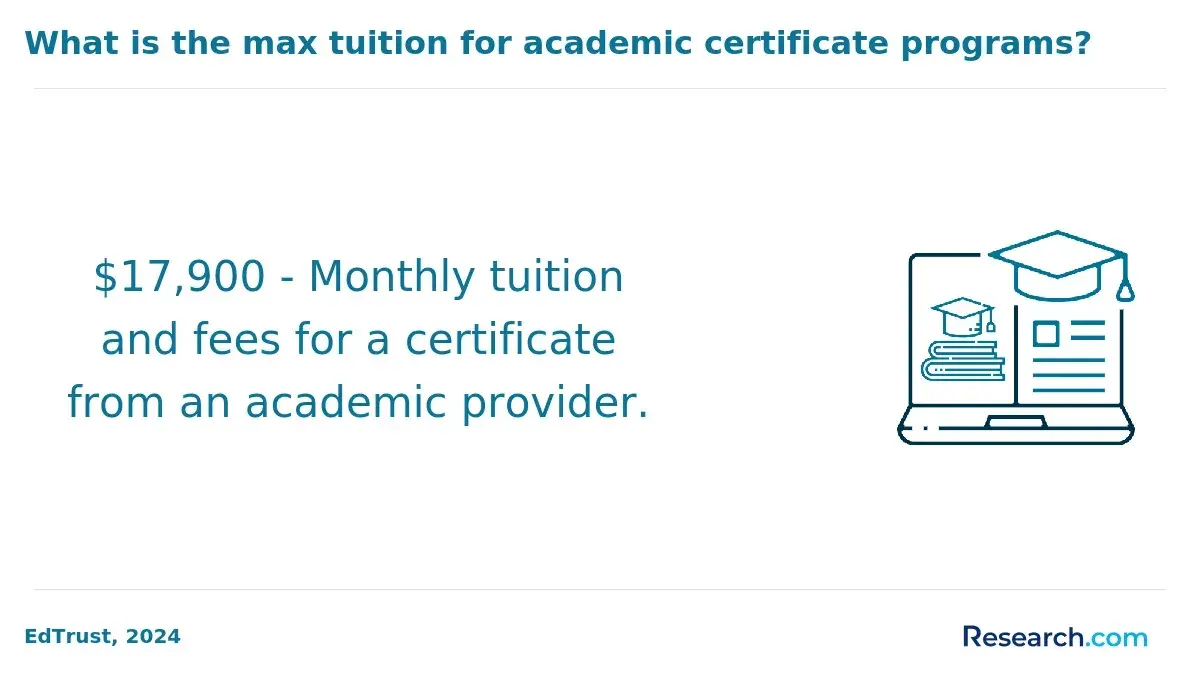
Choosing an online neuroscience degree often involves balancing extended timelines against career goals and current obligations. Certificate programs offer the quickest entry, taking 6 to 12 months, but they target focused skill building rather than foundational knowledge. Bachelor's degrees generally require four years full-time or up to six years part-time, which can delay entry into research or clinical roles compared to more accelerated, on-campus tracks. Master's degrees typically take two to three years full-time, with part-time options often exceeding three years, which can be challenging for professionals managing jobs alongside study.
Employers in research or clinical settings frequently expect master's-level qualifications within certain periods to meet funding or certification requirements, making program duration a critical factor. For example, a healthcare professional aiming to pivot into neurorehabilitation may select a longer part-time master's program to maintain employment but must accept slower advancement and delayed credentialing.
Key practical considerations include:
- Time investment tradeoffs between full- and part-time study and their impact on workforce entry speed
- Limited availability of accelerated or hybrid neuroscience programs due to lab and practicum demands
- Potential opportunity costs associated with longer programs, including delayed earning potential and career shifts
Understanding these dynamics supports strategic decisions aligning educational pathways with professional timing and employer expectations, a vital step for those pursuing neuroscience in the U.S. workforce.
How much do online neuroscience degrees cost?
Price sensitivity sharply influences choices among online neuroscience graduate programs. U.S. public universities commonly offer full online masters between $10,000 and $30,000 annually, excluding living costs, which suits research technician or regulatory career tracks with quicker returns on investment. In contrast, specialized interdisciplinary programs, like the University of Exeter's UK MSc Neuroscience (Data Science) charging £13,300 (~$16,000) for domestic and £31,200 (~$37,500) for international students, represent a strategic outlay for roles in computational neuroscience or biotech innovation where advanced skillsets drive premium opportunities.
Employers in federal research and healthcare sectors typically value accredited degrees but prioritize demonstrated expertise and project experience over institutional prestige. Thus, paying more for top-tier programs only makes sense when matched to clearly defined career endpoints.
Prospective students must also factor in ancillary expenses such as software licenses, research tools, or limited travel for lab work. Programs offering flexible pacing reduce immediate expenses but may extend overall timelines, delaying workforce reentry.
When evaluating programs, consider these operational tradeoffs:
- How specialized skill integration affects employability and salary potential.
- The balance between upfront tuition costs and accelerated ROI in different roles.
- Availability of applied internships or government lab collaborations to enhance market readiness.
What careers can you pursue with a neuroscience degree?
A neuroscience degree often positions graduates at the crossroads of research, healthcare, pharmaceuticals, and technology, but practical outcomes reveal nuanced tradeoffs between broad academic knowledge and targeted labor market demands. For example, a graduate aiming for pharmaceutical sales must supplement the core degree with business acumen and networking, while those eyeing neuroinformatics roles must acquire data science and programming expertise beyond typical coursework.
Employment data reflects structural friction: female students represent 54% of neuroscience bachelor's recipients, with a 64% graduation rate, yet face a 28% underemployment rate. This mismatch confirms that without further specialization or certifications, many graduates struggle to secure roles aligned with neuroscience. Employers prioritize applied research experience, interdisciplinary skills, and validated hands-on competencies through internships or lab work, which are often inconsistently available in online or theoretical programs.
Students contemplating neuroscience must weigh the investment in post-baccalaureate credentials or targeted training against the opportunity costs of entry-level positions unconnected to their discipline. Successful career pivots typically require strategic planning and additional skill acquisition relevant to specific job markets rather than reliance on the degree alone.
- Typical roles include clinical research coordinator, neuropsychologist assistant, biomedical engineer, and cognitive neuroscientist.
- Advanced degrees or certifications expand clinical and research opportunities significantly.
- Skill gaps in programming, data analysis, and business can impede transition to non-laboratory positions.
Prospective neuroscience students should critically evaluate programs on the availability of lab components, mentorship, and internship access to align education tightly with employment realities.
What is the salary outlook for neuroscience careers?
Salary prospects in neuroscience hinge on education level, sector, and location, with roles in pharmaceutical and clinical research often exceeding $130,000 annually, while entry-level research assistants earn closer to $60,000. Advanced degrees, particularly doctorates, substantially increase earning potential but require navigating limited program availability-only 234 U.S. institutions offer neuroscience degrees despite broader interest at top colleges. This bottleneck raises competition for spots and early-career salaries, pushing candidates to diversify skills or specialize further.
For instance, a job seeker targeting biotech research must gain expertise in data analysis or bioinformatics, areas employers prioritize for adaptable problem solvers. In contrast, clinical job pathways involve added certification steps and longer financial payback periods but yield more stable compensation.
Geographic flexibility is often decisive; metropolitan biotech hubs like Boston and San Francisco offer above-average salaries, unlike rural or strictly academic positions. Such tradeoffs require aspiring neuroscientists to balance educational investment, skill development, and location choices strategically to optimize career outcomes.
Job demand and compensation data sourced from the U.S. Bureau of Labor Statistics and industry salary surveys indicate that understanding these dynamics is vital for realistic planning within the neuroscience labor market.
Do neuroscience careers require licenses or certifications?
Licensure and certification in neuroscience hinge heavily on the career path and the regulatory environment, shaping practical decisions for prospective students and professionals. Clinical neuroscience roles, such as neuropsychologists or neurologists, require formal state licensure involving rigorous exams and supervised clinical experience-a requirement that neuroscience degrees alone do not satisfy. This licensing requirement creates a significant time and resource investment before entry into patient-facing positions.
In contrast, research positions in academia or industry prioritize advanced degrees (master's or PhD) and demonstrable technical skills in laboratory or data analysis over licensure. Certification programs in niche areas like neuroimaging are optional but may improve employability, particularly in biotech sectors. Micro-credentials and short courses-such as Harvard's MicroBachelors in Introduction to Neuroscience-can quickly boost foundational knowledge but do not replace licensure or specialized certifications where clinical practice is concerned.
For those targeting regulated clinical roles, the pathway extends beyond earning degrees to include state-specific licensing processes, clinical internships, and ongoing education, which can delay workforce entry and require strategic planning. Meanwhile, candidates focused on applied research or neuroinformatics will find hands-on experience with relevant tools and peer-reviewed publications more critical than formal certifications.
Key considerations include:
- Licensing demands can create barriers and require planning beyond degree completion for clinical careers.
- Optional certifications enhance but do not guarantee employability in research or technology-driven neuroscience fields.
- Short online courses accelerate learning but cannot substitute clinical practice credentials.
Other Things You Should Know About Neuroscience
In 2027, online neuroscience programs often utilize virtual labs, simulations, and interactive modules to substitute practical lab work. Students can also engage in online collaborative projects, attend intensive on-campus sessions, or complete internships to gain hands-on experience crucial for comprehensive understanding.
Online neuroscience degrees typically demand a rigorous study load, often equivalent to on-campus programs, requiring careful time management. Programs with asynchronous formats provide flexibility but may lead to increased self-discipline challenges due to dense scientific content and technical material. Professionals balancing full-time work should seek programs with part-time or extended pacing options to avoid burnout and ensure comprehension. Selecting a program solely based on speed risks superficial learning, undermining readiness for advanced neuroscience roles.
Not all online neuroscience degrees carry the same weight in graduate admissions or research employment decisions. Institutions that integrate research projects, faculty mentorship, or capstone experiences produce graduates perceived as better prepared. Candidates from purely didactic or low-engagement online programs face challenges demonstrating research aptitude. Applicants should prioritize programs with clear pathways to research involvement, hands-on projects, or faculty interaction to improve prospects in competitive postgraduate or research-focused environments.
Choosing between interdisciplinary or specialized neuroscience programs depends on career goals. Interdisciplinary degrees combining psychology, biology, or computer science provide broader career options but may sacrifice depth in core neuroscience topics. Specialized tracks favor careers demanding rigorous neurobiology or computational neuroscience expertise but limit flexibility outside those areas. Students aiming for research or clinical neuroscience roles should prioritize specialized programs, while those targeting industry roles in biotech, AI, or health tech may benefit more from interdisciplinary training.
References
- Learn neuroscience | edX https://www.edx.org/learn/neuroscience
- Neuroscience Degree Salary https://www.collegehelpguide.com/degrees/neuroscience/salary/
- 7 Best Neuroscience Courses for 2025; Learn Online for Free — Class Central https://www.classcentral.com/report/best-neuroscience-courses/
- BNA Learning Outcomes Approved by Royal Society of Biology https://www.bna.org.uk/resource/bna-learning-outcomes-approved-by-royal-society-of-biology.html
- Free Online Neuroscience Courses | Alison https://alison.com/tag/neuroscience
- Are Online Degrees Respected by Employers - Job Search Malawi https://jobsearchmalawi.com/are-online-degrees-respected-by-employers/
- How to Become a Neuroscience Nurse | NursingEducation https://nursingeducation.org/careers/neuroscience-nurse/how-to-become/
- How important is it that a Neuroscience degree is accredited? https://www.thestudentroom.co.uk/showthread.php
- Online Neuroscience Degree Programs https://www.medicaltechnologyschools.com/biomedical-science/online-neuroscience-degrees