2027 Online Neuroscience Degrees With Strong Lab Research Training

Co-Founder and Chief Data Scientist
Professionals seeking to pivot into neuroscience research face a critical barrier: authentic lab experience, which employers and graduate programs consistently demand. The challenge intensifies as traditional, in-person lab opportunities often conflict with ongoing work and family obligations. The National Center for Education Statistics reports that adult learners now constitute over 40% of postsecondary enrollments, underscoring persistent demand for flexible, rigorous training that integrates hands-on research without geographic relocation. This shift forces candidates to weigh the availability of credible online neuroscience degrees offering strong lab components against practical constraints, aiming to maximize both skill acquisition and career mobility.
This article examines the leading online neuroscience degrees that combine comprehensive lab research training with flexible structures, providing a data-driven guide to navigate this complex balance effectively.
Key Things You Should Know
- Online neuroscience degrees with lab training often substitute in-person critical wet-lab hours with virtual simulations, creating a tradeoff that limits hands-on technique mastery essential for experimental roles, according to 2024 US education workforce assessments.
- Employers in biotech and neurotech sectors increasingly demand verified lab competencies; programs lacking robust supervised lab components report 15% lower graduate employment rates in specialized research positions per recent industry hiring data.
- Cost and timeline analyses from 2024 National Center for Education Statistics reveal hybrid online neuroscience degrees with integrated lab access reduce typical program duration by 20%, offering a strategic advantage for midcareer professionals balancing workforce reentry and skill acquisition.
What is an online neuroscience degree with lab-based research training, and who is it best for?
Online neuroscience degree programs with lab-based research training provide essential practical experience that purely theoretical studies lack. This combination is critical for professionals pivoting careers-such as psychologists moving into neuroinformatics-where demonstrating lab techniques is necessary to validate models against empirical data.
While these programs offer flexibility for students unable to relocate, accessing high-quality lab experiences remains a challenge, often requiring partnerships with local institutions or advanced virtual simulations.
Choosing the best online neuroscience programs with hands-on lab experience involves assessing accreditation, the quality of lab access, and mentorship availability. These factors directly impact eligibility for competitive research positions or doctoral programs, as employers in biomedical research, pharmaceuticals, and clinical neurotechnology increasingly demand demonstrable experimental skills.
In 2024, the HarvardX MicroBachelors Program in Introduction to Neuroscience on edX enrolled over 960,000 learners, reflecting broad demand for research-focused neuroscience education. Prospective students should anticipate extra financial and logistical commitments to fulfill in-person components, which significantly affect timelines and costs.
For those weighing options, understanding tradeoffs is vital: fully online coursework may suffice for foundational knowledge, but careers aimed at neuroengineering or pharmaceutical research require lab competency not offered without hands-on training. For comparison in science pathways, consider an online geology degree where similar lab integration challenges exist.
How do online neuroscience degrees handle labs, research, and clinical or hands-on training?
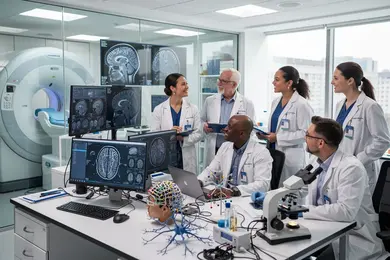
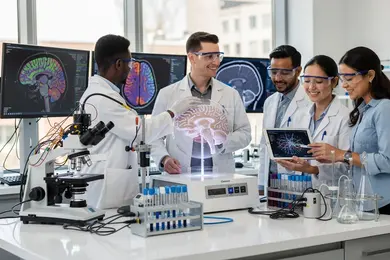
Effective online neuroscience programs with hands-on lab experience blend hybrid frameworks and local affiliations to fulfill essential clinical and research training mandates. Students typically must attend in-person lab sessions at partner institutions near their residence, as virtual-only instruction cannot substitute the practical proficiency employers demand in data collection and clinical assessments.
Virtual neuroscience degrees featuring clinical research training employ advanced software simulations to teach fundamental experimental methods, but these primarily complement, not replace, actual laboratory or clinical internships. For example, a student in neuropsychology might complete cognitive assessments through locally arranged clinical sites to meet accreditation and real-world work standards.
The process for securing quality placements frequently entails early coordination, including identifying host labs or clinics, submitting clearances, and independently completing hours. This can delay progress compared to traditional on-campus routes and requires greater logistical effort from students targeting research-intensive or clinical neuroscience careers.
Workforce data highlight the critical advantage of hands-on experience: the U.S. Bureau of Labor Statistics cites a median psychologist salary of $85,330 with steady job growth, reflecting strong demand for candidates with validated laboratory and clinical competencies.
Employers prioritize demonstrable skills and location-accessible training, factors that materially influence career outcomes in healthcare and biomedical sectors projecting millions of annual openings.
Those also evaluating pathways balancing rigor and flexibility may explore related fields; comparative options include the best online computer science degree, which can offer accelerated curricula adapted to workforce trends.

Are online neuroscience degrees as respected and accredited as on-campus programs?
Accreditation remains the decisive factor in assessing the legitimacy and recognition of online neuroscience degrees. Programs from regionally accredited institutions with robust curriculum standards and confirmed lab research components hold equivalent respect to on-campus counterparts. The respect and value of virtual neuroscience programs hinge not on delivery format but on explicit, supervised lab experience and rigorous research methodology training.
Without such hands-on components, graduates risk falling short in clinical, pharmaceutical R&D, and academic roles that require practical expertise.
For example, candidates lacking verified lab training can find securing competitive jobs challenging, even if they hold advanced degrees. Morgan State University's 2024 MS in Applied Neuroscience reflects this, showing median salaries of $60,000 to $90,000+ that correlate strongly with practical, applied training rather than solely theoretical knowledge. Employers emphasize documented research competence as a key hiring criterion.
Students pursuing online neuroscience degrees must actively arrange local internships or on-site residencies to meet these benchmarks. This creates a tradeoff: flexible scheduling balanced against the logistical complexities of supervised research access.
Prospective enrollees should focus on programs emphasizing accreditation and verifiable lab components, since this directly impacts workforce readiness and long-term career outcomes. For those exploring related disciplines, reviewing jobs with a biology degree can provide additional context to career possibilities.
Ultimately, ensuring online neuroscience degrees deliver tangible research experience is critical for aligning with employer expectations and achieving competitive career positioning in this demanding field of study.
What types of online neuroscience degrees are available, from certificates to graduate programs?
Online neuroscience degree programs with lab research present real tradeoffs between speed, cost, and practical value, shaping career trajectories distinctly. Certificate courses typically emphasize key topics like neurobiology or neuroimaging, ideal for professionals needing targeted upskilling without long-term enrollment.
For instance, a biotech worker might swiftly adopt neuroimaging techniques via a certificate to enhance daily operations. However, these certificates lack comprehensive lab experiences, which are essential to meet rigorous employer expectations.
Graduate and certificate neuroscience courses online vary widely, but master's and doctoral programs incorporate mandatory lab-based research often through partnerships with nearby institutions. These hybrid structures respond directly to workforce demands for demonstrable research proficiency, positioning graduates for lab technician, data analyst, or academic roles.
Yet, they involve multi-year commitments and limited remote flexibility. PhD candidates, in particular, must navigate on-site research requirements at specialized universities capable of remote lab oversight.
Candidates face intense credential differentiation amid a vast pool of options-Coursera's 2026 catalog alone includes over 1,000 neuroscience-related courses and certificates. To stay competitive, many combine certificates with accredited degrees or lab internships, increasing employability in neuroscience fields.
Those evaluating faster pathways may also explore programs featured in the fastest psychology degree listings for insight into balancing pace with depth.
What core courses, lab requirements, and research experiences can you expect in online neuroscience?
Online neuroscience degrees in 2026 must navigate the tension between delivering rigorous laboratory training and the intrinsic limitations of remote formats. Employers now expect graduates to demonstrate hands-on skills in neuroanatomy, neurophysiology, cognitive neuroscience, and computational methods, yet physical lab access remains constrained in fully online programs. This results in a reliance on virtual lab simulations, at-home kits, and synchronous remote instruction to approximate traditional experiential learning.
This shift affects students aiming for technician or research assistant roles where practical lab competencies and remote data analytic proficiency are essential. Remote EEG or behavioral experiments often use standardized digital protocols, but the lack of direct instrument manipulation creates a gap that programs must explicitly address.
Failure to integrate high-quality, applied lab experiences risks producing graduates insufficiently prepared for translational or clinical research settings.
Independent or collaborative research projects conducted under faculty supervision via video conferencing and cloud data sharing serve as capstone demonstrations of research autonomy. Morgan State University's fully online MS in Applied Neuroscience exemplifies a rare program combining robust lab components with workforce alignment, particularly notable as an HBCU offering targeted applied experiences.
Prospective students should expect extended evening or weekend commitments to coincide with live lab sessions, and those enrolling in programs requiring in-person residencies face geographic constraints.
Choosing an online neuroscience degree demands careful scrutiny of lab research integration to meet employer standards for technical skill and reproducibility in 21st-century neuroscience careers.
What are the typical admission requirements for online neuroscience programs with lab components?
Successful admission to online neuroscience programs with lab components hinges on substantial documented research experience, reflecting the reality that practical lab skills remain indispensable despite remote coursework. For example, Harvard's PhD program explicitly requires letters from supervising investigators, confirming hands-on research proficiency. This requirement recognizes that candidates must prove readiness through validated, often supervised research roles before starting advanced study.
Admissions committees typically expect applicants to present:
- Strong academic records, usually with a science GPA above 3.5
- Detailed research resumes highlighting primary laboratory duties
- Multiple recommendation letters underscoring technical competencies
- Video or in-person interviews focusing on experimental design and problem-solving
Because many online neuroscience degrees incorporate mandatory on-site lab residencies or partnerships with local facilities, applicants must demonstrate the capacity to coordinate and access these resources. Professionals transitioning from industry without prior academic research often face delays or conditional acceptance until they secure documented lab experience.
Without this, schools can neither evaluate nor train students adequately for research-intensive roles, a critical factor given neuroscience's practical demands.
How long do online neuroscience degrees take, and what do they typically cost?
Pursuing an online neuroscience degree demands balancing extensive practical training with timelines that vary widely by program type and student status. Associate and bachelor's tracks usually range from two to three years full-time, master's degrees approach two years, and doctoral programs often exceed four years, especially when factoring in lab rotations and research residencies essential for skill validation.
Tuition ranges broadly, from $15,000 to $60,000 for undergraduate programs and $20,000 to $70,000 for graduate degrees. Programs incorporating advanced lab components tend to push costs higher due to the logistical and technological investments required to simulate or coordinate hands-on experiences remotely.
This cost/time dynamic is a key consideration for students targeting roles demanding verified lab proficiency, such as clinical or pharmaceutical positions.
Job market data supports the substantial demand for neuroscience-related expertise, with approximately 1.94 million job openings and median salaries near $77,600 within biomedical segments. However, employers consistently prioritize tangible, supervised lab competencies that online coursework alone seldom guarantees.
Students often must secure local internships or residencies at extra expense, potentially extending program length and financial outlay.
- Associate/bachelor's degrees: 2-3 years full-time
- Master's degrees: ~2 years
- Doctoral programs: 4+ years including lab requirements
- Tuition ranges: $15,000-$70,000+ depending on level and lab access
Real-world outcomes depend heavily on candidates' capacity to integrate theoretical knowledge with practical application under authentic conditions. Working professionals should expect prolonged timelines if internship opportunities are limited or require scheduling outside planned course duration.
What careers can an online neuroscience degree lead to, and which roles require graduate study?
Holding only an online bachelor's degree in neuroscience generally confines graduates to roles like research assistants, clinical technicians, or pharmaceutical sales representatives-positions requiring minimal graduate education but offering limited advancement. Employers in research and clinical settings commonly expect graduate-level credentials for responsibilities involving leadership, independent inquiry, or patient care.
For instance, a bachelor-level lab technician may earn between $40,000 and $60,000 annually but encounters a ceiling on salary and job complexity without advanced degrees like a PhD or MD. In contrast, roles such as neurologists or neuroscience professors, which demand 4-8 years of graduate training, often provide salaries exceeding $100,000.
This gap highlights a significant tradeoff: investing roughly $63,000 for an online BS from institutions like the University of Arizona may facilitate entry but does not eliminate the eventual need for graduate study to achieve clinical or academic leadership.
Optimizing employability with just a bachelor's requires integrating internships or lab placements into the program, as practical experience remains critical. Without this, career mobility is largely confined to support functions.
Prospective students should weigh costs and career ambitions early, recognizing graduate degrees are indispensable for independent research, clinical licensure, and university-level teaching. Programs that facilitate a clear pathway to advanced study are strategically preferable for those targeting leadership or clinical roles.
What is the salary outlook and job demand for neuroscience-related careers in the United States?
Neuroscience careers in the U.S. often require strategic navigation between educational credentials and market expectations, where practical lab experience significantly outweighs purely theoretical backgrounds. Entry-level roles, such as technicians and research assistants, typically start around $60,000 but progress demands advanced degrees combined with hands-on skills in neuroimaging, data analysis, or clinical trial protocols.
For example, professionals using extensive datasets like those from the ENIGMA global neuroimaging consortium gain a competitive edge by engaging with research-grade brain scan data. The University of Utah's 2023 ENIGMA-U project provides accessible resources that enable remote participation in large-scale neuroinformatics, boosting employability in both academic and biotech sectors.
Key workforce implications include:
- Practical lab skills are essential to access the upper salary spectrum, which can exceed $120,000 annually.
- Projects linked to large datasets and neurogenetics research align better with sustained job growth projections of 13% through 2032.
- Theoretical knowledge alone limits upward mobility and long-term earning capacity in neuroscience-related roles.
Employers prioritize candidates proficient in computational modeling and clinical methodologies, often rejecting applicants lacking real lab exposure.
Those transitioning from adjacent fields without such experience may face protracted job searches or need supplementary certifications and internships. In contrast, involvement in consortium-based research increases both salary potential and job market resilience.
How can you choose a reputable online neuroscience program with strong research opportunities?
Programs in neuroscience that fail to incorporate substantial hands-on research experience risk leaving graduates unprepared for roles demanding practical expertise. Employers increasingly prioritize candidates who can demonstrate proficiency in lab techniques, data analysis, and collaboration on active projects. For example, individuals targeting roles in educational technology must engage in programs that emphasize experimental design and cognitive data interpretation rather than solely theory.
The evolving U.S. workforce context supports this, with roles like educational psychologists expected to grow by 6% over a decade, driven by expanding integration of brain science in education. Access to virtual labs paired with on-site practicums balances the needs of working professionals while preserving essential skill development.
Key evaluation criteria when selecting a neuroscience program include:
- Affiliation with recognized research institutions offering remote or hybrid lab access
- Mentorship from active faculty engaged in neuroimaging, electrophysiology, or cognitive assessments
- Opportunities to contribute to peer-reviewed publications and conference presentations
- Use of real datasets from longitudinal cognitive or neurodevelopmental studies for applied statistical training
- Career services that actively track alumni research involvement and foster industry networking
Absent these elements, candidates often face delayed workforce integration or underqualification for research-intensive positions. Verification through syllabi and research output examples should precede enrollment to ensure alignment with career transition goals.
Other Things You Should Know About Neuroscience
Online neuroscience programs with lab research components can enable building a meaningful research portfolio, but the quality depends heavily on program design and mentoring availability. Programs that integrate virtual lab simulations alongside local or partner-site hands-on research provide better outcomes than fully remote setups. Prospective students should prioritize programs offering structured one-on-one mentorship, access to research networks, and opportunities to contribute to publishable work to meet employer and graduate school expectations.
Networking is more limited in online neuroscience degrees since casual, in-person interactions with faculty and peers are minimal or absent. Students must proactively engage in virtual lab sessions, professional groups, or conferences to build connections. Prioritizing programs with strong alumni networks, research collaborations, or industry partnerships can mitigate this gap, but online learners should expect to invest extra effort to establish meaningful professional relationships.
Online neuroscience programs often require more focused time management since labs and research hours can be inflexible and intensive despite remote delivery. Working professionals frequently find balancing synchronous lab sessions and in-person research components with job responsibilities challenging. Candidates should evaluate program schedules carefully, opting for those that offer asynchronous coursework combined with flexible local lab placements to reduce conflicts.
References
- Neuroscience Degree Requirements https://www.collegehelpguide.com/degrees/neuroscience/requirements/
- Free Online Neuroscience Courses | Alison https://alison.com/tag/neuroscience
- Best Online Neuroscience Courses - Translating Brain Science https://translatingbrainscience.com/2025/09/13/best-online-neuroscience-courses/
- Training https://ibro.org/training/
- What Can You Do with a Neuroscience Degree? | Tiffin University https://www.tiffin.edu/news/what-can-you-do-with-a-neuroscience-degree/
- Online Neuroscience Degree Programs https://www.medicaltechnologyschools.com/biomedical-science/online-neuroscience-degrees
- Best Neuroscience Courses Online in 2026 | Neurosity https://neurosity.co/guides/best-neuroscience-courses-online-2026
- Neuroscience - Tracks - Ph.D. Program in Biomedical Science - Mayo Clinic College of Medicine & Science https://college.mayo.edu/academics/biomedical-research-training/phd-program/tracks/neuroscience/
- Potential Careers https://neuroscience.uoguelph.ca/potential-careers/
- Neuroscience https://www.uoguelph.ca/programs/neuroscience/