2027 Online Neuroscience Degrees for Neurodiagnostic Technologist Roles

Co-Founder and Chief Data Scientist
Securing a neurodiagnostic technologist role demands both specialized expertise and timely credentialing, yet traditional degree programs often clash with clinical work schedules and adult learners' responsibilities. Enrollment in online neuroscience degrees grew 18% between 2022 and 2024, driven by a surge in professionals seeking flexible pathways to quickly enter or advance in this niche field, according to the National Center for Education Statistics. This shift highlights the increasing necessity for programs that accommodate practical constraints without diluting rigorous, hands-on training. This article examines current online neuroscience degree options tailored for neurodiagnostic technologist careers, evaluating how each can realistically support credential completion and workforce entry under real-world conditions.
Key Things You Should Know
- Online neuroscience degrees for neurodiagnostic technologists average 24 months to completion at $15,000-$30,000, creating a key cost-time tradeoff versus workplace experience; accelerated programs often sacrifice lab skill depth according to 2024 educational cost data.
- Employers prioritize CDC-aligned clinical certifications over degree prestige, making degree choice secondary to program accreditation triggers that impact eligibility for neurodiagnostic credentialing boards.
- Workforce projections from the Bureau of Labor Statistics indicate a 10% growth in neurodiagnostic roles by 2030, emphasizing the strategic need for degrees integrating virtual clinical practicum to meet immediate employer demand.
What is an online neuroscience degree and how does it prepare neurodiagnostic technologists?
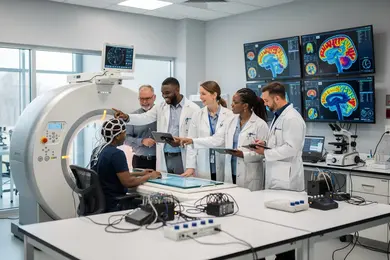
Online neuroscience degree programs for neurodiagnostic technologists must balance theoretical depth with immediate workplace applicability. Graduates are expected to demonstrate proficiency interpreting complex neurological data and managing sophisticated neurodiagnostic equipment like EEG and evoked potentials systems. These skills directly impact diagnostic accuracy, a priority for employers aiming to minimize errors and improve patient outcomes in clinical settings.
Workforce data highlights a significant demand for neurodiagnostic technologists, with O*NET projecting 13,600 job openings between 2024 and 2034. Such demand amplifies the value of programs that integrate clinical practicum or high-fidelity lab simulations, yet securing accredited internships remains a persistent barrier.
Students should critically evaluate program accreditation and the practical supports available for remote learning and hands-on training before committing.
Those pursuing an online neuroscience degree often face challenges including the need for technical literacy and self-discipline to navigate complex learning platforms and neurodiagnostic software independently.
However, these programs can enable career shifts or enhancements for medical and technical professionals seeking to specialize in neurodiagnostic technology careers.
To balance cost considerations without sacrificing quality, some candidates explore options like a data science master online to complement their neuroscience training, leveraging analytical skills applicable in neurodiagnostic data interpretation.
Which online neuroscience degrees qualify you for neurodiagnostic technologist roles?
Online neuroscience degree programs for neurodiagnostic technologist certification must go beyond theoretical coursework to include hands-on clinical practicum options. Employers and licensing bodies mandate supervised clinical internship hours, which purely online programs often struggle to integrate comprehensively.
A working professional enrolled in a 100% online neuroscience degree, for instance, will likely need to secure local clinical rotations independently, adding complexity and potential delays in meeting certification requirements like the Certified Neurodiagnostic Technologist (CNDT) credential.
Programs labeled as Bachelor of Science in Neuroscience or Neurodiagnostic Technology with accredited practicum components offer a more direct path to employability by combining neuroanatomy, neurophysiology, and instrumentation training with applied experience.
However, even the best online curricula cannot fully replicate in-person training with EEG, EMG, and evoked potentials equipment. Graduates focused solely on theoretical knowledge often face challenges attaining the median annual wage of $48,790 reported by the U.S. Bureau of Labor Statistics.
Prospective students should prioritize accredited online neuroscience degrees for neurodiagnostic technologist careers that explicitly prepare them for credentialing exams and facilitate clinical placement.
This alignment mitigates the operational friction between academic completion and workforce expectations, which otherwise risks prolonging job entry or necessitating additional certifications.
Given the nuanced care protocols and technical skills required, candidates should also compare related fields to understand wage trajectories and curriculum demands, such as those impacting roles linked to the online animal science degree salary. This practical evaluation supports informed educational investments and realistic career planning.

How do online neuroscience programs compare with campus options for neurodiagnostic training?
The core challenge in online neuroscience degrees vs campus programs for neurodiagnostic training lies in the substantial gap in clinical and hands-on experience. Neurodiagnostic technologist roles require direct, supervised interaction with specialized equipment, which campus programs deliver through integrated labs and clinical internships.
Online programs, while offering theoretical coursework comparable to traditional paths, must rely on partnerships with local clinical sites or extended residencies to meet these practical demands.
This logistical complexity impacts student outcomes and workforce readiness. Online learners often face uneven access to quality clinical placements, which can delay graduation and diminish competitiveness in a labor market that values proven practical competencies. Employers routinely prioritize candidates with comprehensive clinical exposure, a factor that influences hiring preferences and salary negotiations.
According to the ASET Salary Survey cited by Baptist Health Sciences University, the median annual salary for neurodiagnostic technologists is $68,524, emphasizing the premium placed on skilled, practice-ready graduates.
For students balancing work or residing in underserved areas, online neuroscience education for neurodiagnostic technologists offers flexibility but requires careful scrutiny of clinical affiliations and mentorship quality. Campus programs facilitate ongoing peer collaboration and direct supervision, accelerating skill acquisition.
Prospective students should evaluate programs for transparency about clinical partnerships and alignment with board certification prerequisites to safeguard licensure eligibility and long-term career sustainability.
Those pursuing a strategic pivot may also consider broader context such as biology major jobs reflecting similar workforce dynamics and the premium on applied skillsets.
What accreditation and program quality standards should online neuroscience degrees meet?
Online neuroscience degree accreditation standards in the USA require institutional recognition from regional bodies such as the Higher Learning Commission or Middle States Commission on Higher Education to ensure foundational academic quality and eligibility for federal aid. Yet, meeting these standards alone does not guarantee workforce readiness.
Employers prioritize graduates from programs with CAAHEP accreditation, which signals adherence to clinical and technical competencies essential for neurodiagnostic technologist roles.
Program quality evaluations should focus on the balance between theoretical knowledge and hands-on clinical experience. Purely didactic programs without robust lab practicums or partnerships with local clinical sites leave students underprepared, often extending their on-the-job training period or hindering employability.
Employers expect proficiency in neurophysiological testing and safety adherence, competencies best developed through structured clinical rotations.
Given the rapid expansion in adjacent fields, including data analytics and computational neuroscience, programs incorporating these elements align with workforce realities. ASU Online highlights a 36% growth projection for data scientists from 2023-2033, making interdisciplinary skill sets increasingly valuable for career longevity.
Students should assess program timelines, virtual resource accessibility, and support services, as neglecting these practical factors often results in delayed employment or program attrition.
Prospective learners aiming for a strategic pivot might also consider broader STEM-related pathways, weighing programs such as an accelerated biology degree online to complement neuroscience training, particularly when time and cost constraints are prevalent.
What courses and clinical experiences are included in online neurodiagnostic-focused neuroscience programs?
Neurodiagnostic programs that rely heavily on online coursework must still wrestle with the inescapable demand for hands-on clinical practice, a key determinant of professional credibility and employer preference. Foundational subjects like neuroanatomy, neurophysiology, and electrophysiology establish baseline knowledge, but employer hiring managers emphasize verifiable clinical hours to confirm technical proficiency and patient safety competence.
Clinical practicums, often mandated between 200 and 500 hours, pose logistical challenges, especially for working students balancing employment and education. Programs that only offer theoretical knowledge without robust clinical partnerships risk producing graduates who require extended on-the-job training or face delayed credentialing.
This deficit can be critical in settings such as epilepsy monitoring units or sleep centers, where neurodiagnostic errors carry significant consequences.
Effective programs provide supervised rotations through hospitals or neurology clinics, where students operate EEG and polysomnography equipment, perform patient assessments, and engage in real-time troubleshooting. Flexible scheduling or affiliation with local clinical sites can mitigate the travel and timing barriers for employed learners, a practical consideration often overlooked in program selection.
Given the approximately 178,800 neurodiagnostic technologists reported by O*NET, completing a program that integrates rigorous applied training with theory improves labor market competitiveness.
Prospective candidates should carefully verify the quality of preceptorships and the currency of training technologies, as inadequate clinical exposure directly impacts the timeline to independent practice and limits access to specialized units like neurocritical care.

What are the typical admission requirements for online neuroscience degrees in this field?
Entry into online neuroscience programs designed for neurodiagnostic technologist roles requires more than basic admission criteria; the demands reflect the hybrid nature of scientific rigor combined with clinical proficiency. Prospective students typically need a high school diploma or GED along with foundational coursework in biology, chemistry, and math-often including algebra and statistics-to handle technical neurophysiological content.
Without prior postsecondary credits, applicants may encounter additional prerequisites or placement testing that can delay program start.
Clinical internships delivered in person remain a non-negotiable component despite online theoretical instruction, posing scheduling challenges especially for working professionals balancing current employment. These local practicum requirements ensure candidates develop hands-on experience with neurodiagnostic equipment and data interpretation, skills employers prioritize.
GPA thresholds frequently fall between 2.5 and 3.0, underscoring the expectation for academic resilience. Background checks and immunization records reflect the realities of healthcare employment standards. Admissions offices often seek letters of recommendation or personal statements, aiming to assess applicant dedication and communication aptitudes critical in patient-focused roles.
Financially, the Wisconsin Technical College System sets a practical benchmark with its associate degree averaging $4,585.50 annually in tuition. For prospective students, this investment must be weighed against ancillary fees and clinical placement expenses, alongside realistic salary expectations post-completion.
Budgeting ahead for these combined costs is essential when evaluating the feasibility of this educational path.
How long do online neuroscience programs take and what do they typically cost?
Completing an online neuroscience program designed for neurodiagnostic technologists involves critical tradeoffs between program length, flexibility, and cost. Short, intensive tracks of about one year accelerate credentialing but generally require full-time commitment and rigorous clinical practicums, limiting feasibility for employed students.
Conversely, two-year part-time options enable continued work, balancing income and study but delay entry into the workforce and often increase total expenses.
Tuition varies substantially by institution type and clinical requirements: public universities usually charge between $8,000 and $15,000 for the entire program, while private programs may exceed $20,000 to $30,000.
Additional expenditures such as specialized equipment training, certification exam fees, and clinical placement coordination add $2,000 to $5,000 more. Online formats reduce commuting costs but rarely impact core tuition substantially.
Students must also navigate differing state licensing requirements; some programs bundle exam prep and clinical hour mandates, providing streamlined certification paths, while others may leave these as separate hurdles, risking unforeseen delays or costs.
For example, a working hospital employee looking to maintain full-time status might prioritize a flexible, longer program integrating clinical hours to avoid income loss. Meanwhile, a career-switcher willing to bear higher upfront costs could choose a compact, accelerated cohort for faster entry into neurodiagnostic technician roles.
What certifications and licensing are required to work as a neurodiagnostic technologist?
Certification through the American Board of Registration of Electroencephalographic and Evoked Potential Technologists (ABRET), especially the Registered Neurodiagnostic Technologist (R.N.T.) credential, remains the primary benchmark for neurodiagnostic technologists pursuing employment in hospital neurology units or specialized clinics.
The narrow state-by-state licensing landscape shifts emphasis to nationally recognized credentials, making successful passage of comprehensive exams-covering EEG, evoked potentials, and intraoperative monitoring-essential for demonstrating both theoretical knowledge and clinical proficiency.
Program selection critically impacts employability. Graduates from CAAHEP-accredited neurodiagnostic technology programs benefit from an employment rate over 90%, reflecting employer preference for structured education that includes 1,000 to 1,500 hours of documented hands-on experience.
This contrasts with equivalency routes relying on work experience alone, which may restrict progression in larger healthcare systems.
- Employers prioritize formal credentials linked to patient safety and diagnostic accuracy.
- Experienced technologists without CAAHEP backgrounds face limitations in advancement.
- Continuing education secures relevance amid evolving neurodiagnostic technologies.
Maintaining certification mandates continuing education requirements of 25-30 hours every three years, reinforcing expertise especially in high-stakes environments such as epilepsy surgery monitoring or neurocritical care.
Working professionals face tradeoffs balancing clinical hours and study, necessitating strategic planning to avoid burnout and ensure timely credentialing.
What are the salary expectations and career advancement paths for neurodiagnostic technologists?
Salary trajectories for neurodiagnostic technologists vary notably by setting and specialization. Entry to mid-level roles typically offer $55,000 to $75,000 annually, with specialized clinical environments or high-demand regions pushing wages above $85,000. The U.S. Bureau of Labor Statistics data places the median salary around $65,000, supported by steady employment growth, particularly in areas like Greater Kansas City, which expects neurodiagnostic jobs to increase modestly over the next few years.
Advancement hinges on obtaining certifications such as CNCS or moving into supervisory roles within neurology services. Alternatively, transitioning into clinical neurophysiology or electrophysiology research demands further academic credentials, often a bachelor's or master's degree in neuroscience or related fields.
Choosing between hospital and outpatient clinic settings involves distinct tradeoffs. Hospitals offer quicker promotion potential tied to volume and case complexity but require adapting to irregular hours and emergency coverage. Clinics provide more predictable schedules with fewer leadership openings.
Working professionals should weigh these factors when selecting educational programs; flexible online options focused on advanced techniques can enable career progression without sacrificing current income.
How can students choose a reputable online neuroscience program for neurodiagnostic careers?
Choosing an online neuroscience program for a neurodiagnostic technologist career demands scrutiny of accreditation and measurable program outcomes rather than surface-level features. Regional or national accreditation verifies industry-standard curricula recognized by employers. Equally critical are certification pass rates and job placement data, which reveal whether a program effectively equips students for the Certified Neurodiagnostic Technologist (CNDT) certification frequently required by the workforce.
Clinical practicum availability or established partnerships with neurodiagnostic laboratories differentiates programs that provide indispensable hands-on training from those requiring graduates to independently secure experience, often delaying employment entry. For instance, a working professional advancing within a hospital setting must prioritize flexible, asynchronous courses combined with mandated practicum hours to balance job responsibilities with skill acquisition.
In contrast, recent graduates may opt for accelerated or hybrid formats blending online theory and intensive, in-person clinical exposure to expedite labor market entry.
- Accreditation and outcome data ensure recognized and effective training.
- Hands-on clinical practicums are essential for immediate workforce readiness.
- Flexible, sequenced coursework suits working professionals; accelerated tracks benefit recent graduates.
- Employer connections and alumni success critically impact employment opportunities.
- Cost transparency and support systems prevent unexpected completion barriers.
Program reputation within employer networks and demonstrated alumni outcomes influence hiring prospects, especially amid a projected 4.3% national job growth in neurodiagnostics through 2027, raising competition. Transparent tuition details, verified financial aid, and reliable technical support also shape sustainable completion chances and return on investment.
Other Things You Should Know About Neuroscience
Prospective students should consider factors such as learning preferences, schedule flexibility, and access to local clinical opportunities. Fully online programs offer maximum flexibility but may lack in-person experiences, while hybrid programs provide a blend of online and on-campus learning, potentially enhancing hands-on skills crucial for neurodiagnostic technologist roles.
The workload in online neuroscience programs can vary significantly, with accelerated formats demanding intensive weekly commitments that may impact working professionals. Choosing a program with paced, manageable course loads facilitates deeper learning and improved retention of neurodiagnostic techniques critical for employment. Prospective students should prioritize programs with clear, realistic time expectations to avoid burnout and ensure mastery of skills needed on the job.
Employers in neurodiagnostic technology prioritize candidates whose degrees include specialized coursework and clinical experience directly related to neurodiagnostic methods. A neuroscience degree lacking focused neurodiagnostic training risks being viewed as insufficient preparation, requiring supplementary certification or experience. For direct entry or advancement, selecting programs with clear neurodiagnostic concentration is essential.
Graduates from programs that do not incorporate substantial clinical practicum hours often face challenges securing competitive neurodiagnostic technologist positions, as employers expect hands-on experience alongside theoretical knowledge. This gap can delay credentialing, reduce initial salary offers, and limit networking opportunities vital for advancement. Prospective students should prioritize programs with integrated practicum components to improve job placement and career trajectory.
References
- EEG Training Program in Orlando | EEG Training Program Kissimmee https://cnc-neurology.com/eeg-training-program/
- Career Paths in Neurodiagnostics: Exploring Your Options - Neuro Pathway https://myneuropathway.com/blog/career-paths-in-neurodiagnostics-exploring-your-options/
- BNA Learning Outcomes Approved by Royal Society of Biology https://www.bna.org.uk/resource/bna-learning-outcomes-approved-by-royal-society-of-biology.html
- Neuroscience https://www.ualberta.ca/en/undergraduate-programs/bachelor-of-science-with-honors-neuroscience.html
- Best Neuroscience Courses Online in 2026 | Neurosity https://neurosity.co/guides/best-neuroscience-courses-online-2026
- Neurodiagnostic Technology Program | Lurie Children's https://www.luriechildrens.org/en/for-healthcare-professionals/education/medical-education-training/training-programs/neurodiagnostic-technology-program/
- Neurodiagnostic Technologist - Explore Healthcare Careers - Mayo Clinic College of Medicine & Science https://college.mayo.edu/academics/explore-health-care-careers/careers-a-z/neurodiagnostic-technologist/
- 7 Best Neuroscience Courses for 2025; Learn Online for Free — Class Central https://www.classcentral.com/report/best-neuroscience-courses/
- Neurodiagnostic Technologist https://explorehealthcareers.org/careers/allied-health-professions/neurodiagnostic-technologist/
- Learn neuroscience | edX https://www.edx.org/learn/neuroscience