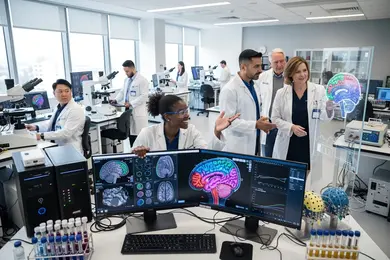
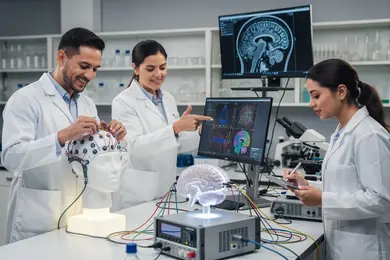
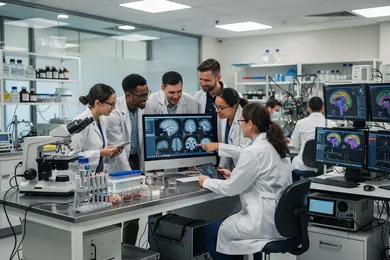
2027 Online Neuroscience Degrees for Lab Technician Roles

Co-Founder and Chief Data Scientist
For aspiring lab technicians aiming to enter neuroscience research, securing relevant credentials without disrupting employment or personal commitments presents a persistent obstacle. Traditional degree programs frequently demand full-time on-campus attendance, limiting access for working adults. The National Center for Education Statistics reports a 15% growth in fully online undergraduate enrollment in STEM fields since 2022, signaling a shift toward flexible degree pathways crucial for balancing work-study demands. This trend reflects broader workforce mobility but also necessitates careful selection of accredited, skill-focused programs tailored to evolving lab standards. This article analyzes current online neuroscience degree options that align with technician roles, guiding informed choices for practical, career-focused outcomes.
Key Things You Should Know
- Online neuroscience degrees for lab technician roles often lack sufficient wet-lab and clinical practicum hours, which constrains employability in 62% of U.S. research labs requiring hands-on validation per NIH 2024 workforce data.
- Employers prioritize accredited programs with integrated bioinformatics modules; 48% of top-tier neurotech firms reject applicants lacking cross-disciplinary training, intensifying reskilling costs and hiring friction.
- Median time-to-employment post-degree extends from 4 to 7 months for purely online graduates, reflecting propagation delays in skill assimilation and an average 15% earnings penalty compared to hybrid pathways, per BLS 2024.
What is an online neuroscience degree for lab technician jobs?
Online neuroscience degree programs for lab technician roles deliver essential scientific training tailored to technical duties within clinical and research laboratories. These programs combine core knowledge in neuroanatomy, neurophysiology, and laboratory methods with flexible scheduling, suited for working adults or individuals constrained geographically. A significant practical tradeoff arises from remote learning's limited hands-on access; students must ensure that programs offer verified clinical partnerships since internships or practicum are mandatory for real-world laboratory competency and employer eligibility.
The best online neuroscience courses for aspiring lab technicians realistically mix virtual lab simulations and theoretical study with in-person clinical experience to meet industry standards. This hybrid approach is critical since employers emphasize accuracy, regulatory compliance, and supervised clinical proficiency. Graduates typically face competitive hiring landscapes where additional credentials or supplementary experience may differentiate candidates.
Labor market data provides context: clinical laboratory technicians specializing in neuroscience earn a median wage of $61,890, with about 22,600 U.S. job openings annually through 2034, highlighting steady demand but intense competition. Informed candidates recognize the need to plan for laboratory safety mastery, bioinformatics tools, and quality assurance processes, especially when shifting from unrelated fields.
Prospective students balancing cost and career impact may also explore options such as a data science masters online if their career goals extend into computational analysis or research data handling within neuroscience contexts.
Which accreditation should an online neuroscience program have?
Regional accreditation remains essential for online neuroscience degree accreditation standards in the US, especially for lab technician roles, because it validates a program's academic and operational quality. However, this alone does not guarantee readiness for the specialized demands of neuroscience-related laboratory work. Programmatic accreditation-such as that from the National Accrediting Agency for Clinical Laboratory Sciences (NAACLS)-directly aligns curricula with industry-endorsed technical competencies and prepares graduates for national certification exams like those offered by the American Society for Clinical Pathology (ASCP). Without such accreditation, graduates may struggle to qualify for state licensure or employer-required certifications, limiting job prospects in hospitals and research environments.
The modest 2% job growth projected for clinical laboratory technologists masks steady annual openings driven by retirements and turnover, making credential differentiation vital. Choosing the best accredited online neuroscience programs for lab technicians helps learners meet both rigorous academic standards and practical certification prerequisites. For example, completing a program lacking programmatic accreditation might necessitate additional training or certification, extending time to employment and increasing costs.
Prospective students weighing options should consider the tradeoff between program flexibility and foundational preparation. Those investigating paths should also review allied fields-for context on educational costs and delivery models, see resources like the best online animal science degree analysis.

Can you become a lab technician with an online neuroscience degree?
Holding an online neuroscience degree alone rarely suffices for immediate employment as a lab technician in biotechnology due to the essential need for hands-on practical training. Most employers place substantial weight on demonstrated laboratory skills in molecular biology, histology, or neuropharmacology-competencies often underdeveloped in purely online formats absent local lab partnerships or internship components. Becoming a lab technician with an online neuroscience program typically requires supplementing theoretical coursework with verified practical experience obtained through community college labs, employer-sponsored training, or certified lab technician programs to meet industry standards.
Employers expect strict adherence to laboratory protocols and safety procedures, and failure to prove these competencies can limit candidates to lower-tier positions or prolong job searches. For example, graduates without documented lab hours may face 6 to 12 months of supervised lab work post-degree before qualifying for standard lab technician roles with typical salaries.
Entry-level salaries for neuroscience-related lab technicians average about $50,000 annually in the U.S., according to data from the Emory University Career Center. Salaries below this mark often correlate with insufficient practical skills, underscoring the tradeoff between convenience of remote education and employability. Prospective students should carefully weigh this dynamic when exploring the average cost of MLIS degree US options versus the value of integrated hands-on training.average cost of MLIS degree US
What coursework is included in online neuroscience programs?
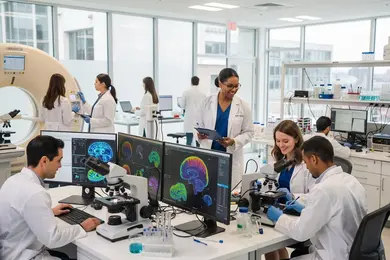
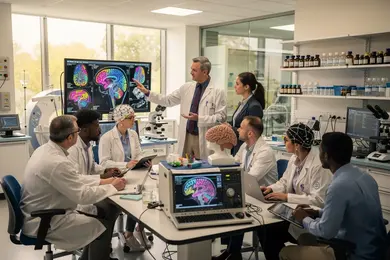
Online neuroscience degree coursework for lab technicians places a strong emphasis on integrating core scientific knowledge with practical laboratory skills essential for technical roles. The curriculum includes cellular and molecular neuroscience, neuroanatomy, neurophysiology, and neuropharmacology, augmented by applied training in experimental design, data analysis, and lab techniques such as microscopy and behavioral assays. This focus ensures graduates can navigate daily lab responsibilities, from tissue preparation to neurochemical assays, meeting employer expectations for immediate job readiness.
Theoretical modules often supplement with virtual labs and case studies simulating real experiments and clinical scenarios, but a critical tradeoff arises because online programs still require in-person clinical rotations or internships to fulfill hands-on experience demands. This balance is vital given that neuroscience lab technician program curriculum online must equip students for regulated environments, including ethics and compliance in human subject research and laboratory safety.
With biotechnology and pharmaceutical sectors increasingly incorporating neurotechnology and computational neuroscience, students benefit from exposure to these emerging fields. Employment data from Tufts Graduate School of Biomedical Sciences show over 90% of neuroscience graduates find work or pursue advanced study within six months, signaling the applied relevance of programs that integrate practical skills effectively.
Prospective students comparing pathways should consider how an online biology bachelor's degree with neuroscience coursework might complement career transitions toward lab technician roles, especially where flexible, accelerated options align with upskilling requirements.
How do online and campus neuroscience programs differ?
Hands-on laboratory experience remains a decisive factor distinguishing campus-based neuroscience programs from their online counterparts. Campus programs grant access to specialized equipment and supervised wet labs, essential for skills like tissue staining and electrophysiology. Conversely, online programs emphasize virtual simulations and remote data analysis, which strengthen computational abilities but limit tactile proficiency.
This divergence shapes employability: employers in sectors requiring physical lab work often favor campus-trained graduates, while those focusing on bioinformatics or large datasets lean toward online-trained candidates skilled in coding and project management.
For instance, a biotech firm developing neural interfaces may prioritize campus graduates' biosample handling expertise, whereas pharmaceutical labs focusing on data pipelines might prefer graduates from online programs with strong digital literacy.
Prospective students should align their choice with career aims:
- Campus programs suit roles demanding routine wet lab tasks and direct equipment handling.
- Online programs are advantageous for interdisciplinary, data-centric neuroscience roles emphasizing analysis and coding.
Logistical aspects further influence decisions: campus enrollment requires relocation and fixed schedules, delaying skill application, while online formats offer flexibility for working professionals balancing job responsibilities. Recognizing these tradeoffs is crucial when planning program selection based on timeline and role-specific demands.

What admission requirements do neuroscience programs usually require?
Applicants aiming for lab technician roles in neuroscience face a clear tradeoff between academic prerequisites and practical experience that directly impacts both admission success and employability. While a high school diploma with core science coursework sets the basic entry level, programs increasingly expect college credits in anatomy, physiology, or general science. For graduate routes, a STEM bachelor's degree and GRE scores are non-negotiable, especially in research-centric tracks.
Employers value candidates who complement theoretical knowledge with hands-on laboratory experience-internships or work-study roles can distinguish applicants significantly. Letters of recommendation from science professionals verifying technicians' practical skills are often required, reflecting workforce demand for operational readiness over mere academic credentials.
Standardized tests like the SAT or ACT remain important for undergraduates, though some institutions waive these in favor of proven academic or experiential performance, illustrating a shift toward holistic evaluation. Prospective students must therefore strategize early to accumulate both coursework and lab hours to navigate competitive admissions and job markets effectively.
In the evolving labor landscape, neuroscience expertise finds growing application in data-centric roles, with a marked 36% growth projected for data scientists earning a median wage of $112,590, according to the U.S. Bureau of Labor Statistics (2023-2033) as summarized by ASU Online. This makes aligning neuroscience training with quantitative skills a practical consideration for sustained career relevance.
How long does an online neuroscience degree take and what does it cost?
Completing an online neuroscience degree for lab technician roles demands a multi-year commitment, typically four years full-time and five to six years part-time, driven by the need to balance coursework with mandatory practical experiences. Despite its virtual setting, these programs often require local internships or onsite labs, increasing both logistical complexity and indirect costs.
Financially, the choice between public and private institutions presents significant tradeoffs. Public four-year universities offer in-state tuition averaging about $10,300 annually, whereas private nonprofits charge around $28,000 yearly. Beyond tuition, students must budget for laboratory fees, materials, and potential travel expenses linked to hands-on training components.
Working professionals considering this pathway should weigh the time and expense against realistic employment outcomes. Shorter certificate options exist but lack the comprehensive training necessary for many lab technician positions, potentially limiting job prospects and salary growth. Employers typically expect demonstrated hands-on competence that goes beyond online coursework.
Which lab technician jobs can neuroscience graduates pursue?
Graduates with a neuroscience degree entering laboratory technician roles face distinct career trajectories shaped by the setting and specialization they pursue. Entry-level research associate or assistant positions in academic and clinical labs provide foundational experience in experimental design, neurobiological data handling, and supporting principal investigators, typically yielding average salaries near $49,152 annually. These roles often pave the way for graduate study or independent research if one remains in academia.
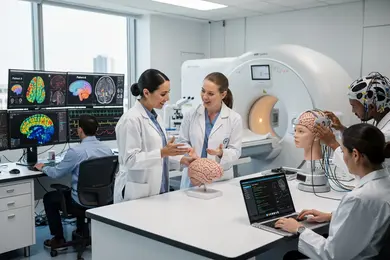
Conversely, technician jobs in neuroimaging or electrophysiology labs require specialized skills such as operating MRI, PET scanners, or electrophysiological recording equipment, leaning heavily on technical proficiency acquired during degree programs. In pharmaceutical or biotech sectors, technicians engage in preclinical drug testing and biomarker assay work, demanding meticulous protocol adherence and sometimes industry-specific certification.
The distinction between academic and industry lab roles is meaningful: academic positions may offer more upward mobility toward research leadership, whereas industry roles prioritize technical depth with limited advancement absent further credentials.
Prospective candidates should weigh these trade-offs and anticipate the need for targeted internships or certifications that demonstrate laboratory competence alongside their neuroscience degree to remain competitive.
What salary can neuroscience lab technicians expect?
Entry-level neuroscience lab technicians in the U.S. face a salary range typically between $42,000 and $50,000, but market realities show that without expanding skill sets, earnings plateau quickly. Employers prioritize candidates who blend traditional lab expertise with advanced computational analysis, data communication, and cross-functional project management. For example, a technician at a biotech startup with these competencies commands a 15%-25% salary premium compared to those limited to bench work.
Positions in pharmaceutical R&D or neurotechnology firms especially reward multidisciplinary capabilities, pushing salaries closer to $60,000 or above. However, those focusing solely on neuroanatomy or routine lab procedures often see stagnant wages despite years of experience. This dynamic underscores the importance of educational programs that integrate applied computational and communication skills, not just classical lab training.
Prospective students should critically evaluate program outcomes, particularly employer connections and practicum opportunities, to ensure practical alignment with current workforce demands. Additionally, supplementing degree credentials with online certifications in programming or business communication can materially elevate salary ceilings.
The wage dispersion highlights a broader workforce implication: continuous upskilling is essential to move beyond government-reported median salaries and maintain relevance amid industry shifts.
What certifications help neuroscience lab technicians qualify for jobs?
Employers in neuroscience labs prioritize certifications that provide concrete, applied skills over theoretical degrees alone. For instance, candidates with a bachelor's in neuroscience but no practical lab certifications often face hiring disadvantages compared to those holding credentials like the Certified Biological Safety Professional (CBSP) or Good Laboratory Practice (GLP) certificates. These credentials assure employers of a candidate's ability to manage biohazards, ensure data integrity, and comply with regulatory standards.
Hands-on laboratory competency certifications such as the Medical Laboratory Technician (MLT) and Clinical Laboratory Scientist (CLS) are essential because neuroscience lab technicians regularly handle complex assays, neurological samples, and advanced instruments that demand precision and reliability.
Additional qualifications in data analysis software (e.g., SPSS and R programming) enhance employability by demonstrating proficiency with neuroimaging and electrophysiological data processing-skills increasingly demanded in both research and clinical trial environments.
Given the projected 11% growth in medical scientist roles over the coming decade, candidates without these certifications risk lagging behind peers who present verifiable laboratory competence. This trend validates a practical tradeoff: investing in targeted certifications offsets the limitations of purely academic credentials by delivering measurable workplace readiness.
Other Things You Should Know About Neuroscience
In 2027, many online neuroscience programs offer virtual labs and simulations. However, some entry-level lab technician roles may still prefer candidates with hands-on experience. It’s essential to seek programs that include on-site lab components or partnerships with local facilities for comprehensive training.
While flexible schedules benefit working adults, online neuroscience programs require strong self-discipline to master complex material without direct day-to-day oversight. The absence of immediate feedback during lab-based coursework can slow skill acquisition, which affects readiness for technical roles. Prospective students must weigh their capacity for autonomous study against the risk of weaker hands-on competencies that can limit job performance and advancement.
Employers increasingly recognize accredited online degrees but scrutinize the depth of practical experience behind them. Without documented lab work or internships often associated with campus programs, candidates with online degrees might face bias or additional vetting. Prioritizing programs that integrate experiential learning or require lab residencies can mitigate employer concerns and improve hiring prospects.
Programs offering specialized tracks tailored to lab technician skills streamline learning toward relevant competencies and improve employability by aligning curricula with industry demands. Generic neuroscience degrees may lack focused training on instrumentation, data analysis, or regulatory compliance critical to lab roles. Students targeting lab technician positions should prioritize programs with these specialized options to enhance practical readiness and career clarity.
References
- Positions Available — CHAMBERLAND LAB https://www.chamberlandlab.org/positions-available
- How to Become a Medical Laboratory Technician https://americanmedtech.org/blog/blog-post/how-to-become-a-medical-laboratory-technician
- Difference between Hybrid, Online & In-Class Degree Programmes | BSBI https://www.berlinsbi.com/blog/what-is-the-difference-between-hybrid-online-and-in-class-degree-programmes
- Neuroscience Degree Requirements https://www.collegehelpguide.com/degrees/neuroscience/requirements/
- Medical Laboratory Technician Salary Guide - Trusted Health https://www.trustedhealth.com/allied-career-guide/lab-tech/salary-guide
- Top Lab Certifications That Boost Your Career | ASCP, HT, MLS, PA https://nicklasstaffing.com/resources/certifications-that-advance-your-lab-career/
- Online Neuroscience Degree Programs https://www.medicaltechnologyschools.com/biomedical-science/online-neuroscience-degrees
- 7 Best Neuroscience Courses for 2025; Learn Online for Free — Class Central https://www.classcentral.com/report/best-neuroscience-courses/
- Learn neuroscience | edX https://www.edx.org/learn/neuroscience
- Can You Join a Medical Laboratory Technician Program Without Science? https://pharmamedical.ca/can-you-still-become-a-medical-laboratory-technician-without-a-science-degree/