2027 Neuroscience Specializations for Cognitive Science Careers

Co-Founder and Chief Data Scientist
Facing a landscape where over 60% of graduate students in cognitive science-related fields now seek flexible, part-time, or hybrid programs, aspiring neuroscience professionals grapple with choosing specializations that align not only with evolving brain research but also with shifting workforce demands and lifestyle constraints. Employers increasingly prioritize candidates with applied technical skills alongside theoretical expertise, yet many programs still lack adaptable curricula or clear career pathway integration. This creates a critical tension for working adults and recent graduates who must optimize education for career mobility without sacrificing depth or relevance. This article examines key neuroscience specializations tailored to cognitive science careers, evaluating their practical fit for diverse enrollment and employment scenarios.
Key Things You Should Know
- Specializing in cognitive neuroscience demands 2-3 additional years beyond a bachelor's, elevating median student debt by 22%, limiting access for mid-career professionals balancing time-cost tradeoffs, per 2024 NCES financial aid data.
- Employers prioritize candidates with neuroinformatics expertise, with 68% of neuroscience-related job postings in 2025 valuing data analytics skills, implying pure molecular neuroscience tracks could face narrower market demand.
- Neuroeconomics specialization growth outpaces traditional neuroscience by 15% annually according to the Bureau of Labor Statistics, creating strategic advantage but requiring interdisciplinary fluency many education programs lack currently.
What are the main neuroscience specializations that support careers in cognitive science?
Specializing within neuroscience demands strategic consideration of real-world employment viability and barriers unique to each subfield supporting cognitive science professions. For instance, neuropsychology stands out with its blend of clinical responsibility, regulatory licensure, and steady market demand-clinical neuropsychologists recorded job growth of over 12% and median salaries near $94,340, reflecting tangible workforce traction. Yet this path requires a significant commitment to clinical training and healthcare environments.
Cognitive neuroscience connects brain function to mental processes, offering strong crossover into academic and applied cognitive science roles, but less clinical licensing, which changes both accessibility and employer expectations.
Computational neuroscience emphasizes quantitative modeling and programming skills, leading naturally into AI and data science roles, often in tech-driven labs where proficiency akin to that gained from a data science masters online is advantageous.
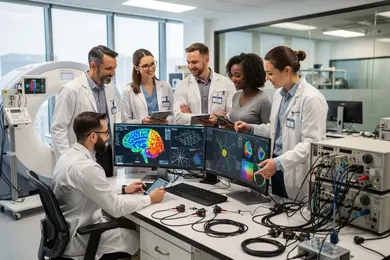
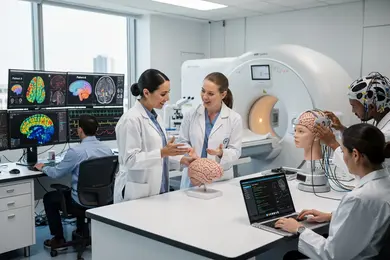
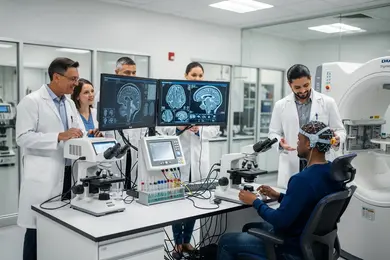
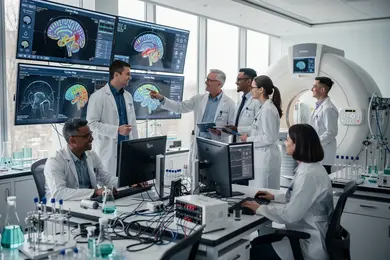
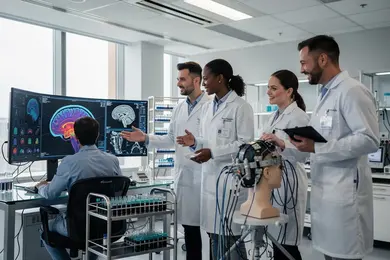
Neuroimaging professionals leverage advanced tools like fMRI and EEG, working at the nexus of neuroscience subfields supporting cognitive science professions. However, access to such equipment and interdisciplinary collaboration sets a higher barrier to entry, impacting how easily candidates translate specialized training into roles.
Choosing a specialization requires weighing technical skill demands, licensure hurdles, and market saturation. Subfields with a balance of clinical impact and research flexibility, notably neuropsychology and cognitive neuroscience, remain more straightforward pathways to cognitive science careers that offer both employability and practical skill application.
How do cognitive neuroscience and neuropsychology degrees differ for cognitive science roles?
The practical divide between cognitive neuroscience and neuropsychology degrees centers on career orientation and skill application, a crucial consideration for those weighing this educational pivot. Cognitive neuroscience graduates predominantly enter roles demanding computational fluency-such as data scientist or research scientist positions-where proficiency in programming, statistics, and experimental design is paramount.
The U.S. Bureau of Labor Statistics reports a median annual wage of $112,590 for data scientists with 36% projected job growth through 2033, illustrating strong market demand for these skills.
In contrast, neuropsychology degrees prepare students for clinical careers requiring extensive licensure and patient-centered expertise in diagnosing and treating brain injury-related cognitive impairments. These roles tend to focus on long-term care rather than algorithm development, shaping different workforce trajectories and timelines due to clinical training requirements.
Those analyzing differences between cognitive neuroscience and neuropsychology degrees must consider these tradeoffs: cognitive neuroscience opens paths in technology-driven cognitive science but demands technical agility, while neuropsychology offers clinical practice with longer credentialing timelines.
Employers in the cognitive neuroscience realm expect verified computational ability, whereas neuropsychology employers prioritize certified clinical competencies.
For professionals considering a shift, it's essential to align educational choices with intended roles-either research-informed technical positions or patient-centered clinical practice. Prospective students should also explore options like an online degree in exercise science to complement cognitive or clinical expertise within healthcare-related fields.
Which neuroscience degrees and concentrations best prepare you for AI and brain-inspired computing?
Choosing the best neuroscience degrees for brain-inspired computing demands balancing theoretical rigor with applied computational skills. Programs focused on computational neuroscience excel at training students in mathematically modeling neural processes and simulating brain functions-key abilities for building neuromorphic AI systems.
In contrast, top neuroscience concentrations for AI careers often include neural engineering, emphasizing neurotechnology such as brain-computer interfaces and advanced signal processing, which align closely with practical AI applications incorporating neural data.
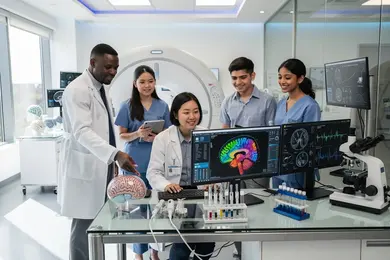
Practical experience with large-scale neural data, including proficiency in functional MRI and EEG technologies, significantly influences employability and earnings. Neuroimaging technicians earn a median wage of $78,980, with employment expected to grow by 6% through 2033, reflecting sustained demand for expertise in brain mapping techniques supporting AI development.
However, graduates from programs lacking comprehensive computational training frequently encounter longer transition periods and lower entry salaries.
For career pivots into AI-driven neuroscience roles, proficiency with Python-based neural simulation libraries and machine learning frameworks is essential. Those without foundational programming skills should consider targeted certifications or boot camps.
Employers prioritize candidates who master complex neural datasets and optimize algorithms inspired by neurobiology while contributing effectively to multidisciplinary teams. When evaluating degrees, prospective students should weigh program focus on computational methods, access to neuroimaging labs, and research connections to AI-driven neuroscience centers to enhance practical outcomes.
Professionals exploring interdisciplinary pathways may also benefit from complementary qualifications like a library science masters, particularly for roles involving neural data management or bioinformatics integration.
What neuroscience coursework and lab experiences are most important for cognitive science careers?
Neuroscience coursework that prioritizes practical lab skills in cellular neurobiology, computational modeling, and cognitive neural systems distinctly improves readiness for neurotechnology roles. Employers expect graduates to demonstrate hands-on expertise in neurophysiology labs, including signal recording and brain imaging analysis, to navigate challenges like hardware constraints and data noise. Cognitive science careers that lack this integration often result in delayed productivity and limited advancement opportunities.
Key lab experiences in neuroscience for advancing cognitive science professions include multidisciplinary projects that mirror real-world neural interface deployment. These require collaboration across engineering and computer science disciplines, enhancing a candidate's market value.
Emory University's 2024 data shows neural engineers command an average salary of $97,410, reflecting strong demand for hybrid skills spanning engineering, data science, and neuroengineering techniques like brain-computer interface (BCI) development.
Professionals pivoting into this space should emphasize coursework in programming languages (Python, MATLAB), statistics, and systems neuroscience to shorten training duration and increase job competitiveness. Prioritizing hands-on BCI and computational neuroscience labs over purely theoretical electives aligns well with employer expectations for managing data complexity under practical conditions.
For those exploring educational pathways in this area, options remain varied; prospective students often review accelerated psychology programs online as alternative stepping stones that intersect with cognitive science fundamentals.
How do online neuroscience programs compare to campus-based options for cognitive science pathways?
Choosing between online and campus-based neuroscience programs hinges on tangible access to hands-on training that shapes real-world skillsets valued by employers. While online options can deliver strong theoretical foundations, they often lack sufficient experimental design and data collection experiences essential for roles in cognitive and applied brain science.
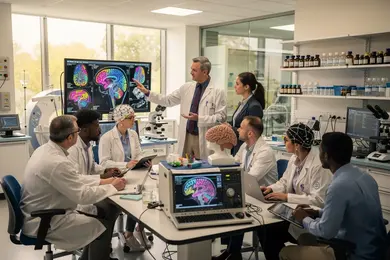
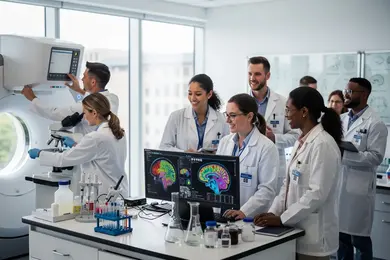
Campus environments provide direct engagement with neuroimaging labs and faculty-led research, creating pathways to internships and collaborative projects that matter in government and research sectors.
Consider these workforce implications when evaluating program formats:
- Government agencies, which offer top salaries (median $100,360), prioritize candidates with practical lab exposure and research networking over purely academic credentials.
- Online students must proactively secure lab residencies or local partnerships to bridge training gaps, a challenge that can delay readiness for hands-on roles.
- Professionals targeting industry positions focused on data analysis or cognitive modeling may find online program outputs sufficient if accompanied by demonstrable project portfolios.
Decision-making should weigh geographic and professional constraints against targeted employer expectations and long-term role requirements in social or affective neuroscience fields. Without embedded practical training, online study risks underpreparing students for experimental work demanding direct laboratory familiarity and collaborative research experience.
What accreditation and program quality standards should neuroscience students targeting cognitive science verify?
Selecting a neuroscience program solely on academic reputation overlooks critical factors that shape real-world employability and skill relevance. Accreditation by recognized regional bodies ensures baseline academic standards, but specialized recognition from entities like the Society for Neuroscience or the Cognitive Science Society is essential to verify curriculum alignment with interdisciplinary research trends and workforce needs. Without this dual validation, graduates risk possessing outdated or narrowly focused expertise.
Faculty actively engaged in cognitive neuroscience research tied to human cognition, learning, or developmental neuropsychology significantly enhance learning quality. Institutions with partnerships offering clinical or applied internships provide access to practical experience, a key differentiator when translating neuroscience theory into career-ready skills.
For example, speech-language pathologists applying principles from developmental neuroscience in pediatric contexts earned a median wage of $95,410 and are projected to see 18% job growth over a decade, reflecting the economic advantage of targeted training.
Programs must offer rigorous, hands-on training in neuroimaging, electrophysiology, and computational modeling. Those focusing narrowly on biochemical or anatomical theory are less competitive outside academic labs. Evaluating graduate outcomes, including placement rates and professional certifications, helps identify programs with transparent pathways to employment.
Finally, weighing program cost against potential career ROI reveals that neuroscience branches linked to education and development hold strong market demand but require explicit skill-building aligned with evolving industry expectations.
What are typical admission requirements and prerequisite backgrounds for neuroscience specializations in this field?
A practical pathway into neuroscience specializations within cognitive science demands more than basic qualifications; it requires a carefully balanced foundation across biology, psychology, chemistry, and mathematics. Prospective students typically need a bachelor's degree with specific coursework in neurobiology or cognitive psychology, alongside a GPA near 3.0 and relevant lab experience emphasizing data analysis and experimental design.
Key workforce trends now prioritize programming skills in Python or MATLAB due to the reliance on computational models and neural data analytics in research and clinical environments. Students from adjacent fields-such as biomedical engineering or linguistics-face the challenge of supplementing their study with core neuroscience classes to meet admission standards.
For instance, a linguistics major shifting toward neurolinguistics must show proficiency in neuroanatomy or physiological psychology to remain competitive.
Experience with neuroimaging technologies like fMRI and EEG is frequently a prerequisite for roles centered on brain-language interactions. According to Emory's 2024 neuroscience career overview, speech-language pathologists using such expertise earn an average of $80,480 annually, illustrating the tangible economic value of specialized interdisciplinary skills.
Clinical or research internships focused on brain-language processing substantially improve candidates' chances for acceptance and employment. Students must navigate tradeoffs between completing foundational science courses and acquiring hands-on neurotechnology experience, as delays in either area can impact early career earnings and credentialing timelines.
What entry-level and advanced career paths link neuroscience specializations to cognitive science jobs?
Starting a career in cognitive science with a neuroscience focus predominantly places individuals in technical support roles such as research technicians, data analysts, or clinical assistants. These positions demand hands-on skills in neural data collection, behavioral testing, and neuroinformatics management within academic, healthcare, or applied tech environments. Early-career professionals gain crucial experience in brain imaging protocols and computational modeling, which serve as foundational competencies for future specialization.
Progression into advanced roles requires deep expertise in niches like neuroeconomics or cognitive neuropsychology, where practical application outweighs purely theoretical knowledge.
For example, neuropsychologists apply brain-behavior insights to develop risk-assessment models used in financial or healthcare sectors, illustrating the direct impact of specialized neuroscience training on cross-industry decision systems. According to The College Board's 2024 career data, neuropsychologists have a median salary of $94,340 and a robust 12.51% job growth forecast.
Workforce dynamics emphasize continuous upskilling in computational techniques, grant writing, and translating neural data into actionable strategies across healthcare, marketing, or AI. Career advancement hinges on balancing credentials-clinical licenses versus research skill sets-which vary widely with employer expectations and sector demands.
In decision-oriented fields like neuroeconomics, empirically grounded experimental design skills are often prioritized over broad theoretical frameworks.
What salary ranges and job outlook can neuroscience graduates expect in cognitive science-related roles?
Graduates with a neuroscience background targeting cognitive science roles must weigh specialization and skill diversity against salary potential and job stability. Positions in pharmaceutical research or medical device companies typically offer higher starting salaries-often above $100,000-but require advanced degrees and practical lab experience.
Conversely, academic or government research roles generally pay between $70,000 and $90,000 initially but provide steadier funding and public-sector benefits.
Data science roles that integrate machine learning and brain modeling notably elevate earnings, with neuroscience data scientists averaging around $120,000 annually, according to Emory's 2024 career survey.
This premium compensates for candidates who combine computational and neuroscience expertise, meeting the growing market demand reflected in federal projections estimating 8-10% job growth through 2030 in sectors such as healthcare technology and AI development.
- Higher pay often correlates with industry specialization and technical proficiency.
- Stable but lower-paying roles prevail in public research sectors.
- Embedding AI coursework and securing internships aligned with industry needs can optimize career trajectories.
Without skills like programming in Python or R and neural data analysis, neuroscience graduates risk salary plateaus below $90,000 and slower career progression. Balancing the time investment required to acquire these competencies against immediate job opportunities is a critical tradeoff to consider.
Practical skill sets in machine learning, cognitive modeling, and data engineering increasingly determine employability and advancement in this field.
How can students choose the right neuroscience specialization for their cognitive science career goals?
Aligning your neuroscience specialization with specific career goals demands careful analysis of labor market realities, sector needs, and employer expectations. For example, choosing a focus like human-computer interaction or neuroergonomics positions candidates within technology and healthcare industries, which actively hire cognitive brain science experts as computer and information research scientists.
These roles come with a median annual salary of $126,830, per 2025 Tufts University career guide data corroborated by BLS reports.
When shaping your specialization, weigh these factors:
- Sector Fit: Applied fields such as neuroergonomics appeal more to technical employers, while systems neuroscience or neuroimaging suit academic or clinical paths.
- Skills and Preparation: Concentrations requiring programming, machine learning, or neurotechnology expertise involve longer, resource-intensive preparatory coursework.
- Regional Employment Trends: Local industry clusters impact hiring opportunities, making employer networks and geographic alignment critical.
- Credential Relevance: Opt for tracks with certifications or research outputs recognized within your target job market.
Consider that clinical specialties like cognitive neuropsychology, although relevant within healthcare, typically offer narrower employment scopes. In contrast, human-computer interaction leverages cognitive science with expanding tech innovation, drawing clearer financial returns and broader demand.
Balancing educational investment against sectors projected for growth and steady hiring is essential for a pragmatic, outcome-driven specialization choice.
Other Things You Should Know About Neuroscience
Research experience is critical, as employers and graduate programs prioritize candidates with hands-on skills in experimental design, data collection, and analysis. However, not all programs provide equal access to meaningful research, which impacts employability. Prioritize programs that offer structured research opportunities with faculty mentorship, as this directly correlates with competitive placements and practical expertise required in cognitive science roles.
Neuroscience curricula are often dense with theory and lab work, leaving limited time for developing interdisciplinary skills such as programming or cognitive assessment techniques. This can restrict readiness for cognitive science careers that demand broader competencies beyond pure neuroscience. Focus on programs that integrate applied training and flexible electives to manage workload while acquiring relevant cross-disciplinary skills, which enhances career versatility.
Inclusion of clinical components adds valuable applied knowledge but may reduce time spent on cognitive neuroscience or computational methods crucial to many cognitive science roles. Prioritize programs offering a balanced or customizable curriculum, allowing you to gain clinical insight without sacrificing cognitive science-relevant training. This ensures stronger alignment with employer expectations and research domains central to the cognitive science job market.
References
- Differences Between Cognitive Science, Neuroscience and Psychology - Dream Uni https://dreamuni.com/blog/differences-between-cognitive-science-neuroscience-and-psychology/570
- Brain-Based AI Careers – A How-To Guide | Numenta https://www.numenta.com/blog/2022/04/11/how-to-pursue-career-in-brain-based-ai/
- Neuroscience with Artificial Intelligence https://www.keele.ac.uk/study/undergraduate-2026/undergraduatecourses/neurosciencewithai/
- Cognitive Science vs Psychology: Key Differences Explained https://intelligenzia.fi/en/cognitive-science-vs-psychology
- Cognitive Science Pathways and Programs - Options Solutions Educational Consultants https://www.optionssolutionsed.com/cognitive-science-pathways-and-programs/