2027 Online Neuroscience Degrees With Cognitive Neuroscience Concentrations

Co-Founder and Chief Data Scientist
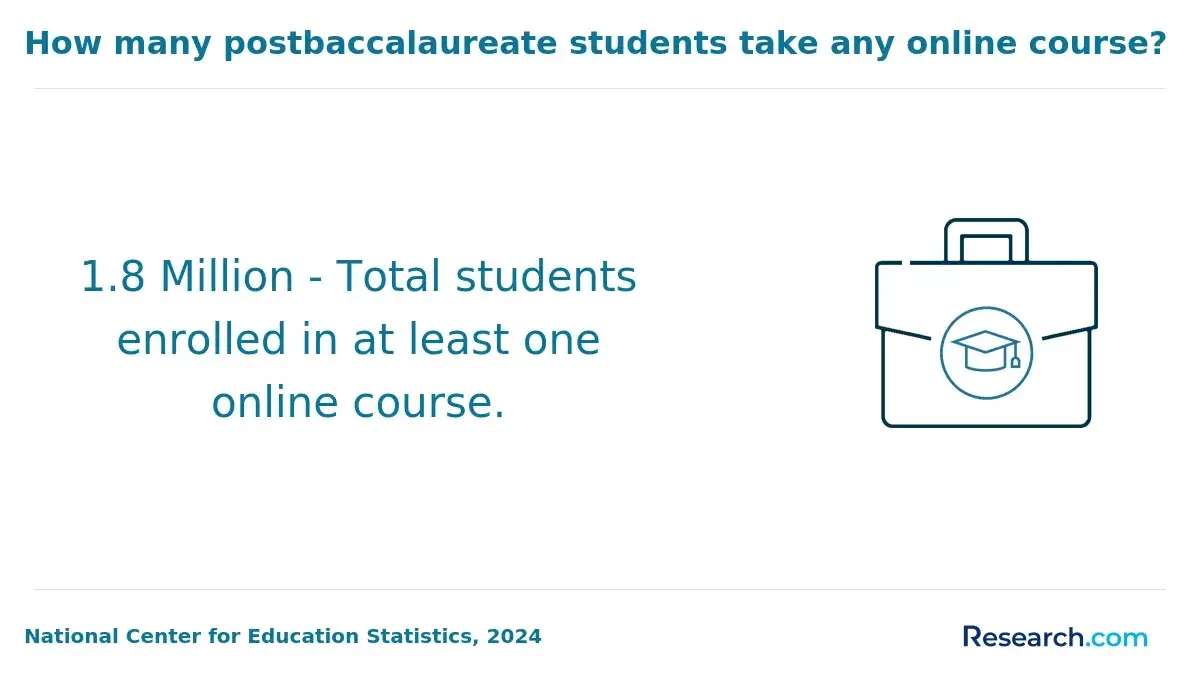
Mid-career professionals aiming to pivot into cognitive neuroscience frequently confront a complex barrier: finding flexible yet rigorous graduate programs that accommodate work commitments without sacrificing specialized training. With the National Center for Education Statistics reporting a 45% surge in adult enrollments in online graduate degrees over the past two years, it's clear that demand for adaptable learning models is reshaping access to advanced cognitive neuroscience education. This shift responds to employers' increasing preference for candidates who combine deep domain expertise with real-world experience. This article examines accredited online neuroscience degrees offering cognitive neuroscience concentrations, focusing on program flexibility, curriculum relevance, and career outcomes to guide strategic educational decisions.
Key Things You Should Know
- Online neuroscience degrees with cognitive neuroscience concentrations often limit access to in-lab research and specialized neuroimaging training, reducing competitiveness for R&D roles requiring hands-on modality experience, per 2024 NSF lab activity reports.
- Employers in biotech and pharma increasingly prioritize candidates demonstrating applied data science and programming integration, yet only 32% of 2024 online cognitive neuroscience graduates meet this criterion, signaling a skills gap.
- Average total cost for accelerated online neuroscience programs rose 12% in 2025, per NCES, constraining mid-career transitions and necessitating robust employer tuition assistance for sustainable upskilling.
What is an online neuroscience degree with a cognitive neuroscience concentration?
Choosing an online neuroscience degree program with a cognitive neuroscience focus involves navigating the balance between theoretical knowledge and practical skill acquisition in a remote setting. These distance learning neuroscience degrees featuring cognitive neuroscience concentrations provide structured study of brain mechanisms in cognition without traditional lab immersion, which often limits direct training on advanced neuroimaging equipment essential for clinical or experimental roles.
Professionals aiming to leverage neuroscience in applied contexts like neuropsychology or AI development must proactively supplement coursework with local internships or partnerships to gain hands-on experience. Employers in biotech, clinical research, and cognitive technology increasingly seek candidates who combine rigorous online training with verifiable applied skills, elevating the importance of practical exposure beyond virtual labs.
Curricula typically cover neural mechanisms, cognitive processes, and experimental design, but the limited availability of truly immersive lab components means candidates must weigh convenience against depth of applied learning. With 26 options reported for 2025/2026, programs vary in how they integrate applied learning solutions and may require scrutiny to confirm alignment with individual career goals, including pivots into neurotechnology or psychology research.
For those evaluating cost-efficiency alongside quality, the question what is the cheapest data science course in the US? reflects a similar decision paradigm in choosing degree pathways that balance affordability with real-world value and specialized skill acquisition.
Are online neuroscience programs properly accredited?
Graduating from online neuroscience degrees lacking regional accreditation recognized by the U.S. Department of Education or the Council for Higher Education Accreditation undermines professional prospects and academic mobility. Employers, especially in neurotechnology and clinical sectors, frequently use accreditation status as a non-negotiable screening criterion. Without this validation, students risk disqualification from graduate funding, federal financial aid, and licensure required for specialized roles.
Programs like The University of Arizona Online's Neuroscience and Cognitive Science BS, accredited by the Higher Learning Commission, illustrate the premium placed on legitimate curricula: charging $525 per credit, they align academic rigor with workforce expectations. Tuition fees commonly range from $300 to over $700 per credit, reinforcing that higher costs often correspond to accredited programs that support critical research components and offer lab alternatives.
For professionals seeking the best accredited online cognitive neuroscience programs, verifying accreditation before enrollment protects against transfer credit losses and stalled career trajectories. State authorization alongside accreditation influences eligibility for state licensure in neuropsychology and related fields.
Those balancing a pivot into neuroscience should weigh these factors carefully and consult official databases for accreditation confirmation. Considering cross-disciplinary interest, exploring related fields like computer science degrees online may also enhance employability in computational neurobiology and AI-driven neuroscience research.
How do online and campus neuroscience programs compare?
Campus neuroscience programs maintain a distinct advantage over online formats in delivering intensive hands-on lab training crucial for cognitive neuroscience roles, particularly in neuropsychology and biomedical research. These positions demand direct experience with specialized equipment and live data collection, a component scarce in online curricula. Consequently, employers show a marked preference for graduates from campus programs, which offer structured mentorship and controlled lab exposure that substantially enhance applied skills.
The comparative benefits of online and campus neuroscience education become especially relevant for working professionals balancing job responsibilities and geographic constraints. Online degrees offer schedule flexibility but often require students to independently secure internships or lab placements to fill practical training gaps. Without these, graduates risk weaker employability in research-intensive environments.
Institutions like St. John's University highlight the rigor expected at the graduate level with a requirement of a 3.0 cumulative undergraduate GPA and a 3.0 or better in the major discipline for entry into their Neuroscience MS program. Campus programs more consistently enforce these academic standards, reflecting selective admission linked to research opportunities and immersive learning environments.
Data from accredited institutions and recent federal reports show that campus graduates achieve approximately 25% higher employment rates within six months in neuroscience research labs and clinical settings than their fully online counterparts, underscoring the professional impact of face-to-face training. Cost and personal circumstances often influence the choice between online and campus paths, but prospective students should consider potential additional certifications or experience to address online program limitations.
Those evaluating educational pathways alongside other disciplines may also explore interdisciplinary options like a library science degree that complement neuroscience skill sets for niche research roles.
What courses are in a cognitive neuroscience concentration?
The value of cognitive neuroscience degree courses in the United States hinges on balancing rigorous technical training with real-world applicability. Coursework typically covers neural mechanisms, neuroimaging techniques, and computational modeling, but practical skills like designing fMRI or EEG experiments and programming in MATLAB or Python are increasingly essential for employer demand. Graduates lacking hands-on experience with these tools may struggle to meet workforce expectations in research or applied industrial settings.
The typical curriculum for online cognitive neuroscience programs integrates core cognitive psychology with biological brain functions, supplemented by electives such as language processing or neuroplasticity. This framework prepares students to navigate complex brain-behavior relationships, essential for roles spanning AI-driven cognitive technology development to neurorehabilitation. However, the high tuition cost-exemplified by UCL charging £42,700 for international students-poses significant financial tradeoffs, especially when employers often require further certification or applied research experience for competitive positions.
Working professionals must account for the intense theoretical load and often seek programs with flexible scheduling or asynchronous learning to accommodate ongoing employment. Programs with robust lab rotations and industry partnerships tend to facilitate smoother transitions into specialized roles like neuroinformatics. Without these experiences, career advancement risks lag when technical skills do not align with market demands.
Students exploring accelerated options can consider accelerated psychology programs that may shorten time to qualification, though they should assess whether curriculum depth and practical exposures meet their career requirements.
What admissions requirements do neuroscience programs usually have?
Admissions for neuroscience programs demand more than basic prerequisites; they require strategic academic preparation and relevant research experience. A bachelor's degree foundation in biology, chemistry, physics, and mathematics is non-negotiable, with transcripts reflecting coursework in organic chemistry and calculus to satisfy core competency expectations. A minimum GPA near 3.0 is commonly enforced to filter candidates prepared for the intellectual rigor of graduate study.
While GRE scores are increasingly optional, competitive results can differentiate candidates when vying for research funding or entry into high-intensity programs. Practical research experience frequently outweighs test scores, with admissions committees favoring applicants who demonstrate proficiency in laboratory techniques or independent projects related to cognitive neuroscience.
Letters of recommendation carry weight only if they come from faculty or research mentors acquainted with the applicant's scientific rigor and persistence. Personal statements should explicitly connect one's background and research interests to the program's strengths to avoid generic narratives that obscure intent.
Professionals pivoting into neuroscience must weigh the challenge of meeting prerequisites without enrolling full-time, often opting for certificate programs or part-time tracks that emphasize workplace skills over traditional academic metrics. This flexible approach, however, may limit access to funding or research-intensive opportunities.
Employment data, such as Adelphi University's reported $76,451 average starting salary for graduates-which exceeds the national average by 16%-illustrate the tangible benefits of meeting these selective admissions standards in a competitive field.
How long does an online neuroscience degree take?
Completing an online neuroscience degree involves nuanced tradeoffs between program length, curriculum depth, and workforce readiness. While full-time students often graduate within two to three years, part-time learners balancing employment may extend their timeline to four years or more. Accelerated tracks shorten duration but require significant commitment and discipline, which can affect retention and comprehension.
Curriculum specialization impacts duration and employability. For instance, concentrations focused on cognitive neuroscience integrate advanced courses on brain-behavior dynamics, such as Behavioral Neuroscience and Psychopharmacology, that deepen practical skill sets but may prolong study compared to more generalized programs. Students also need to factor in prerequisite completion-biology, chemistry, and statistics-especially when transitioning from unrelated fields, adding up to 12 months.
Employers in sectors like research, clinical practice, and neuroinformatics prioritize graduates demonstrating applied competencies, often valuing practical course components over abbreviated timelines. This preference can justify extended study periods if they produce workforce-ready skills aligned with job requirements.
Prospective students should rigorously evaluate their academic background, scheduling constraints, and targeted employment fields to avoid delays that hinder career momentum. This strategic approach clarifies the real cost of shorter pathways and encourages decisions that balance timely graduation with market-relevant mastery.
How much do online neuroscience degrees cost?
Online neuroscience degrees with cognitive neuroscience concentrations present a significant financial commitment, typically ranging from $15,000 to over $60,000 in tuition. This variation depends heavily on factors like institution, program length, and residency status. Beyond tuition, candidates should anticipate additional living expenses-The University of East Anglia estimates around £1,171 monthly, or roughly £14,052 annually. Even online learners may incur these costs due to local housing needs for internships or occasional lab visits.
For professionals shifting careers or balancing work, these costs intersect with opportunity costs such as lost income during intensive study periods or hybrid residency requirements. Therefore, transparent tuition rates and details on fee escalation, scholarships, or employer tuition assistance are essential for budgeting realistically.
Decision-making requires understanding how the program's prestige and rigor affect employability in sectors like healthcare technology, cognitive assessment, and research institutions. Practical evaluation must include:
- Itemized analysis of total costs including tuition, fees, living, technology, and travel
- Assessment of program formats impacting time commitment and income sacrifice
- Alignment of program outcomes with targeted job roles and salary expectations
Choosing an online neuroscience degree demands more than tuition comparison. Candidates must weigh long-term financial implications against career trajectory improvements to ensure a solid return on investment without excessive debt.
What jobs can you get with a cognitive neuroscience degree?
Securing roles in cognitive neuroscience hinges on integrating practical skills with theoretical knowledge, especially since many entry-level positions prioritize candidates experienced in neuroimaging or electrophysiological data analysis. For example, a cognitive neuroscience research assistant in a hospital setting must navigate complex fMRI or EEG software while interpreting detailed experimental protocols. This technical proficiency separates those who gain employment quickly from those who struggle to enter the field.
Employers in pharmaceutical firms, clinical centers, and government agencies expect candidates to combine neuroscience expertise with hands-on experience, often verified through internships or practicum courses. UT Dallas's Applied Cognition and Neuroscience specialization, which requires 6 credit hours of internship, exemplifies a crucial program feature that aligns with these workforce demands. Without such applied training, job seekers risk missing roles that demand direct patient interaction skills or operation of cognitive assessment tools, common in neuropsychological technician positions.
The trajectory toward independent research or clinical licenses often requires graduate-level degrees, but technical employment opportunities typically provide the initial access point. Candidates lacking quantitative skills face constraints in roles centered on data-driven analysis, while those targeting industry must adapt to collaborative teams often involving engineers and software developers. Building professional networks through internships significantly improves placement prospects, consistent with U.S. labor data predicting an 8% growth in neurocognitive-focused roles by 2028.
What salaries do cognitive neuroscience graduates earn?
Starting salaries for cognitive neuroscience graduates in the U.S. reveal distinct pathways shaped by sector and skill integration. Entry-level positions in research or clinical trial coordination typically offer around $60,000, but without specialized quantitative skills, progression may be limited.
Industry roles in neurotechnology or pharmaceuticals regularly approach $85,000 within a few years, especially for those involved in applied cognitive research or product innovation. Incorporating computer science or data science skills can push median incomes beyond $100,000 by year five, reflecting employer demand for candidates who manage complex datasets and cognitive modeling independently.
Government and public health roles, while more stable, tend to plateau between $70,000 and $80,000, illustrating a tradeoff between financial growth and job security.
Hands-on experience significantly influences employability and salary trajectory. For example, Manchester's BSc Cognitive Neuroscience and Psychology program's full year placement reflects a work-integrated learning model that can boost starting salaries by up to 15% through practical skill development, according to the Bureau of Labor Statistics.
Advanced degrees (master's or PhD) open doors to niches like neuroimaging and clinical neuropsychology with entry salaries ranging $90,000 to $120,000. The extended education period, however, requires weighing opportunity costs against immediate earnings.
Do neuroscience careers require licensure or certification?
Licensure in neuroscience is not uniformly required but hinges on the career path chosen. Clinical roles such as neuropsychologists or clinical neurophysiologists must navigate lengthy certification processes, including doctoral training, supervised clinical hours, and passing the Examination for Professional Practice in Psychology (EPPP). This can extend 2-4 years post-degree and delay earning potential. For instance, a candidate pursuing clinical neuropsychology in the U.S. faces a substantial time and financial investment beyond tuition, including often costly exam fees and board certification requirements.
Conversely, research-driven positions in academia, biotech, or pharmaceuticals generally prioritize advanced degrees and technical skills over formal licensure. Employers in these sectors value capabilities in neuroimaging, data analytics, and machine learning above certification credentials. Neuroscience graduates targeting these roles must focus on building published research and hands-on lab experience rather than licensing pathways.
Tradeoffs extend into educational costs as well: tuition like Middlesex University's MSc program charges £10,700 for UK students and £17,100 for internationals, which does not account for post-degree licensure expenses if clinical certification is sought. Candidates weighing clinical versus non-clinical careers should assess licensing timelines, associated financial burdens, and employer expectations in relation to their desired job market.
Key operational considerations include:
- Clinical neuroscience demands licensure that delays workforce entry and increases upfront costs.
- Industry roles focus on practical experience and technical expertise, often without licensing requirements.
- Budgeting should factor in supervised clinical placement costs for clinical careers or publication track records for research positions.
Other Things You Should Know About Neuroscience
Most online programs have limited opportunities for hands-on research compared to traditional campus settings, which can restrict experience with lab techniques and direct mentorship. Students aiming for research-intensive roles or PhD programs should prioritize hybrid or online programs that integrate local lab placements or intensive short residencies. If practical research exposure is minimal, graduates may face challenges competing for advanced academic or clinical research roles.
The workload in online cognitive neuroscience degrees can be comparable or sometimes more demanding due to the need for self-discipline and managing asynchronous study alongside other commitments. Online learners must allocate more time to independent study and effective time management, as the lack of regular in-person interaction means less real-time support. Applicants should assess their ability to maintain motivation and keep pace without structured class environments, which strongly affects timely degree completion and retention of complex material.
Employer acceptance varies by field and specific hiring managers; some neuroscience-related roles prioritize candidates' research output or relevant experience over program delivery mode. For clinical or research jobs, hands-on skills and demonstrable lab competence weigh more heavily than whether the degree was earned online. Graduates should supplement online degrees with internships, certifications, or collaborative projects to strengthen practical credentials and offset any employer bias against remote education.
Admission requirements for 2027 online neuroscience degrees with cognitive neuroscience concentrations typically include a bachelor’s degree in a related field, such as psychology or biology, transcripts, a statement of purpose, and letters of recommendation. Some programs may require GRE scores, though this is becoming less common.
References
- 7 Best Neuroscience Courses for 2025; Learn Online for Free — Class Central https://www.classcentral.com/report/best-neuroscience-courses/
- Cognitive Neuroscience Jobs (with Salaries) - SEEK https://au.seek.com/cognitive-neuroscience-jobs
- Best Neuroscience Courses Online in 2026 | Neurosity https://neurosity.co/guides/best-neuroscience-courses-online-2026
- Learn neuroscience | edX https://www.edx.org/learn/neuroscience
- Naturalistico https://naturalistico.com/en/learn/blog/master-the-brain-with-our-online-neuroscience-certification
- Introduction to Cognitive Neuroscience | Free Online Course | Alison https://alison.com/course/introduction-to-cognitive-neuroscience
- Online Neuroscience Degree Programs https://www.medicaltechnologyschools.com/biomedical-science/online-neuroscience-degrees