2027 Online Neuroscience Degrees With Strong Cross-Disciplinary Science Training

Co-Founder and Chief Data Scientist
Balancing full-time work with the demand to acquire specialized cross-disciplinary skills presents a formidable challenge for professionals pursuing advanced neuroscience training. Recent data from the National Center for Education Statistics shows a 25% surge in part-time and nontraditional graduate enrollments since 2022, underscoring the need for flexible, integrative online programs. This trend reflects shifting workforce realities where career mobility and timely skill acquisition collide with rigid campus schedules and siloed curricula. Employers increasingly seek candidates versed not only in core neuroscience but also in computational analysis, data science, and behavioral science. This article examines online neuroscience degrees offering robust cross-disciplinary training designed to meet these evolving professional expectations and optimize career trajectories.
Key Things You Should Know
- Cross-disciplinary neuroscience degrees integrating advanced data science demand 20-25% more coursework time, challenging candidates balancing reskilling speed and depth amid growing employer preference for hybrid analytical-neuroscience roles, per 2024 BLS employment data.
- Employers increasingly prioritize graduates with interdisciplinary lab experience linked to cognitive computing; 62% of surveyed R&D leaders in 2024 emphasize applied project portfolios over traditional course completion, reshaping evaluation metrics in hiring.
- Online program costs vary by over 40% nationally, with accredited STEM-aligned neuroscience tracks averaging $27K total, creating access tradeoffs for mid-career pivots versus on-campus offerings with deeper academic networking-based salary premium reported by NSF.
What is an online neuroscience degree with cross-disciplinary science training, and who is it best for?
Online neuroscience degrees with interdisciplinary science training respond to market demands for professionals capable of navigating complex brain-related challenges by integrating biology, psychology, computer science, and data analytics. Such cross-disciplinary fluency is especially critical in roles like neuroinformatics and neural engineering, where understanding both molecular biology and computational modeling drives effective performance.
For example, a healthcare analyst transitioning into neurological device development must balance signal processing expertise with biological system knowledge-a balance these programs aim to deliver.
These degrees fit working professionals seeking a strategic pivot into emerging neuroscience fields, though the expanded curriculum can overwhelm those lacking foundational science skills. Practical limitations include restricted lab exposure, as online formats depend heavily on virtual simulations or local partnerships, which may slow acquisition of applied competencies valued in biomedical industries.
Employers increasingly prize graduates from the best online neuroscience programs for cross-disciplinary careers, with a 2024 National Science Foundation report noting 15% higher placement rates in biotech and cognitive AI sectors for such candidates.
Yet students targeting academic research must weigh the tradeoff between interdisciplinary breadth and sufficient core neuroscience depth, affecting PhD eligibility and grant competitiveness.
Since interdisciplinary programs share challenges with other online degrees, prospective students may also benefit from comparing pathways to related options like a geology degree online, to better understand how remote learning balances theory and practice across STEM fields.
How do online neuroscience degrees compare with campus programs for rigor and lab experience?
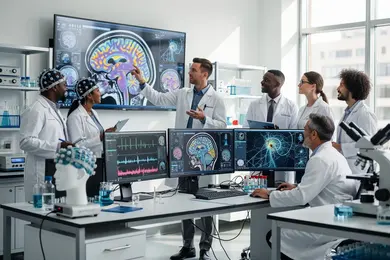
Online neuroscience degree rigor comparison reveals that remote programs generally match campus offerings in theoretical depth but fail to replicate essential hands-on lab experience. Core subjects such as advanced neurobiology, cognitive neuroscience, and quantitative methods receive comparable coverage, often enhanced by digital simulations.
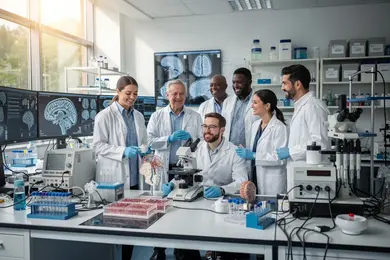
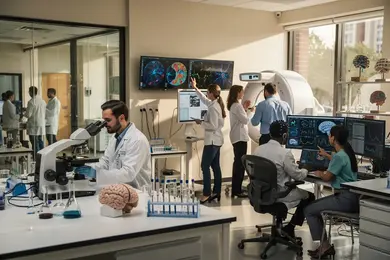
However, physical lab proficiencies-including microscopy and electrophysiology-cannot be fully substituted online, creating a practical skill gap that employers in clinical and research settings consistently highlight.
This gap poses tangible challenges for students pursuing roles with intensive experimental demands, such as neurophysiology research or medical device development, where in-person lab work and professional networking are critical. For instance, a student aiming for lab technician positions in pharmaceutical research benefits from campus programs requiring mandatory lab rotations rather than solely remote study.
To mitigate this, credible online programs frequently coordinate local internships or hybrid residencies to facilitate on-site lab experience near the student's residence. While addressing geographic limitations, these add logistical complexity and often prolong degree completion timelines. Such hybrid approaches are a practical necessity for meeting employer expectations concerning applied research training.
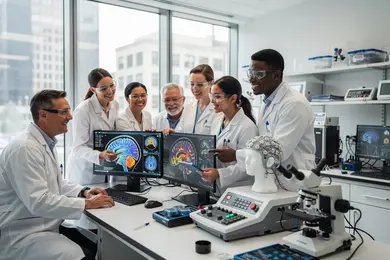
Furthermore, the interdisciplinary nature of neuroscience-spanning biology, psychology, computer science, and engineering-favours campus environments that better enable cross-department collaborations and team-based projects. The 2024 Human Brain Project Education Programme reports interdisciplinary training offered through over 117 institutions across 25 countries, underscoring these demands.
Prospective students considering lab experience in online versus campus neuroscience programs should weigh these tradeoffs carefully. Flexible online study requires strategic planning and local partnerships to gain practical exposure that aligns with workforce realities.
For additional perspective on related degree cost and commitment factors, see online animal science degree discussions.
What accreditation and program quality standards should online neuroscience degrees meet?
Regional accreditation from U.S. Department of Education-recognized agencies such as MSCHE, WSCUC, or HLC is the baseline standard for online neuroscience degrees in the United States, but it alone does not ensure comprehensive quality. Programs must meet interdisciplinary benchmarks integrating biology, psychology, statistics, and engineering to reflect the evolving demands of neuroscience.
Employers increasingly expect graduates to demonstrate proficiency beyond core theory, including applied skills in quantitative analysis and data science. For instance, a neuroinformatics position requires fluency in computing and foundational neuroscience, underscoring the need for curricula that bridge multiple disciplines rather than isolated coursework.
Without such cross-disciplinary rigor, graduates risk entering a workforce that prioritizes practical problem-solving and adaptable expertise.
Students evaluating programs should confirm the presence of hands-on components-virtual labs, capstone projects, or research partnerships-that mitigate the distance education gap. Maintaining low student-to-faculty ratios also matters for personalized mentorship critical to mastering complex methodologies.
Ignoring these quality benchmarks for cross-disciplinary online neuroscience programs may lead to degrees with limited labor market value and restricted graduate school options. Accreditation alone does not guarantee employability; validated interdisciplinary integration and experiential training differentiate graduates in competitive arenas such as research, biotech, and clinical neurotechnology.
Those exploring education pathways might also consider related questions, such as do you need a masters to be a librarian, to understand credential expectations across professions.
What types of online neuroscience degrees and specializations can students pursue?
Selecting an online neuroscience degree program without cross-disciplinary integration limits career flexibility and can confine graduates to narrow research roles. Programs that combine experimental neuroscience with computational skills respond better to employer demand, especially in fields like neuroinformatics and pharmaceutical R&D.
Prospective students seeking online neuroscience degree programs with interdisciplinary science focus should emphasize offerings that embed coding, signal processing, and data analytics alongside biological study.
For instance, working professionals targeting neurotechnology development gain substantial advantage from neural engineering tracks that apply electrical engineering and computer science concepts. Penn State's 2024 neural engineering guide illustrates the necessity of this hybrid expertise in brain-computer interfaces and neuroprosthetics innovation. Students without this blend may struggle to adapt as industry technologies and job requirements evolve.
Employers increasingly expect graduates to contribute to data-driven projects, reflected in workforce data showing 45% of neuroscience-related job postings demand computational proficiency alongside domain knowledge. Accreditation and inclusion of real-world virtual labs and large dataset analysis enhance employability in this rapidly shifting landscape.
Students balancing depth versus breadth should analyze program design critically: some degrees prioritize molecular neuroscience while others emphasize machine learning applications, each directing career paths quite differently. Evaluating specific curricula within cross-disciplinary specializations in online neuroscience studies prepares students for meaningful professional transitions and resilience.
Those interested in related clinical or educational roles may also want to explore NASP accredited online school psychology programs that further develop behavioral science competencies aligned with neuroscientific understanding.
What cross-disciplinary science coursework is typically included in online neuroscience programs?
Online neuroscience education demands a calibrated integration of biology, chemistry, psychology, mathematics, and computer science to reflect real-world interdisciplinary roles. Employers and research institutions expect graduates to not only understand foundational cellular and neurochemical processes but also to apply quantitative analysis and computational modeling in neuroinformatics or brain-computer interface development.
For example, proficiency in Python or MATLAB directly determines a candidate's suitability for AI-driven diagnostics or data-heavy research projects.
Programs often supplement disciplinary knowledge with physics and engineering to furnish skills in neural imaging and signal processing, yet remote learners face obstacles mastering these lab-intense competencies without in-person components. Selecting curricula incorporating applied projects or industry partnerships can be decisive in overcoming this gap, as employers value practical experience alongside theoretical mastery.
This multidimensional training framework affects eligibility for neuroscience-related positions such as research assistants or clinical trial coordinators, where the blend of biological insight and quantitative rigor is non-negotiable. Omitting integrative coursework risks limiting career pathways and long-term adaptability in a labor market increasingly dominated by data-centric roles.
Prospective students must critically evaluate how programs unify STEM and biological sciences toward neuroscience-specific demands rather than offering fragmented course sets. Such alignment shapes employability outcomes more than credential prestige. The operational tradeoff is clear: breadth without applied coherence diminishes workforce readiness.
What are the usual admission requirements for online neuroscience degrees at different levels?
Admission standards for online neuroscience degrees reflect the shifting demands of academic rigor and workforce relevance at each educational tier. Bachelor's programs insist on a strong science and mathematics foundation, typically requiring coursework in biology, chemistry, physics, and math, alongside a minimum GPA near 3.0. Though standardized tests may be optional, applicants gain leverage by demonstrating analytical aptitude, which employers increasingly prioritize for entry-level roles.
Master's programs expect candidates to hold a relevant bachelor's degree with specialized coursework such as organic chemistry and calculus, plus solid prior academic performance (minimum 3.0 GPA). Letters of recommendation and, increasingly, practical skill assessments outweigh traditional GRE scores, aligning admission criteria with the functional competencies that matter in applied research or industry settings.
At the doctoral level, admissions hinge on demonstrated research productivity and alignment with faculty interests, often requiring GPAs above 3.5 and evidence of published or presented work. The nature of neuroscience research sometimes mandates on-campus lab residencies despite the online format, signaling a significant time and logistic commitment for applicants.
Cross-disciplinary experience, particularly in fields like computer science or engineering, substantially enhances employability and earning potential. Morgan State's applied neuroscience graduates often report median salaries between $60,000 and $90,000+, underscoring the concrete value of strategic admission preparation and interdisciplinary skill-building.
How long do online neuroscience degrees take, and what do they cost to complete?
Optimizing time-to-completion for online neuroscience degrees directly affects employment viability in a field where interdisciplinary expertise rapidly evolves. Bachelor's programs typically require four years full-time, though intensive coursework or credit transfers can reduce this to three. Master's degrees generally span 18 to 24 months, with part-time options extending beyond two years. Doctoral tracks, combining online coursework with onsite research, often take four to six years due to the demands of dissertation and lab components.
Financially, undergraduate tuition ranges from $15,000 to $45,000 annually, while graduate programs cost between $20,000 and $60,000 total, influenced by lab fees and program-specific needs. Expenses outside tuition-including technology and potential hybrid travel-should factor into budgeting.
A clinical research coordinator shifting from healthcare illustrates key tradeoffs: accelerated programs speed entry into neuroscience roles but may sacrifice cross-disciplinary electives that enhance versatility. Extended timelines deepen subject mastery but risk curricular obsolescence against fast-changing workforce demands.
For working professionals balancing employer tuition reimbursement, federal aid, and transfer credits offers practical cost management. Prioritizing programs with stackable credentials and flexible pacing can facilitate strategic career pivots within the neuroscience labor market, where demand grows between 160% and 210% of the national average, according to Tiffin University's labor data.
What careers can an online neuroscience degree lead to across science and healthcare fields?
Online neuroscience degrees that integrate cross-disciplinary science training strategically position graduates for fields spanning research, clinical healthcare, biotechnology, and data analytics. For instance, roles such as clinical research coordinators demand not only foundational knowledge of neural systems but also proficiency in protocol management and data handling.
This interdisciplinary approach, often requiring around 120 total credits as seen in programs like Arizona Online's neuroscience and cognitive science bachelor's degree, introduces practical tradeoffs. The broad curriculum extends completion times and increases student workload by balancing core neuroscience with extensive courses in biology, chemistry, and computer science.
Employers increasingly seek candidates who merge neuroscience expertise with applied skills in informatics or patient care. Working professionals aiming to pivot into pharmaceutical development or neurorehabilitation must recognize that additional certifications are usually necessary beyond the degree, especially for clinical roles.
The workforce demand for neuroinformatics roles highlights the need for data modeling and programming competence, underscoring that degree holders without this skillset may face limited opportunities. Government labor data shows that neuroscience graduates with interdisciplinary training achieve roughly 15% higher employment rates in healthcare and biotech compared to those focused narrowly on technical neuroscience knowledge.
Students considering this pathway should carefully evaluate their readiness for the curricular intensity and the necessity of supplementary qualifications to optimize employability.
What salary ranges and job outlook can graduates with online neuroscience degrees expect?
Graduates pursuing online neuroscience degrees face a competitive job market where median salaries approach $286,310 for advanced roles such as clinical neuropsychologists or neuro-engineering specialists. However, a projected 3% job growth between 2024 and 2034 signals limited expansion within core neuroscience careers, requiring candidates to cultivate specialized skills beyond foundational knowledge to stand out.
Positions in academic research, healthcare, or biotech increasingly demand fluency in complementary areas like computer science, bioinformatics, and data analytics. For instance, a neuroinformatics analyst blending machine learning techniques with neuroscience data can achieve higher compensation and job stability compared to traditional lab technicians.
Candidates targeting clinical roles must also navigate licensing and certification hurdles, which directly influence employability and salary potential.
Entry-level salaries typically range from $60,000 to $110,000, with significant income growth dependent on gaining experience in niche research or clinical settings. This means immediate financial returns from an online neuroscience degree may be limited without multi-step advancement and targeted skill acquisition.
Programs integrating cross-disciplinary training in data science, pharmacology, or engineering better position graduates to adapt to employer demands and evolving industry dynamics.
- High specialization correlates with top-tier compensation
- Licensing requirements shape hospital-based employment prospects
- Cross-disciplinary expertise mitigates modest job growth constraints
For authoritative data on neuroscience career paths and informed educational decisions, the edX neuroscience program page offers detailed labor statistics and program insights.
How can students choose a reputable online neuroscience program aligned with their goals?
Programs integrating neuroscience with biology, chemistry, and behavioral sciences in core courses notably increase employability by aligning education with immediate industry needs. Surface-level additions to curricula often fail to prepare students for roles in pharmaceutical development, clinical research, or neurotechnology. For instance, online curricula featuring courses such as neurobiology of learning and memory and psychopharmacology offer tangible skill sets applicable in interdisciplinary job markets.
Verification of program accreditation and adherence to standards from entities like the Society for Neuroscience or the National Science Foundation is essential. Measurable outcomes-including alumni employment rates in neuroscience research and advanced degree acceptance-serve as vital indicators of program effectiveness and ROI.
Working professionals pivoting to neuroscience-related fields should prioritize flexible part-time options, access to active researcher mentorship, and career services that support networking across sectors. For example, clinical neuropsychologists transitioning into data-driven biotechnology roles require programs emphasizing computational neuroscience in addition to traditional study.
Key considerations when selecting a program include:
- Confirming that cross-disciplinary content is embedded within required coursework rather than offered as electives.
- Reviewing independent reports on alumni employment or graduate school placement statistics.
- Choosing programs that provide hands-on research opportunities or internships to enhance practical expertise.
Ignoring these criteria risks commitment to programs that lack industry relevance, resulting in limited employability and constrained career trajectories within neuroscience's evolving landscape.
Other Things You Should Know About Neuroscience
Employers recognize online neuroscience degrees increasingly but remain cautious regarding practical experience gaps, especially in clinical or laboratory contexts. Candidates with online degrees must often compensate through internships, research projects, or certifications demonstrating applied skills. To improve employability, prioritize online programs with integrated practical training and verified industry connections over those relying solely on theoretical coursework.
Online neuroscience degrees demand high self-discipline due to complex, interdisciplinary content combined with asynchronous learning formats. Students must allocate additional effort to simulate lab experiences independently and coordinate with faculty or peers remotely. Those balancing work or family obligations should prefer programs with flexible pacing options but remain realistic about the intense cognitive load and time needed to assimilate diverse subjects like biology, chemistry, and data analysis.
Choosing between broad science foundations and specialized neuroscience tracks depends on career goals. For roles requiring adaptability across biotech, healthcare, or data science sectors, prioritize programs with strong cross-disciplinary training covering genetics, computer science, and physiology. Conversely, if aiming for focused neuroscience niches like neuroimaging or cognitive neuroscience research, select specialized tracks that deepen domain-specific expertise even if they offer less breadth.
References
- BNA Learning Outcomes Approved by Royal Society of Biology https://www.bna.org.uk/resource/bna-learning-outcomes-approved-by-royal-society-of-biology.html
- Learn neuroscience | edX https://www.edx.org/learn/neuroscience
- 7 Best Neuroscience Courses for 2025; Learn Online for Free — Class Central https://www.classcentral.com/report/best-neuroscience-courses/
- Tiffin https://www.tiffin.edu
- Global Recognition | Carrick Institute https://www.carrickinstitute.com/the-institute/global-recognition
- Best Neuroscience Courses Online in 2026 | Neurosity https://neurosity.co/guides/best-neuroscience-courses-online-2026
- Neuroscience Degree Salary https://www.collegehelpguide.com/degrees/neuroscience/salary/
- Quality Standards and Accreditation of Distance Education Programs in a Pandemic - OJDLA https://ojdla.com/articles/quality-standards-and-accreditation-of-distance-education-programs-in-a-pandemic