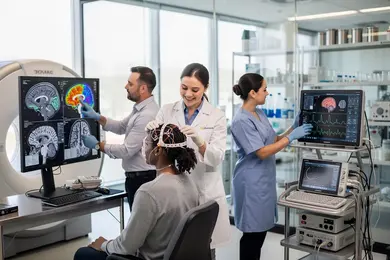
2027 Best Online Bachelor's in Neuroscience for Behavioral Neuroscience Career Paths

Co-Founder and Chief Data Scientist
Securing a behavioral neuroscience role now demands more than foundational knowledge; professionals must often demonstrate timely, flexible credentials that align with swiftly evolving research and clinical needs. Traditional bachelor's programs struggle to accommodate working adults or those relocating for career shifts, with over 40% of students enrolling in online education citing work-life balance as their primary motivator, according to the National Center for Education Statistics. This shift reflects growing employer preference for candidates who combine rigorous academic preparation with adaptable learning formats. Navigating the expanding array of online bachelor's neuroscience programs requires discerning the practical fit of curriculum structure, accreditation, and career services. This article evaluates top online bachelor's options to equip students with the insight needed to align education paths with behavioral neuroscience career trajectories efficiently and strategically.
Key Things You Should Know
- Online bachelor's in neuroscience provide access to research-aligned curricula but often omit intensive lab components, creating a tradeoff affecting eligibility for hands-on behavioral neuroscience roles, per 2024 National Science Foundation data.
- Employers in behavioral neuroscience increasingly expect proficiency in computational modeling and data analytics, skills inadequately covered in many online programs, influencing graduate employability in competitive R&D environments.
- Completion times and costs for online neuroscience degrees vary widely; programs averaging 3.5 years and $45K total tuition optimize timely entry into fast-evolving cognitive neuroscience sectors, according to 2024 Department of Education statistics.
What is an online bachelor's in neuroscience and how does it prepare you for behavioral neuroscience careers?
The value of an online bachelor's in neuroscience programs hinges on balancing the convenience of remote learning against the sector's demand for applied competencies. Behavioral neuroscience career preparation requires not only theoretical grounding in neurobiology and cognitive science but also credible evidence of proficiency in experimental design, neurobehavioral data interpretation, and ethical research practices.
Programs that compensate for limited physical lab access through virtual labs, data analysis projects, or local internships better position graduates for entry-level roles such as research assistants or behavioral technicians. Yet, prospective students should weigh the remote format's flexibility against the necessity of securing hands-on experiences crucial to employer expectations.
Employers in clinical trial or pharmaceutical research settings typically require graduates to demonstrate regulatory knowledge and advanced analytics skills, differentiating these roles from mental health-focused paths where clinical psychology integration is essential.
Selecting programs with rigorous accreditation and faculty expertise remains paramount to avoid weaker credentials that undercut job market or graduate school prospects.
By 2025/2026, the expansion to 26 fully online neuroscience and related bachelor's programs worldwide reflects broader acceptance of remote learning credentials. However, aspirants looking to pivot strategically or advance should assess pragmatic outcomes rather than rely on program volume alone.
For data-savvy professionals evaluating next steps, consider complementary graduate training such as masters in data science online to deepen quantitative skills applicable in neuroscience research and behavioral data analysis.
Which accredited schools offer the best online bachelor's in neuroscience for behavioral neuroscience pathways?
Choosing one of the best accredited online bachelor's in neuroscience programs focused on behavioral career paths requires weighing program rigor against the challenge of securing practical experience. Programs at Arizona State University, Oregon State University, and the University of Florida exemplify this balance by offering deep STEM coursework paired with behavioral neuroscience emphases.
However, students should anticipate supplementing online learning with local lab internships or capstone projects to meet employer expectations for hands-on skills.
Arizona State University's curriculum blends neurobiology with behavioral psychology, useful for positions in research and clinical environments. Oregon State stands out for integrating applied behavioral neuroscience and data analysis, directly applicable in behavioral research roles.
The University of Florida emphasizes interdisciplinary approaches linking neuropsychology and behavioral science, providing strong academic advising for career alignment. These online neuroscience degrees for behavioral career paths demand considerable self-direction to bridge theoretical instruction with practical application.
Graduates often pursue roles in medical research labs, pharmaceutical firms, or mental health organizations, where fluency in behavior-neural interaction is essential.
The U.S. Bureau of Labor Statistics projects a 9% growth from 2024 to 2034 for medical scientists, indicating steady employment prospects for those who supplement online programs with robust experiential components. Reliable internet and proactive local internship acquisition are critical; absence of these may limit job readiness despite degree completion.
The challenges in balancing theory and practice also reflect a broader trend seen in the best accredited online animal science degree programs, which require similar hands-on experience alongside online coursework.
For a comprehensive view of costs and program structures, consider resources like accredited online animal science degree guides to understand comparable STEM fields.

How do online neuroscience bachelor's programs compare with on-campus options for behavioral neuroscience training?
Online neuroscience bachelor's programs largely match traditional campus programs in theory but fall short on practical behavioral neuroscience training. Essential hands-on experience with neuroimaging, electrophysiology, or animal behavior labs is often replaced by virtual simulations that limit skill development. This tradeoff impacts employability since research and clinical roles expect demonstrated proficiency with specialized equipment and real-time data collection, which virtual-only formats cannot fully replicate.
For students focused on behavioral neuroscience training opportunities in online and on-campus degrees, this means online learners must independently secure local internships or lab positions to gain the hands-on experience embedded in on-campus curricula through lab rotations and supervised projects. Without such hybrid arrangements, online programs struggle to cultivate the immersive competencies that advanced research and clinical careers demand.
Given the significant earning potential for neuroscientists-with mean wages around $286,310 annually and median salaries exceeding $239,200-investing in programs that ensure comprehensive practical training offers a clear advantage.
Online degrees may suit those prioritizing theoretical foundations or seeking a different trajectory, but anyone targeting high-level research or clinical roles should weigh these tradeoffs carefully. For context on practical online degree alternatives, consider comparing paths like a computer science degree online, where experiential elements differ substantially.
What admissions requirements and prerequisites do online bachelor's in neuroscience programs typically have?
Admission into online bachelor's in neuroscience programs hinges on quantifiable academic readiness, particularly in STEM disciplines. Prerequisites for behavioral neuroscience bachelor programs commonly demand completion of biology, chemistry, and often physics along with mathematics through Algebra II or precalculus. These requirements are not ornamental; they are prerequisites because advanced neuroscience coursework and laboratory exercises necessitate a solid foundation in scientific methods and quantitative reasoning.
Admission GPA thresholds typically range between 2.5 and 3.0, with selective institutions imposing higher standards to prioritize candidates equipped to navigate complex neurobiological subjects. While standardized tests like the SAT or ACT have become optional at some schools, they still hold weight for scholarship decisions and competitive admissions.
Because many neuroscience concepts rely heavily on hands-on lab experience, applicants must critically evaluate if their chosen online programs arrange in-person lab access or necessitate local partnerships. This factor frequently dictates whether prerequisite lab coursework must be completed beforehand to maintain progression without interruption.
For working professionals pursuing a strategic shift, evidence of quantitative aptitude through relevant online courses or industry experience can sometimes substitute formal prerequisites, broadening access without diluting program rigor.
From a workforce perspective, meeting these prerequisites is vital. Medical scientists, a prevalent career outcome after neuroscience studies, earned a mean salary of $111,430 in 2024, emphasizing demand for graduates who demonstrate mastery of essential competencies. Those exploring options can consult best online biology degree programs for complementary pathways.
What core courses and specializations should a neuroscience bachelor's include for behavioral neuroscience roles?
Behavioral neuroscience degree programs that fail to integrate rigorous laboratory training and specialized coursework significantly reduce graduates' competitiveness in research and applied roles. Core curriculum must extend beyond basic neurobiology to include neuropharmacology, cognitive psychology, and neuroendocrinology, which are essential for understanding brain-behavior dynamics in clinical and pharmaceutical contexts.
For example, pharmaceutical companies demand graduates with applied skills in psychopharmacology and computational modeling to evaluate drug effects on brain function accurately.
Electives or special topics focused on neuroimaging techniques, machine learning, and neuropsychological assessment tools cater to roles in public health and policy, where data-driven behavioral analysis is critical. Programs that overlook hands-on research experience or lack access to quality labs and mentorship often hinder practical readiness, especially in remote or online settings.
Accreditation and established partnerships with research networks or hospitals are vital decision criteria for ensuring meaningful experiential learning.
Students must weigh tradeoffs between theoretical depth and applied skill sets, aligning course choices with targeted workforce demands. OnlineDegree.com reports that neuroscience-related roles offer an average salary of $93,730, reflecting a strong market for candidates who combine specialization with practical expertise in behavioral neuroscience domains.
How long does it take to earn an online neuroscience bachelor's and what does the timeline look like?
Completing an online bachelor's degree in neuroscience often takes four years full-time, but the timeline varies significantly based on enrollment and personal obligations. Part-time students or those balancing work typically need five to six years, reflecting the practical friction of integrating rigorous science courses with other commitments. Accelerated options can reduce this to about three years by leveraging extra courses or summer sessions, but this intensifies workload and demands strong self-discipline.
Foundational coursework covers biology, chemistry, and psychology in the first two years, necessary to underpin later specialized study. The final years concentrate on advanced topics and research methodologies, including computational skills increasingly sought after in biotech and healthcare analytics roles.
For instance, graduates trained in quantitative methods align with labor market growth projections for data scientist positions-33.5% increase and $120,230 average salary as reported by the Labor Department.
Students should weigh the impact of lab requirements, internships, and research projects, which may extend study time but are critical for real-world skills and employability. Asynchronous online formats offer flexibility but can prolong completion without careful time management.
The tradeoff for career pivoters lies in balancing extended study timelines against acquiring applied skills essential for evolving neuroscience job markets.
How much do online bachelor's in neuroscience programs cost and what financial aid is available?
Choosing an online bachelor's in neuroscience involves weighing significant cost and future career trajectory considerations. Total tuition typically ranges from $30,000 to $70,000, varying by public versus private institutions and residency status. Public universities offer more affordable in-state rates averaging $350 to $450 per credit, whereas private schools exceed $600 per credit. Given the 120-130 credit hour requirement, these differences substantially affect financial outlay.
Beyond sticker price, prospective students should anticipate additional expenses such as lab fees and course materials, which impact the true cost of attendance. Financial aid options span federal need-based grants like Pell Grants, institutional scholarships, and federal loans that require cautious debt management relative to expected neuroscience career earnings.
Working adults frequently leverage employer tuition assistance, though coverage is inconsistent and often tied to specific employment conditions. Scholarship opportunities focused on STEM or neuroscience fields demand proactive, competitive applications.
The majority of graduates transition to graduate study rather than immediate workforce entry. This trajectory necessitates planning for advanced education costs, which typically exceed undergraduate expenses but critically influence clinical and research career pathways.
What behavioral neuroscience careers can you pursue with an online bachelor's in neuroscience?
Graduates with a behavioral neuroscience bachelor's degree face distinct tradeoffs between immediate workforce entry and committing to extended graduate education. Entry-level roles such as research assistants in cognitive neuroscience labs demand proficiency in data analysis and neuroimaging methods but often offer limited career growth without advanced credentials.
Behavioral health technician positions in clinical settings provide applied experience supporting neurological or psychiatric patients yet typically require additional certification beyond the bachelor's degree.
Clinical neuroscience professions such as neurologists or neuropsychologists require graduate or medical degrees, with a typical salary around $234,425 annually but only a projected 3% job growth through 2031. The significant time and financial investment to secure these roles underscores the importance of aligning educational pathways with long-term career goals and available resources.
Other viable directions include neuropsychological technician roles in rehabilitation or pharmaceutical research coordination, where certification plus a bachelor's can allow entry. In technology sectors, graduates contribute to developing cognitive devices and brain-computer interfaces by integrating neuroscience with engineering or computer science skills.
Choosing between direct employment in supportive neuroscience functions or investing in graduate training involves weighing labor market realities and personal circumstances. Prospective students should critically evaluate program offerings for strong lab components and networking to optimize post-graduate opportunities.
What salary ranges and job outlook can behavioral neuroscience graduates expect in the United States?
Behavioral neuroscience graduates in the U.S. face a clear compensation gradient shaped by role specificity and industry demands. Entry-level research or lab technician roles generally start around $50,000 annually, while specialized positions in clinical research, pharmaceutical development, or neurotechnology approach $90,000.
This disparity reflects both skill application and sector-specific demand, with biotech and healthcare employers valuing multidisciplinary competence. According to U.S. Bureau of Labor Statistics projections, biological sciences-related jobs will grow at 13% through 2032, indicating stable opportunities but increased competition.
Those seeking career paths outside direct research-such as data analysis or cognitive therapy support-must consider the variable wage landscape and often the necessity for additional credentials or advanced degrees. For example, advancing into neuropsychology or behavioral clinical analysis typically involves graduate education but correlates with higher salary thresholds beyond the bachelor's baseline.
Online behavioral neuroscience degrees remain limited, with only 26 programs worldwide available out of 235 as noted by Educations.com for 2025/2026. While these afford flexibility, students may face narrower professional networks compared to on-campus peers, a critical factor since employers prioritize hands-on lab experience and established connections.
Pragmatically, combining an online degree with internships, targeted certifications, and technical skills in data science or programming can counterbalance these challenges, enhancing employability and income potential in a competitive U.S. labor market.
How do accreditation, research opportunities, and faculty expertise affect the quality of an online neuroscience program?
Accreditation, research involvement, and faculty specialization critically shape the practical value of online neuroscience programs, with direct implications for career readiness in behavioral neuroscience roles. Without recognized accreditation, students encounter credit transfer challenges and licensing barriers that can impede advancement in competitive fields such as clinical research coordination or health-related practitioner roles.
Programs embedding active research opportunities-remote participation in studies or data analysis-equip students with marketable skills that extend beyond theory. For instance, engagement in projects exploring neural mechanisms of behavior cultivates analytical abilities essential for interpreting clinical trial data or supporting evidence-based healthcare decisions.
Faculty expertise aligned with current behavioral neuroscience research ensures that curriculum content remains relevant and connected to professional networks.
Students should target programs where instructors maintain publications and grants in their subfields, such as cognitive neuropsychology or neuropharmacology, to secure mentorship grounded in applied practice.
Key considerations include:
- Verification of regional or program-specific accreditation for licensing and credit reliability
- Access to ongoing research projects fostering relevant technical competencies
- Faculty actively contributing to behavioral neuroscience literature linked to career targets
Data from Arizona State University's online neuroscience degree emphasize how applied neuroscience correlates to workforce outcomes: the physician assistant track linked to neuroscience shows a 20.4% job growth projection and an average salary above $135,000.
Choosing programs lacking these components risks graduating disconnected from these expanding, well-compensated workforce niches.
Other Things You Should Know About Neuroscience
A research thesis or internship significantly enhances practical skills and employer appeal but is not uniformly required in online neuroscience programs. Programs that mandate or strongly encourage hands-on research or internships better prepare students for behavioral neuroscience roles by providing real-world data collection and analysis experience, which many employers prioritize. If your program lacks these components, you will need to seek external opportunities to remain competitive.
An online bachelor's in neuroscience alone rarely qualifies graduates for direct clinical roles, as most positions require advanced or specialized certifications beyond the bachelor's level. For behavioral neuroscience careers involving patient interaction or clinical assessment, additional credentials such as a master's in clinical neuropsychology, counseling, or relevant licenses are necessary. Prioritize programs offering clear pathways or partnerships facilitating these advanced qualifications to avoid career stagnation.
Employers often scrutinize online neuroscience degrees for proof of hands-on experience and academic rigor, which can be less evident than with on-campus programs. Graduates from online programs must demonstrate equivalent competencies through internships, lab work, or research projects to offset potential bias. Selecting programs with strong faculty engagement and practical components reduces barriers to employer acceptance in competitive behavioral neuroscience job markets.
Many do. Proctored exams are common in upper-division neuroscience, statistics, and research methods courses, using virtual proctoring or approved testing centers. Programs also often require a minimum 2.0 GPA for graduation, and some capstone or lab courses must be completed within specific term windows.
References
- Neuroscience Degree Salary https://www.collegehelpguide.com/degrees/neuroscience/salary/
- Onlinedegree https://onlinedegree.com
- Neuroscience https://www.ualberta.ca/en/undergraduate-programs/bachelor-of-science-with-honors-neuroscience.html
- Future of Accreditation in E-Learning ‚ÄöѨ Prioritizing Public Interests https://elqn.org/the-future-of-accreditation-in-e-learning-prioritizing-public-interests/
- Behavioral Neuroscience Degree | Houghton University https://www.houghton.edu/social-sciences/behavioral-neuroscience-major/
- BNA Learning Outcomes Approved by Royal Society of Biology https://www.bna.org.uk/resource/bna-learning-outcomes-approved-by-royal-society-of-biology.html
- Neuroscience Majors https://www.hamline.edu/academics/undergraduate/neuroscience-major-ba-bs
- What Can You Do with a Neuroscience Degree? | Tiffin University https://www.tiffin.edu/news/what-can-you-do-with-a-neuroscience-degree/