2027 Pharmaceutical Research Roles You Can Target With a Neuroscience Degree

Co-Founder and Chief Data Scientist
Professionals with a neuroscience degree often confront the critical challenge of aligning their specialized knowledge with pharmaceutical industry roles that demand multidisciplinary expertise and adaptability. The 2024 National Center for Education Statistics noted a 15% increase in enrolled adult learners pursuing flexible or online programs, indicating rising demand for accessible pathways that accommodate career pivots without sacrificing depth. This shift highlights how timing, credential relevance, and practical skill application influence employability just as much as academic prestige. This article identifies targeted pharmaceutical research positions suited for neuroscience graduates, providing actionable insights to navigate this competitive landscape and optimize career outcomes.
Key Things You Should Know
- Pharmaceutical roles requiring a neuroscience degree show a 12% slower entry-to-senior transition than average STEM jobs, per 2024 BLS data, necessitating early specialization to offset extended career ramp-up.
- Employers prioritize candidates with combined pharmacology and advanced data analytics skills, with 68% of pharma research postings in 2024 explicitly demanding cross-disciplinary expertise, incentivizing dual-skill acquisition.
- High cost and limited availability of federally funded neuroscience-pharma programs-covering fewer than 15% of applicants annually as reported by NIH 2024-restrict timing flexibility and extend pre-employment phases.
What pharmaceutical research careers are available to graduates with a neuroscience degree?
Pharmaceutical research careers for neuroscience graduates often demand specialized expertise beyond a basic degree, reflecting a need for nuanced skills and interdisciplinary fluency. The global preclinical CRO sector, valued at $9.3 billion in 2024 with a projected 7.8% CAGR to 2030, mainly focuses on CNS and neurodegenerative disease pipelines, shaping job opportunities in this niche.
For example, preclinical research scientists must combine neuroanatomy and molecular neuroscience knowledge to create assays that reliably predict human trial outcomes, a key role particularly prevalent in biotech startups targeting Alzheimer's or Parkinson's disease.
Neuroscience degree job opportunities in pharmaceutical research extend to neuropharmacologists who analyze drug effects at synaptic and cellular levels. These positions usually require advanced electrophysiology and receptor pharmacology training, putting a premium on graduate-level specialization.
Clinical research coordinators with neuroscience backgrounds navigate complex CNS drug protocols, ensuring regulatory compliance and bridging communication between research teams and clinical staff, directly impacting drug development timelines.
Biomarker specialists represent another critical role by developing tools that quantify disease progression or therapeutic response, integrating neuroscience with biostatistics and regulatory frameworks. Identifying and focusing on these distinct pathways early on helps avoid overly broad job searches that dilute employability in this competitive space.
Students aiming for a pivot or advancement should also consider complementary credentials or coursework, as reflected in resources outlining the cheapest online data science masters, to enhance their analytical and computational skill sets essential for emerging demands in neurodrug development.
How does a neuroscience degree prepare you for drug discovery and development roles?
Holding a neuroscience degree offers significant leverage in drug discovery, especially within central nervous system (CNS) therapeutics, where nearly 15% of global clinical trial market value is concentrated. However, industry data reveal that employers expect more than theoretical expertise; candidates must convert neural pathway understanding into actionable drug development strategies.
For instance, in early-stage roles, applying electrophysiological assays or calcium imaging can improve compound selectivity and reduce expensive trial failures, demonstrating how a neuroscience degree supports pharmaceutical development careers.
Practical pharmaceutical development demands integration of neurobiology with medicinal chemistry, high-throughput screening, and regulatory knowledge-skills not inherently covered in typical neuroscience curricula. Many entry-level professionals enter as research associates or preclinical specialists, emphasizing the importance of internships or certifications to build translational competencies alongside academic foundation.
Clinical development roles leverage neuroscience graduates' abilities to interpret neurobehavioral endpoints and manage CNS-specific adverse events, essential in heterogeneous disorders like Alzheimer's disease for trial design and patient stratification.
Candidates navigating these pathways must weigh the tradeoff between deep mechanistic knowledge and the breadth of cross-functional skills necessary in drug pipelines.
Prospective students evaluating a neuroscience degree for a pharmaceutical pivot should also consider accessible programs, such as an exercise science online degree, when balancing practical skill acquisition with flexible learning formats.
Which pharmaceutical research roles most directly use neuroscience knowledge and lab skills?
Neuroscience research roles in pharmaceutical development entail distinct tradeoffs in function and expertise that significantly affect career trajectory. For instance, neuroscience-focused medical science liaisons (MSLs), who constitute about 18% of U.S. MSLs, prioritize translating complex neurobiological data into clinical insights. This role demands strong communication skills and a thorough grasp of neuroanatomy, neurophysiology, and pharmacodynamics, positioning them as key players in CNS-active drug development but with less hands-on lab involvement.
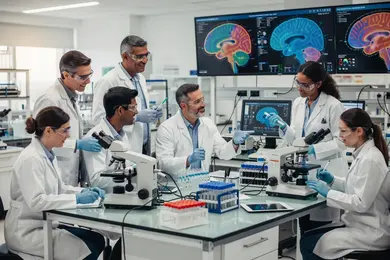
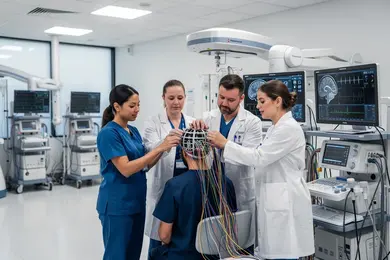
Conversely, neuropharmacologists conduct detailed preclinical and clinical studies with sophisticated lab techniques such as electrophysiology and neuroimaging. This path requires extensive neuroscience lab skills and a longer training period, but it offers direct impact on compound optimization and toxicity profiling.
Meanwhile, clinical research associates specializing in neurological disorders manage trial protocols for conditions like Alzheimer's and Parkinson's, balancing neuroscience expertise with regulatory compliance and neurocognitive testing coordination, though their workload varies with trial phases.
Choosing among these pharmaceutical lab positions requiring neuroscience expertise involves evaluating the balance between laboratory work, regulatory knowledge, and communication demands. Candidates must also consider workforce realities, including specialized skill requirements and training length.
Aligning these practical factors with educational pathways is critical to navigating this specialized, evolving field. For those considering interdisciplinary options, reviewing affordable pathways such as computer science degrees may supplement neuroscience research roles with valuable computational skills increasingly sought in pharmaceutical development.
What education, training, and skills do you need to work in pharmaceutical neuroscience research?
Pharmaceutical research roles requiring neuroscience degrees demand more than academic credentials; employers expect measurable technical expertise aligned with drug development and clinical safety monitoring. While a bachelor's degree in neuroscience, pharmacology, or biochemistry is a baseline, many positions require a master's or PhD, reflecting the complexity of CNS (central nervous system) drug research.
Proficiency in molecular biology, neuroimaging, and bioinformatics is standard, but practical hiring increasingly weighs experience in pharmacovigilance-an $8.9 billion market growing to $16.2 billion by 2030. This growth emphasizes skills in signal detection, adverse event reporting, and regulatory compliance with FDA and EMA guidelines.
Education and skills for pharmaceutical neuroscience research careers must bridge academic knowledge and industry application; a neuroscience researcher transitioning into pharma typically invests 12-18 months in targeted training on drug metabolism, safety signal management, and clinical trial protocols.
Certifications such as RAC and pharmacovigilance-specific courses with case-based learning improve employability, especially when paired with hands-on experience in real-world data integration and ethical considerations of neuropharmacological trials.
Real-world candidates succeed by combining neuroscience expertise with operational knowledge of electronic data capture software and cross-disciplinary communication, a blend rarely addressed in traditional degree programs. Prospective students should consider accelerated psychology programs as an alternative pathway when seeking foundational neuroscience education efficiently linked to clinical research roles.
For those evaluating viable options, accelerated psychology programs provide focused curricula that may complement pharmaceutical research ambitions.
How do bachelor's, master's, and PhD neuroscience pathways differ for pharma careers?
Choosing between bachelor's, master's, and PhD pathways in neuroscience directly shapes your role, responsibilities, and career trajectory within pharmaceutical industries focused on CNS drugs. For example, bachelor's degree holders typically start as clinical trial coordinators or data analysts, supporting operational and data-driven tasks rather than leading scientific innovation.
This role fits well with an FDA landscape where neurologic drug approvals have risen about 40% over five years, increasing demand for professionals skilled in regulatory logistics but limiting advancement into research leadership.
Master's graduates often move into clinical research associate or project manager positions, functioning as intermediaries between experimental teams and regulatory bodies. Their training supports protocol development and compliance, aligning with the roughly 13% share neurology holds in novel drug approvals. However, these roles often plateau before reaching independent innovation or senior scientific leadership.
PhD holders access higher-impact positions such as clinical pharmacologists, regulatory scientists, or drug discovery leads with deep expertise in biomarker validation and experiment design. These roles require demonstrating ability to manage complex regulatory submissions and cross-functional teams, matching the increasing sophistication of CNS pipelines in recent FDA data.
The tradeoff is a more limited job market volume and significant investment of time and resources to prepare.
- Bachelor's: faster entry, operational focus, limited upward research mobility
- Master's: broader scope bridging science and regulation, capped innovation potential
- PhD: leadership in research and regulatory science, higher specialization, smaller job market
Deciding your path involves balancing immediate employability against long-term impact and leadership potential within pharmaceutical neuroscience.
What is the typical curriculum in neuroscience programs geared toward pharmaceutical research?
Programs focused on neuroscience for pharmaceutical research aim squarely at drug development demands, combining molecular neurobiology, neuropharmacology, and translational neuroscience. Their practical orientation reflects the rapidly expanding CNS therapeutics sector, poised to grow from $116.2 billion in 2023 to $205.0 billion by 2032, necessitating graduates with applied R&D skills aligned with industry needs.
Core coursework covers:
- Cellular and molecular neuroscience targeting synaptic function and neuroplasticity linked to drug mechanisms.
- Pharmacokinetics and pharmacodynamics to decode drug behavior in neural tissue.
- Quantitative bioinformatics and statistics for analyzing clinical and preclinical trial outcomes.
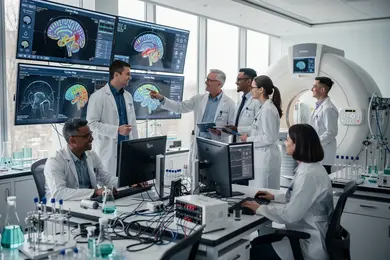
- Neuroimaging techniques like fMRI and PET for in vivo drug efficacy assessment.
- Regulatory compliance and ethics centered on FDA and global pharmaceutical standards.
Graduates face a balancing act: broad neuroscience knowledge versus specialized pharmacology and regulatory science expertise. The latter often yields better pharmaceutical R&D roles, since industry hiring favors candidates who demonstrate direct drug development competencies.
For example, neuropharmacologists in pharma translate molecular insights into viable therapeutic candidates, applying skills gained through hands-on lab and computational modeling exposure.
Practical training integrating animal models and human tissue assays is critical, as is navigating interdisciplinary collaboration. Prospective students should focus on program alignment with industry R&D trends rather than prestige alone, recognizing that practical expertise in neuropharmacology and regulatory affairs impacts employability more decisively than theoretical neuroscience breadth.
Can you prepare for pharmaceutical research with an online neuroscience or related degree?
Online neuroscience degrees can serve as a foundation for pharmaceutical research careers, but their value depends heavily on program design and additional practical experience. Programs that integrate advanced neuropharmacology, molecular biology, and data analytics coursework respond better to pharmaceutical industry needs, especially given the rapid growth of AI-driven drug discovery-from $1.6 billion in 2023 to a projected $9.1 billion by 2030, according to Grand View Research.
Candidates lacking computational skills risk falling short in CNS drug discovery roles where AI applications and programming languages like Python or R are increasingly standard.
However, most online neuroscience programs omit lab-based training, creating a significant gap for roles requiring hands-on experimental skills. This gap necessitates supplementing education with internships, apprenticeships, or industry collaborations to gain practical exposure.
For example, a professional pivoting into CNS drug research would benefit from completing certifications in computational biology and engaging with active pharmaceutical research groups to demonstrate applied expertise and navigate hiring biases.
- Complete specialized bootcamps or credentials in AI and computational methods.
- Participate in projects involving neurological disease modeling using real datasets.
- Network strategically to secure mentorship and insights from pharma research teams.
Without such steps, online neuroscience education risks being overly theoretical and less competitive in labs prioritizing translational research and AI-powered drug screening. Balancing accessibility with rigorous skill-building beyond standard curricula is essential for meaningful employability in pharmaceutical research.
What salaries and advancement opportunities exist in pharmaceutical research for neuroscience majors?
Starting salaries for neuroscience graduates in pharmaceutical research typically range from $75,000 to $95,000, increasing to $110,000-$140,000 at mid-level roles. Senior positions, especially in Alzheimer's drug development, command $150,000 to $200,000 or more. This wage scale reflects increasing specialization requirements shaped by a sharp 60% rise in industry-sponsored Alzheimer's trials between 2018 and 2024, which intensifies demand for skills in biomarker validation, imaging, and translational science.
Advancement beyond entry-level research hinges heavily on demonstrating the ability to manage complex trials and analyze clinical data while collaborating across disciplines. However, progression to management or strategic roles usually requires additional qualifications such as project management certifications, a PhD, or an MBA.
For example, candidates with only a master's degree often plateau at mid-level unless they supplement technical expertise with leadership training, which can accelerate promotion to director roles within five to seven years.
Neuroscience graduates face a distinct tradeoff between career stability and flexibility:
- Large pharmaceutical firms provide structured promotion pathways and higher salary stability.
- Smaller biotech companies offer rapid diversification of responsibilities but with less predictable compensation.
- Contract research organizations expose researchers to a broader array of clinical trials but offer 10% to 20% lower pay than direct pharmaceutical employment.
These dynamics mean students and professionals must weigh educational investments against realistic labor market trajectories, prioritizing skill sets that align with evolving regulatory frameworks and trial methodologies.
What is the job outlook for neuroscience-trained professionals in the pharmaceutical industry?
Pharmaceutical roles intersecting with neuroscience increasingly demand professionals who combine technical expertise with strong communication skills, particularly as the medical communications outsourcing market nears a projected $5.6 billion by 2032 at an 8.9% CAGR. Candidates aiming for positions like medical science liaison or medical writer face tradeoffs: technical proficiency in neuroscience alone often falls short without complementary skills in writing or regulatory compliance, which can delay initial employability.
For example, a neuroscience graduate pursuing a medical writing role within neurology must quickly master synthesizing clinical trial data under strict deadlines while navigating complex compliance requirements. This dual demand creates a high barrier for those without formal training in medical communications, reinforcing the value of targeted certifications or coursework.
Demand hotspots are pharma companies focused on neurodegenerative and neuropsychiatric treatments, where precision in scientific communication directly influences regulatory approval and market success. However, research-intensive neuroscience roles remain highly competitive, typically requiring advanced degrees and published work.
Employers expect adaptability to shifting regulatory landscapes and cross-disciplinary collaboration. Therefore, ongoing skill development-such as certifications in clinical research or regulatory affairs alongside neuroscience study-positions candidates more effectively within this evolving sector.
How can you choose an accredited, reputable neuroscience program for pharma-focused careers?
Prioritizing neuroscience programs with verifiable ties to pharmaceutical research significantly impacts career outcomes, especially when targeting roles in drug development or regulatory affairs. Accreditation by recognized U.S. bodies like the Council for Higher Education Accreditation (CHEA) establishes academic baseline quality, but industry-connected internships and collaborations with biopharma companies or CROs are pivotal for real-world experience.
Review faculty research portfolios for publications and active grant funding relevant to drug discovery or translational neuroscience. Absence of such credentials often correlates with outdated curricula that lack pharmaceutical application insights.
Given neurology's 35% surge in biopharma deal volume from 2019 to 2023 (Evaluate Pharma / IQVIA 2024), programs that fail to emphasize industry trends or practical analytic skills risk leaving graduates underprepared.
Employment data focusing on pharma research positions versus purely academic roles reveals curriculum relevance. Programs whose alumni require supplemental qualifications to enter pharmaceutical sectors signal insufficient direct training.
Key practical skills currently demanded include pharmacokinetics, data analytics, and medico-legal frameworks, often missing from theoretical neuroscience curricula.
Balancing highly specialized neuroscience degrees with interdisciplinary offerings in pharmacology, bioinformatics, or business increases adaptive potential within evolving biopharma neurology pipelines. For example, a candidate blending neuroscience and commercial deal-making skills is more competitive in negotiating licensing and partnership agreements, reflecting growing sector needs.
Other Things You Should Know About Neuroscience
Choosing between research-focused and industry-oriented neuroscience programs depends on your career goals in pharmaceutical research. Research-focused programs emphasize academic inquiry and technical depth, better suited for roles in early-stage drug discovery or clinical trial design. Industry-oriented programs tend to prioritize applied skills, regulatory knowledge, and collaboration, which align with positions in product development or regulatory affairs. Prioritize programs that explicitly integrate pharmaceutical industry case studies and internships if your goal is rapid entry into pharma companies.
Hands-on experience with relevant lab techniques, such as electrophysiology, molecular assays, or imaging, is critical for employability in pharmaceutical research. Employers expect proficiency in these methods at the master's or PhD level, as this reduces onboarding time and training costs. Students without access to core lab skills face significant disadvantages in competitive hiring processes, even if their theoretical knowledge is strong. Prioritize programs that offer robust lab components or partnerships with pharma labs over purely theoretical curricula.
Neuroscience graduates can enter pharmaceutical regulatory roles, but many positions may require additional training or certification in regulatory affairs. While a neuroscience degree provides strong analytical skills, understanding specific regulatory guidelines is crucial for these roles, often necessitating further study or professional certification programs in 2027.
Advanced neuroscience degrees, especially PhDs, demand substantial time commitments often exceeding five years, including research, publishing, and teaching responsibilities. This workload can delay entry into the pharmaceutical workforce compared to shorter, professionally focused master's programs. Evaluate your readiness for extended academic training versus quicker industry-focused qualifications, balancing your urgency to start working against the depth of research expertise required for your target role. Choosing the right program impacts your career trajectory and initial job eligibility.
References
- Explore Parexel Careers in Neuroscience https://jobs.parexel.com/en/neuroscience
- Neuroscience Graduate Program Curriculum https://www.bcm.edu/education/graduate-school-of-biomedical-sciences/degree-programs-and-certificates/neuroscience/curriculum
- Early careers at AstraZeneca https://careers.astrazeneca.com/imed-early-phase-drug-discovery-graduate-programme
- What Can You Do with a Neuroscience Degree? | Tiffin University https://www.tiffin.edu/news/what-can-you-do-with-a-neuroscience-degree/
- Advanced skill training in Neuroscience courses: a case study of Drugs & Brain - Federation of European Neuroscience Societies https://www.fens.org/careers/networks/nens/nens-clusters/advanced-skill-training-in-neuroscience-courses-a-case-study-of-drugs-brain
- Neuroscience Degree Salary https://www.collegehelpguide.com/degrees/neuroscience/salary/
- Potential Careers https://neuroscience.uoguelph.ca/potential-careers/
- School of Life Science/Neuroscience - INTERNATIONAL EUROPEAN UNIVERSITY, POLAND | EUROPE | STUDY IN POLAND | STUDY IN EUROPE | MBBS | GENERAL MEDICINE | BUSINESS | ENGINEERING | IT | EUROPE https://ieu.com.pl/european-school-of-life-sciences/school-of-life-science-neuroscience/
- Neuroscience major = what jobs? https://talk.collegeconfidential.com/t/neuroscience-major-what-jobs/2035219
- Careers in Neuroscience - Thiel College https://www.thiel.edu/academics/departments/neuroscience/neuroscience-alumni-careers