2027 Best Online Bachelor's in Construction Management for Assistant Project Manager Paths

Co-Founder and Chief Data Scientist
Balancing full-time employment with advancing credentials can restrict access to timely, relevant education for assistant project managers in construction management. Traditional degree programs often clash with fluctuating project demands, making on-site attendance unrealistic for professionals juggling deadlines and site emergencies.
The surge in online bachelor's degree enrollment-now exceeding 9 million students as reported by the National Center for Education Statistics-signals a shift toward flexibility, yet selecting a program that aligns with industry expectations and career mobility remains complex. This analysis identifies the best online bachelor's degrees for construction management tailored to assistant project manager trajectories, emphasizing practical program features and workforce alignment to guide informed decisions.
Key Things You Should Know
- National Center for Education Statistics data shows that online bachelor's in construction management programs average $35,000 total cost, a key cost barrier delaying credential attainment by 18 months versus in-person degrees.
- Construction management employers prioritize applicants with internships and site experience; purely online programs face a 27% disadvantage in first-job hiring rates, necessitating proactive fieldwork integration.
- Labor market projections forecast 11% job growth through 2032 for assistant project managers, but regional saturation varies sharply, urging targeted program selection aligned with high-demand metro areas to maximize hireability.
What is an online bachelor's in construction management and how does it prepare assistant project managers?
The value of an online bachelor's degree in construction management for assistant project managers lies primarily in its direct operational application rather than theoretical breadth. Graduates gain core competencies in project scheduling, budgeting, site supervision, and quality control, enabling them to identify and resolve bottlenecks before delays impact costs-vital in sectors like commercial construction or infrastructure development.
While the curriculum covers construction methods, materials, safety regulations, and legal requirements, its distinct focus sharpens industry-specific skills such as blueprint interpretation and subcontractor coordination. These prepare assistant project managers to manage compliance and resource allocation effectively, bridging critical gaps between planning and execution.
This pathway differs appreciably from general business degrees by emphasizing technical proficiency with tools like Building Information Modeling (BIM) and scheduling software such as Primavera. These practical skills align closely with employer expectations for assistants who track milestones and mitigate risks under stringent deadlines.
Employment projections underscore the relevance of this degree: construction manager roles are expected to grow 9% from 2024 to 2034, outpacing the average occupational growth rate. However, students must weigh program accreditation and experiential learning opportunities carefully, as employers increasingly prefer candidates with validated hands-on experience alongside academic credentials.
For those evaluating how an online construction management degree prepares assistant project managers, reviewing online construction management courses can provide deeper insight into program affordability and outcomes.
Which accredited online construction management programs are best for aspiring assistant project managers?
Assistant project managers in construction often face a choice between deeply technical training and leadership skill development. Programs accredited by the American Council for Construction Education (ACCE) that combine applied construction management methods with core competencies like project scheduling and cost estimation better position students to manage complex infrastructure projects.
The practical outcomes of such programs are evident in salary disparities reported by the U.S. Bureau of Labor Statistics, where the top 10% exceed $175,000 annually, contrasted with entry-level roles at about $65,000.
Employer hiring decisions increasingly prioritize candidates who demonstrate familiarity with industry-standard software such as Primavera or MS Project and who have engaged in live simulation labs or virtual internships embedded in their studies. This practical experience reflects real-world problem-solving far more effectively than theory alone. However, students trading off program flexibility for instructional depth should recognize asynchronous formats favor full-time workers but may impair development of essential collaboration skills needed to lead on-site teams.
The top online bachelor's degrees in construction management for project management careers address these tradeoffs by integrating leadership under pressure with software proficiency, often through hybrid learning formats. Such strategic program choices enhance competitiveness for assistant project manager roles and future upward mobility.
Additionally, students considering a related shift might explore a sports management degree online to compare curricular structures and flexibility in other management disciplines.
How do online construction management degrees compare with on-campus programs for project management careers?
Employers in construction management prioritize practical experience and team collaboration skills that online construction management degrees versus on-campus programs for project management often address differently. While online programs replicate core knowledge, the lack of consistent hands-on exposure can limit candidate competitiveness in urban general contracting firms where in-person project portfolios remain valued.
Conversely, students targeting subcontractor or specialty trade roles may find online degrees offer comparable outcomes due to industry flexibility and regional licensing alignment.
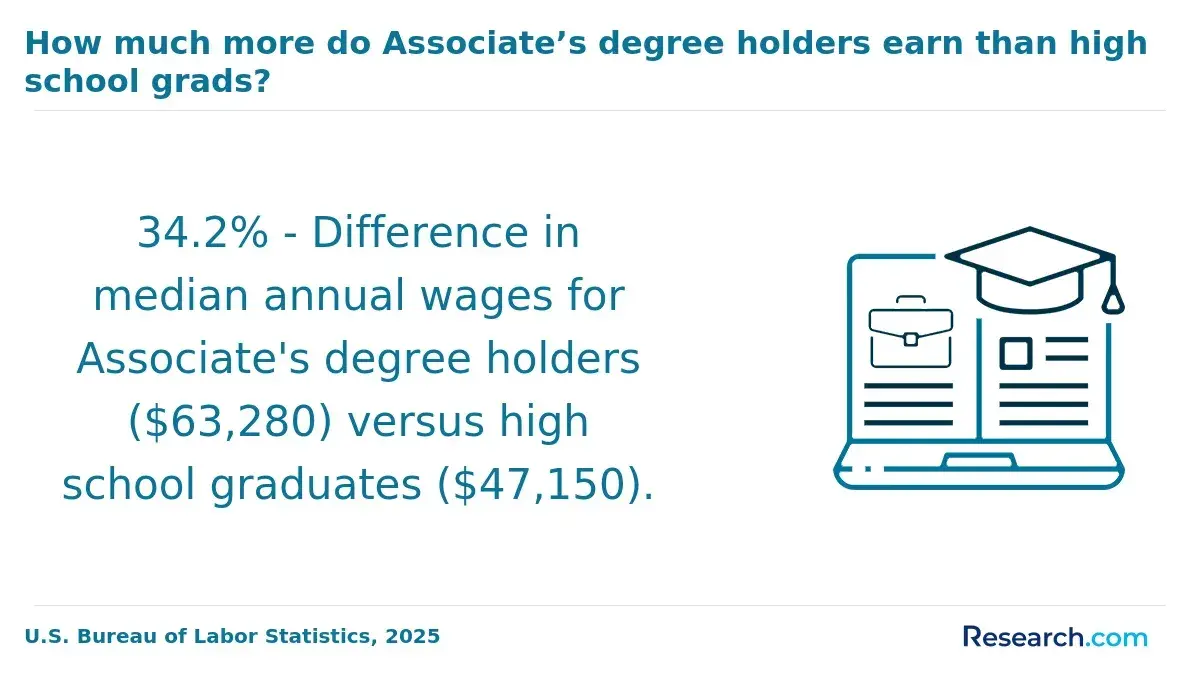
Cost effectiveness tips strongly toward online education: average annual tuition for online construction management bachelor's degrees before aid is about $15,202, with net costs reduced to roughly $8,774 annually after financial assistance. This substantially lowers the total degree cost, benefiting working professionals balancing employment and education commitments.
However, for students weighing flexibility and career outcomes of construction management education options, bridging practical gaps is essential-accredited programs requiring local internships or fieldwork better position graduates for employment.
Proactive employer outreach is required to confirm that online credentials receive equivalent recognition and networking opportunities, which traditionally stem from on-campus faculty and peer interactions. Graduates must exhibit proficiency in digital project tools, cost estimating, and risk management. Those seeking to pivot or advance their careers should also consider complementary pathways, such as exploring an online masters in healthcare management, to diversify leadership skills applicable across sectors.
Ultimately, alignment of program curricula with applied learning, regional licensing, and local work experience determines if an online pathway meets workforce demands beyond theoretical knowledge alone.
What courses and skills do online construction management majors gain for assistant project manager roles?
Online construction management coursework for assistant project managers equips students with precise technical and managerial skills essential for real-world roles where juggling schedules, budgets, and subcontractors defines daily workflows. Core classes cover project scheduling, cost estimation, contract administration, and construction methods to manage delays and safety compliance effectively.
Students gain risk mitigation and regulatory navigation capabilities through materials management and construction law courses, which reduce costly site errors. Advanced training in construction technology, including building information modeling (BIM), enhances coordination among diverse stakeholders and streamlines project delivery.
Essential skills gained from online construction management programs also include communication and leadership techniques that enable conflict resolution and team supervision. Practical software proficiency-using tools like Primavera or Microsoft Project-supports dynamic resource allocation and real-time adjustments to unforeseen issues such as supply chain disruptions or on-site changes.
Graduates qualify for varied roles like construction manager, site engineer, cost estimator, and sustainability consultant, reflecting a curriculum built to meet multifaceted employer demands across project types. This versatility is critical as assistant project managers often pivot between commercial, residential, or infrastructure projects while integrating new sustainability standards.
For those weighing career options, the degree has parallels with some high-paying jobs with environmental science degree pathways in emphasizing technical rigor alongside regulatory insight. Candidates should consider the balance of coursework and practical skill-building to align with their target sector's operational realities.
What are the typical admission requirements for an online bachelor's in construction management?
Admissions for online bachelor's in construction management hinge on proving both academic readiness and foundational field knowledge, ensuring candidates can handle a demanding workload and practical challenges. While a high school diploma or GED with official transcripts and a minimum GPA around 2.5-3.0 are standard, test scores like the SAT or ACT are often optional but may be requested in selective cases. This variability reflects differing institutional priorities and the competitive nature of the field.
The expectation extends beyond academics: applicants frequently need prior exposure to construction basics or relevant work experience to link theory with job duties typical of assistant project managers or site supervisors. For example, a skilled tradesperson shifting to project management benefits from this prerequisite, bridging hands-on understanding with formal education.
Degree programs match campus-based credit requirements (typically 120-125 credit hours), emphasizing that online study demands equivalent commitment and time management, especially for working adults balancing multiple responsibilities. Many programs also require personal statements or letters of recommendation focused on time-management and career goals, plus technical assessments or interviews assessing problem-solving aptitude.
Applicants should anticipate pre-enrollment advising or orientation to address knowledge gaps, aligning expectations for the rigorous curriculum ahead. These steps help ensure the candidate's preparedness for both academic and workforce demands in construction management.
How long does an online construction management bachelor's take and what does it cost?
Accelerating an online bachelor's degree in construction management hinges on managing prior credits and balancing work demands, especially for those like assistant project managers seeking career growth without extended absence from the job site. Transfer credits can reduce program length to two or three years, as Rowan University exemplifies by admitting transfer students with a minimum 12 credits and 2.0 GPA, which mitigates redundant coursework and lowers overall costs.
Program expenses vary widely-public institutions generally charge $400 to $500 per credit hour in-state, while private universities may exceed $700. Some schools apply flat tuition per term, favoring students who overload credits to expedite degree completion. Veterans and qualifying employees might access additional financial aid, impacting net costs.
Online programs tailored for early to mid-career professionals emphasize asynchronous learning and condensed semesters, enabling simultaneous on-the-job training. Employers typically require a mix of academic credentials and field experience for project leadership roles, meaning the investment in time and cost often results in enhanced employability and salary prospects.
- The ability to transfer credits speeds graduation while decreasing debt load, supported by Department of Education data.
- Students must navigate transcript evaluations carefully to optimize transfer acceptance.
- Balancing coursework with professional responsibilities remains a primary challenge.
What jobs can you get with an online construction management degree besides assistant project manager?
Positions beyond assistant project manager in construction management leverage distinct skill sets with varied operational impact. For instance, project schedulers focus on optimizing timelines and resource allocation-a critical factor in meeting tight deadlines-while cost estimators analyze detailed budget projections to reduce financial risk on projects.
These roles emphasize specialized expertise that employers value for maintaining workflow efficiency and cost control.
Graduates targeting site superintendent roles must balance leadership and hands-on experience to supervise day-to-day workforce productivity effectively. Safety managers, tasked with OSHA compliance and site safety protocols, address regulatory demands that often limit liability and disruption. Success in these functions depends on ongoing technical knowledge and practical readiness rather than solely academic credentials.
Strategically, pursuing alternate roles tends to broaden foundational skills but may delay advancement into senior project oversight positions, where integrated risk management and contract negotiation capabilities become essential. According to Texas A&M's 2025 report using BLS data, construction management roles are projected to grow by 9%, suggesting demand for professionals who combine expertise with practical experience.
This dynamic means graduates must weigh immediate job specialization against longer-term career mobility. For example, a professional specializing early as a safety manager might find fewer opportunities for rapid promotion compared to one accumulating project-wide managerial responsibilities. Hence, understanding employer priorities and regional sector complexity is crucial before committing to a specific pathway.
What is the salary outlook for assistant construction project managers with an online bachelor's degree?
Assistant construction project managers with an online bachelor's degree in construction management typically earn between $65,000 and $85,000 annually, though this depends heavily on location, industry sector, and employer size. Urban commercial markets push salaries toward $90,000 due to project complexity and budgets, while smaller residential markets often start closer to $60,000. Government-funded infrastructure projects usually offer steadier income but slower wage growth.
Successful candidates bridge academic knowledge with practical field experience, since familiarity with budgeting software, scheduling tools, and regulatory compliance is routinely expected by employers. Programs that combine accredited online coursework with strong industry connections and internships tend to yield higher starting offers because they address this critical gap between theory and hands-on site management.
Long-term salary gains and advancement into full project manager roles generally require around 3 to 5 years of targeted experience plus certifications like the Certified Construction Manager (CCM) or Project Management Professional (PMP). These credentials significantly elevate baseline compensation and career trajectory.
Key practical factors:
- Geographic and market-specific salary variations impact earnings more than degree choice alone
- Hands-on field experience is indispensable for leveraging online degrees effectively
- Industry-recognized certifications amplify earning potential beyond the initial salary range This nuanced balance between education, skills, and credentials shapes realistic income expectations and highlights how strategic credentialing supplements an online construction management degree.
How strong is the job outlook for assistant project managers and construction managers nationwide?
The job market for assistant project managers and construction managers shows steady expansion with a projected 5% growth through 2034, aligning with average occupational growth. Yet, entry-level competition intensifies as candidates often arrive with bachelor's degrees specifically in construction management or related fields. Employers increasingly expect a dual fluency in technical construction concepts and digital project management tools, making educational background a decisive factor.
Those shifting from trades to assistant project manager roles typically encounter extended learning curves due to the necessity of proving structured project oversight experience. Online bachelor's programs attempt to bridge this gap through industry-relevant assignments, but their cost-averaging about $595 per credit, according to BestColleges' 2024 survey-exceeds the national average for bachelor's degrees, raising concerns about return on investment.
Career progression varies by sector. Commercial and public infrastructure sectors reward knowledge in project control and regulatory compliance with faster advancement, whereas residential construction demands a broader skill set with slower upward mobility. Prospective students and professionals should weigh these realities:
- Evaluate program rigor versus tuition premium carefully, particularly for online pathways.
- Consider sector-specific skill demands when choosing coursework or certifications.
- Anticipate longer ramp-up times transitioning from trades without formal project management training.
How can students evaluate accreditation, quality, and industry alignment in online construction management programs?
Accreditation-both regional/national and specialized such as from the American Council for Construction Education (ACCE) or the American Institute of Constructors (AIC)-is a pivotal factor in vetting construction management programs. Without this, graduates risk enrolling in courses whose credits lack transferability or whose credentials hold limited industry recognition, directly impacting employability as assistant project managers.
The quality of a program often hinges on measurable outcomes. For example, programs reporting at least a 70% job placement rate within six months post-graduation correlate with stronger hiring prospects. Equally important are instructors with active construction management certifications or significant field experience, complemented by low student-to-faculty ratios that foster skill refinement essential for complex project oversight.
Curricula must align with evolving industry demands, integrating updated project management software, construction law, safety standards, and sustainability practices. Practical differences emerge by project type: infrastructure-focused managers require proficiency in regulatory compliance and risk assessment, whereas those targeting residential projects benefit more from cost estimation and subcontractor coordination. Advisory boards populated by practicing professionals help keep coursework current with sector trends.
Direct site experience through internships or practicum components remains non-negotiable, bridging classroom knowledge with field realities. Considering the U.S. Bureau of Labor Statistics' projection of 9% employment growth for construction managers over the next decade, selecting programs with proven outcomes and industry connections substantially improves the likelihood of sustainable career entry and progression in this competitive labor market.
Other Things You Should Know About Construction Management
Work experience and internships provide hands-on learning that coursework alone often cannot replicate, especially in construction management where site-specific knowledge and real-time problem-solving are critical. Employers prioritize candidates with practical exposure because it demonstrates the ability to navigate daily challenges in project settings. While coursework delivers foundational theory and technical skills, prioritizing programs that integrate or require internships enhances employability and readiness for assistant project manager roles.
Online programs offer essential flexibility for working professionals but this can come with risks like inconsistent engagement or time management challenges that impact learning depth. Students must proactively prioritize coursework to avoid superficial understanding, especially in construction management where sequential learning of technical and management concepts is necessary. Programs with structured schedules, live interactions, or cohort models tend to deliver better outcomes than fully self-paced formats.
For assistant project manager roles, a broad construction management degree typically holds more value because it covers comprehensive project lifecycle skills and cross-disciplinary knowledge. Specializations can limit early-career opportunities or require additional training to transition across project types. Prioritize generalist programs early on, then pursue specializations after gaining field experience to align career advancement with employer expectations.
The best online bachelor's programs for construction management in 2027 often blend theoretical learning with practical applications. They provide students with digital simulations, case studies, and project-based learning, ensuring graduates possess the necessary skills and understanding to meet employer expectations as assistant project managers.
References
- CourseCareers https://coursecareers.com/blog-posts/coursera-vs-coursecareers-construction-project-management
- Construction Management Jobs and Career Path | Cardinal Civil https://cardinalcivil.com/blog/what-jobs-can-you-get-with-a-construction-management-degree
- How to Pursue a Career as a Construction Site Manager https://www.oshaeducationcenter.com/become-a-construction-manager/
- Project Management Employment Statistics in the US https://zoetalentsolutions.com/project-management-employment-statistics-in-the-us/
- 5 Entry-Level Construction Management Degree Jobs After Graduating https://aic-builds.org/entry-level-construction-management-degree-jobs/
- Project Manager Job Market 2026: Trends and Salary https://skillifysolutions.com/blogs/project-management/project-manager-job-market/
- Bachelor of Science Construction Project Management https://www.sait.ca/programs-and-courses/degrees/bachelor-of-science-construction-project-management
- Construction Jobs for Growth & Stability https://www.irecruit.co/insights/best-construction-jobs-career-growth-stability
- Building Project Manager - Salary, How to Become, Job Description & Best Schools https://www.onlinedegree.com/careers/architecture-construction/building-project-manager/