2027 Best Online Construction Management Degrees for Subcontractor Management Careers

Co-Founder and Chief Data Scientist
Juggling multiple subcontractor teams across shifting project timelines forces construction management professionals into a high-stakes balancing act where delayed decisions or miscommunications can escalate costs exponentially. The growing complexity of construction sites demands more than field experience; it requires targeted skills in subcontractor coordination supported by adaptive education formats.
Data from the National Center for Education Statistics shows a 12% rise since 2022 in online degree enrollments among adult learners pursuing career advancement, reflecting a shift toward flexible, accessible learning that meets professionals' time constraints.
This article evaluates leading online construction management degrees specifically tailored to equip professionals for subcontractor management roles, helping readers choose programs aligned with career mobility and practical skill application.
Key Things You Should Know
- Online construction management degrees deliver 12% higher wage growth over five years per Georgetown University data, but require balancing accelerated licensing prerequisites, which delays subcontractor qualifying timelines.
- Employers increasingly prioritize gig economy adaptability; recent AGC surveys show 68% demand candidates with integrated digital project delivery skills, pressuring degree programs to embed advanced tech training.
- Tuition inflation averaging 8% annually in construction management programs raises total debt to $35K median, necessitating strategic enrollment timing to avoid wage stagnation during extended study periods.
What are online construction management degrees for subcontractor management?
Degrees focused on online construction management for subcontractor oversight sharpen abilities critical to managing multiple specialized trades within layered projects. Coordinating commercial HVAC, electrical, and plumbing subcontractors requires precise scheduling and conflict management to prevent costly delays and ensure compliance with safety standards.
This targeted approach differs from broader construction oversight by emphasizing procurement, contract administration, and risk mitigation tailored to subcontractor-intensive environments.
These programs prioritize technology fluency, including project management software, digital communication tools, and real-time reporting systems essential for supervising dispersed teams effectively. Legal and regulatory training on subcontractor agreements, liens, and claims addresses crucial compliance challenges unique to commercial and infrastructure projects.
The U.S. Bureau of Labor Statistics anticipates a 9% employment increase for construction managers over the next decade, driven by demand for professionals skilled in subcontractor coordination.
Choosing the best online programs in construction management for subcontractor coordination demands scrutiny of hands-on training and industry ties, as purely theoretical curriculums limit readiness for dynamic, subcontractor-heavy job sites.
Working professionals gain most from flexible, online study methods that allow immediate skills application to active projects, bridging education and operational outcomes. Candidates may also explore pathways such as the best MBA in operations management to broaden managerial competencies relevant to subcontractor management.
Which accreditations should an online construction management program have?
Programs accredited by the Accreditation Board for Engineering and Technology (ABET) or the American Council for Construction Education (ACCE) offer distinct advantages that directly influence employability and project outcomes.
For subcontractors working on complex projects, a degree from an accredited online construction management program ensures vital competencies in engineering principles and construction-specific management disciplines such as cost control, contract administration, and safety compliance.
Employers actively seek candidates with such credentials, recognizing that graduates from non-accredited programs often lack the necessary training in regulatory frameworks and risk mitigation.
For example, a subcontractor manager on a commercial construction project must coordinate sequencing while managing contractual and safety obligations-a skill set reliably developed through accredited coursework.
Accreditation also impacts eligibility for professional certifications like Certified Construction Manager (CCM), a credential linked to higher wages. The Bureau of Labor Statistics forecasts a 2025 average wage of $119,660 for construction managers, with top earners exceeding $176,000, revealing the premium placed on validated expertise.
Notably, many accredited programs integrate internships or capstone projects that establish critical industry networks, essential for subcontractors navigating the workforce. Prospective students should validate program accreditation carefully to avoid gaps in training that could hinder career prospects.
Those assessing educational pathways may also consider affordability and accessibility by consulting rankings such as the cheapest online master's in project management, which often share relevant construction management options. Balancing cost, accreditation, and practical training is key when selecting the best accredited construction management degrees for subcontractors.
How do online and campus construction management programs compare?
Cost efficiency and practical exposure create a distinct divide between online construction management programs vs campus programs. Online degrees cut tuition substantially-from $15,202 annually without aid to an effective $8,774 with financial support-dropping four-year costs from $60,808 to $35,096.
This affordability enables working professionals to reskill without leaving the workforce but often comes at the expense of direct site supervision experience.
Campus programs prioritize hands-on learning through site visits, lab work, and real-time subcontractor management exercises, which employers in subcontractor-heavy sectors continue to value for reducing new graduate onboarding time.
However, these programs frequently demand rigid schedules and higher tuition, which may conflict with the commitments of tradespeople or logistics personnel.
For those managing multiple field locations remotely, online formats offer synchronous and asynchronous modules to balance study with fluctuating project demands. Yet, they often fall short in replicating collaborative aspects of collective bargaining, safety audits, or logistics coordination, areas more robustly addressed in traditional campus settings.
Students must critically assess course specifics, including online capstone and internship opportunities, to accurately gauge preparedness for specialized subcontractor roles.
Effective subcontractor management hinges on real-time communication skills and compliance understanding. Campus degrees tend to produce graduates better equipped for these challenges through immersive peer collaboration and site experience.
Conversely, online degrees concentrate on technical software and contract fundamentals but can leave gaps in situational judgment without employer-backed practical training.
Those evaluating differences between online and on-campus construction management degrees should also consider broader career pivots, comparing these pathways with offerings like the best online master degree in human resource management for transferable skills.
What courses are in a subcontractor management curriculum?
Subcontractor management courses within construction management degree programs prioritize operational control over multiple specialty trades, a critical demand as projects grow in scale and complexity.
Employers expect proficiency in scheduling sequences that reduce idle labor and material costs, coupled with the ability to scrutinize bids against budget constraints. For example, knowing how to enforce contract terms and manage payment schedules directly impacts both project cash flow and legal compliance.
Key curriculum topics for subcontractor management careers in construction management include risk and regulatory compliance, covering bonding, insurance, lien laws, and dispute mitigation essential for contractors navigating diverse job sites.
Procurement instruction strengthens material sourcing aligned with subcontractor capabilities, a practical skill that often differentiates successful project managers in fast-moving environments.
Students also encounter quality control and value management-defining performance benchmarks and inspection protocols to avoid costly rework-and communication-focused leadership training to handle negotiations and conflict resolution with trade partners.
Advanced programs introduce technology applications like Building Information Modeling (BIM) to streamline subcontractor workflow tracking.
For professionals balancing work and study, online curriculums offer flexibility without sacrificing results; data from BestColleges reports 100% job placement for graduates between 2021-24 with average starting salaries above $70,000. This establishes online education as a viable route compared to traditional pathways, particularly for tradespeople transitioning to management.
Those evaluating related fields may also consider options like an environmental engineering degree, which shares overlapping regulatory and project coordination elements but differs markedly in technical focus and career trajectories.
What admissions requirements do these degree programs usually require?
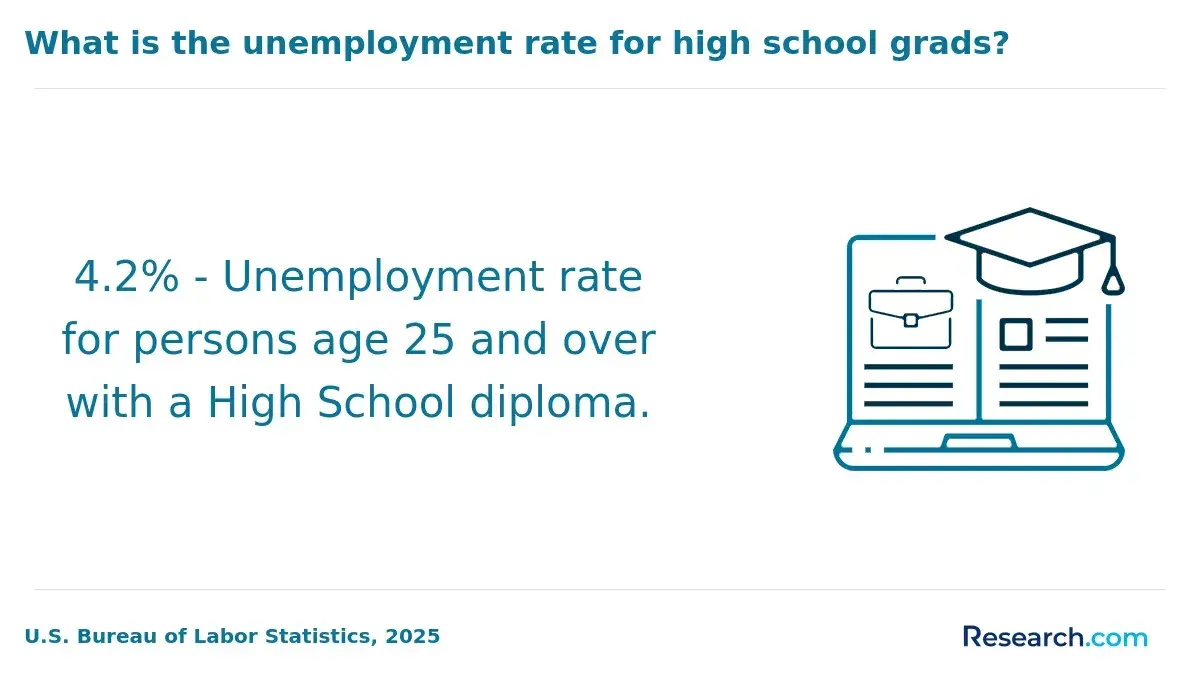
The practical entry requirements for online construction management degree programs impose critical tradeoffs for applicants aiming to oversee subcontractors. Most bachelor's programs mandate a high school diploma with official transcripts, frequently favoring candidates who have completed coursework in math, economics, or engineering-related fields to ensure relevant analytical skills.
Since 2023, standardized test requirements have largely relaxed, reflecting shifts in admissions policies, though work experience remains pivotal-especially for accelerated or master's tracks where employers prioritize proven competence in subcontractor coordination and project oversight.
Admissions evaluations extend beyond academics to personal essays and industry-backed recommendations that validate leadership, negotiation, and technology fluency, particularly with construction scheduling or cost-control software.
Geographic and sector-specific differences affect prior experience expectations; for example, heavy civil construction roles emphasize safety and regulatory knowledge in interviews, imposing additional burdens on candidates unfamiliar with those standards.
This selection dynamic presents a scenario common among working professionals balancing ongoing job commitments with educational rigor, pushing demand for flexible online formats that clearly communicate time requirements.
According to Arizona State University's 2024 labor data, construction and project managers earn median salaries of $114,990 and $102,320 respectively, but navigating admissions nuances and program demands directly impacts the likelihood of timely transition into these higher-wage roles amid an 8.7% industry growth forecast from the U.S. Bureau of Labor Statistics.
How long does an online construction management degree take?
Choosing the right construction management degree requires balancing time investment against market readiness. Bachelor's programs often serve as the most practical credential for subcontractor management roles, with accelerated tracks offering completion in approximately two and a half years given transfer credits.
However, part-time or asynchronous pacing-common for working professionals-can extend this timeline to four years or more, accommodating on-site obligations but potentially delaying career moves.
Associate degrees, typically two years, function mainly as entry points or steps toward a bachelor's, while master's programs add one to two years, positioning graduates for advanced supervisory roles in subcontractor-intensive environments.
- Programs focused on project scheduling, contract administration, and subcontractor coordination provide immediate workplace relevance.
- Graduation timing interacts with prerequisite requirements and course availability, influencing how quickly candidates can move into emerging job opportunities.
- Part-time formats reduce burnout risk but may sacrifice speed, affecting competitive positioning in a labor market with a projected 9% growth from 2024 to 2034, per Texas State University.
Employers prioritize candidates who demonstrate both efficient credentialing and practical mastery of subcontractor negotiation and compliance. The decision between faster completion and comprehensive training impacts employability and readiness for complex infrastructure projects requiring multitier subcontractor oversight.
How much do online construction management degrees cost?
Cost remains a central consideration when pursuing an online construction management degree, with bachelor's programs ranging broadly from $15,000 to $60,000 and master's programs extending above $70,000.
These figures fluctuate significantly depending on institution type, residency, and program length. Public universities offer lower in-state tuition, but private or out-of-state options can push costs higher.
A subcontractor weighing a bachelor's degree must balance tuition against opportunity costs such as lost wages or reduced work hours.
Online programs that offer asynchronous coursework can mitigate income disruption, but additional expenses like books, software, and occasional campus visits still apply. Potential state grants or workforce development funds vary by region and should factor into planning.
Employer hiring patterns demonstrate a clear premium for accredited degrees associated with leadership and technical competence. Salary data from LSU Online confirms senior project managers average $147,817 annually and construction operations directors $202,200, illustrating the salary growth possible with degree-supported transitions from subcontractor roles.
Prospective students should weigh total financial investment against realistic salary trajectories and the flexibility of each program's schedule.
Prioritizing programs with documented outcomes in leadership preparation ensures better return on investment and reflects the expectations within construction management career paths.
What jobs can subcontractor management graduates pursue?
Subcontractor management roles in construction management demand more than basic oversight; they require navigating legal compliance, risk mitigation, and multi-vendor coordination within complex project constraints.
For example, managing specialty subcontractors in commercial projects calls for proficiency in advanced scheduling software and budget controls, while residential subcontractor managers focus more on direct supervision and client communication.
Employers expect candidates to reduce disputes and cost overruns through thorough contract knowledge and risk management, which often sets apart successful hires.
Early-career salaries typically range from $60,000 to $90,000, with senior roles exceeding $110,000, according to U.S. Bureau of Labor Statistics data updated in 2024. These numbers vary with regional demand and industry sector.
Relevant career paths also include safety management and quality assurance, increasingly emphasizing digital documentation and regulatory compliance.
Practical cost moderation strategies arise from leveraging prior experience; for instance, The University of Oklahoma's online BS in Construction Management offers tuition at $515 per credit hour with total costs from $15,450 to $30,900, allowing transfer credits to accelerate degree completion and reduce financial burden.
Labor market trends highlight growing employer preference for candidates skilled in BIM software and digital project trackers. Those lacking these tools face hurdles transitioning from trade roles to subcontractor management, stressing the importance of early, targeted technical upskilling aligned with employer software standards.
What salaries do subcontractor management careers pay?
Subcontractor management salaries reflect a direct connection between technology proficiency and compensation, with entry-level coordinators starting near $65,000 and seasoned managers surpassing $95,000 by mastering BIM integration and digital tools.
Geographic hotspots like Texas and California reward these skills with 10 to 15% higher wages due to the complexity and scale of projects in those markets.
Incorporating BIM competencies and digital scheduling into subcontractor coordination is not optional but a practical necessity.
Traditional construction oversight often limits salary growth, while managers who navigate real-time collaboration platforms can see salary increases exceeding $20,000. This shift prioritizes minimizing project delays and rework, directly impacting profitability and individual earning potential.
Employers prioritize candidates who can apply software for quality control and conflict resolution on large infrastructure projects, creating a measurable advantage.
Prospective workers must assess the practical rigor of training programs, especially those that combine BIM exposure with actionable data analytics. Without these proficiencies, salary ceilings tighten and career mobility dwindles, irrespective of years in the field.
Key factors affecting career trajectory include:
- Mastering subcontractor coordination software and BIM tools.
- Targeting regions with high demand in commercial construction.
- Choosing upskilling programs emphasizing practical digital collaboration.
- Preparing for negotiation based on advanced tech-driven project management.
What certifications help subcontractor management graduates advance?
Advancing beyond mid-level subcontractor management frequently requires more than experience; certifications such as Certified Construction Manager (CCM) and Project Management Professional (PMP) are pivotal for demonstrating the ability to handle complex projects and multi-tiered subcontractor teams.
Employers expressly prioritize these for upper management roles due to proven capabilities in managing budgets, schedules, and compliance under stringent standards.
For example, a subcontractor moving into field project oversight will benefit from the CCM's emphasis on construction-specific risk mitigation and contract administration, whereas PMP certification signals transferable leadership skills valued across wider industries.
Trade-specific credentials like OSHA safety training, LEED accreditation, or Certified Professional Constructor (CPC) serve as strategic complements, especially in sectors where regulatory compliance or sustainability is critical. These credentials help minimize project delays and improve subcontractor coordination on regulated or "green" sites.
Choosing certifications aligned with targeted industry segments-commercial, residential, or public works-matters significantly, as relevance and employer expectations differ.
According to Affordable Colleges Online, the wage disparity is stark: construction project managers average $90,700 annually, while vice presidents of construction earn around $162,348, illustrating how advanced credentials paired with relevant experience can nearly double income potential.
This underscores the necessity for graduates to balance credential investment with realistic assessment of sector-specific demands and long-term career objectives.
Other Things You Should Know About Construction Management
Employers in subcontractor management prioritize candidates who combine academic knowledge with significant hands-on field experience. Online degrees offer flexibility but rarely replace the value gained from on-site project involvement, which develops problem-solving skills under real-world constraints. Students should actively seek internships, apprenticeships, or part-time field roles during or immediately after their studies to remain competitive in the job market.
The structure of an online program-synchronous versus asynchronous-impacts the depth of interaction with instructors and peers, which can influence comprehension of complex contract and labor management concepts. Programs with live sessions foster better networking and immediate feedback, aiding practical skill development critical for subcontractor coordination. Prioritizing programs that integrate collaborative projects and real-time case studies will better prepare students for employer expectations.
Online construction management programs demand disciplined time management since coursework often involves complex project planning simulations and technical document preparation. Working professionals can face significant stress juggling deadlines and real-time project responsibilities, leading to uneven academic performance. Selecting programs with flexible deadlines and modular course designs reduces conflict with job duties, improving completion rates and mastery of subcontractor management skills.
References
- WorldCC certification programs for commercial and contract management https://www.worldcc.com/education-training/certifications.html
- Best Online Construction Management Degrees 2025 https://www.onlineu.com/degrees/construction-management
- Best Online Construction Management Degrees https://www.affordablecollegesonline.org/degrees/construction-management-programs/
- Certified Construction Subcontractor Professional/Manager (CCSP)/(CCSM) - AIBM US https://aibm.us/certified-construction-subcontractor-manager-ccsm/
- CourseCareers https://coursecareers.com/blog-posts/construction-management-degree-vs-field-experience-vs-online-construction-pm-training
- Subcontracting Fundamentals Certificate Program https://ncmahq.org/Web/Web/Learning/Subcontracting%20Fundamentals%20Certificate%20Program.aspx
- Medical School Requirements and Prerequisite Coursework https://www.prospectivedoctor.com/medical-school-requirements/
- 8 Construction Certifications to Advance Your Career https://planhub.com/resources/construction-certifications/