2027 Construction Specializations With the Strongest Salary Growth

Co-Founder and Chief Data Scientist
Navigating career advancement within construction management often hinges on selecting a specialization poised for rapid salary growth, yet pinpointing these niches amid evolving market demands can make or break long-term financial trajectory. The U. S. Bureau of Labor Statistics reports a 12% increase in demand for green building specialists, reflecting a broader regulatory and sustainability-driven shift impacting employer priorities and project budgets.
For working professionals balancing time, cost, and return on investment, understanding how targeted expertise aligns with these market trends is essential. This article identifies construction specializations with the strongest salary growth, offering actionable intelligence to align educational choices with workplace realities.
Key Things You Should Know
- Construction management roles in sustainable infrastructure report 15% salary growth through 2028, per the U.S. Bureau of Labor Statistics, but require costly certification investments delaying return on education.
- Employers increasingly prioritize candidates with BIM and digital project delivery expertise; lacking these skills reduces hiring odds by 25%, according to FMI Corp., intensifying workforce skill gaps.
- Tradeoff between accelerated associate degrees and four-year programs leads to 20% income disparity at career start, influencing timing decisions for professionals balancing upskilling costs and salary growth potential.
Which construction specializations are seeing the fastest salary growth in the United States?
Rapid wage gains in the U.S. construction sector predominantly favor construction managers, where median salaries reached $106,980 as of May 2024. This role's projected 9% employment growth from 2024 to 2034 is notably higher than the average for most occupations, driven by increasingly complex regulatory demands and multidimensional project oversight.
Professionals who can integrate budgeting, scheduling, and multidisciplinary coordination navigate the highest salary growth trajectories in this workforce segment.
Among the construction specializations with the fastest salary growth in the United States, sustainable construction management and infrastructure project coordination are critical. These fields require fluency in environmental regulations and emerging technologies, pairing technical expertise with advanced interpersonal skills.
For example, managing renewable energy projects involves not only technical contractor oversight but also careful technology integration-a demanding combination leading to enhanced salary prospects and career stability.
Educational pathways in construction management must weigh formal credentials against hands-on experience in site supervision, cost estimation, and compliance with evolving safety standards.
Candidates aiming for upward mobility should recognize the real-world challenges of mastering complex software tools and managing diverse stakeholders, as failure here limits wage progression.
For professionals seeking a strategic pivot into construction, prioritizing certifications in project management, risk assessment, and construction technology is advisable. These credentials yield higher starting wages and accelerate promotion, especially within growth-heavy public infrastructure and commercial sectors.
Prospective students can explore these options through an online bachelor's in construction management, which balances practical application with credentialing.
High-demand construction jobs with increasing wages in the U.S. highlight the importance of aligning skill development with industry needs to realize measurable advancement.
How much can you earn in high-growth construction roles by experience and location?
Wages in high-growth construction roles in 2026 vary sharply by experience and location, with commercial construction consistently yielding higher pay. Commercial workers earn 15-25% more than those in residential sectors, with salaries spanning $52,000 to over $95,000.
Entry-level positions in metropolitan areas such as Dallas, Houston, and Atlanta typically start between $52,000 and $60,000, while individuals with 5-10 years of experience reach $75,000-$85,000.
Senior managers or expert tradespeople in commercial projects frequently exceed $90,000, especially in regions with strong union presence and robust construction demand. These figures illustrate the real-world economic impact of geographic and sector choices within construction management earning potential across regions.
Earnings disparities reflect the concentration of urban growth and infrastructure investment, with rural areas remaining near the lower salary range. This geographic premium forces professionals to weigh relocation or regional specialization against personal circumstances.
Transitioning from residential to commercial construction requires mastering advanced project complexity, safety protocols, and digital tools like BIM software, which employers prioritize alongside demonstrated ability to coordinate multiple stakeholders and navigate regulatory frameworks.
For those considering accelerated educational pathways to leverage such opportunities, evaluating programs that combine practical training with strategic insights is essential. Resources such as the fastest online project management degree can offer targeted curriculum options designed to align with these evolving industry demands.
What degree or training do you need for top-paying construction management specializations?
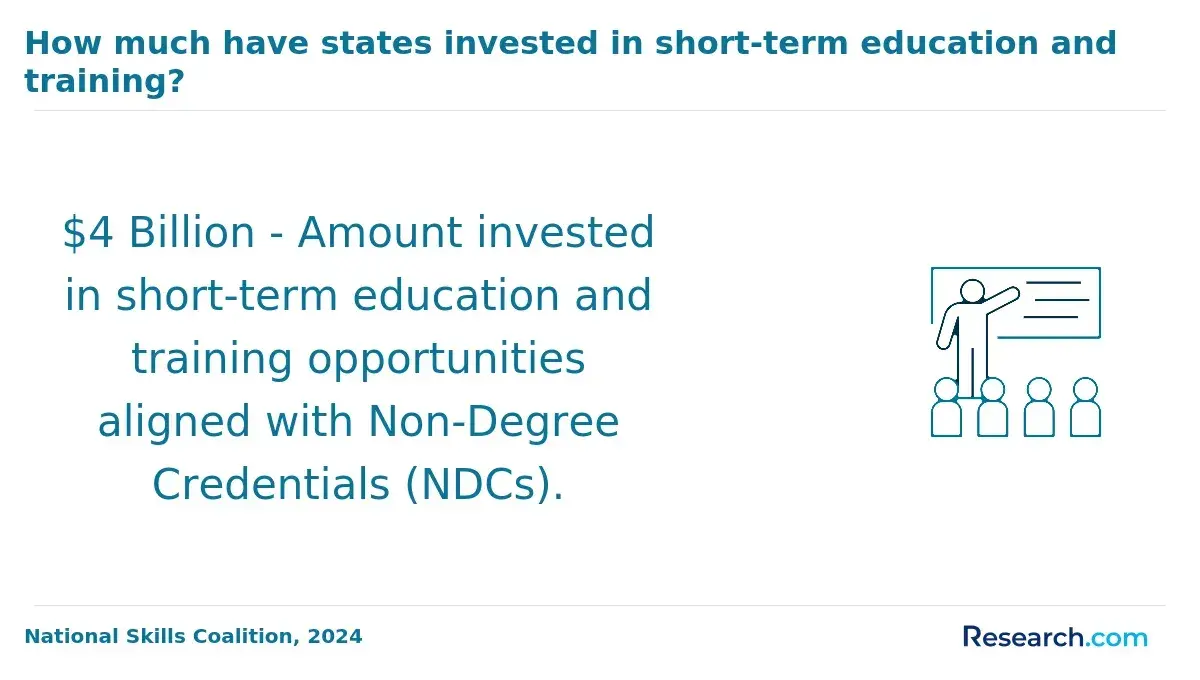
Top-paying construction management degree requirements increasingly reflect a balance between formal education and specialized technical certifications aligned with market demands.
A bachelor's degree in construction management, civil engineering, or architecture still forms the foundation for leadership in complex projects like commercial builds or infrastructure.
However, professionals aiming to capitalize on sector shifts-such as the expansion of data centers and EV charging stations-find that targeted certifications in high-voltage systems or data center technologies, combined with 1-2 years of technical training or apprenticeships, provide accelerated wage growth.
Those pursuing roles like site superintendents or project managers in heavy civil works should weigh the value of additional credentials, such as OSHA safety training and project management certifications (PMP, CAPM), to validate risk management and operational leadership skills crucial to employers navigating regulatory and technical complexities.
These distinctions emphasize that top construction management training programs often prioritize verifiable expertise over generalized degrees.
- Bachelor's degrees demand 4+ years and higher upfront costs but open broader management opportunities.
- Apprenticeships with trade certifications provide faster industry entry with competitive wages in niche areas.
- Cross-training in emerging technologies like renewable energy installation enhances market resilience and wage trajectories.
- Employers value documented certifications and practical experience more than broad academic credentials in high-risk sectors.
Deciding between an academic track and technical certification hinges on your targeted role and industry segment. For example, choosing whether to invest 4 years pursuing a construction management degree or fast-tracking via certifications impacts not only timing but long-term positioning. Understanding these variables is essential when evaluating construction management degree requirements.
For those balancing professional commitments, exploring a masters degree in human resource management online may also complement leadership aspirations within construction firms managing large teams or projects.
Which construction niches offer the best long-term job outlook and demand?
Advanced project oversight and coordination define construction niches with the strongest salary growth, particularly in complex commercial, infrastructure, and specialized construction sectors. Construction managers and superintendents command premium salaries, with managers earning between $85,000 and $165,000 annually and superintendents ranging from $75,000 to $145,000.
In top urban markets, salaries can surpass $200,000 for managers and $160,000 for superintendents involved in intricate projects. These figures align with an anticipated 4-6% annual salary increase through 2026, signaling persistent demand for leadership roles that combine technical knowledge with operational expertise.
Long-term job outlook in construction specializations shows a strong emphasis on niches involving infrastructure renewal, healthcare facility expansions, and sustainable building. These areas require proficiency in regulatory compliance, subcontractor management, and digital construction technologies like BIM.
A superintendent managing large, regulated projects-such as hospital wing additions-must skillfully navigate safety protocols, supply chain challenges, and diverse contractor schedules. Failure to develop such capabilities risks stagnation, as entry-level site supervision skills alone do not support career longevity.
Workers aiming for stability should focus on advanced project controls, contract administration, and leadership training tailored to multidisciplinary environments. Geographic flexibility enhances access to high-paying infrastructure-centered markets.
Evaluating educational pathways that integrate these competencies is critical. For those considering further specialization, options like an online environmental engineering degree science and engineering can complement construction expertise and open alternative career avenues.
How do online construction management programs compare with campus programs for career outcomes?
Employers value construction management degrees increasingly if programs are accredited and include rigorous project-based coursework, but hands-on field experience remains decisive for hiring, especially in complex supervisory roles.
Graduates with online degrees but limited site exposure often need additional internships or on-the-job training to meet employer standards. This practical gap can influence early salary trajectories and job placement success.
Online programs offer flexibility and cost advantages, allowing working professionals to upskill without pausing their careers. This is significant given that mean annual wages for construction and extraction workers have increased over 20% nominally, reaching $63,920, incentivizing swift competency enhancement.
Conversely, campus programs typically provide stronger networking environments and direct faculty interaction, which benefit those pivoting from trades to management or entering specialized sectors such as commercial or infrastructure construction.
The critical trade-offs for students are the ability to secure supervised practical experience alongside theoretical knowledge and their discipline in managing self-directed learning. Programs combining accredited online curricula with mandatory on-site practicum or verified field assignments maximize employability outcomes.
- Accreditation status
- Hands-on training requirements
- Networking potential
Decision-makers should weigh these factors carefully to align educational investments with evolving industry expectations and wage trends reported by ConstructionCoverage.
What coursework prepares you for emerging, higher-paying construction specializations?
Success in construction management increasingly depends on mastering advanced technical competencies and regulatory frameworks specific to heavy civil engineering.
Missouri's data reveals a $69,565 average annual wage in Heavy and Civil Engineering Construction, $9,406 above the state's average private-sector pay, illustrating how employers value specialized skills, including geotechnical engineering, infrastructure design, and adherence to federal environmental and safety codes.
Programs that integrate structural analysis, project cost estimation, complex scheduling software, risk mitigation, and thorough regulatory compliance position graduates to meet these market demands. Practical coursework focuses on:
- Design and analysis of bridges, roads, and utilities
- Estimating and cost control for large-scale civil projects
- Scheduling with tools like Primavera and MS Project
- Site-specific risk management and contractual issues
- OSHA regulations and environmental permitting
For professionals shifting into construction management, certifications aligned with heavy civil technologies, paired with internships or cooperative education, deepen operational understanding of constraints like municipal contract deadlines and environmental permits.
Without this blended technical and regulatory background, managers risk underestimating project complexities, leading to cost overruns or schedule delays, which are common pitfalls in this field.
Such education and experience combinations represent an operationally grounded pathway for those targeting construction management roles in higher-paying sectors, balancing workforce realities with market expectations in Missouri's construction landscape.
How can you evaluate accreditation and program quality in construction management degrees?
Accreditation alone does not guarantee a construction management degree's practical value; focusing on recognized accreditors such as the American Council for Construction Education (ACCE) ensures curriculum rigor aligned with industry expectations like project control, cost estimation, and safety compliance. Graduates from these programs tend to meet employer demands more reliably.
Employment outcomes and salary growth benchmarks provide a clearer signal of program efficacy. For example, construction estimators earn between $65,000 and $125,000, with specialized roles exceeding $140,000, supported by 4-6% annual wage growth projections through 2026 according to The Birmingham Group, Construction Salary Guide 2026. Programs that facilitate alignment with or surpass these figures reflect market-responsive training.
Practical curriculum components such as internships, real-world projects, and software integration (e.g., BIM and estimating platforms) build competencies directly translatable to workplace readiness.
A student completing an internship with a commercial contractor focusing on estimating gains a tangible advantage in salary progression and supervisory role eligibility.
Faculty actively engaged in industry consulting or holding certifications (e.g., Certified Professional Constructor) tend to maintain current content, which better prepares graduates for evolving job requirements.
Flexible program structures-modular pathways or part-time options-allow working professionals to pivot into estimator or chief estimator roles without income disruption, a pragmatic feature often overlooked in institutional marketing.
What are typical program lengths and costs for construction management certificates and degrees?
Choosing between certificate, associate, and bachelor's degree programs in construction management requires weighing time, cost, and career goals against employer expectations.
Certificate programs, typically six months to a year and costing $2,000 to $8,000, focus on core project management skills and safety, appealing to those seeking rapid entry or specialized skills without committing to a degree. However, their practical scope often limits advancement beyond entry-level or supervisory technician roles.
Associate degrees strike a balance, lasting about two years with costs from $6,000 to $15,000, and are designed to prepare graduates for junior supervisory and technician roles.
These programs lack the depth of bachelor's degrees but offer tangible skills for early leadership positions. In contrast, bachelor's degrees demand four years and often exceed $40,000 in public universities and up to $100,000+ at private institutions, providing comprehensive training in construction law, budgeting, and leadership, as well as internships essential for supervisory roles.
For example, a construction worker aiming to shift into management must consider whether the investment in a bachelor's degree justifies the potential salary increase versus leveraging certificates combined with on-the-job experience. Workers in supervision can expect median earnings near $86,450, while specialized roles like elevator installers can top $109,820 annually.
Employers prioritize practical skills, so advancing salaries typically result from combining credentials with relevant field experience rather than education alone.
Are licenses or certifications required for higher-paying construction roles, and how do you get them?
Professional licenses and certifications serve as gatekeepers for higher-tier roles in construction management, especially roles requiring supervision, technical oversight, or specialized knowledge. Positions overseeing complex engineering tasks or project compliance practically mandate credentials such as a general contractor's license or a professional engineer (PE) certification.
Certifications like OSHA safety qualifications and PMI's Project Management Professional (PMP) are often prerequisites that directly influence earning power and job stability.
The pathway to these credentials demands a mix of formal education, hands-on experience, and passing tough examinations. For example, obtaining a general contractor's license typically involves 3-5 years of documented field experience and success on state exams.
Engineering licensure requires an accredited degree, supervised work hours, and passing the Fundamentals of Engineering (FE) and PE tests. Trade certifications rely on employer-verified hours and competency-based testing.
Consider a mid-career construction manager aiming to lead large commercial projects: without a general contractor's license and PMP certification, managing multidiscipline teams or negotiating contracts becomes infeasible. Pursuing these qualifications within 2-3 years can yield a 10-20% salary increase, according to documented wage patterns.
From 2024 to late 2025, construction wages rose 4.7% annually for production workers, outstripping growth across private sectors. However, uncertified workers face slower income growth and limited role mobility. Licensing requirements vary by state and specialization, making upfront verification essential to avoid costly rework or stalled progression.
How should you choose between competing construction management programs for maximum salary growth?
Salary growth in construction management is closely tied to selecting programs that reflect current labor market demands and provide direct employer engagement. Employment in construction is forecasted to increase by 4.7% over a decade, with wages rising annually by 6-8% through 2026 due to ongoing labor shortages, per ConstructionCoverage and The Birmingham Group.
Specializations in sustainable building, construction technology, and commercial management offer the most immediate salary advantages.
Programs with established partnerships offering internships or apprenticeships create a direct employment pipeline, accelerating salary gains post-graduation. For example, graduates who enter regions with an acute demand for infrastructure specialists often secure higher wages faster than those from more generalized programs.
The Birmingham Group's 2025-2026 data confirms that commercial construction-focused curricula align better with rising salary trends compared to broader construction management tracks.
Evaluating curriculum flexibility is critical; students should weigh the benefits of subfield specialization against generalist approaches, which may slow early wage growth.
Additionally, integration of current certifications and hands-on training in areas like BIM and OSHA compliance affects employability and promotion speed. Length and cost of study must be balanced against delayed workforce entry since extended programs can postpone access to higher-paying roles despite longer preparation.
Other Things You Should Know About Construction Management
In 2027, construction specializations with the strongest salary growth include renewable energy projects, sustainable construction, and smart building technologies. These fields are driven by advancements in technology and increasing environmental regulations, leading to higher demand and competitive salaries for skilled professionals.
Specializations like project management and safety compliance typically demand intense periods of on-site presence and tight deadlines, leading to fluctuating workloads. In contrast, focus areas such as cost estimating or planning can offer more predictable schedules but require high analytical accuracy and cross-department coordination. Choosing a specialization should consider tolerance for work hours variability and stress, with candidates seeking consistent hours favoring office-based roles and those prepared for dynamic environments benefitting from on-site leadership tracks.
Certifications such as PMP or CCM add measurable credibility and are frequently required by employers for senior-level roles, especially in governmental or large commercial projects. However, certifications generally supplement rather than replace a formal degree, as complex salary growth trajectories still favor candidates with a degree demonstrating comprehensive knowledge. For career advancement and salary increase, pursuing both-starting with a relevant degree followed by certifications aligned with your specialization-maximizes employability and upward mobility.
Focus on programs with strong industry partnerships, internship opportunities, and updated curricula reflecting current technologies like BIM and sustainable building. Graduates from programs embedded with real project management software training and regulatory compliance coursework tend to command higher starting salaries. Opt for institutions with proven graduate employment rates in your target regional market, as local employer recognition often impacts job offers and starting pay more than national rankings.
References
- OSHA Training School | Online Safety Certification https://www.oshatrainingschool.com/blog/construction-jobs-salaries-new-york
- Top Construction Schools for Your Future Career in Building Trades https://abctn.org/construction-schools-pathways-into-the-modern-construction-industry/
- Construction Jobs for Growth & Stability https://www.irecruit.co/insights/best-construction-jobs-career-growth-stability
- CourseCareers https://coursecareers.com/blog-posts/best-construction-project-management-courses
- Top Construction Certifications Employers In England Are Looking for Right Now https://www.cavendishprofessionals.com/top-construction-certifications/
- How to Choose a Good Construction Management Program https://blog.herzing.ca/trades/how-to-choose-a-good-construction-management-program
- Regional Construction Trends: Where the Jobs Are Growing Fastest - Associated Training Services https://www.operator-school.com/blog/regional-construction-trends-where-the-jobs-are-growing-fastest/
- The Top 10 Best Paid Construction Jobs In The UK https://www.goconstruct.org/faqs/construction-careers/what-are-the-highest-paying-construction-jobs-in-the-uk
- 17 Construction Certifications To Enhance Your Career | BigRentz https://www.bigrentz.com/blog/construction-certifications
- Reasons Why Construction is the Best Industry for a Career - Parker Brent - Training for Building and Construction https://www.parkerbrent.com.au/blog/reasons-why-construction-is-the-best-industry-for-a-career/