2027 Online Construction Management Degrees With Preconstruction Career Alignment

Co-Founder and Chief Data Scientist
Balancing demanding work schedules with the need for a focused degree pathway frequently hinders career progression for construction management professionals targeting preconstruction roles. With the U. S. Department of Education reporting a 22% rise in adult enrollment in online degree programs since 2022, this shift signals a tangible response to workforce mobility and accessibility gaps.
Yet the challenge lies in selecting programs that integrate essential preconstruction skills-such as cost estimation, contract negotiation, and project planning-without extending time to degree or compromising employer expectations. This article evaluates current online construction management degrees that streamline preconstruction alignment and support strategic career advancement decisions.
Key Things You Should Know
- Online construction management degrees aligned with preconstruction roles deliver 15% higher starting salaries per 2024 Labor Department data, but require mastery of advanced estimating and bidding software, raising initial learning barriers.
- Employers prioritize applicants with integrated virtual teamwork experience; programs lacking collaborative project simulations reduce candidate competitiveness in a shifting remote-intensive industry landscape.
- Cost and duration disparities-ranging from 18 to 36 months and $12,000 to $45,000-force prospective students to balance accelerated entry against long-term debt within an industry where time-to-field expertise significantly impacts promotion trajectories.
What is an online construction management degree with a preconstruction focus, and who is it best for?
Graduates of an online construction management degree with preconstruction specialization acquire targeted expertise in early-phase project planning, cost estimating, and risk assessment that directly influences project feasibility and budget control.
This specialization fits professionals prioritizing estimator, scheduler, or preconstruction manager roles where early collaboration with architects and engineers optimizes resource allocation and improves bid accuracy, critical in commercial real estate development and infrastructure projects.
Employers value candidates who can navigate both technical complexities and financial frameworks within the preconstruction phase, a distinction reflected in the U.S. Bureau of Labor Statistics projecting 9% employment growth for construction managers through 2034 and a median wage of $106,980.
However, prospective students should anticipate a steep learning curve if lacking prior exposure to construction methods or relevant software, factors that can impede progress compared to traditional onsite-focused programs.
When choosing among the best online construction management programs for preconstruction careers, it is essential to weigh whether one's goals align with strategic decision-making and cost control in preconstruction rather than general construction supervision or site execution. Those emphasizing broader construction leadership might find less alignment with this niche focus.
For students exploring educational options to gain this specialized skill set, reviewing carefully vetted resources like construction management programs can clarify program fit and real-world application.
How do online construction management programs compare to on-campus options for preconstruction careers?
The choice between online construction management programs and on-campus alternatives fundamentally hinges on the balance between practical exposure and flexible learning. While online curricula typically cover critical preconstruction competencies such as scheduling software, cost estimation, and contract negotiation through simulations, they lack the immersive, real-time project collaboration and direct mentorship that on-campus programs integrate.
This distinction directly impacts preconstruction career outcomes from online construction management degrees, where graduates without hands-on site experience may face employer skepticism despite strong theoretical knowledge.
Given the widespread talent shortage (two-thirds of contractors grapple with filling qualified project management roles), employers increasingly prioritize candidates with demonstrated client communication and interpersonal skills alongside technical proficiency.
For example, a candidate experienced in live clash detection and coordination on a multi-trade commercial site often secures trust faster than a purely online graduate. Online students, including working professionals seeking to pivot or upskill, must compensate by pursuing internships or local project involvement to bridge this gap.
Cost and scheduling flexibility make online options appealing, yet the absence of robust networking channels necessitates proactive engagement with professional associations or contractors.
Prospective students should evaluate how well an online path aligns with their capacity to supplement learning through fieldwork and employer expectations. Detailed comparisons of project management degrees clarify these tradeoffs for strategic decision-making in construction management career trajectories.
What accreditation and industry standards should online construction management degrees meet for credibility?
Employers prioritize candidates from online construction management degree accreditation standards recognized by agencies like ABET or ACCE, as these confirm curriculum quality aligned with industry expectations. Graduates from nonaccredited programs typically face hiring setbacks because their competencies may not meet the practical demands of preconstruction and construction roles.
Rigorous adherence to industry-recognized certifications for construction management programs, such as CMAA or AGC, ensures a curriculum that covers essential skills like cost estimation, project controls, and OSHA safety compliance.
For example, candidates trained under CMAA standards are better prepared for high-stakes environments like real estate development or heavy civil projects, where precise budgeting directly influences contract awards and profitability.
Program elements that integrate hands-on case studies and construction software training mitigate skill gaps that otherwise slow progression into mid-level preconstruction roles or certification eligibility, including the Certified Construction Manager (CCM).
The Bureau of Labor Statistics forecasts roughly 46,800 openings annually over the next decade, driven largely by retirements and industry expansion. This demand favors candidates from accredited programs whose training reflects measurable competencies aligned with evolving workforce needs.
Prospective students should verify institutional accreditation and cross-check curriculum content with CMAA or ACCE benchmarks to ensure outcomes relevant to contemporary preconstruction duties. For those balancing time constraints, alternatives like the fastest online MHA pathways may offer insight into accelerated degree models, albeit outside construction management.
Which online construction management degree levels best support preconstruction roles and advancement?
Bachelor's degrees in construction management remain the most pragmatic credential for new entrants aiming at preconstruction roles, primarily due to their rigorous coverage of estimating, scheduling, cost control, and contract administration. These programs closely mirror employer demands in project planning and bid preparation, skills essential for preconstruction specialists.
While associate degrees provide basic familiarity, their limited preconstruction focus often restricts graduates to entry or support positions. This distinction is critical when assessing online construction management degree programs for preconstruction careers.
Master's degrees target professionals with significant field experience seeking leadership in integrated project delivery or strategic preconstruction roles. For example, a field technician advancing to an estimator position benefits more from a bachelor's curriculum emphasizing applied technical skills than a master's program focused on broader executive competencies.
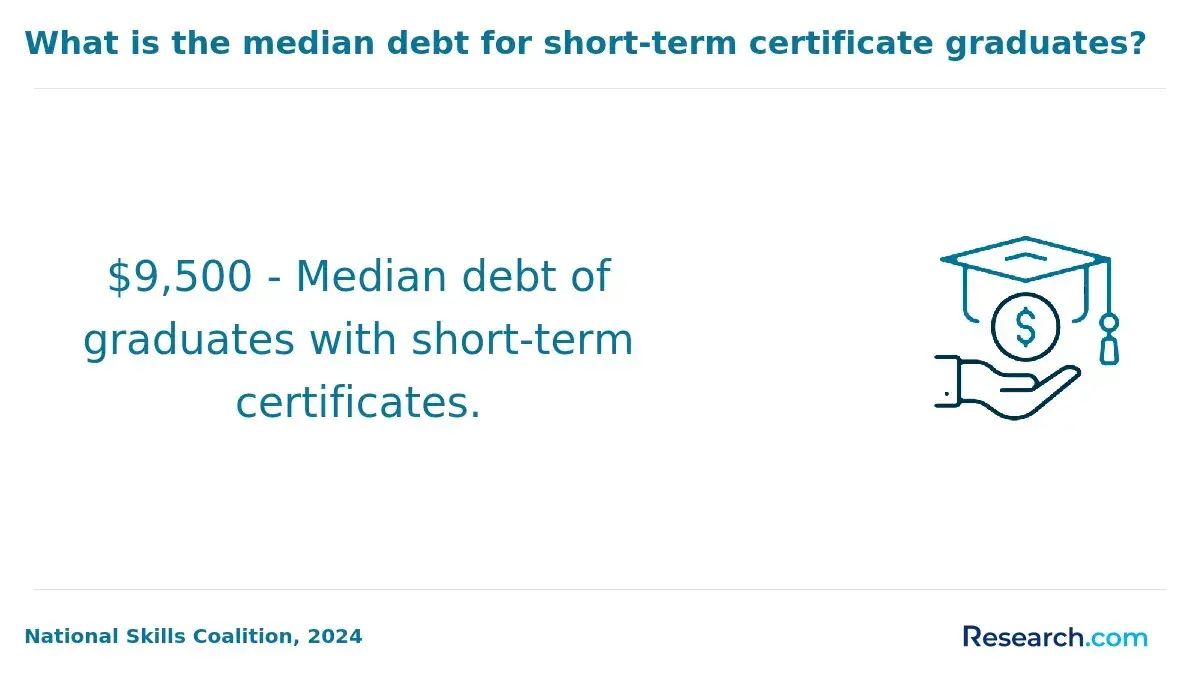
Short-term certificates, while appealing for quick upskilling, rarely meet the depth employers require, especially when median salaries for informed preconstruction roles exceed $110,000 according to Glassdoor data cited in the 2026 Coursera guide.
Student decisions must weigh time, cost, and stage in their career trajectory. Those without prior construction experience should prioritize bachelor-level study covering technical and managerial fundamentals alongside evolving industry standards like sustainability and construction law.
Professionals with experience aiming for senior roles should consider master's degrees for strategic skill sets. Among the best online construction management degree levels for career advancement in preconstruction, degrees integrating real-world software tools add critical value.
For those evaluating credential affordability or alternative fields, resources like the health information management degree online offer comparative insights into accessible online degree programs.
What preconstruction-focused courses and skills are typically included in online construction management curricula?
Online construction management degrees with a preconstruction focus equip students with specialized skills that directly translate to early project phases where accurate cost estimating, scheduling, and procurement control significantly affect outcomes.
A critical real-world scenario involves coordinating design alternatives and value engineering decisions-a common challenge in commercial or heavy civil projects where managing scope changes and cost uncertainty is routine.
Programs prioritize advanced competencies such as quantity surveying, risk analysis, and bid preparation, skills that shape a graduate's effectiveness in securing contracts and forecasting resource demands.
Technical expertise in CAD integration and Building Information Modeling (BIM) enables preconstruction managers to identify design conflicts and constructability issues before the build phase, reducing costly delays.
Practical tradeoffs appear as most online offerings lack substantial hands-on field experience; while virtual simulations are increasingly incorporated, students seeking residential construction roles must verify curriculum alignment with local codes and negotiation practices, which differ markedly from commercial sectors.
Entrepreneurial skills are increasingly necessary given that 36% of construction managers work as self-employed contractors, demanding proficiency beyond technical knowledge, including team leadership and client communication.
Graduates must navigate contract documents and regulatory compliance while collaborating with subcontractors and designers-soft skills embedded into these programs reflect these workforce realities and market volatility.
What are typical admission requirements for online construction management programs with a preconstruction track?
Online construction management programs with a preconstruction focus typically require a high school diploma or equivalent, but the real differentiator lies in prior experience and coursework. Applicants holding industry certifications such as OSHA safety training or relevant project experience often navigate admissions more smoothly, as practical exposure carries substantial weight in selective programs.
For working professionals, this prior experience can significantly shorten the time to credential completion through transfer credits and better align learning outcomes with workforce expectations.
Standardized tests are increasingly optional, yet certain institutions maintain them as an admission component, especially when assessing candidate readiness for technically demanding preconstruction roles. Personal essays or statements remain a key evaluative element, helping schools discern applicants' understanding of construction processes and career intent.
From a financial perspective, tuition commonly ranges from $15,450 to $30,900, depending on transfer credits, a cost that requires balancing against the national median construction manager salary of $106,980.
Candidates must weigh upfront investment against program duration and clear pathways to roles emphasizing cost estimating, scheduling, and project coordination - core preconstruction skills in demand across construction firms.
Ensuring a robust technology setup for online participation and selecting accredited programs that incorporate practical case studies or internships enhances employability. Failure to meet these admission and logistical demands often leads to extended study periods or stalled career progression, illustrating the importance of precise application strategy and realistic financial evaluation for those pursuing this pathway.
How long do online construction management degrees take, and what do they cost?
Choosing an online construction management degree involves weighing the interplay between time, cost, and market relevance rather than treating program duration or price as standalone factors.
For instance, associate degrees, typically completed in around two years, offer a quicker and more affordable entry point, costing about $15,000 in public in-state institutions, but may require supplementary certifications to meet employer expectations for digital competency.
Bachelor's programs span approximately four years, carry tuition fees that can exceed $70,000 at private institutions, and increasingly embed technical training aligned with project modeling, scheduling software, and data analytics.
This integration of digital skills directly influences employability and earning potential, as demonstrated by findings from the American Institute of Constructors emphasizing the value of hybrid construction and data literacy expertise.
For professionals transitioning from trade roles, investing in a lengthier bachelor's degree with a built-in tech focus may produce stronger workforce positioning despite higher upfront costs and study time.
Conversely, those prioritizing speed and lower expense should consider associate degrees paired with targeted certificates, though this path might limit immediate access to senior roles requiring advanced competencies.
- Degree timelines vary from 2 to 4 years depending on credit transfers and enrollment intensity.
- Tuition ranges broadly from $15,000 to $70,000+, influenced by program level and institution type.
- Employer preference leans heavily toward candidates fluent in digital construction tools and data analytics.
- Financial aid and employer tuition support can offset costs but require strategic planning.
What preconstruction job titles can graduates pursue, and what do those roles involve day to day?
Preconstruction roles demand a distinct skill set centered on detailed coordination, risk management, and financial precision before physical work begins. Graduates with an online construction management degree often fill key positions such as preconstruction manager, estimator, scheduler, and project engineer-each requiring adaptability to complex variables and tight deadlines.
For instance, a preconstruction manager must align design goals with budgeting and timelines while negotiating between architects, engineers, and clients to keep a project legally compliant and financially viable.
Estimators face volatile material costs and labor uncertainties, producing bid scenarios that balance profitability against market fluctuations. Schedulers deploy software tools like Primavera or MS Project to optimize workflow sequencing, which is critical in fast-moving infrastructure projects to avoid costly delays.
Project engineers regularly collaborate on technical reviews and constructability assessments that preempt site issues. Consider a healthcare facility project, where strict regulatory requirements necessitate precise engineering coordination during preconstruction to minimize expensive redesigns.
Economic data from OnlineColleges.net reveals starting salaries close to $55,000 for bachelor's holders, rising to $72,000 mid-career, while master's degree graduates start near $65,000 and can approach $90,000. Employers prioritize candidates who combine analytical skills with practical proficiency in industry-standard tools and problem-solving within preconstruction workflows. Navigating this phase effectively directly influences project outcomes and career trajectories.
What salary ranges and job outlook can preconstruction-focused construction management graduates expect?
Graduates focusing on preconstruction management face salary tiers that reveal employer priorities: entry-level roles yield $65,000 to $80,000, mid-level positions range from $90,000 to $110,000, and senior managers earn over $130,000. This reflects the premium placed on skills like value engineering and risk assessment, especially in commercial, infrastructure, and complex industrial projects.
For instance, candidates adept at advanced cost estimation and negotiating subcontractor agreements can leverage higher pay in competitive urban markets.
The Bureau of Labor Statistics reports over half a million construction management jobs, with 9% growth expected through 2033. Job demand concentrates in urban centers and capital project hubs, while rural areas may see slower wage growth and fewer openings. This geographic and sectoral variability impacts graduates' job search strategies.
Continuous certification and software proficiency, such as Building Information Modeling (BIM) and project management tools, are indispensable. Transitioning from general construction oversight to preconstruction requires mastering detailed quantity takeoffs alongside subcontractor negotiation-skills directly linked to enhanced salary brackets and hiring preference.
Preconstruction roles demonstrate better resilience during economic downturns due to their upfront budgeting and risk mitigation focus. Aligning credentials with green building standards further enhances marketability and income stability in evolving regulatory climates.
How can students evaluate and choose a reputable online construction management program for preconstruction careers?
Choosing an online construction management program for a preconstruction career requires prioritizing accreditation from bodies like ABET or ACCE, as this ensures curriculum relevance tied directly to industry standards. Programs should feature coursework in cost estimating, scheduling, value engineering, and BIM to meet employer demands on technology-focused projects.
For example, professionals moving from hands-on construction roles need advanced preconstruction analytics rather than entry-level construction basics to maintain employability in a specialized market.
Employment outcomes matter: programs with verified graduate placement in preconstruction roles, particularly within firms focused on infrastructure, energy retrofits, or smart building technologies, align with the projected 9% job growth through 2033, according to the Bureau of Labor Statistics, summarized by NMU Global Campus and Purdue Polytechnic Institute. Equally essential is practical learning-project-based work or partnerships that offer experience with current preconstruction tech and collaborative software.
Students must weigh flexibility against cohort pacing and instructor accessibility to avoid scheduling conflicts that inhibit mastery. Programs relying on generic or outdated content reduce the value of the credential, especially amid rapid industry advances.
Checking faculty active engagement in current infrastructure or smart building initiatives, alongside transparent data on retention and certification pass rates, helps predict a program's ability to support successful career transitions in preconstruction leadership.
Other Things You Should Know About Construction Management
Recognition of online degrees depends significantly on the program's accreditation and the reputation of the institution offering it. Employers in construction management prioritize candidates who demonstrate practical skills and relevant industry certifications alongside their degree. Selecting an online program that partners with industry bodies or incorporates hands-on project work increases employer confidence and job placement prospects.
Online construction management programs often require the same level of academic rigor as traditional formats but demand greater time management skills due to the self-paced nature. Students must allocate consistent weekly hours to complete assignments, group projects, and case studies, which can be challenging while working full-time. Prioritize programs with structured schedules and live sessions if balancing work and study time is a concern.
Specialized preconstruction tracks narrow study focus to estimating, bid preparation, and project planning, providing deeper skillsets for early project phases. However, this can limit exposure to on-site management and broad operational knowledge that some employers value. For strategic career advancement, choose a program offering a balanced curriculum that integrates preconstruction expertise with core construction management competencies.
References
- Certified Construction Manager | Construction Management Association of America https://www.cmaanet.org/certification/ccm
- Exploring 15 Crucial Construction Roles & Job Titles https://www.rib-software.com/en/blogs/construction-roles-jobs-titles
- Construction Management Courses: Study Online and Advance Your Career https://www.oxfordhomestudy.com/construction-management-courses
- CourseCareers https://coursecareers.com/blog-posts/construction-management-degree-vs-on-the-job-experience-vs-structured-training
- 5 Entry-Level Construction Management Degree Jobs After Graduating https://aic-builds.org/entry-level-construction-management-degree-jobs/
- What do you learn in a bachelor's in construction management? | edX https://www.edx.org/resources/what-do-you-learn-in-a-bachelors-in-construction-management
- Online Bachelor's in Construction Management | NMU https://online.nmu.edu/bachelors-construction-management/
- Top Construction Management Classes to Advance Your Career in 2026 https://abcsocal.org/construction-management-classes-programs-skills-and-career-impact/
- Construction Project Manager Average Salary UK | Atkins Search https://www.atkinssearch.co.uk/insights/construction-project-manager-average-salary/