2027 Best Online Construction Management Programs for Professionals Seeking Infrastructure Careers

Co-Founder and Chief Data Scientist
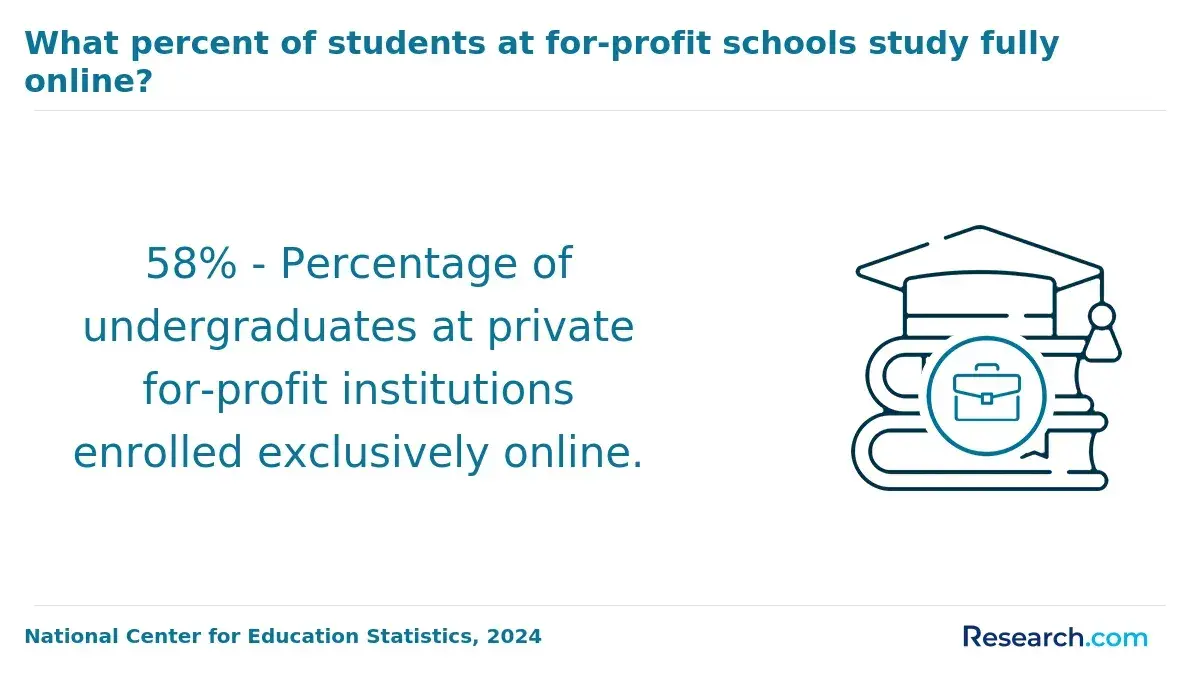
Mid-career professionals targeting infrastructure roles frequently encounter inflexible program schedules that clash with full-time employment or family obligations, risking prolonged career stagnation. Federal data from 2024 reveal a 15% annual increase in adult learners enrolling in accredited online programs, signaling a shift toward education models prioritizing accessibility without sacrificing rigor. Yet, striking the right balance between program credibility and flexible delivery remains a challenge, as employers increasingly scrutinize the applicability of online credentials for complex project management roles.
This article evaluates leading online construction management programs to help professionals identify options that optimize flexibility, employability, and real-world skill acquisition for strategic career advancement.
Key Things You Should Know
- Over 65% of infrastructure employers prioritize candidates with specialized construction management credentials linked to project delivery metrics, signaling a shift from degree prestige to measurable outcomes in hiring, increasing pressure on programs to integrate real-world performance data.
- The average program duration of 18-24 months combined with escalating tuition, as reported by the National Center for Education Statistics 2024, creates a critical cost-benefit tension for mid-career professionals balancing lost wages against accelerated certification timelines.
- Employer demand for proficiency in emerging digital tools like BIM and project risk analytics, now embedded in 72% of leading curricula according to McKinsey 2024, compels prospective students to weigh program tech depth against traditional management theory's practical relevance.
What is an online construction management degree and who is it best suited for?
Transitioning into construction management from technical trades or early-career field roles demands a curriculum that merges project oversight with financial and regulatory savvy. Online construction management degree programs for infrastructure careers target this niche, balancing business acumen with real-world project controls.
For instance, a project engineer aiming to lead multi-million-dollar transportation projects benefits by mastering risk mitigation, workforce coordination, and contract fundamentals, which these programs methodically integrate.
These degrees typically combine coursework on project scheduling, materials estimation, regulatory frameworks, and contract law with communication skills essential for leadership roles. Online delivery suits professionals juggling employment and education, though synchronous collaboration and site internships may require supplementary arrangements.
Cost considerations are practical barriers: BestColleges' analysis reports an average annual expense of $15,202, totaling approximately $60,808 for a bachelor's without aid, a significant investment reflecting employer expectations for versatile credentials that influence salary and promotion trajectories.
Students must weigh their current experience, the program's industry-aligned accreditation, and the managerial-technical skill balance, recognizing that these degrees do not provide immediate engineering licensure.
Those specifically seeking certifications or a license as a professional engineer or tradesperson will face limitations with these programs. For a data-driven comparison of affordability, consult the cheapest online construction management degree listings.
Best online construction management courses for professionals in the United States emphasize pragmatic, scalable skills directly applicable in civil engineering, transport, and commercial building sectors.
How do online construction management programs compare to on-campus options for working professionals?
Choosing between online construction management programs and traditional on-campus courses involves understanding significant trade-offs tied to professional demands and workforce integration.
Flexible construction management education for working professionals often leans toward online options, which enable uninterrupted full-time employment and adaptability to project timelines that rarely fit a 9-to-5 schedule.
Yet, this flexibility frequently comes at the expense of direct, hands-on experience and face-to-face collaboration, elements that on-campus programs emphasize through labs, site visits, and team-based settings reflective of contractor-centric environments.
Employers tend to value immediate operational readiness grounded in practical site knowledge and robust interpersonal networks, strengths typically cultivated in on-campus settings. Online pathways offset these deficits by offering asynchronous case studies, simulations, and modular coursework tailored to those prioritizing theoretical depth or credential expansion without relocating.
For example, a site-based construction manager aiming for leadership roles may benefit more from immersive campus programs, while an experienced project engineer juggling active assignments might find online curricula more viable for accelerated online project management degree completion.
Considering a projected 9% employment growth in this sector from 2024 to 2034, professionals must align learning choices with their current position, networking needs, and skill application timelines. Balancing these factors is critical, especially when on-the-job responsibilities and the need for direct client or contractor interaction shape the practical value of each pathway.
Which online construction management programs are considered the best for infrastructure-focused careers?
Programs focused on infrastructure-related construction project management deliver critical regulatory and technical skills absent in generalist curricula. Degrees from regionally accredited universities tailored to infrastructure challenges-such as managing public contracts, environmental compliance, and urban-scale projects-directly address employer demands for professionals fluent in government regulations and public sector partnership navigation.
For mid-career professionals transitioning into infrastructure project management, prioritizing programs with coursework on DOT regulations and public bidding is essential to avoid costly on-the-job learning gaps. Enrollment should weigh access to internships and networks within public agencies or infrastructure firms, which influence job placement outcomes more reliably than program prestige.
BestColleges' 2024 report, citing BLS data, identifies a $106,980 median annual salary for construction managers, reflecting the increased value of infrastructure competencies in government and major projects. However, degrees lacking specific infrastructure context risk producing graduates unprepared for sector-specific operational complexities.
Flexible asynchronous and modular program designs can accommodate working professionals balancing full-time roles while pursuing these top accredited online construction management degrees for infrastructure professionals. This delivery model supports timely completion without sacrificing academic depth.
Those seeking advancement within infrastructure-focused management may also explore a doctorate in healthcare administration for strategic leadership roles intersecting public infrastructure and community health initiatives.
What accreditation and institutional quality standards should online construction management programs meet?
Regional accreditation recognized by the U.S. Department of Education or the Council for Higher Education Accreditation forms the baseline institutional quality criteria for online construction management degrees, ensuring credit transferability and fundamental rigor.
Programs aligned with ABET or ACCE standards go further by matching curriculum and competency outcomes with employer expectations, impacting employability, particularly in infrastructure sectors.
For example, a project manager role at a civil engineering firm demands applied skills in cost estimation, scheduling, and safety protocols that only specialized accreditation verifies.
Graduates from online programs lacking these credentials often face significant hiring disadvantages and reduced access to professional certifications like Certified Construction Manager (CCM), which many organizations require for senior positions.
Cost considerations intersect tightly with accreditation. On average, online construction management bachelor's programs cost around $60,808 in total tuition-substantially less than comparable on-campus tracks nearing $100,000-allowing for more affordable pathways without sacrificing quality if accreditations are in place.
Practical learning components such as virtual labs, internships, and capstone projects are essential and often mandated by accrediting bodies to bridge theoretical knowledge with workforce readiness. Dedicated career services tailored to construction sectors can mitigate networking limitations inherent to online study.
This dynamic also parallels other technical fields, calling attention to resources like online electrical engineering degrees for veterans that emphasize similar stringent quality and real-world training criteria.
What degrees and credentials in construction management support infrastructure career advancement?
Choosing a degree or certification in construction management necessitates weighing program specialization against cost and employer requirements. Degrees with sustainability or technology tracks command higher tuition. Boise State charges $395 per credit compared to Arizona State's $580-primarily because the marketplace values expertise in advanced software, data analytics, and sustainable materials.
This distinction matters in infrastructure roles focused on green projects or smart city initiatives, where public agencies prioritize proven skills over generic knowledge.
Professional certifications like the Certified Construction Manager (CCM) and OSHA safety credentials serve as practical proof of compliance and site management acumen, often bridging gaps between academic credentials and real-world demands.
Mid-career professionals frequently balance online degrees with these certifications to signal both technical mastery and leadership versatility because employers expect candidates to handle increasingly complex regulatory and environmental challenges.
In practice, public sector infrastructure agencies favor degrees aligned closely with current digital workflows and sustainability, despite higher upfront costs, whereas private sector roles may accept broader management credentials supplemented by certificates.
Prospective students must perform a cost-versus-value analysis, considering how tuition investment relates to job market relevancy and evolving infrastructure technologies.
- Programs with sustainability tracks entail premium tuition but increase employability in public infrastructure.
- Certifications validate site-level expertise and regulatory compliance essential for leadership roles.
- Balancing degree choice with certifications optimizes advancement opportunities across sectors.
What courses and specializations do online construction management programs typically include?
Online construction management programs are most effective when their curricula align tightly with employer demands for candidates who can navigate complex project schedules, cost controls, and regulatory environments.
Core subjects such as project management, cost estimation, construction law, and safety protocols translate directly into workplace expectations, especially for mid-career professionals shifting into supervisory roles.
Specialized tracks offer distinct employability tradeoffs. For instance, a focus on building information modeling (BIM) prepares graduates for urban development firms emphasizing digital workflows, while infrastructure project delivery suits those targeting public sector agencies managing large-scale transportation or renewable energy projects.
Understanding contract administration and risk mitigation also separates competent managers from merely theoretical learners, as negotiating vendor agreements and managing liabilities are daily realities.
Accelerated bachelor's options can compress degree timelines to two or three years, amenable to working professionals eager to pivot or advance swiftly. Yet the intensity of such programs demands significant time management; those without flexible work environments or firm employer support often face heightened challenges balancing academics and job performance.
Programs integrating hands-on software training, real-world case studies, and compliance context produce candidates with measurable workforce readiness. Prospective students must weigh how specialization choices map onto their targeted sectors and the practical balance between speed-to-degree and depth of experiential learning to optimize career outcomes.
What are the typical admission requirements and application materials for online construction management degrees?
Admission for online construction management degrees often entails balancing academic requirements with real-world experience to qualify for increasingly competitive roles. While a high school diploma or GED is a baseline, relevant postsecondary coursework in engineering, business, or construction technology significantly strengthens an application.
Work history and professional certifications such as OSHA or PMP can sometimes translate into academic credit, an important factor for mid-career individuals seeking expedited advancement.
Applicants face GPA thresholds typically ranging from 2.5 to 3.0 at the bachelor's level, with graduate programs demanding completed undergraduate degrees and stronger academic records.
Beyond transcripts, submitting letters of recommendation that affirm technical skills and leadership potential is common, as is providing a statement of purpose that clearly outlines career objectives.
A detailed resume aligning employment and internships with course expectations helps gauge fit from both admissions and employer perspectives.
For professionals working full-time, navigating prerequisites, application processes, and enrollment deadlines can delay entry into programs with rolling admissions or flexible course requirements.
Workforce trends, including Arizona State University's projection of an 8.7% job growth rate for construction managers and a median salary near $115,000, emphasize tangible career opportunities tied to rigorous admission standards and relevant preparation.
These admissions criteria function as gatekeepers to a field where timely completion and applied knowledge directly affect employability and career trajectory.
How long do online construction management programs take, and what do they cost to complete?
Completing an online construction management degree demands careful balancing of time and cost, especially for working adults. Bachelor's programs typically require around 120 credits, with full-time students finishing in 2 to 3 years, while part-time learners or those transferring fewer credits may take 4 years or longer. This timeline directly affects total expenses and workforce reentry, as extended durations increase both tuition outlays and opportunity costs.
Tuition calculated on a per-credit basis makes the cost highly sensitive to credit requirements and price per credit. For example, Rowan University charges $609 per credit for its online BA construction management program, totaling roughly $73,080 over 120 credits.
Lower per-credit rates or transfer credits can ease financial burdens, but quality programs aligning with employer standards often carry premium pricing reflecting industry-relevant curriculum and accreditation.
Professionals considering accelerated study must weigh added workload against risks of burnout and possible delays, which may raise total costs indirectly.
Employers increasingly demand formal degrees or recognized credentials for project management roles, particularly in civil infrastructure, heavy construction, or commercial sectors, making investment in a thorough program critical for long-term career flexibility and earning potential.
Financing tools-such as employer tuition assistance, GI Bill benefits, or federal aid-are essential to integrate into planning. Transparency about credit-hour costs and realistic timelines shapes strategic decisions. This pragmatism helps candidates navigate tradeoffs between intensive study and manageable pacing without sacrificing credentials expected by employers in competitive construction management markets.
What construction management and infrastructure careers can graduates pursue, and what salaries can they expect?
Career outcomes for graduates with degrees in construction management hinge significantly on geographic location and specific role focus. Project managers in high-demand urban infrastructure projects often command salaries north of $120,000, whereas entry-level site supervisors in smaller regions may start around $60,000.
Cost estimators, whose accuracy directly impacts project budgeting, typically earn between $65,000 and $95,000 depending on credentials and experience. Meanwhile, safety coordinators average about $70,000, emphasizing operational compliance and risk mitigation.
One critical but often overlooked factor is the wide variance in educational costs. According to Learn.org's 2026 data, bachelor's programs span from approximately $15,000 at lower-tier institutions to $100,000 at premium universities. This range forces students-especially international ones-to assess immediate debt against probable industry networks and placement potential.
Key tradeoffs include regional market saturation and credential relevance. States with larger infrastructure budgets offer higher salary ceilings but also greater competition.
Professionals must align academic credentials with targeted technical certifications to move beyond base roles and access management or executive responsibilities.
- Average annual wages vary broadly by specialization and region
- Educational investment impacts return based on program reputation and recruiting pipelines
- Combining degrees with certifications drives opportunities above entry level
Are there licenses, certifications, or professional memberships that online construction management graduates should consider?
Employers in infrastructure sectors increasingly require online construction management graduates to hold recognized certifications alongside their degrees to reduce project risks and regulatory delays.
The Certified Construction Manager (CCM) credential from the Construction Management Association of America is widely accepted as proof of advanced project leadership, but state-issued contractor licenses are often mandatory for those aiming at specific trades or public contracts, involving exams and documented experience.
Safety credentials like OSHA 30-hour training or Certified Safety Professional (CSP) certification are essential in heavy civil projects, where compliance oversight directly affects project viability.
Choosing which credentials to pursue involves tradeoffs: accumulating multiple certifications, such as CCM plus a state license, can delay workforce entry due to required years of site experience post-graduation.
Memberships in professional bodies like the American Society of Civil Engineers (ASCE) and the Associated General Contractors of America (AGC) offer continuous learning and networking opportunities crucial for navigating complex project expectations and evolving standards.
ACCE accreditation, as seen in programs at Arizona State University and Boise State University, signals up-to-date training in BIM and project analytics-skills increasingly non-negotiable for infrastructure employers using digital workflows. Graduates lacking these credentials risk longer job searches and lower placement rates in specialized sectors.
- Certifications satisfy employer demands for verified skills and reduce compliance penalties.
- Professional memberships provide access to best practices and industry networks.
- Completing certifications requires balancing immediate career entry versus long-term credential accumulation.
Other Things You Should Know About Construction Management
For professionals with substantial field experience, an online construction management degree adds structured business, legal, and technical knowledge that many employers require for mid- to senior-level roles. However, the value depends on the program's emphasis on project management tools, infrastructure-focused case studies, and leadership skills rather than just theoretical content. Prioritize programs that integrate practical software training and real-world scenario analysis to complement and formalize hands-on experience for career advancement.
Workload intensity varies widely; some programs expect 15-20 hours per week, which can disrupt full-time employment unless schedules are flexible. Online programs designed for professionals often offer asynchronous coursework but require disciplined self-management to meet deadlines. When selecting a program, evaluate course pacing and institutional support services to avoid burnout, especially if balancing job site responsibilities or family obligations.
Employers increasingly accept online degrees, but value depends on the institution's reputation, accreditation, and program rigor. Infrastructure employers look for credentials that demonstrate not only theoretical knowledge but also proficiency in modern construction technologies and compliance standards. For best outcomes, choose programs with strong industry ties and applied learning components to signal readiness for complex infrastructure projects.
In 2027, top online construction management programs for infrastructure careers include Arizona State University, Purdue University, and University of Southern California. These programs offer specialized courses that cater to industry trends, equipping professionals with skills essential for leadership roles in infrastructure projects.
References
- Best Online Construction Management Degrees: 2026 https://gobuid.com/en/blog/all-articles/best-online-construction-management-degree-programs
- CourseCareers https://coursecareers.com/blog-posts/construction-management-degree-vs-field-experience-vs-online-construction-pm-training
- Pentauliahan Pengurus Pembinaan (CCM) | CIDB HQ https://www.cidb.gov.my/eng/certified-construction-manager-ccm/
- Construction Management Course Requirements https://training.jacksonms.gov/virtual-library/awG3fY/6OK119/ConstructionManagementCourseRequirements.pdf
- 5 Construction Management Career Opportunities Out of College https://aic-builds.org/5-construction-management-career-opportunities-out-of-college/
- What Jobs Can You Get With a Construction Management Degree? - NCW https://www.teamncw.com/2025/10/28/what-jobs-can-you-get-with-a-construction-management-degree-2/
- ABET Approves CMAA-Led Criteria for Construction Management Programs - ABET https://www.abet.org/abet-approves-cmaa-led-criteria-for-construction-management-programs/
- American Council for Construction Education | Council for Higher Education Accreditation https://www.chea.org/american-council-construction-education
- 17 Construction Certifications To Enhance Your Career | BigRentz https://www.bigrentz.com/blog/construction-certifications
- Construction Management Jobs and Career Path | Cardinal Civil https://cardinalcivil.com/blog/what-jobs-can-you-get-with-a-construction-management-degree


























![2027 Best Advanced Standing Online MSW Programs [CSWE Accredited] thumbnail](/uploads/Online_Advanced_Standing_MSW_301dbd5368.jpg)