2027 Best Online Construction Management Degrees for Residential Construction Careers

Co-Founder and Chief Data Scientist
Juggling job responsibilities with advancing education presents a critical challenge for construction management professionals targeting residential construction roles, where timely certification and practical skills directly influence project leadership opportunities. The National Center for Education Statistics reports a 15% rise in online enrollment among adult learners since 2023, signaling a growing preference for flexible programs that accommodate full-time employment and geographic constraints. This trend reveals a strategic shift in how industry practitioners pursue credentials without sacrificing income or work-cycle alignment.
Navigating program quality, accreditation, and course delivery methods becomes essential to avoid costly delays and career stagnation. This article evaluates the best online construction management degrees tailored for residential construction careers, focusing on how each program addresses scheduling flexibility, practical competency, and employer recognition to inform smart enrollment decisions.
Key Things You Should Know
- The scarcity of accredited online construction management degrees limits employer trust, with AGC-employer surveys revealing 65% prefer candidates from programs tied to regional industry standards, pressuring choices toward costly regional accreditations.
- Data from the Bureau of Labor Statistics shows a 12% wage premium for graduates of online construction management programs with integrated project-based internships, influencing hiring toward hybrid experiential curricula over purely asynchronous degrees.
- Extended program durations averaging 36 months for fully online construction management degrees increase cumulative opportunity costs by 18%, compelling working professionals to balance accelerated on-site cohorts against longer, lower-cost remote formats.
What is an online construction management degree for residential construction, and who is it best for?
Success in residential building project roles increasingly demands formal managerial credentials combined with hands-on experience. An online construction management degree for residential construction careers provides critical skills such as project scheduling, budgeting, contract administration, and navigating residential codes, tailored for professionals balancing current employment with education.
For example, a licensed electrician transitioning into a residential project manager position gains essential oversight and compliance competencies to justify salary growth and leadership responsibilities.
Cost considerations notably shape ROI evaluations. The average annual tuition before aid is roughly $15,202, reduced to about $8,774 with financial assistance, amounting to $60,808 and $35,096 total, respectively (National Center for Education Statistics, BestColleges).
Early-career individuals without field experience must weigh these investments against the typical timeline to attain fully independent managerial status.
Employers now expect proficiency with digital construction tools and regional regulatory standards; programs incorporating virtual simulations or localized code training enhance graduate marketability.
Reliable technology access and disciplined time management remain practical barriers for many students in these remote formats. Those lacking residential exposure or unwilling to juggle work-study demands might find limited immediate impact from this credential.
Professionals should also explore related pathways, including the best MBA in operations management, which can complement construction management expertise for broader operational roles. Selecting among the best online construction management programs for residential builders requires careful alignment of program rigor, hands-on relevance, and budget constraints.
How do online construction management programs compare to on-campus options for residential careers?
Online construction management programs versus on-campus options for residential construction careers present a crucial decision balancing flexibility against direct mentorship. Employers prioritize hands-on skills, project software proficiency, and practical experience over degree delivery mode.
Online formats enable professionals engaged in active residential projects to integrate coursework with real-time supervision, taking advantage of digital tools vital for timely decision-making and adherence to local codes.
By contrast, on-campus programs better support foundational learning through face-to-face interaction, site visits, and immersive labs that simulate complex construction scenarios. These aspects are often less accessible for mid-career individuals due to geographic and scheduling challenges.
Candidates new to the field often benefit from on-campus networking and streamlined internship placements, while online students must proactively seek local partnerships to verify practical competencies.
This comparative approach to online construction management degrees for residential building necessitates evaluation of one's career stage and resource access.
The Bureau of Labor Statistics projects 9% job growth for construction managers from 2024 to 2034, signaling robust demand for those able to navigate evolving technologies and regulatory environments. Programs that incorporate virtual reality or drone project management provide graduates with distinct competitive advantages in residential markets.
For those assessing, "is a project management degree worth it", practical application within current job roles and readiness for employer expectations remain paramount.
Which online construction management degrees are best for residential construction-focused students?
Online construction management degrees with a focus on residential building must prioritize applied skills in project scheduling, cost controls, and familiarity with residential building codes above broader commercial construction theories.
Employers in residential construction expect graduates who can quickly master software like Procore or Buildertrend and manage subcontractors across typical homebuilding stages such as foundation, framing, and finishing trades.
Without exposure to hands-on training integrated into the curriculum, new hires often struggle with daily operational realities and homeowner communication, which differ markedly from commercial jobsite dynamics.
Selecting programs that offer specialized residential construction tracks or certificates from regionally accredited schools improves job market readiness and aligns with employer demands for expertise in local zoning laws, sustainable practices, and residential construction law.
Students balancing online study options should also consider whether programs provide internships or mentorship opportunities tailored to residential project workflows, as these experiential components bridge classroom learning with site-level coordination.
From a workforce perspective, construction management professionals focusing on residential sectors benefit from competitive salaries, with the top 10% earning close to $177,000 annually.
Those practical skill sets translate directly into higher earning potential and sustained career resilience. For students comparing pathways, evaluating the best online construction management programs focused on residential building alongside other related fields, such as online human resource management masters programs, can clarify long-term strategic fits and diversify managerial competencies.
What accreditation and program quality standards should online construction management schools meet?
Employers in residential construction overwhelmingly prefer candidates from accredited programs because accreditation confirms mastery of essential skills like project scheduling, cost estimating, safety compliance, contract administration, and technology use.
Accreditation by bodies such as the American Council for Construction Education (ACCE) or relevant regional agencies ensures that programs meet industry standards, which directly impacts graduate employability and wages. Without this validation, applicants face significant obstacles securing jobs or achieving career mobility in a standards-driven field.
The quality criteria for residential construction management degrees online extend beyond accreditation alone. Programs must demonstrate faculty expertise, up-to-date curricula, and meaningful experiential components such as BIM software training or project management platforms to bridge theoretical knowledge with practice. Partnerships enabling internships or site projects provide critical real-world exposure often lacking in less rigorous online offerings.
Data from BestColleges show that from 2021-22 through 2023-24, a top online program achieved a 100% job placement rate for graduates, with starting salaries above $70,000. This challenges the misconception that online construction management programs cannot deliver competitive preparatory outcomes compared to on-campus education. However, outdated curricula or absence of recognized accreditation markedly lower employment prospects.
In practical terms, general contractors or developers reject resumes missing clear accreditation or certified skill endorsements, making it essential for students to prioritize programs meeting established accreditation standards for online construction management programs.
Those ignoring these markers risk prolonged unemployment or depressed initial wages. Students should consider regional employment markets and program compatibility with evolving industry expectations, as well as explore related pathways, including online electrical engineering courses USA, when seeking specialized technical competencies.
What courses and skills do online construction management degrees cover for residential projects?
Online construction management degrees for residential projects emphasize technical and regulatory skills that directly address the operational complexities of homebuilding. Unlike commercial or industrial construction, residential work demands tight coordination among diverse stakeholders within constrained physical and regulatory environments, requiring focused expertise in project scheduling, cost estimation, and contract administration.
Mastering local zoning codes and architectural plan interpretation is critical given the typical constraints of neighborhood developments. Safety and risk management prioritize challenges such as limited site access and subcontractor timing, areas where lapses can cause costly delays or disputes.
Financial controls in volatile material markets hinge on budgeting and procurement skills that mitigate risks of cost overruns-frequent in residential projects due to fluctuating homeowner expectations and supply chain variability. Proficiency in Building Information Modeling (BIM) and project management software further enables real-time coordination among suppliers, architects, and field teams to keep timelines and budgets aligned.
Given a projected shortage of 499,000 skilled workers by 2026, ACCE accreditation distinguishes programs that deliver validated competencies meeting employer needs for leadership, problem-solving, and adaptive design strategies.
What are the typical admission requirements for online construction management bachelor's programs?
Admission into online construction management bachelor's programs often hinges on demonstrating analytical readiness through transcripts emphasizing algebra and geometry, reflecting the field's demand for precise project estimation and scheduling skills. While standardized tests like the SAT or ACT have grown optional, incorporating them can differentiate applicants in a competitive pool.
Institutions generally expect a high school diploma or equivalent with a GPA of 2.5 to 3.0, but practical work experience in trades or construction can sometimes substitute academic prerequisites, especially for nontraditional students.
The application process typically includes a personal statement clarifying career intentions and motivation, providing an early gauge of candidate fit within the demanding construction environment. Letters of recommendation are not universally required, but they benefit those transferring or with prior industry involvement.
English proficiency assessments are standard for non-native speakers to ensure effective communication on site and with stakeholders, a core competency in construction management roles. Technical familiarity with drafting, CAD, or safety protocols enhances candidacy but is rarely mandatory.
Financially, tuition costs range significantly, with online options usually on the lower end-roughly $15,000 to $100,000 total-offering working professionals a flexible and cost-conscious path. Opting for online programs can reduce expenses and scheduling conflicts but may limit hands-on exposure, a tradeoff prospective students must weigh against their career goals.
How long do online construction management degrees take, and what do they cost?
Choosing between degree programs and certificates in construction management hinges on the balance between depth, time, and cost relative to career goals and employer expectations. Bachelor's degrees generally require four years, with accelerated options shortening this to about three, and cost between $15,000 and $60,000.
Master's degrees demand an additional one to two years and typically range from $20,000 to $50,000 in tuition. These degrees equip candidates with comprehensive technical and leadership skills essential for advanced supervisory roles and strategic positions within the industry.
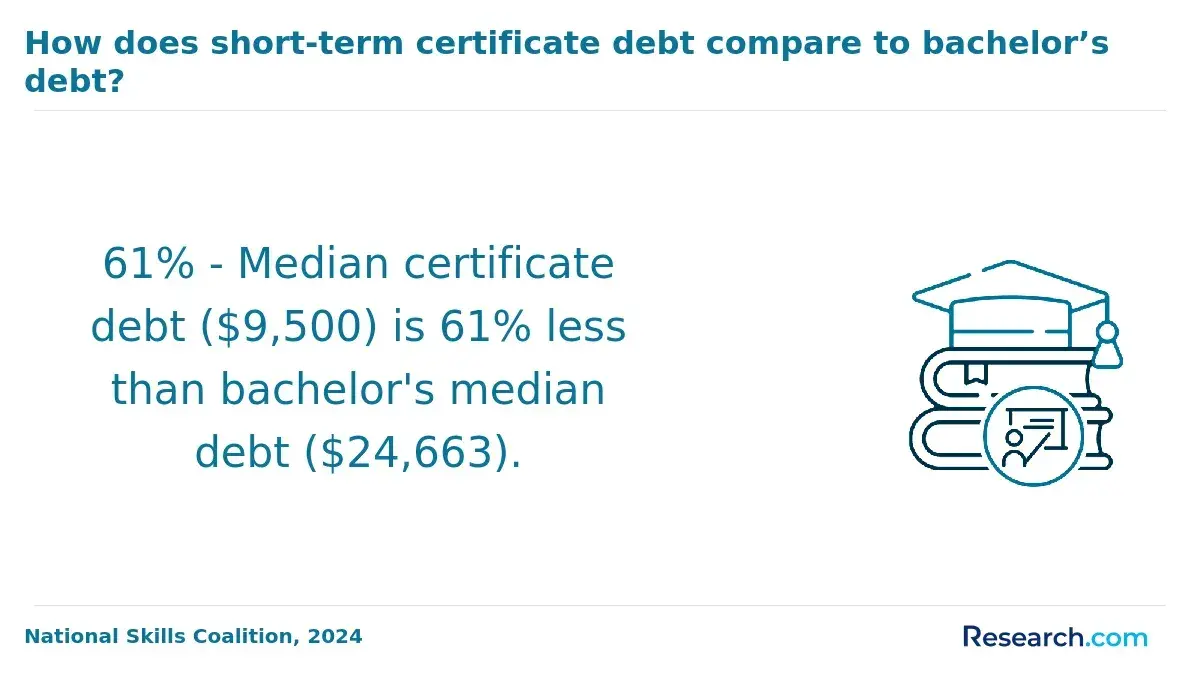
On the other hand, professional multi-course certificates offer a practical shortcut, typically costing $2,000 to $8,000 and taking 9 to 12 months to complete. Employers value these credentials for specialized roles, especially in residential construction, where knowledge of codes and project workflows can directly impact efficiency.
A site supervisor emerging from a certificate program can often transition faster into the workforce than a degree-seeker who must invest years more. However, the tradeoff lies in long-term growth: certificates can accelerate entry or advancement in targeted areas, but lack the broad technical authority and leadership training that degree holders possess.
A tradesperson aiming for site supervision may find a certificate more immediately valuable, while aspiring project directors typically require a bachelor's degree combined with relevant field experience. Assessing these pathways with clear career endpoints in mind prevents costly detours and aligns credential investments with real labor market demands.
What residential construction jobs can you get with an online construction management degree?
Online construction management degrees increasingly reflect the integration of digital tools essential for residential construction roles, such as BIM software, scheduling platforms, and digital cost estimation.
Employers expect graduates to navigate these technologies fluently to optimize project budgets, timelines, and labor allocation, challenges magnified by the shift toward remote collaboration and advanced digital documentation.
Typical positions available with this credential include project manager, estimator, and site supervisor, all demanding proficiency in software-based interpretation of architectural plans and compliance tracking amid evolving regulations.
For example, estimators must accurately predict material and labor costs in highly competitive housing markets, while site supervisors balance quality and safety without consistent on-site presence.
Additional roles like contract administration and procurement specialist involve digital negotiation and supply chain oversight, but all online students face a significant tradeoff: limited hands-on training. Employers often prioritize internship or field experience alongside software skills to verify real-world readiness, which online programs may insufficiently provide.
Entry-level roles such as assistant project manager or coordinator are common starting points, with advancement tied to demonstrated mastery of both software tools and regulatory frameworks.
Aligning degrees with regional licensing further strengthens employability where jurisdictional compliance is strict. Overall, these online degrees now match workforce demands more directly than in previous years but require strategic effort to overcome experiential gaps.
What salary ranges and job outlook can residential construction managers expect?
The practical value of an online construction management degree in residential construction hinges on navigating a nuanced salary landscape marked by geographic and project-scale differences. Median salaries for managers with such degrees hover around $115,000, driven largely by metropolitan multifamily and luxury housing projects.
In contrast, entry-level roles or those in rural markets often fall between $70,000 and $85,000. The top 10% exceed $160,000 by managing complex, multi-site contracts, indicating the premium placed on scale and responsibility.
Employers expect online graduates to demonstrate proficiency not only in budgeting and regulatory compliance but also in advanced scheduling software and subcontractor coordination. However, candidates lacking field experience often face barriers to accessing top-paying positions without additional certifications or hands-on apprenticeships.
This sets a clear path for transitioning professionals: practical on-site leadership and vendor negotiation skills remain foundational before ascending to full project management.
Consider a professional moving from office administration to construction management. Initial salaries may grow slowly as on-site supervisory experience accumulates, with wage growth tied to proven cost-control and leadership achievements over time.
This progression underlines that digital fluency must be matched by demonstrated effectiveness in team and resource management. Given the competitive but solid job growth rate near 8.7%, this balance is key for sustainable career advancement in residential construction.
Are there licenses, certifications, or exams needed for residential construction management careers?
Licensing and credentialing decisions critically shape career trajectories in residential construction management, with tangible consequences on job authority and compensation. While no universal license governs the field, credentials such as the Certified Construction Manager (CCM) and Associate Constructor (AC) serve as validated markers of technical skill and project leadership, often opening doors to roles requiring oversight of complex builds.
For example, a candidate managing a multi-million-dollar housing development in a state with strict codes must typically hold a general contractor license, attained through specific exams aligned to local regulations.
Employers favor candidates combining an accredited online construction management degree with industry certifications, as this reduces onboarding friction and liability risks.
Missing credentials like OSHA safety certification can impede meeting critical compliance standards, limiting employability and increasing insurance challenges. Practical experience alone, while necessary, rarely replaces formal certification where safety or legal compliance is concerned.
Financial tradeoffs also influence credential paths. The average cost of online construction management programs exceeds $60,000, yet a considerable 42% reduction can be achieved through financial aid, lowering typical expenses to about $35,000.
Reinvesting these savings into exam fees and preparatory courses aligns with employer expectations and helps circumvent wage ceilings common among uncertified managers.
Large firms often mandate multiple licenses to handle extensive projects, whereas smaller companies may accept accredited degrees plus experience. Decision-making thus requires balancing state licensing demands, credentialing costs, and the anticipated return in salary or project scope.
Other Things You Should Know About Construction Management
Prior construction experience is not always required for admission, but it significantly affects your ability to grasp advanced management concepts and practical applications. Programs that accept students without field experience often include more foundational courses, which can extend graduation time and increase overall workload. If you lack hands-on experience, choose programs with integrated internships or hands-on labs to bridge theoretical knowledge with real-world skills, as employers prioritize candidates who can manage both office and site operations effectively.
Part-time study allows students to maintain employment while earning their degree, but it can delay entry to higher-responsibility roles by one to two years compared to full-time study. Employers generally favor candidates who complete their education faster because it signals strong time management and commitment. However, part-time programs are suitable if you require steady income or need flexible schedules; just be prepared for a prolonged balancing act between work, study, and personal time that may limit availability for high-demand projects or leadership roles in the short term.
Networking is a known limitation of online programs, but certain programs mitigate this through mandatory residencies, virtual industry events, and alumni networks focused on residential construction. Without deliberate networking components, students risk weaker industry connections, which can slow job placement or advancement in local residential markets that rely heavily on personal relationships. Prioritize programs with structured networking and regional industry partnerships to align with employer expectations and enhance practical job prospects.
References
- CourseCareers https://coursecareers.com/blog-posts/construction-management-degree-vs-field-experience-vs-online-construction-pm-training
- 5 Must-Have Construction Management Certifications https://www.aerotek.com/en/insights/5-must-have-construction-management-certifications
- Best Master’s in Construction Management Online Degree [currentyear] | NEIT https://www.neit.edu/blog/best-masters-in-construction-management-online-degrees
- Construction Management Courses: Study Online and Advance Your Career https://www.oxfordhomestudy.com/construction-management-courses
- Average Construction Project Manager Salary - Elevate Constructionist https://elevateconstructionist.com/average-construction-project-manager-salary/
- Construction Management Certification Course Online https://vdci.edu/courses/construction-management-certification
- BSc (Hons) Construction Management https://www.ube.ac.uk/undergraduate/construction-management/
- 17 Construction Certifications To Enhance Your Career | BigRentz https://www.bigrentz.com/blog/construction-certifications
- Residential Construction Project Manager Salary Guide https://www.ecisolutions.com/blog/residential-construction/bolt-trade-contractor-software/residential-construction-project-manager-salary-what-you-can-expect-to-make/