2027 Best Online Construction Management Degrees for Advancement in Construction Leadership

Co-Founder and Chief Data Scientist
Facing the challenge of advancing into leadership roles within construction projects often means juggling complex timelines, stringent budgets, and evolving regulatory demands - all while lacking the flexible education options needed to upskill. The National Center for Education Statistics noted a 17% increase in online enrollment among adult learners from 2022 to 2024, signaling a shift toward accessible programs designed for working professionals.
This reflects an industry-wide recognition that traditional degree formats frequently fail to accommodate career-building students who require practical, flexible learning models without interrupting employment. This article examines top online construction management degrees, evaluating their capacity to enhance leadership potential and career mobility under real-world constraints.
Key Things You Should Know
- Over 65% of U.S. construction firms prioritize candidates with degrees offering integrated project delivery skills, yet such curricula extend program duration by 15-20%, raising cost and timing tradeoffs per NCES employment projections.
- Employers increasingly demand proficiency in digital tools like BIM and Lean Construction, evidenced by a 40% wage premium for graduates skilled in these areas according to 2024 AGC workforce surveys, compelling curricular emphasis on tech integration.
- Online degree affordability reduces entry barriers, but inconsistent accreditation among providers creates credential recognition risks, impacting hiring outcomes for 28% of applicants per ACCE 2024 quality audits.
What is an online construction management degree and how does it prepare leaders?
Leadership demands in construction management increasingly require an integrated skill set encompassing project coordination, cost control, safety compliance, and stakeholder communication. Candidates with an online construction management degree gain a versatile toolkit including construction technology, contract administration, and risk management.
For instance, a construction manager on a large commercial site must combine budgeting expertise with adherence to OSHA safety standards-skills that this degree specifically develops. Practical proficiency in digital tools like BIM simulations proves essential to resolving on-site design changes and scheduling challenges.
The growing expectation for construction management leadership skills development reflects a sector expanding at 9% employment growth projected from 2024 to 2034 by the Bureau of Labor Statistics. This rate outpaces average occupational growth and signals stable demand amid rising project complexity. However, working professionals should weigh tradeoffs involving program accreditation and state licensure alignment, as gaps can delay certification and restrict job mobility, especially in metropolitan areas with stricter licensing.
Flexible scheduling options in many online construction management degree programs address working professionals' logistical constraints. Yet, students benefit most from programs incorporating internships or industry partnerships that link theoretical knowledge with hands-on experience. Verifying these factors alongside curriculum content and regulatory coverage is key to ensuring smooth career progression.
For a curated selection of affordable, accredited programs aligned with real-world employer expectations, prospective students can explore construction management degree options tailored to diverse career goals.
What are the best online construction management programs for advancing into leadership roles?
Workforce projections anticipate a shortfall of approximately 499,000 construction professionals by 2026, driving employers to seek candidates from online construction management programs for leadership advancement that emphasize practical skills over theoretical knowledge. Programs integrating contract negotiation, risk mitigation, and leadership under compressed timelines better prepare graduates for real-world challenges.
Graduates are expected to demonstrate proficiency with sector-specific technologies such as Primavera P6 and building information modeling (BIM), essential for navigating the regulatory demands of public infrastructure projects. Employers prioritize candidates familiar with these tools as compliance and reporting grow more stringent.
The best online construction management degrees for construction leadership roles incorporate immersive elements like synchronous sessions with simulations and collaborative projects, offering a closer approximation to industry dynamics than purely asynchronous formats. Internships or capstone projects with active construction firms provide crucial exposure to issues such as supply chain disruptions and workforce productivity.
For working professionals, the choice often involves weighing accelerated or part-time curricula that accommodate onsite responsibilities against the need for comprehensive leadership training. Aligning program formats with employer-supported benefits enhances employability while managing time constraints inherent in shift work or project-based roles.
Prospective students may find the accelerated project management degree a strategic consideration when selecting education pathways that combine speed with leadership skill development.
How do online construction management degrees compare with on-campus programs for career advancement?
Career progression in construction management often hinges more on demonstrated skills and industry alignment than on whether a degree is earned online or on-campus. Mid-career professionals engaged in sectors like infrastructure or commercial development find that online construction management degrees versus on-campus programs for career growth converge in value when programs emphasize rigor and current industry standards rather than delivery format.
The chief advantage of online construction management education for leadership advancement lies in its flexibility, enabling professionals to continue working while integrating new methodologies directly into their projects. This real-time application supports skill reinforcement and can accelerate promotion to roles with $100K+ salaries. Yet, early-career candidates lacking established networks frequently benefit more from on-campus experiences, gaining access to internships and employer connections through face-to-face interaction and hands-on labs.
Decision-makers should weigh programs on curriculum relevance-such as BIM technologies and regulatory compliance-and how closely they engage employers in design to ensure job readiness. Modular online formats that allow specialization and faster completion adapt better to working professionals' schedules. For those evaluating pathways, considering options like a hospitality management degree online can provide insight into structuring accelerated and flexible studies aligned with workforce demands.
What accreditation and program quality indicators matter for online construction management degrees?
Employers in construction leadership roles consistently prioritize candidates from programs accredited by recognized regional agencies and the American Council for Construction Education (ACCE). Regional accreditation guarantees institutional standards and credit transferability, while ACCE accreditation confirms alignment with industry competencies essential for leadership.
For instance, a foreman aiming to transition into project management must validate both technical and managerial expertise through these accreditations to meet employer expectations.
Balancing cost against quality remains crucial. Data from the National Center for Education Statistics, as cited by BestColleges, shows the average annual cost of an online bachelor's degree is $15,202 before financial aid, totaling approximately $60,808 over four years. Prospective students should weigh these expenses against transparent graduation rates and workforce outcomes, especially when assessing online construction management degree accreditation standards.
Programs incorporating experiential learning-such as virtual simulations or partnerships with construction sites-facilitate practical skill application relevant across residential and commercial projects. For example, training on project management software used in commercial construction can enhance a residential builder's leadership versatility.
Tracking graduation times and alumni employment through independent data sources provides critical benchmarks to evaluate program performance. Programs without clear outcome data risk leaving students without measurable returns on investment. Practical decision-making includes looking beyond tuition alone-potential candidates might discover more affordable options by comparing costs with program quality and outcomes, as demonstrated in this resource for the cheapest online mechanical engineering degree.
- Look for regional plus ACCE accreditation.
- Validate cost versus demonstrated graduate outcomes.
- Prioritize programs offering practical, technology-driven training.
- Confirm availability of clear, third-party reported employment and completion data.
What courses and specializations are typically offered in online construction management programs?
Employers in mid- to upper-level Construction Management roles expect proficiency in managing complex schedules, budgets, and legal frameworks, which online programs address through core courses in project scheduling, cost estimation, contract administration, construction law, and safety management. However, not all curricula equally reflect the nuanced demands of real-world projects, making specialization choices critical for practical relevance.
For example, a candidate focused on infrastructure projects benefits substantially from specializations in risk management, which tackle regulatory challenges and public contract intricacies. Conversely, professionals aiming for commercial real estate development must prioritize land use policy, zoning, and financing strategies, which directly influence project feasibility and stakeholder negotiations.
Integrating technology skills such as building information modeling (BIM) and construction analytics is increasingly non-negotiable, given their growing role in project accuracy and operational efficiency. Leadership training that enhances coordination across multi-disciplinary teams also aligns with employer expectations for handling large-scale, stakeholder-complex projects.
Tuition cost remains a pivotal consideration. At rates like $2,424 per credit at some institutions, candidates must evaluate whether projected salary increments post-degree justify this outlay, especially when alternative accredited programs offer competitive pricing without sacrificing industry recognition or outcome quality.
Deciding how to tailor coursework and specialization should weigh industry alignment, employer credential recognition, and the ability to apply skills across both private and public sector projects, thus positioning graduates for sustainable career advancement in Construction Management.
What are the admission requirements and application materials for online construction management degrees?
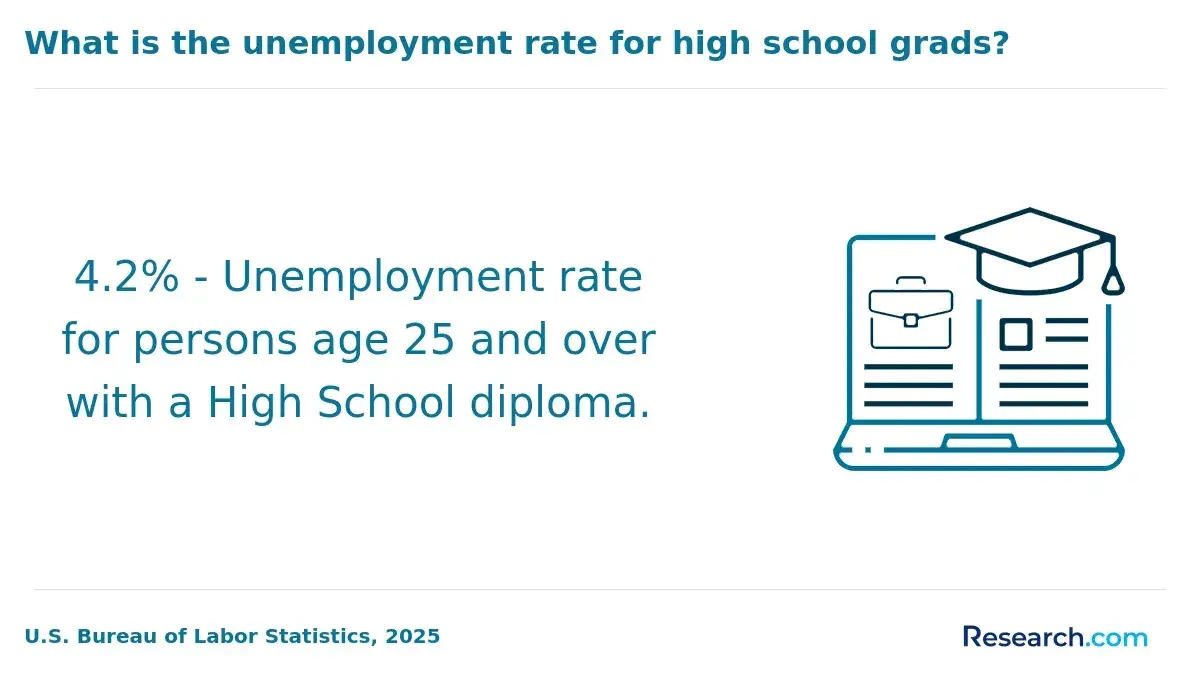
Online construction management degrees require more than academic readiness; they demand alignment with workforce expectations and practical experience. Admissions commonly insist on a high school diploma or GED for bachelor's tracks and a related bachelor's degree for master's entry, supported by transcripts verifying foundational coursework in math, science, and construction principles.
The value of prior field experience, frequently a minimum of 1,000 documented hours in roles like site supervision or project coordination, cannot be overstated, especially for programs emphasizing readiness over theoretical knowledge.
Standardized test requirements like the SAT or ACT are diminishing but persist in selective programs focused on specialized areas such as construction safety or estimating, reflecting differentiated employer demand. Applicants typically must submit detailed resumes and often letters of recommendation confirming relevant competencies. Personal statements that clearly articulate career goals and leadership intentions help admissions committees evaluate candidate fit beyond credentials.
International and nontraditional students face additional hurdles with verified English proficiency (e.g., TOEFL, IELTS) and credential evaluations, which in practice can delay entry and add complexity to admissions.
These requirements mirror workforce realities where ACCE- and ABET-accredited programs correlate with approximately 15% higher job placement rates within six months, according to the U.S. Department of Labor's 2024 Construction Labor Market Report. Choosing whether to meet these benchmarks involves tradeoffs between program accessibility and long-term employability outcomes.
How long do online construction management degrees take and what do they cost?
The practical choice of an online construction management degree hinges on balancing program length, cost, and workforce impact. Associate degrees typically require two years, suiting those entering field roles quickly, while bachelor's degrees-favored for leadership positions-usually extend to four years but can be accelerated. Master's degrees, taking 18-24 months full-time, are aimed at experienced professionals poised for project or construction management leadership roles.
Part-time formats offer flexibility but elongate completion time, delaying potential salary gains.
Tuition ranges widely: public universities often charge $150-$400 per credit hour, resulting in $30,000-$60,000 for a bachelor's degree, while private or specialized programs can exceed $70,000. Master's costs span approximately $20,000 to $50,000. Additional expenses such as materials and proctoring fees add to the investment, requiring a clear budget plan.
Employers prioritize accredited degrees blending practical expertise in budgeting, scheduling, and regulatory compliance over quicker certificates with limited competence development. Construction managers earn a median salary near $115,000, reflecting an 8.7% job growth rate; project managers earn about $102,000 with 5.6% growth, validating investment in programs emphasizing leadership skills.
Professionals must weigh accelerated, costlier programs against slower, more affordable options that may extend time away from work roles. Understanding employer credential preferences and certification pathways enhances ROI and strategic career positioning.
What construction leadership careers can you pursue with an online construction management degree?
Leadership roles in construction management demand a blend of technical expertise and refined interpersonal skills that programs must address to ensure graduates' advancement. For example, project managers coordinating commercial construction timelines must exercise decisive problem-solving and subcontractor oversight under tight deadlines, skills often developed through targeted coursework.
Meanwhile, cost estimators rely on accurate financial analysis to mitigate risk-a capability sometimes undervalued but essential for maintaining project profitability.
Environmental regulation and sustainability drive specialized career paths that require more than broad oversight. Professionals managing LEED-certified developments or implementing net-zero targets need education aligned with evolving green standards, such as Stanford's Sustainable Design & Construction track, to remain competitive in these rapidly growing industry sectors.
Employers increasingly expect leaders to also excel in negotiation and client communication, as these skills directly impact stakeholder alignment and project success. Without such competencies, mid-level stagnation is common, especially when pursuing high-value niches like infrastructure or renewable energy projects that also demand continuing certifications.
Practical educational choices should reflect regional hiring landscapes and salary prospects, as sustainability-focused candidates may find stronger opportunities in states with aggressive emissions policies compared to generalist construction management graduates.
Ultimately, selecting a program that integrates workforce realities with specialization and ongoing credentialing better positions candidates to navigate competitive labor markets and adapt to sector-specific demands.
What is the salary potential and job outlook for construction managers and construction executives?
Salary potential in construction management sharply correlates with responsibility level, sector, and location, often creating distinct financial incentives for transitioning into executive roles. Median wages hover around $100,000 annually, yet seasoned executives managing multi-site or commercial infrastructure projects can command $180,000 to $200,000 or more.
Such disparity underscores the importance of targeted experience and sector-specific leadership capabilities.
The workforce demand trajectory supports continued growth, with an anticipated 9% employment increase by 2034, generating roughly 45,000 new positions each year. Growth is particularly pronounced in sectors like renewable energy and transportation infrastructure, though candidates lacking formal construction management education or leadership experience face higher barriers to entry, especially at senior levels.
Data from Louisiana State University's online construction management program illustrates that outcomes improve markedly for candidates obtaining relevant credentials, showing job placement rates exceeding 90%. Employers emphasize mastery of project lifecycles, budget oversight, and safety compliance-skills not easily gained without structured education or hands-on exposure.
Prospective students must weigh the tradeoff between dedicating time to degree programs and managing current job responsibilities. Additionally, soft skills such as negotiation and team leadership become increasingly critical alongside technical knowledge, with program flexibility and alignment to target sectors influencing the practical value of educational investment.
How can working professionals choose the right online construction management program for advancement?
Program accreditation directly impacts both the employability and advancement potential of construction management professionals. Accreditation from organizations such as ACCE or ABET signals to employers that the curriculum aligns with industry standards, which often influences hiring and promotion decisions.
For example, Indiana State University's ACCE-accredited online program charges a uniform rate of $337 per credit hour for all students, eliminating residency-based cost disparities-a practical factor for professionals planning investment versus employer tuition support.
Curriculum relevance varies significantly by sector focus. Those pursuing leadership in commercial or infrastructure fields should prioritize programs with robust coverage of project scheduling, risk management, and construction law. Integration of digital competencies like BIM and construction analytics is increasingly decisive for employers seeking candidates prepared to handle data-driven decision-making.
Employers favor credentials linked to measurable workforce outcomes such as safety certifications or LEED training, especially in federally funded infrastructure projects with compliance demands. Factors like cohort size, faculty with field experience, and flexible scheduling heavily influence a program's suitability for working professionals balancing job responsibilities.
Evaluating career services and alumni outcomes reports from accredited programs provides insight into real-world job placement success. Candidates must weigh these tangible data points to avoid unexpected opportunity costs and to align education choices with long-term career objectives in a sector demanding continual skill renewal.
Other Things You Should Know About Construction Management
Most online construction management programs do not strictly require prior work experience, but having practical experience significantly improves comprehension and application of coursework. Employers prioritize candidates who combine formal education with hands-on project exposure, especially for leadership roles. If your background lacks relevant experience, seek programs with integrated internships or mentorship options to build practical skills alongside theory.
Employers acknowledge that a degree offers broader strategic, technical, and leadership training than certifications or trade experience alone. However, in construction management, certifications and field experience hold strong immediate relevance and often influence hiring decisions heavily. Prioritize a degree program that incorporates industry-recognized certifications and practical projects to maximize employer recognition and career impact.
Online construction management programs demand time management skills since coursework includes complex project planning, cost estimation, and legal aspects alongside standard academic tasks. Balancing job responsibilities and study can extend degree completion time. Select programs with flexible pacing, asynchronous classes, and clear schedules to minimize conflict with work duties and sustain steady progress toward advancement.
When selecting an online construction management degree program, consider accreditation, faculty expertise, curriculum, flexibility for working professionals, and career services, including industry partnerships and alumni networks, to enhance career advancement opportunities upon graduation in 2027.
References
- CourseCareers https://coursecareers.com/blog-posts/construction-management-degree-vs-field-experience-vs-online-construction-pm-training
- How to choose a bachelor's in construction management | edX https://www.edx.org/resources/how-to-choose-a-bachelors-in-construction-management
- BSc (Hons) Construction Management https://www.ube.ac.uk/undergraduate/construction-management/
- Best Online Construction Management Degrees: 2026 https://gobuid.com/en/blog/all-articles/best-online-construction-management-degree-programs
- 5 Construction Management Career Opportunities Out of College https://aic-builds.org/5-construction-management-career-opportunities-out-of-college/
- Construction Management Jobs and Career Path | Cardinal Civil https://cardinalcivil.com/blog/what-jobs-can-you-get-with-a-construction-management-degree
- Online Certification in Construction Management Program – Is It Worth It? https://www.aproplan.com/blog/online-certification-in-construction-management-program
- Best Master’s in Construction Management Online Degree [currentyear] | NEIT https://www.neit.edu/blog/best-masters-in-construction-management-online-degrees
- Online Specialization in Construction Management | Colorado State University Global https://csuglobal.edu/academic-programs/undergraduate-specializations/undergraduate-specialization-construction-management