2027 Best Online Construction Management Programs for Schedulers Seeking Broader Leadership Roles

Co-Founder and Chief Data Scientist
Schedulers in construction management increasingly confront a dual challenge: mastering complex project timelines while aspiring to lead multidisciplinary teams amid shifting industry demands. This tension intensifies as employers seek leaders who combine technical proficiency with strategic insight, yet many programs lack sufficient flexibility to accommodate working professionals aiming to pivot into leadership. According to the National Center for Education Statistics, online enrollment for graduate programs grew 8% between 2022 and 2024, signaling that more adults prioritize accessible, career-aligned education over traditional campus-bound schedules.
Such data reveals a shift toward modular, scalable learning that fits varied professional rhythms. This article evaluates leading online construction management programs specifically for schedulers targeting broader leadership roles, focusing on curriculum scope, delivery format, and career transition support to guide informed choices amid these competing demands.
Key Things You Should Know
- The 15% average salary premium for schedulers with advanced construction management credentials versus those without signals employer prioritization but risks late-career ROI given a 3.8-year median completion time from NCES data.
- Demand shifts toward integrated leadership roles require programs emphasizing cross-disciplinary curricula; BLS trends show 27% of employers prioritize hybrid business-technical skills over pure scheduling expertise.
- Programs with embedded industry partnerships yield 42% higher job placement at 6 months, yet limited availability constrains access for non-metro candidates, intensifying geographic career mobility challenges.
What is an online construction management program for schedulers seeking leadership roles?
Schedulers transitioning into leadership roles face a significant shift: moving from focusing solely on detailed project timelines to overseeing broader project delivery, including contract administration, financial oversight, and team leadership.
For instance, a scheduler promoted within a large commercial construction firm must integrate technical scheduling expertise with managerial decisions to meet budgetary and safety requirements, reflecting the dual competencies hiring managers now expect.
This evolution aligns with labor market trends. U.S. construction management employment is projected to grow 5% from 2022 to 2032, adding roughly 22,200 jobs. With a median annual wage of $104,900 in 2023, advancing into leadership roles offers measurable financial rewards.
However, practical challenges arise, such as balancing full-time work with asynchronous study formats typical of online construction management programs for schedulers aiming for leadership. Programs that fail to bridge theory and applied tools, like resource allocation and stakeholder coordination, may leave graduates underprepared for real-world constraints.
Prospective students should critically assess program accreditation, the relevance of curriculum to evolving technologies, and access to mentorship or networking. Those targeting senior positions must prioritize curricula integrating leadership theory with advanced scheduling and financial skills, addressing employer demand for candidates adept in both micro-level scheduling and macro project management.
For an in-depth evaluation of program options, the online construction project management degree landscape offers useful insights into accelerated pathways suited for working professionals seeking to expand their leadership capacity.
How can a construction scheduler use an online construction management degree to move into leadership?
Transitioning from scheduler to construction leadership demands skills beyond timeline oversight, which an online construction management degree can provide by expanding expertise to budgeting, contract negotiation, safety compliance, and team leadership.
For instance, a scheduler working on a large nonresidential building project who acquires financial acumen and personnel management through this education can manage cost control and labor allocation effectively.
This capability aligns with the projected 8% growth in construction manager employment from 2022 to 2032, reflecting workforce demand for leaders skilled in multifaceted project oversight.
Advancing the construction scheduler career with online construction management education requires mastering regulatory knowledge, communication, and software tools for comprehensive project control. Practical development areas include:
- Competence in construction law and risk management to reduce delays and ensure compliance.
- Leadership communication for coordinating subcontractors and stakeholders clearly.
- Proficiency in advanced project management software beyond basic scheduling.
- Understanding financial documents and cost estimation to make informed budgeting decisions.
Tradeoffs entail balancing current job demands with intensive coursework, highlighting the need for disciplined time management. Strong programs emphasize real-world case studies to enhance immediate applicability. Employers expect graduates not only to demonstrate technical skill but also to drive operational improvements and risk reduction, essential for ascending to senior roles.
Prospective students should also consider what jobs can you get with a project management degree, as understanding this can clarify how an online construction management degree complements broader strategic project leadership.
Which types of online construction management degrees best fit experienced schedulers?
Bachelor's degrees in construction management offer a clear strategic advantage for experienced schedulers seeking to move beyond technical roles into leadership positions. These programs deliver critical competencies in budget oversight, contract administration, and stakeholder engagement-areas where associate degrees or certificates often fall short.
For schedulers transitioning into roles such as project manager or director, the expanded skill set supports navigating complex project dynamics and risk mitigation.
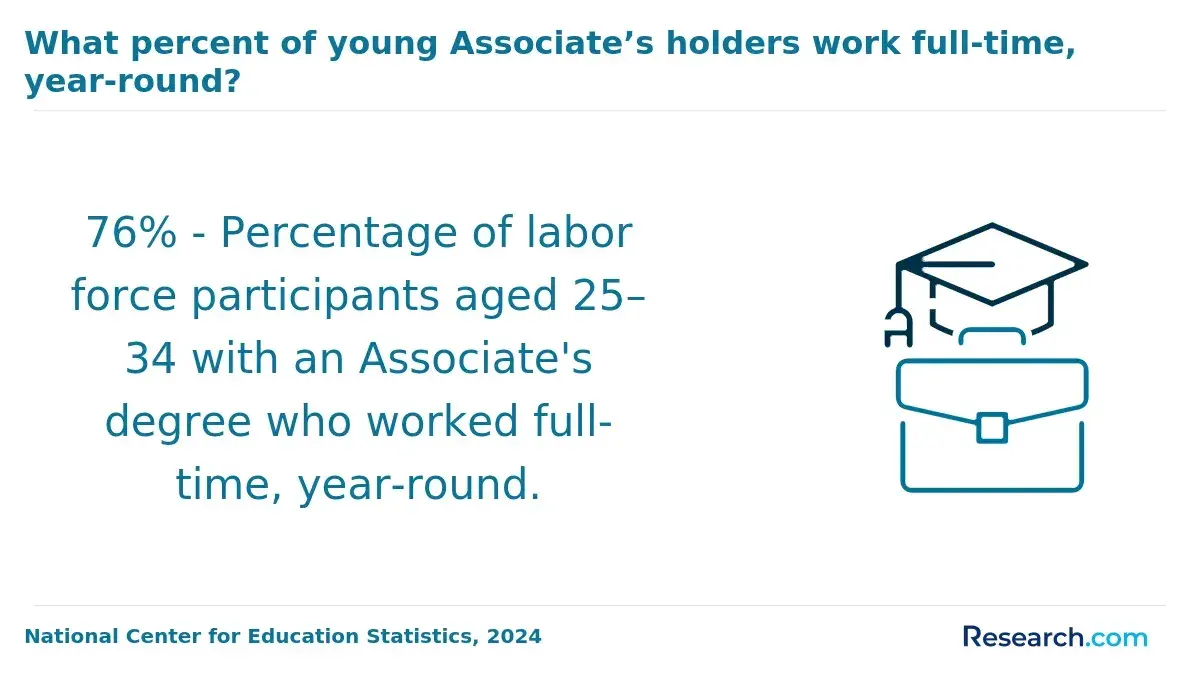
Economic data corroborate this divide: individuals with a bachelor's in construction management earn roughly $13,000 more annually than those holding associate degrees, reflecting employer preference for managerial insight paired with field knowledge.
Key attributes of effective online construction management degree programs for experienced schedulers include flexible scheduling to maintain workforce participation, integration of real-world case studies, and industry-standard software training. These elements ensure graduates can lead multidisciplinary teams across commercial, infrastructure, or industrial projects.
Important considerations include:
- Associate degrees and certificates remain relevant for foundational skills, but lack advanced leadership training
- Master's degrees are generally unnecessary for mid-level leadership roles and seldom yield commensurate salary gains
- Programs highlighting critical thinking and communication skills enhance adaptability in diverse construction environments
Prospective students weighing their educational paths should also compare their options with related fields, and while assessing online hospitality programs, the availability of flexible and career-focused credentials like a hospitality degree online can offer insights into structuring work-study balance and leveraging sector-specific leadership training.
What accreditation and institutional approvals should online construction management programs have?
Choosing an online construction management program without regional accreditation or relevant institutional approvals risks long-term professional setbacks. Regional accreditation from bodies such as the Higher Learning Commission ensures degrees meet fundamental academic standards, critical for credential recognition by employers and eligibility for federal financial aid.
Without this, credits may not transfer or count toward licensure across states, directly impacting schedulers aiming for project leadership roles.
For students balancing full-time work-over 70% of online schedulers, according to a 2024 Affordable Colleges Online survey, programs must demonstrate verified institutional approvals for online delivery that include robust student support and academic integrity protocols.
These elements safeguard educational rigor amid flexible learning formats, a necessity often overlooked in less regulated programs.
The American Council for Construction Education (ACCE) or similar construction-specific accreditations add another layer of relevance by aligning curriculum with industry competencies.
Employers trust ACCE-accredited degrees because graduates have engaged with rigor tailored for construction professionals, a significant advantage when competing for leadership or certification roles in a competitive workforce.
When evaluating online options, confirming these accreditation standards and approvals is not merely administrative but a practical safeguard ensuring that educational investment translates into career-ready qualifications and meets state-level certification requirements. Professional pathways may narrow sharply without such due diligence.
- Verify regional accreditation to secure federal aid and credential acceptance.
- Confirm ACCE or equivalent construction-specific accreditation for specialized rigor.
- Assess institutional approvals for online delivery ensuring student services and academic integrity.
- Check state-level licensure or certification pathways require degrees from accredited programs.
Prospective students interested in related technical fields can also look for vetted pathways as demonstrated in online electrical engineering degree programs for veterans, underscoring the importance of accreditation across disciplines.
In sum, careful scrutiny of online construction management program accreditation standards and institutional approvals for construction management degrees in the US decisively influences long-term employability and professional credibility.
How do online and on-campus construction management programs compare for working schedulers?
The practical advantage of online construction management programs lies in their integration with ongoing work responsibilities, enabling immediate application of leadership concepts in active projects. For instance, a scheduler at a mid-sized commercial firm can implement project lifecycle techniques learned remotely directly into current assignments, accelerating both skill development and managerial visibility.
Arizona State University's 2024 data reveals that over 80% of online enrollees bring prior field or trade experience, emphasizing a curriculum designed to transition practitioners from task-level scheduling to comprehensive project oversight.
Unlike many traditional on-campus options that focus on foundational theory, online programs often concentrate more on leadership, communication, and risk management skills essential for project leadership roles.
Tradeoffs arise in networking and hands-on collaboration, where on-campus programs offer advantages through direct peer interaction and site-based learning, especially in sectors like infrastructure or industrial construction.
Conversely, professionals in commercial or residential sectors relying heavily on digital project management tools may find online programs equally effective and more flexible.
Employers increasingly expect measurable leadership effectiveness tied to current job performance, making individual self-motivation and firm culture critical factors in choosing between online and campus formats. This decision not only affects knowledge acquisition but also determines access to mentorship, internal promotion possibilities, and the degree of immersive learning.
What coursework and skills do online construction management programs teach for advanced scheduling and leadership?
Advanced scheduling proficiency in construction management increasingly requires fluency with digital platforms such as Primavera P6, Microsoft Project, and BIM-based tools. Industry data shows that over 70% of general contractors heavily rely on BIM or model-based scheduling, and more than 60% anticipate accelerated adoption to streamline coordination within complex project environments.
Students trained in these programs gain practical skills aligned with these market shifts, but must weigh software specialization against broader managerial acumen.
Programs emphasize applying Lean construction principles to reduce workflow inefficiencies and improve schedule reliability, key in projects constrained by multi-subcontractor dynamics or fast-tracked timelines.
Leadership training focuses on interpreting variances and utilizing predictive analytics to anticipate disruptions, empowering candidates to negotiate realistic schedule adjustments under pressure.
Consider a commercial build requiring phased coordination among diverse stakeholders: mastering contractual integration with scheduling ensures accountability against milestones and clarifies tradeoffs between speed, cost, and quality.
Graduates emerge prepared not only to operate technical tools but also to lead teams through the tradeoffs inherent in project delivery, bridging the divide between digital proficiency and strategic oversight.
What are typical admission requirements and application materials for online construction management programs?
Admission standards for online construction management programs often reflect a balance between academic preparation and relevant workforce experience. While a high school diploma or GED remains the baseline, many bachelor's tracks demand prior college coursework or an associate degree in related fields.
Crucially, applicants must submit official transcripts evidencing competence in math and science skills that directly impact project scheduling and operational oversight.
Standardized testing requirements like the SAT or ACT are becoming less universal, especially when candidates present substantial professional experience or prior credit, reflecting an industry shift toward practical qualifications over solely academic metrics.
Application packages commonly require a personal statement and one or more letters of recommendation, ideally validating leadership potential and technical proficiency.
For example, a mid-career scheduler with five years of site experience benefits from submitting documented work samples or supervisor endorsements that explicitly demonstrate project milestone management and risk mitigation abilities.
Additional factors include prerequisite coursework in CAD or safety standards and interview components focusing on decision-making under pressure, which are clear indicators that programs tailor admission to align with employer demand for leadership readiness.
Tuition typically spans $30,000 to $55,000, with graduates often realizing a 25-30% salary uplift within five years, underscoring the financial tradeoff inherent in pursuing these credentials.
How long do online construction management programs take, and what do they cost?
Duration and cost of online construction management programs vary significantly based on prior credits and industry experience, directly affecting time-to-degree and financial investment. For working schedulers with relevant certifications or transfer credits, accelerated bachelor's paths commonly shorten completion to two or three years, while full-time students often take up to four years. Graduate certificates and master's programs typically span one to two years part-time.
Tuition rates reflect institutional type and delivery format, ranging from approximately $15,000 to over $40,000 total for bachelor's programs. Public universities tend toward the lower end, while private institutions and per-credit pricing (usually $400-$700) can elevate costs depending on credit requirements. Students must weigh these costs against potential salary increases from leadership roles unlocked by the credential.
Employers in construction management often prefer candidates combining formal education with hands-on experience or industry certifications, effectively reducing the need for foundational coursework. This dynamic benefits professionals aiming to minimize both program length and tuition expenses.
Practical tradeoffs include balancing study load with ongoing employment and financial resources. For example, a scheduler employed at a small firm with limited tuition assistance might prioritize public programs and credit-for-experience options over accelerated tracks. Such decisions impact cash flow, debt load, and ultimately, the return on investment in this competitive field.
- Typical duration: 2-4 years for bachelor's; 1-2 years part-time for graduate certificates or master's
- Cost range: $15,000-$45,000, depending on institution and credit structure
- Employer preference: Prior experience or certifications can reduce program length and cost
What construction management careers, leadership roles, and salaries can schedulers pursue after graduation?
Schedulers transitioning into construction management roles must adapt to broader responsibilities beyond timeline coordination, including budget oversight, contract administration, and team leadership.
This shift significantly impacts compensation; for instance, a scheduler with a bachelor's degree promoted to project executive at a mid-sized commercial firm can expect a salary increase from about $70,000 to over $98,000 annually, according to Indeed's 2024 data showing pay bumps between 20% and 40%.
Such financial growth accompanies demands for interdisciplinary coordination, procurement knowledge, and strategic decision-making capacity.
In high-stakes environments like heavy civil infrastructure projects, scheduling expertise alone no longer suffices. Delays magnify costs across workflows, requiring managers to integrate financial controls and stakeholder communication simultaneously. Success depends on mastering construction law, safety regulations, and emerging technologies such as BIM and ERP software platforms.
Prospective construction management professionals should anticipate the need to develop conflict resolution and contract negotiation skills, as these managerial functions often lie outside traditional scheduling training. Salary trajectories vary by region and sector, with metropolitan areas and specialized fields like oil and gas offering steeper wages but also higher performance expectations.
- Direct promotion can raise salaries by 20-40%.
- Expanded roles involve leadership, financial, and legal competencies.
- Software proficiency in BIM and ERP is increasingly critical.
- High-impact projects demand advanced coordination and risk management.
Are there certifications or professional credentials that complement an online construction management degree for schedulers?
Certifications like the Project Management Professional (PMP) and Certified Construction Scheduler (CCS) often surpass the value of an online construction management degree by providing advanced skills in risk mitigation and multidisciplinary team leadership.
Employers favor these credentials as evidence of practical ability and commitment to industry standards-qualities that unaccredited programs frequently lack. With fewer than 40% of online programs possessing specialized construction accreditation such as ACCE, professional certifications fill critical voids in credibility and quality assurance.
Schedulers operating on large public infrastructure projects encounter unique requirements, including stakeholder coordination under distinct standards. Credentials from bodies like the Construction Management Association of America (CMAA) or the Association for the Advancement of Cost Engineering (AACE) offer expertise tuned to these environments. Combining these certifications with an accredited degree typically strengthens a candidate's market position significantly.
The tradeoff lies in the time and effort needed to earn these certifications, which often require rigorous exams and documented field experience. However, the return includes higher salaries and faster promotions for those aligning certifications with their sector's demands and employer expectations.
- Certifications validate leadership and strategic oversight beyond technical skills.
- Specialized accreditation rates for online degrees remain low, increasing reliance on credentialing bodies.
- Professional organization credentials provide distinct advantages for public infrastructure roles.
- Time and cost investment in certifications often translate into tangible career benefits.
Other Things You Should Know About Construction Management
Online construction management programs vary significantly in pacing and workload, with some requiring intensive weekly commitments unsuitable for full-time professionals. Programs that integrate asynchronous learning with flexible deadlines offer better compatibility with demanding work schedules but may reduce real-time interaction and networking opportunities. Students must realistically evaluate their current job demands and select programs offering structured flexibility that supports meaningful learning without overextending their capacity, ensuring progress toward leadership without risking burnout or compromised job performance.
While institutional reputation matters, employers in construction management put greater weight on demonstrated competencies, relevant experience, and project outcomes than on the program's brand alone. Graduates from lesser-known but well-structured programs can compete effectively if the curriculum aligns with industry standards and the student builds a credible professional portfolio. For those targeting broader leadership roles, prioritizing programs with strong industry connections, experiential learning components, or partnership projects enhances employability more than chasing prestigious names without practical application.
Employer acceptance of online degrees has risen sharply, especially if the program is regionally accredited and includes leadership-focused coursework relevant to construction. However, some employers may still question the level of peer interaction and hands-on experience in purely online formats. To offset this, prospective students should seek online programs that offer hybrid elements, live virtual collaboration, or capstone projects tied to real-world industry problems, demonstrating the ability to lead teams and manage complex projects despite the degree's online nature.
References
- What do you learn in a bachelor's in construction management? | edX https://www.edx.org/resources/what-do-you-learn-in-a-bachelors-in-construction-management
- LATEST NEWS https://www.acce-hq.org/
- What Jobs Can You Get With a Construction Management Degree? - NCW https://www.teamncw.com/2025/10/28/what-jobs-can-you-get-with-a-construction-management-degree-2/
- CourseCareers https://coursecareers.com/blog-posts/construction-project-management-certifications-vs-on-the-job-skill-building
- Best Master’s in Construction Management Online Degree [currentyear] | NEIT https://www.neit.edu/blog/best-masters-in-construction-management-online-degrees
- ABET Approves CMAA-Led Criteria for Construction Management Programs - ABET https://www.abet.org/abet-approves-cmaa-led-criteria-for-construction-management-programs/
- BSc (Hons) Construction Management https://www.ube.ac.uk/undergraduate/construction-management/
- Best Online Construction Management Degrees: 2026 https://gobuid.com/en/blog/all-articles/best-online-construction-management-degree-programs
- Learn Construction Management Online https://constructionmanagementonline.com/