2027 Online Construction Management Degrees With Strong Construction Safety Training

Co-Founder and Chief Data Scientist
Project managers in construction face a critical crossroads balancing rigorous safety compliance with efficient site oversight-failure to master both can lead to costly delays, regulatory penalties, or worse, worker injuries. As federal data from OSHA highlights, construction accounts for nearly 20% of workplace fatalities nationwide, a sobering figure fueling employer demand for managers skilled in construction safety.
Meanwhile, the growing preference for flexible, online degree programs reflects a workforce often juggling job responsibilities and family commitments, with adult learners now representing over 40% of online enrollments according to NCES. This article identifies online construction management degrees that integrate strong construction safety training while accommodating these real-world constraints, enabling prospective students to make informed educational choices aligned with employment realities.
Key Things You Should Know
- Nearly 65% of U.S. construction firms now mandate OSHA 30-hour safety certification, making online construction management degrees with embedded safety training crucial for immediate employability per 2024 Department of Labor data.
- Integrating advanced safety modules often extends program completion by 20-30%, requiring learners to balance accelerated career entry against comprehensive hazard mitigation skills, as shown in recent NCES enrollment studies.
- Employers increasingly prioritize candidates with quantified safety risk reduction outcomes from degree projects, directly linking specialized online curricula to rising average starting salaries-up 12% since 2023, per AGC workforce surveys.
What is an online construction management degree with a strong construction safety focus?
An online construction management degree with safety specialization is more than a generalist pathway; it is a strategic choice for professionals aiming to lead complex projects with elevated risk profiles. Construction consistently records about 30% of all occupational fatalities worldwide, and managers without strong safety acumen face real operational vulnerabilities and compliance challenges. This specialization is not an add-on but a core skillset integrating OSHA standards, hazard recognition, and proactive injury prevention.
Construction management programs focused on safety training equip candidates to handle scenarios like fall prevention on high-rise sites, heavy equipment inspections, and hazardous material protocols. Graduates mitigate project delays and reduce costs by lowering on-site injuries, workers' compensation claims, and OSHA fines. Employers increasingly demand leaders who can conduct safety audits and embed a safety culture throughout project lifecycles.
Students pursuing this specialization should prioritize programs offering real-world case studies and alignment with certifications such as the Certified Safety Professional (CSP). The online format helps working professionals maintain career momentum while upgrading safety credentials essential for regulatory compliance roles and emergency response planning.
For those evaluating construction educational pathways, understanding how a safety-focused degree can differentiate you amid competitive hiring landscapes is key. Reliable information on affordability and program rigor is available for those seeking the best fit in an online format, such as through this construction management degree online.
How do online construction management programs teach construction safety compared to campus programs?
Online construction management safety training methods prioritize analytical review over tactile experience, contrasting sharply with campus programs that offer direct hands-on labs and site visits. For instance, online students typically assess recorded hazard identification exercises in sectors like petroleum construction, cultivating remote hazard recognition essential for managing multiple sites simultaneously.
Campus-based programs, meanwhile, emphasize physical presence that builds muscle memory in hazard mitigation but may offer less exposure to digital incident reporting systems now standard in the field.
Online coursework integrates cloud-based reporting tools and real-time communication protocols reflecting the decentralized nature of modern construction projects. This prepares students better for overseeing dispersed teams and ensuring compliance across remote job sites. Conversely, in-person training leans on traditional forms and face-to-face correction drills, providing stronger on-the-ground hazard management skills.
Employers increasingly seek construction managers with robust safety competencies; the Bureau of Labor Statistics projects a 9% growth in employment for such professionals from 2024 to 2034. Graduates from online paths often need supplementary site internships or certifications to bridge the gap left by limited immersive exposure. Prospective students aiming for a strategic shift can find a quickest online project management degree useful but should weigh the tradeoffs between practical experience and flexible digital learning.
Tradeoffs in construction safety education online vs campus demand evaluation of one's career goals and learning context:
- Online paths enhance remote site assessment and digital documentation familiarity.
- Campus programs provide superior hands-on hazard mitigation and site presence.
- Combining online studies with certifications or internships maximizes workforce readiness.
Which accreditations and industry approvals should these online construction safety programs have?
The value of online construction safety program accreditations lies in their direct influence on employability and employer trust. Regional accreditation recognized by the U.S. Department of Education or CHEA ensures transferability and program legitimacy, but industry-specific validation from the American Council for Construction Education (ACCE) markedly increases a graduate's competitiveness. ACCE accreditation signals that graduates have met rigorous safety standards relevant to real-world project demands.
Industry certifications for construction safety training, such as those aligned with OSHA regulations or certifications like Certified Safety Professional (CSP) and Associate Safety Professional (ASP), provide measurable credentials that employers actively seek. In high-risk sectors like oil and gas or heavy civil construction, programs combining construction management with OSHA's Construction Safety and Health Outreach criteria significantly reduce onboarding time and costs, offering immediate field readiness.
Prospective students should weigh programs that lack these endorsements carefully; absence of accreditation can marginalize graduates amid a market where safety compliance is increasingly a hiring prerequisite. Employers recognize that accredited programs deliver verified curriculum rigor and practical safety expertise, a combination reflected in construction managers' average annual wage of $119,660 in 2025.
Those evaluating pathways that bridge construction safety and broader leadership roles may find examining related fields worthwhile, such as doctorate in healthcare administration programs, which share strategic oversight elements applicable across industries.
What core construction management and safety courses will you take in these online degrees?
Effective construction management safety training courses merge core knowledge of project delivery with detailed occupational safety practices, addressing real employer needs for compliance and risk mitigation. A curriculum incorporating construction materials, methods, and scheduling paired with specific safety topics-such as OSHA regulations, hazard identification, and site-specific safety program design-equips students for managing dynamic, high-risk environments.
Courses that focus on accident investigation train future managers in root cause analysis, an essential skill in a sector where 14% of occupational safety specialists worked in construction in 2022. Legal components like construction law and contract administration further prepare graduates to navigate complex liability and regulatory compliance issues.
Working professionals pursuing online construction management degree core classes must evaluate the balance between rigorous safety content and practical scheduling demands, often leveraging software tools like BIM integrated with safety modules for hands-on emergency response and enforcement simulation.
Graduates entering the workforce do so with capabilities aligned to employer expectations for reducing incident rates and ensuring regulatory adherence in environments accounting for one in every seven certified safety specialist roles nationwide.
Unlike some programs emphasizing general management skills, degrees with robust safety training prioritize operational readiness in real-world safety challenges. Students also benefit from comparing these pathways with technical disciplines, such as the focused rigor found in a mechanical engineer degree, when considering long-term career investments within construction-related fields.
What admissions requirements do online construction management programs with safety training typically expect?
Practical work experience significantly shapes admissions into online construction management programs with safety training, as foundational knowledge alone rarely suffices. Applicants with OSHA certifications or roles like site safety technician can bypass some entry barriers, gaining access to advanced safety-management coursework.
By contrast, those without relevant on-site experience often face additional hurdles such as mandatory pre-admission safety modules or construction technology basics, underscoring a critical tradeoff between academic credentials and hands-on proficiency.
Admission requirements typically include a high school diploma or equivalent, with many bachelor's programs expecting preparatory college coursework or an associate degree. Standardized tests like the SAT or ACT are increasingly optional for candidates demonstrating substantial industry experience-reflecting evolving employer priorities that favor documented practical skills.
Letters of recommendation and personal statements usually focus on specific competencies like hazard mitigation and regulatory compliance, which serve to distinguish candidates within competitive admissions pools, especially at the graduate level. This emphasis signals that programs seek individuals capable of integrating field expertise with the technical rigor essential to construction safety leadership.
Employment data reinforces these admission priorities: Safety Specialists earn a median $78,060 annually, while OSH Technicians make around $67,900, affirming a market demand for graduates who can effectively balance safety protocols with managerial responsibilities. Prospective students should weigh these criteria carefully when strategizing their educational investments and career pivots in the construction safety arena.
How long do online construction management degrees take and what do they cost?
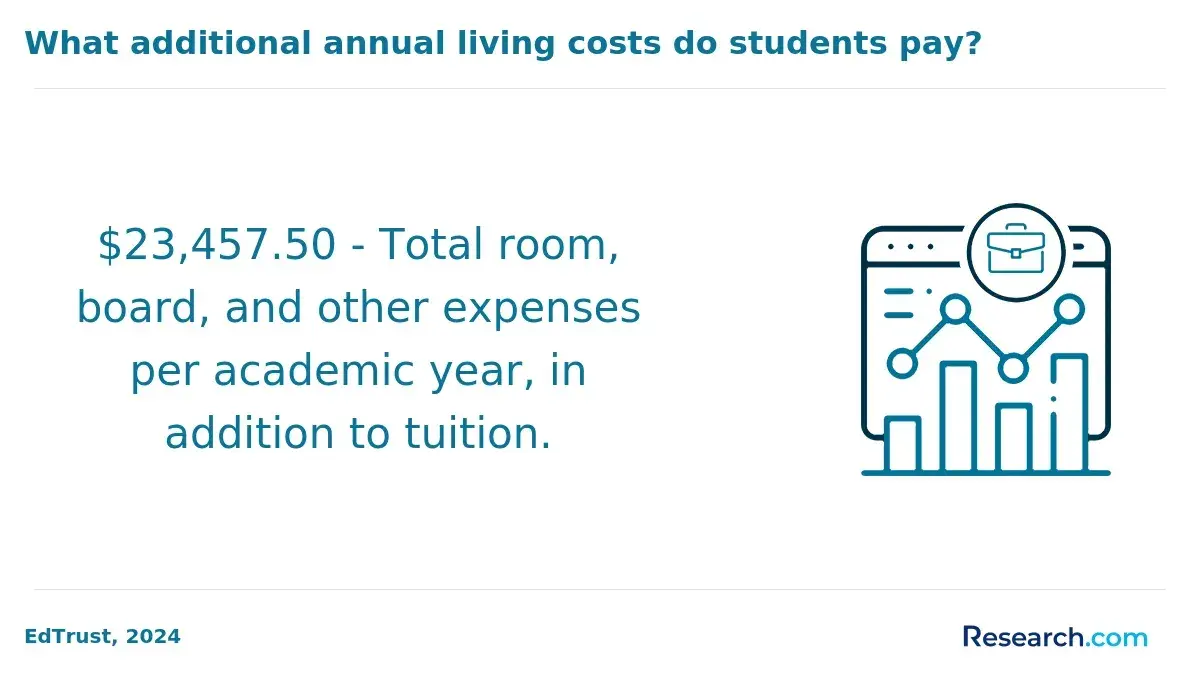
Completing an online construction management degree typically takes four years full-time, with part-time options extending beyond five years due to course load flexibility. This duration matters significantly for working professionals balancing paychecks and study demands. The average annual cost stands at $15,202, summing to approximately $60,808 over the degree span, excluding expenses like textbooks, software, or certification exams that employers may require.
Students face a clear financial tradeoff: while the upfront investment is substantial, graduates from accredited programs often start with salaries exceeding $70,000. For example, a project manager entering commercial construction may recover educational costs within two years of steady employment. Conversely, public sector roles with more gradual wage growth might delay this return.
Accelerated hybrid formats can reduce degree completion to three years but increase per-credit costs and workload intensity, making them more demanding choices. Employer tuition reimbursement can mitigate net expenses, though students should anticipate unpaid internships or capstone projects that might disrupt income streams.
Effective planning involves balancing time, cost, and additional credentialing needs to maximize employability and salary potential. Understanding these variables is essential for individuals strategically seeking a career pivot or advancement in construction management, where real-world experience and certification can influence job prospects as much as the degree itself.
What construction careers can you pursue with an online construction management degree in safety?
Online construction management degrees with a focus on safety equip graduates for roles demanding strict regulatory compliance and proactive risk mitigation, such as construction safety manager or site safety officer. For instance, a safety manager on a commercial project enforces OSHA standards, conducting audits to prevent costly accidents and downtime. In complex infrastructure projects, site safety officers balance operational efficiency with rigorous hazard controls on heavy equipment.
Employers favor candidates who can reduce liability and insurance costs through verified safety expertise and leadership. Graduates often transition into positions integrating safety with broader operational oversight, including construction superintendent or quality control manager roles. The ability to rapidly interpret safety data and modify protocols is essential in dynamic environments like highway construction or industrial plant upgrades.
Job placement data reflects strong labor market demand: reports indicate 100% employment within months for safety-trained construction management graduates, with starting salaries exceeding $70,000. However, ongoing continuing education is necessary due to evolving regulations, imposing a significant time and financial commitment.
Key competencies include understanding complex workplace regulations, hazard communication, and incident investigation. Graduates must also navigate variable site-specific challenges, such as confined spaces or electrical hazards. Combining practical site experience with this specialized education better positions professionals for durable career advancement and immediate workplace impact.
What salary ranges and earning potential exist for construction managers with safety expertise?
Construction managers with integrated safety expertise command salaries substantially above the typical range for their field due to the added value of risk mitigation and regulatory compliance. The median annual wage for these professionals is approximately $102,567, over 100% higher than the general U.S. wage average, driven by demand in industries where safety protocols directly impact project timelines and legal liabilities.
Salary variation hinges on experience, certifications such as OSHA or Certified Construction Manager (CCM), and geographic regulations. For instance, managers in California overseeing large, heavily regulated commercial projects often see compensation approaching $140,000, reflecting stringent safety standards. Conversely, managers working on smaller residential developments in less regulated states may earn closer to $85,000.
Employers frequently prioritize candidates with safety credentials because these professionals reduce accident-related downtime, justifying salary increases of 10-20% beyond standard construction management roles. However, pursuing these credentials often means slower initial wage growth as professionals invest time in training.
Industry focus also affects pay scales:
- Infrastructure projects allocate higher budgets for combined management and safety roles.
- Smaller contractors may offer less but still value integrated safety knowledge.
Job seekers should weigh the practical tradeoff between upfront credentialing effort and the long-term stability offered by safety-centered careers, particularly in sectors sensitive to compliance pressures.
How does an online construction management degree prepare you for safety certifications like OSHA or CHST?
Online construction management degrees that integrate safety certification preparation offer more than academic knowledge-they provide critical alignment with industry expectations for certified professionals. These programs embed essential OSHA and CHST safety principles directly into project management coursework, bridging the gap between theoretical frameworks and practical exam readiness.
Students typically encounter comprehensive training on OSHA standards, workplace hazard recognition, and environmental health, which often fulfills prerequisites for OSHA 30-hour or CHST certifications. This integration reduces the need for additional certification-specific training and accelerates credential attainment, particularly valuable for working professionals balancing on-the-job responsibilities.
Practical application is a defining advantage. For instance, a construction manager working on commercial sites can directly implement risk mitigation techniques around fall prevention or equipment safety garnered from these programs, enhancing not only exam performance but also operational site safety.
From a labor market perspective, combining construction management skills with certified safety expertise correlates with stronger employability. Arizona State University data shows construction managers earn about $114,990 annually with 8.7% job growth, whereas safety-focused project managers command around $102,320 with 5.6% growth-indicating a strategic value in acquiring both competencies.
Challenges remain in program selection, including ensuring curricula reflect current OSHA updates and offer active exam preparation or partnerships with certification bodies. Candidates should critically evaluate whether programs provide relevant case studies or virtual simulations to avoid credentialing gaps.
How can you compare and choose the best online construction management program for safety training?
Effective online construction management programs integrate OSHA certification, hazard recognition, and risk mitigation with direct application to jobsite realities. Graduates entering roles such as project manager or superintendent benefit most from curricula that extend beyond minimum compliance, incorporating advanced safety technologies like wearable sensors.
Employers prioritize safety proficiency combined with management ability, reflected in average annual wages near $90,700, underscoring the economic value of comprehensive safety training.
Balancing flexibility with practical experience is a critical challenge. Purely online formats often lack hands-on site safety internships common in hybrid programs, so strong virtual labs or case-based learning must compensate to maintain job readiness. Programs transparent about graduation rates and placement success offer clearer insight into real-world alignment. Ongoing professional development is essential to keep pace with evolving safety standards and technologies after graduation.
Prospective students aiming to pivot into commercial construction roles should weigh these tradeoffs carefully. Solid career services linked to firms with robust safety cultures enhance employment outcomes. Crucially, curriculum that explicitly addresses incident prevention, emergency response, and regulatory compliance offers immediate workplace relevance rather than theoretical knowledge alone.
- OSHA-focused safety compliance integrated into coursework
- Emphasis on both theoretical and applied safety technologies
- Career services connected to safety-centric employers
- Hybrid delivery with optional on-site practicum preferred for practical competency
- Transparent reporting on placement and graduation metrics
Other Things You Should Know About Construction Management
Hands-on experience is crucial as it bridges the gap between theoretical knowledge and real-world application. In construction, understanding site dynamics and safety protocols through practical scenarios enhances skill levels and preparedness, making graduates more effective and attractive to employers.
Online construction management degrees with safety training tend to have comparable or even heavier workloads due to integrating specialized safety modules and regulatory content. Students balancing work and study should expect rigorous time management demands, particularly when courses include case studies, compliance documentation, and project simulations. Selecting programs with manageable pacing or asynchronous options can mitigate burnout risks.
Employer acceptance varies, but degrees from accredited institutions with verified safety curricula receive increasing recognition. Hiring managers prioritize demonstrated competencies and certifications (like OSHA) alongside degree credentials. Graduates should complement their degree with practical safety certifications and documented project experience to maximize employability.
Professionals aiming for roles specifically in site safety or risk management should prioritize programs with strong safety content, as these provide targeted expertise favored by employers in safety-critical roles. Conversely, those seeking general construction leadership roles benefit from broader management curricula coupled with optional safety certifications. Clarifying career goals upfront ensures the educational investment aligns with desired job functions.
References
- Certified Safety Manager | Construction: Roles & Training https://www.naspweb.com/blog/certified-safety-manager-construction/
- CourseCareers https://coursecareers.com/blog-posts/construction-management-degree-vs-field-experience-vs-online-construction-pm-training
- Construction E-Learning: Making Skills and Certification Accessible Across Europe https://cosac.co.uk/news/online-construction-courses-and-flexible-training-options/
- Best Online Courses for Construction Safety in 2025 - https://cmarcottesafety.com/online-courses-for-construction-safety/
- How to Become a Construction Safety Officer: CHST and Beyond https://ehscareers.com/employer-blog/become-construction-safety-officer-chst-beyond/
- 5 Construction Management Career Opportunities Out of College https://aic-builds.org/5-construction-management-career-opportunities-out-of-college/
- Construction Management Salary - iFundi https://ifundi.co.za/construction-management-salary/
- Best Master’s in Construction Management Online Degree [currentyear] | NEIT https://www.neit.edu/blog/best-masters-in-construction-management-online-degrees
- The 9 Best Construction Training Software of 2026 | SafetyCulture https://safetyculture.com/apps/construction-training-software
- How to Choose the Right Safety Training Provider | ClickSafety https://www.clicksafety.com/blog/how-to-choose-the-right-safety-training-provider