2027 Best Online Master's in Construction Management for Project Controls Careers

Co-Founder and Chief Data Scientist
Mid-career professionals in construction management often confront a pivotal dilemma: upgrading skills in project controls without sacrificing ongoing work responsibilities or relocating. This challenge intensifies as employers increasingly require advanced competencies in cost management, scheduling, and risk mitigation.
Recent data from the National Center for Education Statistics indicates a 15% surge in online master's degree enrollment among adult learners in 2024, reflecting a shift toward flexible, career-compatible education.
Such flexibility is especially crucial given the construction industry's cyclical workload and project-dependent schedules. This article evaluates top online master's programs tailored for project controls careers, helping readers pinpoint programs that balance rigor, accessibility, and real-world applicability.
Key Things You Should Know
- In 2024, average online master's tuition for construction management spans $30,000-$65,000; higher costs accelerate ROI only when paired with programs emphasizing advanced project controls software mastery, per NCES data.
- Employers increasingly require certifications in project control tools like Oracle Primavera, with 62% prioritizing practical software integration skills over generalized management degrees, according to FMI Corporation's workforce survey.
- Programs delaying hands-on project controls experience until final terms reduce immediate job market competitiveness; early curriculum exposure correlates with 22% higher placement rates within six months, per industry hiring reports.
What is an online master's in construction management?
Professionals pursuing an online master's degree in construction management for project controls should weigh the impact of program design on their practical skills and career flexibility. Unlike traditional classroom settings, online curricula require disciplined time management and typically rely on virtual collaboration, which affects how students gain real-world application, especially managing dynamic schedules and risk across geographically dispersed teams.
The projected 5% job growth over the next decade, with roughly 38,700 openings annually, demands candidates who excel in both technical construction expertise and quantitative competencies such as cost modeling and scheduling software.
Employers emphasize candidates' ability to integrate project scope, budget, and regulatory compliance efficiently. Although online programs widen access for working professionals and those distant from urban centers, prospective students must critically assess access to industry-standard tools and experiential learning opportunities, including internships or mentorships.
Practical scenarios highlight these tradeoffs: for instance, a graduate coordinating subcontractor timelines with supply chain constraints within a transportation project must seamlessly apply knowledge gained remotely. This exemplifies why selecting one of the best online construction management programs for project controls careers involves scrutinizing course rigor and support structures rather than mere convenience.
For those seeking a data-driven comparison of program options, the online construction project management degree portal offers a curated resource to evaluate accelerated paths and align them with employment outcomes.
Which accreditation matters for construction management programs?
ABET accreditation, especially from its Engineering or Computing Accreditation Commissions, remains the pivotal credential for construction management programs aiming at project controls roles. Graduates from ABET-accredited programs are distinctly advantaged when pursuing positions requiring verified technical rigor, such as government contracts or large-scale infrastructure projects.
Without this or a similarly respected professional accreditation, candidates often face skepticism regarding their preparedness for critical tasks like scheduling, cost estimation, and risk mitigation.
Regional accreditation bodies like the Higher Learning Commission provide necessary but insufficient validation compared to ABET's industry-specific benchmarks. In more specialized sectors, such as oil and gas or infrastructure development, the preference shifts further towards programs recognized by the Construction Management Association of America (CMAA) or the American Council for Construction Education (ACCE).
These accreditations affirm curricula that integrate current project controls software and methodologies vital for handling multi-million-dollar projects.
Employment outcomes illustrate the tangible impact of accreditation on career prospects. The U.S. Bureau of Labor Statistics reports median annual wages for construction managers at $104,900, with top earners exceeding $174,240.
Graduates from programs lacking accreditation generally experience longer job searches and lower starting salaries since employers prioritize credentials signaling operational readiness in compliance, safety, and contract management.
For those evaluating an online construction management program accreditation in the United States, these distinctions can strongly influence employability and salary trajectory.
When choosing the best accredited construction management degrees for project controls, weigh how these accreditations reflect real-world employer expectations and sector-specific requirements rather than relying solely on institutional prestige.
How do online and campus programs compare?
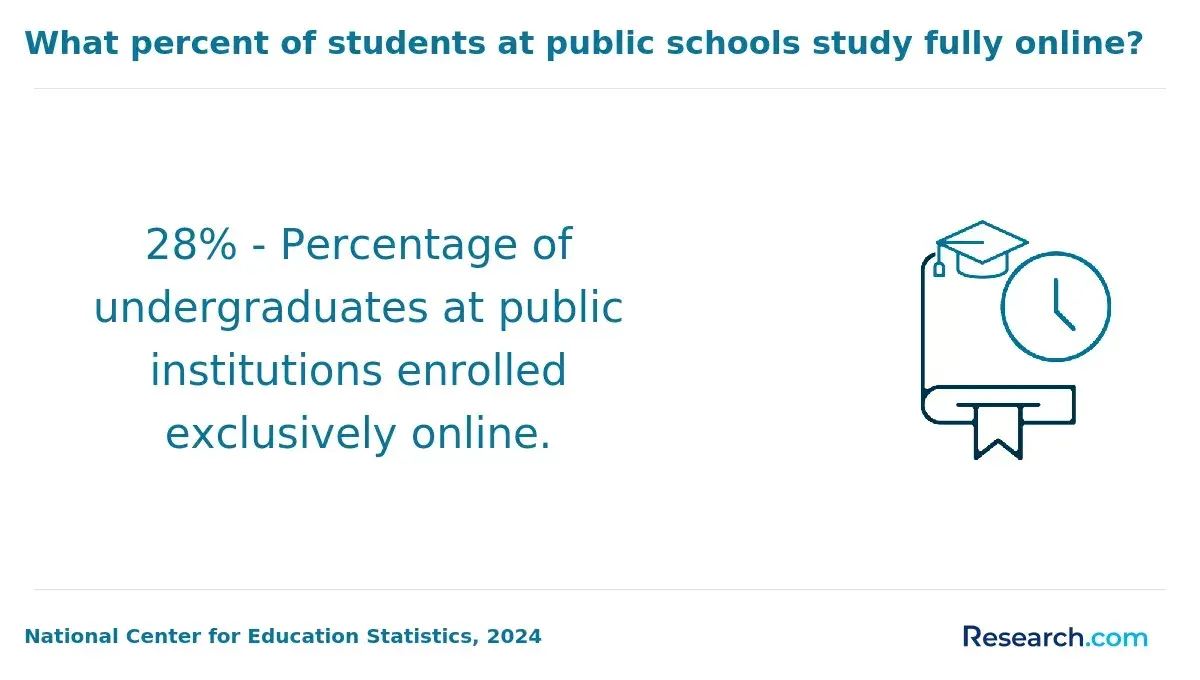
The best online construction management programs in the US differ fundamentally from campus options in flexibility and direct, hands-on exposure. Online degrees allow professionals to juggle full-time work while applying updated skills immediately, an advantage for those managing multiple sites or ongoing projects.
Conversely, campus programs often provide immersive access to specialized labs, in-person mentorship, and site visits, which remain preferred for sectors like heavy civil infrastructure or aerospace construction controls.
Employers commonly seek project controls expertise grounded in tangible problem-solving; campus formats naturally facilitate this through face-to-face collaboration and physical resources.
However, workforce data suggest graduates from both modalities demonstrate comparable competencies, often via virtual simulations and interactive software tools that accredited online programs increasingly integrate.
Purdue University research confirms that holding a master's degree raises salary prospects by 25% to over 75%, regardless of whether coursework was online or on campus.Trade-offs are clear:nline degrees offer schedule adaptability and broader program selections, beneficial for those balancing family or complex workloads.
Trade-offs are clear: online degrees offer schedule adaptability and broader program selections, beneficial for those balancing family or complex workloads. Campus degrees provide richer collaborative environments critical for leadership development and site-specific technical skills.
For example, a project manager in commercial real estate might find an online master's sufficient for mastering controls software and reporting, while those aiming for specialized industrial fields could require campus resources.
Costs, employer tuition support, accreditation, and preparation for certification exams also weigh heavily in these decisions. Prospective students evaluating differences between online and campus construction management degrees should factor these operational realities.
Additionally, those interested may explore related fields such as healthcare, evident in options like the masters degree in healthcare management.
What courses are in construction management programs?
The decision to pursue construction management programs tailored for project controls professionals must consider the distinct technical and strategic skills demanded by employers. Core coursework-such as project scheduling using CPM and PERT, alongside cost estimating and budgeting-directly prepares students to manage tight timelines and enforce financial discipline.
Programs addressing risk management teach how to navigate unexpected delays or overruns, a common scenario in infrastructure or commercial construction, underscoring the practical need to anticipate and mitigate project disruptions.
Master's in construction management program curriculum frequently integrates contract administration and safety management to equip graduates with the legal and regulatory fluency required onsite.
Employers prioritize candidates proficient in industry-standard tools like Primavera P6, Microsoft Project, and BIM software due to the sector's ongoing digital transformation. The global construction project management software market doubling from $9.3 billion to over $18 billion by 2030 emphasizes the necessity of such technical fluency.
However, mastering these competencies demands navigating interdisciplinary challenges involving engineering concepts, financial analysis, and regulatory compliance simultaneously.
Advanced training in data analytics and AI for predictive controls reflects a shift toward data-driven decision-making, valuable but complex for professionals pivoting careers.
Online construction management project controls courses offer flexible access to these skills, though applicants must weigh the rigor and breadth of the curriculum carefully.
For those comparing paths, evaluating the practical relevance of courses aligned with current market demands is critical. This contrasts with more generalized technical degrees, such as a mechanical engineering online degree, which may provide foundational knowledge but less targeted project controls insight.
Detailed program choices and affordability comparisons can be explored with resources like the mechanical engineering online degree listings available at research.com.
What admission requirements do these programs have?
Admissions to online master's degrees in construction management reveal significant practical tradeoffs between academic credentials and professional experience.
While a bachelor's degree in engineering, architecture, construction, or business from an accredited institution remains the baseline, programs increasingly weigh relevant work history, particularly in project controls roles such as scheduling and cost estimation, as a substitute for perfect GPA scores.
For example, a project engineer aiming to move into a controls manager position must clearly document leadership and oversight competencies, making admissions committees prioritize tangible skills over standardized test scores.
Typical application requirements include official transcripts, a project-focused resume, and letters of recommendation from supervisors or academic mentors who can verify technical and managerial abilities.
Though some programs still request GRE scores, many waive them to accommodate mid-career professionals whose track records better predict success in complex, deadline-driven construction environments.
International applicants must meet English proficiency standards through TOEFL or IELTS unless their prior education was completed in English-speaking countries. Several online programs have adopted more flexible admissions criteria, emphasizing managerial aptitude and technical prowess evidenced within professional portfolios rather than relying on traditional metrics.
Admissions offices often facilitate pre-application advisement, helping candidates align their profiles with program demands and thereby enhancing application quality and efficiency.
How long does the degree take and cost?
Online master's degrees in construction management typically require 18 to 24 months of full-time study, though flexible pacing often extends programs to three years or longer to accommodate working professionals. A critical factor influencing total cost is the per-credit tuition rate, which varies considerably across institutions.
For example, Drexel University charges $830 per credit for its online MS in Construction Management for 2026-2027, marking a roughly 40% savings against its $1,382 per credit on-campus rate. Given a typical credit load of 30 to 36 credits, the total tuition ranges from approximately $24,900 to $29,880.
For professionals who must maintain full-time employment, these price differentials and program durations have practical consequences: longer programs delay the application of new skills, and higher costs can limit financial flexibility.
Employers in infrastructure-centric industries increasingly prefer candidates with affordable, accelerated programs paired with relevant project controls expertise, as these align more closely with organizational needs and project timelines.
Additional program expenses, such as textbooks, specialized software, and any mandatory residencies, can add 10-15% to the overall cost and should be factored into budgeting. Early verification of financial aid options, employer tuition assistance, and federal loan availability is essential to understanding net program costs.
Drexel's per-credit rate indicates a financially viable pathway that balances affordability and rigor without imposing excessive debt burdens, fitting for those pursuing strategic career shifts within construction management.
Which project controls skills do students learn?
Master's programs in construction management emphasize operational skills directly aligned with managing multifaceted projects under real-world constraints. Graduates gain expertise in cost estimating and control, crucial for navigating volatile material prices and labor market dynamics without derailing budgets.
Scheduling training combines traditional Critical Path Method (CPM) with software like Primavera P6 and Microsoft Project, enabling proactive adjustment to shifting timelines-a frequent necessity on complex infrastructure or commercial builds.
Risk management coursework targets scenarios that differentiate between project types, instilling the ability to allocate contingencies with precision and negotiate contracts informed by quantified risk profiles.
Effective document control and data management practices support compliance and coordination across wide-ranging subcontractors and regulatory bodies, essential for avoiding costly delays or legal exposure.
The integration of earned value management (EVM) metrics cultivates the capacity to track project progress against benchmarks and identify variances early, allowing course corrections before issues escalate.
Adding Building Information Modeling (BIM) enhances alignment between design changes and execution schedules, reducing rework and cost overruns-a frequent pain point in large-scale projects.
For prospective students evaluating return on investment and admission feasibility, programs like Texas State University accept applicants with a minimum 2.75 GPA over the last 60 undergraduate credit hours, broadening access for mid-career professionals seeking advancement without a perfect academic record.
What careers can this degree lead to?
Advanced construction management roles increasingly demand a fusion of technology fluency and analytical proficiency rather than traditional supervisory skills alone.
Graduates of online master's degrees in this field often secure positions such as project controls analysts, cost estimators, or scheduling managers, where expertise in BIM (Building Information Modeling), scheduling software, and data analytics directly influences project outcomes.
For instance, a project controls analyst working on a large infrastructure project leverages real-time data analytics to adjust timelines and budgets dynamically, mitigating expensive overruns.
Yet this shift toward integrated digital platforms introduces operational challenges: continual certification on evolving software, maintaining data integrity, and cross-disciplinary coordination are prerequisites that can limit career progression if ignored.
Candidates without strong analytical capabilities tend to stagnate in entry-level roles despite advanced degrees. Meanwhile, roles such as sustainability consultants require balancing regulatory knowledge with emerging green technology applications.
Prospective students should critically assess program curricula for rigorous hands-on technology training and analytics integration to meet these market realities.
As USC employment data illustrates, the fastest growth is in tech-enabled careers within construction management rather than solely traditional project supervision. This evolution underscores a strategic tradeoff-mastery of complex digital tools significantly broadens career trajectories but necessitates ongoing upskilling and adaptation.
How much do project controls graduates earn?
Graduates with a master's in construction management and a focus on project controls can expect starting salaries ranging from $75,000 to $120,000 in the U.S., influenced strongly by location, employer size, and experience.
Entry-level roles such as project planners often begin near the lower bound, whereas seasoned professionals-cost controllers, risk analysts, or project directors-in large metro areas or prominent engineering firms regularly surpass $110,000.
Projected employment growth in construction management over the next decade hits 11%, outpacing national averages and emphasizing employer demand for expertise that integrates scheduling, cost, quality, and risk controls on complex projects.
This differential growth suggests accelerated opportunities in infrastructure and energy sectors compared to more stable commercial building markets, where salary progression tends to be steadier but slower.
Key to maximizing salary trajectories is proficiency in industry-standard software including Primavera P6, Microsoft Project, and BIM applications, paired with strong communication and negotiation skills that directly affect promotion and raises.
Those targeting senior or regional project controller roles should anticipate 15% to 25% salary increases over five years, particularly when certifications and relevant experience align with construction hubs like Houston or San Francisco.
What certifications improve project controls careers?
PMP and CCM certifications represent critical differentiators in the project controls landscape, particularly for those targeting construction-related roles with direct oversight of schedule, cost, and compliance. Employers often mandate PMP certification for schedule management and risk analysis, as it confirms proficiency in methodologies endorsed by the Project Management Institute.
CCM certification narrows focus further, addressing complexities unique to construction project execution, providing candidates an edge in contract bidding and regulatory oversight.
Complementary credentials like the Earned Value Professional (EVP) or Agile Certified Practitioner (PMI-ACP) enhance specialized competencies-EVP for rigorous budget forecasting in infrastructure projects and PMI-ACP for iterative project management approaches. However, these should supplement rather than substitute foundational certifications to best navigate job market demands.
Holding multiple certifications accelerates progression but involves balancing costs and ongoing education requirements. In sectors such as commercial building or heavy civil construction, project controllers with PMP and CCM report higher salaries and faster promotions, reflecting employer valuation of formal credentials over experience alone in larger firms.
Smaller contractors may weigh practical experience more heavily, presenting a strategic decision point for candidates on where to invest time and money.
Program choice and certification alignment matter: graduate placement rates exceeding 90% in some top-ranked online master's in construction management programs suggest that credential preparation integrated into curricula can yield strong employment outcomes. Students should match certifications to their targeted industry segment and regional job market for maximum return.
Other Things You Should Know About Construction Management
The depth of practical exposure varies significantly between synchronous and asynchronous formats. Synchronous programs offer live interaction, which can enhance learning complex project control techniques, but require strict scheduling. Asynchronous formats provide flexibility but place greater responsibility on students to self-motivate, which can affect mastering time-sensitive planning and cost control tools essential for employers. Choosing the right format depends on your work schedule and ability to engage actively with instructors and peers.
Programs that embed current construction management software like Primavera P6 or Procore provide a direct advantage in meeting employer expectations. Without hands-on software training, graduates may face a steeper learning curve in job roles focused on scheduling, cost estimating, and risk management. When deciding, prioritize programs that balance theoretical knowledge with practical software application to improve immediate workforce readiness.
Specialized project controls tracks offer targeted skills but may limit flexibility if you decide to shift toward general construction leadership roles. Broader degrees provide versatility but can dilute focus on detailed project controls competencies valued in cost and schedule management positions. Candidates aiming for rapid advancement in project controls should favor specialized tracks, whereas those seeking wider management roles should consider comprehensive construction management degrees to maximize career adaptability.
References
- Best Master’s in Construction Management Online Degree [currentyear] | NEIT https://www.neit.edu/blog/best-masters-in-construction-management-online-degrees
- How Long Does it Take to Get a Bachelor’s Degree? https://www.pointloma.edu/resources/accelerated-undergraduate/how-long-does-it-take-get-bachelors-degree
- What is project controls? https://www.apm.org.uk/resources/what-is-project-management/what-is-project-controls/
- Top Certifications for Aspiring Project Managers in Engineering - The Planet Group https://www.theplanetgroup.com/blog/top-certifications-for-aspiring-project-managers-in-engineering
- Project controls training - ECITB https://www.ecitb.org.uk/professional-development/professional-and-management/project-control/
- Construction Management Program https://cod.edu/academics/areas/architecture/construction-management.html
- Comparison Of Accreditation Requirements For Construction Programs http://ascpro0.ascweb.org/archives/1989/Rebholz89.htm
- How a Project Management Certification Can Improve Your Career https://digitalworkshopcenter.com/career-advice/employment-training/how-a-project-management-certification-can-improve-your-career/