2027 Best Online Master's in Construction Management With Infrastructure Delivery Focus

Co-Founder and Chief Data Scientist
Construction managers aiming to specialize in infrastructure delivery face a volatile job market where projects demand advanced coordination skills and technical expertise to meet rising federal standards and sustainability goals. As the U.S. Bureau of Labor Statistics projects a 12% employment growth for construction managers by 2032, many professionals confront the challenge of balancing work schedules with upskilling requirements.
This is compounded by a workforce increasingly composed of adult learners who prioritize flexible, accessible education formats; the National Center for Education Statistics reports a 35% surge in online master's enrollments since 2023, signaling a structural shift in how credentials are obtained. This article evaluates the leading online master's programs focused on infrastructure delivery, guiding prospective students through choices that align program flexibility and specialized curriculum with career advancement imperatives.
Key Things You Should Know
- National Infrastructure Pipeline's $1.5 trillion investment through 2029 drives demand for master's grads skilled in digital twin and BIM integration, but programs emphasizing deep technical tools may delay graduation by 6-12 months, impacting opportunity cost.
- Employers prioritize candidates with demonstrated project delivery metrics over theoretical knowledge; graduates lacking multi-jurisdictional infrastructure experience face up to 23% longer job search durations according to Construction Labor Market reports (2024).
- Rising tuition inflation averaging 5.2% annually for specialized online master's programs pressures working professionals to balance upfront costs against a median salary uplift capped near 15%, challenging immediate ROI expectations.
What is an online master's in construction management with an infrastructure delivery focus?
An online master's in construction management with an infrastructure delivery specialization trains professionals to lead multifaceted infrastructure initiatives, demanding a deep grasp of regulatory compliance, cost control, and risk management unique to large-scale civil projects.
Such programs prepare graduates to manage complex stakeholder interactions and lifecycle project delivery, from initial design and permitting to ongoing operations, aligning with employer expectations for cross-disciplinary agility and measurable project improvements.
In practice, overseeing a bridge construction project exemplifies these challenges: the manager must synthesize environmental assessments, maintain strict budget adherence, and navigate evolving regulations without disrupting timelines.
This composite skill set differentiates candidates in a labor market where the U.S. Bureau of Labor Statistics forecasts a 9% increase in construction manager jobs from 2024 to 2034, along with a median annual wage of $99,590.
The master's degree in construction management focused on infrastructure project delivery demands hands-on experience with digital construction tools, quantitative modeling, and legal frameworks.
The online format specifically enables professionals to apply coursework directly amidst ongoing projects but requires disciplined time management and proactive communication.
For those weighing financial investment, understanding construction management degree online cost is critical to balancing value with realistic career outcomes.
How does an online infrastructure-focused construction management master's compare to on-campus programs?
Employers in infrastructure delivery consistently favor candidates with tangible project experience and established industry networks, creating a clear divide between online infrastructure-focused construction management master's programs and their on-campus counterparts.
While curricula often align in scope, on-campus students benefit from proximity to construction hubs and face-to-face collaboration, which are critical for developing local employer relationships and hands-on skills.
Online programs, valued for their flexible scheduling, cater to working professionals aiming to expand expertise in capital projects without pausing their careers. This model aligns with the projected $3.7 trillion annual infrastructure investment through 2035, but demands disciplined time management, absent in structured cohorts.
The tradeoff involves less immediate access to emerging technologies and physical site visits, areas where on-campus students engage with vendors and real-world labs essential to mastering geotechnical and transportation systems challenges.
Decision-makers should weigh these differences against career objectives. Early-career professionals targeting roles within regional construction sectors may find on-campus programs better positioned for network-building and project involvement.
Conversely, seasoned professionals can leverage online programs to deepen infrastructure delivery knowledge conveniently. To bridge common experiential gaps, online learners must proactively pursue internships or local construction projects.
Prospective students can further explore options by reviewing a comprehensive project management degree list tailored for affordability and flexibility.
What accreditation and institutional quality standards should these online programs meet?
Accreditation for online Construction Management programs, specifically in infrastructure delivery, is a decisive factor shaping graduate employability and long-term career prospects.
Employers favor candidates from programs accredited by bodies like ABET or regional accreditors because such credentials confirm proficiency in construction finance, project administration, and integration of infrastructure systems.
Without this, graduates may encounter obstacles securing leadership positions, as labor market data links formal accreditation directly to hiring preferences.
The institutional quality criteria for US-based construction management degrees go beyond accreditation. Programs must demonstrate faculty expertise, maintain current, technology-infused curricula, and provide experiential learning opportunities such as virtual simulations or industry collaborations.
These components are vital in equipping students to handle complex transportation and public works projects with advanced delivery methodologies and sustainability practices.
Labor market projections reveal a 9.2% growth rate through 2033 for master's-level construction management roles, with median advertised salaries around $140,200. This data reflects employer demand for graduates capable of addressing the sophisticated risk management and coordination challenges present in infrastructure projects.
Prospective students should verify that accreditation specifically covers the construction management specialty rather than general institutional status. Additionally, comparing program offerings with other professional pathways, such as a Doctorate of Healthcare Administration, underscores the importance of aligning educational investments with clear workforce outcomes and sector-specific skills.
What are the typical admission requirements for online construction management master's programs?
Admission decisions for online construction management master's programs increasingly hinge on relevant, demonstrable professional experience alongside academic credentials. While a bachelor's degree from an accredited institution remains a baseline requirement-ideally in construction management, engineering, or architecture-applicants lacking formal construction backgrounds must compensate with substantial work experience or prerequisite coursework to satisfy technical competencies.
Minimum GPA requirements typically cluster around 3.0, though some programs adjust for strong practical experience. Standardized tests like the GRE are becoming optional, reflecting a shift toward evaluating managerial aptitude over standardized metrics.
Admissions panels emphasize demonstrated abilities in scheduling, budgeting, and regulatory compliance skills proven through real-world project management, such as overseeing large-scale infrastructure delivery for five or more years, which substantially improves employability and readiness.
Applicants should recognize that success in an online format demands strong self-direction and digital literacy, as programs rely heavily on remote engagement. A strategic personal statement articulating career objectives tied to infrastructure challenges helps differentiate candidates within competitive admissions pools focused on practical outcomes aligned with workforce needs.
There are currently 60 online master's programs in construction management in the U.S., making up about 24% of all such degrees nationwide, a sign of the field's movement toward remote education. For candidates considering intersecting fields, exploring an environmental engineering degree online may offer relevant crossover opportunities.
Requirements for admission to online construction management master's degree programs vary but consistently prioritize a balance of academic foundation, verifiable professional experience, and digital proficiency.
How long do these online programs take, and what do they typically cost?
Master's programs in construction management focused on infrastructure delivery demand a strategic balance between duration, cost, and workforce integration. Typically spanning 18 to 36 months, these programs accommodate working professionals through part-time formats, generally requiring 30 to 36 credit hours. Accelerated tracks are available but often require full-time study, which may disrupt active roles in project and field management.
Tuition variability is considerable, with per-credit costs ranging roughly from $700 to over $1,200. For instance, Drexel University's discounted 2026-2027 rate of $830 per credit lowers a 30-credit program's estimated tuition to about $24,900, excluding fees.
Programs with transparent per-credit pricing aid learners in precise financial planning, particularly when employers expect completion within two to three years to remain competitive.
The choice of program length involves real tradeoffs:
- Extended durations can fragment attention and diminish momentum in careers demanding on-site leadership.
- Shorter, intensive courses may limit the depth of practical engagement needed for complex infrastructure projects.
Opportunity cost also plays a critical role-time spent studying often competes with billable work or supervisory responsibilities. Prospective students must weigh tuition affordability against program timelines, aligning their educational investment with employer expectations and evolving infrastructure delivery demands.
What core courses and specializations emphasize infrastructure delivery and project execution?
The core curriculum in infrastructure delivery within construction management programs emphasizes advanced project controls, risk management, and systems engineering designed for complex public works.
These courses prioritize practical skills in contract administration for large infrastructure initiatives, such as transportation systems and environmental remediation, addressing the intricate coordination required among multiple agencies and stakeholders.
For example, infrastructure project finance coursework frames budgeting around government funding cycles and grant compliance, a critical competency for managing federally funded water or transportation projects.
Specialized training also includes digital tools like Building Information Modeling (BIM) and Geographic Information Systems (GIS), which enhance accuracy and communication across engineering teams and contractors.
Mid-career professionals who pursue this focused coursework gain a dual advantage: they align project execution capabilities with regulatory compliance and community engagement, two factors heavily weighted in hiring decisions within public and private sectors involved in state or federal projects.
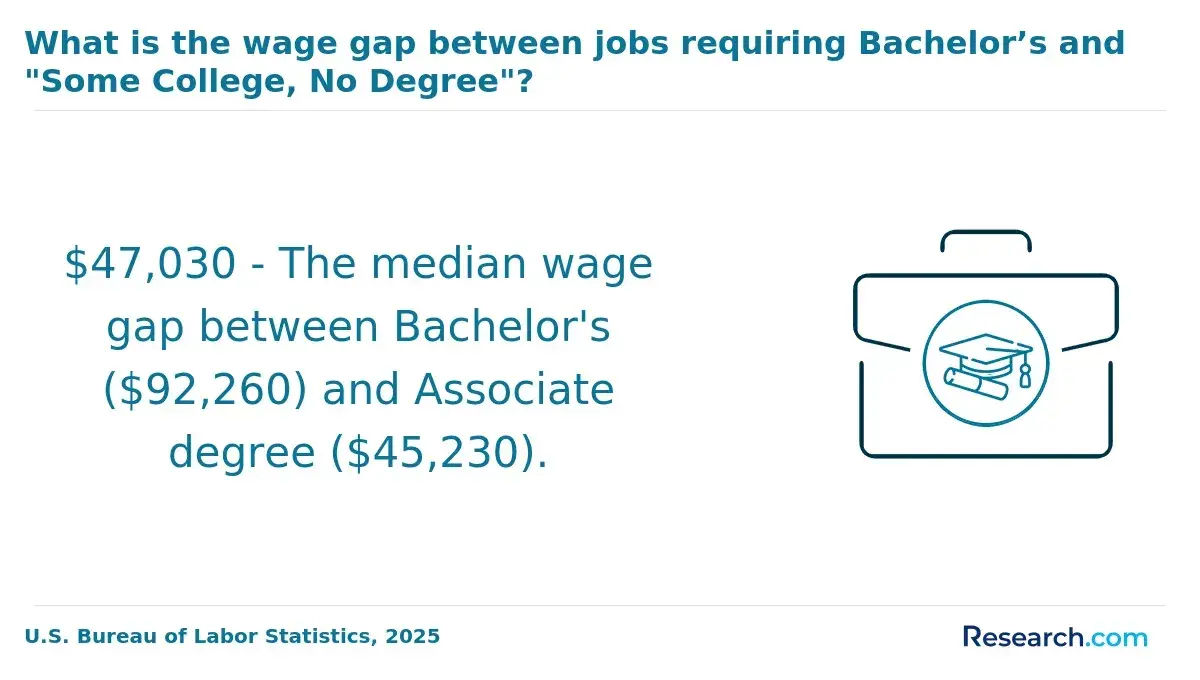
According to data from Purdue University, master's degree holders in related fields can expect salary increases ranging from 25% to over 75%, reflecting the tangible return on investing in advanced, specialized infrastructure education.
Strategic selection of curricula that integrate technical expertise with practical project delivery challenges remains essential for those targeting meaningful roles in the infrastructure sector.
What careers can graduates pursue in infrastructure delivery and construction management?
Graduates of master's programs focused on infrastructure delivery in construction management encounter a labor market shaped by massive public infrastructure investment exceeding $550 billion through 2026. This financial scale demands professionals equipped not just with routine construction skills, but with expertise in navigating complex regulatory frameworks, multi-agency coordination, and nuanced financial oversight of long-term projects.
For instance, an infrastructure project manager overseeing a transit expansion must reconcile federal compliance, local government budgeting, contractor scheduling, and community stakeholder interests. Such roles highlight the importance of education that integrates resilience planning and adaptive delivery methods with practical project execution challenges.
Career paths beyond project oversight include risk specialists focusing on infrastructure resilience, sustainability consultants incorporating climate adaptation, and cost engineers managing budget volatility under supply chain and labor fluctuations. Employers prioritize demonstrated mastery in complex project delivery processes, multi-year financial planning, and negotiation across public-private sectors.
Mid-career professionals transitioning into this field should anticipate challenges such as adapting to slower public-sector procurement cycles compared to commercial construction and mastering the interplay between political pressures and technical constraints.
- Advanced coordination of multidisciplinary teams
- Management of evolving urban environmental requirements
- Balancing federal, municipal, and private stakeholder demands
What salary ranges and earning potential can graduates reasonably expect?
Graduates from online master's programs focused on infrastructure delivery typically start with salaries between $85,000 and $110,000, rising to mid-career earnings of $120,000 to $150,000. These figures align with U.S. Bureau of Labor Statistics reports and data from the 2024 Engineering News-Record Construction Salary Survey.
Specialized sectors like transportation or utility infrastructure often offer a premium of up to 15% over average construction management pay due to complexity and regulatory demands.
Because programs such as Purdue's mandate at least two years of construction industry experience, candidates enter with practical expertise that boosts employability and salary negotiation power.
Employers prioritize professionals who combine advanced academic credentials with proven field experience, especially in managing project delivery efficiency and mitigating risks.
Transitioning from general construction roles to infrastructure-focused management often involves accepting limited immediate salary increases, particularly if studies require stepping away from work temporarily.
However, this investment typically leads to advancement into senior project management, executive contracting, or consultancy roles within five years of graduation.
Key skills include integrated scheduling, regulatory compliance, and stakeholder coordination. These capabilities often justify salary differences, especially in major metropolitan areas where senior positions exceed $160,000 annually.
- Graduates targeting employers engaged in federal or state infrastructure programs usually access higher pay scales.
- Those in smaller firms or non-infrastructure markets may encounter lower initial compensation but can leverage the degree for specialized niches, such as renewable energy construction or urban transit.
What is the job outlook for infrastructure-focused construction management professionals in the U.S.?
The demand for infrastructure-focused construction management professionals hinges on their capacity to juggle complex regulatory environments, multistakeholder coordination, and evolving sustainability requirements throughout long project timelines.
The U.S. Bureau of Labor Statistics projects a 12% growth rate for construction managers from 2022 to 2032, reflecting increased federal and state spending on infrastructure renewal. In practice, employers prioritize candidates with experience in Building Information Modeling (BIM), integrated project management software, and expertise in sustainable materials.
Advanced degrees specializing in infrastructure delivery add measurable value when graduates apply lifecycle cost analysis and risk mitigation in large-scale public works like highways or water systems. Yet, transitioning theoretical knowledge to site-specific challenges remains a significant hurdle, pressing candidates to seek flexible, real-world learning formats.
Mastersportal data shows approximately 24% of construction management master's programs are online, catering to professionals balancing ongoing employment with academic advancement.
Such programs must integrate continuous professional development components to prepare graduates for extended project durations and rapidly advancing infrastructure technologies.
Decision-makers evaluating master's pathways should weigh the practical relevance of curricula, program flexibility, and employer-valued competencies rather than defaulting to program prestige or modality alone.
How can students choose the best online construction management master's for their goals?
Selecting an online construction management master's program with an infrastructure delivery focus requires precise alignment between curriculum and career goals. Professionals pursuing executive roles in infrastructure agencies need coursework in advanced project controls, public-private partnerships, and regulatory compliance, while those targeting owner's representative positions benefit from contract administration and risk management training.
Deciding factors extend beyond content to include practical elements that influence employability and return on investment. Accreditation matters for credibility with employers, and faculty with direct infrastructure experience can provide relevant, up-to-date insights.
Programs must offer flexible scheduling to accommodate working professionals and include networking opportunities linked to industry stakeholders.
- Project-based assignments that mimic real infrastructure challenges enhance preparedness for complex delivery environments.
- Programs tied to transportation or water resource projects often accelerate promotions by providing situational experience valued in these sectors.
- Comparing tuition and program length against projected salary gains is essential to assess financial viability.
Construction managers' median salary reaches approximately $99,590, with top earners exceeding $163,000, indicating specialized infrastructure skills can directly influence senior-level compensation.
Prospective students must weigh the depth of infrastructure-focused learning and industry connectivity against time and cost commitments to ensure that educational investments translate into tangible career advancement. These considerations are especially vital for engineers transitioning into construction management roles focused on public infrastructure delivery.
Other Things You Should Know About Construction Management
Employers prioritize candidates with strong practical skills and relevant project experience, regardless of program delivery. Online programs vary widely in rigor; those that incorporate real-world case studies, synchronous sessions, and strong industry ties offer outcomes comparable to on-campus formats. Applicants should prioritize programs with experiential learning components and clear alignment to current infrastructure construction challenges to avoid gaps in applied skills that can affect employability.
Online infrastructure-focused programs often demand consistent weekly engagement, including time-intensive project simulations and detailed technical assignments. Balancing full-time work and studies requires prioritizing programs with flexible deadlines or asynchronous coursework while maintaining active communication with instructors. Choosing programs with modular formats can reduce burnout risk, allowing professionals to maintain performance levels at work without sacrificing academic progress.
Research-intensive programs suit those aiming for policy, consulting, or academic positions, offering deeper theoretical frameworks but fewer immediate practical skills. Practice-oriented programs focus on project management tools, contract administration, and field leadership, better preparing graduates for direct employer needs in infrastructure delivery. Prospective students should prioritize practice-based curricula if their goal is swift advancement in operational roles over long-term theoretical expertise.
References
- Project Planning, Development and Delivery https://inclusiveinfra.gihub.org/action-areas/project-planning-development-and-delivery/
- New grads expect to earn over $100K right after college, on average—these are the top fields to achieve that https://www.cnbc.com/2025/04/23/career-fields-where-new-grads-can-command-a-100000-starting-salary.html
- Construction Management Jobs and Career Path | Cardinal Civil https://cardinalcivil.com/blog/what-jobs-can-you-get-with-a-construction-management-degree
- 5 Construction Management Career Opportunities Out of College https://aic-builds.org/5-construction-management-career-opportunities-out-of-college/
- Ideal Workplace Solutions | Corporate Training & Consultancy Firm | Kenya https://idealworkplacesolutions.org/course/training-on-infrastructure-construction-project-management
- Construction Management Careers In The Age Of Infrastructure Investment https://iticollege.edu/blog/construction-management-careers-in-the-age-of-infrastructure-investment/
- What do new grads want from an employer? To start, a salary range https://hrexecutive.com/what-do-new-graduates-want-from-an-employer-to-start-a-salary-range/
- Online Master of Engineering: Specialization in Construction Engineering and Management (MEng) https://www.ualberta.ca/en/graduate-programs/master-of-engineering-construction-engineering-management-online.html
- Infrastructure Construction courses - Modern Science https://modernsciencetr.com/infrastructure-construction/
- Engineering, Infrastructure and Construction https://ricardo-vargas.com/industries/engineering-infrastructure-construction/