2027 Best Online Construction Management Programs for Coordinators Moving Into Project Roles

Co-Founder and Chief Data Scientist
Stepping from coordination to project leadership in construction demands more than on-the-job experience-professionals must quickly master scheduling, budgeting, and risk management without pausing their careers. However, balancing full-time work with advanced training presents a barrier for many, especially as 59% of adult learners prioritize program flexibility according to the National Center for Education Statistics' recent data on online graduate enrollment.
This trend signals a critical shift: accessible, rigorous education must fit complex schedules without compromising depth or employer credibility. This article evaluates the best online construction management programs tailored for coordinators advancing into project roles, focusing on program structure, career impact, and real-world applicability to facilitate informed selection.
Key Things You Should Know
- Workers shifting from coordinator to project roles face a 17% salary premium gap when choosing programs without integrated BIM and cost-control modules, per AGC labor market data, forcing prioritization between specialization and time-to-completion.
- Employers indicate 68% of job posts explicitly require capstone project experience related to real-world contract management, making programs lacking this component less effective for immediate employability in 2024 industry surveys.
- Average program costs vary by 45%, with accelerated formats compressing curriculum in under 12 months but reducing networking opportunities vital for incumbent coordinators transitioning roles, creating critical access-versus-outcome tradeoffs.
What does a construction management coordinator do, and how do responsibilities change in project roles?
The evolution from construction management coordinator job duties in project roles to full project leadership inevitably involves a marked increase in both responsibility and skill complexity. Coordinators primarily focus on administrative tasks such as scheduling, documentation, and communication among subcontractors and on-site teams. However, stepping into project management demands active engagement in budget control, risk mitigation, subcontractor negotiation, and direct oversight of daily operations.
This transition requires mastering new competencies like contract administration, financial forecasting, and advanced leadership-skills that profoundly influence a project's ability to meet strict deadlines while managing cost overruns. For instance, a coordinator in commercial building projects may handle logistical coordination efficiently, but as a project manager, they must lead diverse teams and swiftly adapt to unexpected disruptions or design alterations.
The 9% projected growth for construction manager employment by the U.S. Bureau of Labor Statistics signals rising industry demand, yet this growth also implies steeper learning curves and substantial accountability shifts. Coordinators moving up must seek relevant certifications or degrees combining applied project management and construction law with hands-on training. Without these qualifications, adapting to direct project oversight or managing multi-stakeholder complexities-especially in infrastructure or industrial sectors-becomes challenging.
Practical preparation steps include gaining proficiency with construction management software, understanding regulatory frameworks, and honing negotiation tactics. Such focused upskilling aligns coordinator capabilities with employer expectations, which is crucial when evaluating educational options such as a construction management degree online.
How can online construction management degrees help coordinators move into project management?
Project coordinators moving into management roles must acquire not just experience but a strategic skill set in budgeting, scheduling, and risk mitigation-skills that online construction management degrees for project coordinators specifically target. These programs help bridge the operational gap from site-level oversight to project leadership, often including competencies in contract negotiation and regulatory compliance that reshape communication dynamics with stakeholders and subcontractors.
Employers now routinely require candidates who demonstrate fluency in industry software like BIM or Primavera alongside practical field knowledge. The flexibility of online degrees allows working professionals to integrate learning directly into active projects, accelerating the development of employer-visible expertise. This format addresses a key tradeoff: balancing demanding coursework with existing job responsibilities while ensuring relevance to current industry standards.
Financially, the advantage is clear. According to U.S. Bureau of Labor Statistics data, the top 10% of construction managers earn $176,990 annually, more than twice the median wage for all occupations; even the lowest 10% earn $65,160. This wage differential stems from the advanced decision-making skills and responsibility levels fostered by formal education and experience combined.
However, selecting a program requires careful evaluation of curriculum alignment with practical tools and project demands. Understanding contract law or sustainable building practices can reduce delays and cost overruns during transition phases, but time management remains a critical challenge. For those considering degree options, resources such as the bachelor's in project management offer insight into programs designed to balance these factors effectively.
What are the best types of online construction management programs for working coordinators?
Progressing into project roles within construction management demands more than technical skills; it requires targeted leadership training and applied knowledge relevant to mid-career coordinators. Effective online construction management programs for coordinators integrate practical coursework in scheduling software, cost estimation, contract administration, and risk management to equip students for active job sites or remote project oversight.
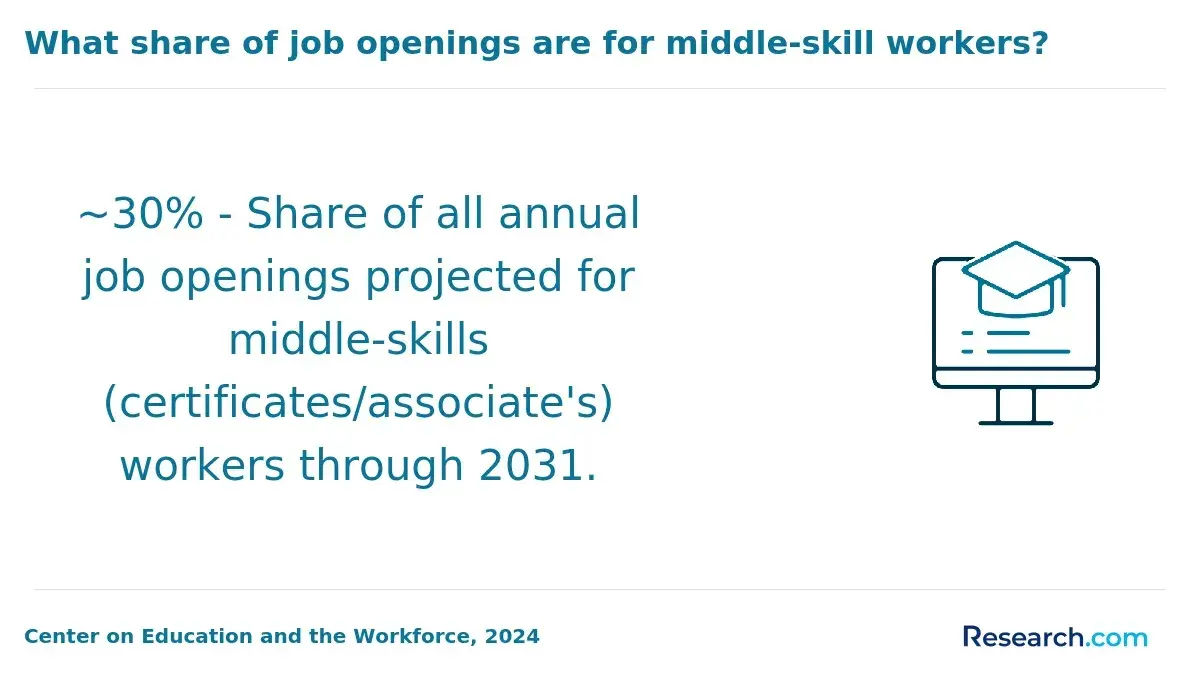
Program structures offering flexible pacing and asynchronous formats address the challenge of balancing part-time study with full-time employment, a critical consideration for working professionals. While certificates or associate degrees can expedite skill acquisition for specific niches, they often fall short in delivering the comprehensive business and management foundation necessary to secure project leadership positions. For coordinators focusing on commercial or infrastructure projects, selecting courses with construction law, building codes, environmental regulations, and federal compliance content is essential.
Employers prioritize proficiency in software tools like Procore and Primavera P6 alongside demonstrated leadership capabilities through hands-on simulations or capstone projects. Working professionals evaluating the best construction management courses for project coordinators should verify that curricula facilitate both practical experience and networking opportunities to improve market competitiveness.
Online bachelor's degree programs remain the most effective pathway to meet employer expectations, aligning with a projected 9% job growth and offering median wages substantially above the national average. Those interested might also compare pathways through resources such as the online hospitality degree rankings for broader insights into accelerated online programs.
How do online construction management programs compare with on-campus options for flexibility and quality?
Choosing between on-campus and online construction management program benefits requires evaluating tangible skills acquisition over convenience alone. Online construction management programs flexibility and quality comparison reveals wide disparities in tuition-Boise State University charges $395 per credit, whereas Arizona State University reaches $580 per credit. This 47% difference can translate to substantial variation in program rigor, faculty expertise, and industry-experience opportunities.
Lower-cost online options typically limit hands-on project simulations and live instructor engagement, reducing preparation for complex site coordination roles. Conversely, pricier programs often integrate real-time case studies, advanced software training, and direct mentorship, enhancing readiness for project leadership but increasing upfront costs.
Employers prioritize accredited degrees demonstrating proven competencies in scheduling, budgeting, and compliance, but also weigh candidates' practical exposure. For example, coordinators transitioning into heavy civil projects face challenges mastering dynamic risk assessments better supported by hybrid or on-campus models featuring site visits.
Prospective students should prioritize programs offering structured internships or cooperative education to balance limited in-person exposure common in purely online tracks. Those seeking affordable yet credible pathways might also review options like a mechanical engineering degree online for related technical foundations, supporting interdisciplinary skills applicable in construction contexts.
What accreditation and program quality standards should online construction management students look for?
Programs accredited by the American Council for Construction Education (ACCE) or recognized regional bodies offer a discernible advantage in online construction management education. This accreditation signals mastery of essential skills such as cost estimation, scheduling, and safety compliance-areas employers prioritize when advancing coordinators to project managers. Without these credentials, programs often fall short in delivering practical experience, which can stunt career progression.
The real-world impact of program quality is evident through outcomes like graduation rates, employer partnerships, and career placement. For example, mandatory internships and cooperative education embedded in curricula significantly elevate employability by fostering familiarity with current construction technology and industry workflows. Students should seek programs that actively connect learners with local contractors to ensure immediate relevance post-graduation.
Cost variance among online programs also influences decision-making. Data from GoBuild's 2026 review highlights tuition spanning from $47,400 at Boise State University to $69,600 at Arizona State University for 120 credits, excluding additional fees. This nearly $22,200 difference demands rigorous ROI assessment based on expected salary gains and recognized industry standing rather than assuming lower tuition equates to reduced quality.
Ultimately, the strongest candidates balance validated accreditation, embedded practical training, and remote delivery infrastructure capable of simulating hands-on project challenges. These elements together shape graduates equipped to meet the increasingly technical demands of construction management roles and respond to employer expectations efficiently.
What courses and skills are typically covered in online construction management programs for project roles?
Advancing from coordinator to project lead in construction management demands far more than basic oversight; it requires mastering complex, multidisciplinary skills that align with real-world project dynamics. Core training includes project scheduling tools like Primavera or Microsoft Project, cost estimation, and contract administration, ensuring candidates can tightly manage timelines and budgets under pressure.
Realistic program scenarios emphasize mid-project disruptions such as supply chain delays or weather impacts, pushing students to develop effective contingency plans that maintain workflow continuity. This reflects a common industry expectation: balancing administrative duties with on-site engagement while leveraging digital integration across BIM and ERP systems to enhance efficiency and documentation accuracy.
Programs also expand beyond traditional site management by incorporating environmental assessments, materials oversight, and regulatory compliance, opening pathways to specialized roles like sustainability consultant or quantity surveyor. Risk management instruction centers on identifying and mitigating safety and financial threats across diverse project scales, sharpening decision-making and stakeholder communication-essential when coordinating among architects, engineers, and clients.
Understanding contract types and compliance frameworks is critical, particularly for minimizing legal exposure on federally funded or private projects. This comprehensive approach equips coordinators to transition effectively into project leadership roles requiring both technical depth and strategic judgment.
What are common admission requirements and application materials for online construction management programs?
Admission to online construction management programs generally requires at least a bachelor's degree or comparable experience in relevant trades or project support roles. Programs expect official transcripts showing a minimum GPA between 2.5 and 3.0, with some demanding higher academic performance. Application materials often include a resume and a personal statement that clarifies career objectives, enabling evaluators to assess fit and motivation.
The shift away from mandatory SAT or ACT scores places greater emphasis on prior college work and professional experience. Letters of recommendation from supervisors or industry contacts serve to validate leadership skills and practical readiness. Some programs enforce prerequisite courses in math, business, or construction technology to ensure student preparedness for advanced project management topics.
Accelerated tracks spanning 2 to 3 years exist for professionals aiming to upgrade from coordination to project roles, contingent on credit transfers or increased coursework. This can shorten time-to-degree but requires careful navigation of specific prerequisites and deadlines to prevent enrollment delays.
- Collecting transcripts and recommendation letters well ahead of deadlines mitigates administrative delays.
- Highlighting measurable achievements in construction coordination improves personal statement impact.
- Programs integrating real-world case studies better align academic learning with employer expectations.
Employers increasingly favor candidates with both validated academic credentials and applied experience, so selecting programs that balance these components strategically supports long-term workforce mobility.
How long do online construction management programs take, and what do they cost?
Choosing between certificate, associate, or bachelor's level construction management programs requires balancing time, cost, and career outcomes against real employer expectations. Accelerated certificates (6-12 months) offer rapid access to new roles but often limit long-term advancement compared to degrees that span 2 to 3 years part-time.
For example, a coordinator aiming to become a project manager may gain immediate skills from a certificate but will likely hit a ceiling without a degree.
Costs vary widely: certificates typically range from $3,000 to $10,000, associate degrees $10,000 to $25,000, and bachelor's degrees $20,000 to $60,000. Programs accredited by the American Council for Construction Education (ACCE) command higher prices but align directly with what top employers demand, enhancing hiring prospects in competitive markets.
Students must weigh total expenses beyond tuition-technology fees, materials, and certification exams can cumulatively add several hundred dollars. Part-time pacing is essential for working professionals but may extend time to completion, potentially delaying earnings gains associated with credential upgrades.
Practical advice includes prioritizing programs with transparent costs and verified graduation and placement data to avoid investing in credentials that do not translate to tangible employment benefits. This approach helps mitigate risks of prolonged job searches or credential mismatch in a labor market increasingly valuing accredited construction management education.
What job titles, career paths, and advancement options exist after moving into construction project roles?
Transitioning from entry-level coordination to advanced roles in construction management shifts the balance from hands-on technical work toward supervisory and strategic responsibilities, emphasizing adaptable leadership over routine tasks. Progression to project manager involves mastering budgeting, scheduling, and directing teams, a move that demands strong communication and problem-solving skills alongside technical knowledge.
Moving into superintendent positions typically requires significant field experience and the capacity to resolve onsite conflicts, while estimator roles focus heavily on quantitative analysis and bidding expertise, often necessitating specialized certifications in cost management. Sustainability officer roles introduce regulatory depth and environmental considerations, highlighting growing sector demands but narrowing specialization options.
Tradeoffs are inherent: project management roles reduce direct technical involvement but increase administrative complexity and coordination duties. Geographic location impacts advancement velocity; metropolitan markets tend to offer quicker promotions but more rigid hierarchies, whereas rural areas may provide broader hands-on exposure but slower upward mobility.
Employers prioritize candidates who combine technical proficiency with leadership qualities and software expertise in BIM and project scheduling platforms. Online associate and bachelor's programs in construction management align curricula with practical skill-building and real-world case studies, supporting strategic career pivots by reinforcing competencies sought in evolving construction project roles.
What salary ranges and job outlook can construction coordinators expect after becoming project managers?
Moving from a construction coordinator to a project manager involves a significant shift in responsibility and compensation, typically ranging from $75,000 to $115,000 annually, depending on industry and region. Project managers in commercial or infrastructure projects generally earn between $90,000 and $100,000, while those managing complex endeavors such as transportation infrastructure can exceed $110,000.
This salary increase reflects broader duties, including budget oversight, scheduling, subcontractor management, and client relations, all requiring refined negotiation skills and financial acumen.
Job growth prospects remain favorable, with the Bureau of Labor Statistics projecting a 9% increase in construction manager roles over the next decade. This growth concentrates opportunities in sectors with sustained infrastructure investment, though salary trajectories differ markedly between residential projects, which are often smaller and lower paying, and federal or industrial projects that offer quicker advancement and greater stability.
Key tradeoffs for aspiring project managers include adapting to elevated pressures for on-time delivery and regulatory compliance, which contrast with the task-focused nature of coordinator positions. Developing proficiency in financial oversight and stakeholder communication is essential to justify raises and maintain employer confidence throughout this transition.
Anticipating these nuances offers practical guidance for those targeting leadership in construction management, underscoring the importance of targeted skill development aligned with market demands and project scale.
Other Things You Should Know About Construction Management
In 2027, leading online construction management programs for coordinators moving into project roles offer comprehensive curricula, industry-focused training, and flexible study options. Top programs include Arizona State University's online Bachelor of Science in Construction Management and Colorado State University's Master of Construction Management. Each program offers strong industry connections and tailored coursework for practical skills development.
Online programs vary significantly in workload; accelerated or cohort-based formats often require intense, consistent weekly commitments that can conflict with full-time employment. Coordinators should evaluate programs with flexible pacing options and asynchronous coursework to balance current job responsibilities without burnout. Overlooking the temporal demands of a program risks poor performance and delays in career transition.
Employer valuation depends more on the program's accreditation and the candidate's demonstrated competencies than on delivery mode alone. Accredited online programs from recognized institutions are accepted equally when they provide rigor comparable to on-campus counterparts. Candidates must supplement credentials with practical experience and professional networking to assure employers of their readiness for project management roles.
Yes, programs integrating mentorship or industry connections provide significant advantages by facilitating real-world insights and job placement opportunities. Mentorship accelerates understanding of project complexities beyond textbooks and signals commitment to employers. Investing in programs with established industry networks improves direct access to project roles and practical problem-solving skills critical for advancement.
References
- CourseCareers https://coursecareers.com/blog-posts/daily-tasks-of-construction-project-manager
- Tech-Driven Construction Careers: New Industry Roles | TOPS https://www.takeoffpros.com/blog/new-job-roles-in-construction-caused-by-data-and-technology-collection/
- 8 Construction Management Career Paths - RedStone Construction Group https://redstone-cg.com/blog/8-construction-management-career-paths/
- Project Management https://www.agc.org/education/project-management
- Best Online Construction Management Degrees: 2026 https://gobuid.com/en/blog/all-articles/best-online-construction-management-degree-programs
- How to choose a bachelor's in construction management | edX https://www.edx.org/resources/how-to-choose-a-bachelors-in-construction-management
- BSc (Hons) Construction Management https://www.ube.ac.uk/undergraduate/construction-management/
- Construction Careers: Opportunities and Challenges - Resource Options, Inc. https://www.resourceoptions.com/construction-careers/
- A Project Manager's Role in Construction | Procore https://www.procore.com/library/construction-project-manager