2027 Construction Roles That Often Lead to Executive Positions

Co-Founder and Chief Data Scientist
Relying exclusively on entry-level or mid-tier construction roles without clear advancement can stall career growth, especially when employer demands increasingly favor candidates with multi-disciplinary skills and leadership exposure. A 2024 report from the U. S. Bureau of Labor Statistics projects a 10% growth in construction management jobs, emphasizing a tightening labor market where versatility is critical.
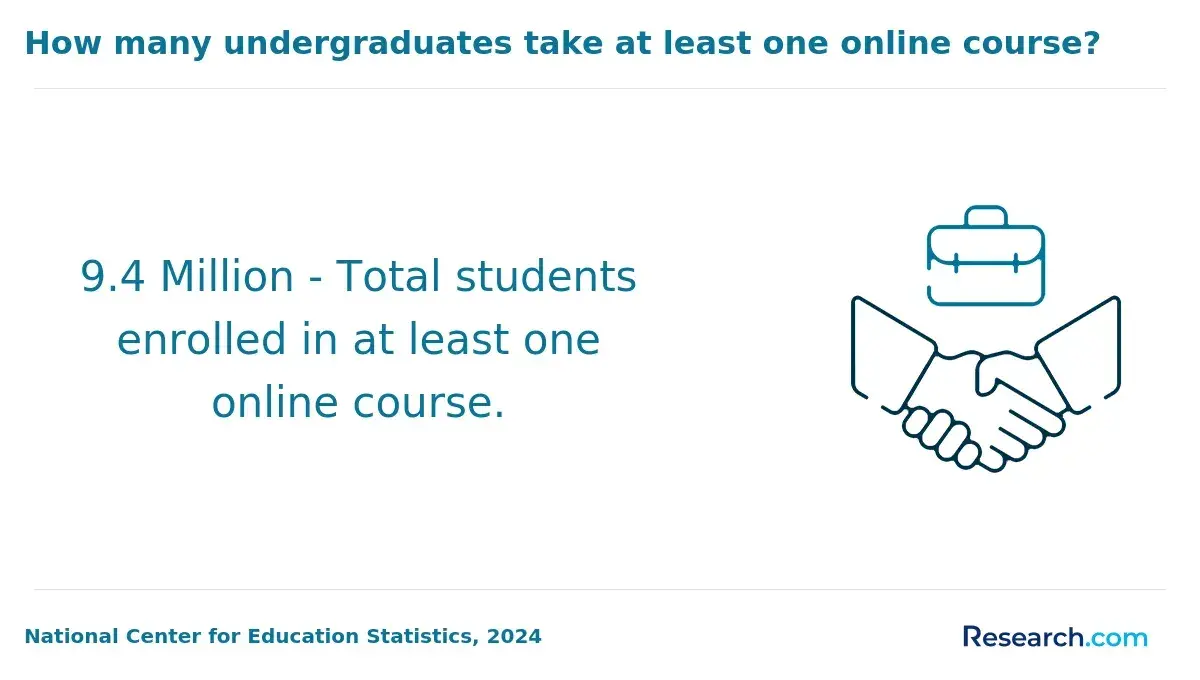
Meanwhile, rising enrollment among adult learners in flexible, asynchronous programs, as reported by the National Center for Education Statistics, has shifted traditional timelines and accessibility, allowing working professionals to pivot mid-career more feasibly. This article outlines specific construction roles that typically bridge operational experience and executive readiness, guiding professionals on targeted pathways to unlock leadership opportunities efficiently.
Key Things You Should Know
- Mid-career transitions into executive roles from construction management require balancing advanced technical certification with leadership training, as data from the U.S. Bureau of Labor Statistics shows 15% wage growth for those combining both by 2026, signaling premium employer valuation.
- Employers increasingly prioritize project managers with financial acumen, evidenced by a 2024 AGC report noting 72% of firms promoted from within with dual expertise in construction management and cost analysis, shifting workforce skill demand.
- The average 2.8-year delays and $13K extra cost for part-time construction management degrees reported by NCES discourage slower educational pathways, forcing candidates to choose accelerated credentials or risk stagnating career progress at supervisory levels.
Which construction roles most commonly lead to executive positions like COO, VP, or CEO?
Ascending to executive roles like COO, VP, or CEO within construction management demands more than onsite leadership; it requires integrated expertise across operations, finance, negotiation, and regulatory frameworks. Individuals who transition from field superintendent or project engineer roles gain crucial resource allocation and compliance skills, forming a foundation for strategic leadership.
This pathway is reflected in hiring trends, where firms emphasize candidates with experience spanning residential, commercial, and infrastructure projects to mitigate leadership blind spots in diverse operational contexts.
The workforce outlook favors those with broad management backgrounds as employment for construction managers is projected to grow 9% from 2024 to 2034, significantly outpacing average occupational growth. However, professionals strictly focused on technical specialties often plateau at mid-management without expanding into cross-functional domains such as financial planning and people management, which are critical for executive responsibilities.
Practical advancement often involves mastering complex cost estimation and contract negotiation to maintain profitability under budget constraints, skills honed by senior estimators advancing toward leadership. Safety management experience increasingly adds value, given executives' accountability for enterprise-wide compliance and risk mitigation. As workforce challenges like labor shortages and supply chain disruptions persist, leaders who can integrate operational agility with long-term strategy are at a premium.
For those seeking a strategic pivot, programs like an online MBA operations management can complement field knowledge by strengthening executive decision-making capabilities, aligning with pathways to COO VP and CEO roles in construction management.
What education and experience do you need to move from field roles into construction leadership?
Advancement into construction leadership increasingly demands a combination of formal education and practical field experience. Employers now commonly require at least an associate degree in construction management, civil engineering, or a related technical field just to be considered. Yet, a bachelor's degree remains essential for securing high-level executive roles, especially those focused on estimating and preconstruction.
Over 75% of construction executives held bachelor's degrees or higher by 2024, illustrating the real workforce expectation for this credential alongside substantial hands-on expertise. This sets a clear educational threshold that aligns closely with long-term career viability.
The field experience needed for construction management roles includes 7 to 10 years in positions of growing responsibility, such as site supervision or project coordination. Mastery of cost estimating, scheduling software like Primavera or Procore, contract negotiation, and risk mitigation are critical competencies. For example, a field superintendent transitioning toward a Chief Estimator role must acquire rigorous quantitative skills and deep familiarity with bid processes, often through rotational assignments or projects coupling operational and administrative tasks.
Certifications can supplement but never replace the value of documented achievements in cost savings or project delivery efficiency, which are key to employer decisions. Candidates without formal education often plateau at mid-management unless technical mastery compensates.
Therefore, pursuing a bachelor's-level construction management education, such as a project manager bachelor degree, paired with strategic field experience remains the most pragmatic pathway into leadership across diverse U.S. markets.
Construction executive roles in estimating and preconstruction commonly rank among the top-paying positions, with total compensation surpassing $300,000 on sizable portfolios. This reality reflects the premium employers place on the complex blend of specialized knowledge and proven leadership capability.
How do project manager and senior project manager roles prepare you for executive construction careers?
Senior project managers in construction transition to executive roles by navigating complex demands such as budgeting multi-million-dollar projects and managing diverse subcontractor teams. This role requires a strategic mindset focused on stakeholder negotiation and regulatory compliance, with responsibilities mirroring those of project executives who integrate objectives across departments. A senior project manager's ability to balance client expectations while allocating resources directly reflects the operational challenges faced by executives.
How project manager roles build leadership skills in construction is evident in their exposure to contract administration and problem resolution, critical for oversight of profitability and long-term strategy. Executives expect consistent, accurate forecasting and on-time delivery-skills cultivated in these positions that reinforce accountability and strategic planning. The professional tradeoff involves mastering technical expertise alongside communication and political skills within corporate hierarchies.
Data from the Associated General Contractors of America projects a 6-8% compensation increase for senior field leaders like project executives and senior project managers by 2026, confirming employer prioritization of operational proficiency under pressure. Aspiring executives should pursue roles emphasizing financial controls, workforce management, and cross-functional collaboration to meet elevated expectations in the field. Those seeking to complement practical experience may consider an accelerated healthcare management degree online, which can provide insights into leadership applicable across sectors.
Senior project manager career path to executive positions in construction demands not only technical mastery but also a blend of strategic vision and real-world negotiation skills that define leadership effectiveness.
How can a construction superintendent or general superintendent transition into executive-level responsibilities?
Transitioning from a construction superintendent career advancement to executive roles requires shifting focus from hands-on project oversight to strategic leadership and financial stewardship. Core superintendent skills like onsite problem-solving are insufficient without competence in budgeting, contract negotiation, and multi-project coordination.
Executives expect proven ability to manage complex portfolios while aligning with organizational growth, creating a gap that candidates must bridge through formal education or certification programs in construction management, finance, or business administration.
A general superintendent transition into executive leadership often involves taking initiative in cross-functional leadership assignments. For instance, a superintendent on a large infrastructure project might lead client negotiations or oversee subcontractor contracts, gaining experience essential for executive-level stakeholder relationship management. Such roles develop data-informed decision-making and familiarity with organizational risk assessment frameworks, which are critical for broader accountability.
Mastering advanced software tools for financial modeling, scheduling, and resource allocation becomes essential to move beyond single-project metrics to portfolio-wide KPIs. These competencies align with workforce realities, where the median wage for construction managers is $106,980 compared to $49,500 for general occupations as reported by the U.S. Bureau of Labor Statistics. However, overcoming operational biases inherent in superintendent roles-including a focus on immediate problem-solving over long-term strategy-remains a key challenge.
Practical pathways include engaging in executive mentorship, rotational roles in procurement or corporate strategy, and active networking within construction leadership associations. Such engagement complements skill-building and builds credibility required for decision-making authority.
Students and professionals considering this pivot should weigh the merits of combining experience with targeted education, such as pursuing an online mechanical engineering degree, which can broaden technical and managerial expertise relevant to executive roles.
In what ways do preconstruction manager and estimating director roles lead to C-suite opportunities?
Preconstruction managers and estimating directors develop financial acumen and strategic planning skills directly applicable to executive roles such as CEO or COO. Their responsibilities-managing complex budgets, negotiating contracts, and forecasting under tight deadlines-embed expertise in cost control and risk mitigation essential for leadership accountability. For instance, a preconstruction manager who integrates sustainability criteria into cost forecasting can position their firm to secure green contracts, aligning with market demands for environmental responsibility.
As ESG and sustainability increasingly influence project approvals, professionals with demonstrated expertise in these areas gain a distinct advantage and command salaries 20-30% higher than peers without such skills. Employers now expect succession candidates to combine estimating proficiency with corporate sustainability leadership, expanding traditional role definitions.
However, technical mastery alone is insufficient. Transitioning to C-suite requires learning cross-functional collaboration, corporate governance, and compliance beyond project delivery. This gap often necessitates targeted mentorship and ESG-focused certifications to build leadership capacity.
Successful executives originating from preconstruction or estimating backgrounds contribute measurable fiscal discipline and the ability to navigate regulatory pressures-capabilities critical for steering profitability and organizational resilience amid dynamic market shifts.
How do construction management degrees and MBAs support advancement into executive positions?
Possessing a construction management degree accelerates progression into executive roles by embedding critical skills in project leadership, budgeting, and client negotiation-competencies often learned slowly on the job. For example, project managers with such degrees typically advance more quickly because they grasp industry regulations and technology integrations that shape real-time decision-making.
An MBA builds on this foundation by broadening strategic acumen in organizational behavior, corporate finance, and cross-functional leadership-qualities essential when moving beyond technical oversight to executive-level strategy. Notably, MBAs enhance adaptability to digital tools like AI and Building Information Modeling (BIM), increasingly vital as technology-driven leadership expands rapidly in construction and real estate development sectors.
Employer demand forecasts indicate 5-6% annual growth in senior roles through 2032, prioritizing candidates who blend construction-specific education with business savvy. Without an MBA or specialized degree, professionals often encounter promotion delays rooted in gaps around strategic planning and technology deployment.
Key tradeoffs arise when choosing between paths:
- A construction management degree offers earlier, focused specialization within the industry, while an MBA fosters versatile leadership capabilities applicable across real estate investment or corporate development.
- Those pursuing dual credentials or integrated programs gain distinct advantages by bridging technical knowledge with executive management, critical for firms emphasizing digitally enabled growth.
What should you look for in an accredited construction management program that supports executive career goals?
Operational leadership skills directly tied to measurable site outcomes-such as safety performance and budget adherence-determine which construction management programs deliver genuine workforce value. A multimillion-dollar infrastructure firm, for example, advanced candidates with OSHA-compliant safety expertise and capability in real-time data analytics, emphasizing practical competency over theoretical knowledge. Programs that integrate advanced project controls with risk mitigation training better prepare students to reduce costly safety incidents and project delays.
Accreditation from recognized agencies like ACCE remains a practical filter for employers. Graduates from non-accredited institutions typically face slower career progression due to limited employer recognition. Certifications such as Certified Construction Manager (CCM) embedded in coursework add tangible career capital, streamlining entry into leadership roles.
Projected salary growth of 6-8% for construction leadership roles by 2026 reflects market demand for candidates combining financial planning, personnel management, and regulatory compliance with communication skills that facilitate stakeholder negotiation and conflict resolution. Those focusing solely on technical skills often lag behind in securing executive roles.
Practical learning through internships or co-ops, where students manage live projects under licensed professionals, bridges academic theory with real-world leadership pressures both on-site and in corporate settings. Selecting programs prioritizing these elements can significantly differentiate candidates in a competitive field.
How do online construction management programs compare with on-campus options for future executives?
Employers hiring for executive roles in construction increasingly prioritize demonstrated leadership within complex project environments-a quality more reliably developed through on-campus construction management programs. These programs integrate team-based projects, site visits, and direct faculty mentorship, enabling candidates to navigate real-world pressures and build critical networks. By contrast, online programs typically offer comparable technical rigor but lack immersive leadership training and face-to-face networking.
For working professionals embedded in construction firms, online programs provide flexible scheduling that can fit around demanding work hours. Such students must proactively pursue internships or local projects to offset virtual program limitations on experiential learning. Conversely, aspiring executives without hands-on site experience benefit more from on-campus cohorts, where structured immersion in leadership contexts and peer interaction enhance visibility among hiring networks.
The U.S. Bureau of Labor Statistics projects 7-11% employment growth in real estate development and construction management by 2032, with the strongest demand for strategic and development leadership roles. Success in these positions hinges on strategic thinking and communication, skills frequently refined in on-campus environments through interactive learning.
Key factors influencing program value include employer recognition of format, mentorship availability, access to industry networks, and opportunities to develop soft skills under pressure. Candidates combining education with 3-5 years of increasing responsibility in construction projects align best with evolving executive demands.
- On-campus: immersive leadership training, networking, higher executive visibility
- Online: flexible, matches technical curriculum, requires self-driven experiential learning
What are typical salaries, bonuses, and equity packages for top construction executives?
Top-level construction executives in Texas command substantial base salaries-generally between $160,000 and $230,000-with total compensation often climbing to $340,000 when bonuses and equity are included. These figures reflect a compensation structure where equity packages and performance-based incentives create meaningful differentiation, especially for roles like Vice Presidents of Operations or Regional Directors within mid- to large-sized contractors.
Bonuses typically range from 15% to 30% of base salary but hinge heavily on measurable outcomes such as project delivery, safety compliance, and financial performance. Equity awards, more prevalent in publicly traded firms, take the form of stock options or profit-sharing, aligning executive incentives with long-term growth or acquisition goals. In private companies, equity may be less liquid but represent ownership stakes that grow in value over time.
Professionals pursuing these executive pathways should carefully evaluate tradeoffs between stability and upside potential. Larger contractors provide more predictable bonus structures, while entrepreneurial companies may offer greater equity upside but with higher risk. Geographic factors also play a role-Texas's robust market scale commands higher pay than many other regions, but mobility might be required to reach these thresholds.
Advancement depends on proven experience managing multi-million-dollar portfolios and consistently meeting budget and timeline targets. Career strategies emphasizing financial literacy, portfolio risk management, and strategic leadership increase readiness for these demanding compensation benchmarks and roles.
What professional certifications and leadership skills help construction professionals reach executive roles?
Executive roles in construction management demand more than technical credentials; they require a blend of strategic leadership, financial insight, and practical experience managing large, complex projects. Certifications like Certified Construction Manager (CCM) and Project Management Professional (PMP) are instrumental, as they demonstrate competence in risk mitigation, resource allocation, and project delivery under regulatory scrutiny.
However, success at the executive level hinges on navigating tradeoffs between budget constraints and quality standards while aligning construction initiatives with broader organizational objectives. For instance, a vice president overseeing a $300 million commercial portfolio must integrate fiscal discipline with adaptive leadership to ensure compliance, safety, and timeline adherence, emphasizing communication and negotiation skills as critical to building trust and cohesive teams.
Practical exposure to budgeting, contract management, and regulatory environments alongside credential attainment reduces the risk of an overly theoretical profile, which can limit employability. Executives frequently see 30-40% of their compensation tied to bonuses and equity, incentivizing leadership that actively drives profitability and innovation.
Developing this combination of applied leadership and financial acumen positions construction professionals to meet employer expectations for roles with salaries projected between $200,000-$500,000+.
Other Things You Should Know About Construction Management
Employers prioritize leadership competencies such as strategic decision-making, financial literacy, and conflict resolution above pure technical skills at the executive level. Gaining experience managing cross-functional teams and budgets early can distinguish candidates. Prioritize opportunities that expose you to company-wide planning and operational challenges rather than only project-specific technical tasks to build these skills effectively.
Diversity in construction sector experience broadens your understanding of market dynamics and client needs, which is preferred for executive roles with broader responsibilities. However, deep specialization can be valuable if tied to scalable operations or innovation in niche markets. Assess your career goals: pursue diverse roles for generalist leadership paths and focused expertise when targeting executive roles in specialized firms.
Strategic timing is critical when pivoting careers within construction management, ideally after acquiring solid frontline management experience but before reaching senior executive eligibility. Executives expect proven operational success and leadership impact, which typically requires 5-10 years in progressively responsible roles. Making pivots too early risks gaps in credibility; waiting too long risks plateauing, so plan transitions to align with demonstrated achievements and organizational needs.
References
- Working in Construction Management: A Guide https://www.sjvc.edu/guides/working-in-construction-management-guide/
- Journeyman to Superintendent Career Path in Construction | Step-by-Step Guide https://skillit.com/blog/path-from-journeyman-to-superintendent-in-construction
- The Estimating & Preconstruction Management Career Path – Blog https://floridaconstructionconnection.com/estimating-and-preconstruction-management-career-path/
- The Essential Guide to Construction Manager Education and Career Paths https://abcsocal.org/construction-manager-education/
- How MBA in Construction Project Management supports career growth to senior job roles https://kingsedu.ac/mba-in-construction-project-management/
- C-Suite Org Chart | Executive Structure & Reporting Hierarchy https://cowenpartners.com/c-suite-org-chart/
- Construction Jobs for Growth & Stability https://www.irecruit.co/insights/best-construction-jobs-career-growth-stability
- Kimmel.com | Career Pathways Series: Your Guide to Becoming a Senior Project Manager https://kimmel.com/candidates/career-pathway-series-senior-project-manager-guide.html
- Top 10 C-Suite Titles & Positions in Demand for 2026 https://maexecsearch.com/top-c-suite-titles-and-positions-in-demand/
- 7 Secrets To Land A Top UK Construction Leadership Job | Mos Training https://mostraining.co.uk/7-steps-to-senior-construction-management/