2027 Best Online Construction Management Programs for Professionals Seeking Real Estate Development Roles

Co-Founder and Chief Data Scientist
Mid-career professionals aiming to transition into real estate development often confront a dual challenge: securing advanced expertise without pausing income streams or uprooting established routines. The Bureau of Labor Statistics projects a 10% growth in construction manager employment through 2032, signaling intense competition for roles demanding both technical proficiency and strategic oversight. However, over 60% of postgraduate enrollees now favor online formats, according to the National Center for Education Statistics, reflecting a decisive shift toward flexible learning tailored to working adults.
This article evaluates the top online construction management programs designed to equip professionals efficiently for real estate development careers, focusing on accessibility, rigor, and career impact.
Key Things You Should Know
- Programs emphasizing integrated real estate finance show 15% higher placement rates in urban development roles, but this specialization narrows applicability to residential and commercial sectors, limiting cross-industry mobility.
- Employer surveys from the AGC reveal a 28% preference for candidates with practical BIM and sustainable construction tech skills, making curriculum alignment with emerging tools critical for workforce entry.
- Median program cost rose 12% since 2023, increasing debt burdens; accelerated formats reduce opportunity costs but often sacrifice comprehensive project lifecycle training, posing timing versus depth tradeoffs for career changers.
What are the best online construction management programs for real estate development careers?
The ongoing shortage of construction managers reported by industry bodies reinforces that real estate development demands a hybrid skill set that merges technical project leadership with financial and legal acumen.
For working professionals pursuing the best online construction management degrees for real estate development, selecting a program aligned with market realities is critical to avoid delayed career impact caused by insufficient practical preparation.
For instance, a construction manager partnering with investors must navigate capital stack complexities alongside construction budgeting; lacking this dual expertise often leads to lost opportunities in integrated projects.
Top-rated online construction management programs for real estate careers differentiate themselves by combining real-time software training, cost estimation, and risk mitigation with focused coursework in zoning and developer relations. Effective programs feature
- accredited curricula that incorporate current industry software and compliance standards
- access to internships or partnerships enabling hands-on experience
- incremental credential pathways in niche areas like sustainable construction or project finance
- flexible pacing to accommodate working professionals balancing job commitments
Choosing primarily asynchronous programs may limit essential networking opportunities required for deal-making and stakeholder management in real estate development. Evaluating these tradeoffs is essential before committing to an online pathway.
Detailed assessments of program outcomes and practical learning integration provide a more accurate predictor of post-graduation readiness than promotional claims alone. Prospective students can explore comparative options among the best construction management schools to ensure alignment with their career goals.
Are online construction management degrees respected by employers?
The practical value of online construction management degrees depends heavily on alignment with industry standards and employer expectations rather than mere credential possession. Employers recognize these degrees when they come from accredited programs emphasizing project scheduling, budgeting, and regulatory compliance through realistic case studies and virtual simulations.
For many roles, especially in commercial real estate development, candidates must pair an online credential with verifiable onsite experience or internships to demonstrate effective leadership and local code knowledge.
Demand growth in this field, projected at 9% over a decade by the U.S. Bureau of Labor Statistics, reflects workforce shortages where employers increasingly accept online degrees as part of a broader skills validation framework.
However, students must weigh several tradeoffs: prioritizing programs with strong industry partnerships, ensuring accreditation, and planning for post-graduate networking opportunities to showcase applied problem-solving under real project constraints.
These nuances illustrate why employer recognition of construction management online programs remains conditional. Without concrete portfolio evidence or practical experience, graduates risk skepticism despite completing coursework.
Prospective students interested in accelerated learning paths may explore online accelerated project management degree programs, which often emphasize condensed practical training valuable to employers.
Balance program selection with career objectives and anticipate employer focus on demonstrable applied skills rather than online degree completion alone to improve hiring outcomes.
What accreditation should online construction management programs have?
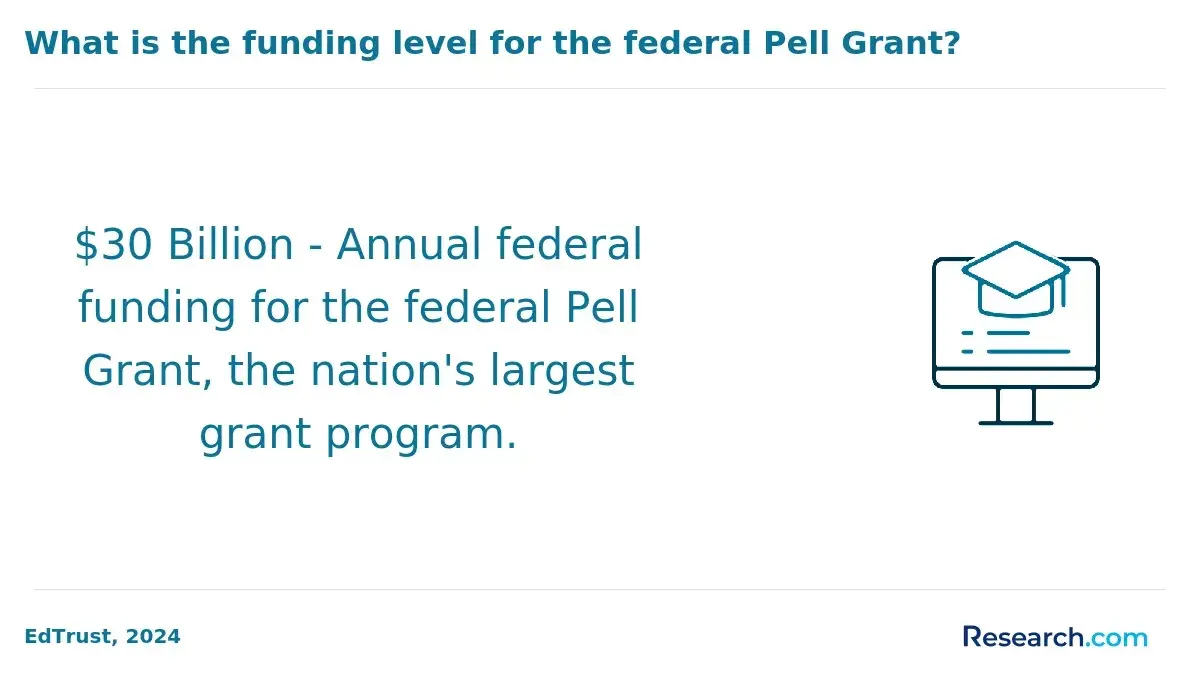
Employers in the construction sector prioritize graduates from accredited online construction management programs in the US because accreditation directly correlates with workforce readiness and reduced training costs.
Programs certified by the American Council for Construction Education (ACCE) provide a curriculum aligned with evolving industry standards, covering essentials like project management, cost estimation, construction law, and sustainable practices.
Lack of ACCE accreditation often means gaps in these critical areas, limiting graduates' competitiveness for advanced roles or real estate development projects.
Regional accreditation, such as from the Higher Learning Commission (HLC) or Middle States Commission on Higher Education (MSCHE), provides foundational academic credibility but is insufficient alone without domain-specific validation like ACCE.
Students considering these pathways should carefully verify accreditation to ensure credits transfer seamlessly and degrees meet licensure requirements, both of which significantly impact career mobility across construction sectors.
The labor market rewards accredited degree holders: BestColleges' analysis utilizing NCES data indicates an online construction management bachelor's median salary of $78,000 versus $46,000 for high school diploma holders. This 70% premium illustrates how accreditation signals practical competence to employers, enabling graduates to fill complex roles with minimal onboarding.
For professionals balancing education and work, exploring options such as the best online health information management degree CAHIIM accredited programs can offer a comparative perspective on the rigor and career impact of accredited online degrees across industries.
How do online and campus construction management programs differ?
Online construction management programs differ sharply from campus-based ones in accessibility and integration with ongoing employment, which is critical when balancing complex responsibilities. Notably, 69% of employers favor candidates who complete rigorous online degrees while working, associating this with superior time management and self-motivation skills.
This preference accentuates the practical advantage of online formats for professionals aiming to pivot or advance within the field. These programs offer asynchronous learning complemented by virtual simulations, yet demand strong self-discipline to maintain progress without daily in-person accountability. This tradeoff is central to understanding the differences between online and traditional construction management education.
By contrast, traditional campus programs emphasize immersive, hands-on experiences through direct site visits, group projects, and face-to-face networking, essential for early-career students or those lacking an established industry network.
However, campus attendance often requires commuting or relocation, imposing significant lifestyle disruptions. For example, a full-time civil engineer shifting toward construction management might find an online program allows immediate application of lessons on current projects, preserving income and visibility benefits not typically afforded by campus alternatives.
Decision-making must consider these nuances:
- Online programs boost promotability by enabling career advancement without interrupting employment.
- Campus programs deliver richer peer and mentor interactions, crucial for foundational relationship-building.
- Online learners need proactive self-management and must cultivate external networks to compensate for reduced in-person engagement.
For prospective students assessing whether to pursue an environmental science degree or a related field, understanding the operational realities of online construction management programs versus campus programs can clarify which educational path aligns with long-term workforce integration.
What courses are in a construction management degree?
Opting for a construction management degree requires a clear-eyed assessment of how varied curricula align with specific industry roles. For instance, commercial development demands proficiency in translating architectural plans into detailed budgets and schedules, making courses in cost control and project scheduling indispensable. Residential project managers, conversely, prioritize regulatory compliance and subcontractor coordination, areas where contract law and safety training prove critical.
Core coursework typically involves construction methods, cost estimating, and legal frameworks, but programs offering advanced instruction in risk management, sustainable practices, and Building Information Modeling (BIM) significantly enhance strategic decision-making skills.
Practical components such as internships and capstone projects simulate industry complexity, preparing students to navigate challenges like labor shortages and volatile material costs, factors that have shaped workforce and supply chain logistics since 2022.
Financially, online bachelor's programs average $15,202 annually, roughly 18% less than in-person public options, but require self-discipline in digital collaboration. Choosing between an engineering-focused versus business-oriented pathway affects employability and job function, especially in real estate development contexts.
- Emphasis on technical versus managerial skills should reflect targeted role demands.
- Practical application remains essential for adapting to workforce diversity and market volatility.
- Cost savings online may come with tradeoffs in networking and hands-on exposure.
Students must weigh these factors against career goals to ensure mastery over the technical and managerial domains employers in real estate development insist upon.
What admission requirements do online construction management programs have?
Admission to online construction management programs typically hinges on more than a bachelor's degree; employers and programs prioritize demonstrable industry experience and technical competence. While a degree in engineering, architecture, business, or related fields forms the academic foundation, practical construction or project supervision experience-usually two to five years-is crucial for navigating advanced coursework and real-world challenges.
The preference for specialized credentials over broad graduate tests like the GRE or GMAT reflects workforce demand: 58% of employers favor technical expertise rather than MBA qualifications for development roles. This reality shifts the applicant's focus toward building a portfolio of relevant roles and specific skills rather than test scores.
Letters of recommendation and personal statements carry weight when they illustrate leadership potential and align with complex project environments, such as urban infrastructure or commercial property developments, where meeting deadlines and controlling budgets are non-negotiable.
For candidates lacking foundational experience, prerequisite bridge courses can fill gaps but at the expense of additional time and cost, impacting return on investment. Early career planning to secure relevant experience significantly improves admission prospects and long-term employability in this field.
- Minimum 2.5-3.0 GPA from accredited undergraduate program
- Two-plus years of industry experience preferred
- GRE/GMAT less frequently required
- Recommendation letters stressing technical and leadership skills
- Personal statement focused on realistic career challenges
How long does an online construction management degree take?
The time required to complete an online construction management degree varies widely, reflecting program format, student commitment, and credential level. Full-time bachelor's degree seekers often invest 3 to 4 years, while part-time or accelerated tracks can reduce this to 18-24 months.
Associate degrees or certificates typically require 12 to 24 months. Programs crediting prior experience may shorten this timeframe, an important factor for tradespeople or project coordinators aiming for practical advancement.
Some students extend programs to accommodate seasonal work demands or travel restrictions common in real estate development roles, exemplifying the benefits of asynchronous learning formats.
Others prioritize faster completion, selecting accelerated pathways despite increased schedules and potential burnout risks. This showcases a fundamental tradeoff between paced, integrative learning and swift credential attainment.
Employer attitudes have shifted-78% of hiring managers now regard online degrees from accredited institutions as equivalent to on-campus counterparts, up from 61% six years prior.
This shift places greater weight on program accreditation and quality rather than mere speed of completion, influencing how students balance rapid entry into the workforce versus deeper skill acquisition through internships or applied projects.
Decision-making should weigh:
- The alignment of program length with job market timing and personal workload
- The potential cost of delayed graduation against the value of integrated practical experience
- The risks of accelerated schedules, including reduced opportunities for meaningful field exposure
Such considerations shape whether students achieve not just completion but sustained employability and career flexibility.
How much do online construction management programs cost?
Programs combining construction management and real estate development command tuition fees from $15,000 to $60,000, with public institutions offering more accessible options around $15,000-$30,000, while private or specialized schools often exceed $40,000.
This price range aligns with a market-driven need for candidates with hybrid skills in construction oversight and financial feasibility analysis, a gap noted by 64% of real estate executives in the Urban Land Institute and PwC's Emerging Trends in Real Estate 2025 report.
Choosing a program involves weighing upfront cost against potential salary impact and career trajectory. For instance, a mid-career construction supervisor eyeing a transition into real estate development faces a tradeoff: a $50,000 program with robust industry connections might unlock $15,000-$25,000 annual raises within three years, effectively covering the investment. Conversely, budget options under $20,000 often focus narrowly on construction skills, limiting advancement in roles demanding financial acumen.
Strategic enrollment in part-time or modular courses tied to credit hours can optimize affordability while maintaining employment income. Additional expenses like software licenses, textbooks, and occasional on-site residencies add 10-20% to direct costs, highlighting the importance of meticulous budgeting aligned with realistic career plans.
Employers are increasingly willing to subsidize tuition when programs directly enhance competencies in project viability and risk management. This dynamic underscores the operational value of selecting accredited, outcome-oriented construction management education.
What jobs lead from construction management to real estate development?
Transitioning from construction management to real estate development demands combining hands-on project execution with strategic market and financial insight, skills not fully developed in typical construction roles.
For instance, a project manager managing multimillion-dollar projects gains vital negotiation and risk assessment experience, but advancing into development requires added expertise in market analysis, property acquisition, and financing.
Estimators, skilled in financial feasibility, provide a foundation, yet developers must integrate this with broader investment decision frameworks.
Mid-level professionals often face a skills gap: operational proficiency alone is insufficient without knowledge of municipal approval workflows, financial modeling software, and sector networking.
Those seeking development roles should pursue targeted certifications or cross-disciplinary projects to acquire these competencies and meet employer expectations for both execution and strategic portfolio management.
Online bachelor's degrees in applied construction management fields show an 87% employment rate three years post-graduation-nearly equivalent to on-campus offerings-indicating that online pathways can effectively prepare candidates for foundational skills. However, students must actively supplement these programs with development-specific knowledge to remain competitive.
- Operational experience in budgeting and scheduling builds essential groundwork.
- Additional education in real estate finance and urban planning improves hiring prospects.
- Networking across investment and design sectors bridges critical gaps.
What certifications help construction managers move into development roles?
In construction management development roles, holding the Certified Construction Manager (CCM) credential is often indispensable for establishing leadership over complex, high-value projects and multifaceted stakeholder networks.
The CCM, awarded by the Construction Management Association of America (CMAA), directly targets skills essential to directing multi-million-dollar real estate ventures.
Complementing this, the Project Management Professional (PMP) certification enhances capabilities in risk mitigation, budgeting, and resource allocation-competencies critical when managing diverse project phases and cross-sector teams.
While professional licenses like Licensed General Contractor (GC) or Professional Engineer (PE) can augment credibility and technical authority, especially in regulatory environments, they require notable time and financial investment.
Their practical value depends on whether the development role demands regulatory navigation and hands-on construction oversight or focuses primarily on strategic management.
Data from the 2024 CMAA compensation study reveals tangible returns for candidates blending formal education and certification: professionals with bachelor's degrees in Construction Management and CCM certifications tend to reach director or VP roles earning median total compensation near $172,000 after 15+ years, compared to $128,000 for those without degrees. This difference underscores how education-certification combinations impact marketability and earnings trajectory.
For site managers shifting toward development, prioritizing CCM certification is a strategic move to gain industry-specific leadership credibility. Supplementing with PMP addresses broader project complexities encountered in development portfolios.
Maintaining certifications through renewal and continuing education is essential to stay current with evolving construction technology, sustainability mandates, and regulatory frameworks-factors that shape employers' expectations and the operational environment.
Other Things You Should Know About Construction Management
Online construction management programs often assume students can dedicate significant weekly hours, typically 10-15 or more, to coursework and group projects. Working professionals must choose programs with flexible pacing and asynchronous content to accommodate fluctuating workloads and site demands. Programs lacking flexibility increase the risk of burnout or falling behind, which can delay graduation and disrupt career momentum. Prioritizing programs designed specifically for part-time learners with strong support services improves the feasibility of balancing study and job duties.
Program reputation affects employer perception but is secondary to demonstrated skills and relevant experience. Graduates from lesser-known but rigorous programs can compete effectively if they build portfolios of real project work and internships. Conversely, well-known programs may open doors initially, but graduates who lack practical competence face barriers advancing beyond entry-level roles. Candidates should focus on programs with industry connections that facilitate internships or projects directly linked to employer needs rather than relying solely on brand recognition.
Integrating electives in real estate finance and urban planning is beneficial for understanding development feasibility, market dynamics, and regulatory environments, which are often outside core construction management scopes. Programs that offer these electives provide a more strategic skill set, crucial for transitioning from project execution to development decision-making. Those omitting these subjects risk narrowing career options and may struggle with cross-disciplinary communication essential in real estate development. Students pursuing development careers should seek programs with tailored electives or dual-focus options to enhance long-term versatility.
References
- Project Manager Path: Climbing the Construction Career Ladder - Associated Training Services https://www.operator-school.com/blog/project-manager-path-climbing-the-construction-career-ladder/
- Best Master’s in Construction Management Online Degree [currentyear] | NEIT https://www.neit.edu/blog/best-masters-in-construction-management-online-degrees
- How to Pursue a Career as a Construction Site Manager https://www.oshaeducationcenter.com/become-a-construction-manager/
- 5 Steps to Become a Construction Manager https://superconstruct.io/blog/steps-to-become-a-construction-manager
- All About Real Estate Development Jobs - Adventures in CRE https://www.adventuresincre.com/real-estate-development-jobs/
- Best Master’s in Construction Management Online for 2025 https://www.onlinemastersdegrees.org/best-programs/construction-management/
- Certified Construction Manager | Construction Management Association of America https://www.cmaanet.org/certification/ccm
- Construction Management - Atlantic Technological University https://www.atu.ie/courses/bachelor-of-science-construction-management
- CourseCareers https://coursecareers.com/blog-posts/construction-management-degree-vs-field-experience-vs-online-construction-pm-training
- BSc (Hons) Construction Management https://www.ube.ac.uk/undergraduate/construction-management/